齐鲁工业大学国家重点实验室,济南/建筑设计
2018年初,齐鲁工业大学长清校区准备启动国家重点实验室建设项目,希望通过此次建设填补校园重点学科实验实训设施的不足。设计团队第一次进入校园踏勘现场,发现这所高校经过十余年的建设,如今只剩最后一块建设用地。校园整体遵循了效率至上的功能主义布局原则,约1900余亩的校园被清晰的划分为南侧的教学科研组团和北侧的生活运动组团,两功能组团共享中心的校园核心景观。对于南侧的教学组团也有突出的大规模现代校园的典型特征,通过封闭院落形成一个个围合的教学单元有序的排列在南北轴线的两侧,配合尺度宏大的前区广场,共同构成校园入口的仪式空间。
At the beginning of 2018, the Changqing campus of Qilu University of Technology prepared to start the construction project of national key laboratories, hoping to fill the shortage of experimental training facilities for key disciplines on campus through this construction. The design team visited the campus for the first time and found that after more than ten years of construction, only the last piece of construction land is left. The overall campus follows the functionalist layout principle of efficiency first. About 1900 mu of campus is clearly divided into the teaching and research group in the South and the life and sports group in the north. The two functional groups share the core landscape of the center. The teaching group in the South also has the typical characteristics of a large-scale modern campus. The enclosed teaching units are orderly arranged on both sides of the north-south axis through the closed courtyards, and cooperate with the grand front square to form the ritual space at the entrance of the campus.
▼项目外观,Project appearance
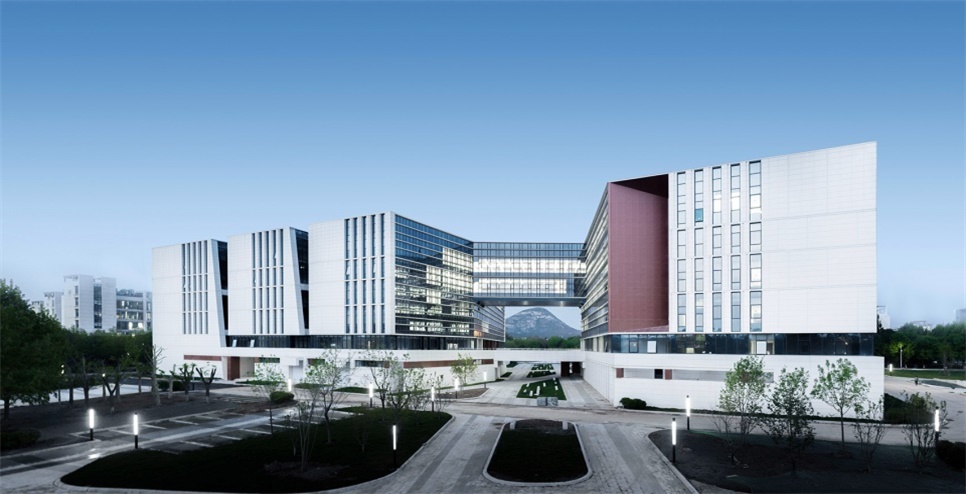
我们此次的项目基地位于教学轴线组团西侧,是一块脱离了南北轴线控制,并能够兼顾校园、城市双重空间界面的特殊场地。由此我们萌生出尝试以本次建设为契机,让校园建筑以开放姿态面对城市与校园的构思,以回应反思当下封闭无趣的校园空间。同时,环顾长清大学城的建设,作为城市知识高地,本应与城市开放发展互为因果,相伴而生,不同学校间,在公共设施、人力资源及教育功能等方面实现大范围融合和共享。但因各校区的建设模式、办校管理方式的差异,导致各校区被城市道路分隔为封闭的诸侯一方,校园与城市,校园与校园之间更无开放融合,教育、科技、经济之间良性交融机制也难以有效建立。伴随着这些遗憾,也带着更多的期待我们去重新审视当下的校园建设,重新认识这块场地及周边城市环境。让本次实践项目以积极状态织补起校园空间界面,并尝试与城市及环境建立更为紧密的联系成为团队的设计共识。
Our project base is located in the west of the teaching axis cluster. It is a special site that is out of the control of the north-south axis and can take into account the dual spatial interface of campus and city. Therefore, we initiated the idea of taking this construction as an opportunity to make the campus architecture open to the city and the campus, in response to the reflection on the current closed and boring campus space. At the same time, looking around the construction of Changqing University Town, as a knowledge highland of the city, it should have been a cause and effect with the opening and development of the city. Different schools have achieved large-scale integration and sharing in public facilities, human resources and educational functions. However, due to the differences in the construction mode and management mode of each campus, each campus is divided into a closed vassal side by the urban road. There is no open integration between campus and city, between campus and campus, and it is difficult to effectively establish a benign integration mechanism between education, science and technology, and economy. With these regrets and more expectations, we will re-examine the current campus construction and re understand this site and the surrounding urban environment. It has become the design consensus of the team to let this practice project in a positive state weave the campus space interface and try to establish a closer relationship with the city and the environment.
▼鸟瞰,Aerial view
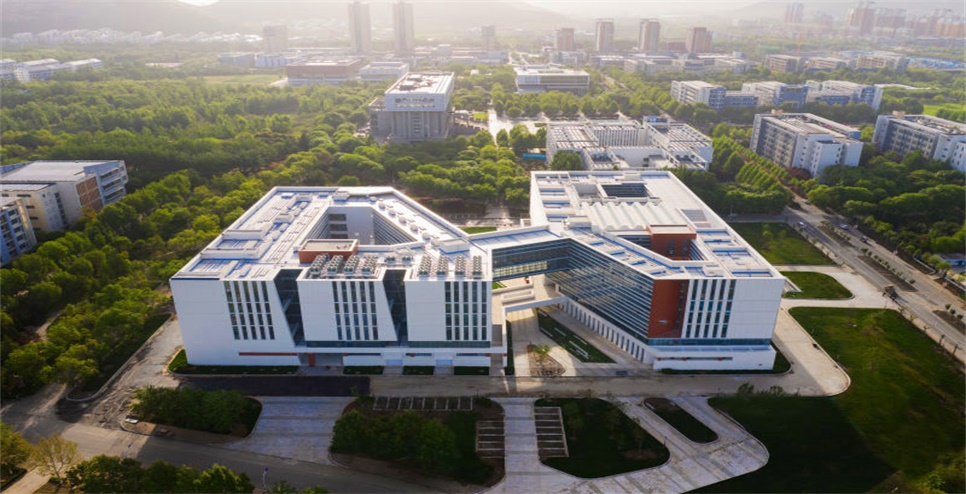
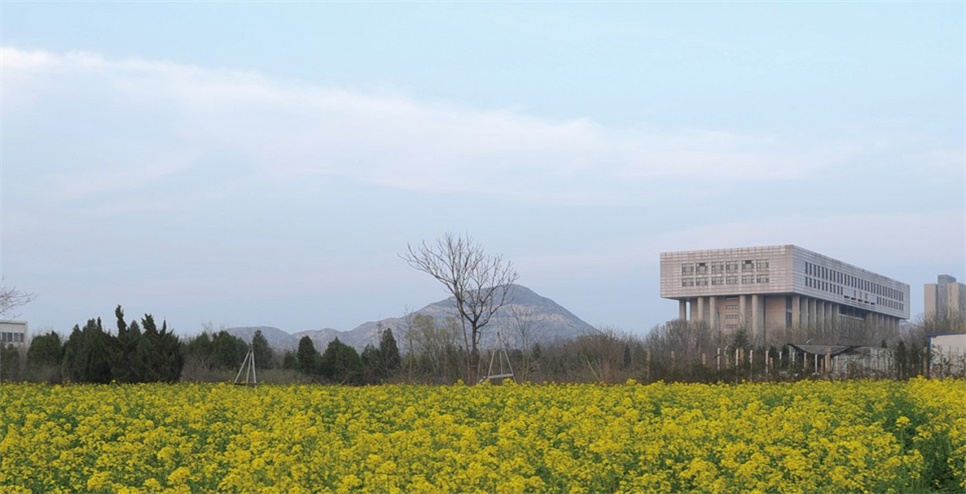
项目场地周边拥有丰富的景观资源,西南侧为景观河道,东北侧为校园绿化山体,将两处景观串联是设计的第一直觉。通过现场踏勘,发现站在场地之中,沿着我们预设的景观视廊再向东北方向,还能望见更远处的一处自然山体。于是便有了将远景借入校园之内,形成城市——校园河道——项目场地——中心景观——远处山体的视线通廊的立意。
There are rich landscape resources around the project site. The southwest side is a landscape river and the northeast side is a campus greening mountain. Connecting the two landscapes is the first intuition of the design. Through the site survey, it is found that standing in the site, we can see a natural mountain in the distance along our preset landscape corridor to the northeast. Therefore, the vision is borrowed into the campus to form a vision corridor of city - campus River - project site - central landscape - distant mountains.
▼基地周边环境,Surrounding environment of the base
▼基地分析,Base analysis
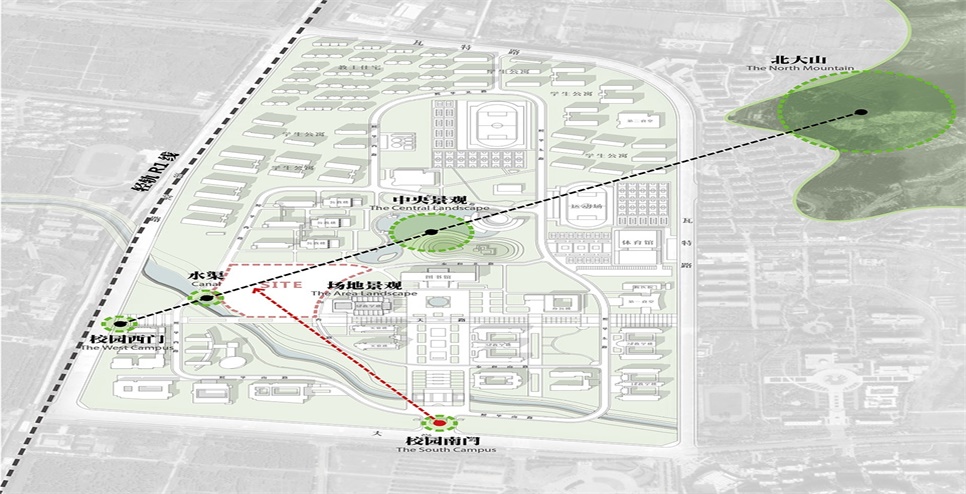
后来,我们经过翻阅资料得知,此山名叫北大山,是著名诗人、散文家徐志摩先生于1931年搭乘“济南号”邮政飞机触山罹难之处,不禁对此山此景所承载的人文记忆所感动,更加坚定了通过视线向其致敬的创作意愿。由此,建筑形态被景观视廊切分为两部分,通廊之间形成了可穿越的公共空间,通廊之上又通过空中教学会客厅进行联通,使得两个切分的形体产生联系,形成一个完整构图。实用空间与虚空空间(景观空间)严密的图底关系,共同组成独特的场域空间。
Later, we learned through reading materials that this mountain is called Beida mountain. It is the place where the famous poet and essayist Mr. Xuzhimo died when he took the "Jinan" postal plane in 1931. We can't help but be moved by the humanistic memory carried by this scene of the mountain and strengthen his creative willingness to pay tribute to it through the line of sight. As a result, the architectural form is divided into two parts by the landscape viewing gallery. A traversable public space is formed between the corridors, and the corridors are connected through the air teaching reception hall, so that the two segmented shapes are connected to form a complete composition. The practical space and the void space (landscape space) are closely related to each other to form a unique field space.
▼设计生成,Design generation
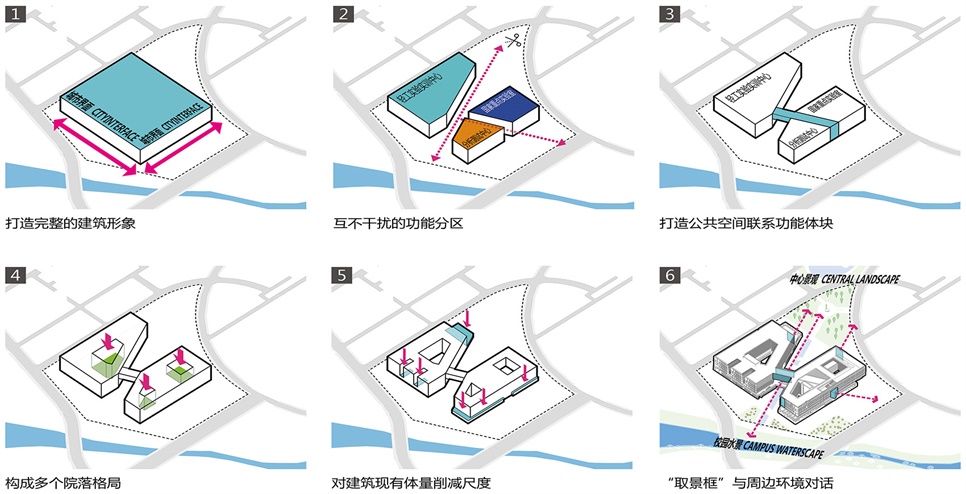
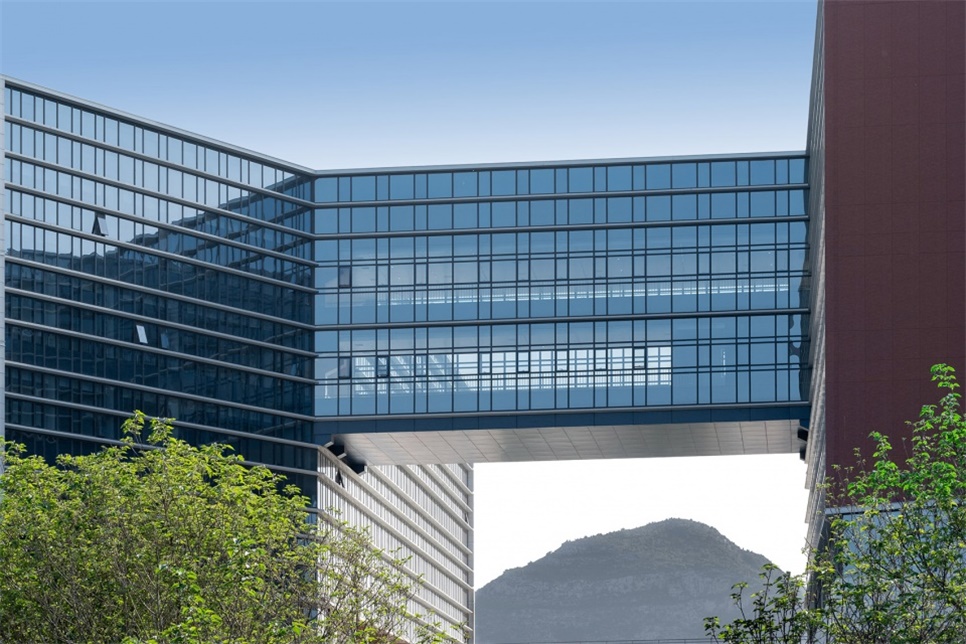
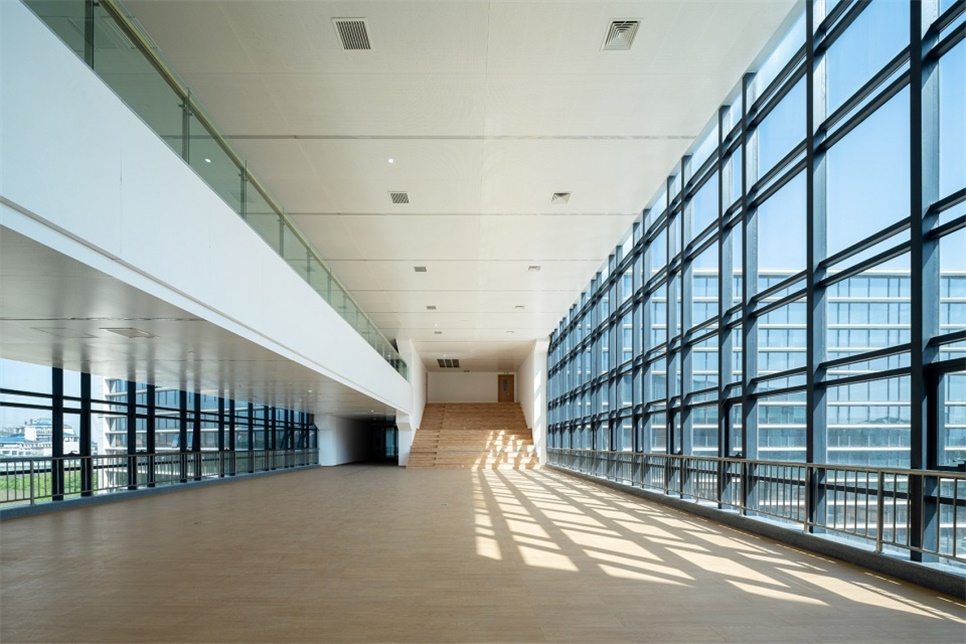
被划分的南北两个体量刚好契合了重点实验、实训教学两部分的主要建筑功能。南北联系的24m跨度的空中连廊也成为独特体验的空中路演空间,连廊建立起多维立体的活动空间。在这里,向东望得见山,向西看得见水,是观赏校园景观的最佳视角。
The two volumes divided into North and south just fit the main building functions of key experiments and practical teaching. The 24m span air corridor connecting the north and the South has also become an air roadshow space for unique experience. The corridor has established a multi-dimensional and three-dimensional activity space. Here, mountains can be seen from the East and water can be seen from the west, which is the best perspective for viewing the campus landscape.
▼总体鸟瞰,General aerial view
▼透过建筑之间的空隙看向北大山,Looking at the north mountain through the gap between buildings
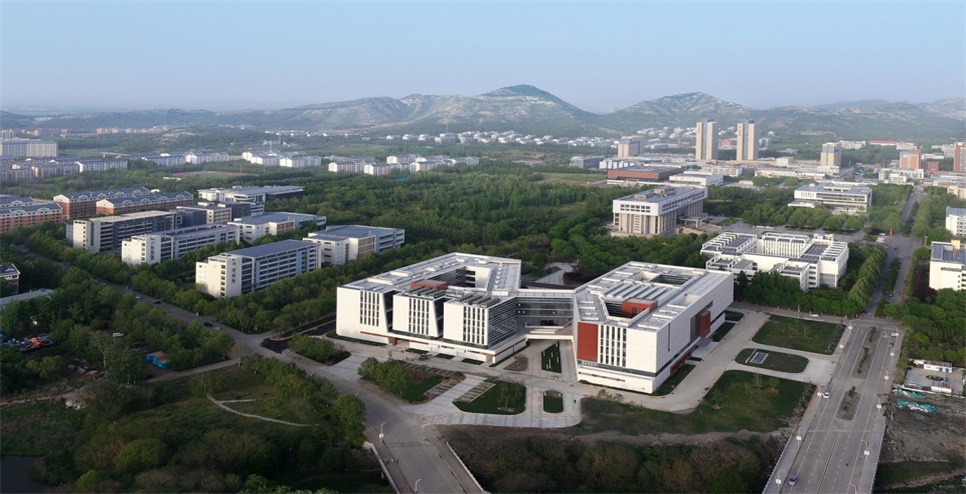
考虑到校园整体风貌和建筑界面的统筹,项目的形态走势与校园其他主体教学建筑保持一致,都以东西向水平展开,同时延续了校园整体现代简洁明快的浅色色彩风格。立面的设计上,也尽可能回归简洁、实用,每个立面都反应其内部的功能特性。
Considering the overall landscape and architectural interface of the campus, the shape trend of the project is consistent with that of other main teaching buildings on the campus, both of which are carried out at the East-West level, while continuing the modern, simple and bright light color style of the campus as a whole. In terms of facade design, it is also simple and practical as far as possible, and each facade reflects its internal functional characteristics.
▼简洁明快的建筑体量,Simple and lively building volume
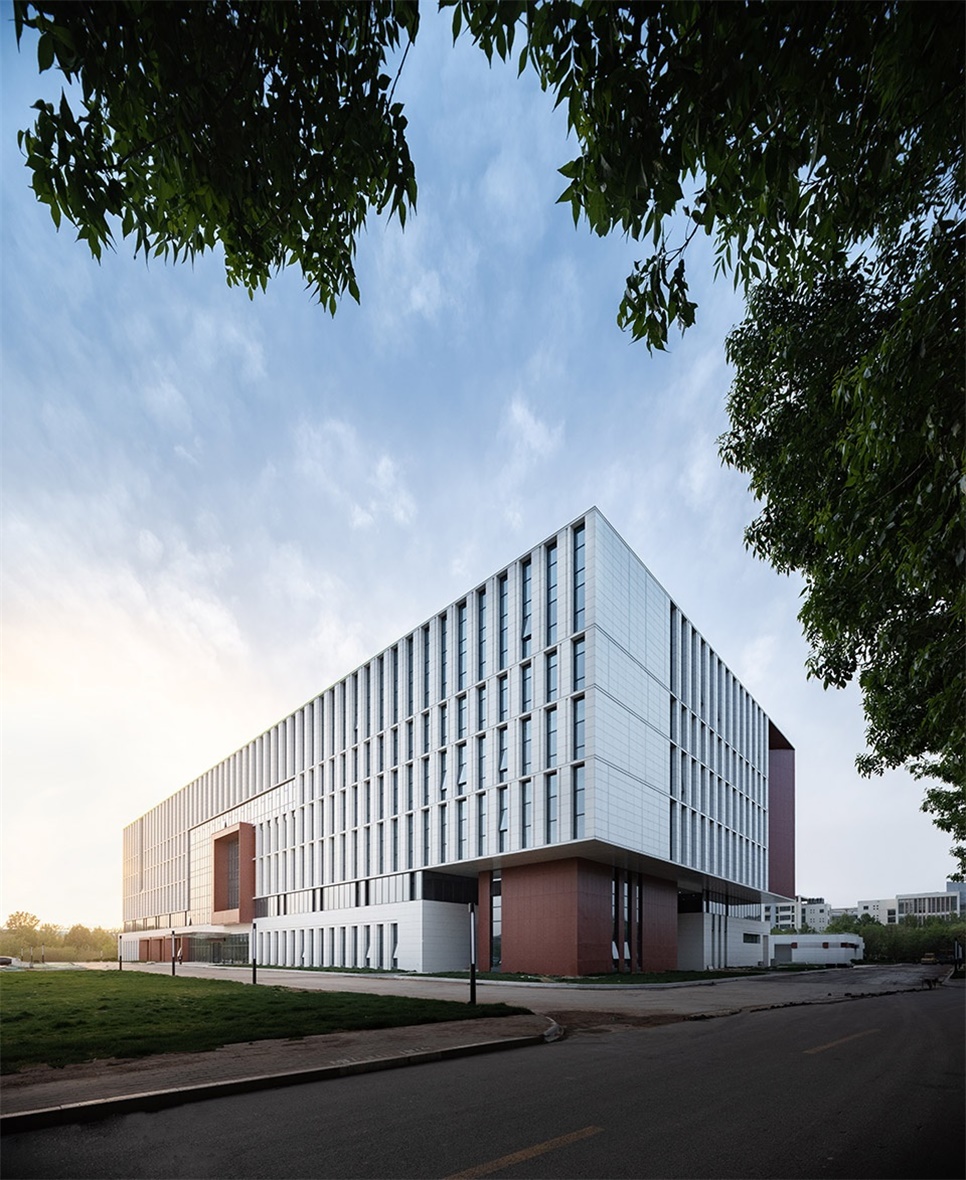
因为场地西侧临近校园西大门,建筑南侧界面选择适当后退,在面向西入口主干路的方向让建筑南侧界面与东侧的公共教学楼围合形成较为开放舒适的前区广场。南立面匀质开窗形成秩序感,景窗的植入与校园南入口形成互动。
As the west side of the site is close to the west gate of the campus, the South interface of the building shall be properly retreated. In the direction facing the main road at the west entrance, the South interface of the building shall be enclosed with the public teaching building on the east side to form a relatively open and comfortable front area square. The south facade has homogeneous windows to form a sense of order, and the implantation of landscape windows interacts with the south entrance of the campus.
▼西侧立面,适当后退,West side elevation, properly backward
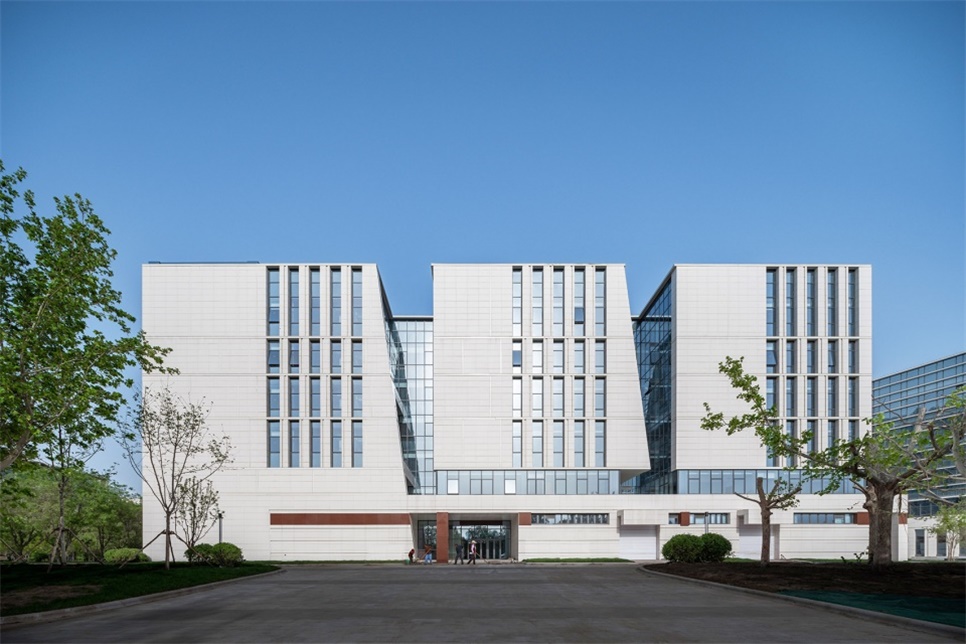
▼建筑南立面与前区广场,Building south facade and front area square
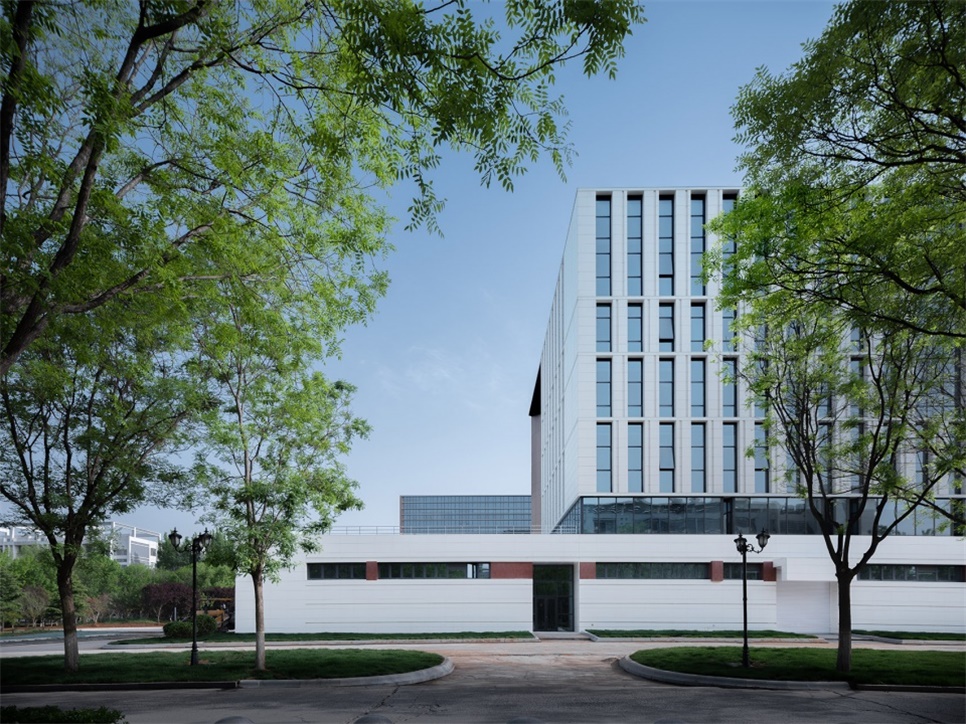
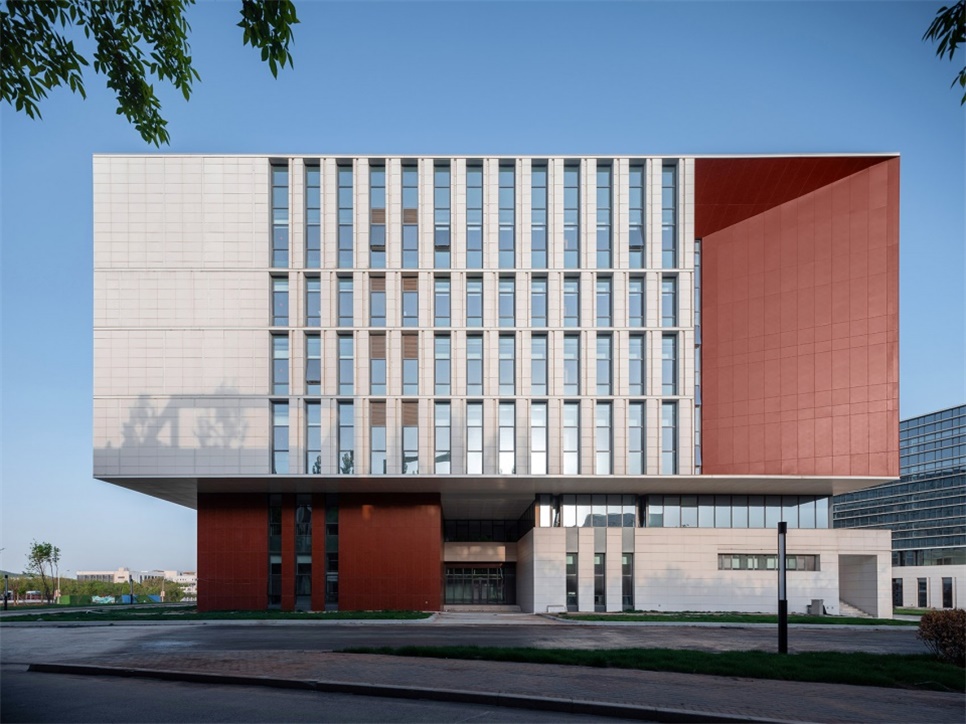
西侧立面考虑城市景观需求,界面处理较为完整,强调体块感与雕塑感的形态塑造。北侧由于面对的是学生宿舍,因此北立面相对轻松匀质实体开窗反应功能存在的合理性。东立面面对校园中心景观,界面处理更加灵动,水平分段处理强调悬浮水平之感,巨型景窗建立室内外的积极对话。中心切开后的形体界面具备了空间的张力,水平轻盈的线条强调空间的指向与延展,内虚外实的表皮包裹更加强化型体切合的存在感。
The West facade considers the needs of urban landscape, and the interface treatment is relatively complete, emphasizing the shape shaping of the sense of block and sculpture. As the north side faces the student dormitory, the North facade is relatively easy and homogeneous, and the window opening response function is reasonable. The East facade faces the central landscape of the campus. The interface treatment is more flexible. The horizontal subsection treatment emphasizes the sense of suspension level. The giant view window establishes an active dialogue between indoor and outdoor. After the center is cut, the body interface has the tension of space. The horizontal and light lines emphasize the direction and extension of space. The skin wrapping of the internal virtual and external solid strengthens the sense of existence of the body fit.
▼东侧立面设置巨型景窗,Giant view windows are set on the East facade
通过建筑体量的大胆切割和空间渗透,是建筑师让建筑环境的调控回归设计自主性的尝试。开放绿谷的走向与济南夏季、过渡季主导风向相契合,让学生更多地拥抱阳光、风,还有阴影下的凉意。这样的设计减少了建筑物本身对空调的过度依赖,反而催生了一个更加自然、开放的学习场所,而非在传统意义上的集中、围合、高能耗的单体建筑物。
The bold cutting and spatial penetration of the building volume is an attempt by architects to return the regulation of the architectural environment to the design autonomy. The trend of the open green valley is consistent with the dominant wind direction in Jinan in summer and transition seasons, allowing students to embrace more sunshine, wind and coolness under the shadow. This design reduces the excessive dependence of the building on air conditioning, and instead promotes a more natural and open learning place, rather than a centralized, enclosed and energy-efficient single building in the traditional sense.
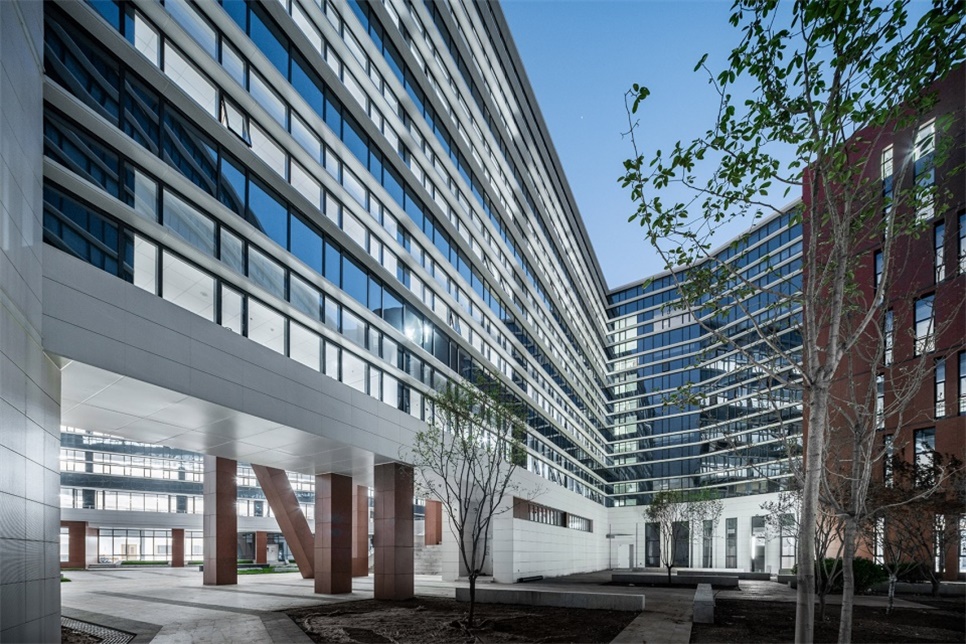
为了进一步加强建筑的多孔性,设计中将建筑底层部分抬高架空以实现空气对流,植入庭院为空间的通透性创造可能。此外,为景观最大程度地纳入建筑的空间布局当中,朝向景观的不同界面分别嵌入取景容器,学生可以临窗驻足,思考凝望,打破了建筑与风景的界限,让自然渗透进来。
In order to further strengthen the porosity of the building, the bottom part of the building is raised overhead in the design to realize air convection, which is implanted into the courtyard to create the possibility of space permeability. In addition, in order to bring the landscape into the spatial layout of the building to the greatest extent, different interfaces facing the landscape are embedded with viewfinder containers. Students can stop at the window, think and gaze, breaking the boundary between the building and the landscape, and allowing nature to penetrate.
▼底层部分架高实现空气对流,Air convection can be realized by raising the bottom part
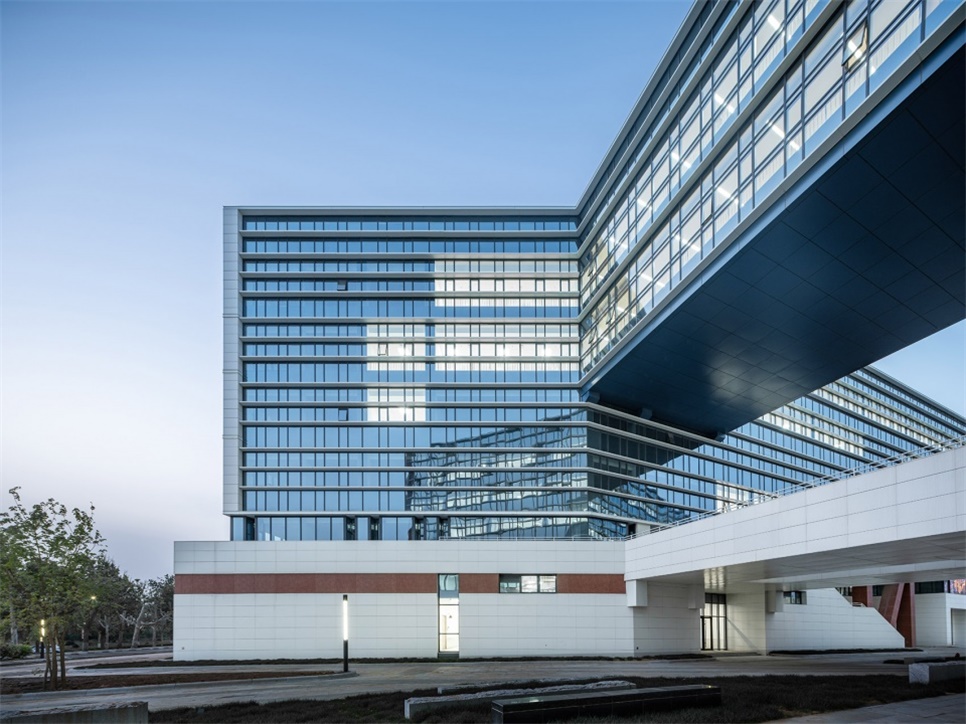
建筑采用上下叠加的方式组织不同开放性的功能空间。二层平台之上漂浮的盒子来承担教学、实验空间,给予主体教学活动安静、温暖、具有场所感的空间载体;平台下部的开放场所结合架空、悬挑、渗透、围合等方式,创造了收放有致的半室外空间体系,形成可供穿梭行走的自由空间,激发交流的广场、适于休憩阅读的户外大台阶、多义性的功能厅和活动室在游走路径上穿插,为师生提供更多在场所中探索的可能。通过提供这一系列的非正式教学空间场所,试图激发师生间相互交流的契机,打造一个规范标准之上的活力校园。
The building adopts the way of superposition to organize different open functional spaces. The floating box on the second floor platform bears the teaching and experimental space, giving the main teaching activities a quiet, warm and space carrier with a sense of place; The open space under the platform combines aerial, overhanging, infiltration, enclosure and other methods to create a semi outdoor space system with proper retraction and release, forming a free space for shuttling and walking, stimulating the square for communication, outdoor large steps suitable for rest and reading, and multi-functional halls and activity rooms interspersed on the walking path, providing more possibilities for teachers and students to explore in the place. By providing this series of informal teaching spaces, we try to stimulate the opportunity of mutual communication between teachers and students, and create a dynamic campus based on norms and standards.
▼庭院,Courtyard
▼连廊内的公共空间,Public space in the corridor
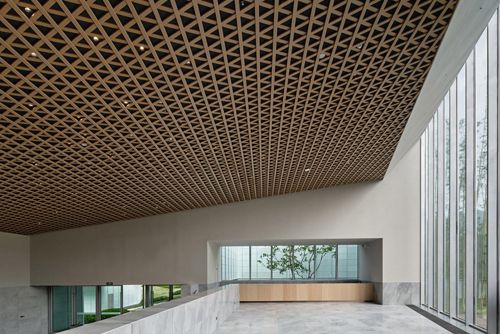
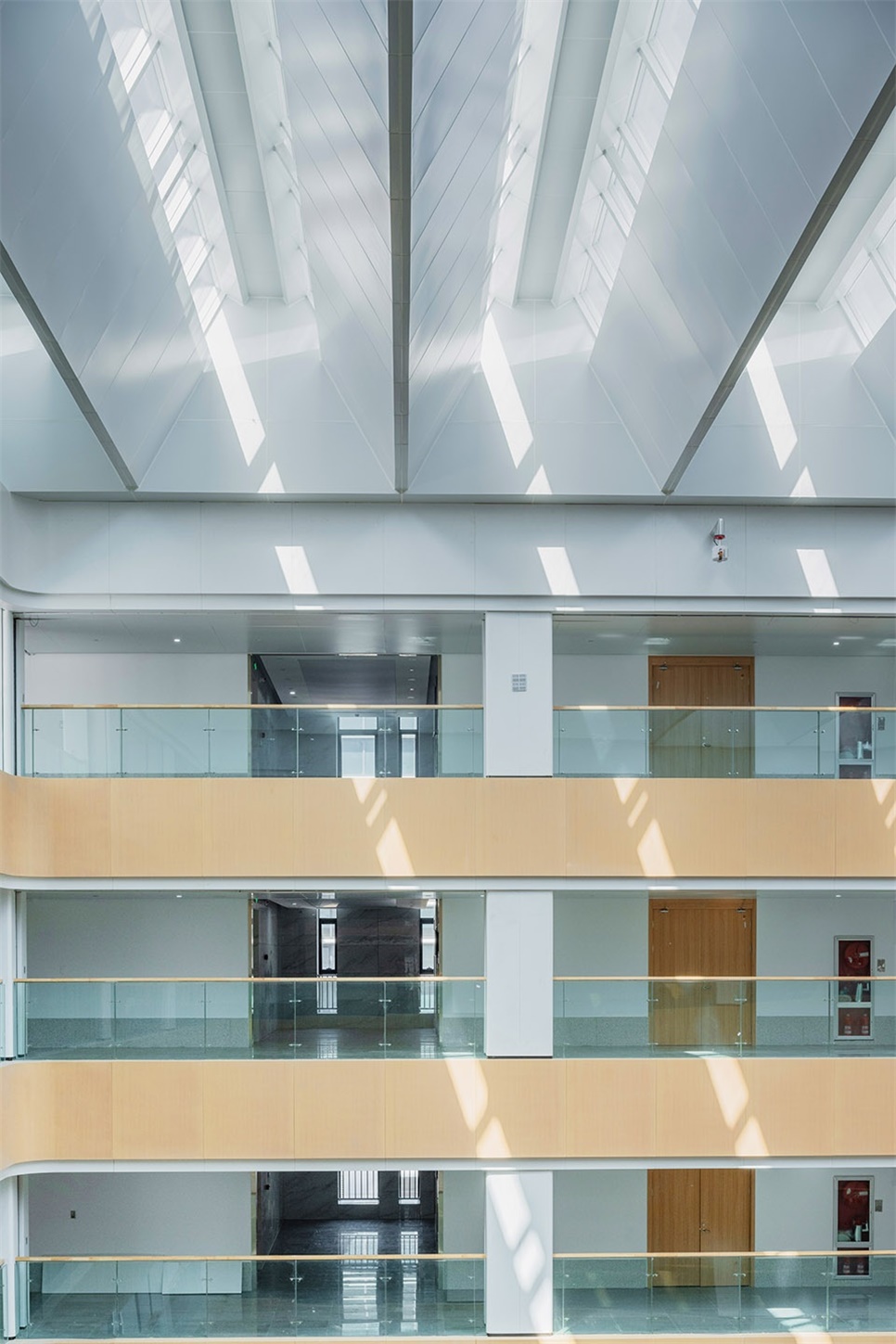
▼走廊与中庭,Corridor and atrium
在项目中,我们体会到人类的建造其实与面向环境并不冲突,反之建筑可以成为纽带,协调每一种需求在环境中的作用。我们尝试改变校园建筑功能割裂单一、缺少开放精神的现状,强调混合型交往空间的植入,创造一种学习与自然、与生活相互有机融合的环境,为学生们的丰富的校园生活提供更深刻、更人性化、更温馨的空间载体。
In the project, we realized that human construction does not conflict with the environment. On the contrary, architecture can become a link to coordinate the role of each demand in the environment. We try to change the current situation that the functions of campus buildings are separated from each other and lack an open spirit, emphasize the implantation of mixed communication space, create an environment where learning, nature and life are organically integrated, and provide a more profound, humanized and warm space carrier for students' rich campus life.
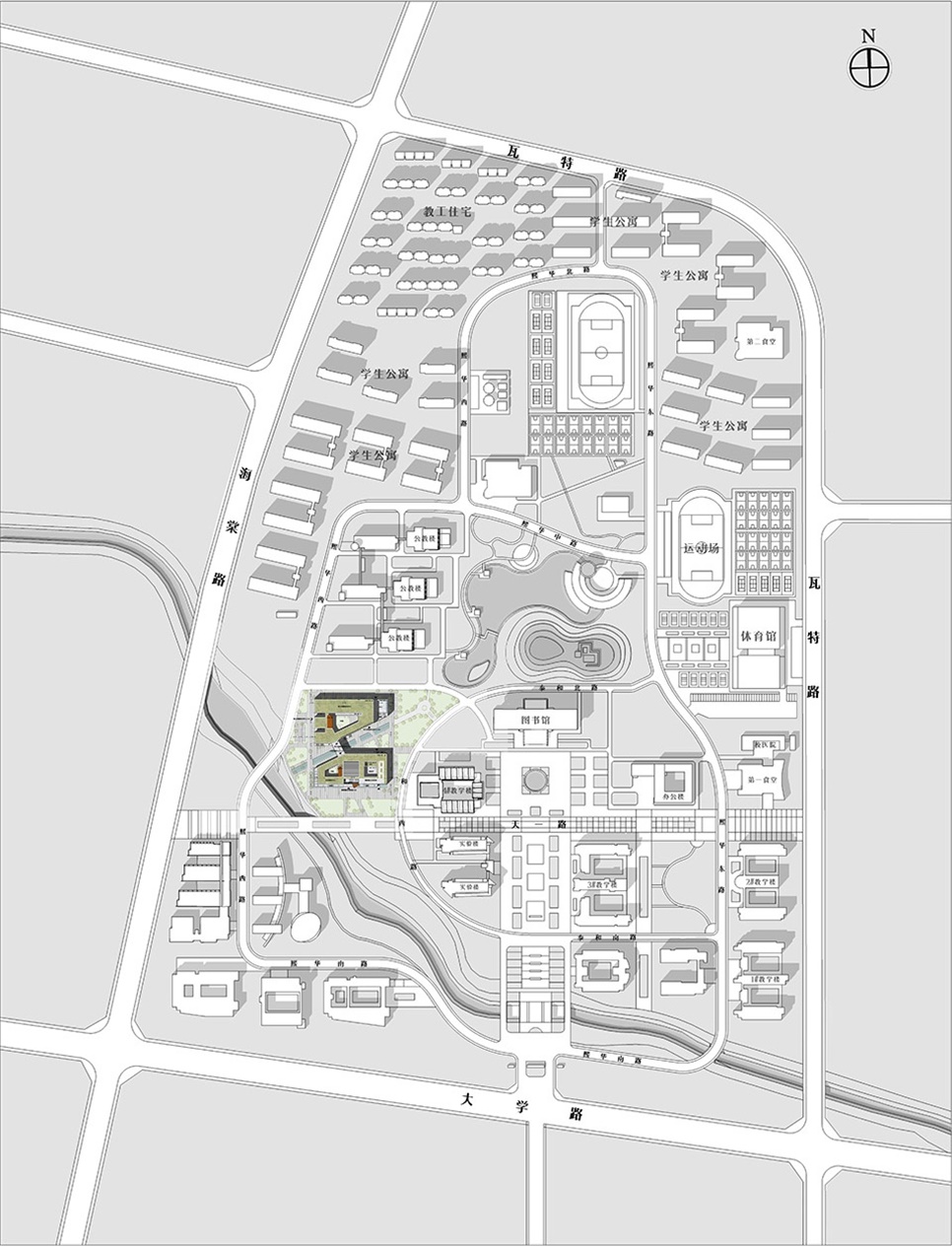
▼总平面图,General layout
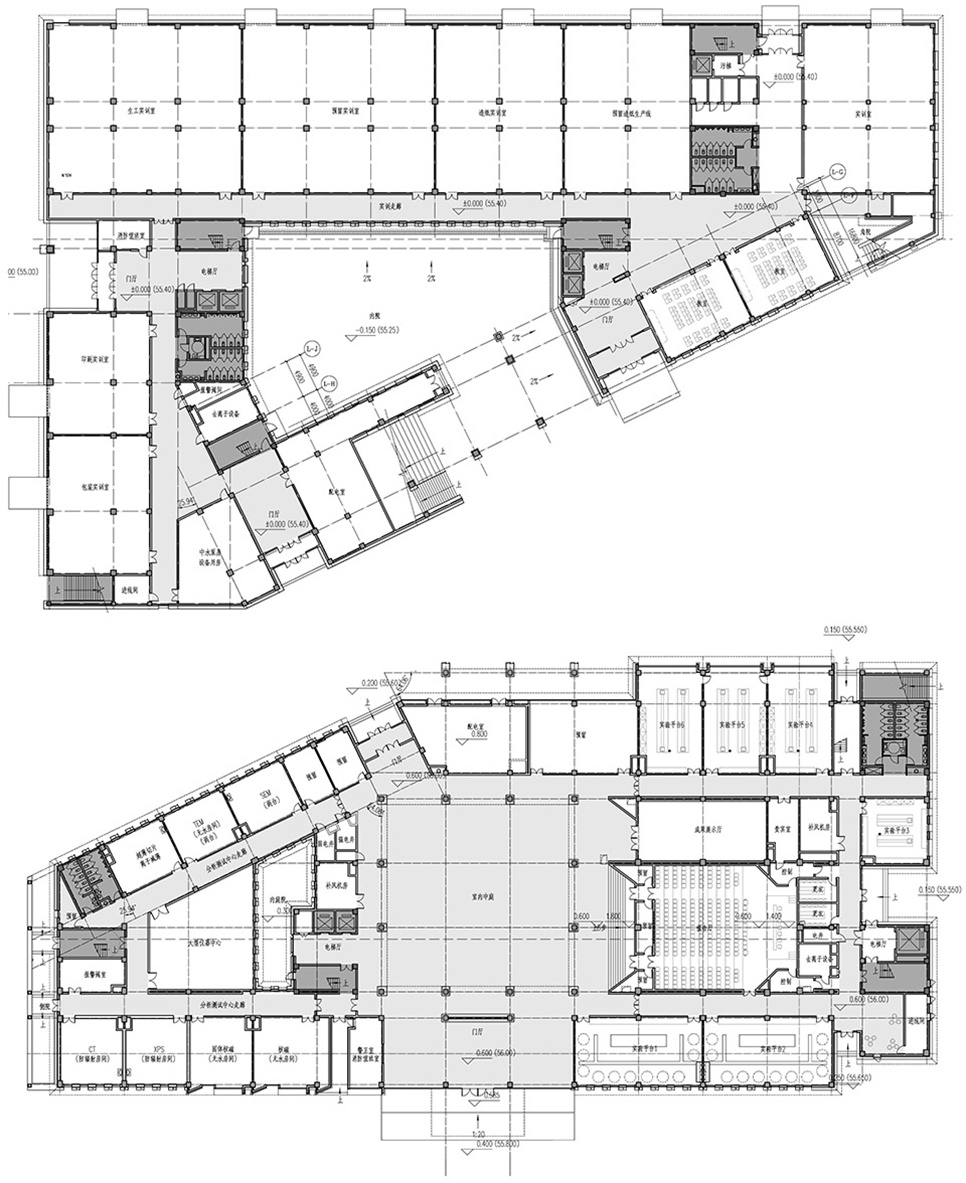
▼一层平面图,First floor plan
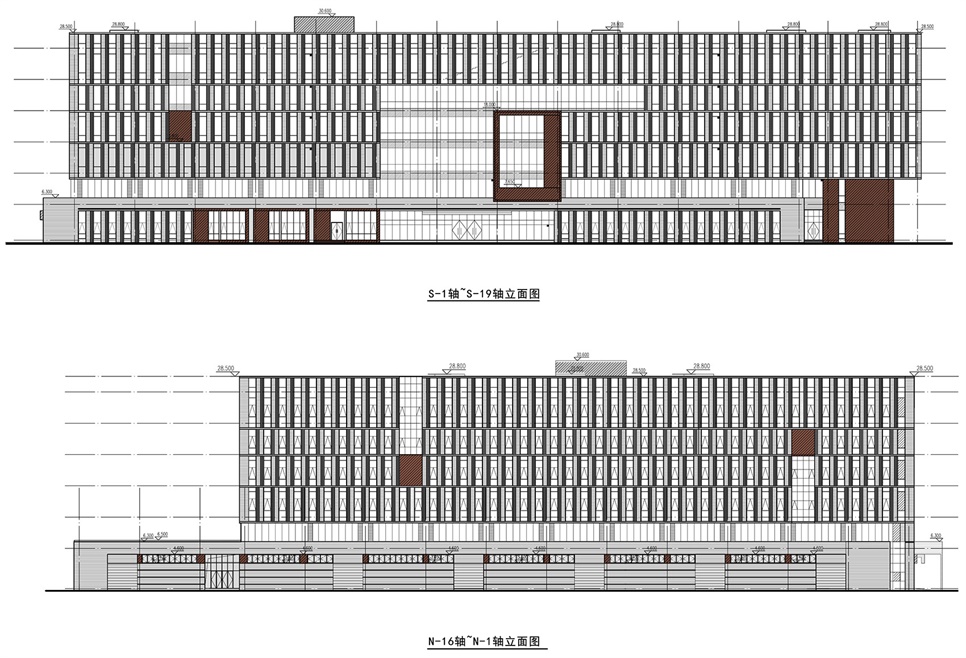
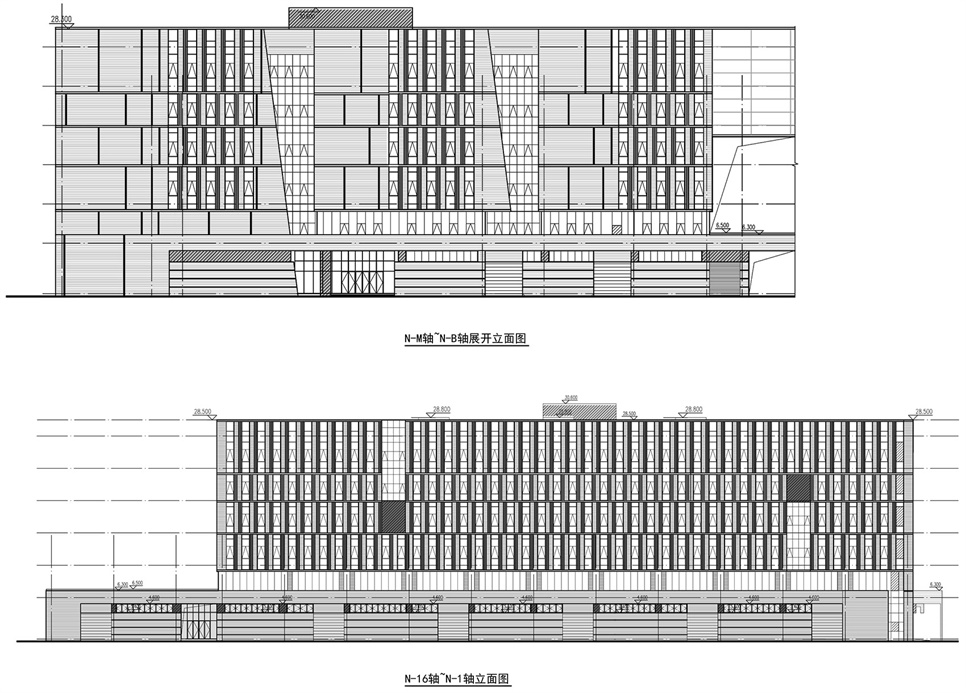
▼立面图,Elevation
项目信息
项目名称:齐鲁工业大学国家重点实验室
文章分类:建筑设计
设计公司:同圆设计集团有限公司
项目地址:济南
项目规模:50363㎡
设计团队:郭立强、于塔娜、邵旭、刘琳
Project information
Project Name: State Key Laboratory of Qilu University of Technology
Article category: Architectural Design
Design company: Tongyuan Design Group Co., Ltd
Project address: Jinan
Project scale: 50363 ㎡
Design team: Guo Liqiang, Yu Tana, Shao Xu, Liu Lin