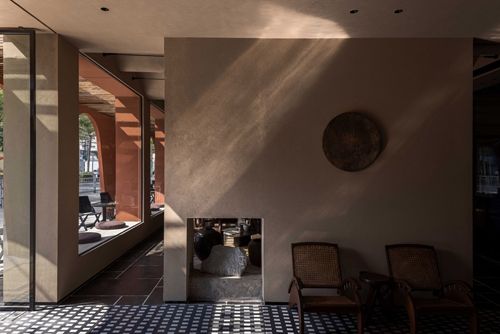
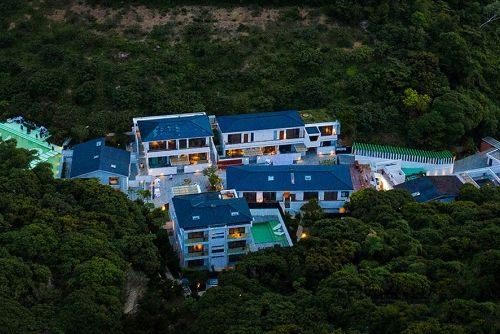
丹棱老峨山居度假酒店,四川眉山 / 門口建筑工作室
老峨山在成都平原的西南边缘,仿佛是成都平原地下的红砂岩突然涌起,海拔直接拔升到1100米,山上桂树成行、竹林成片、茶田依依,环境优美。
Lao’e Mountain is on the southwest edge of Chengdu Plain, as if the red sandstone under Chengdu Plain suddenly rises up, and the altitude directly rises to 1100 meters. There are osmanthus trees in rows, bamboo forests, and tea fields on the mountain, making the site a beautiful environment.
▼项目概览,overall of the project
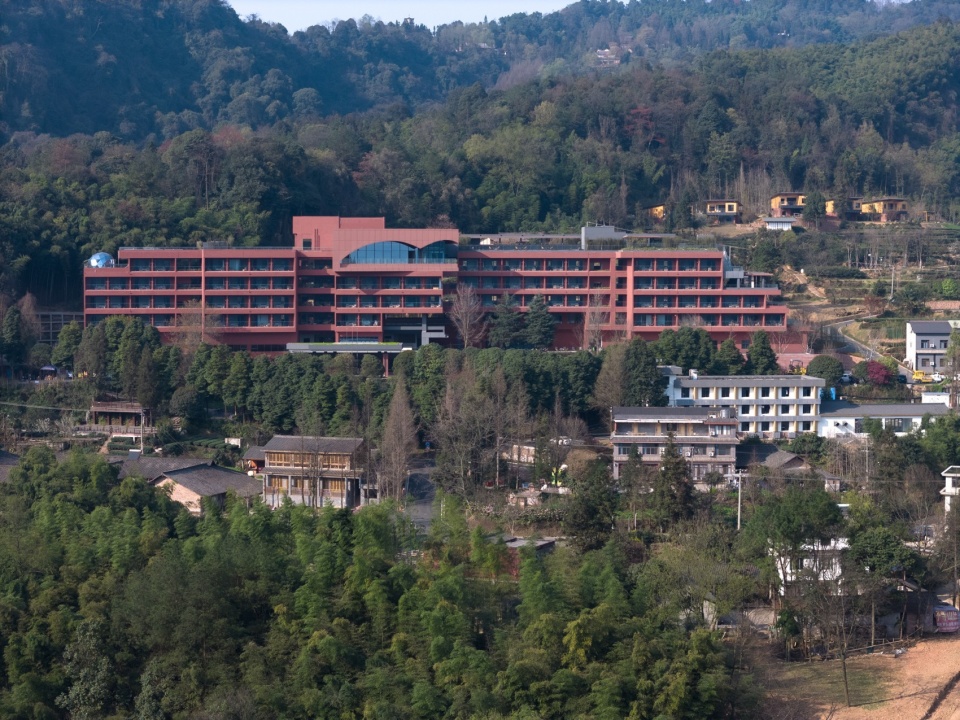
▼项目半鸟瞰,half-aerial view
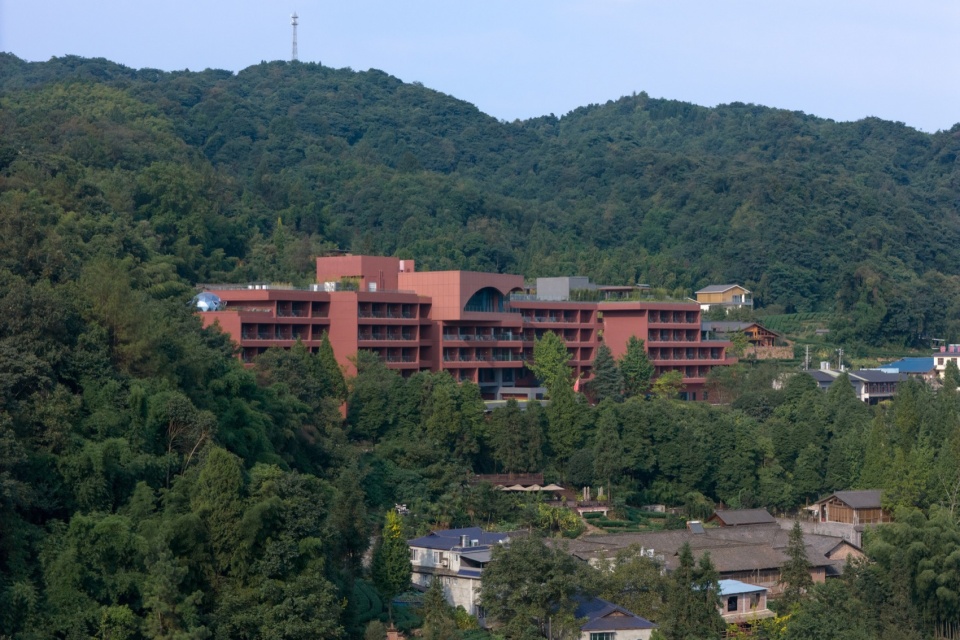
▼由周围环境看建筑,viewing the hotel
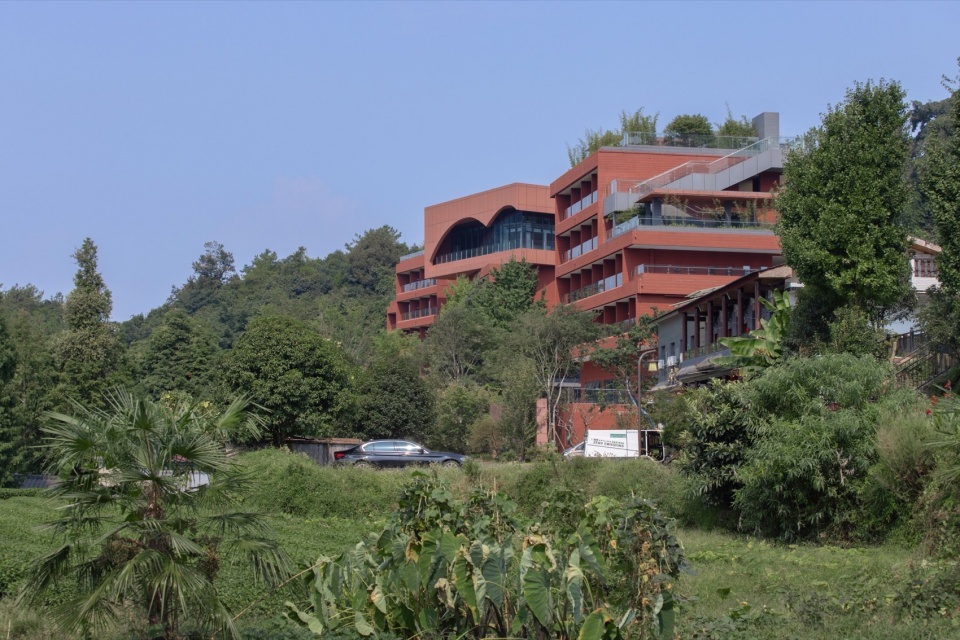
项目基地在半山腰仅有的一块平地上,原址是一个政府的招待所。基地北侧靠山,是一层层茶田,南侧朝向河谷,视野开阔,红砂岩的山体沿山谷徐徐展开,像是佛陀躺下的睡姿,于是有人附会这是一尊“睡佛”。不管怎样,老峨山山体、河谷和周遭的茶田,还有定时升起的炊烟,基地里散发出远离城市的平静。
The site of the project is a flat land halfway up the mountain, which was a guest house for government before. The north is against layers of tea field while the south is towards the open view of the valley. The unfolding red sandstone like the Buddha lying down, so some people call it “Sleeping Buddha”. The mountain, the valley, the surrounding tea field and the smoke from fires all show the quietness far from the cities.
▼整体鸟瞰,aerial view of the site
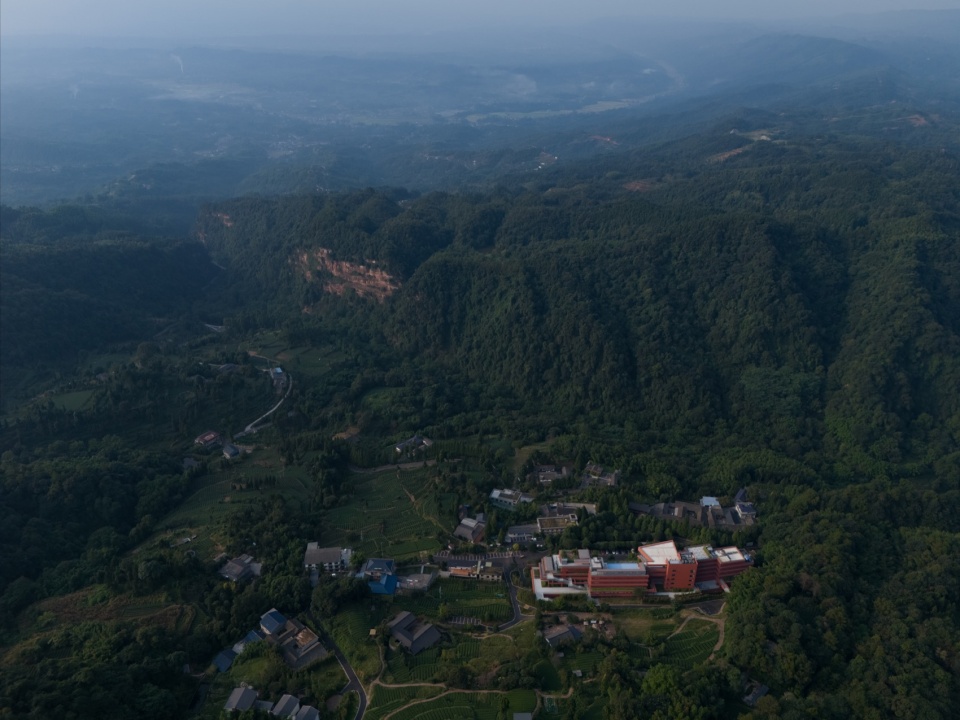
▼项目鸟瞰,aerial view
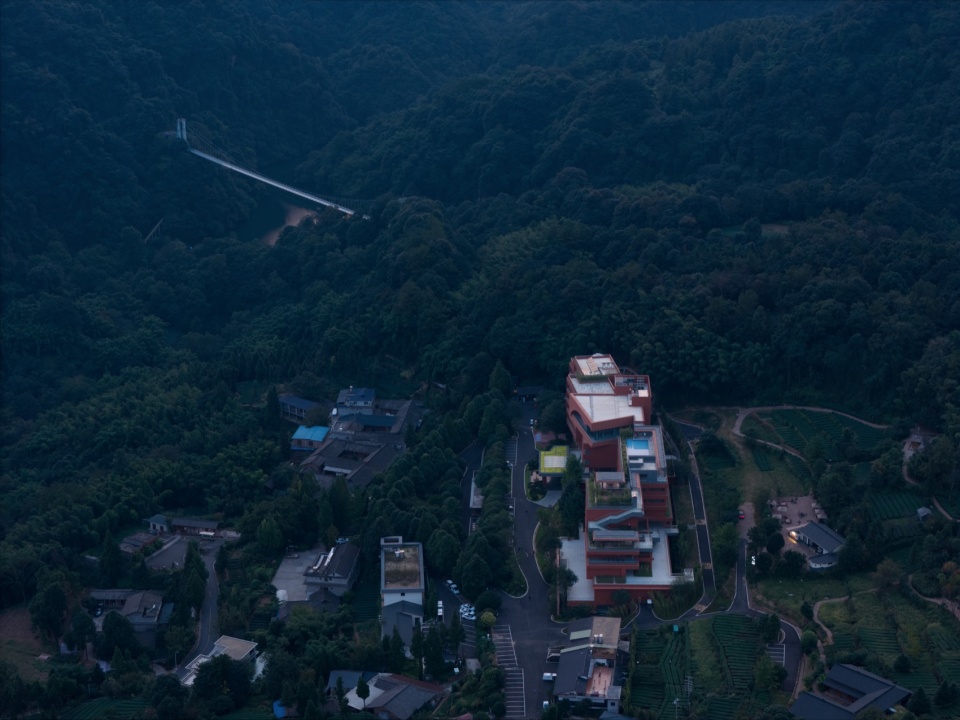
▼群山与建筑,mountain and architecture
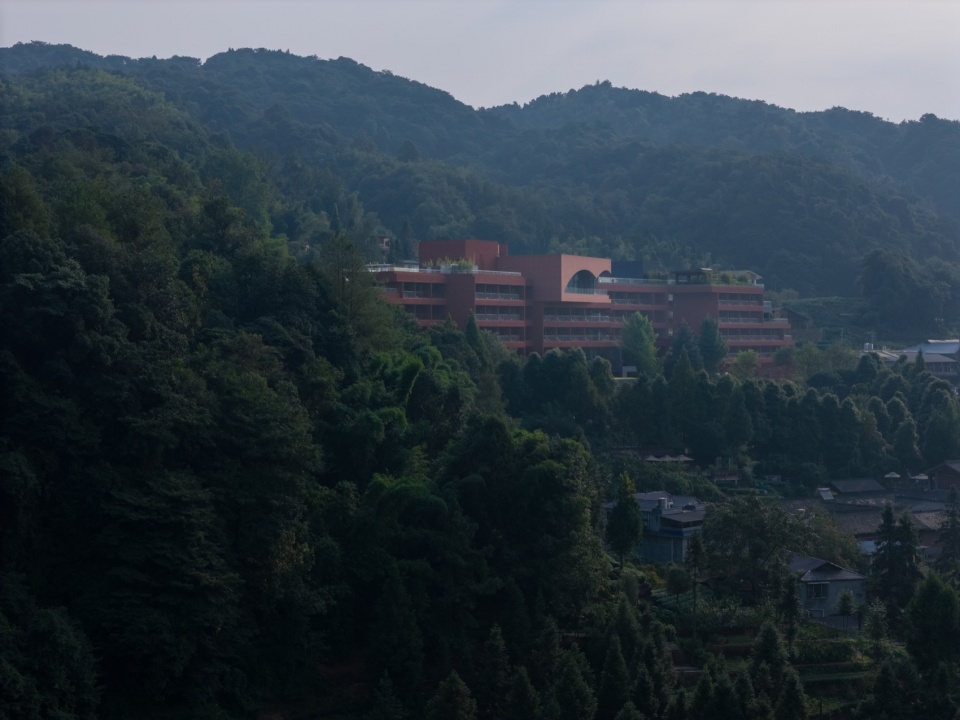
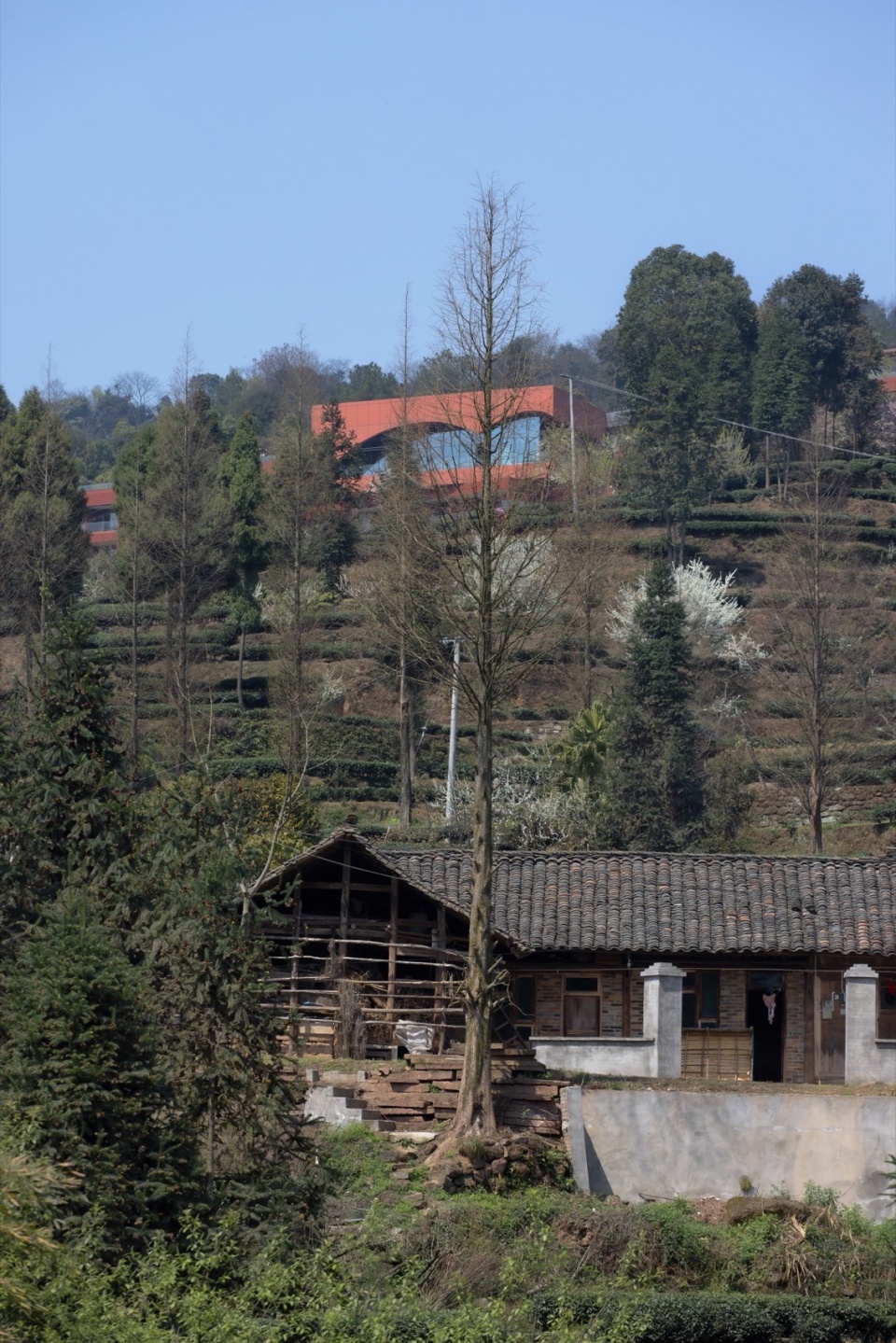
▼由茶田看建筑,viewing the project from the tea terrace
这栋建筑应该以什么样的形式呈现,我们试图以一栋建筑来回答这三个问题:What a building could be? We try to answer in this building:
问题1:何时才能算进入一栋建筑。Question 1: When is getting into the hotel?
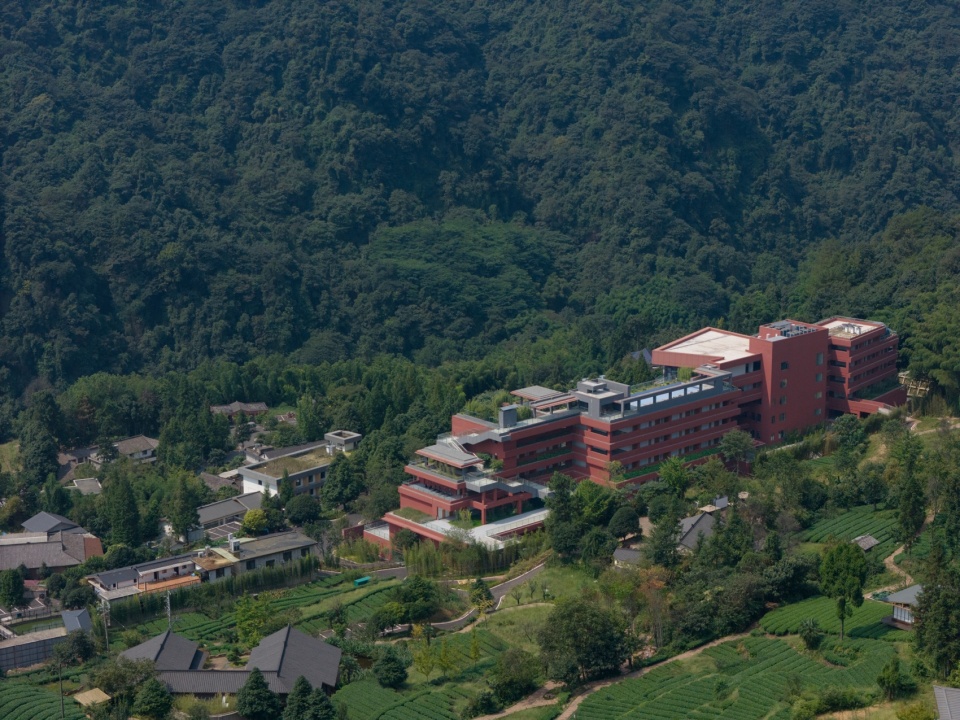
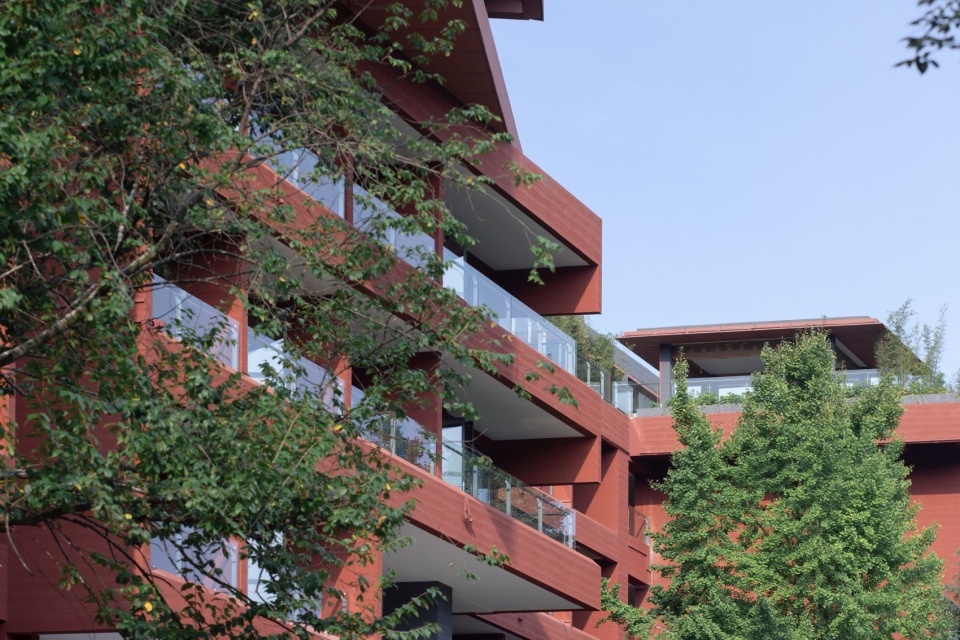
进入老峨山,通过曲折蜿蜒的山路不断爬升——山路沿着山谷转折,过桥穿林,在山谷另一侧就是“睡佛”的山体,红砂岩裸露在外,一直提醒着我们四川盆地是一块巨大的红砂岩这个事实。酒店的外墙颜色必定是如同红砂石一般。
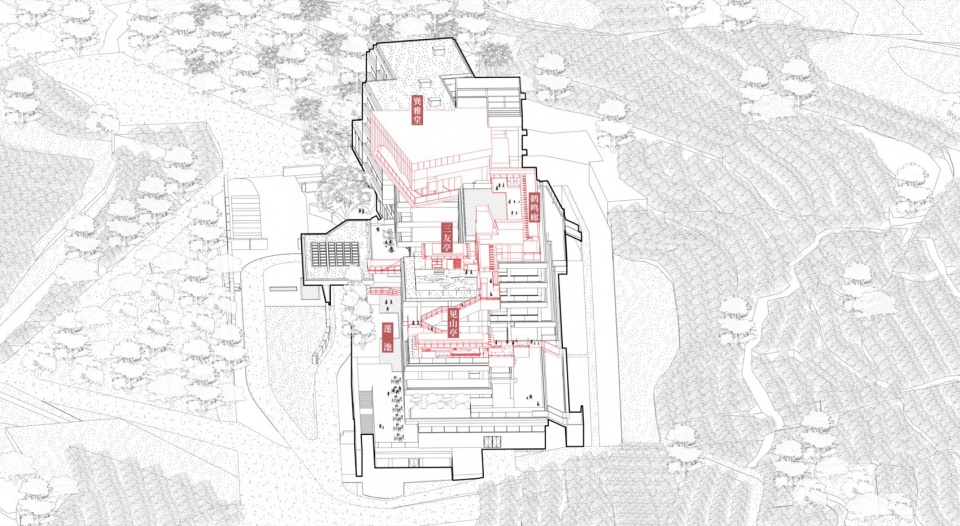
▼轴测图,axonometric drawing
Into the Lao’e Mountain, we continue to climb through the winding road. The road turns along the valley and is across the bridge through the forest. The “Sleeping Buddha” mountain with the red sandstone exposed is on the other side of the valley. It has always reminded us of the fact that the Sichuan Basin is a huge piece of red sandstone. Thus, the color of the hotel’s facade should be the same as the red sandstone.
▼项目鸟瞰,aerial view
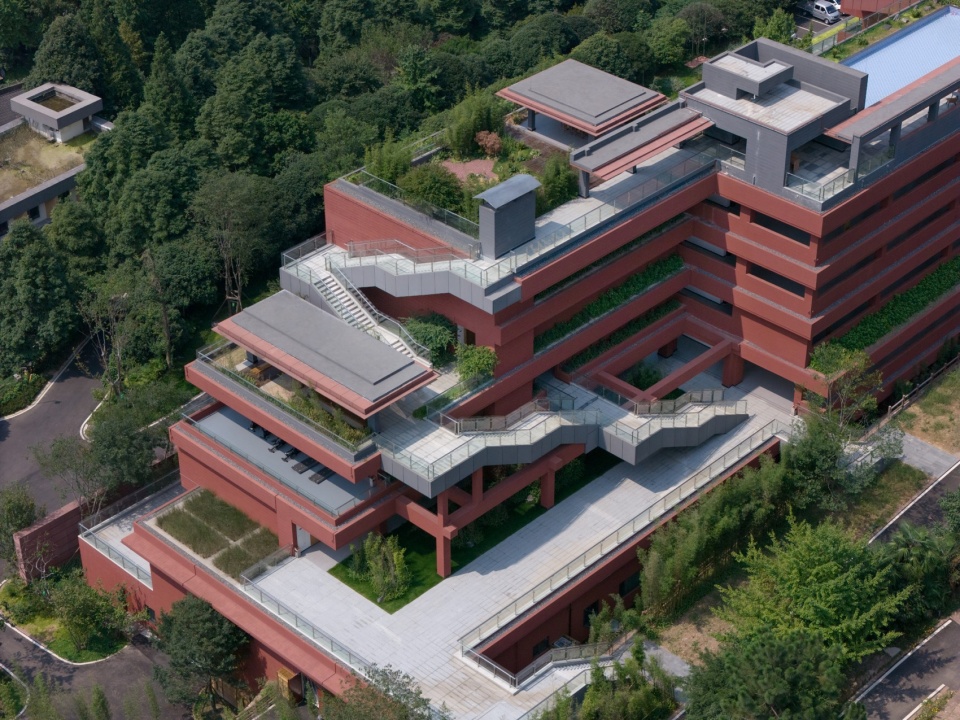
▼项目鸟瞰近景,closer aerial view
▼由建筑看群山,viewing the mountain from the hotel
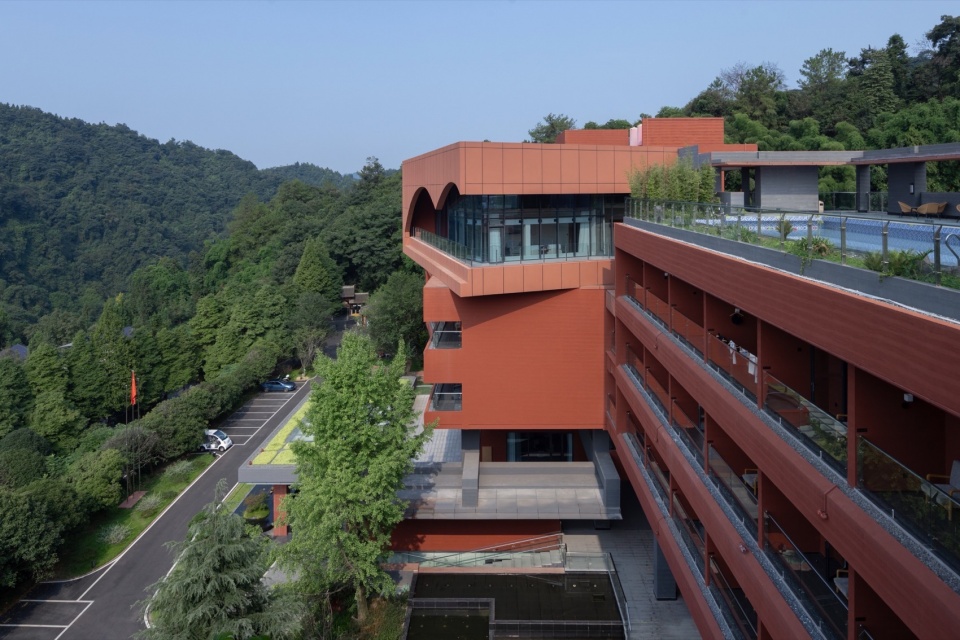
▼立面近景,closer view of the facade
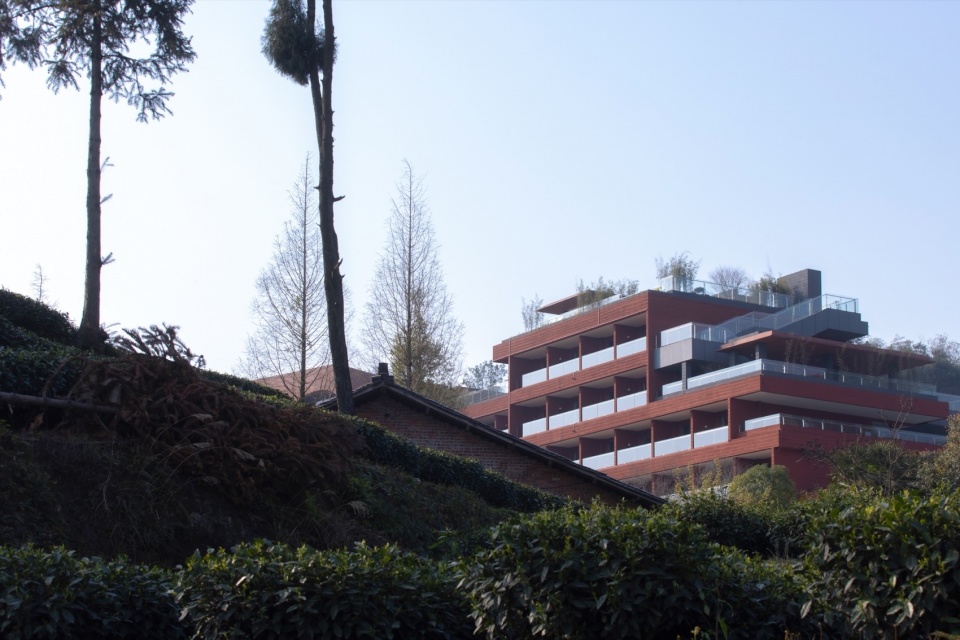
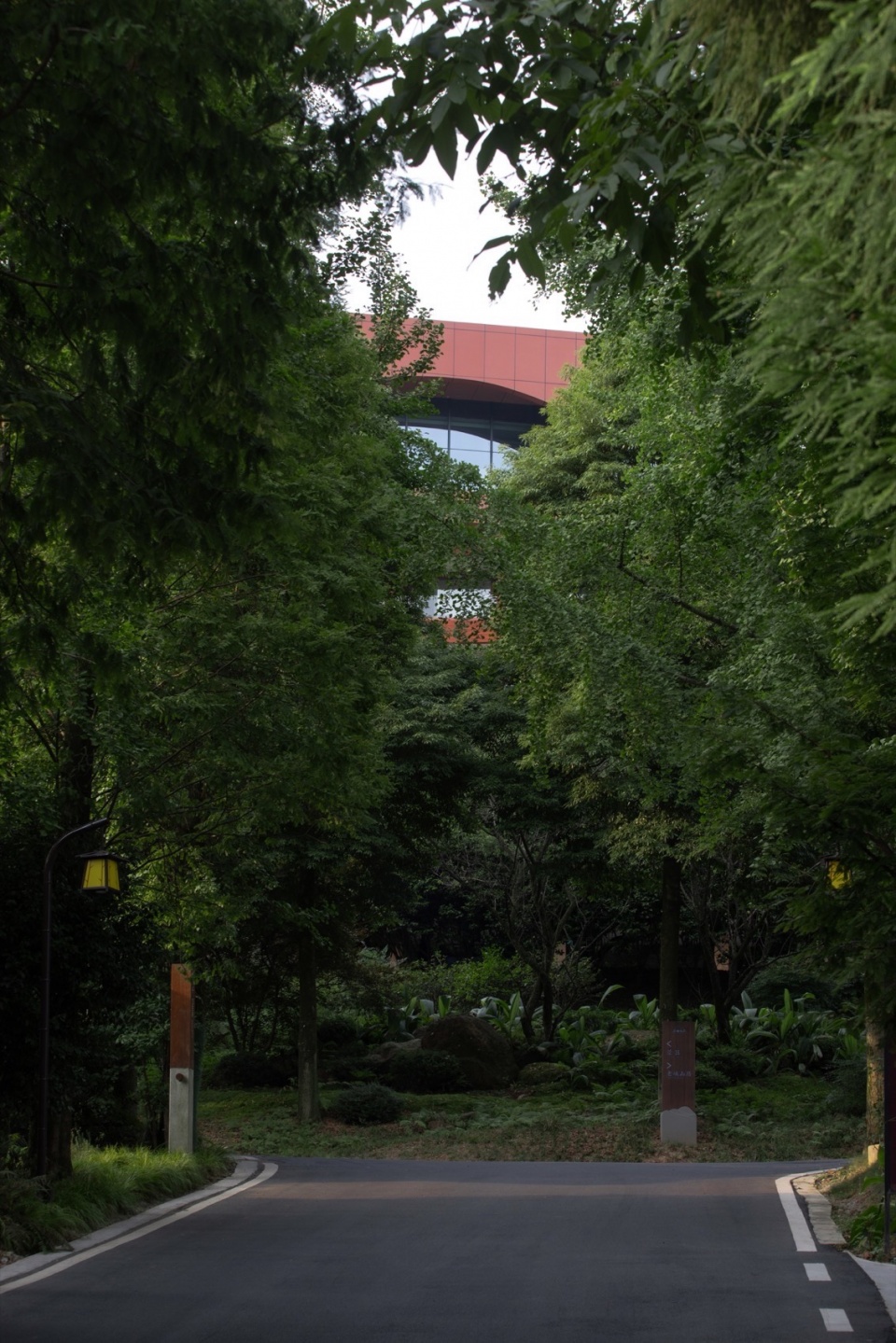
当视线可以穿越林间的缝隙,看到建筑顶层的“山影堂”,山影堂挑出建筑主体,如同一只脱离建筑的鸟儿,悬挂在枝头。这是这栋红色的如同红砂岩的建筑给人的第一印象。
When you look through the gaps in the forest, “The Mountain Shadow Hall” on the top floor of the building can be seen. It stands out from the whole building like a bird hanging from a branch that has been detached from the building. This is the first impression of this red sandstone-like building.
▼视线可以穿越林间的缝隙,look through the gaps in the forest
▼街景,street view
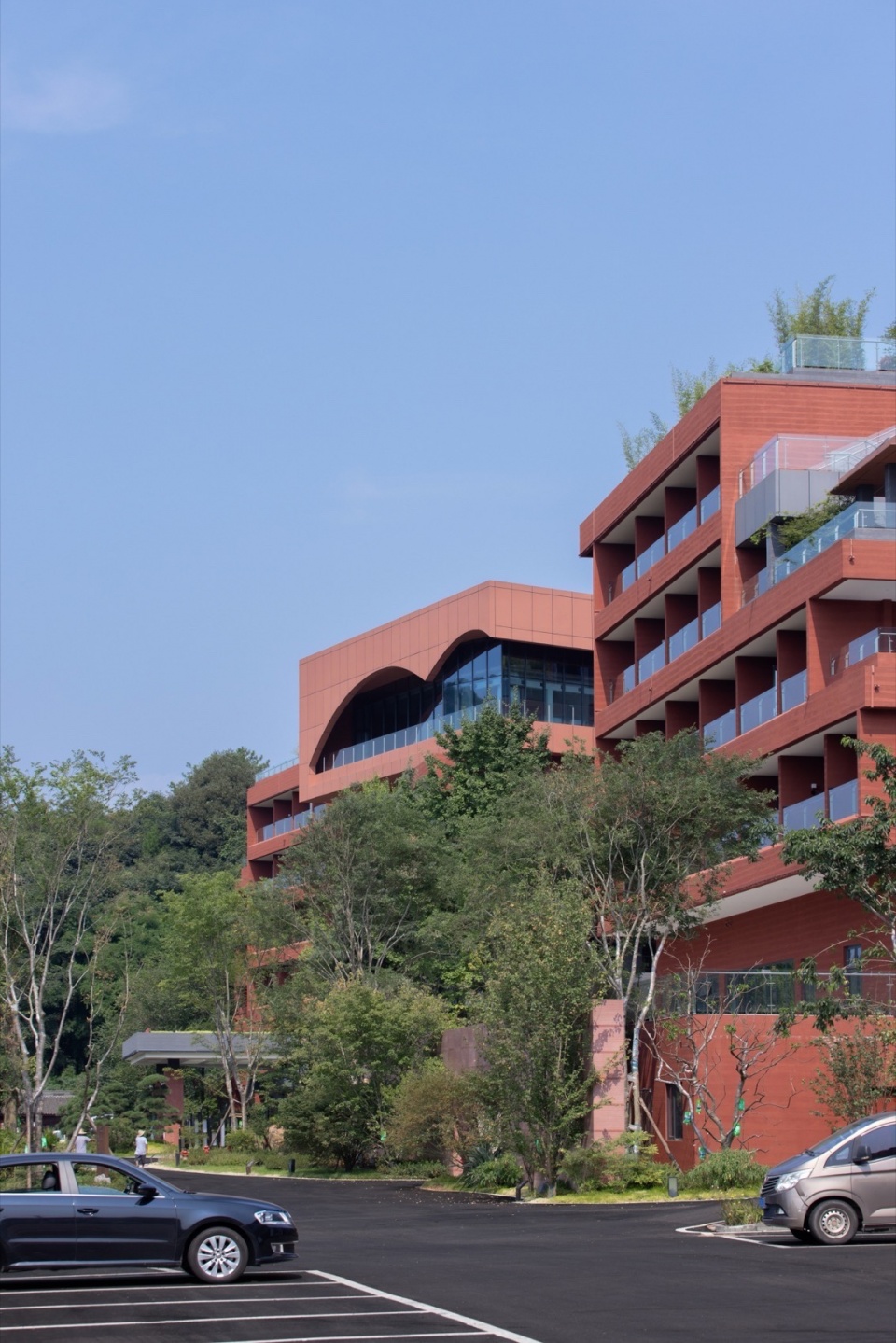
▼街景,street view
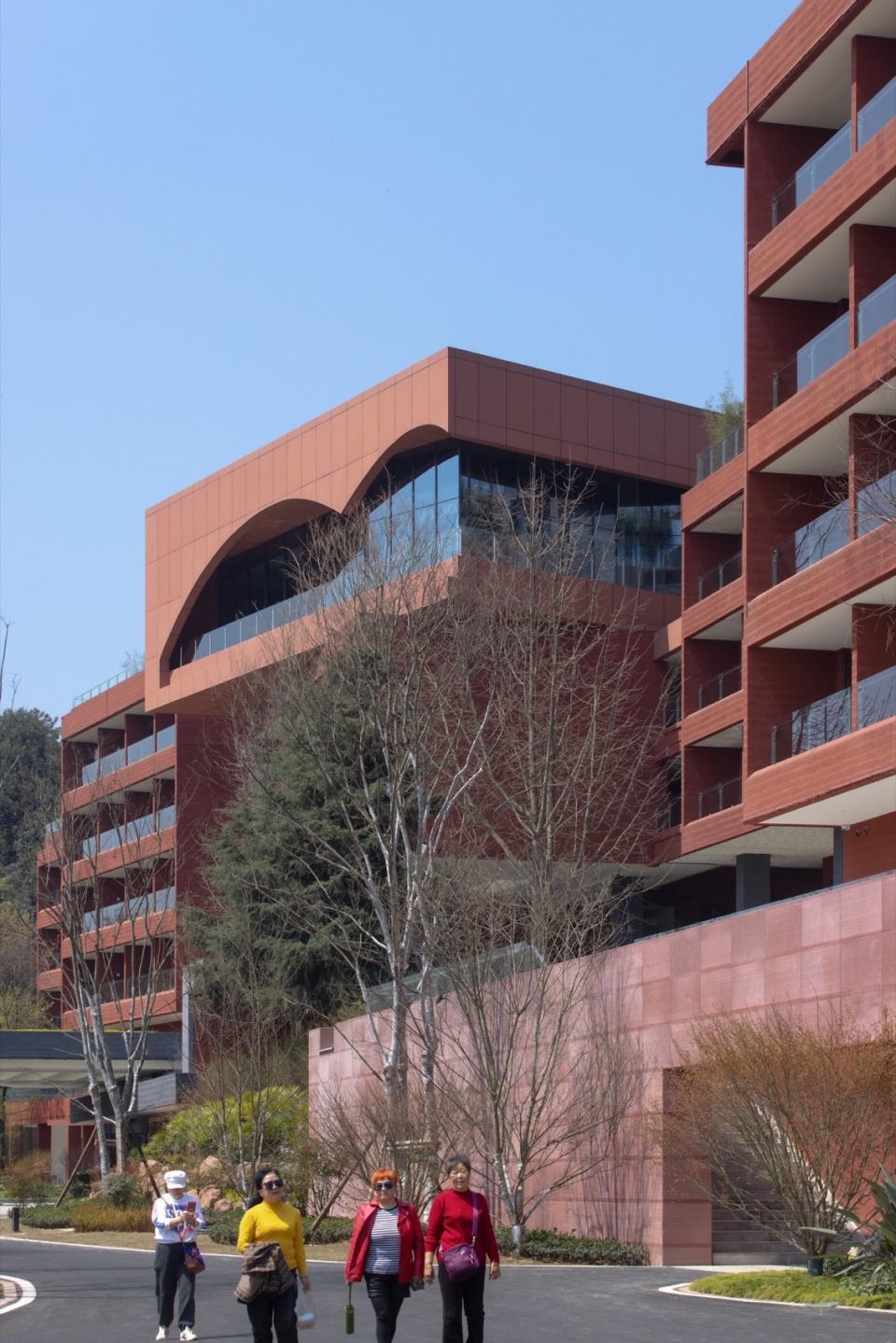
当红色建筑在红砂岩巨石中升起后,由此我们进入了建筑。
When the red building rises from the boulder of red sandstone, we enter it.
▼入口,entrance
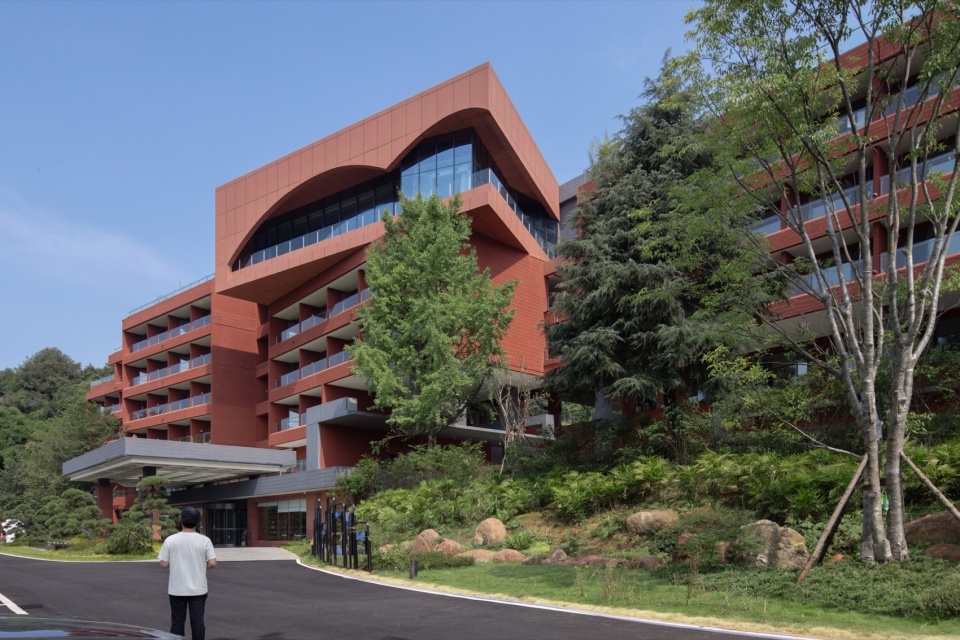
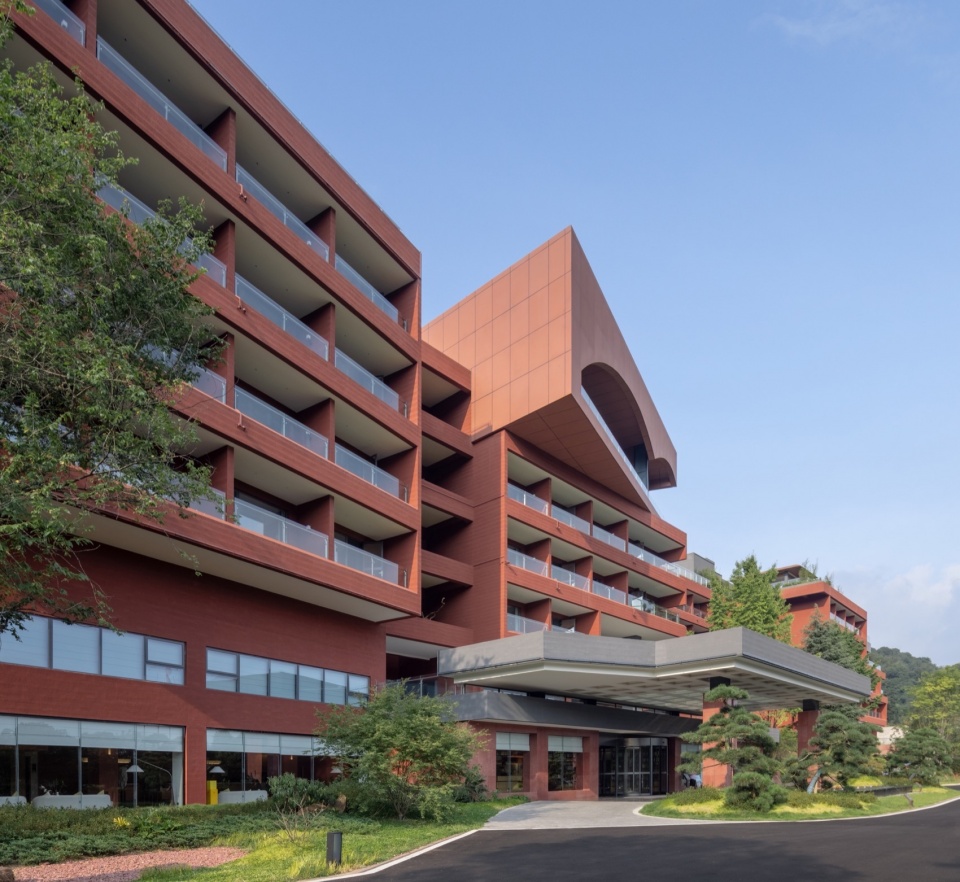
问题2:一个酒店什么样的功能才算是完美的?Question 2: What kind of features make a hotel perfect?
酒店建筑被切分成四个独立的体块,并根据地形和视野做了细微的转动,使每个体块拥有自己的方向感和独立性,同时也减小了体量。
The building was cut into four separate blocks and slightly rotated according to the topography and the view, so that each block has its own sense of direction and independence, and at the same time the volume is reduced.
▼水景庭院,waterscape
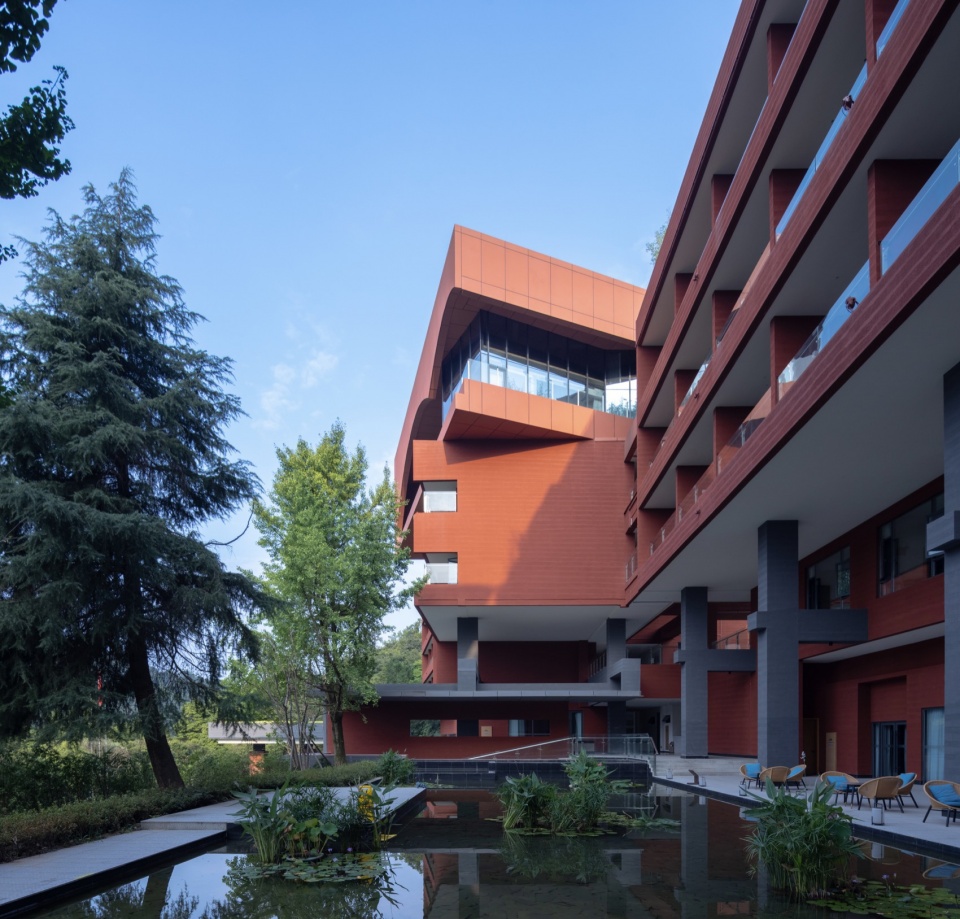
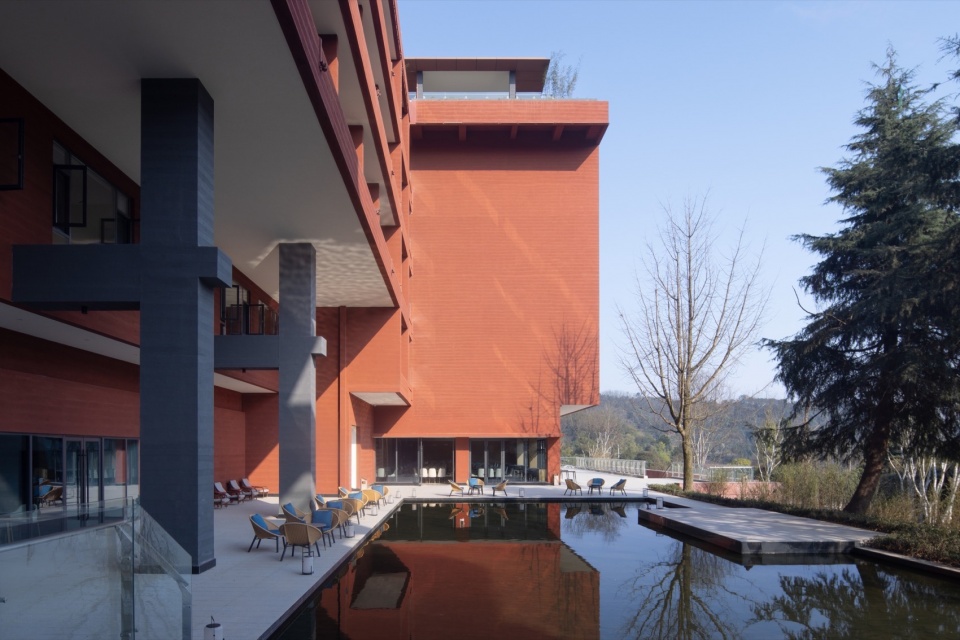
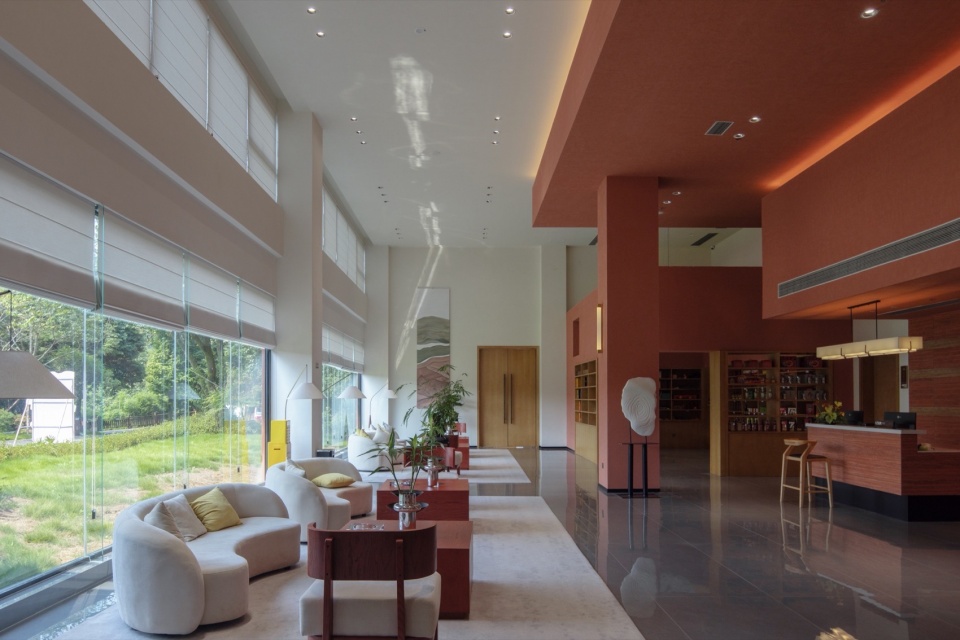
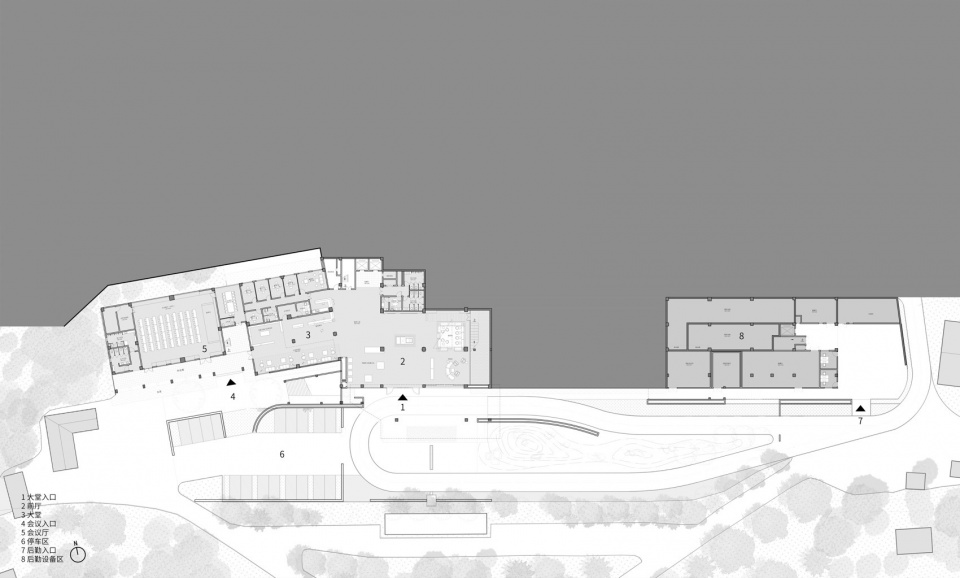
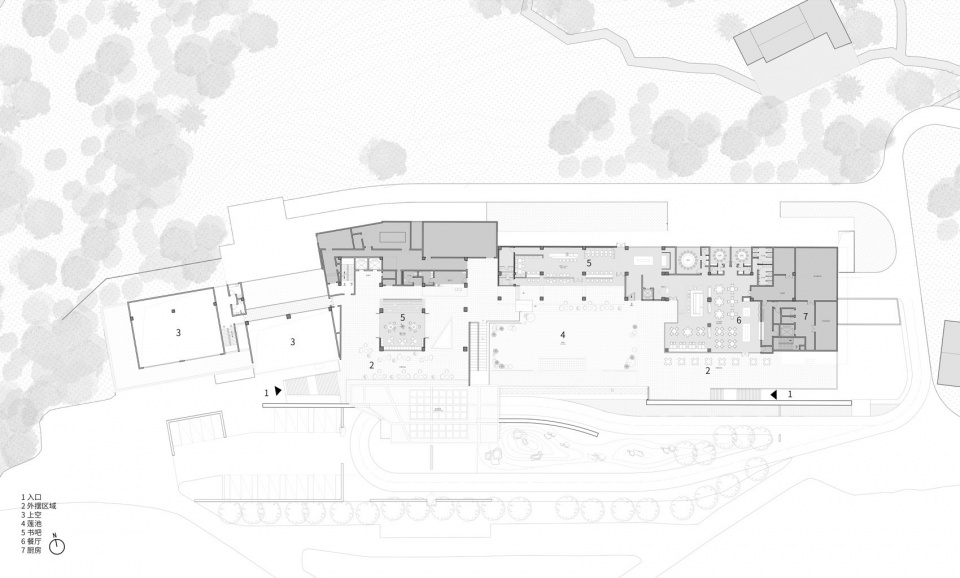
酒店的一层是公共区域,会议中心、大堂、礼宾入口、咖啡厅酒吧和餐厅一字排开。因为顺应现有地形,各部分功能标高不同,顺势形成不同的场域,使各功能有自己的领域感和独特性。所有的客房在底层和顶层公共区域之间,都朝向视野开阔的景观面,令人心旷神怡,走廊在后山的茶田凤尾竹包裹之下,充满安全感。
The first floor is the public area, where the conference center, lobby, concierge entrance, café bar and restaurant are lined up. Because of the existing topography, each part of the function has a different height, forming their own space with its own sense of domain and uniqueness. All the guest rooms between the ground floor and the top floor public area have the view of the open refreshing landscape. The corridors are surrounded by the tea fields and bamboos in the back of the mountain, which is full of security.
▼咖啡厅酒吧,café bar
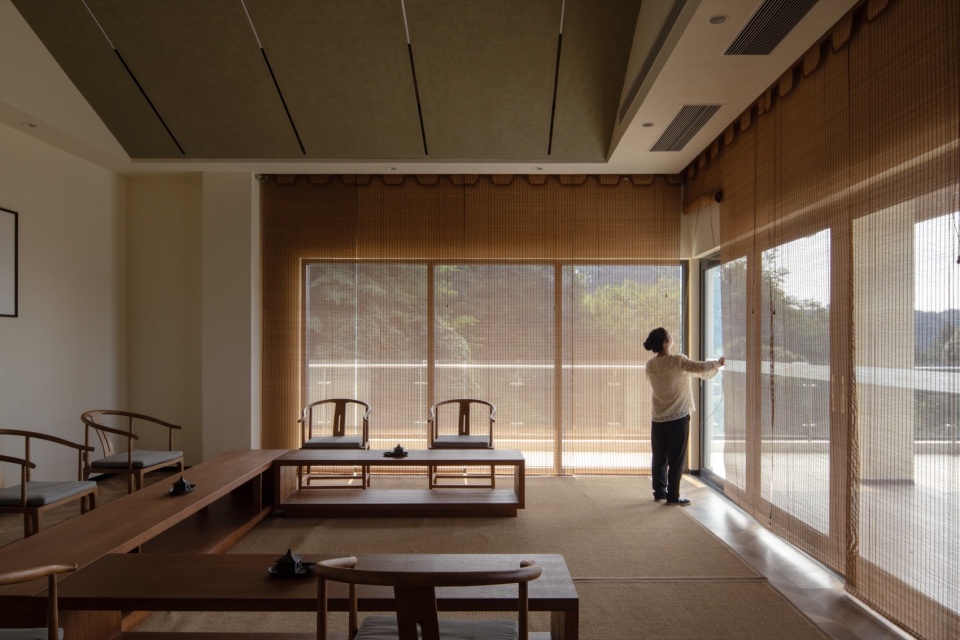
▼茶室,tea room
▼客房,guest room
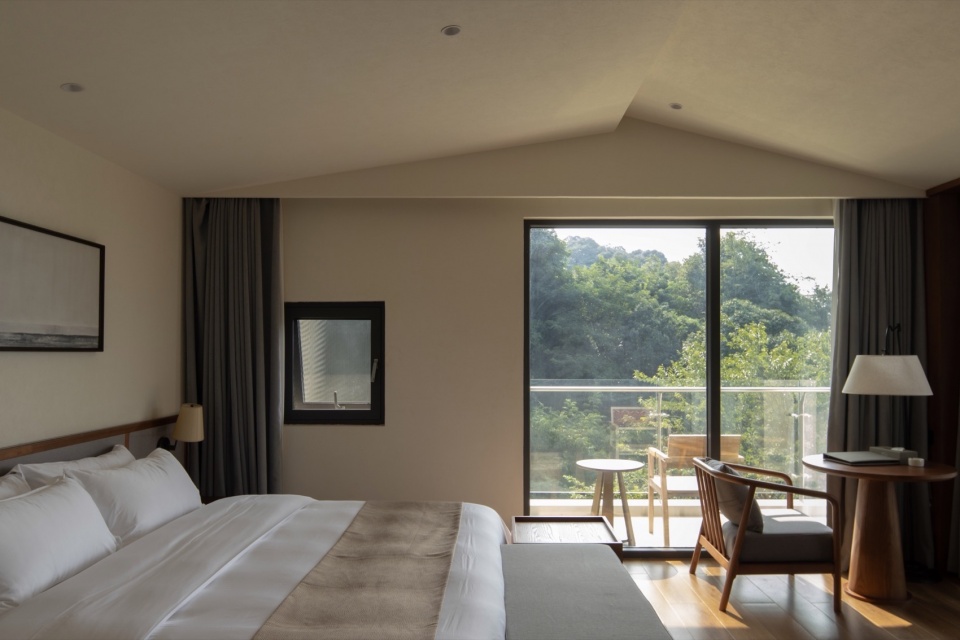
每一个功能有不同的空间氛围,空间氛围确定了他者对建筑的感知,我相信,即使未来酒店用途有改变,这些空间依旧能展现自己的魅力:这才是建筑功能的完美展现。
Each function has a different spatial atmosphere, which determines the perception of the building by others. Even if the use of the hotel changes in the future, these spaces will still be able to show their charming. Therefore, this is the perfect expression of the building’s feature.
▼景观视野,frame view
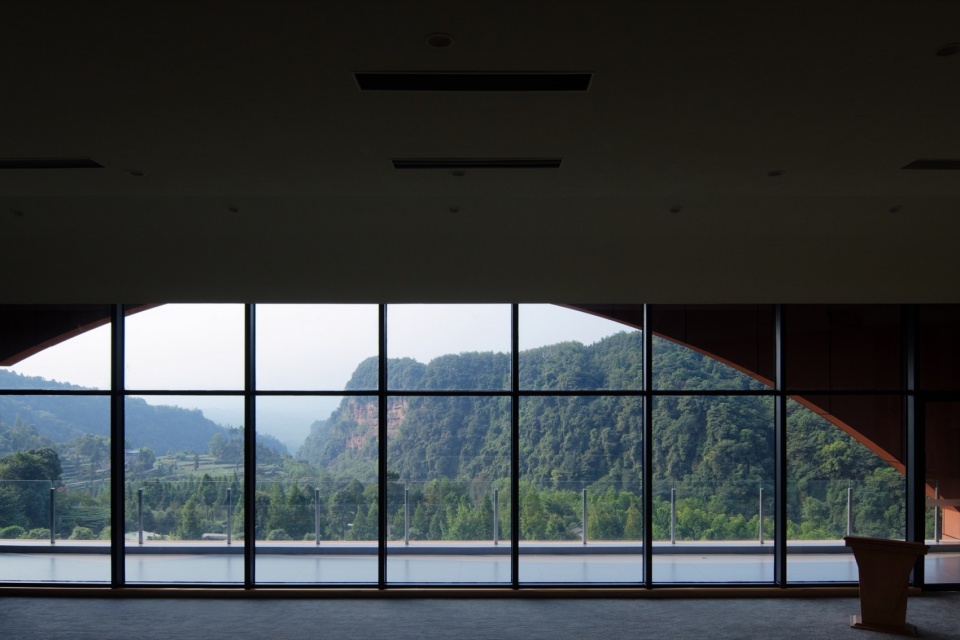
问题3:普通的酒店如何变得有趣?Question 3: What makes a normal hotel to be interesting?
如果说酒店的尺度是和山呼应的话,我们用回廊、之字形楼梯、步道等近人尺度的建筑元素,以串联与叠加的方法。组成一条完整的环形的爬山路径,串联整个建筑。
▼模型,model
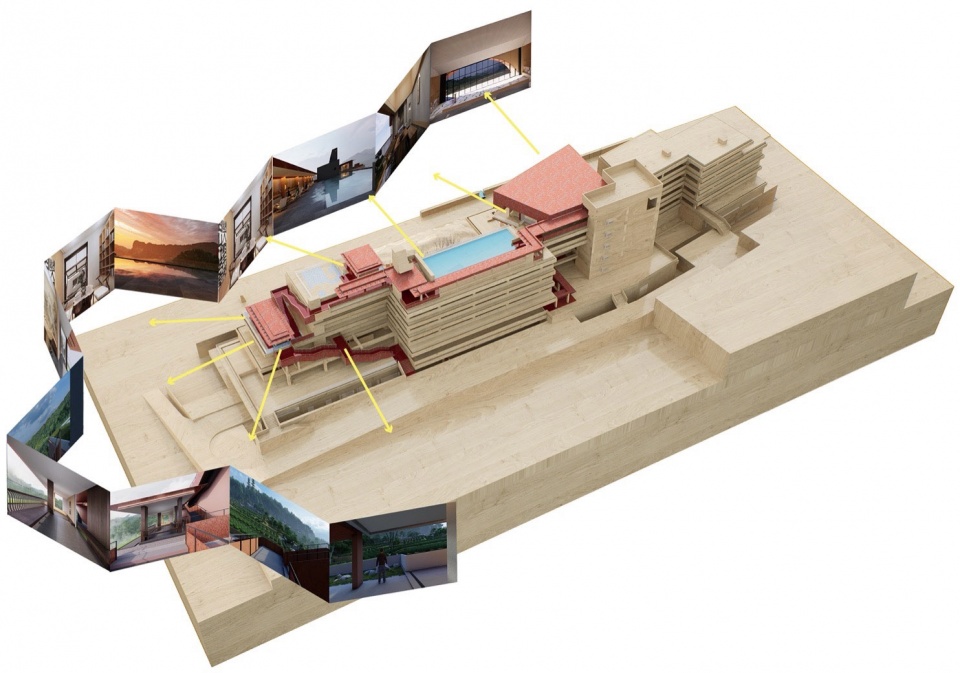
If the scale of the hotel echoes the mountain, we connect and layer the corridors, zigzag staircases, walkways, and other human scale architectural elements. It forms a complete circular climbing path that connects the whole building.
▼回廊、之字形楼梯,corridors, zigzag staircases
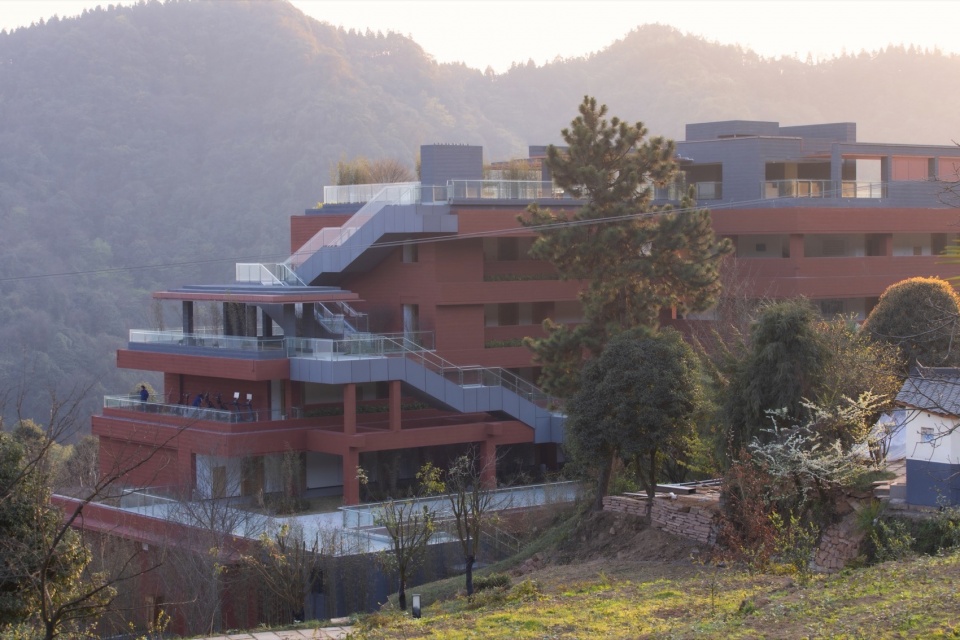
▼底层庭院,garden
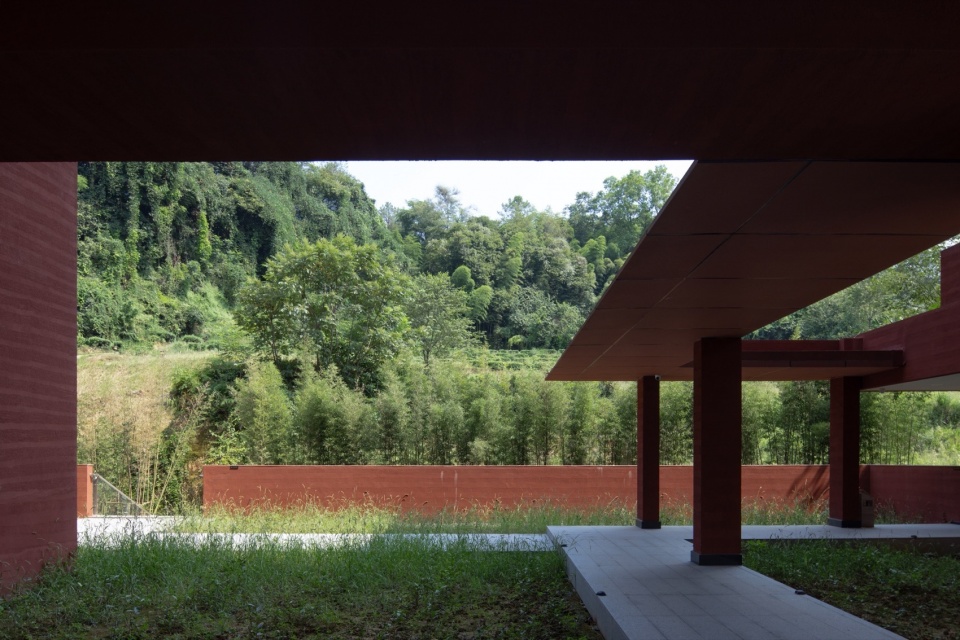
▼空间层次,spatial layers
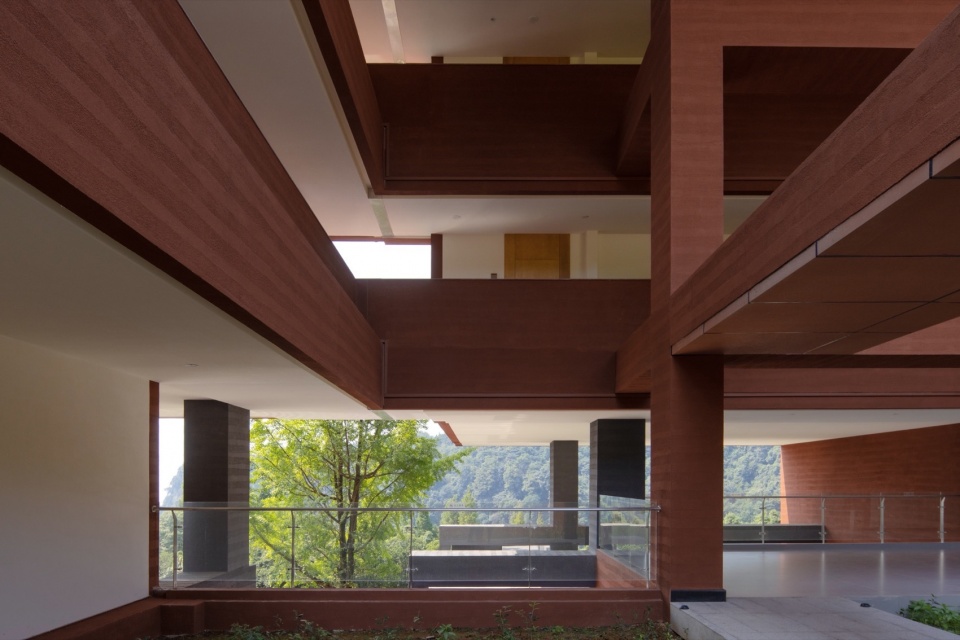
▼回廊,corridor
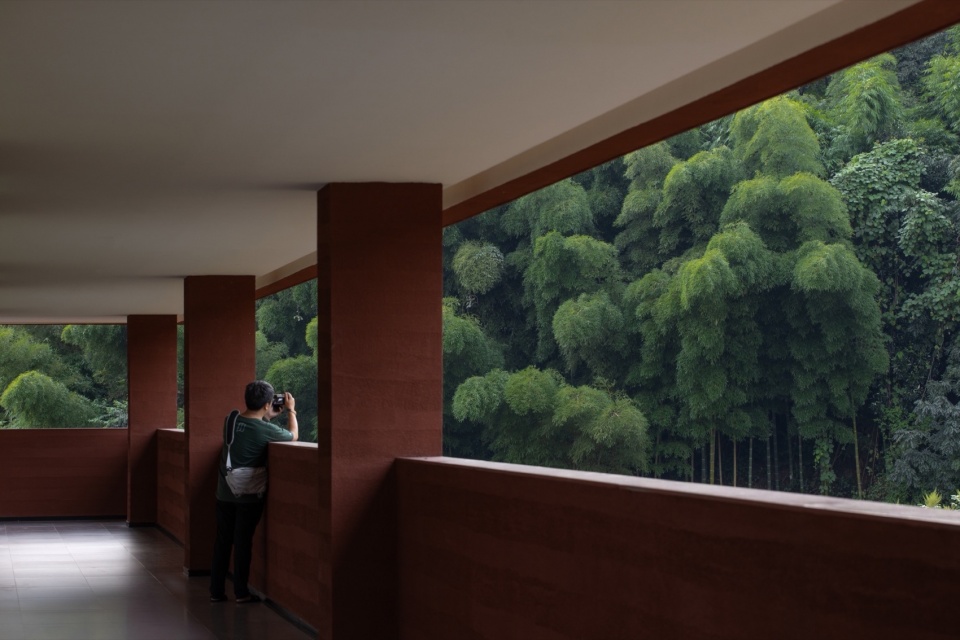
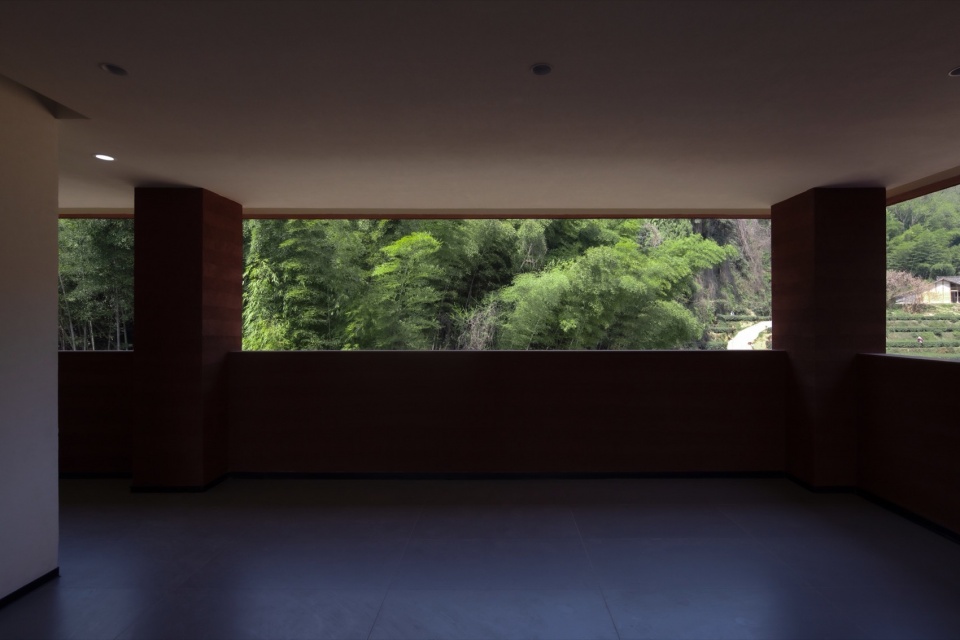
▼窗口,openings
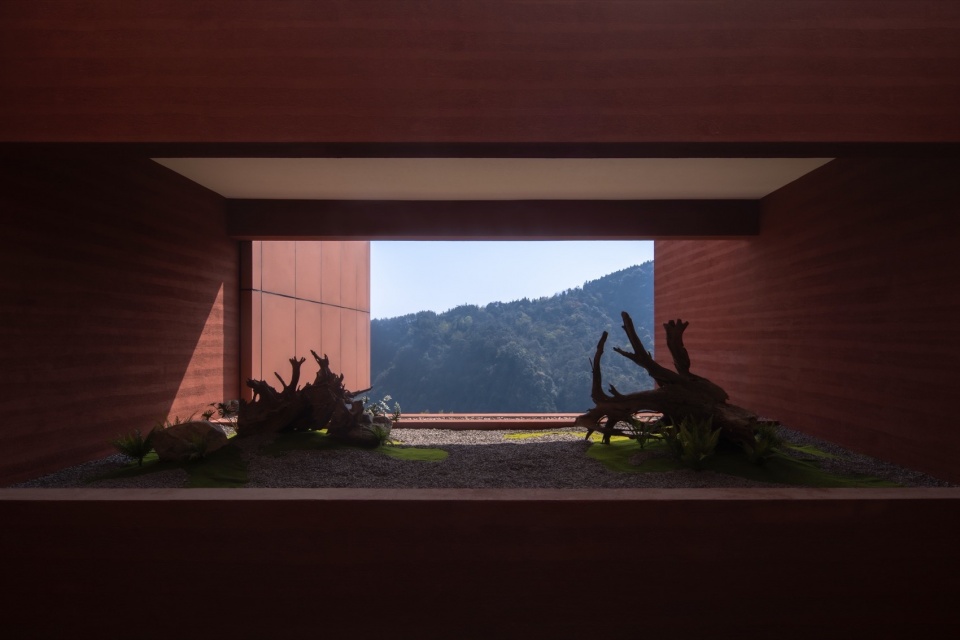
这条独立的游线不跟酒店本体功能交叠,但又能回到酒店的任一功能里。在这条游览线路上,可以远眺远山,可以近观茶田,路过莲池,亭榭,人宛如画中游,给予人丰富的体验,戏拟了一次古人登临远眺的场景。
This independent tour route does not overlap with the hotel’s main functions, but can return to any part of it. In this tour route, you can see the distant mountains, can be close to the tea fields, can pass the lotus pond, pavilions. It seems like people traveling in a painting, simulating a scene of the ancients to climb and far view with rich experiences.
▼茶田与建筑,tea terrace and the hotel
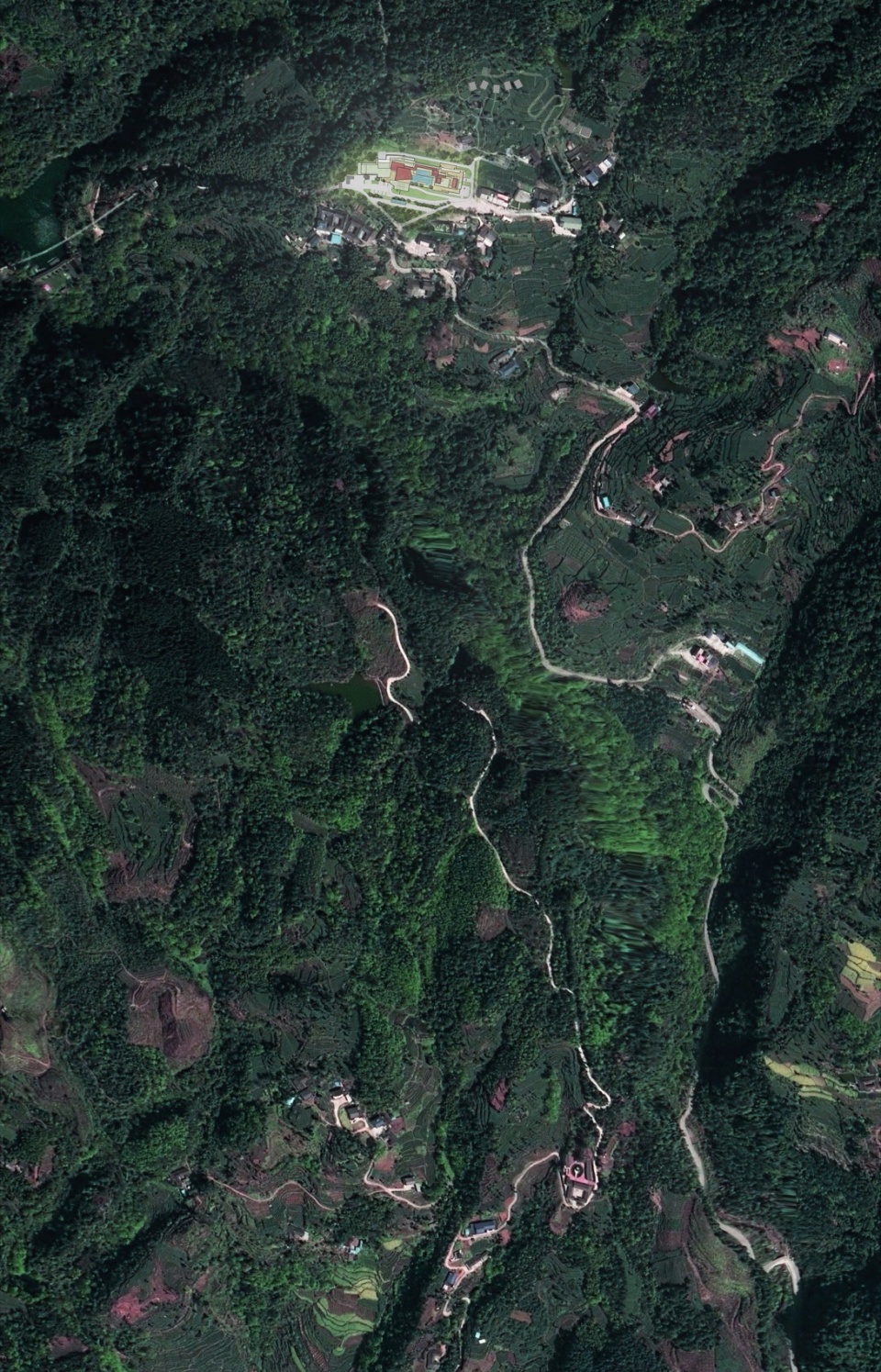
▼区位图,location
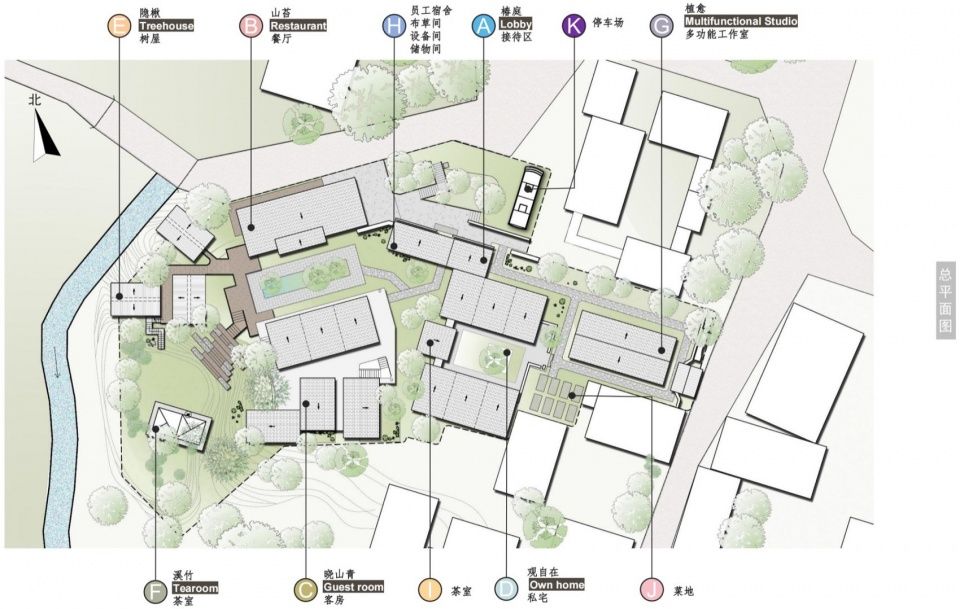
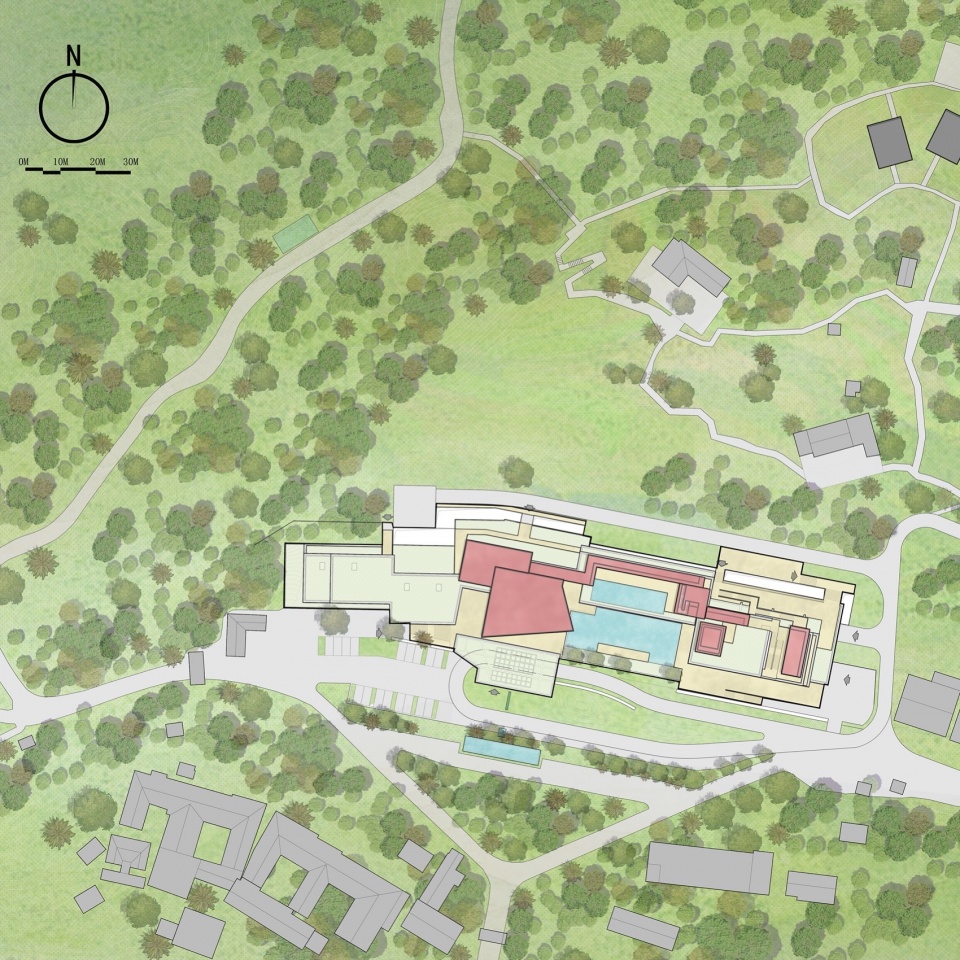
▼总平面图,master plan
▼一层平面图,ground floor plan
▼二层平面图,first floor plan
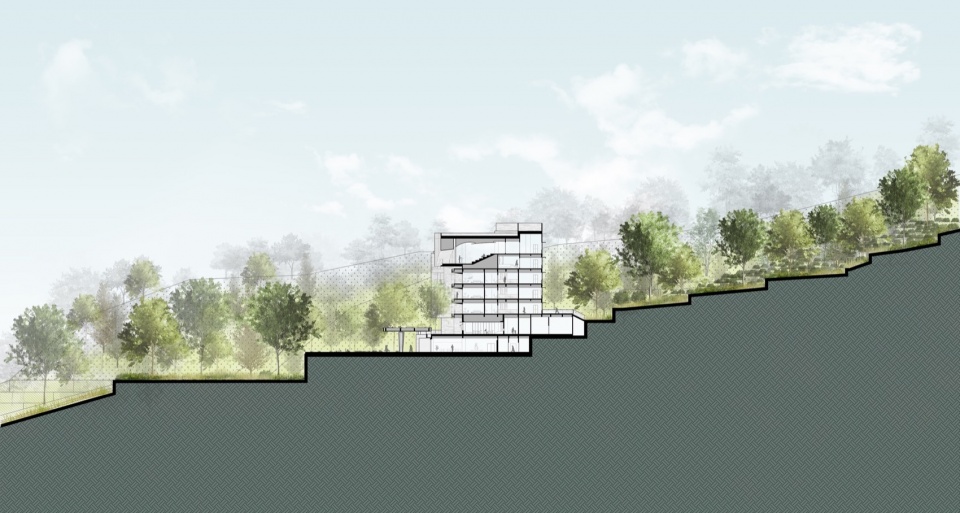
▼剖面图,section
Project: Danling Lao’e Mountain Resort
Type: Hotel
Design: epos architecture
Website: http://www.eposarchitecture.com/
Email: office@eposarchitecture.com
Completed: 2024.06
Design in charge: Cai Kefei, Wang Xi
Architects: Peng Xiangwei, Zhuang Weihang, Zhang Yu, Lin Jingran, Yang Yanyu, Wu Jiayi, Chen Siyang (Intern), Shao Xingzhi (Intern), Sun Meijia (Intern), Zhang Wenxian (Intern)
Location: Lao’e Mountain, Danling, Meishan Sichuan
Architectural Area: 11212㎡
Photography: Arch-Exist
Urban Design: Maikunta Future Village Research Institute
Construction Design: Guizhou Provincial Architectural Design & Research Institute Co. Ltd.
Client: Danling County Cultural Tourism Development Co., Ltd.