中国黄海湿地博物馆铁道公园,盐城 / 上海都设营造
盐城原有火车站改造成为“中国黄海湿地博物馆”之后,原候车站台并未采取常规的拆除方式,而是结合博物馆与湿地公园,改造成为市政公园,更为精彩的是其中一部分改造成为酒店的公共部分,这是一个颠覆式的更新。
After the original railway station in Yancheng was transformed into the “China Yellow Sea Wetland Museum”, the original station platform was not demolished in the usual way. Instead, it was combined with the museum and wetland park to be transformed into a municipal park. What’s even more exciting is that a part of it was transformed into the public part of the hotel, which is a revolutionary update.
▼改造后,After renovation
从废弃地到“打卡点” From Eyesore to Icon
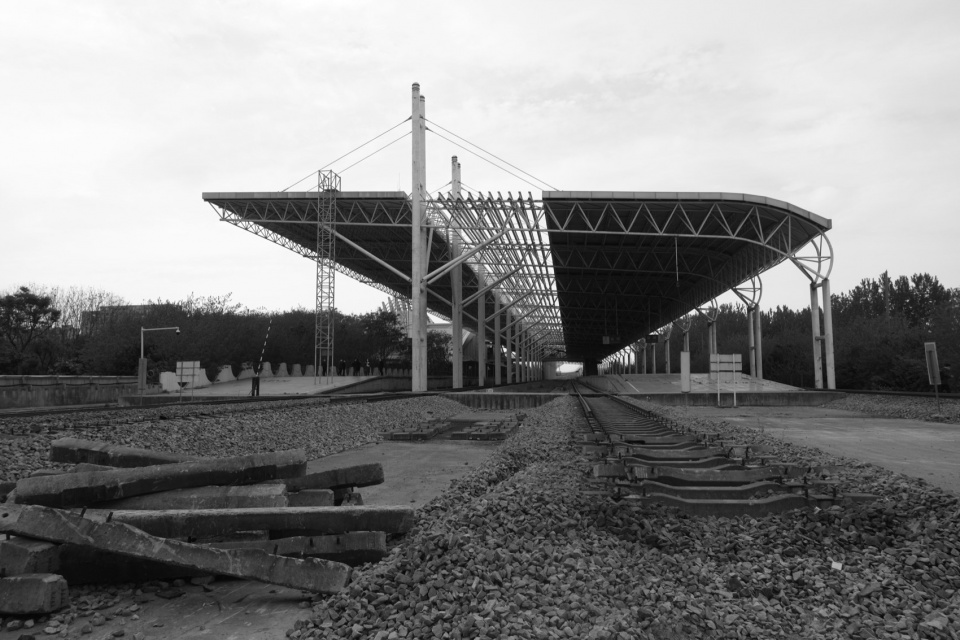
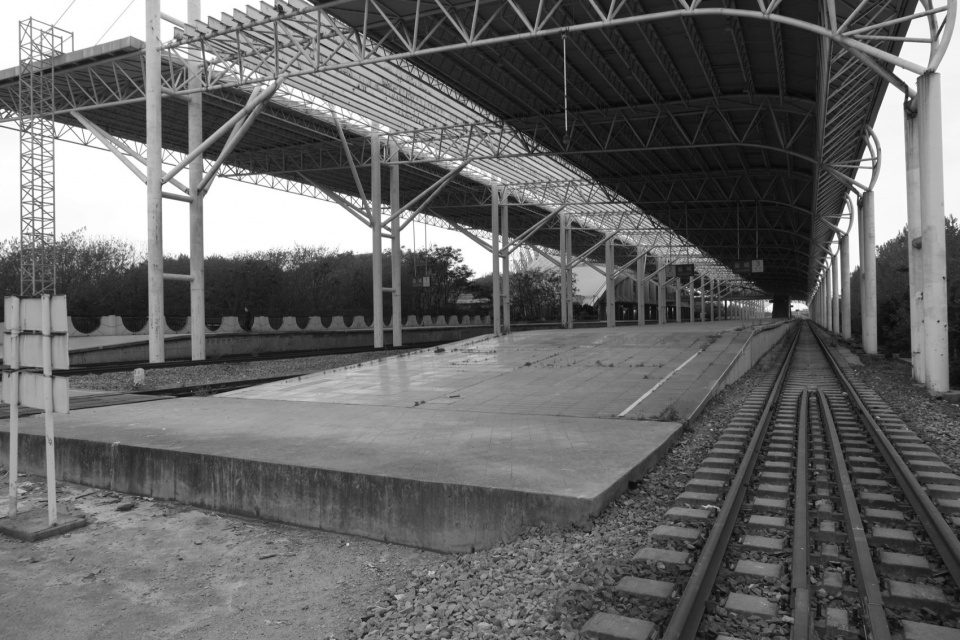
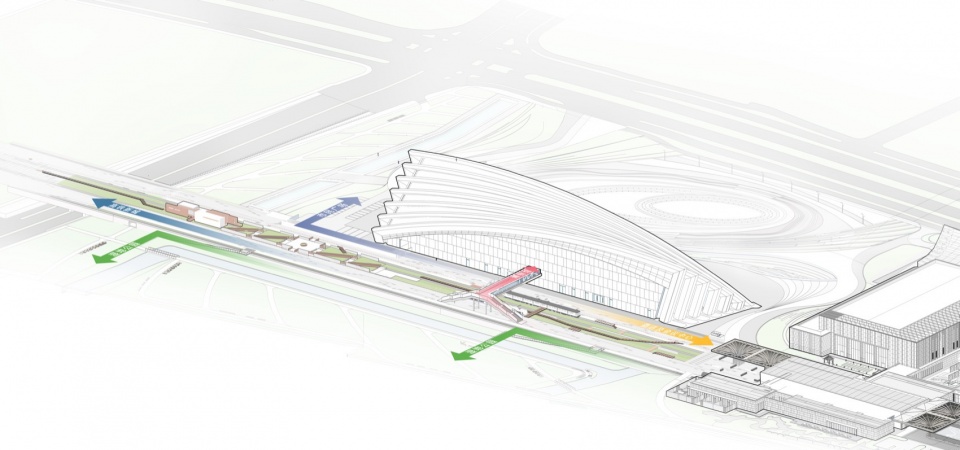
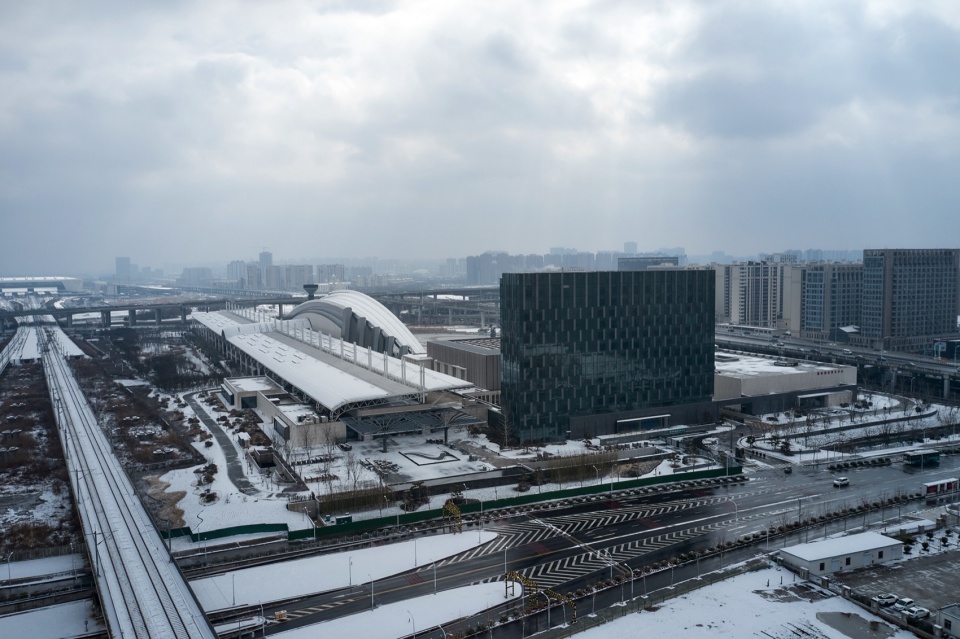
初次踏勘,现场的荒芜感是给建筑师的最深印象。刚停止使用的站台,钢柱、桁架雨棚、铁轨等元素没有受到太多破坏,似乎在述说着不甘于退出历史舞台的愿望。作为火车站区域整体复兴计划的一部分,周边分布湿地博物馆、湿地公园、五星级酒店、国际会议中心等业态。铁道公园作为连接器,将各个功能块紧密联系,形成一条步行景观轴线。
▼改造前现状,Pre-renovation Status
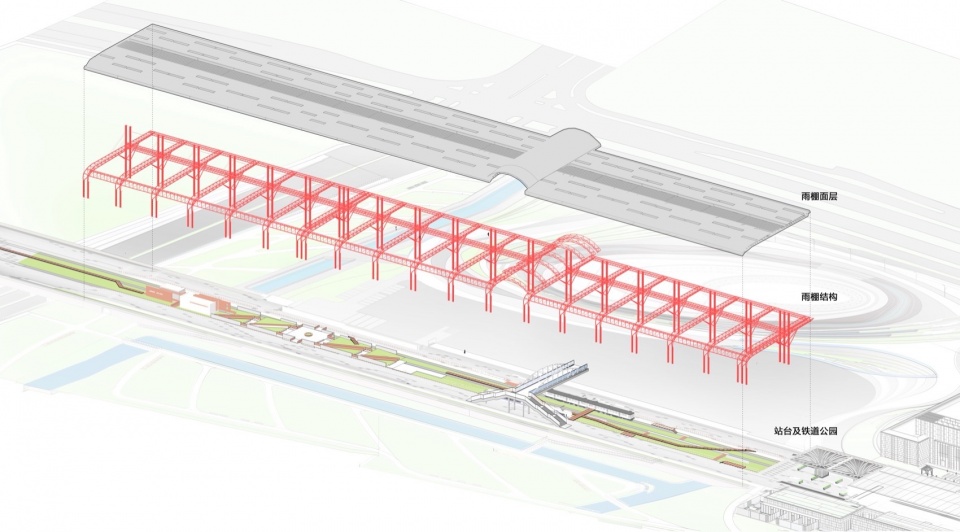
▼铁道公园串联周边建筑-轴测分析,Axonometric Analysis of Railway Park and Surroundings
▼区域总平面图,Master Plan
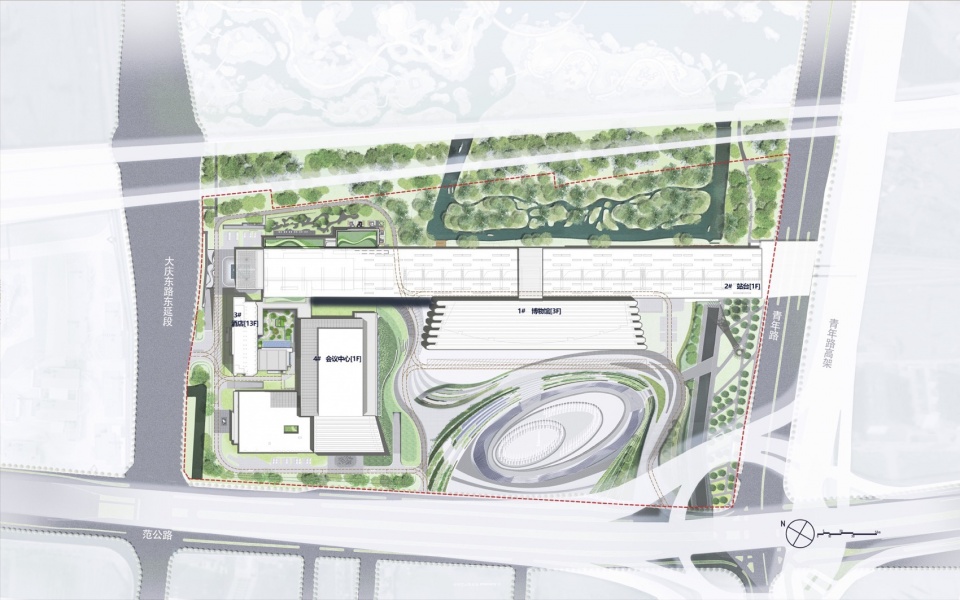
The initial survey revealed that the desolate atmosphere on site left the deepest impression on the architect. The platform, which has just been discontinued, has not suffered much damage to elements such as steel columns, truss canopies, and railway tracks, as if expressing a desire to withdraw from the historical stage. As part of the overall revitalization plan for the railway station area, there are wetland museums, wetland parks, five-star hotels, international conference centers, and other businesses distributed around it. The railway park serves as a connector, closely linking various functional blocks to form a pedestrian landscape axis.
▼从湿地公园看铁道公园及博物馆、酒店,Viewing Railway Park, Museum, and Hotel from Wetland Park
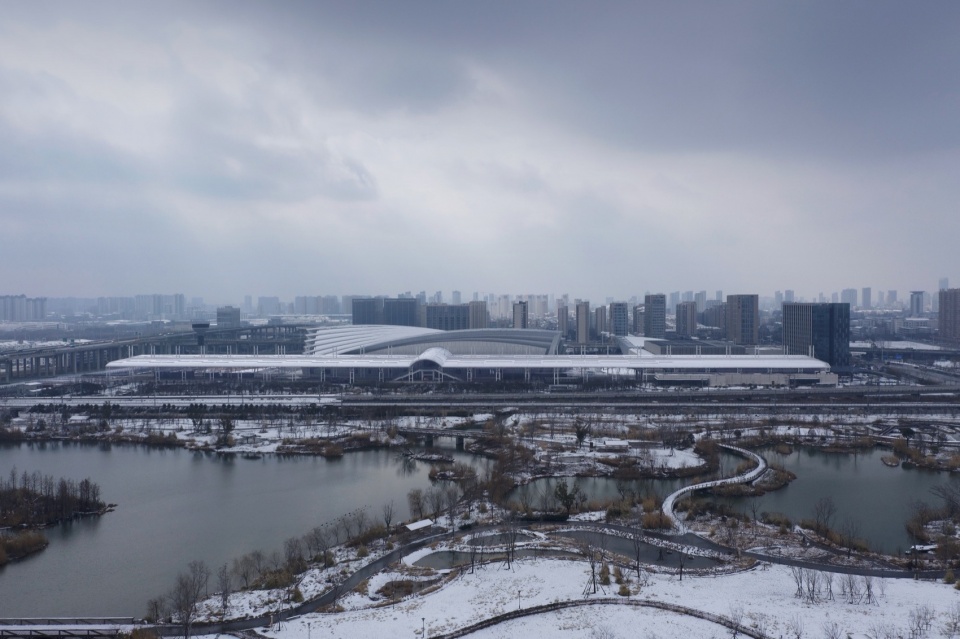
▼从湿地公园水面看博物馆及铁道公园,Viewing museums and railway parks from the water surface of wetland parks
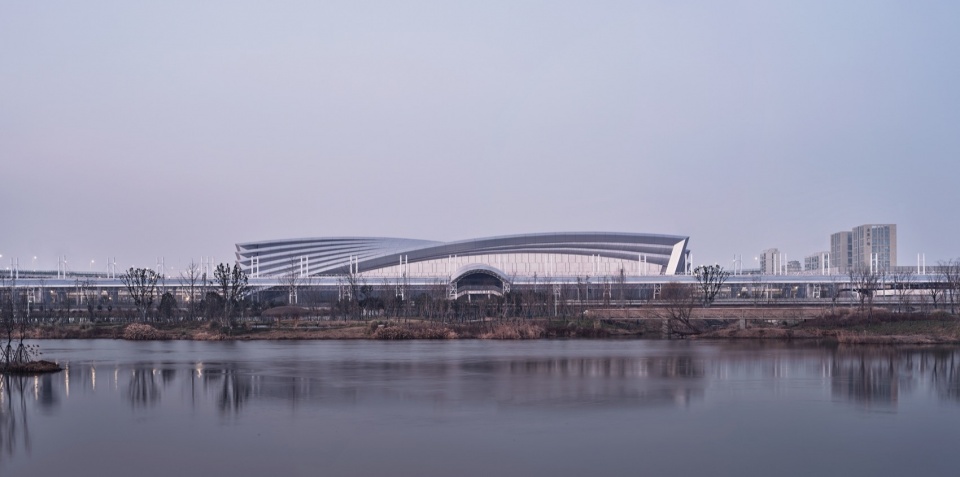
▼湿地公园与站台,Wetland Park and Platform
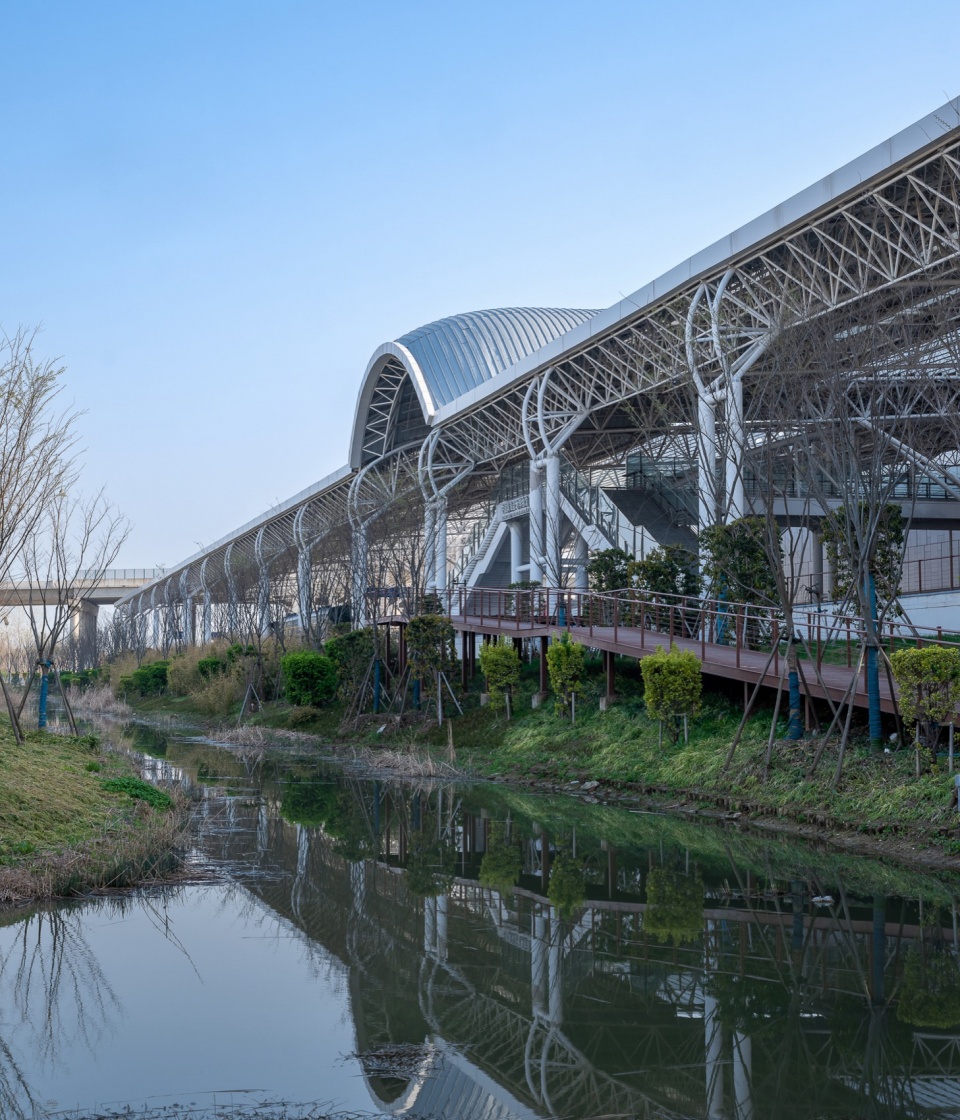
▼站台与老火车,Platform and old train
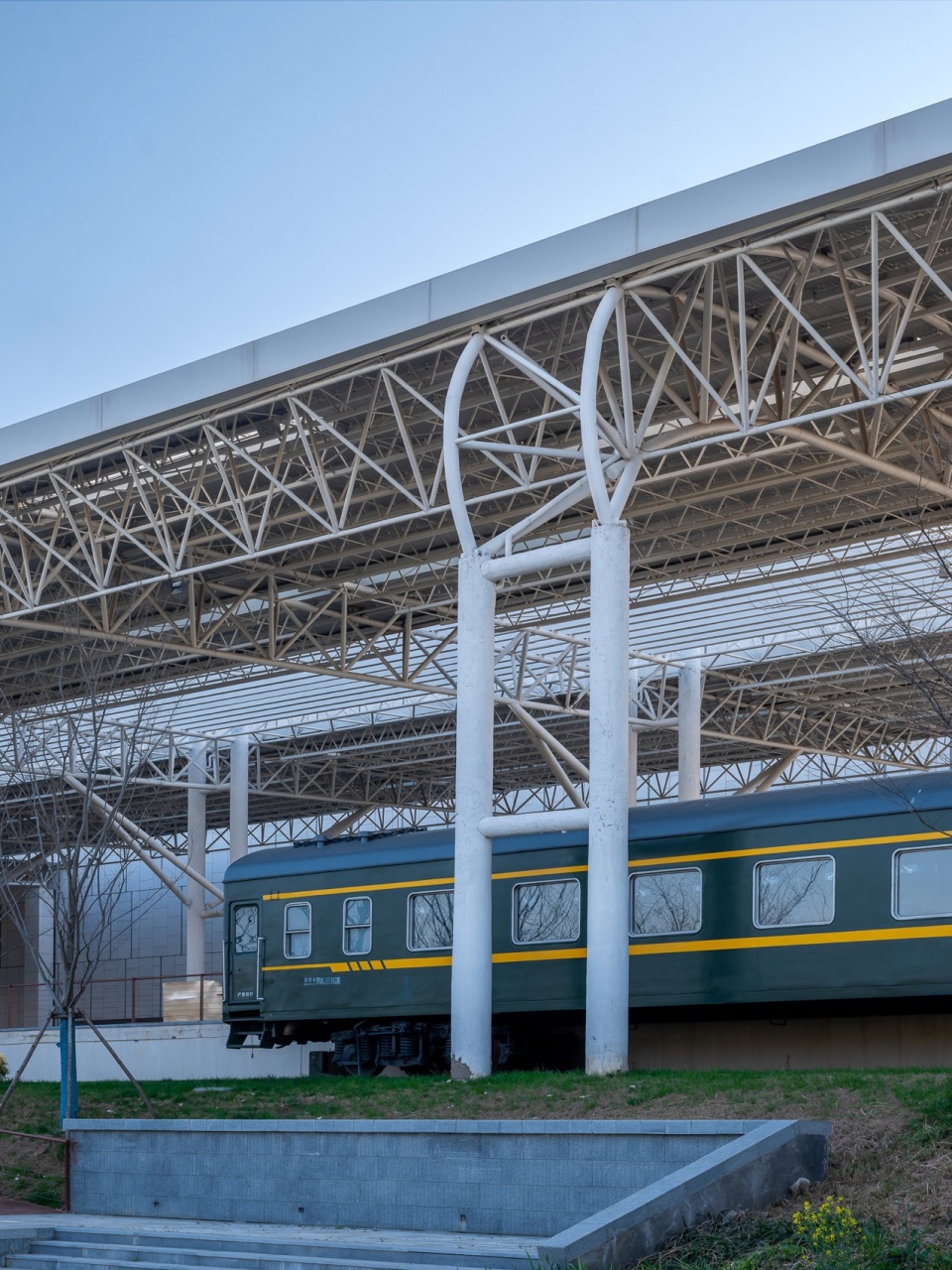
“非建筑”的改造—“微整形” Beyond Architecture: The Art of Facade “Micro-Renovation”
与建筑类改造不同,站台及铁道属于“构筑物”,这样的“非建筑”类改造更讲究一个力道的把握。站台及铁道作为城市记忆的重要组成部分,承载了许多人的乡愁。在与业主及主管部门的多轮沟通后,“微改造,轻介入”的设计策略逐渐显现。
Unlike architectural renovations, platforms and railways belong to “structures”, and the renovation of such “non-architectural” structures requires more attention to the control of the degree of intervention. As an important part of urban memory, platforms and railways carry the nostalgia of many people. After several rounds of communication with the property owners and competent authorities, the design strategy of “micro-renovation with light intervention” gradually emerged.
▼站台和栈道,Platform and Boardwalk
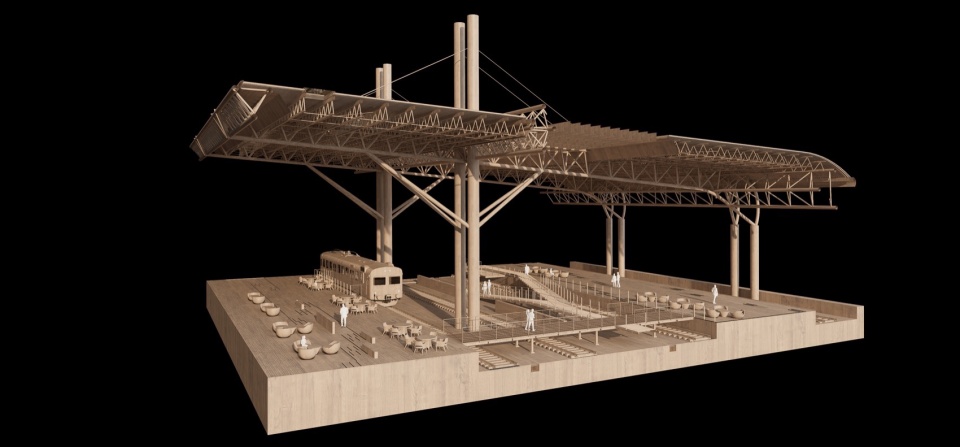
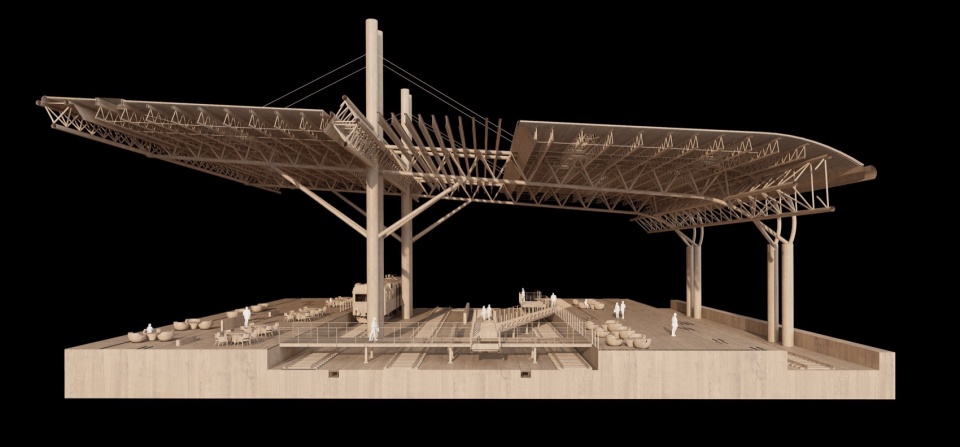
▼站台雨棚元素分解-单元爆炸图,Platform Canopy Element Decomposition – Exploded Axonometric
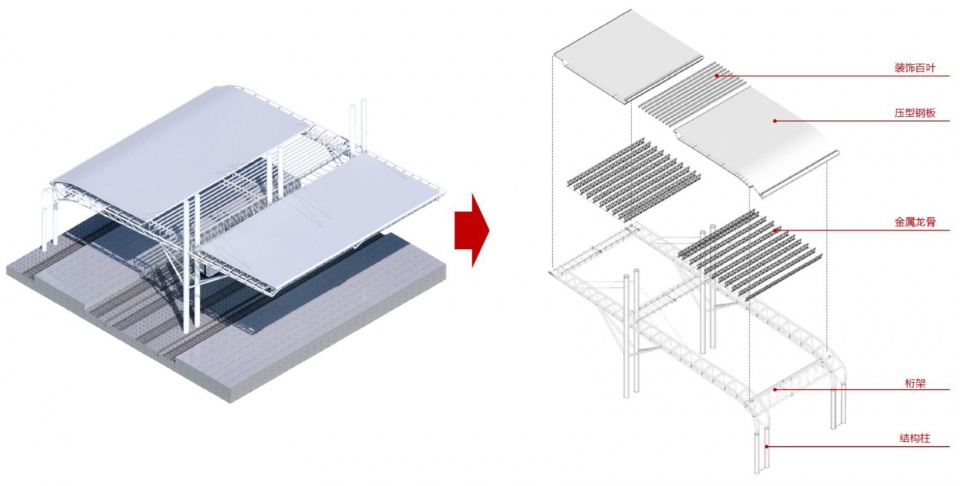
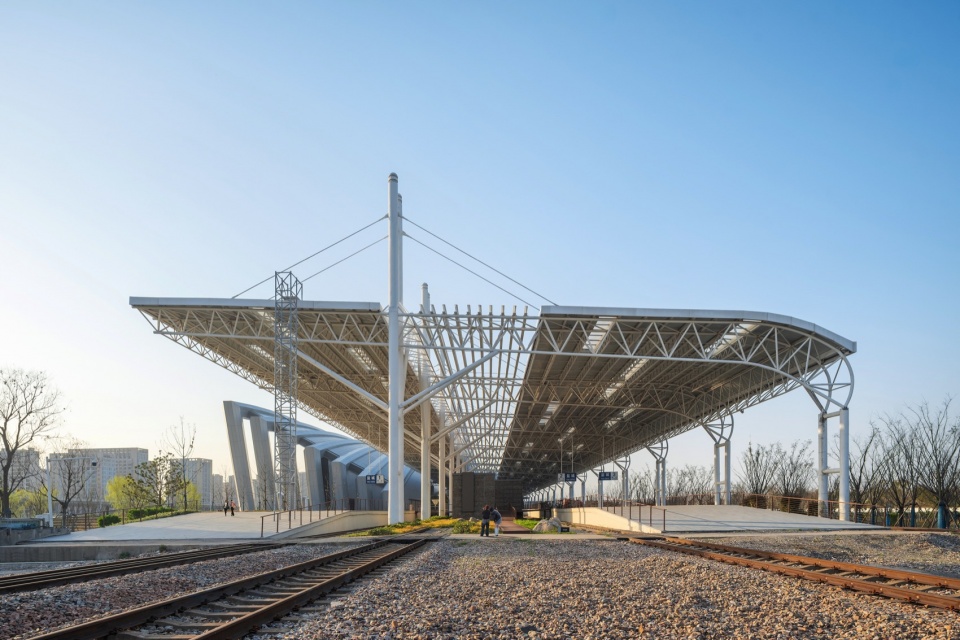
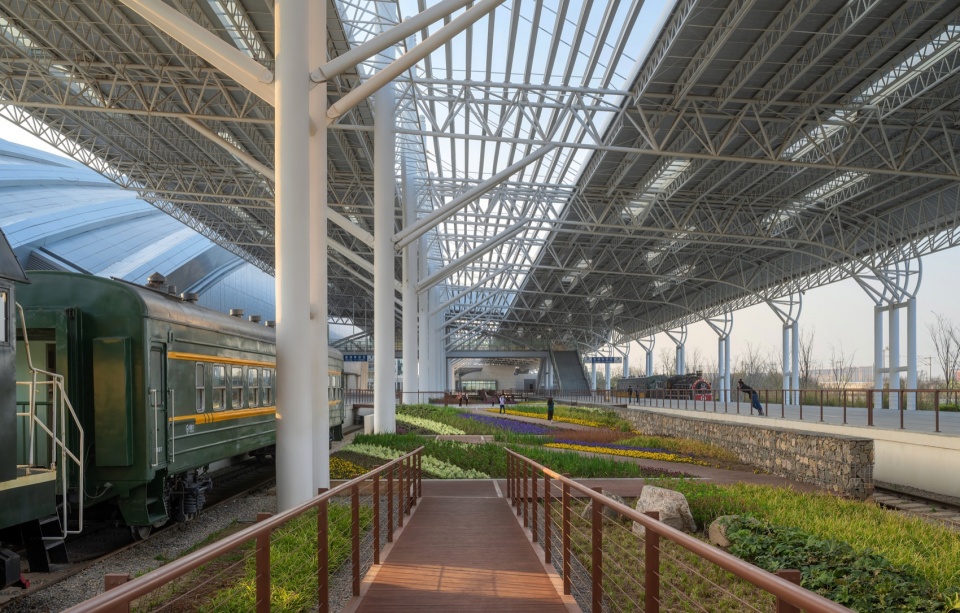
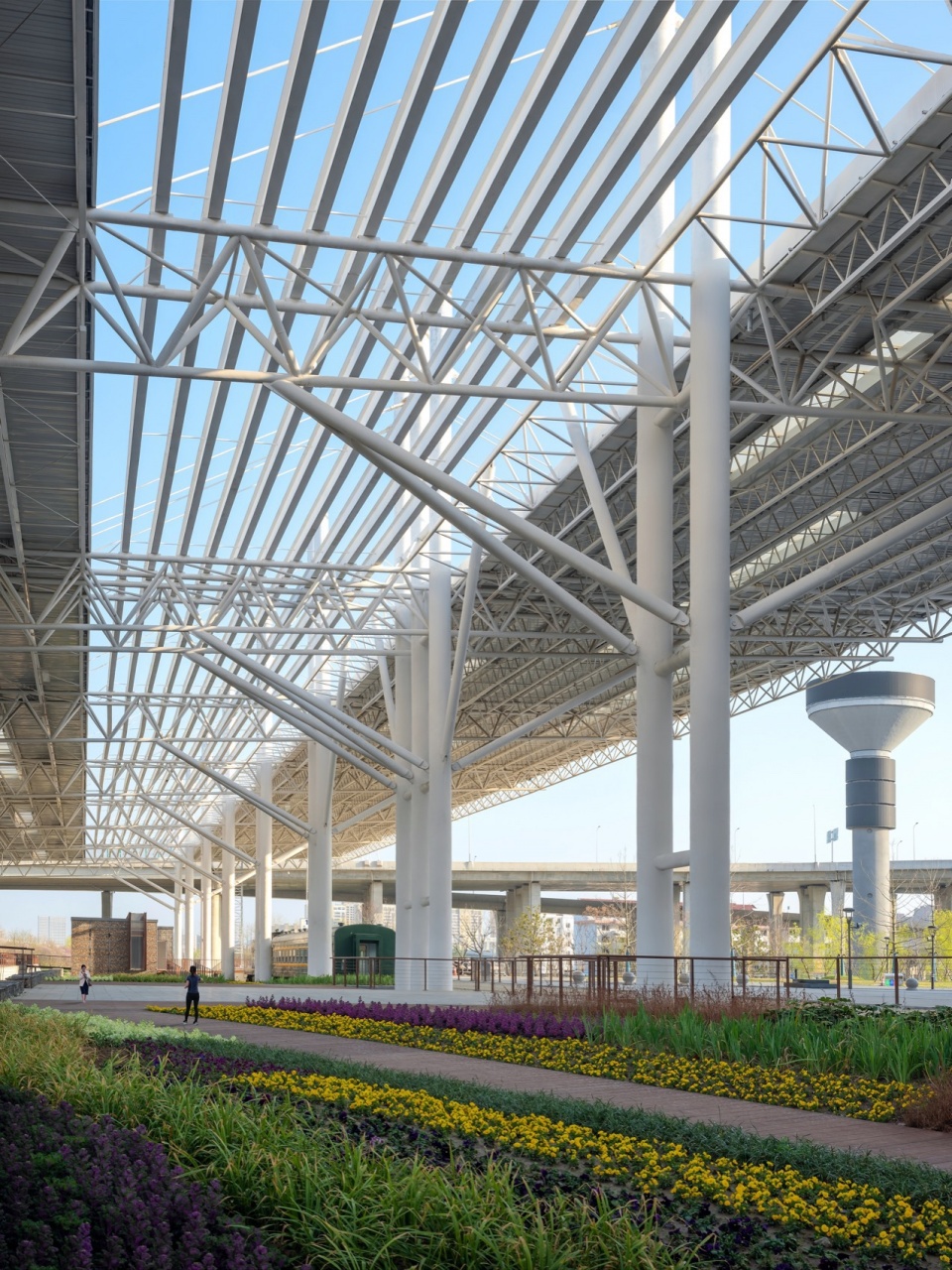
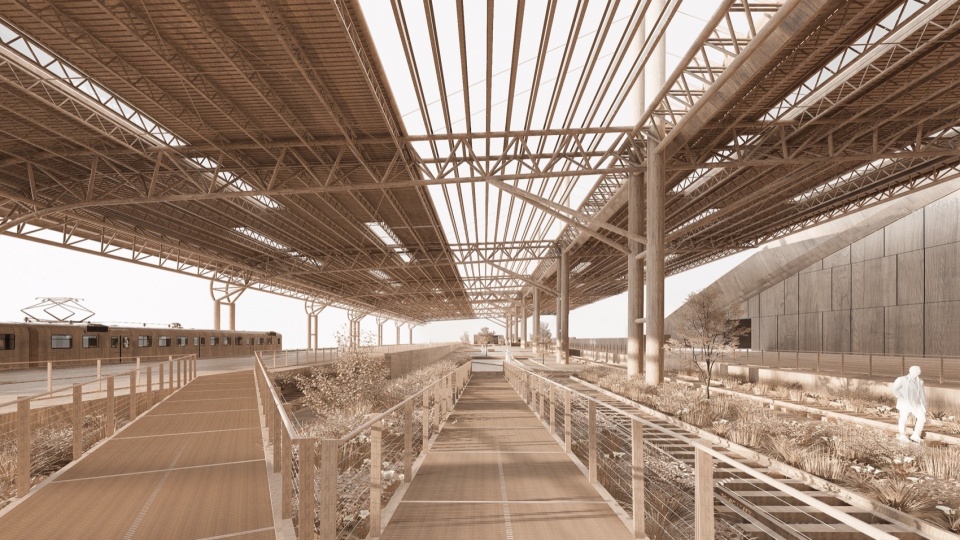
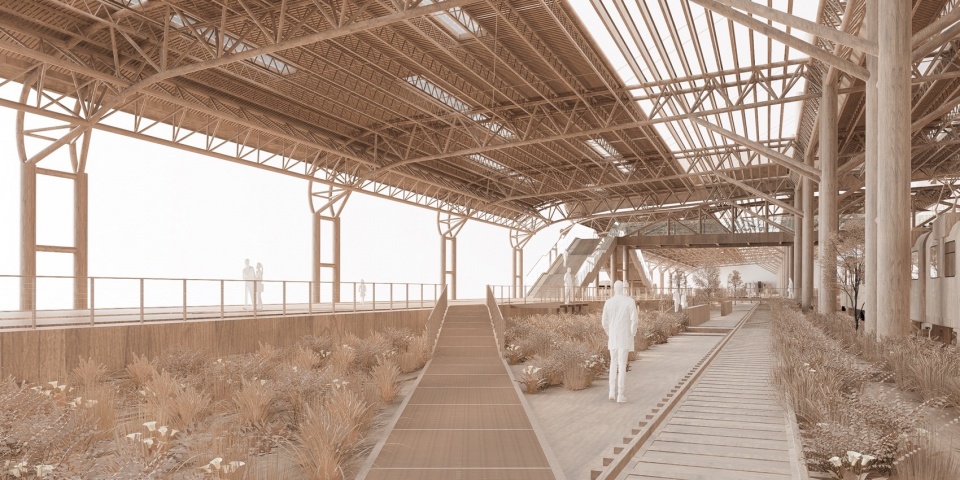
站台雨棚是基地上最主要的构筑物,改造保留整体构件,仅进行表面喷漆处理,确保防火防腐性能。屋面上增开天窗,在增加地面照度保证植物的生长的情况下,通过天光渲染,凸显桁架的构造特征。
▼酒店大堂对站台的再利用,Reutilization of Platform in Hotel Lobby
The platform canopy is the most important structure on the site. During the renovation, the overall components are retained, and only surface painting treatment is carried out to ensure fire prevention and anti-corrosion performance. Skylights are added on the roof. While increasing the ground illumination to ensure the growth of plants, the structural features of the truss are highlighted through the rendering of the skylight.
▼改造后的站台雨棚,The platform canopy after renovation
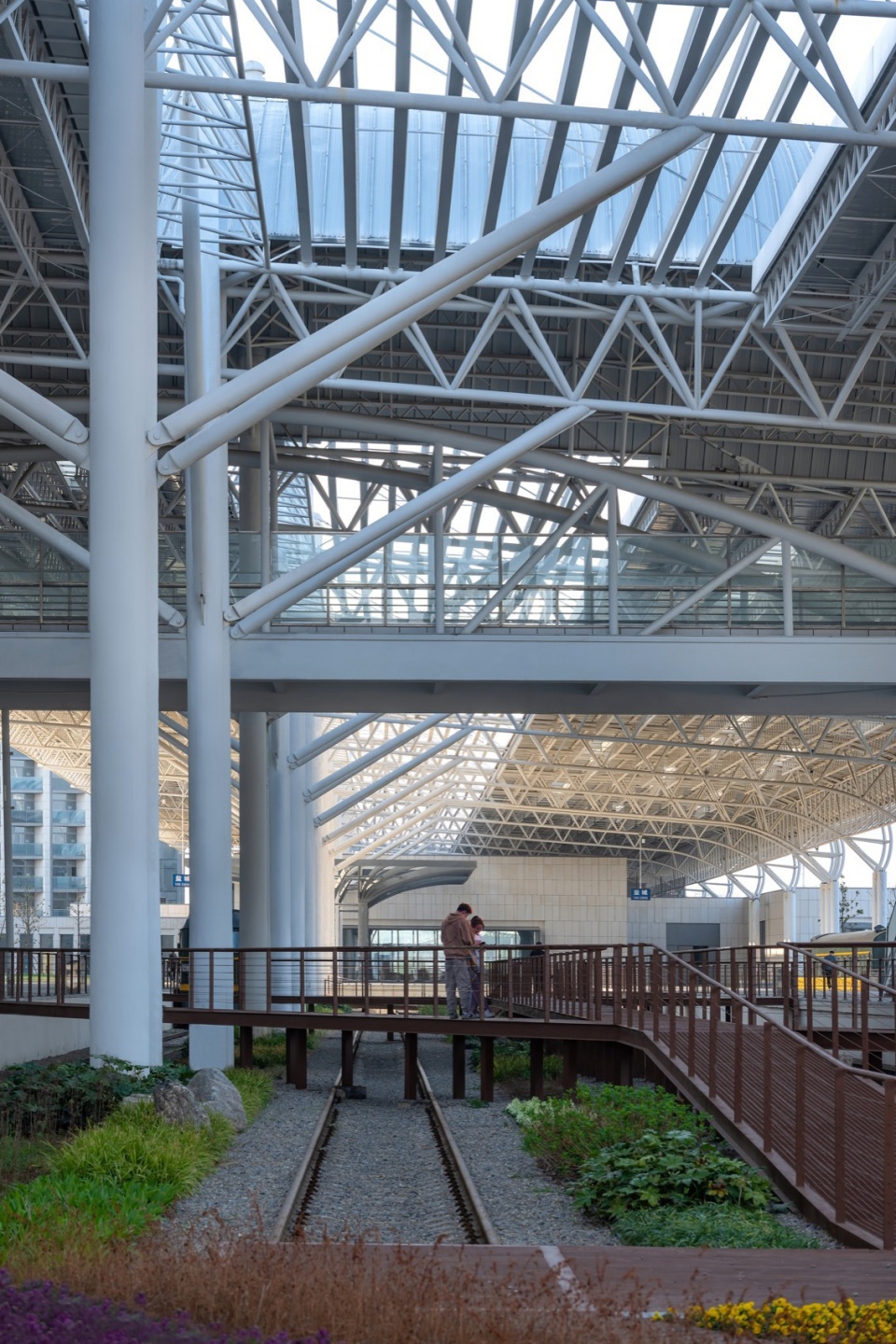
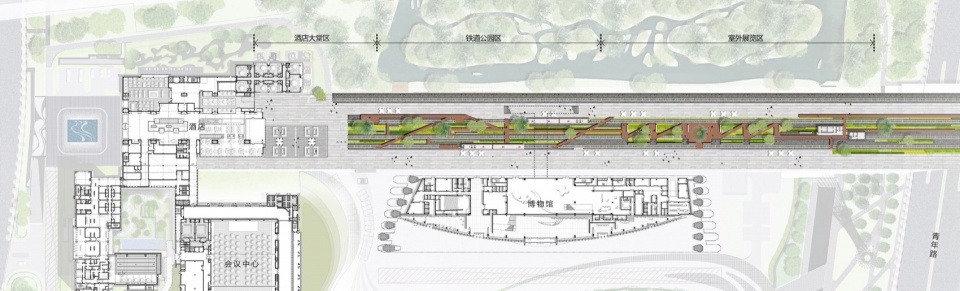
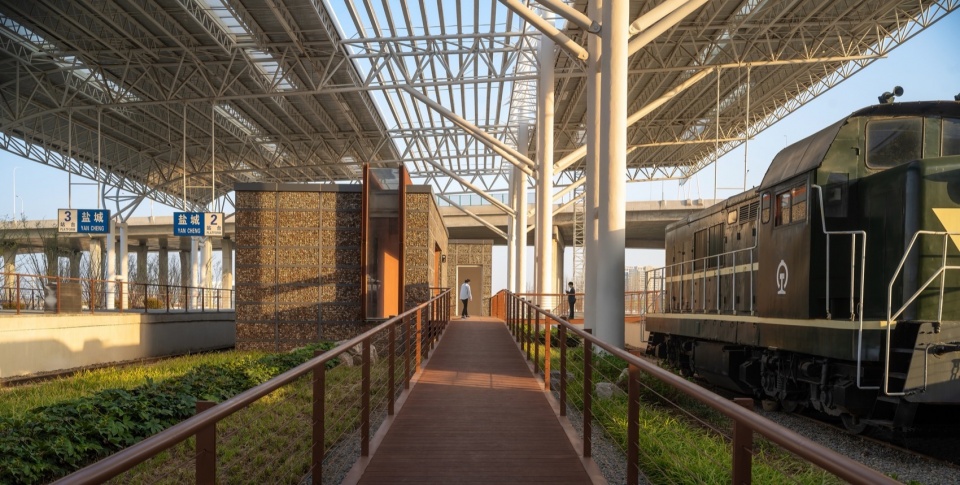
景观布置顺势而为,原站台区域仅更换地面铺装,铁轨及枕木均保留如旧,同时植入斜向栈道,将两侧站台与铁道区域紧密联系。原来只“可远观”的铁道区域成为“可近游”的铁道公园。两列旧火车成为铁道公园的一部分,市民可进入老式绿皮火车内部打卡喝咖啡,近距离的体验铁道文化。
▼铁道公园总图平面,Railway Park Overall Plan
▼站台雨棚及景观对应关系-整体爆炸图,Platform Canopy and Landscape Relationship – Overall Exploded Diagram
▼站台和栈道,Platform and Boardwalk
The landscape arrangement follows the natural layout. In the original platform area, only the ground pavement is replaced, while the rails and sleepers are all retained in their original state. At the same time, diagonal plank roads are installed to closely connect the platforms on both sides with the railway area. The railway area, which could only be viewed from a distance before, has now become a railway park that people can visit up close. Two old trains have become part of the railway park. Citizens can enter the old green leather trains, take photos, have coffee, and experience the railway culture at close range.
▼悬浮于铁道上的景观栈道,Landscape boardwalk suspended on the railway
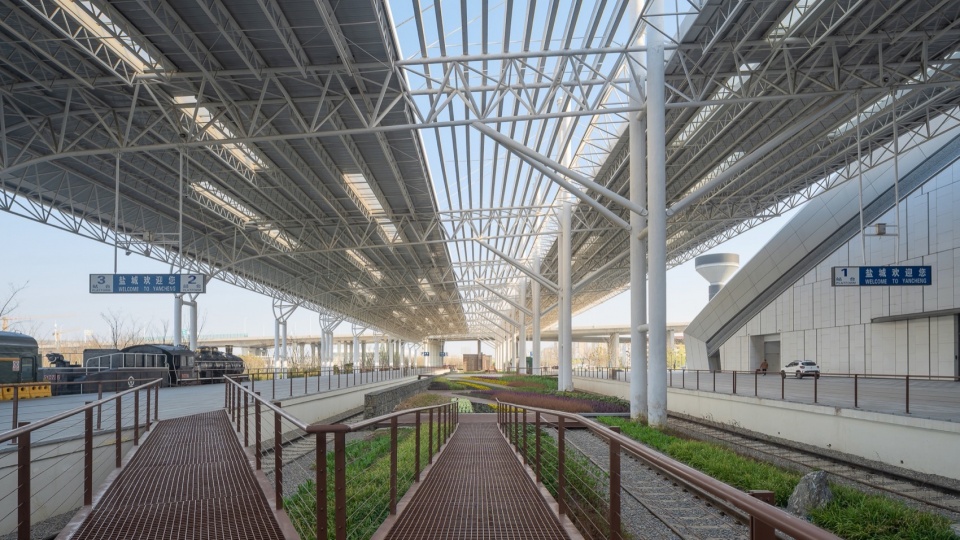
▼栈道与铁轨并置形成步行系统,The combination of boardwalks and railway tracks forms a pedestrian system
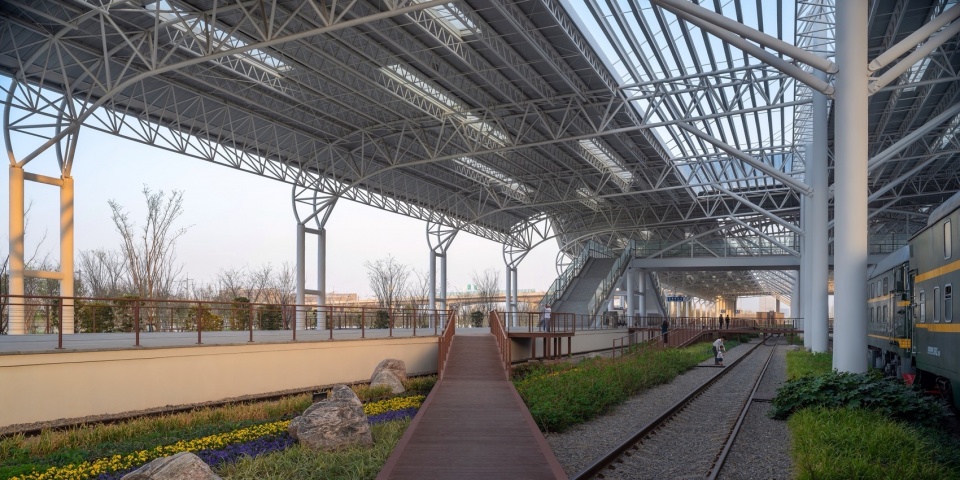
▼景观栈道联系站台与铁道,Landscape boardwalk connects the platform with the railway
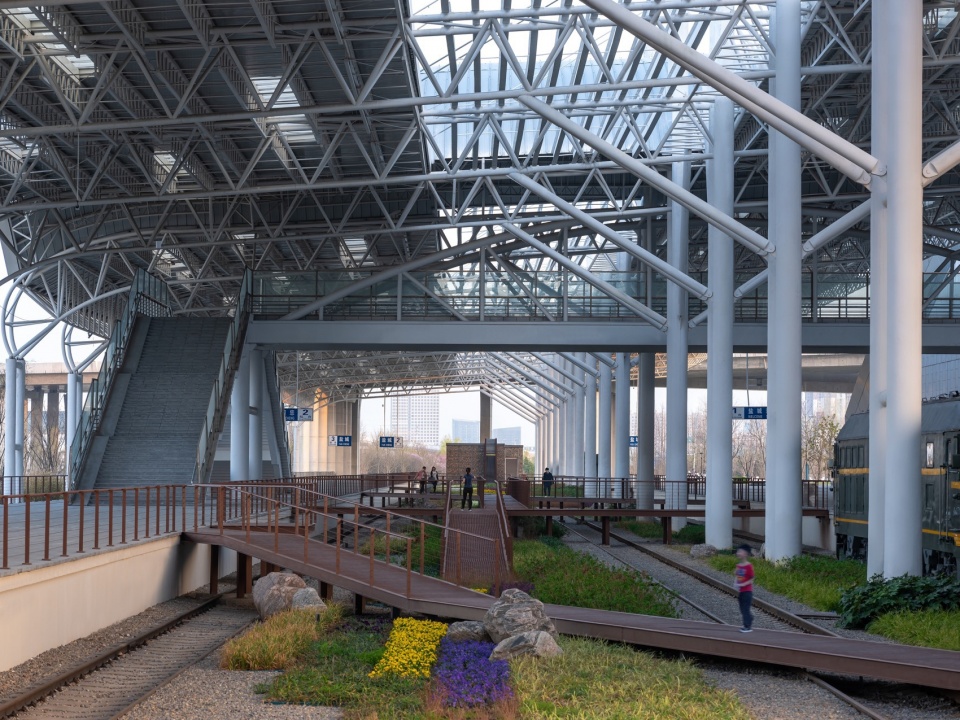
▼站台公园与博物馆,Platform Park and Museum
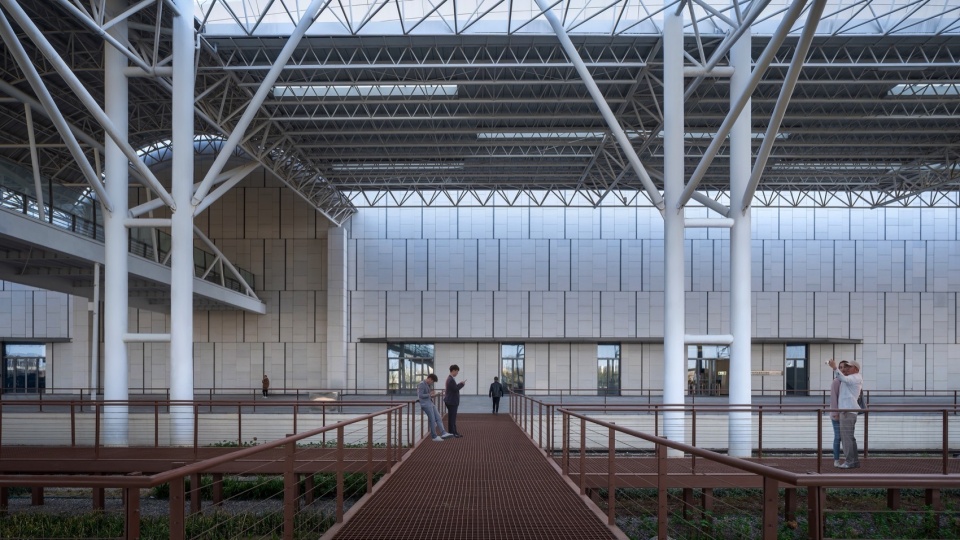
从铁路砾石到建筑外墙与景观墙 Track to Wall: How Railway Ballast Reinvents Architecture
局部景观化后,部分原铁路的砾石如何使用?本案给出了一个创新的思路:做成景观片墙和建筑。
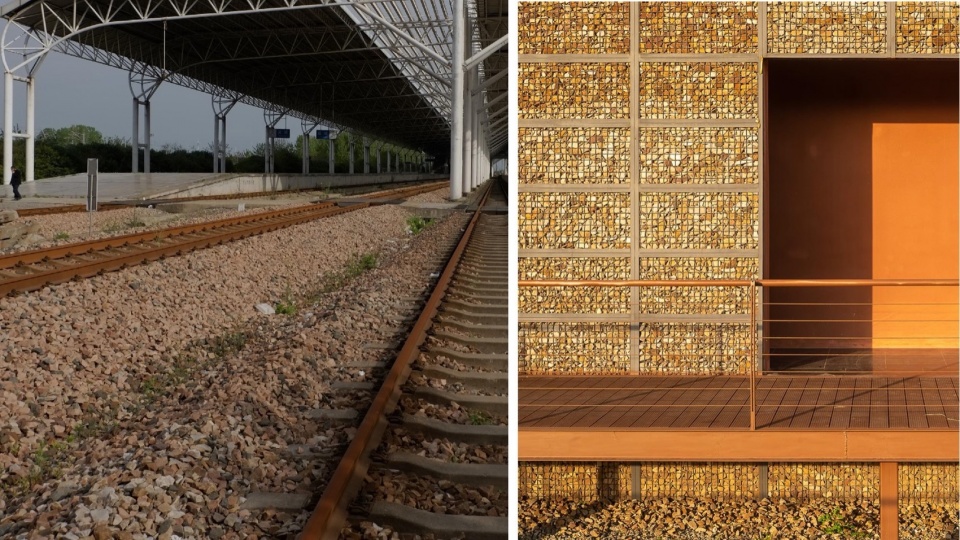
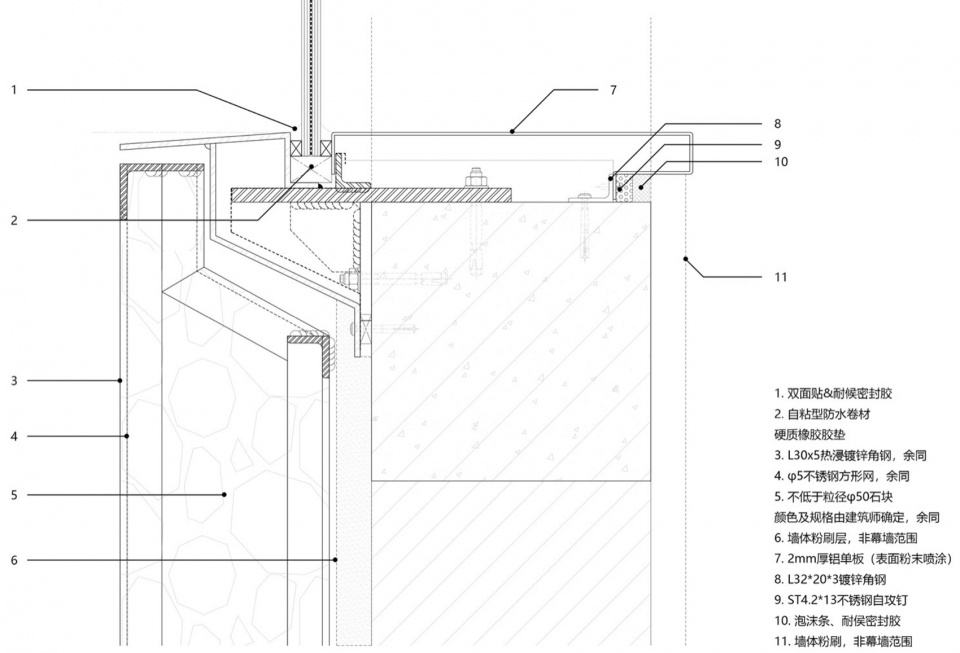
栈道构件采用深色耐候钢板,与原有铁轨枕木融为一体。设计就地取材,收集铁道砾石,将其作为石笼墙使用,尽可能保留自然粗犷的场所记忆。
How to use some of the gravel from the original railway after partial landscaping? This case presents an innovative idea: to create landscape walls and buildings. The components of the boardwalk are made of dark weather resistant steel plates, which are integrated with the original rail sleepers. Design using local materials, collect railway gravel, and use it as a gabion wall to preserve the natural and rugged memories of the place as much as possible.
▼石笼墙以砾石为原料,Stone cage walls are made of gravel as raw material
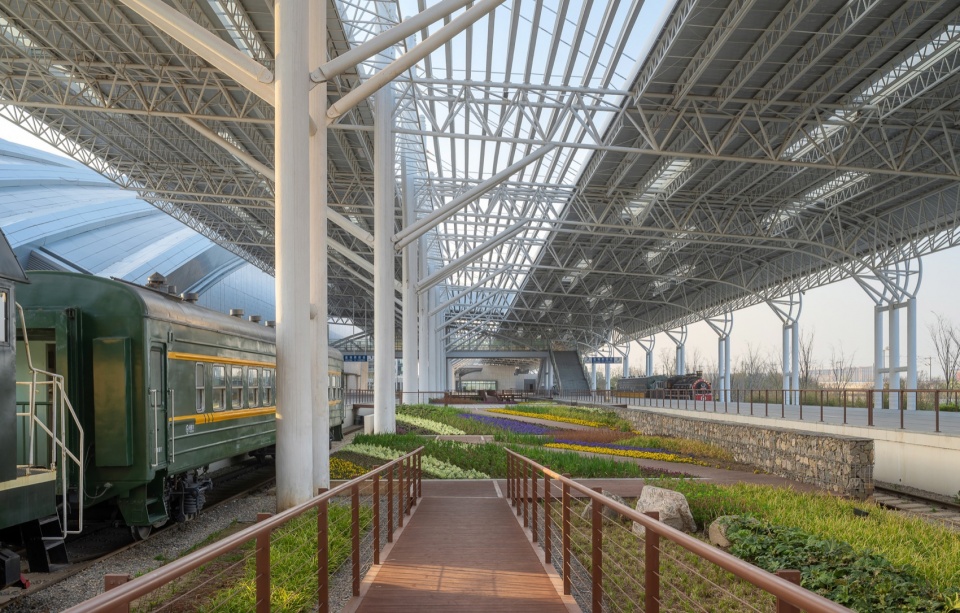
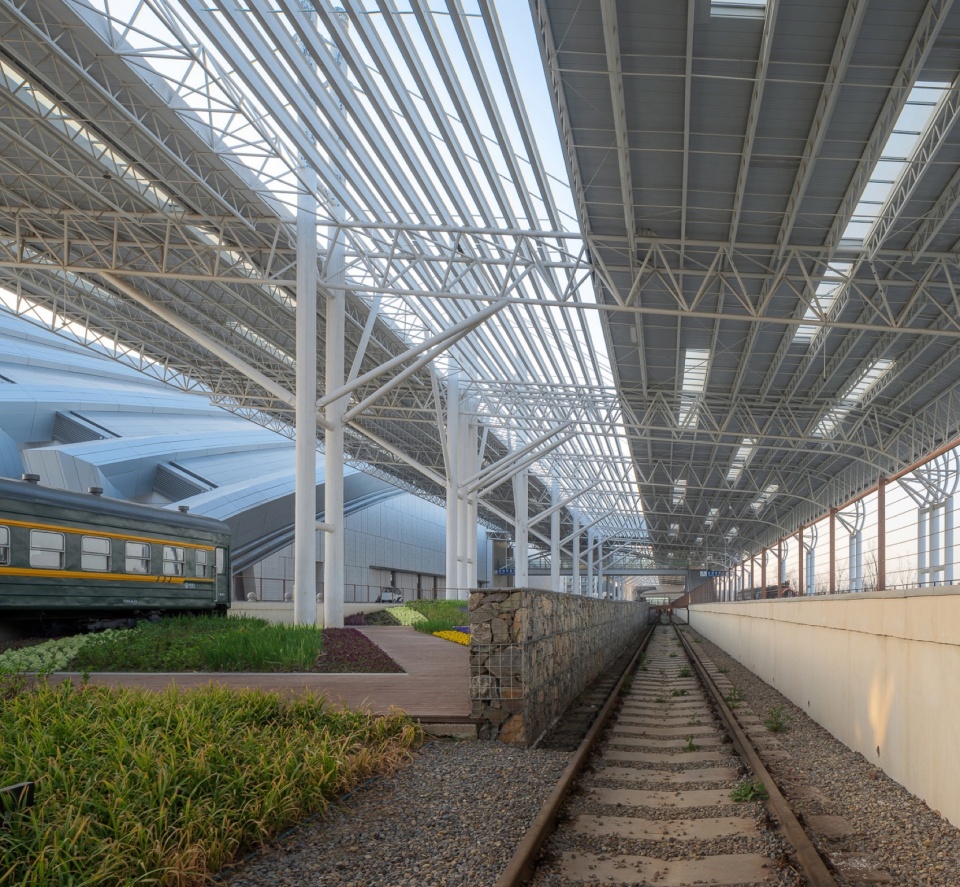
▼铁路砾石为原料的石笼墙,
Stone cage wall made of railway gravel as raw material
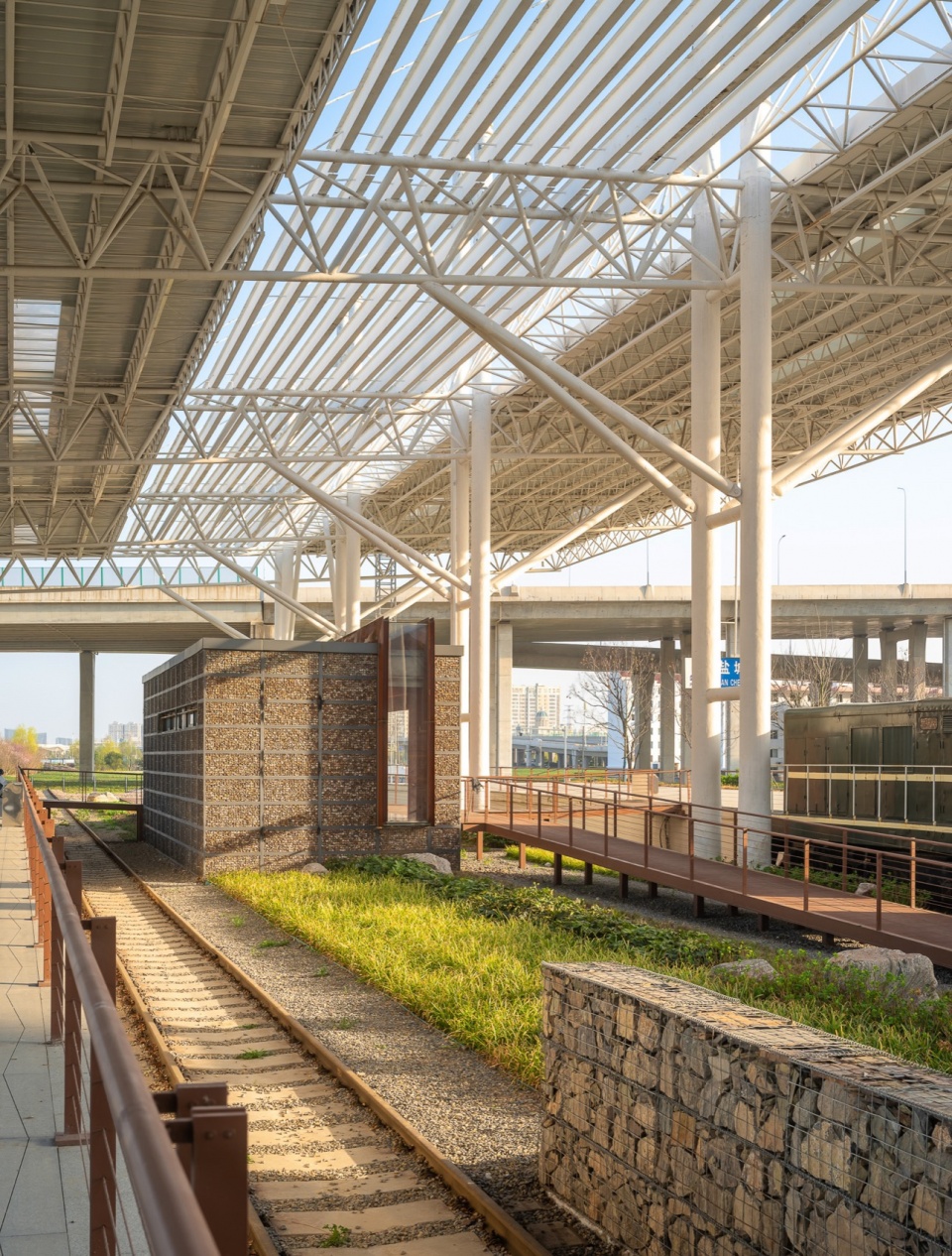
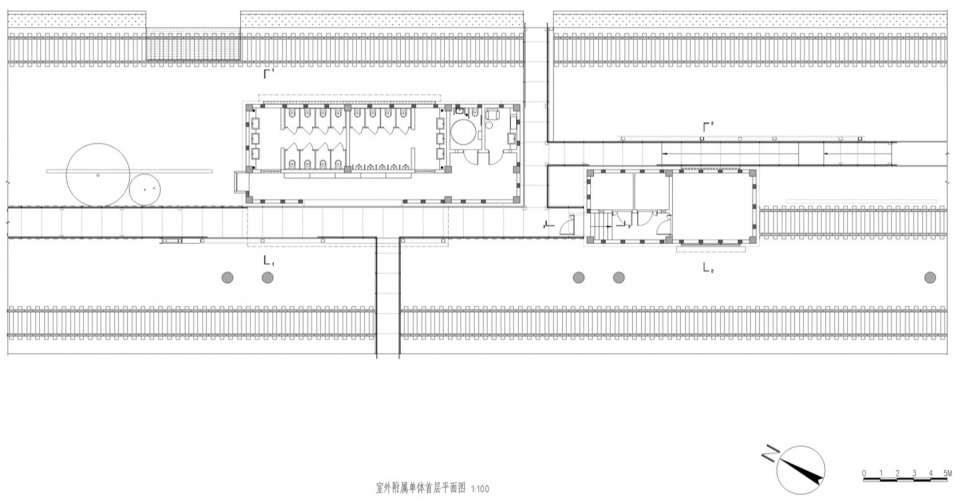
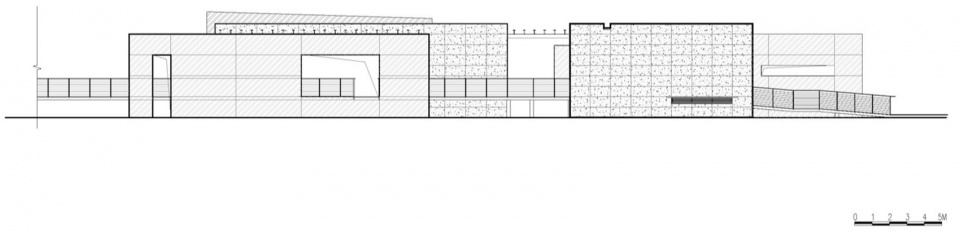
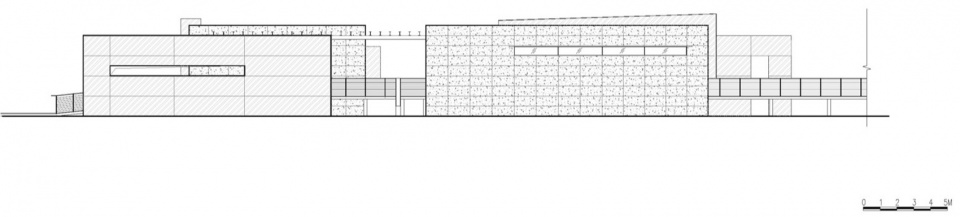
在铁轨区新增一小品建筑,包含卫生间,机房等功能。两个体量错落布置,通过栈道与两侧站台及铁道景观区相联系。外墙采用石笼墙面,由现场铁道砾石收集而成,希望形成如自然生长出来的建筑效果。
▼小品建筑与铁道关系,Pavilion Architecture and Railway Relationship
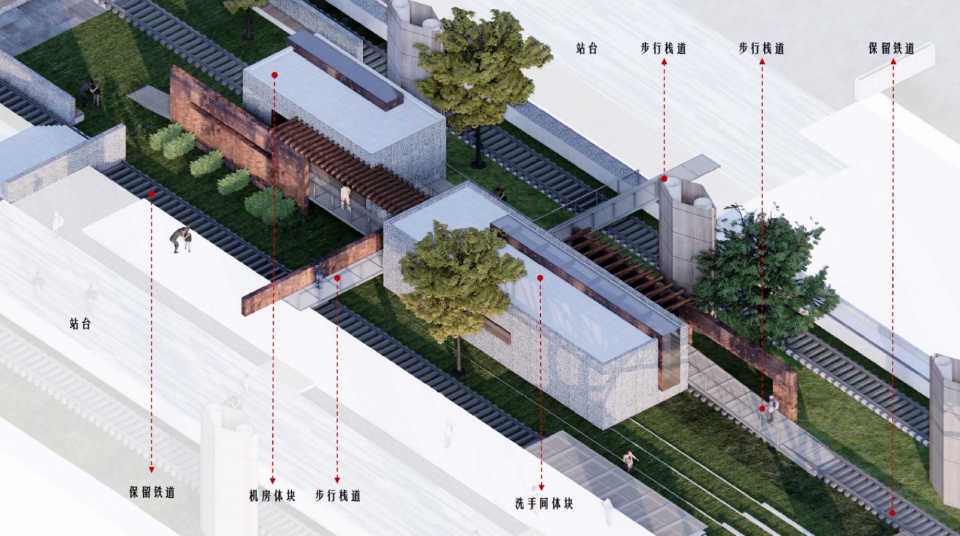
Add a small building in the railway area, including functions such as toilets and computer rooms. Two volumes are arranged in a staggered manner, connected to the platforms on both sides and the railway landscape area through a boardwalk. The exterior wall is made of gabion walls, collected from railway gravel on site, hoping to create a building effect that grows naturally.
▼步行栈道与老火车,Pedestrian boardwalk and old train
▼铁轨砾石制作的石笼墙面,Stone cage wall made of railway gravel
从过去向未来延伸—站台酒店 Departing from the Past, Arriving at the Future
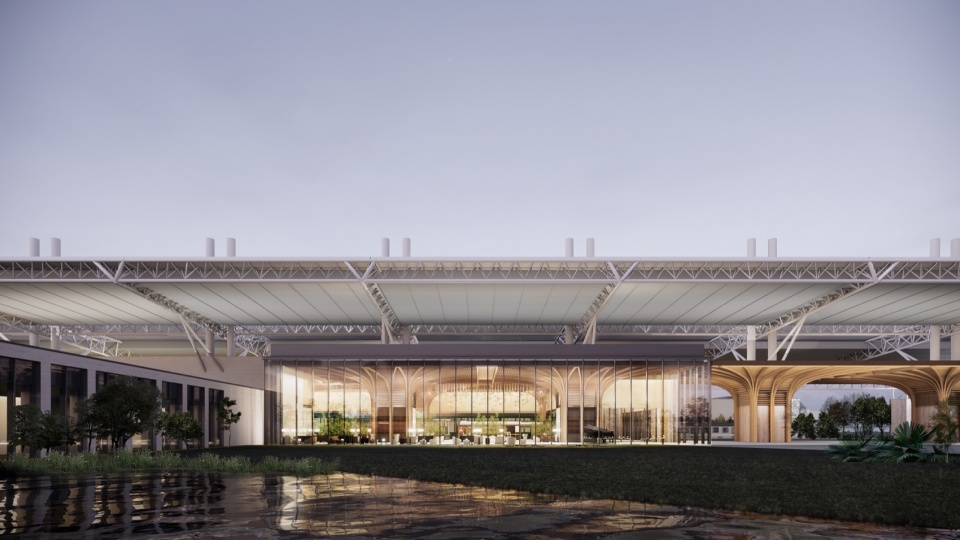
时任政府领导希望这个站台的改造要有独创性,要创新,不是简单的做一个公园,而是一个老铁路活化利用的典范,并且多次到现场调研,提出将站台全部保留,一部分改造成为新建酒店的公共部分的思路。
The government leaders at that time hoped that the transformation of this platform should be original and innovative, not just as a park, but as a model for the activation and utilization of the old railway. They also went to the scene many times to investigate and propose the idea of keeping all the platforms and transforming part of them into the public part of the new hotel.
▼新建酒店与保留站台,New hotel and reserved platform
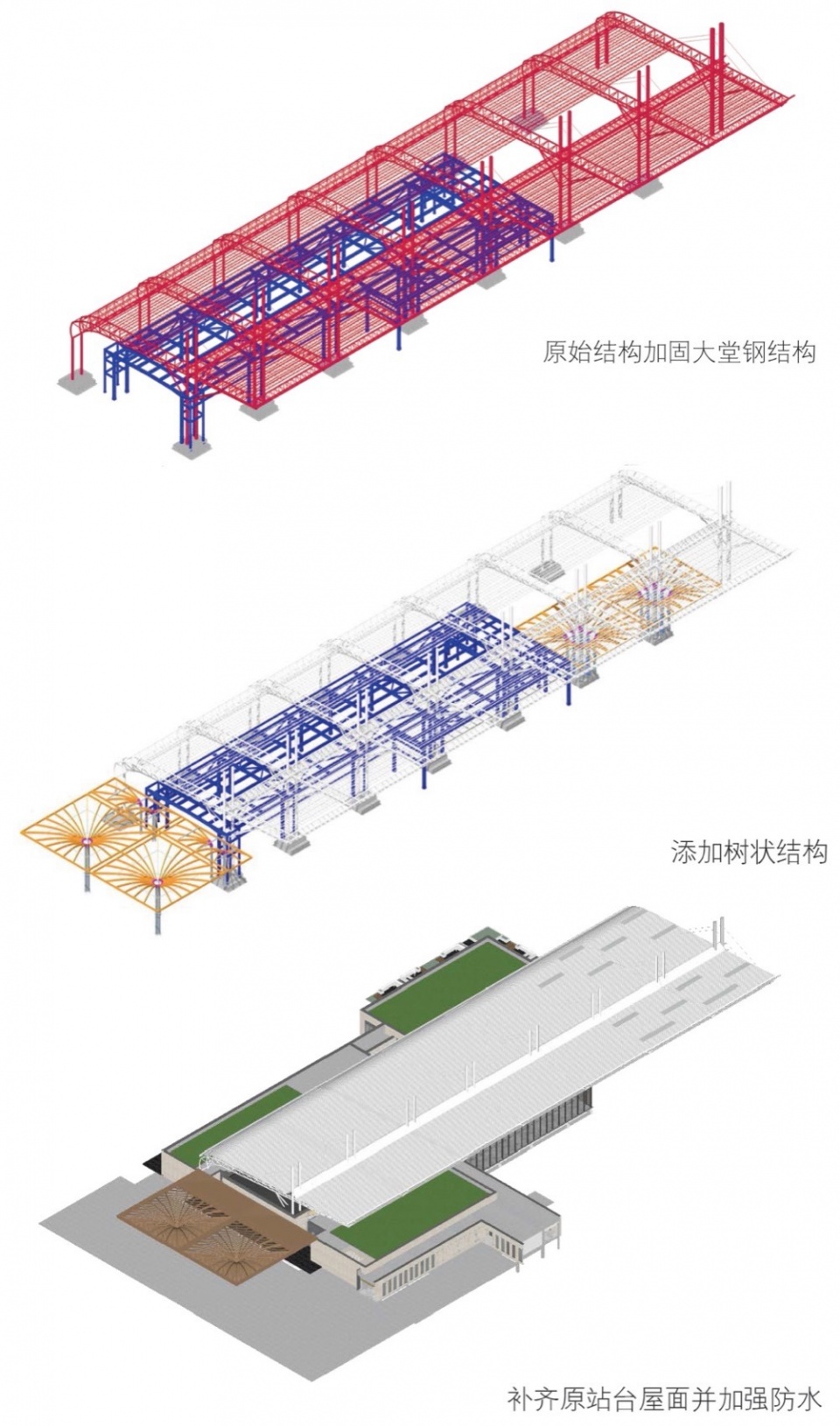
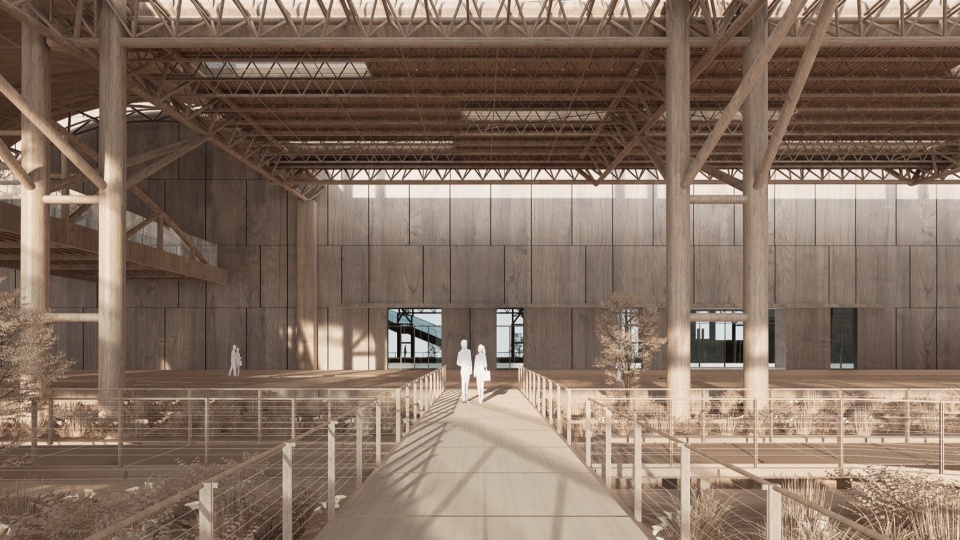
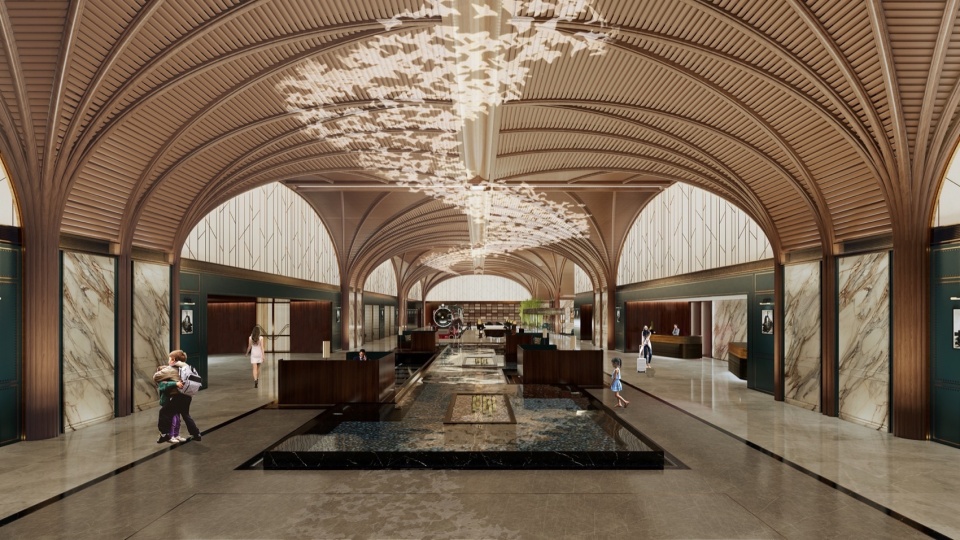
这个思路启发了设计团队,但面临的难题是站棚属于临时建筑,不能作为建筑使用,所以在站棚下重新设计了屋顶,利用屋顶和站棚的高度差放置机电设备,新的结构也成为室内装饰:保留的铁路在室内得到活化利用,列车被改造成为餐厅,站台被改造成为接待和大堂吧,实现了一个前所未有的创新。
This idea inspired the design team, but the challenge they faced was that the station shed was a temporary building and could not be used as a building. Therefore, the roof was redesigned under the station shed, and mechanical and electrical equipment was placed using the height difference between the roof and the shed. The new structure also became interior decoration: the preserved railway was revitalized indoors, trains were transformed into restaurants, and platforms were transformed into reception and lobby bars, achieving an unprecedented innovation.
▼站台雨棚下的酒店大堂,Hotel Lobby Beneath Platform Canopy
▼悬浮于铁道上的景观栈道,Suspended Landscape Boardwalk Above the Railway
▼栈道与铁轨并置形成步行系统,Boardwalk and Railway Form a Pedestrian System
▼站台公园与博物馆,Platform Park and Museum
▼酒店大堂区域(装修施工中),Hotel Lobby Area (Under Construction)
▼室外附属单体平面图-公厕,Outdoor Ancillary Building Plan – Public Restroom
▼室外附属单体立面图1,Outdoor Ancillary Building Elevation 1
▼室外附属单体立面图2,Outdoor Ancillary Building Elevation 2
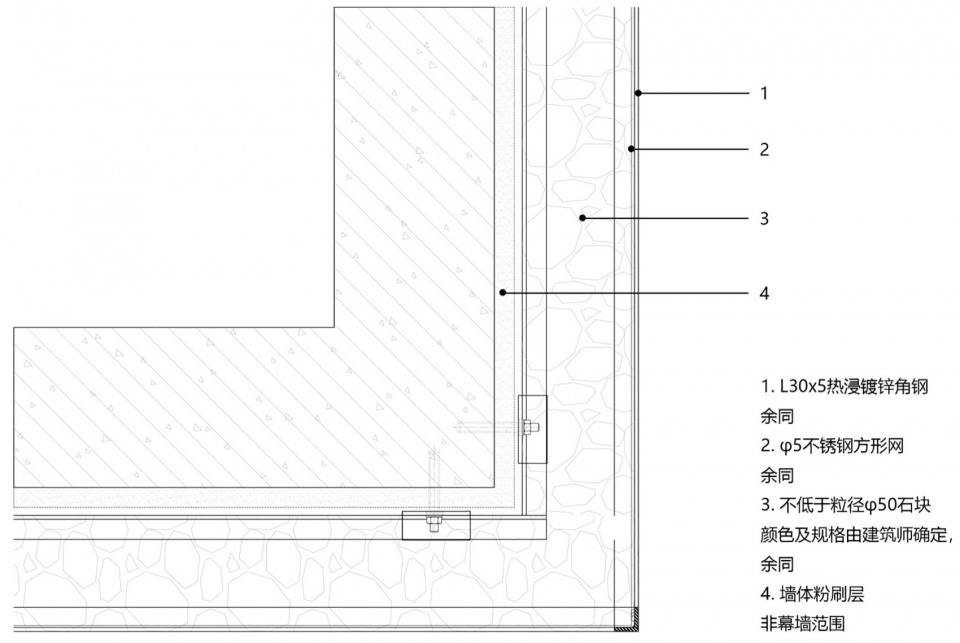
▼节点大样图,Detail Nodes
Project name: China Yellow Sea Wetlands Museum Railway Park
Project type: Architectural Design,Landscape Design,Renovation
Architectural Design: DuShe Architectural Design Co. Ltd., Shanghai
Landscape Design: DuShe Architectural Design Co. Ltd., Shanghai
Website: http://www.shdsd.cn/
Contact e-mail: zhujielu@shdsd.cn
Design year:2019
Completion Year:2021
Project location: Intersection of Fangong Road and Qingnian Road in Tinghu District, Yancheng, Jiangsu
Landscape area: approximately 32,000 ㎡
Building area: 150 ㎡ (auxiliary single unit)
Photo credit: ZY Architectural Photography
Client: Yancheng Railway Investment Development Co., Ltd.
Collaborative Design: Arcplus Institute of Shanghai Architectural Design & Research(Co.,Ltd.)
Curtain Wall Consultant: BRM Façade Technology (Shanghai) Co., Ltd.
Landscape deepening design: Chongqing Daye Landscape Creative Design Co., Ltd.