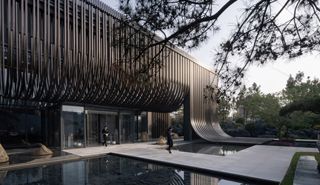
素院,上海 / 大舍建筑设计事务所
建筑位于上海嘉定区盛产葡萄的马陆镇大裕村,村里有一些因为生态原因而被停用的乡办工厂,在2008年政府计划利用这些工厂用地引进艺术家工作室,作为一项文化进入乡村的更新与振兴计划。艺术家岳敏君的工作室是这个计划中的一部分,但是工作室在土建于2011年封顶后因故一直处于空置状态,直到最近由本土时尚品牌地素接手,将其打造为一个综合文化中心。
Located in Dayu Village, Malu Town, Jiading District of Shanghai—an area renowned for grape production—this project occupies a former township-owned factory site that had been decommissioned for ecological reasons. In 2008, the local government initiated a rural revitalization program by repurposing such industrial land for artist studios, introducing cultural elements into the countryside. The studio of artist Yue Minjun was one such initiative. Although the building was structurally topped out in 2011, it remained vacant for years due to unforeseen circumstances. Recently, it was taken over by the local fashion brand Dazzle, which transformed it into an integrated cultural center.
▼场地鸟瞰,Bird’s-eye view of the site
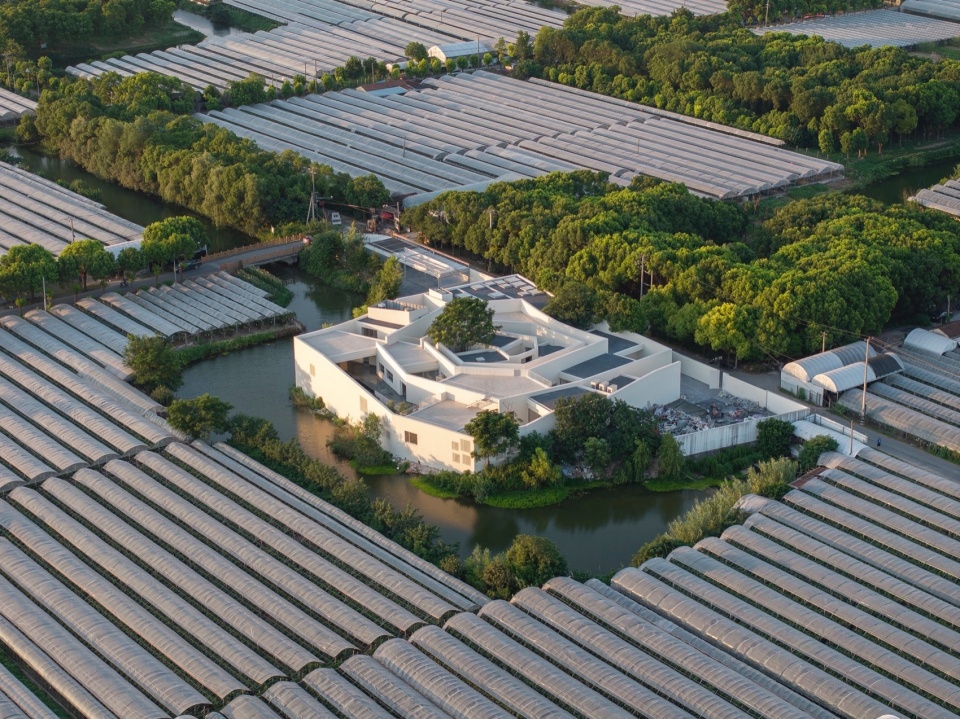
▼庭院与平台,Courtyard and platform
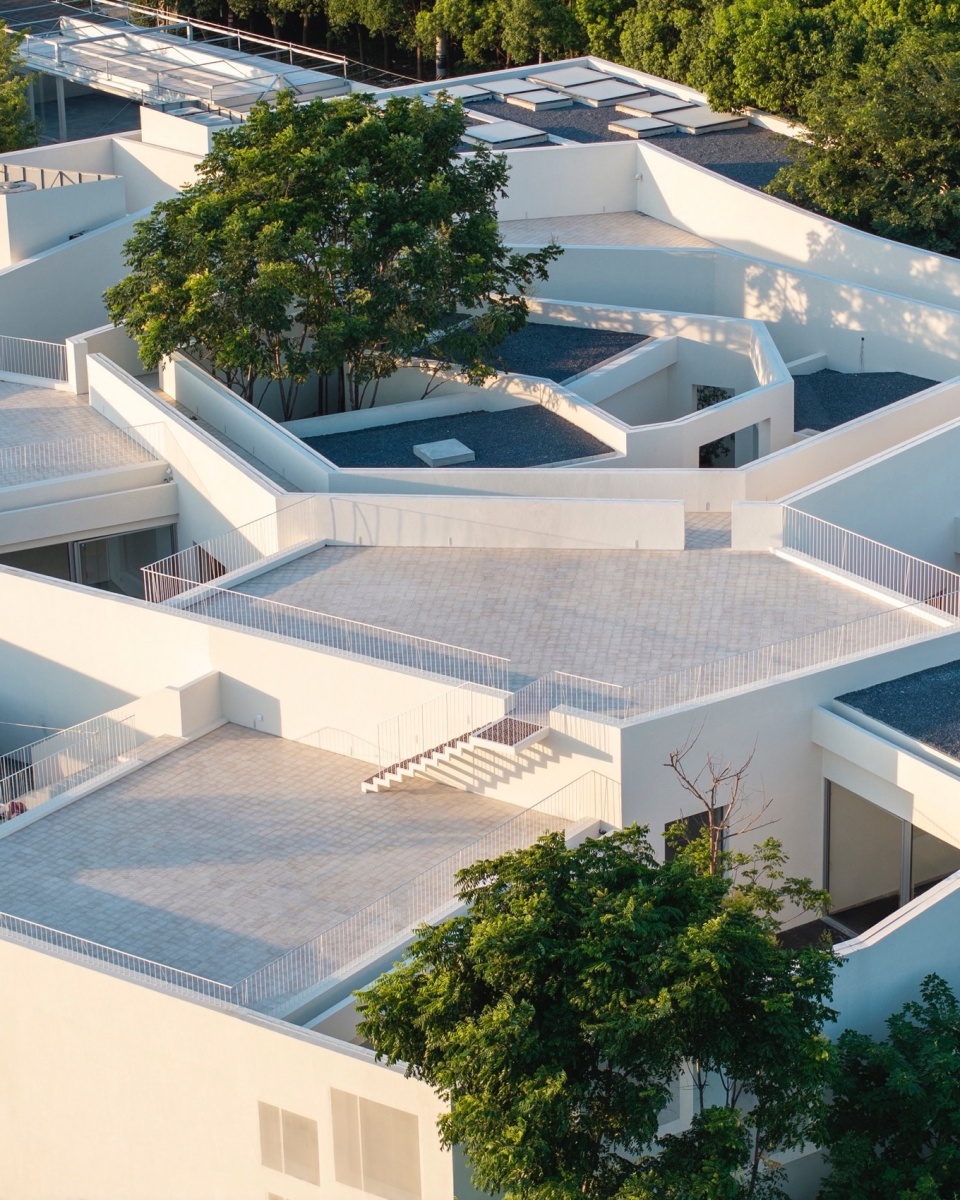
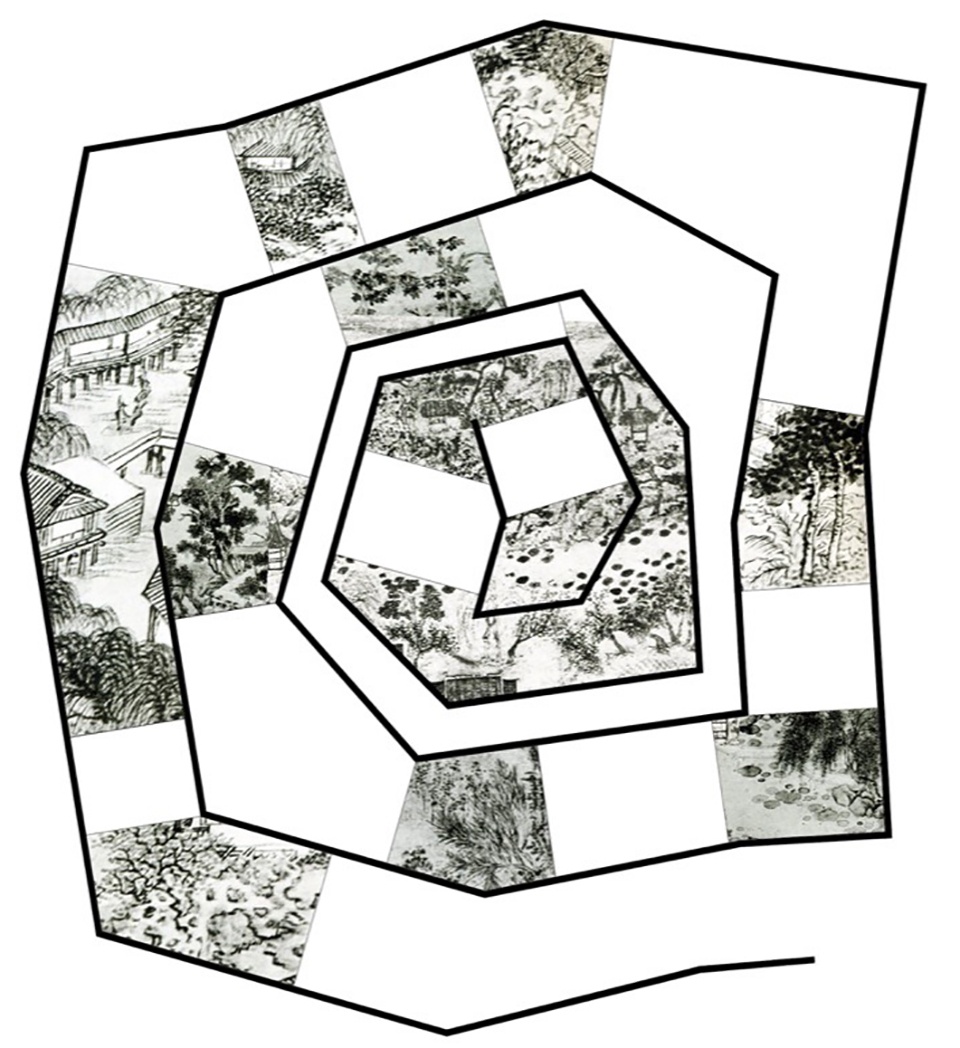
建筑构思源自与艺术家最初的对话,基于他的“迷宫”系列艺术作品及其与江南园林的文化关联,产生了“曲径迷园”的空间概念。设计以一条螺旋折线,将以“进”为特征的江南传统住宅空间进行了重新组织。在50米见方的基地内的螺旋延展中,可以发现空间序列的末端不断转回到了开端的一侧,新的路径和空间的透叠也随之产生。
▼迷宫 – 修身持志 怡情养性,Maze – Cultivating one’s character, maintaining one’s aspirations, soothing the mind and nurturing one’s nature
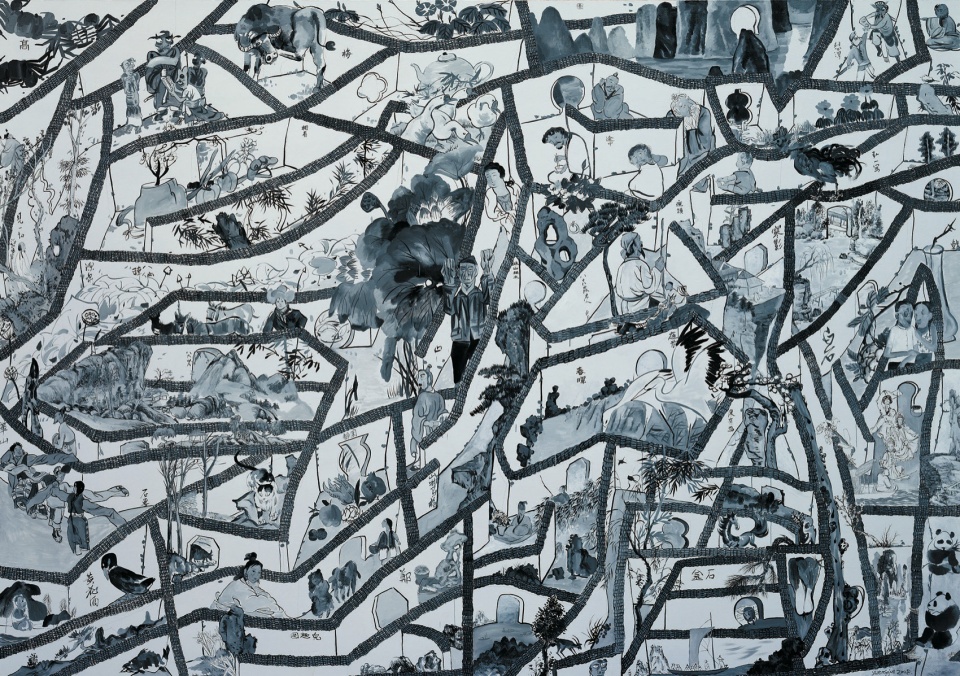
The architectural concept stemmed from early conversations with the artist and drew inspiration from his Maze series as well as its cultural connections to Jiangnan gardens. This gave rise to the idea of Qujing Miyuan (Curved Paths and Maze Gardens). A spiraling broken line was employed to reorganize the spatial logic of traditional Jiangnan residences, particularly their characteristic of jin (progression)—a directional movement that leads one inward through layered thresholds. Within a square site measuring 50 meters per side, the spiral unfolds in a continuous sequence, where the end of the spatial path loops back to its origin. New spatial overlaps and sightlines emerge in this process of turning and folding.
▼入口局部,Entrance detail
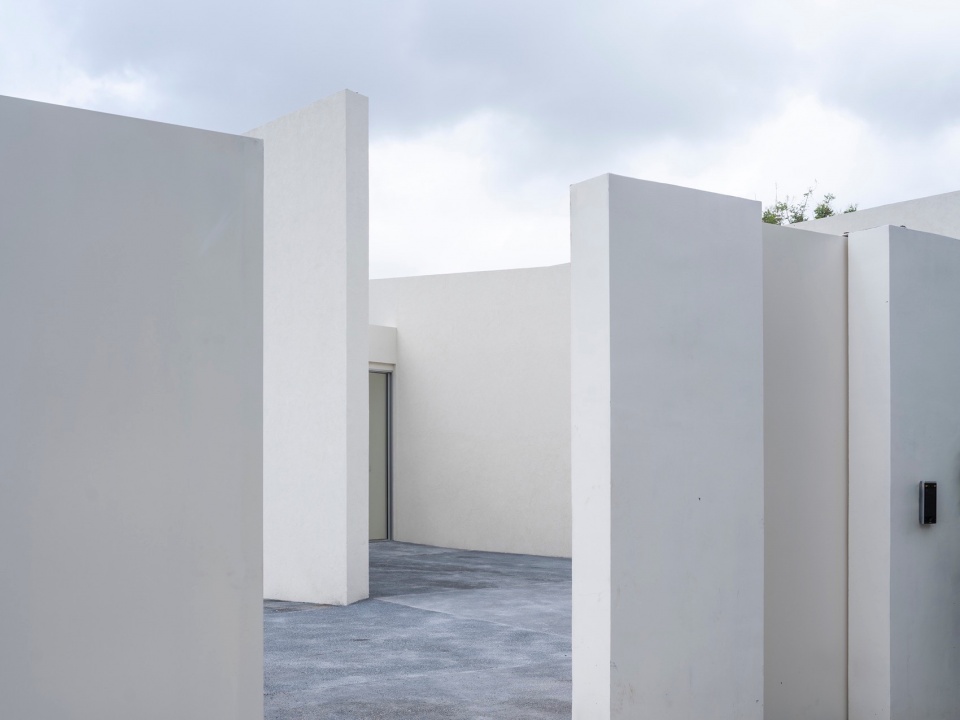
▼画廊院子局部,Partial view of the gallery courtyard
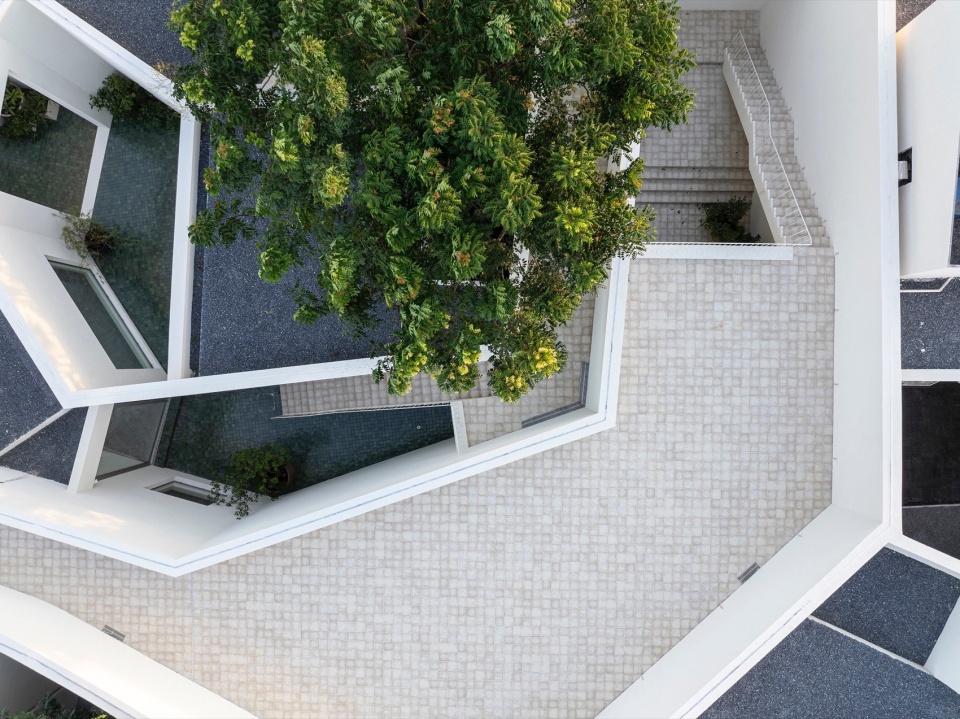
▼从屋顶平台俯瞰泳池,Pool viewed from rooftop platform
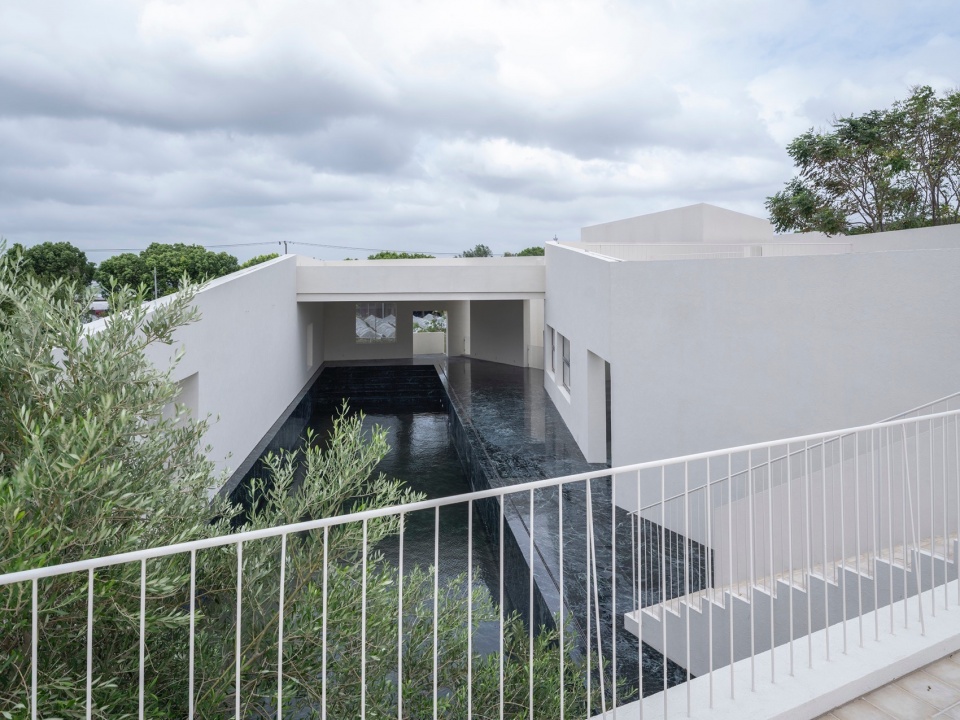
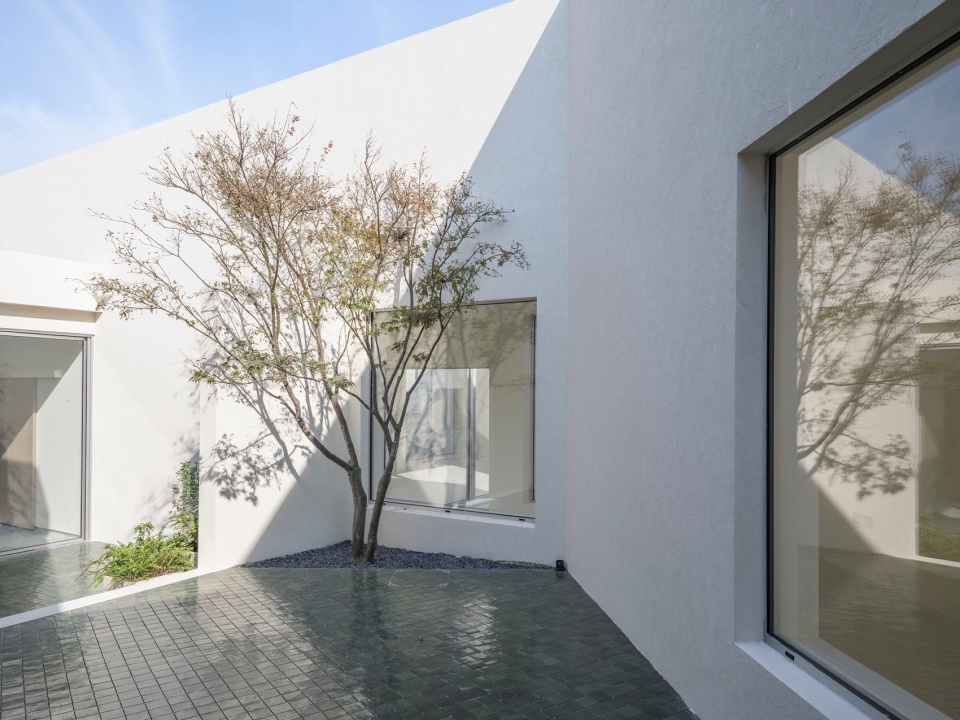
▼书店院子局部,Partial view of the bookstore courtyard
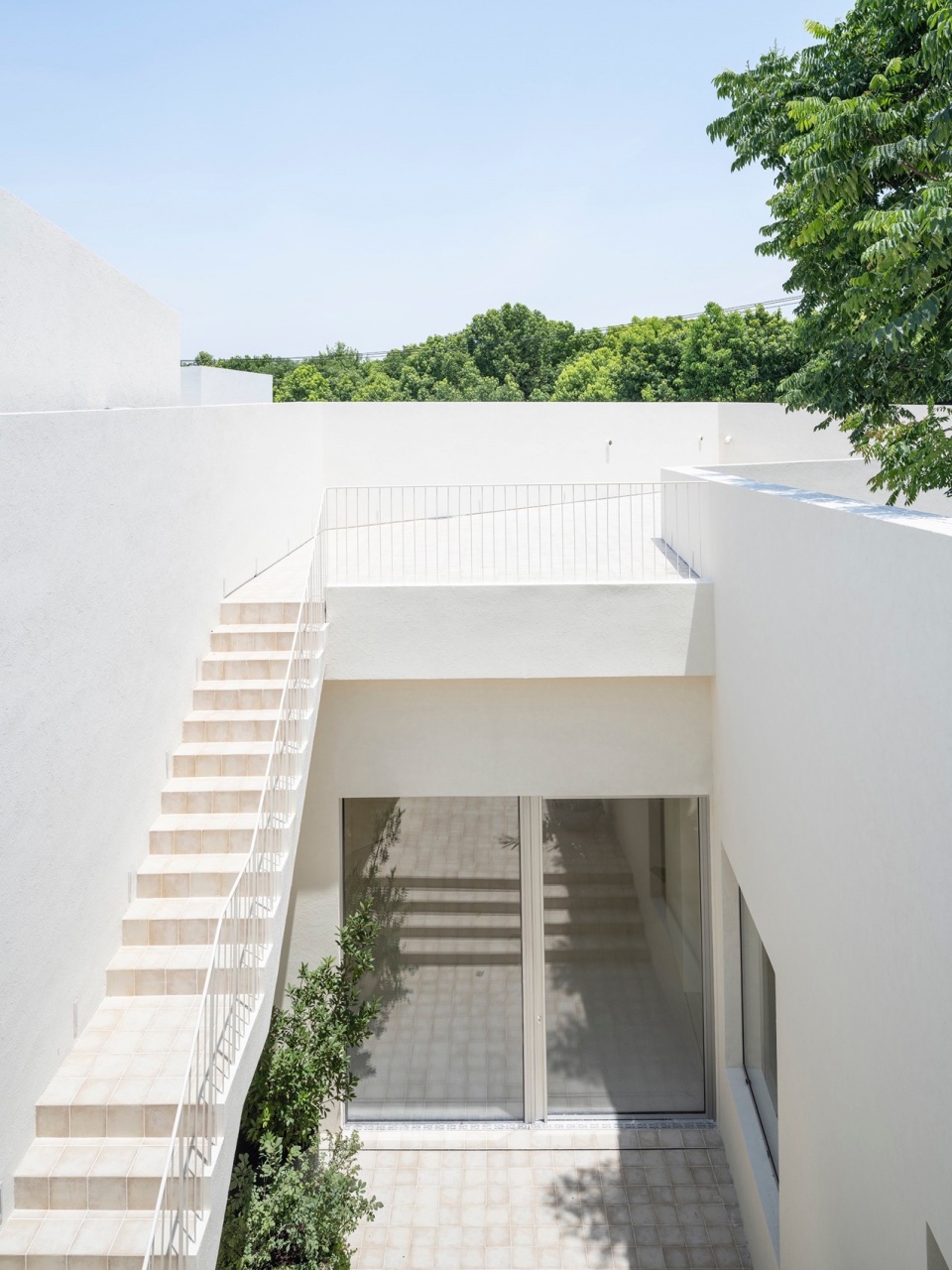
▼从屋顶平台俯瞰庭院,Courtyard viewed from rooftop platform
因为水池的挖掘,土方就地平衡,并根据空间体验的意图堆出一个小山包来,螺旋空间随之起伏,建筑和地形共同形成了一个可以让人的身体可以感受上下的、旷奥的、且具有连续性的微而弱的“假山”,“曲径迷园”便形成了。
▼工作室及住宅迷宫图解,Illustration of the studio and residential maze
Earth excavated from the swimming pool was redistributed on-site to create a small hill, shaped intentionally to enhance the embodied spatial experience. As the spiral path undulates, through the interplay of architecture and terrain, a delicate and continuous “rockery” emerges—inviting the body to traverse up and down, and to dwell in a space that is at once expansive and profound. In this way, the vision of Qujing Miyuan takes form.
▼泳池,Swimming pool
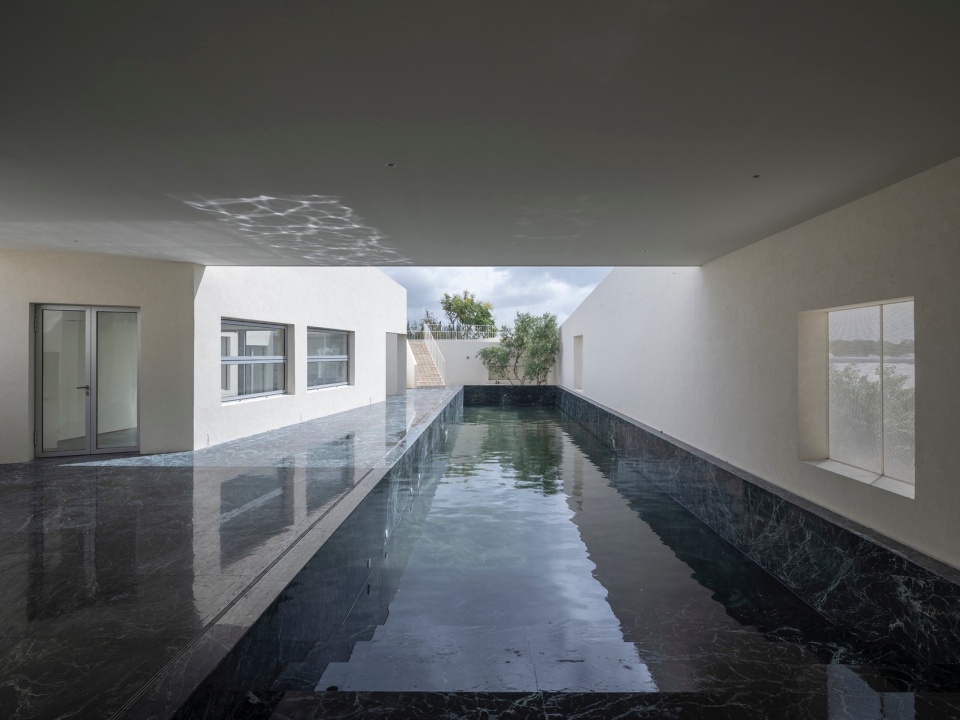
▼庭院局部,Courtyard detail
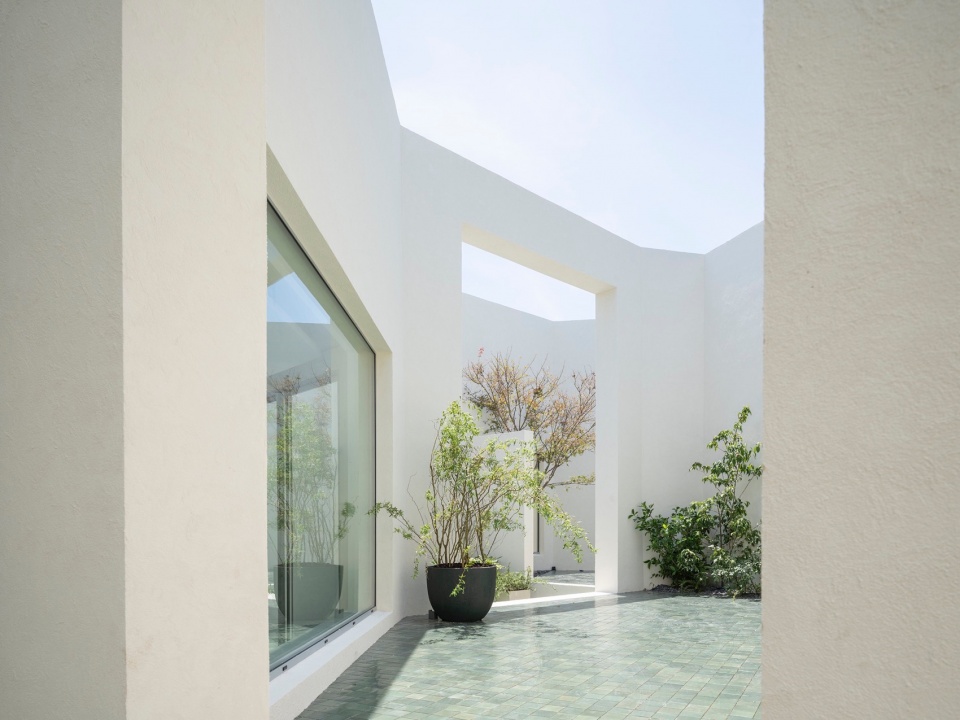
▼商店院子,Shop courtyard
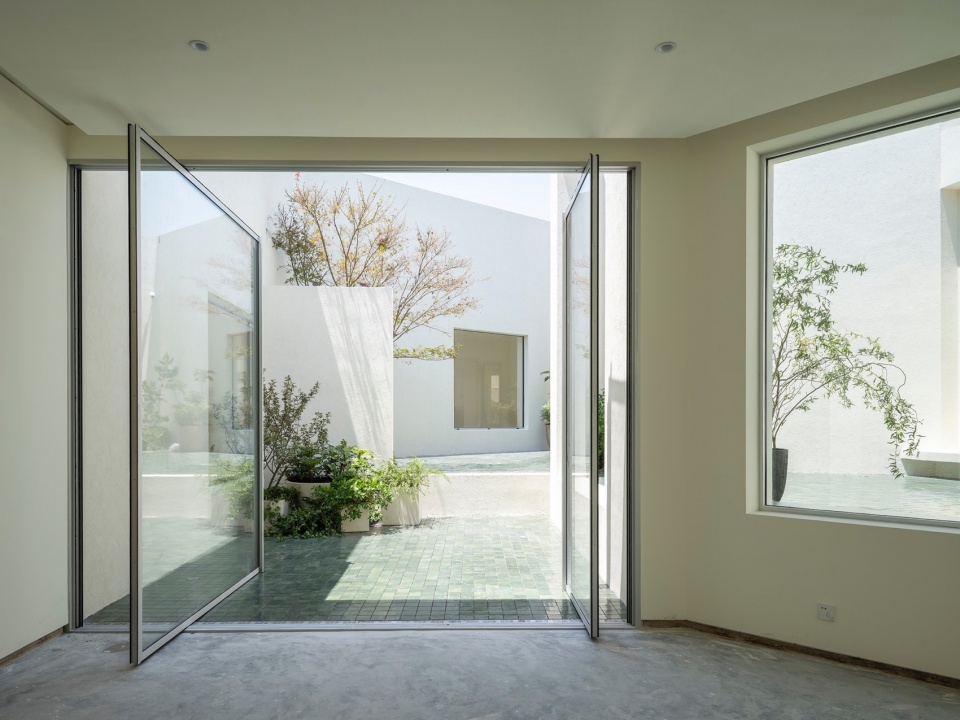
▼视线穿过多层空间,View through multi-level space
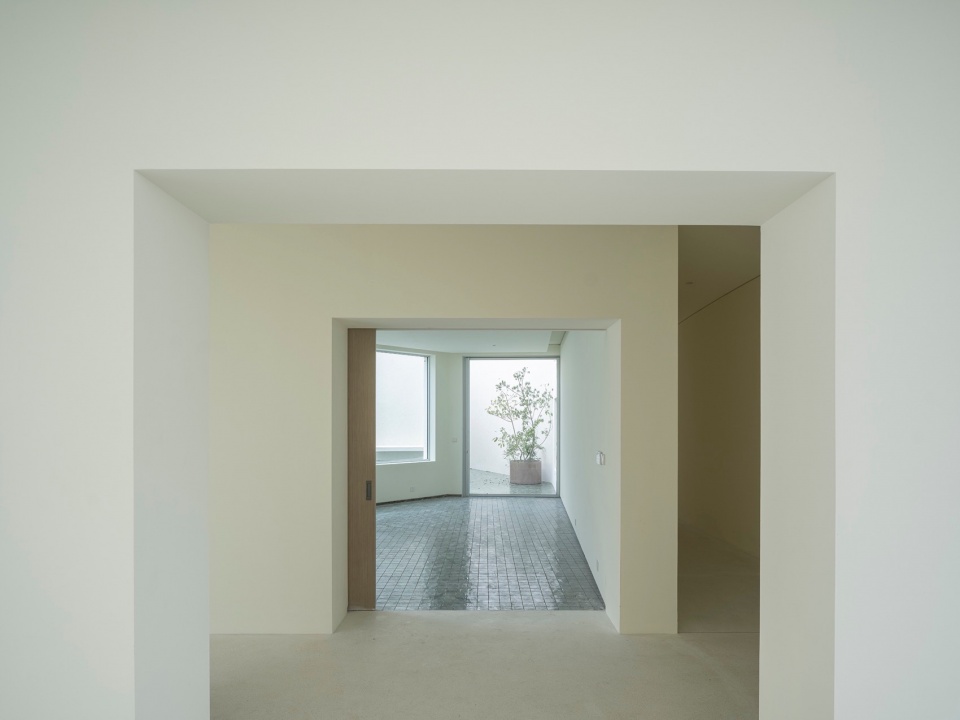
▼庭院框景,Framed view of the courtyard
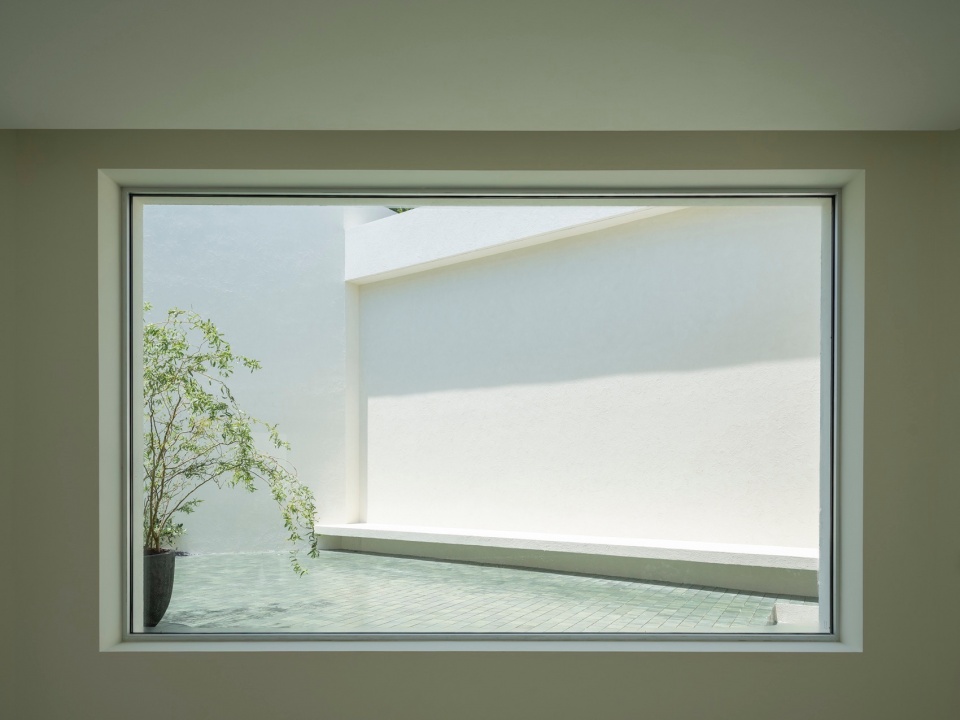
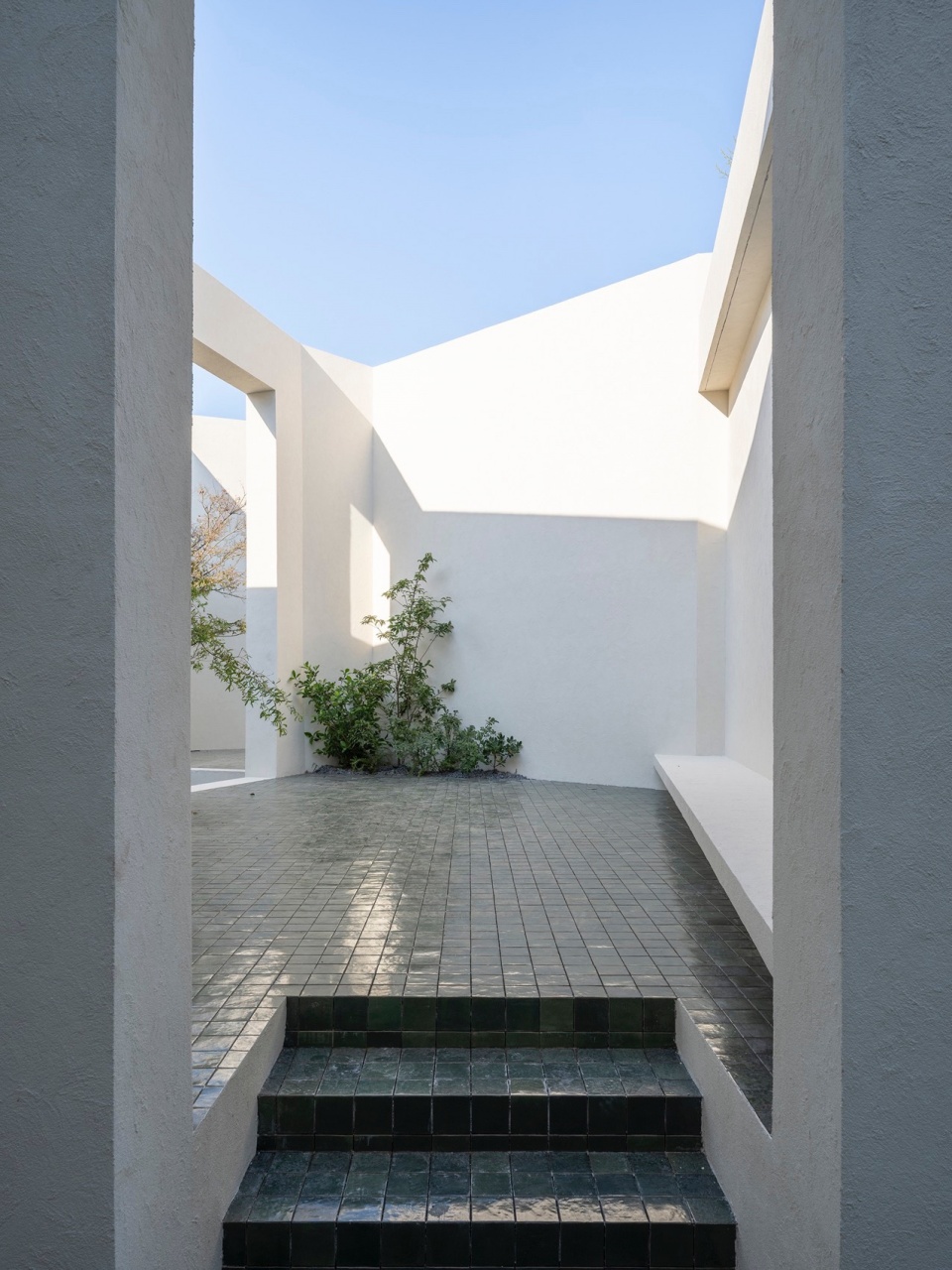
▼庭院楼梯,Courtyard staircase
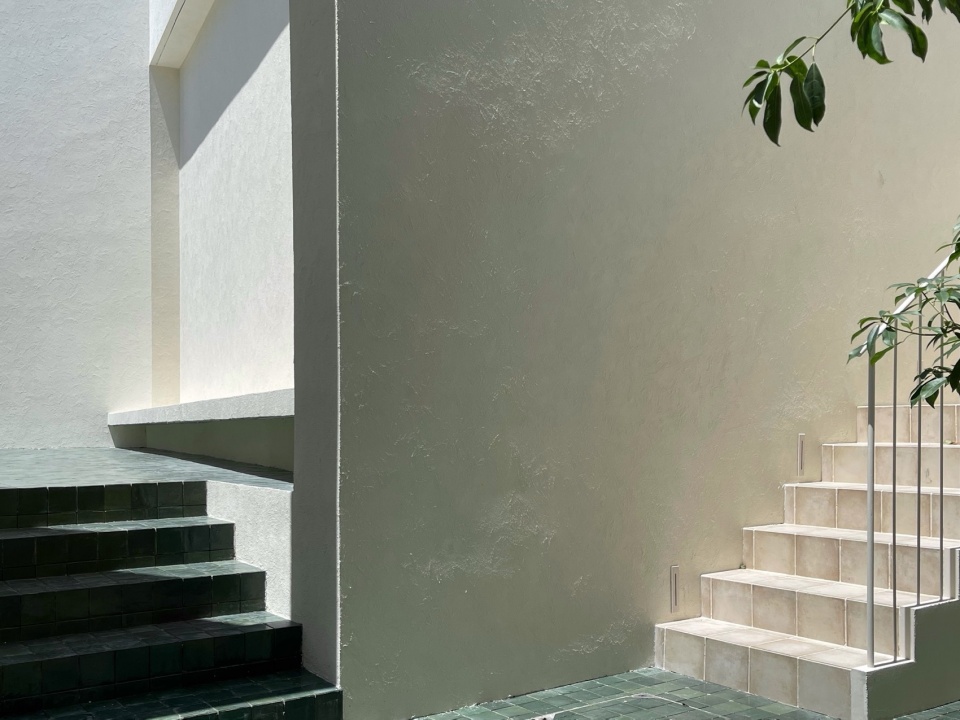
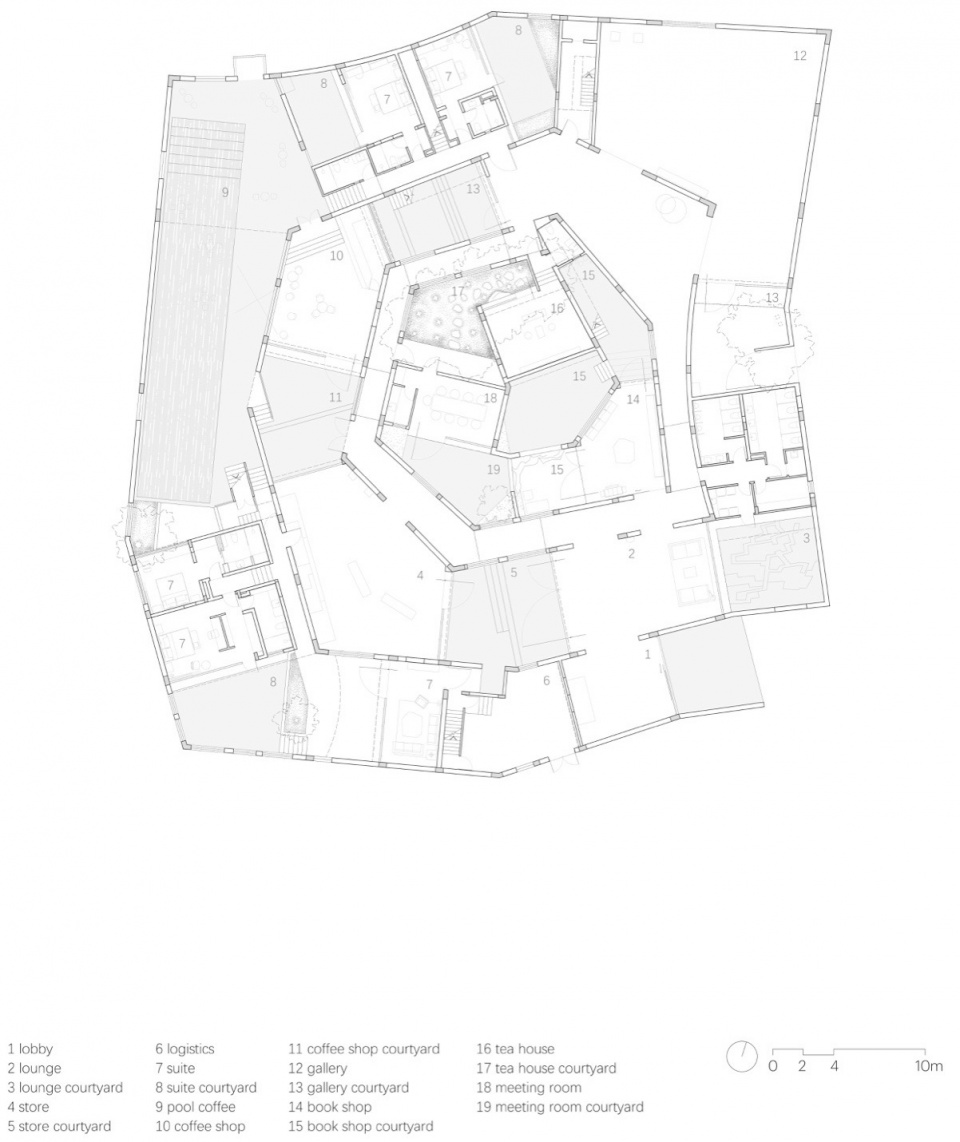
素院在原设计的空间布局基础上,融合了艺术展览、图书、瑜伽、茶室、酒店等多种业态,其空间使用和原本的工作室、客厅、书房、茶室、客房等布局基本完全吻合,这也意味着江南传统居住空间在使用上的通用性在先前的图解转换中被带入了,同时传统民居空间的等级结构也被螺旋图解解构,获得了一种自由感,这在素院的重新使用中得到了证明。
▼本项目与进落民居平面的类比,The analogy between the project and the floor plan of the entrance and exit residential buildings
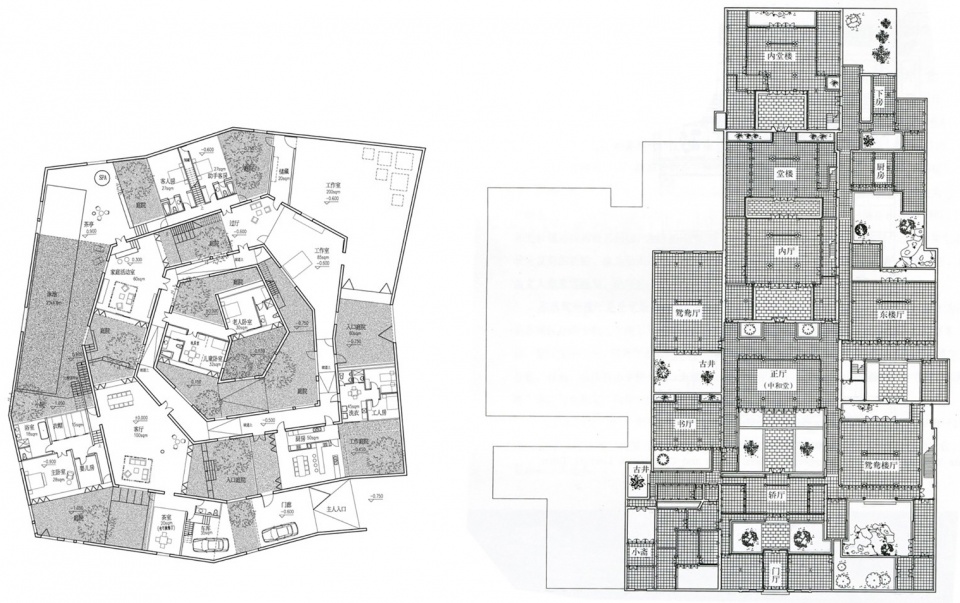
Based on the original spatial configuration, Su Yuan now integrates multiple programs, including art exhibitions, a library, yoga rooms, a tea house, and guest accommodations. These functions align closely with the studio’s initial layout of a living room, study, tea room, and guest rooms—demonstrating how the spatial typology of traditional Jiangnan dwellings carries a kind of inherent adaptability. This continuity reveals how traditional space, even through diagrammatic transformation, retains a general-use flexibility. At the same time, the hierarchical structure often found in vernacular residences has been dissolved by the spiral logic, resulting in a new sense of spatial freedom—something affirmed by Su Yuan’s contemporary usage.
▼中心庭院,Central courtyard
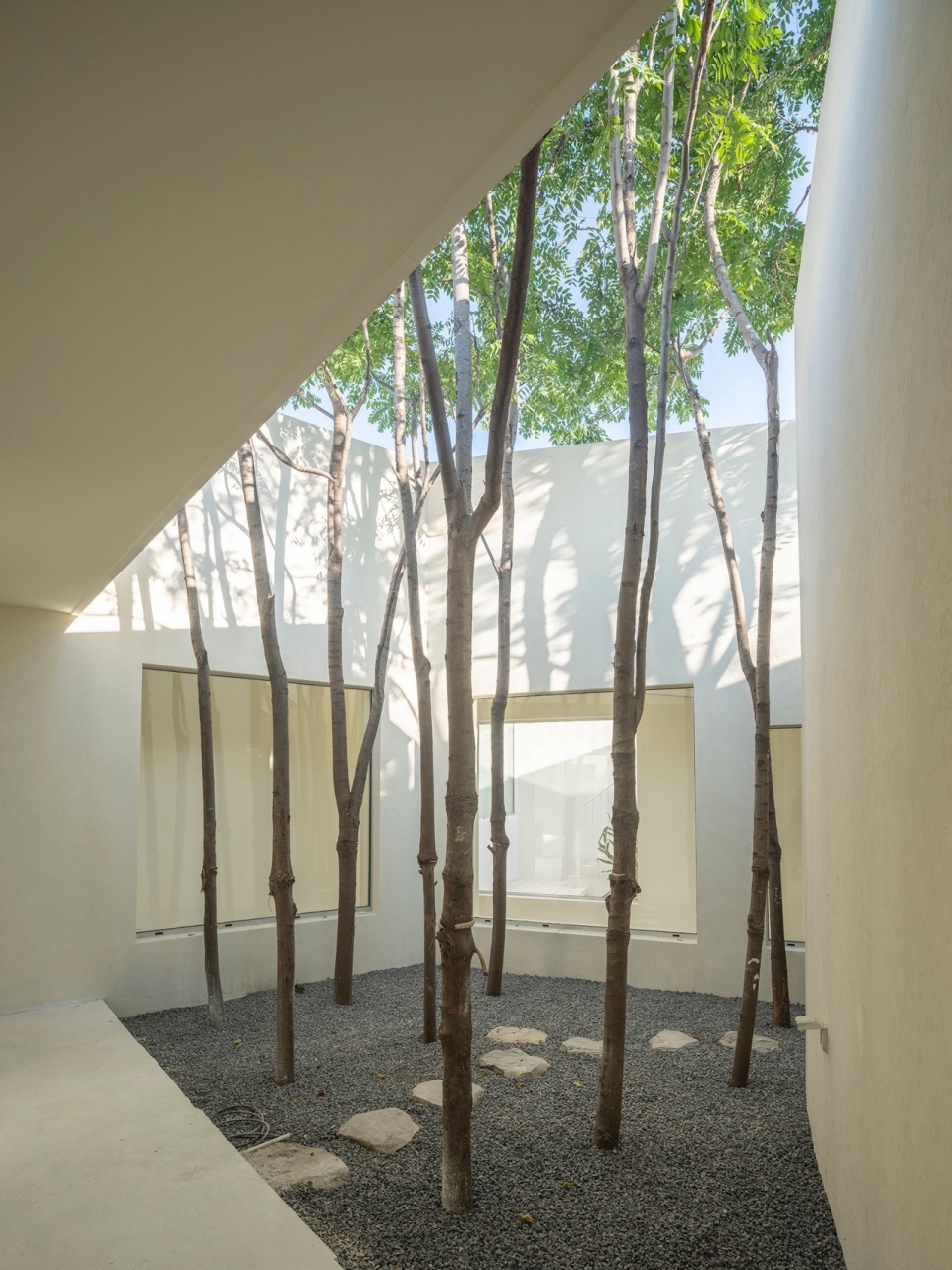
▼从书店望向庭院,View from bookstore to courtyard
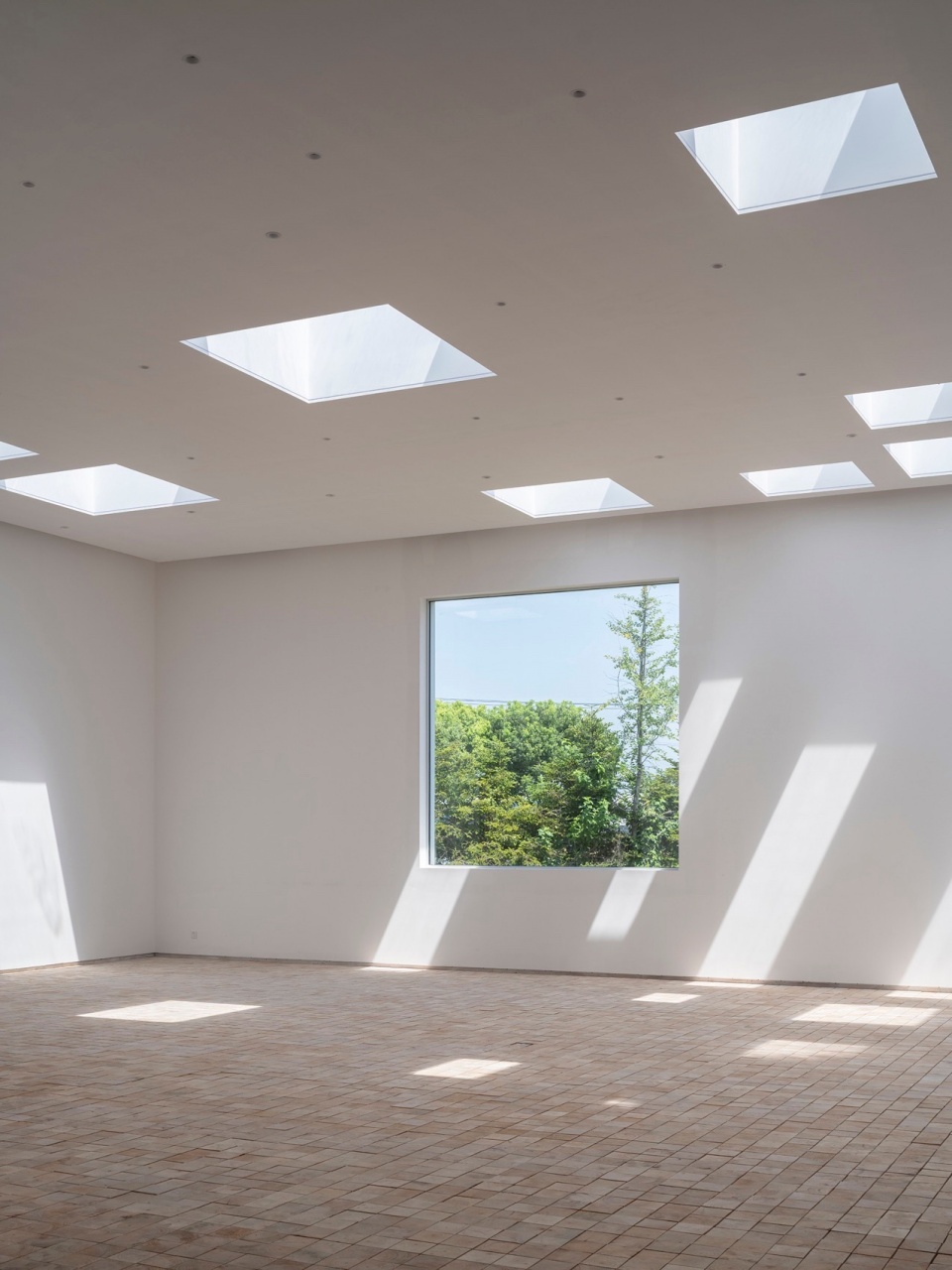
▼主画廊窗景,View through the main gallery window
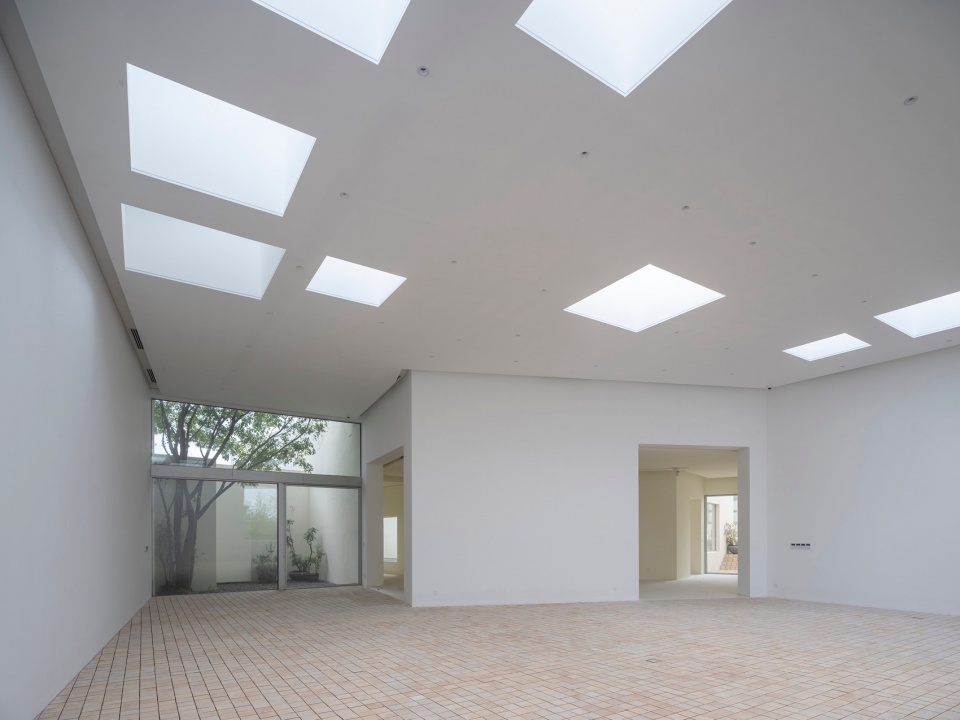
▼主画廊与庭院,Main gallery and courtyard
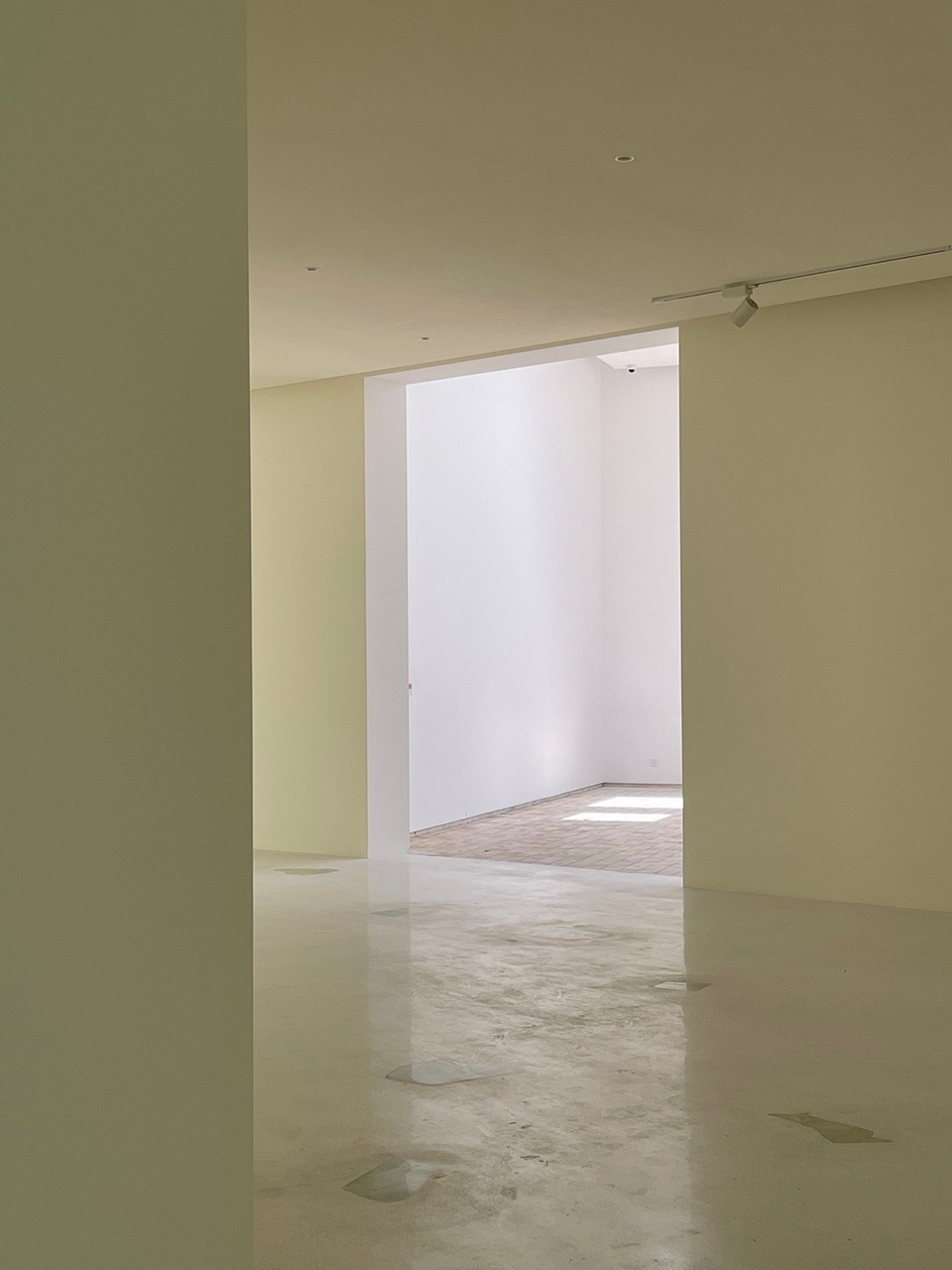
▼走廊局部,Corridor detail
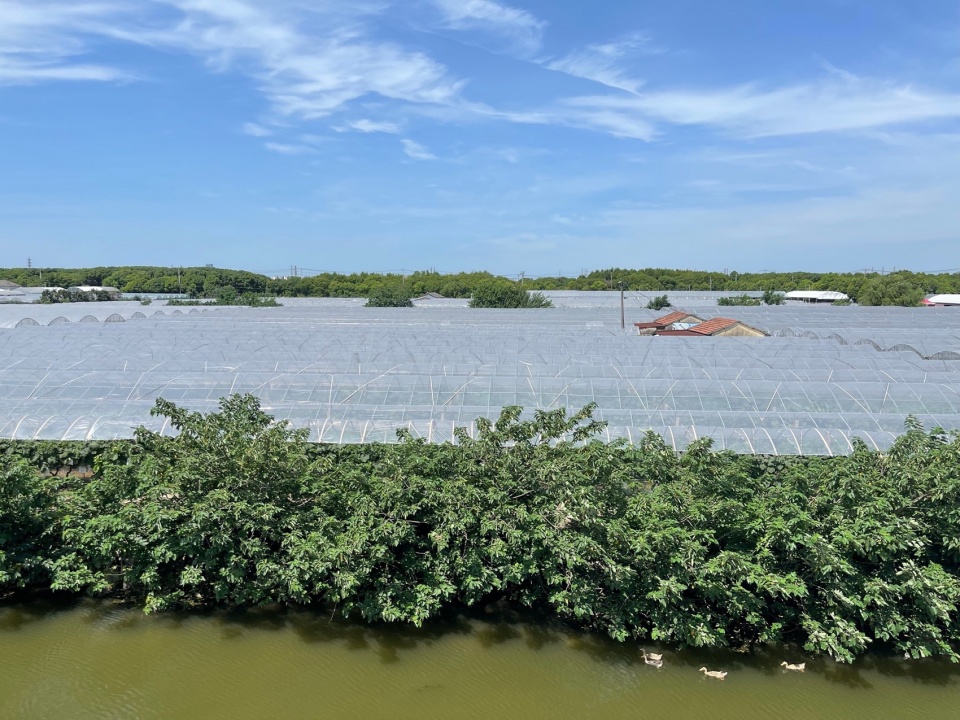
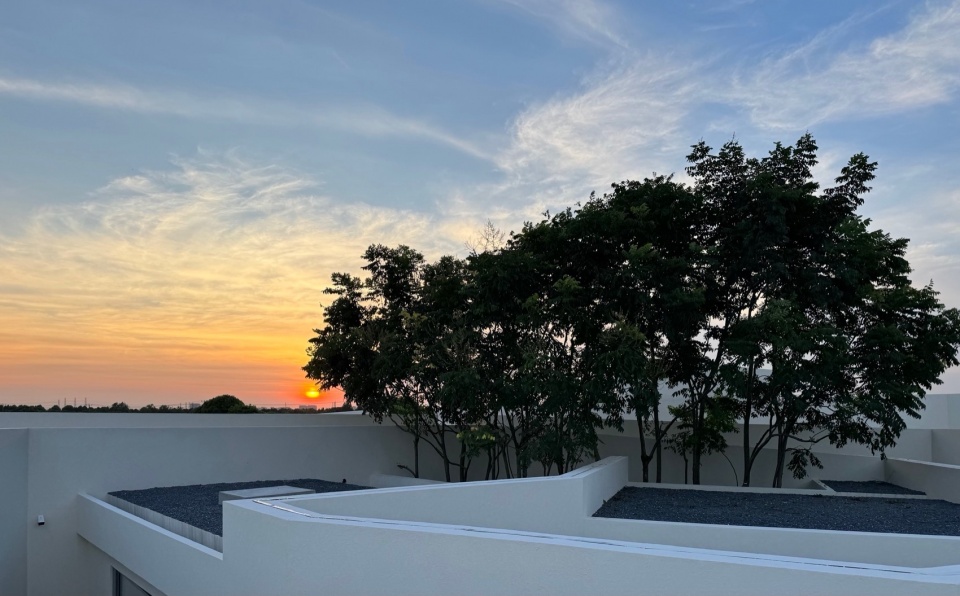
当人们在房间与院子的交替穿梭中忽而被引至屋顶,一望无际的葡萄园之开阔便也能被收入其中,天气晴朗的傍晚,视线可直抵地平线尽端的落日。中心庭院的13棵细枝的树木15年来仿佛变成了一棵树,伴随着建筑的时间并适应着空间向上生长,是建筑不变的使用者。
As visitors move fluidly between rooms and courtyards, they may unexpectedly be led to the rooftop, where a vast view of the surrounding vineyards unfolds. On clear evenings, the sightline can stretch uninterrupted to the sunset at the horizon. In the central courtyard, thirteen slender trees planted fifteen years ago have seemingly grown into a single organism—rising upward with the building, adapting to its spaces over time. They remain the most constant occupants of Su Yuan.
▼从屋顶露台眺望葡萄园,View of the vineyard from rooftop terrace
▼夕阳下的素院,Courtyard at sunset
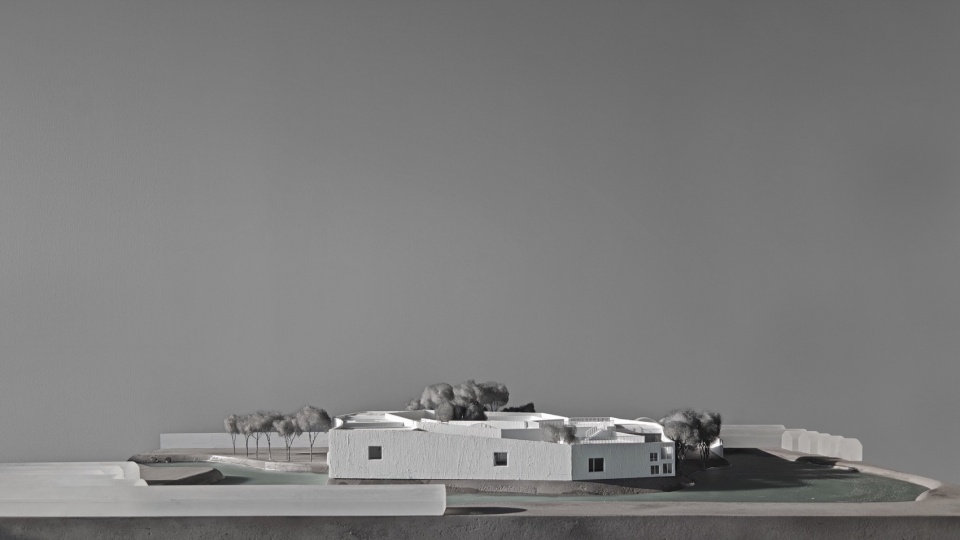
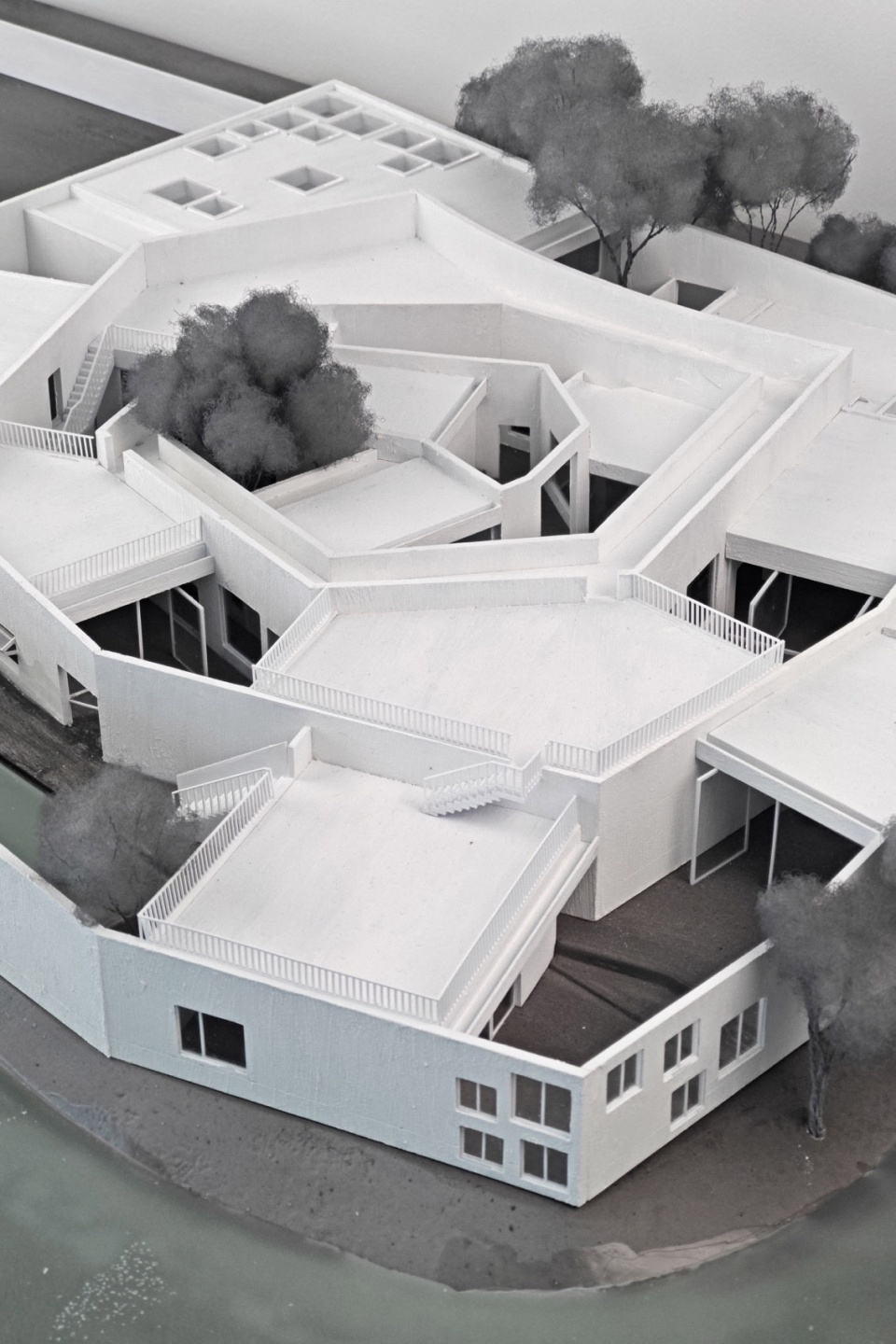
▼模型,model
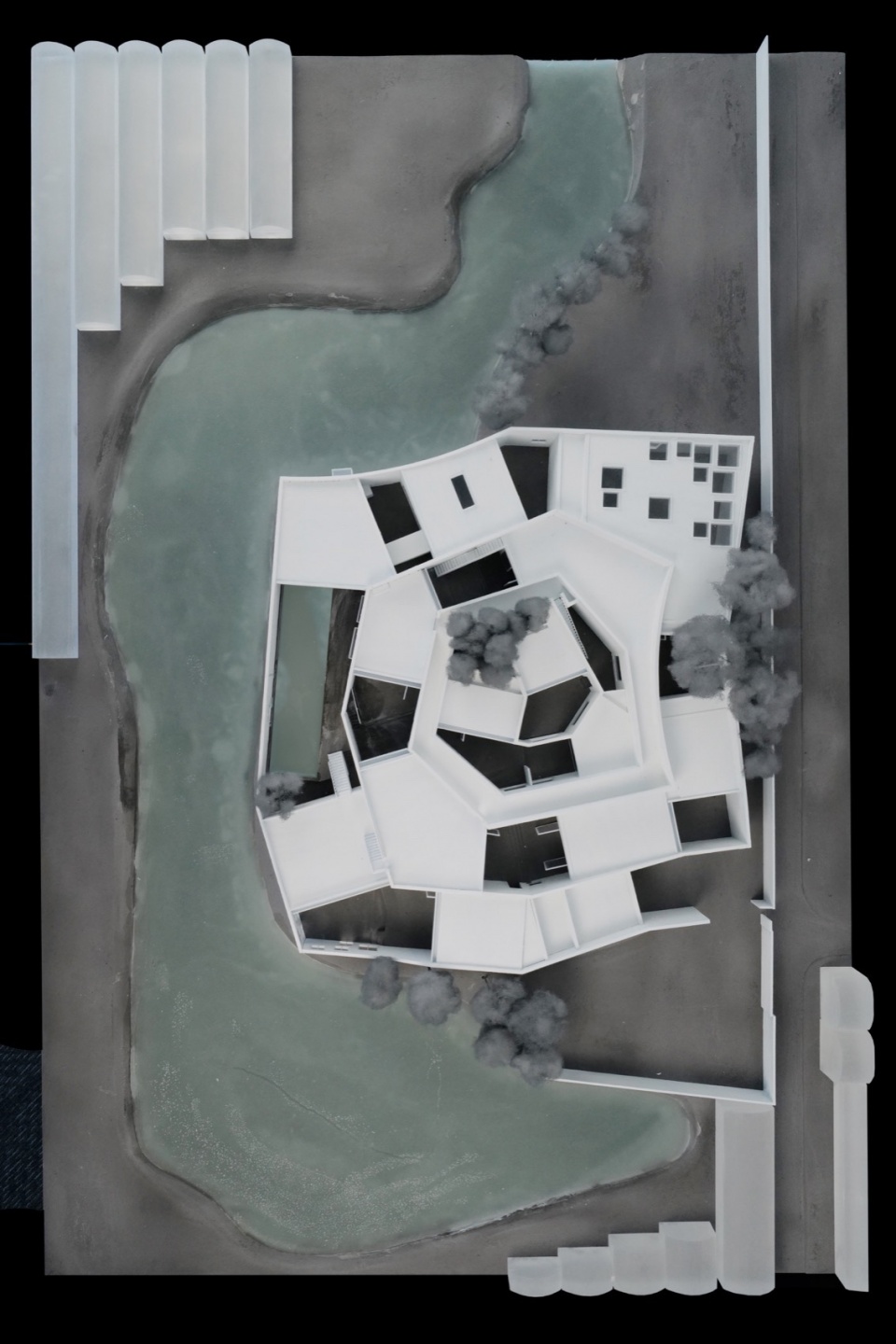
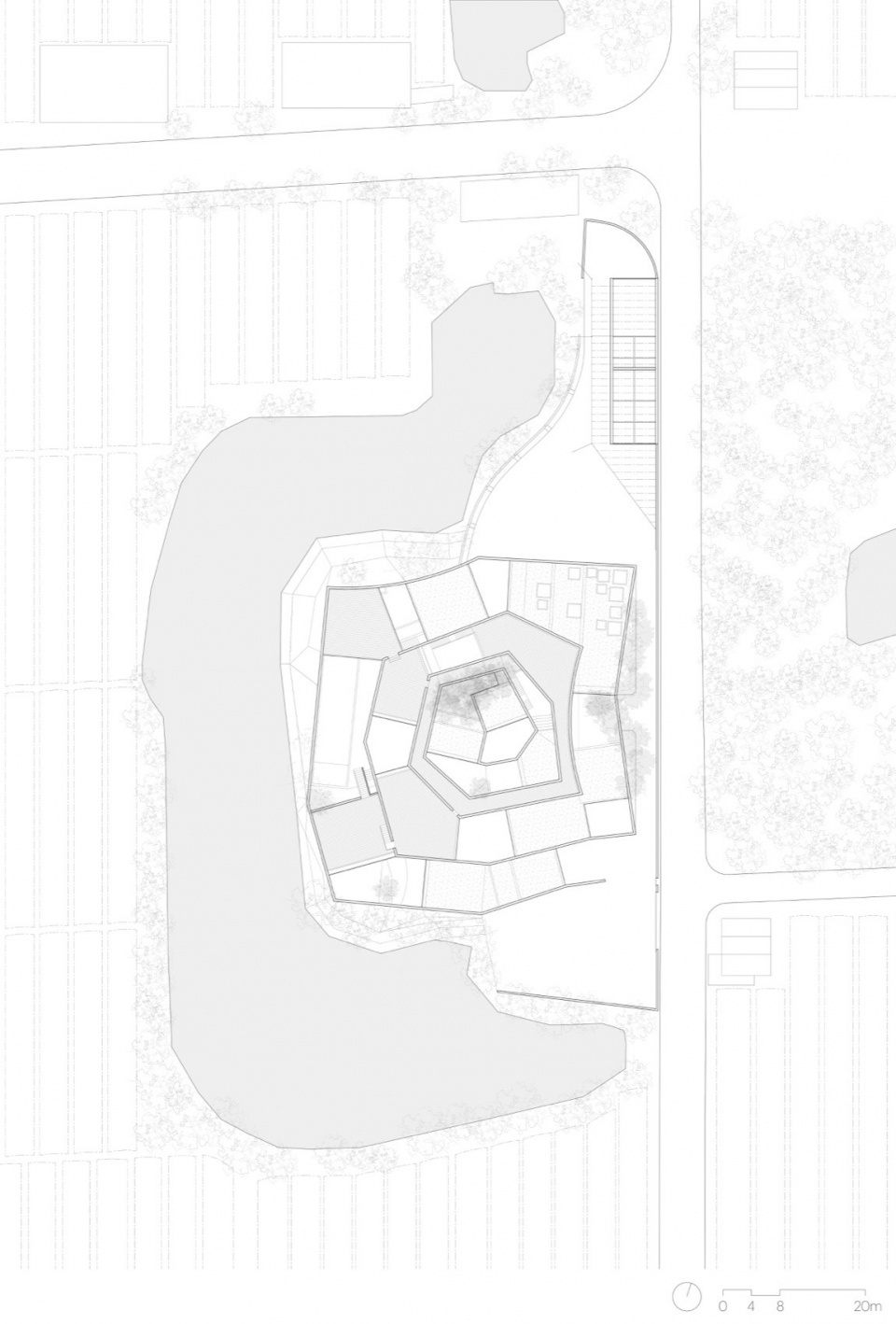
▼总平面图,master plan
▼底层平面图,ground floor plan
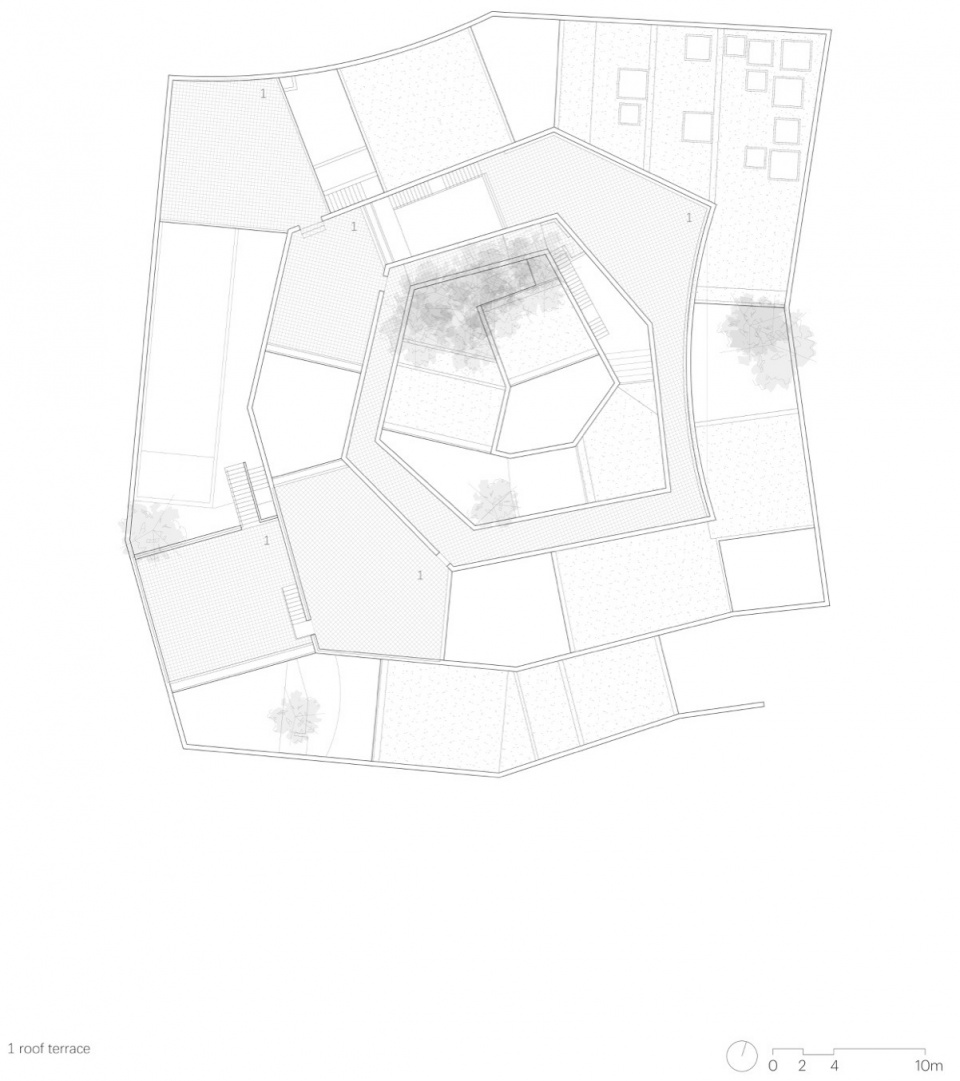
▼顶层平面图,roof terrace plan
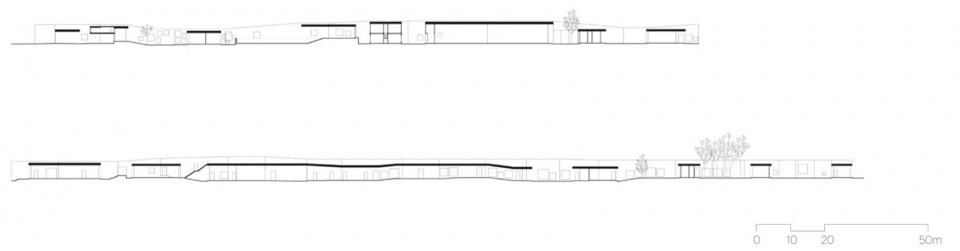
▼剖面图,section
project name: Su Yuan, House and Garden
location: Dayu Village, Malu Town, Jiading District, Shanghai
design period: 2008.07 –
completion: 2024.09
architectural design: Atelier Deshaus
design team: Liu Yichun, Wang Longhai, Chen Jiang, Dou Yinian
structure, m&e: Shanghai Yaxin Engineering Consulting Co., Ltd.
interior design: Yanfei Architects
site area: 3700 sqm
floor area: 1380 sqm
floors: 2
![[荒野之家 #133#]-风帆之家,武汉 / 个个世界 + 先进建筑实验室](/_ipx/_/https://www.iecwww.com/uploads/images/20250519001/20250519001001.jpg)