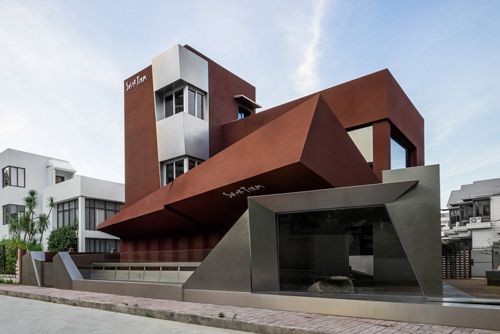
麓湖CPI岛WX建筑设计,成都 / 变余构造
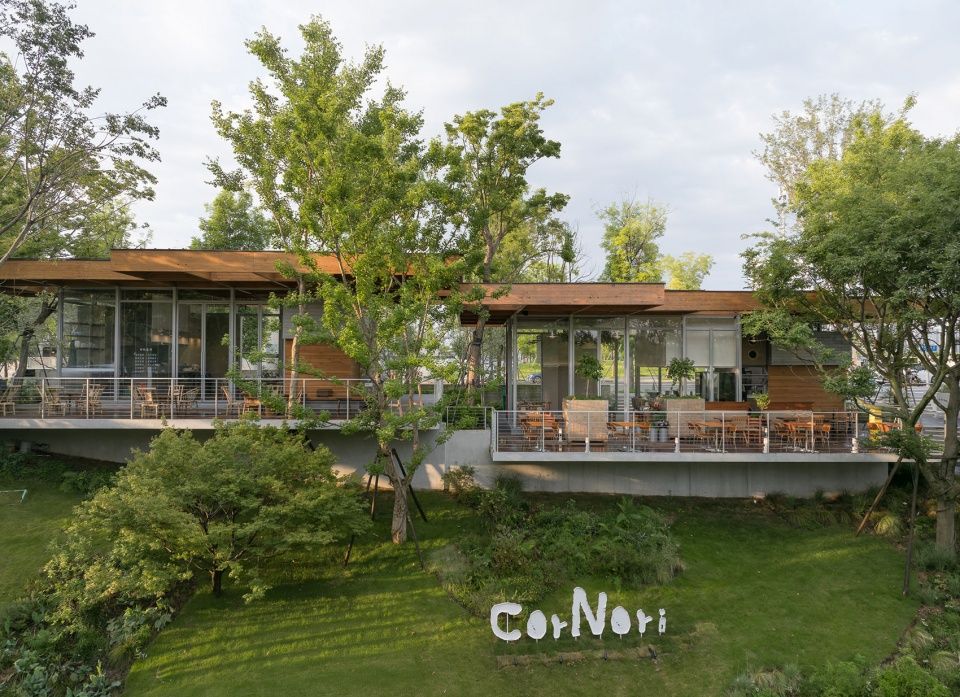
项目位于成都麓湖CPI岛,是位于成都“麓湖生态城”中麓客岛东侧的由别墅样板间集合岛改造而成的极具代表性的非标商业集群。WX号楼,是其中较为特殊的一栋,她地处CPI边界,是位于突出小半岛之上的新建建筑。
The project is located on CPI Island in Luhu Lake, Chengdu — a landmark non-standard commercial cluster transformed from a group of villa showrooms on the eastern side of Luhu Island, within Chengdu’s “Luhu Lake Eco-city.” Among them, Building WX stands out as particularly distinctive, positioned at the edge of CPI on a prominent small peninsula as a newly constructed building.
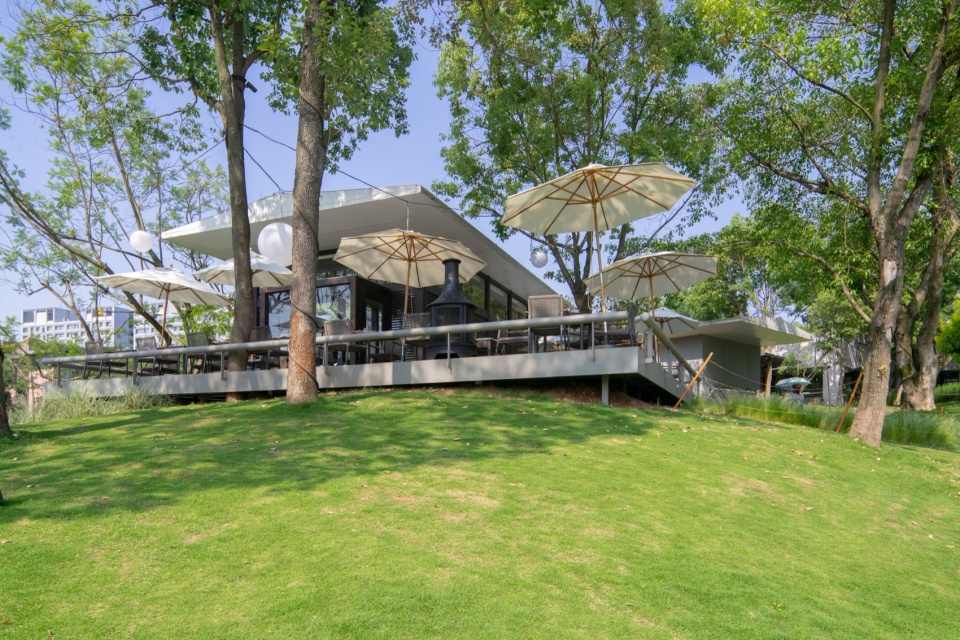
▼建筑南侧,South side of the building
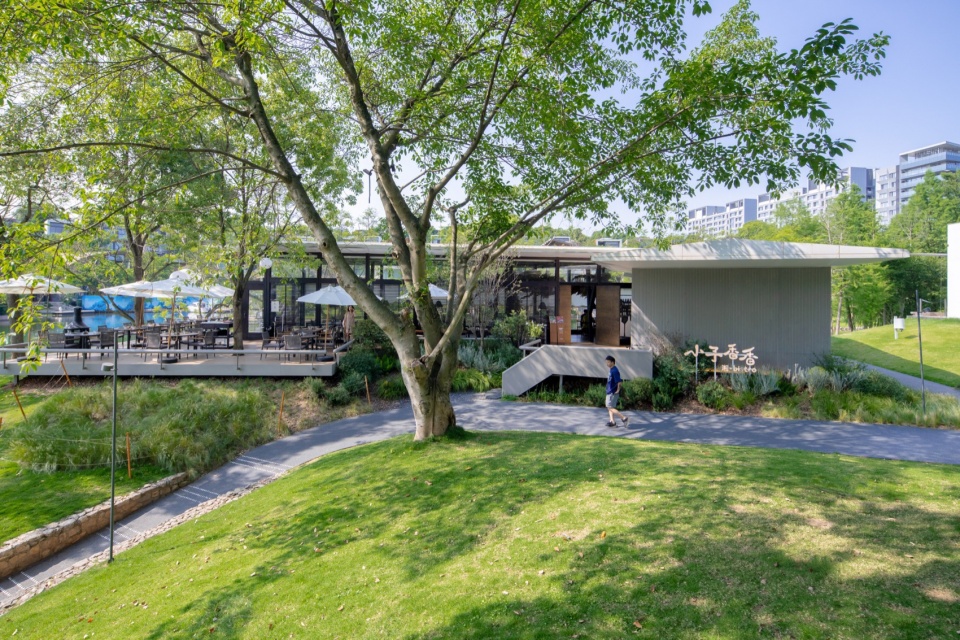
▼建筑西南侧,Southwest side of the building
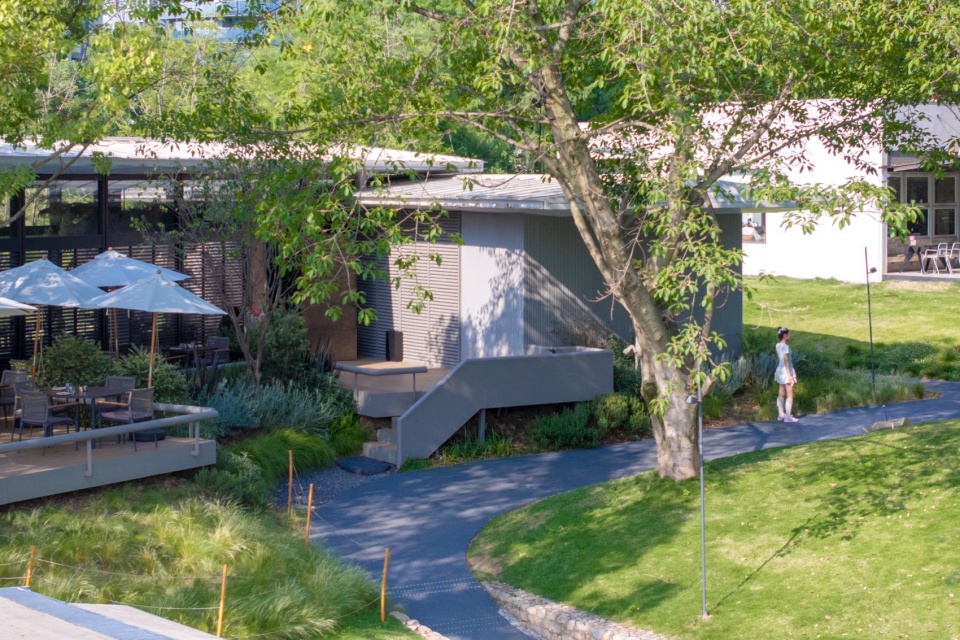
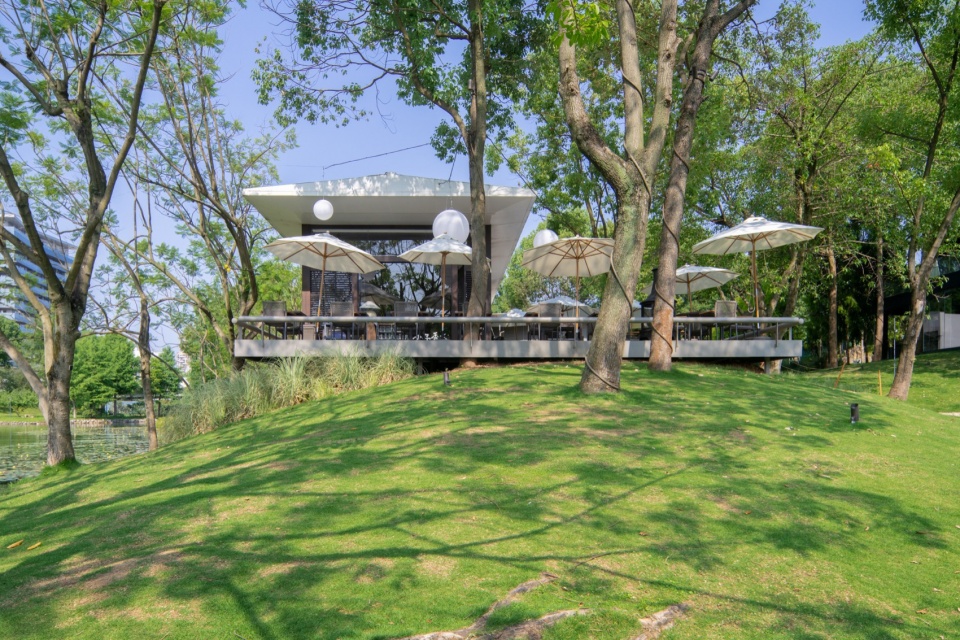
▼建筑西侧,West side of the building
环境关系的精准控制Precise Control of Environmental Relationships
项目的设计始于对场地的理解,凸起的草坡上大小树木密布。在精准测量了树木点位与树冠高度之后,我们对场地树木进行分析划分等级,并决定了树木去留,以此“卡”出了建筑的平面与高度控制线。
The design process began with a deep understanding of the site: a raised grassy slope densely populated with trees of various sizes. After carefully measuring the positions and canopy heights of the trees, we analyzed and categorized them, making deliberate decisions about which to preserve and which to remove. In doing so, we effectively “carved out” the building’s footprint and established its height constraints.
▼卡出来的轮廓,The “carved out” outline
▼卡在树林间,Building among the woods
▼卡出来的漂浮建筑体量,Floating building volume
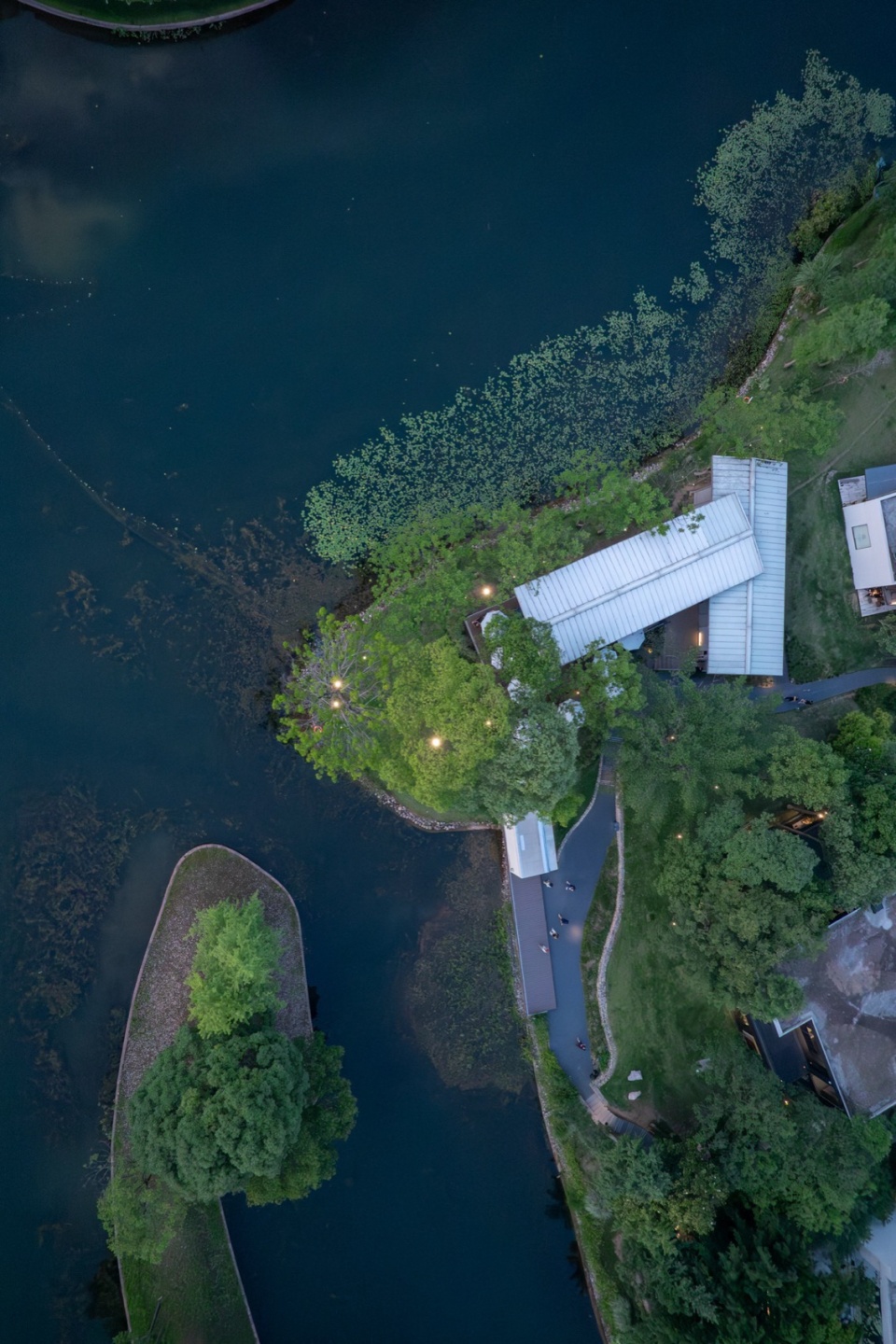
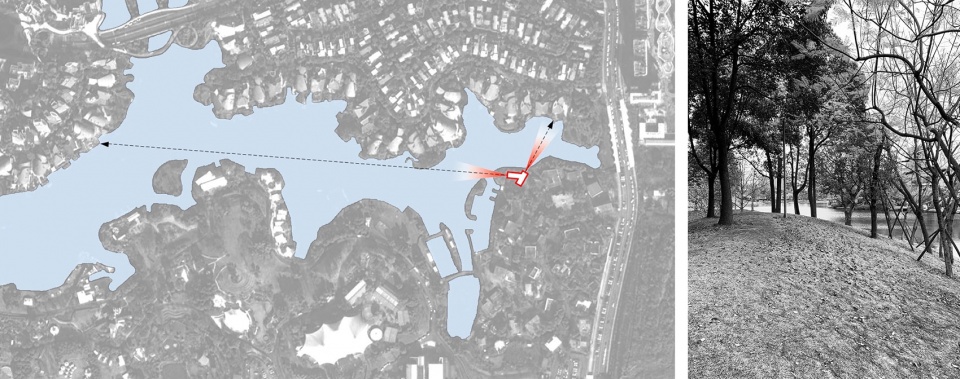
场地被湖岸线包裹且享有环绕湖景。为了将景观资源最大化,我们在有限的平面操作空间内将建筑体量进行扭转:长边平行于湖岸,短边指向湖景深处,强化并丰富了景观体验。
Encircled by the lake’s shoreline, the site enjoys panoramic views of the water. To maximize these landscape resources, we rotated the building mass within the site’s limited footprint—aligning its long side parallel to the shore and orienting its short side toward the heart of the lake vista. This approach enhanced and enriched the overall scenic experience.
▼视线操作&场地原貌,Line of sight analysis & The original state of the site
▼同角度湖景,Lake view from the same angle
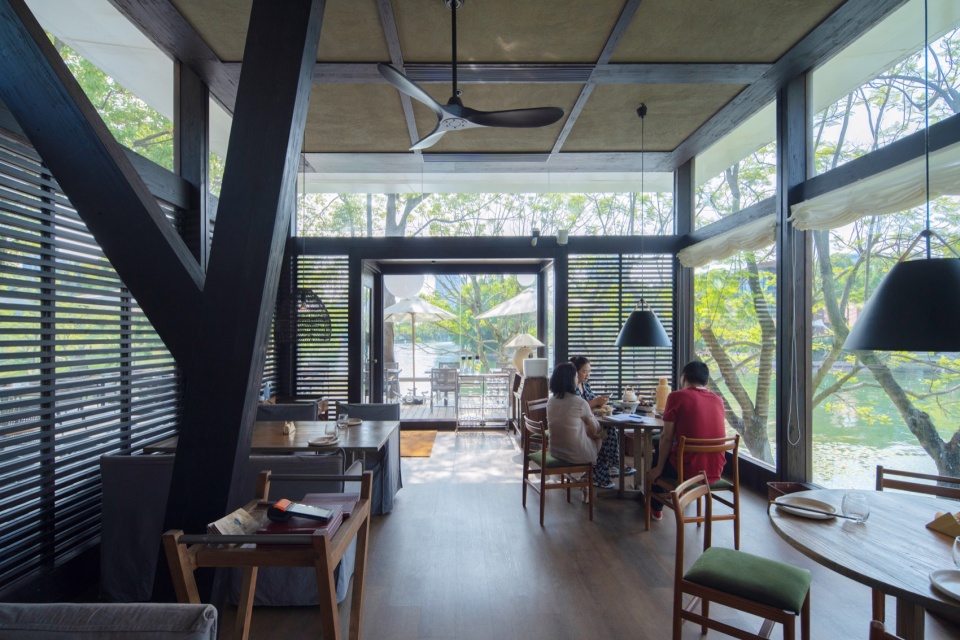
▼湖景,Lake view
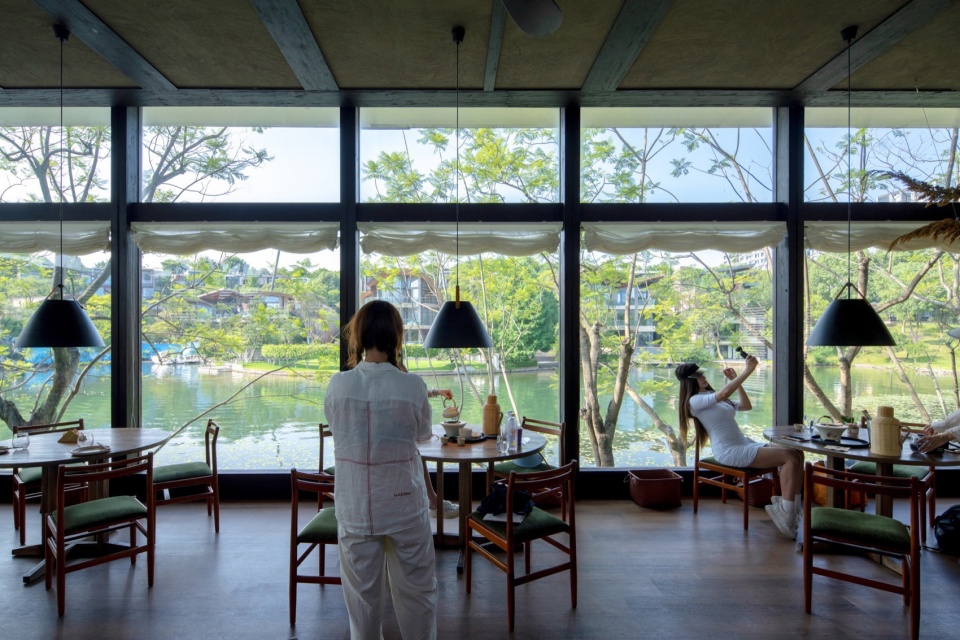
▼内外融合,Integration of internal and external
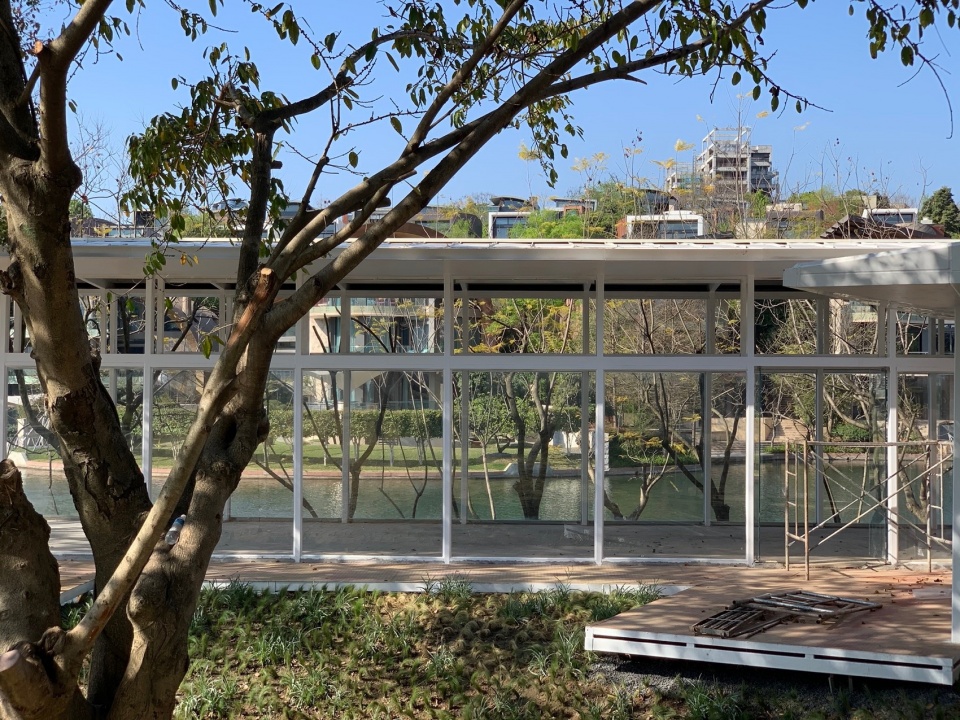
凸起的地平线与低矮的树冠限定了建筑高度:漂浮的透明盒子、水平向的取景框成为了我们的对这个建筑姿态的想象。通透的立面将内外景观融合,与树干尺度相似的钢柱强化了“似在树林间”的体验。同时,对树荫下草坡的延伸也成为了我们对建筑灰空间的设计意向。
The raised terrain and low-lying tree canopy naturally limited the building’s height, inspiring our vision of a floating, transparent box—a horizontal viewfinder delicately set within the landscape. The glazed façade blurs the boundary between interior and exterior, while slender steel columns, echoing the scale of surrounding tree trunks, heighten the sensation of being immersed within a grove. Simultaneously, we envisioned the extension of the shaded grassy slope as a semi-outdoor “grey space,” seamlessly integrating nature and architecture.
▼坡上关系,Relationship on the slope
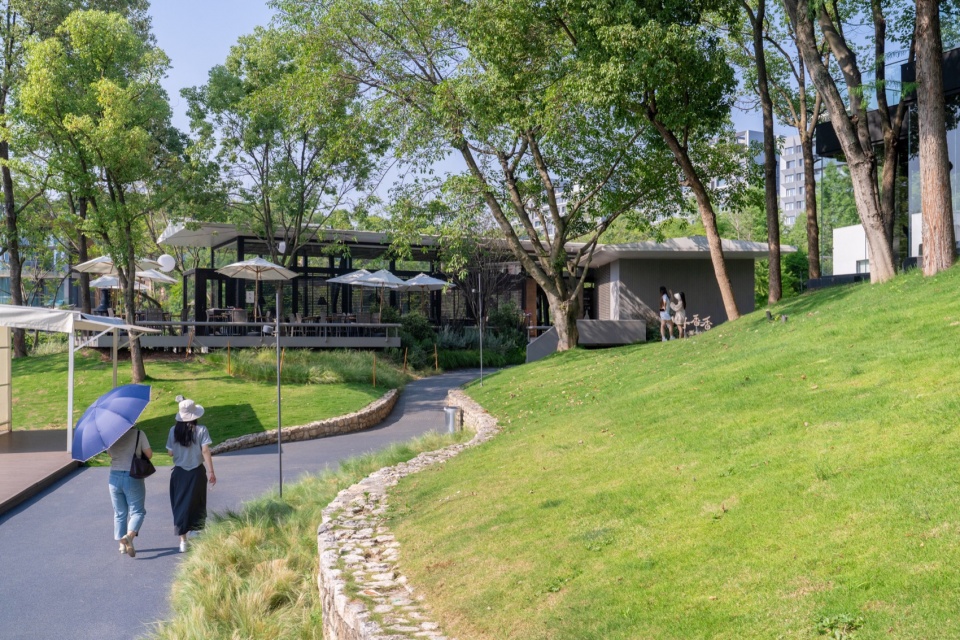
▼坡前关系,Relationship in front of the slope
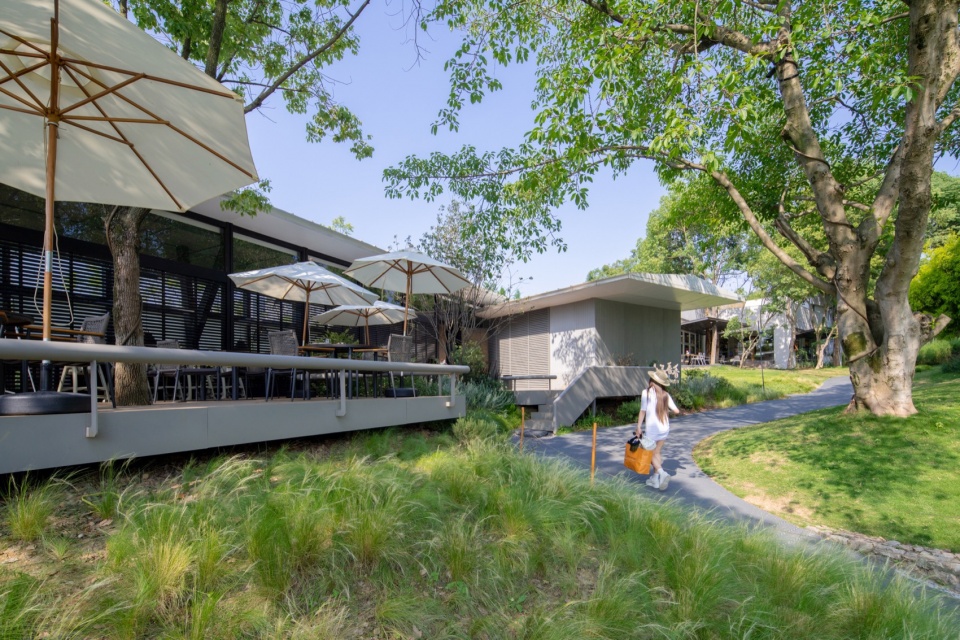
商业内容的充分留白Sufficient Openness for Commercial Content
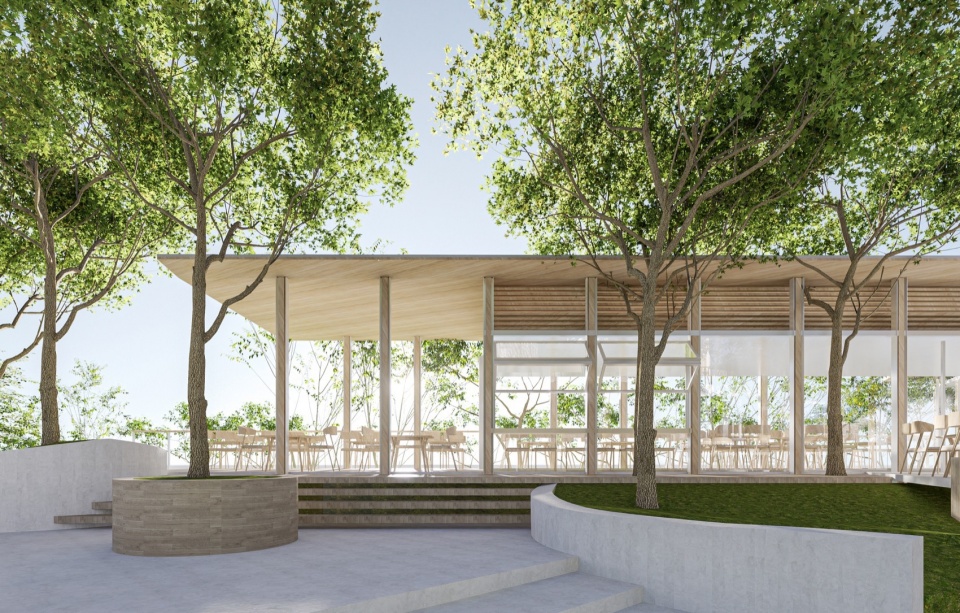
设计伊始,这个建筑便被定位为轻食店。功能需求为我们的进一步设计提供了空间操作指南:建筑次要景观面开辟辅助道路与入口,从而确定了厨房的位置并做了水电的预留;室内宽度需保证两排餐位桌椅的摆放以确保总餐位数量;主入口与主要道路的退距以形成标志性展面;将屋檐以格栅形式设计成设备层将空调藏入。
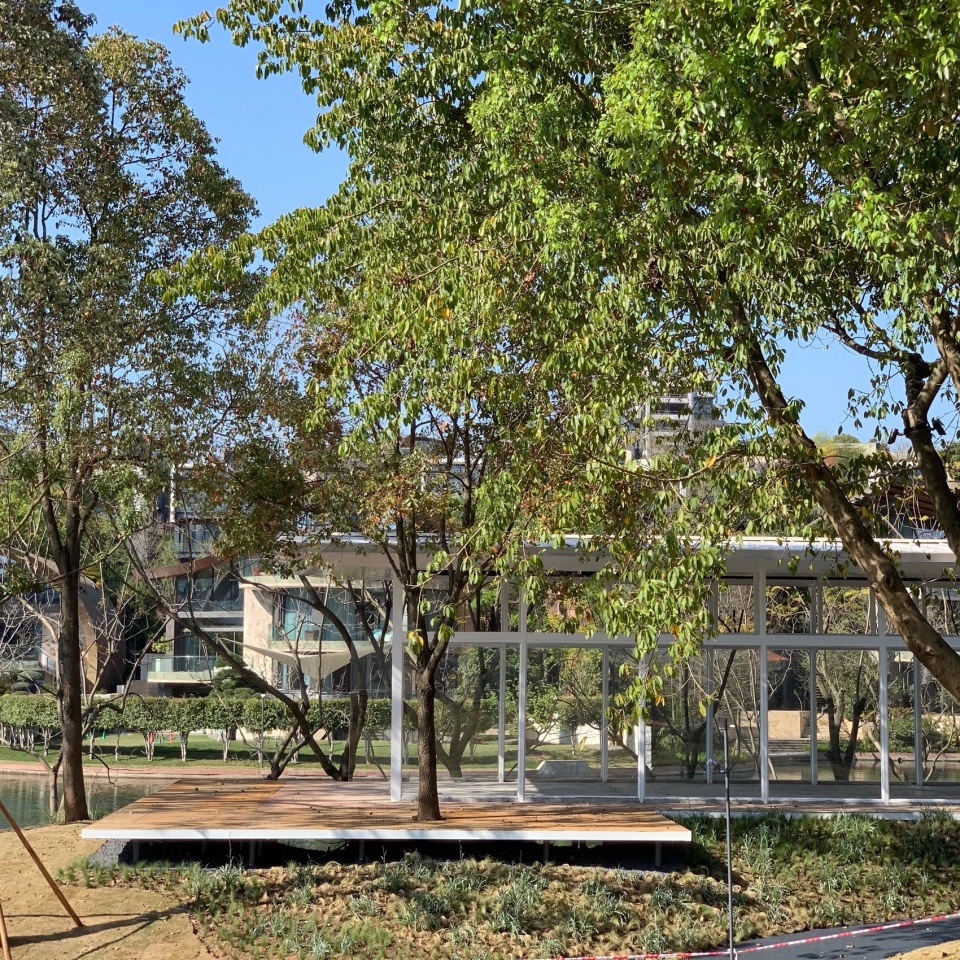
From the outset, the building was envisioned as a light dining venue. Functional requirements provided clear spatial guidelines: auxiliary roads and entrances were positioned along the building’s secondary façade, determining the location of the kitchen and allowing for water and electrical reserves; the interior width was planned to accommodate two rows of dining tables, ensuring the necessary seating capacity; setbacks from the main entrance and road were introduced to create a signature display frontage; and the eaves were designed as a lattice-like equipment zone to discreetly house the air conditioning system.
▼灰空间 设计,Design of the grey space
▼灰空间 刚建成,Grey Space – Just completed
▼灰空间 填满加玄关,Grey space – Fill up and add a foyer
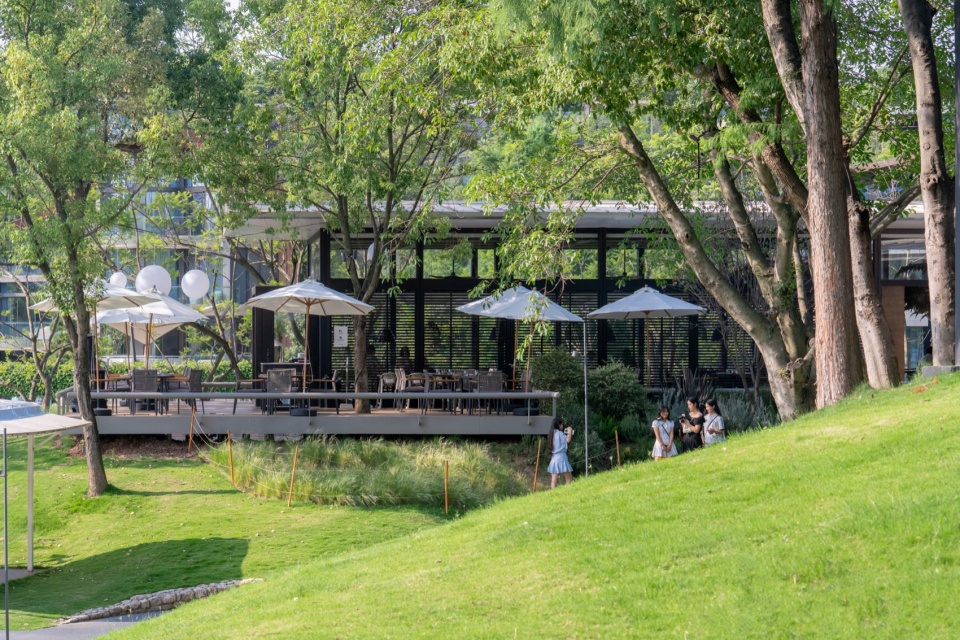
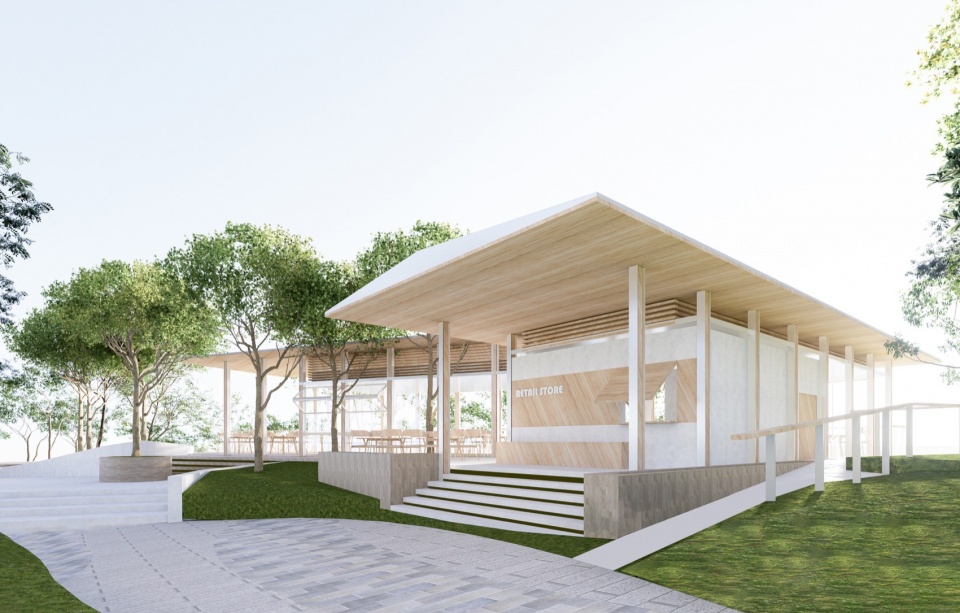
▼入口关系 设计退台+前区,Entrance relationship design – Exit + front area
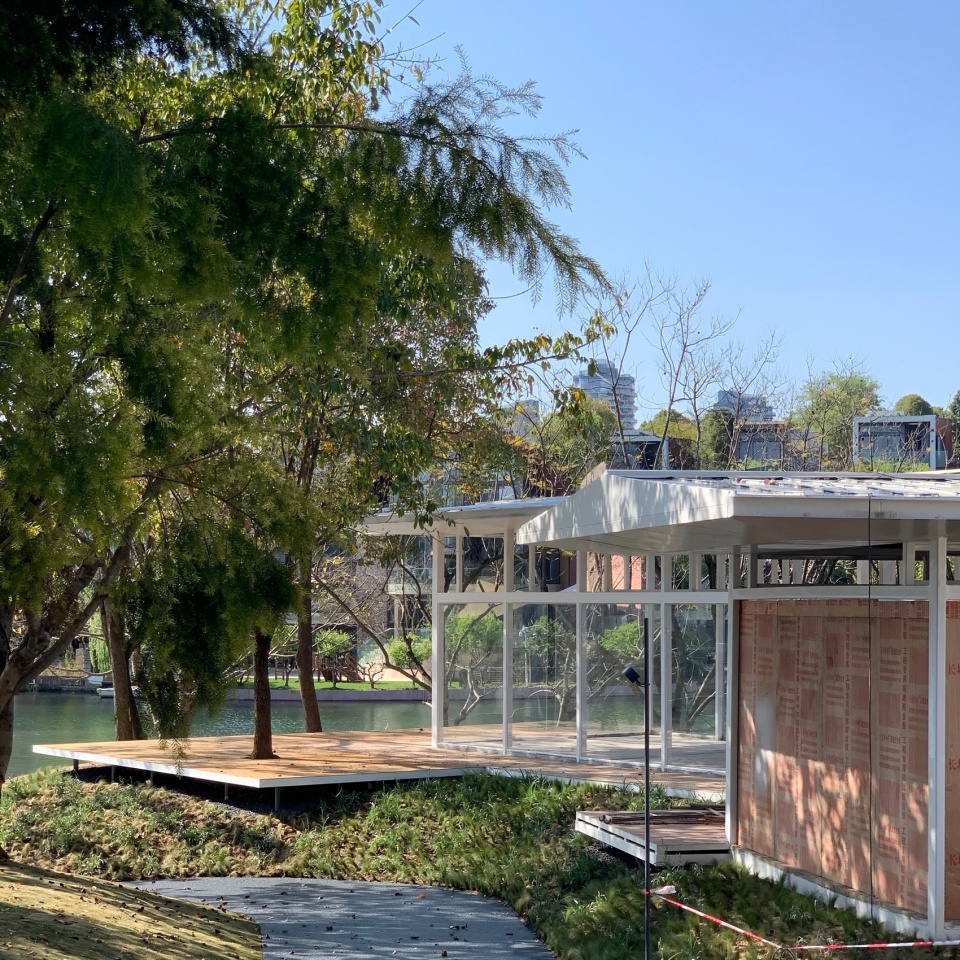
▼入口关系 刚建成 直逼道路,Entrance relationship – Just built, directly approaching the road
▼入口关系 现状重塑入口关系,Entry relationship – Reshaping the entry relationship
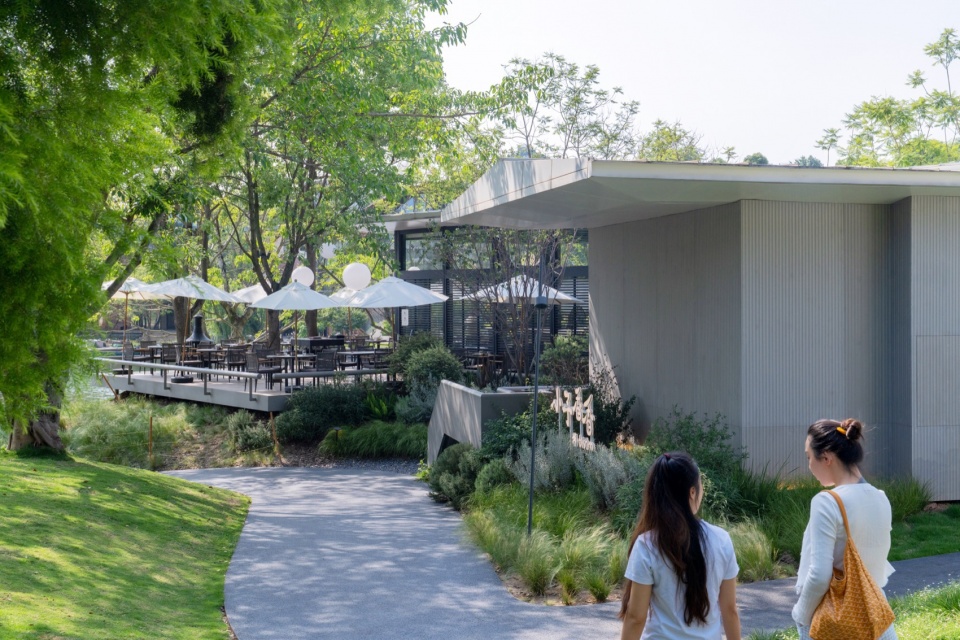
有趣的是,在施工后期,商家介入提出了新的需求。后面又经历了商家更换,期间建筑空置了半年左右,在这样建筑师不可控的过程中,一些原有的设计也发生了转变:先前预留的观景面檐下空间被占领,从而得到了更多的室内可运营空间,并在树冠下增设了平台,拓展了室外外摆区;在餐食品类确认之后,厨房空间需求增加,建筑侧翼被彻底填满,入口与道路关系也被完全改变;顶部的设备层也被转移到了临湖的结构架空层内,从而获得了更高的室内净高。
Interestingly, in the later stages of construction, the tenant/operator became involved with new demands. After a subsequent tenant change, the building remained vacant for about half a year. During this period beyond the architect’s control, several of the original design intentions evolved: the under-eave area initially reserved for views was absorbed into the interior, increasing the usable indoor space; new platforms were added under the tree canopy to extend the outdoor dining area; once the menu concept was finalized, the kitchen’s footprint expanded, completely occupying the building’s side wing and altering the relationship between entrance and circulation; and the rooftop equipment zone was relocated to the lakeside elevated structure, thereby achieving a greater interior ceiling height.
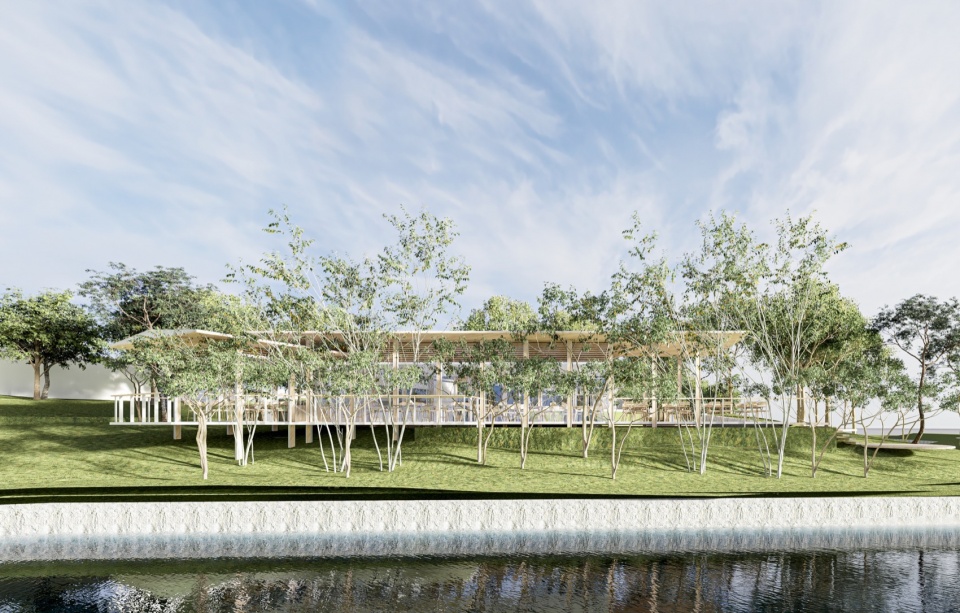
▼沿湖长向 设备顶部,Perspective along the lake – facade
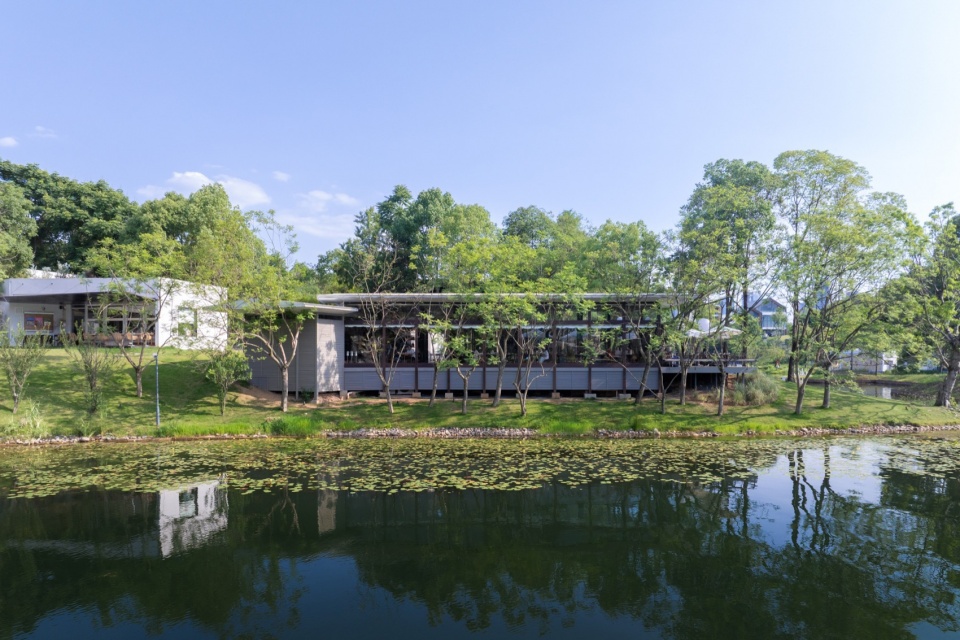
▼沿湖长向 设备底部,Perspective along the lake – facade
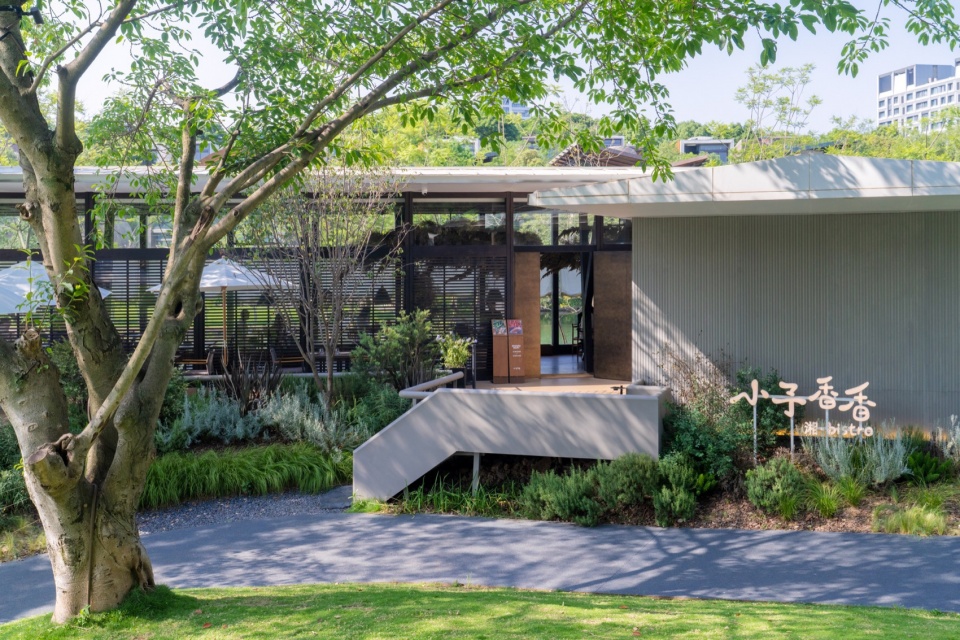
▼入口,Entrance
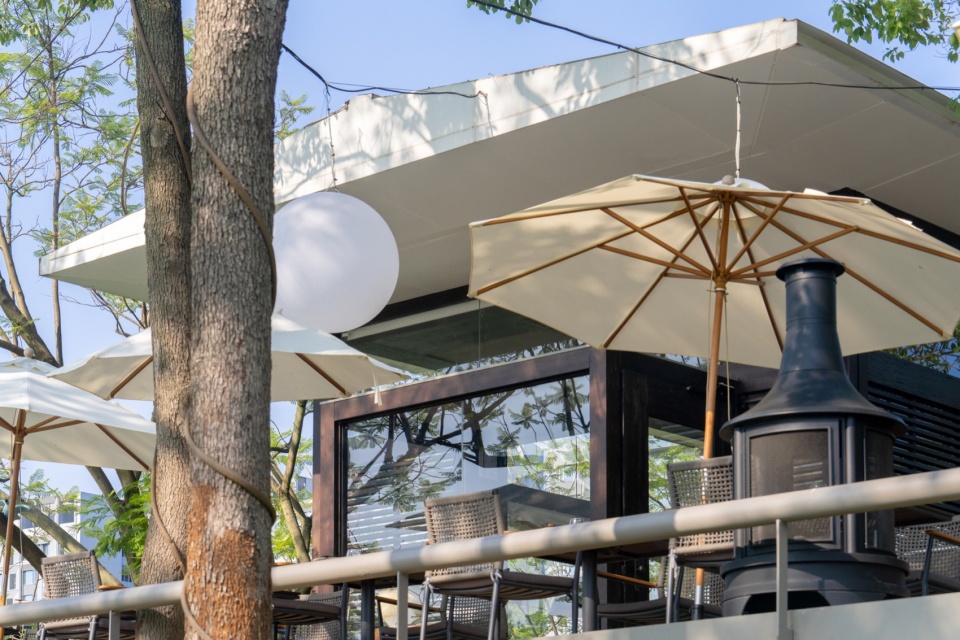
▼灰空间+檐口,Grey space + eaves
现在的设计市场中,商业空间的设计方可以是建筑师、室内设计师、运营方、广告公司等等。在WX最终呈现的过程中,不可否认,我作为建筑师也经历了忒修斯之船式的自我怀疑。我始终认为,在商业空间中,设计只是运营的介质,好的空间应该是多方合作共赢的平台,他可以在时间推移中演化以适应市场的瞬息万变,因此,将充分的留白给与运营方更多的空间可能或许也是设计师的工作之一,毕竟商业的本质始终是盈利。
In today’s design landscape, the designers of commercial space can include architects, interior designers, operators, advertising agencies, and more. In the case of WX, I, as the architect, undeniably experienced a kind of Ship of Theseus-like self-questioning. I have always believed that in commercial architecture, design serves as a medium for operation — a good space should function as a platform for multi-party collaboration and mutual benefit, capable of evolving over time to meet the demands of a rapidly shifting market. In this sense, deliberately leaving space open-ended for the operator to shape and adapt may also be part of the architect’s responsibility. After all, at its core, commerce is fundamentally about profitability.
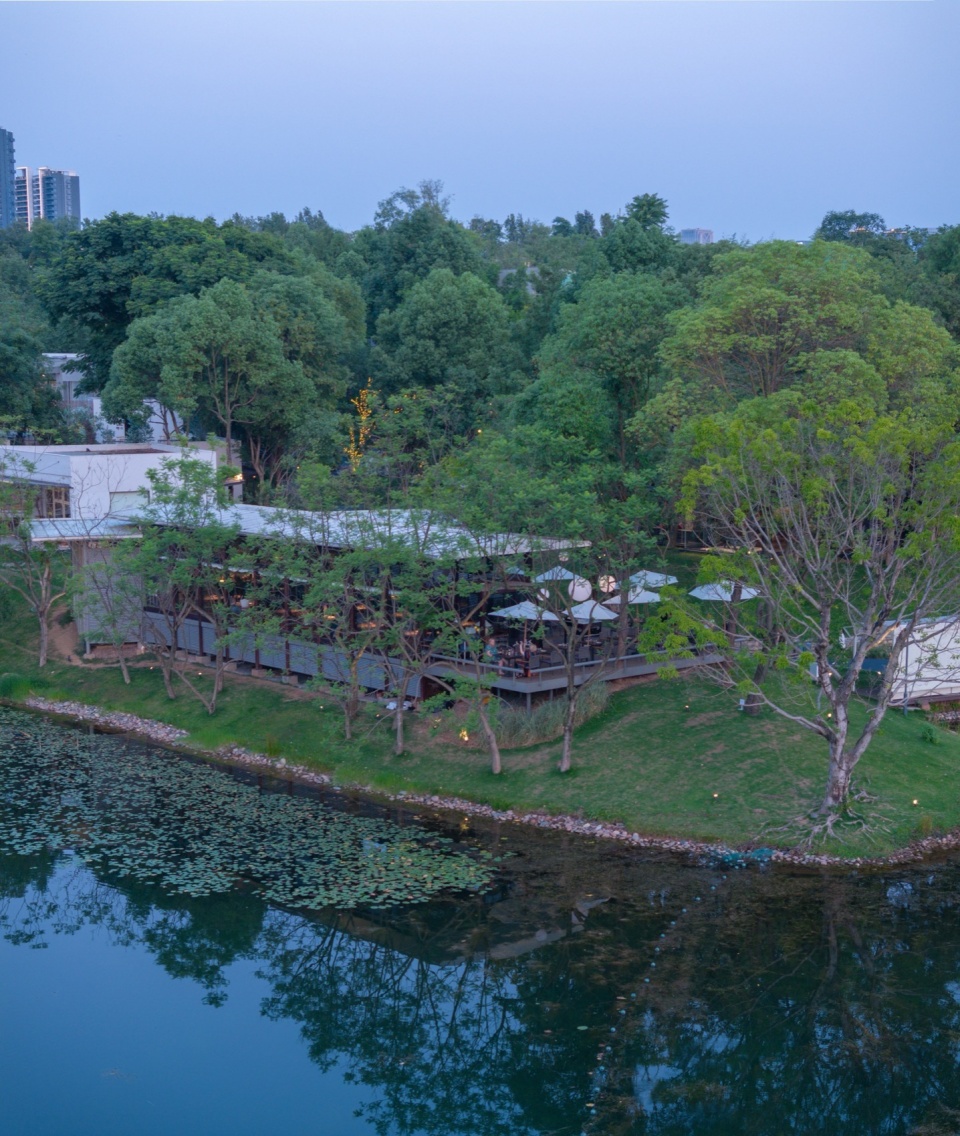
▼湖边远眺,Looking at the building from the lakeside
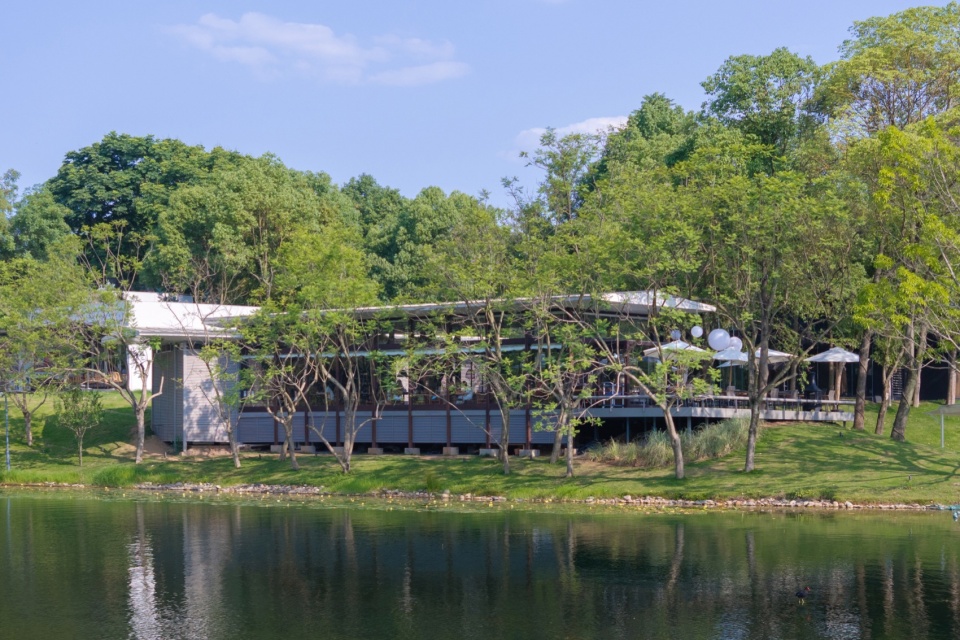
▼建筑南侧,South side of the building
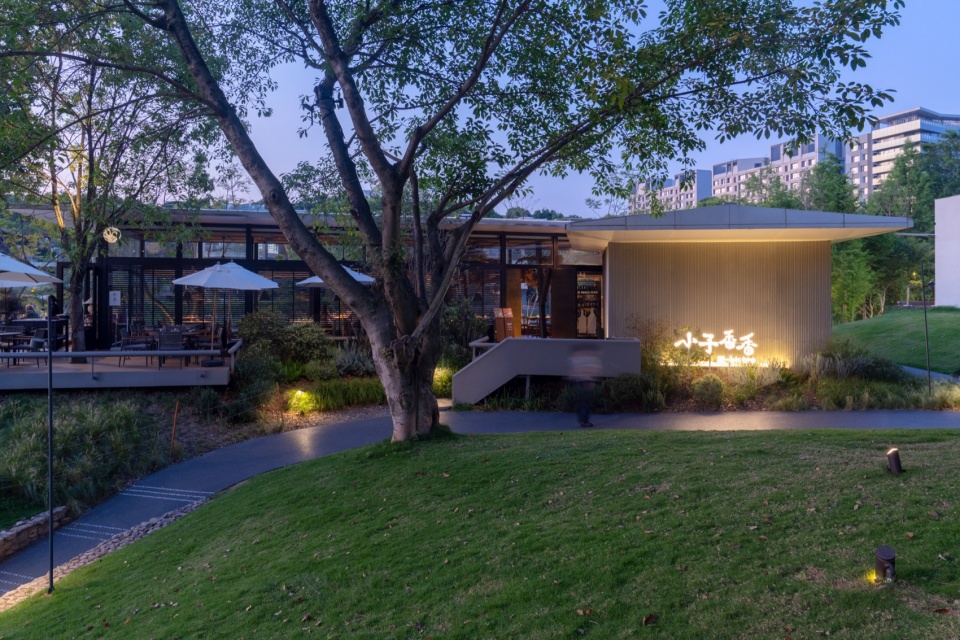
一百个项目有一百个不同的条件,而对环境关系的精准控制,商业内容的充分留白,这样的体悟也为我们后续的非标商业项目设计的判断与操作提供了启示。
Every project presents its own unique set of conditions, and this experience — balancing precise environmental control with sufficient openness for commercial development — has provided us with valuable insights that continue to inform our approach to future non-standard commercial design projects.
▼总平面图,Master Plan
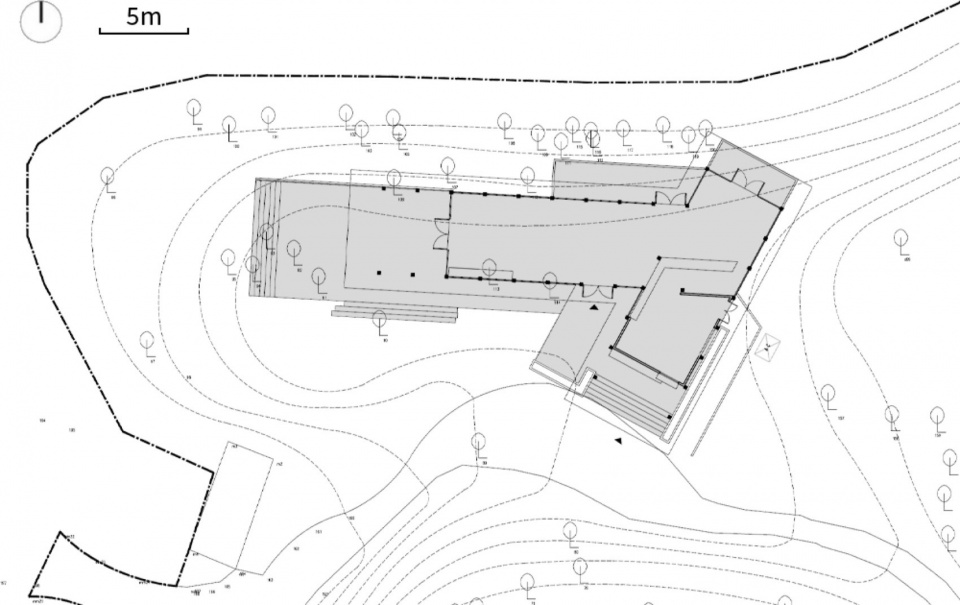
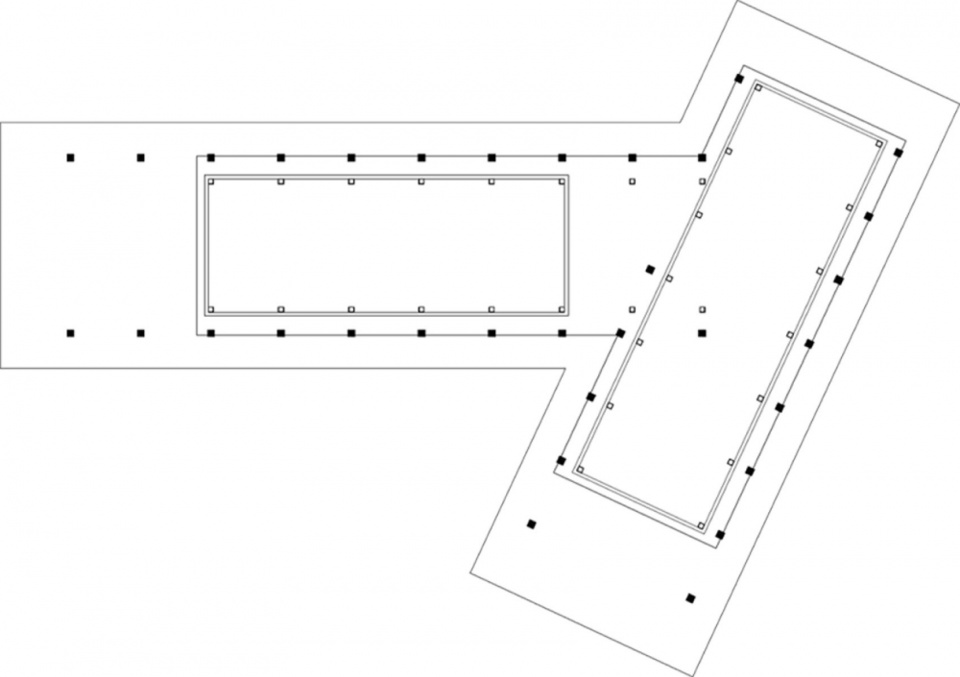
▼一层平面图,First Floor Plan
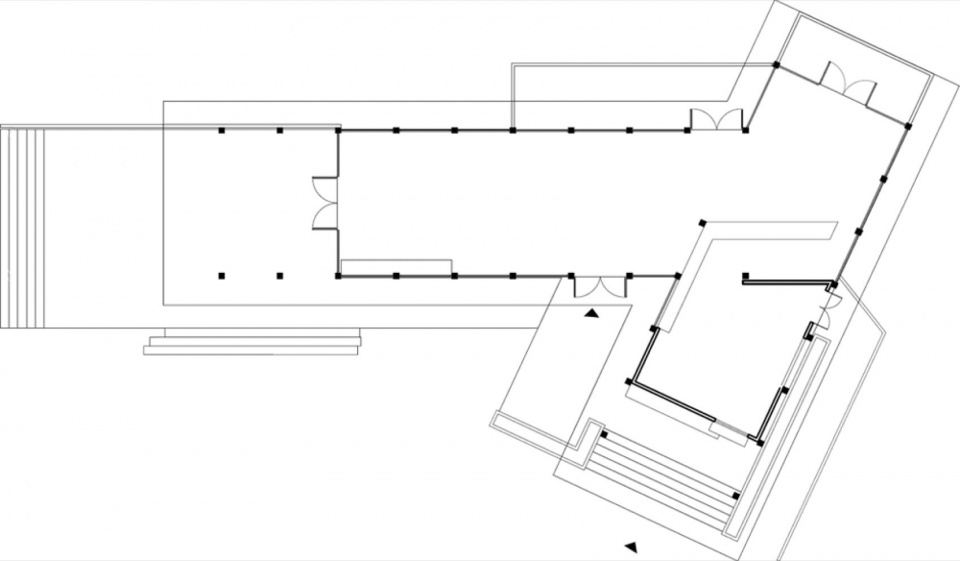
▼设备夹层平面图,Equipment Mezzanine Plan
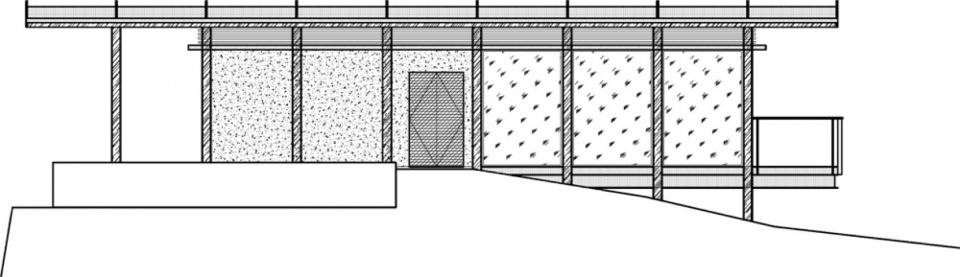
▼北立面图,North Elevation

▼东立面图,East Elevation
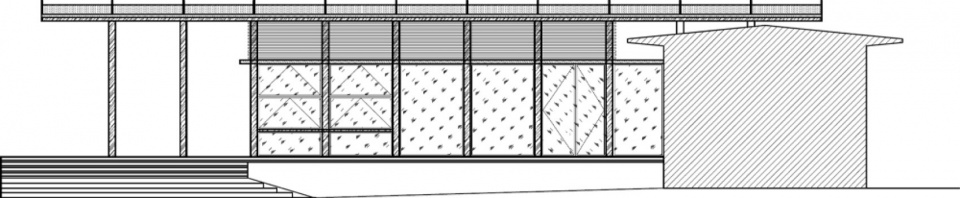
▼南立面图1,South Elevation 1
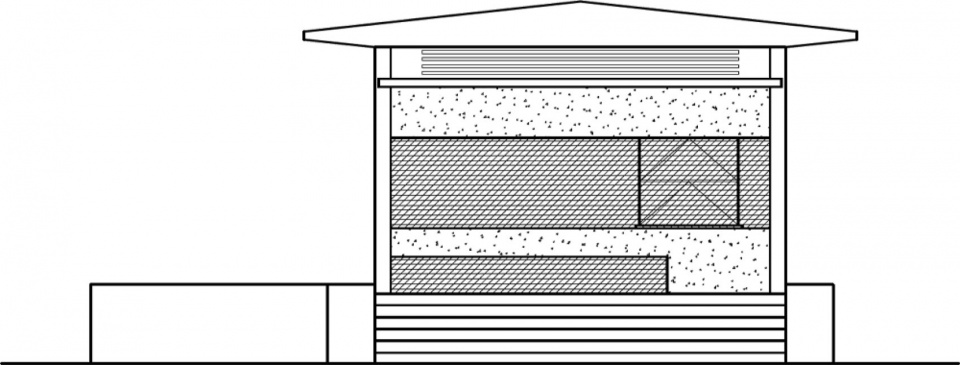
▼南立面图2,South Elevation 2
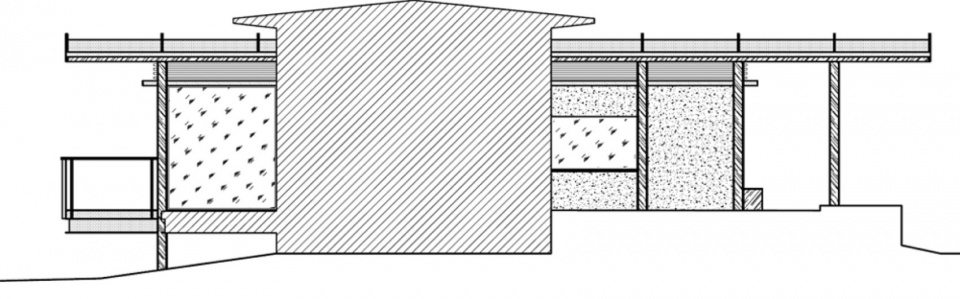
▼西立面图1,West Elevation 1
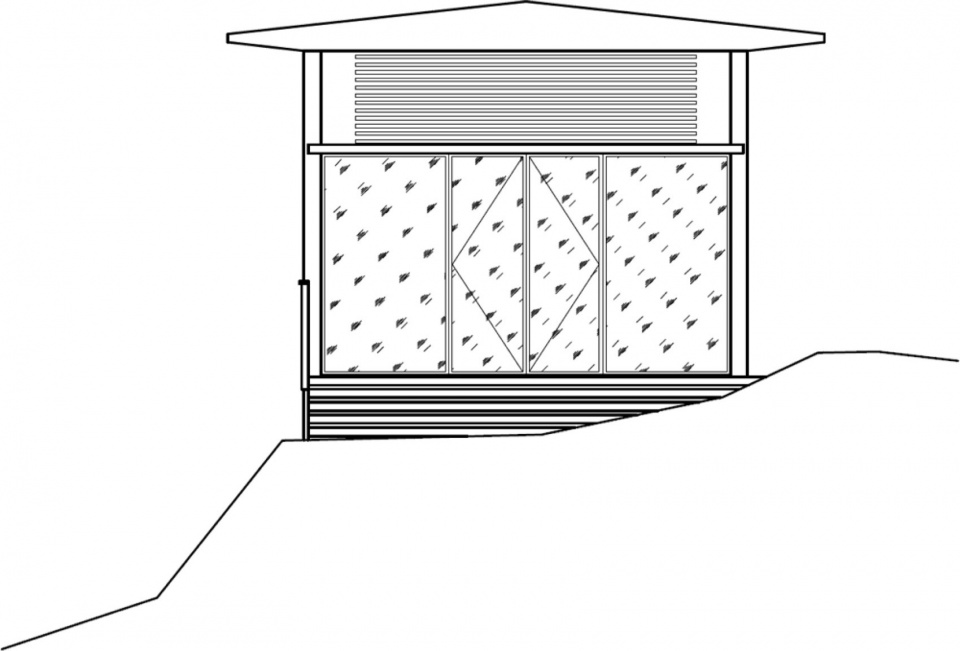
▼西立面图2,West Elevation 2
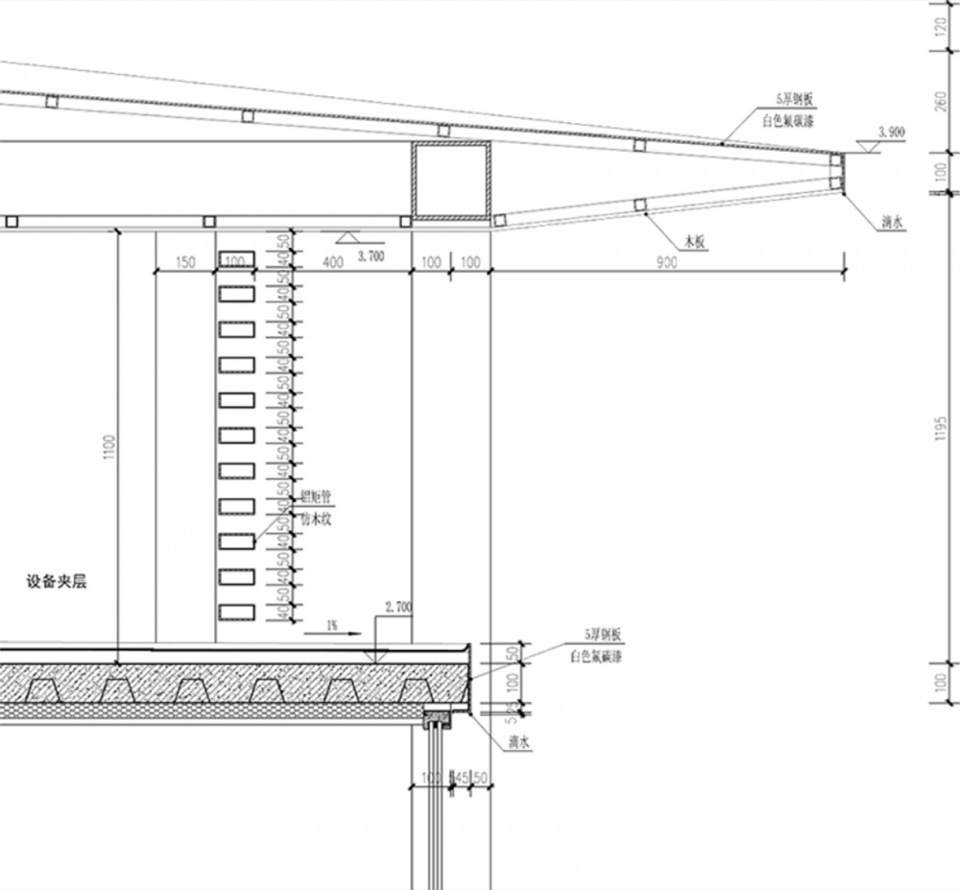
▼建筑构造细部图,Architectural Detail Drawings
Project Name: WX Building Design on CPI Island, Luhu Lake
Project Type: Architecture
Design: Palimpsest
Email: zongjie.kou@hotmail.com
Location: Chengdu, Sichuan Province, China
Project Duration: February 2023 – April 2024
Client: Chengdu Wide Horizon Real Estate Development Co., Ltd. ,Chengdu Afaqi Commercial Management Co., Ltd
Client Design Management (Architecture): BAI Jiuxu, WANG Kaiwen (Chengdu Wide Horizon R&D and Design Department)
Building Area: 160.64㎡
Architectural Design: Palimpsest
Lead Architect: KOU Zongjie
Project Team: YU Fan, LIANG Xi, DU Nan, JIANG Zongshui, LI Wenying, SONG Jilai, LIU Yingyi
Store Design: WUJI DECO
Construction Companies: Tutai Construction Group
Construction Drawings Design: Zhouyu Design Group Co., Ltd., Sichuan Zhongheng Zhuke Survey and Design Co., Ltd. Chengdu Second Branch
Landscape Design: Yudao Landscape
Lighting Design: BPI Lighting Consultant Design Company
Curtain Wall Detail Design: Zhouyu Design Group Co., Ltd.
Photography: Existing Architecture, KOU Zongjie
Copywriting: KOU Zongjie