芦苇廊、观鸟屋等——邢襄生态园景观建筑系列 / 北林风景建筑研究中心-段威工作室 + 上海领沃园林设计事务所-李𬱖工作室
项目概况Project Overview
邢襄生态园位于河北省邢台市,是一处生态环境优越的自然园区。园内湿地资源丰富,生物多样性显著,原始自然风貌保存完好,为野生动植物提供了良好的栖息地。为提升园区的生态价值与公共服务功能,北林风景建筑研究中心和上海领沃园林设计事务所共同合作,设计了一组结合景观想象的建筑,期望这些建筑能够与自然结合,与生活其间的动植物生境结合,最大限度地呈现这里的原始生态。
Xingxiang Ecological Park is situated in Xingtai City, Hebei Province, and features an exceptional ecological environment. The park boasts abundant wetland resources, significant biodiversity, and well-preserved, pristine natural landscapes, providing an ideal habitat for a diverse array of wild flora and fauna. To enhance the park’s ecological value and public service functions, Atelier Folie and Shanghai Lingwo Landscape collaborated to design a series of buildings that integrate landscape imagination. These structures aim to harmonize with nature and the habitats of the flora and fauna that inhabit the area, thereby maximizing the presentation of the site’s original ecological environment.
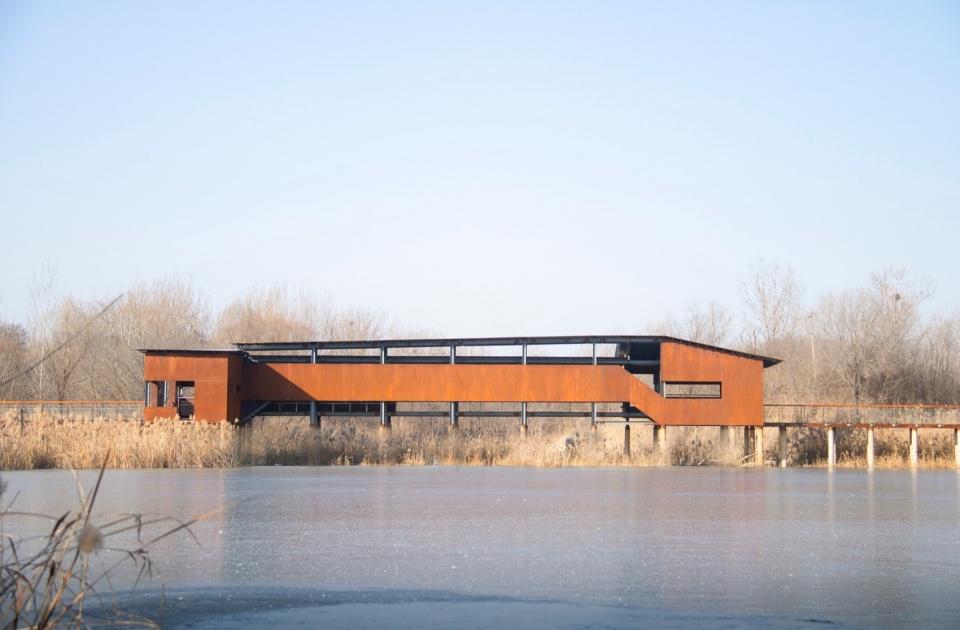
▼邢襄生态园-芦苇廊,Xingxiang Ecological Park – Reed Pavilion
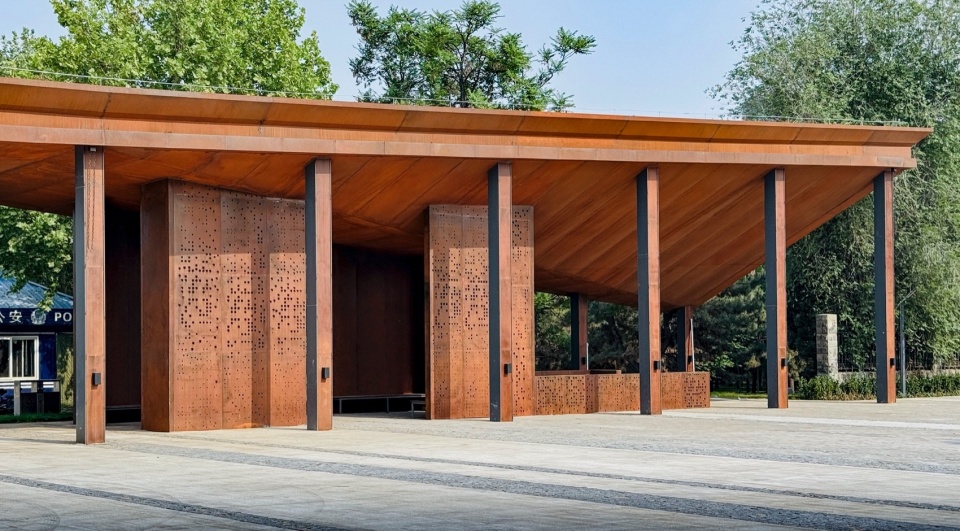
▼邢襄生态园-西大门,Xingxiang Ecological Park – West Gate
▼邢襄生态园-观鸟屋,Xingxiang Ecological Park – Bird-watching Tower
建筑景观Built with Landscape
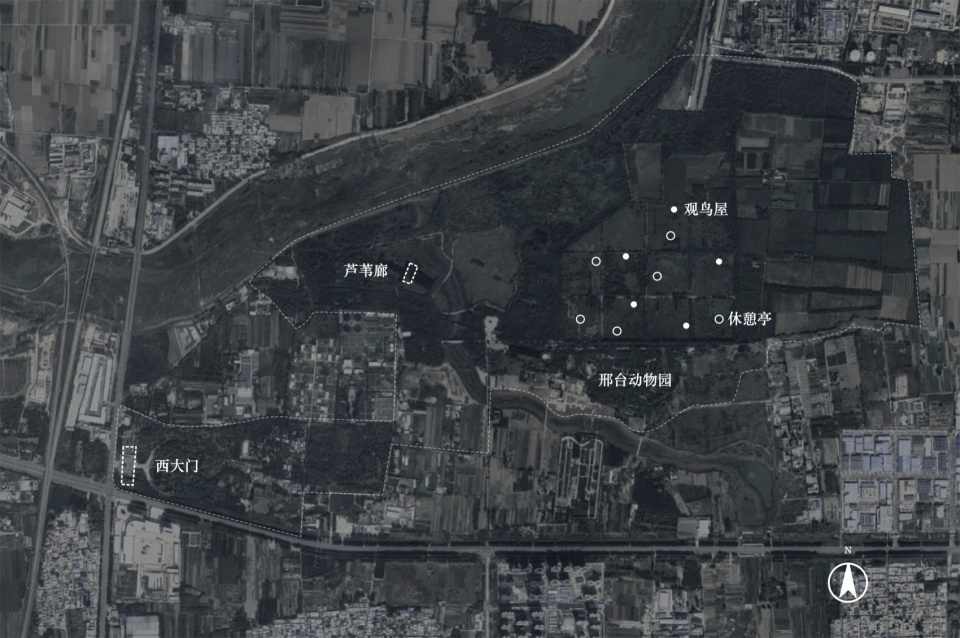
项目整体定位为集生态展示、科普教育、休闲娱乐于一体的综合性园区。结合园区功能需求及建筑定位。在保护原有生态的基础上,规划建设了一系列配套建筑,旨在打造集生态保护、科普教育、休闲游憩于一体的综合性生态空间。其中包括一处大门建筑的更新设计,一处湿地芦苇廊,以及多个观鸟屋和休憩亭建筑。
The project is positioned as a comprehensive park that integrates ecological display, science education, and leisure and entertainment. Based on the functional requirements of the park and the positioning of the buildings, a series of supporting buildings have been planned and constructed to create a comprehensive ecological space that integrates ecological protection, science education, and leisure and recreation. These include the renovation design of the main gate building, a wetland reed pavilion building, and several bird-watching towers and rest pavilions.
▼建筑点位分布图,Architecture location distribution map
传统园林建筑中的微观个体,不仅是功能性的建筑物,更是文化符号与空间意境的载体。在当代景观建筑设计中,这些原型通过形式简化、功能复合或材料创新得以重新诠释,既保留了传统意蕴,又契合现代需求。
Micro-individuals in traditional landscape architecture are not only functional buildings, but also carriers of cultural symbols and spatial artistic conception. In contemporary landscape architecture design, these prototypes are reinterpreted through simplification of form, integration of functions, or innovation in materials, preserving traditional connotations while meeting modern needs.
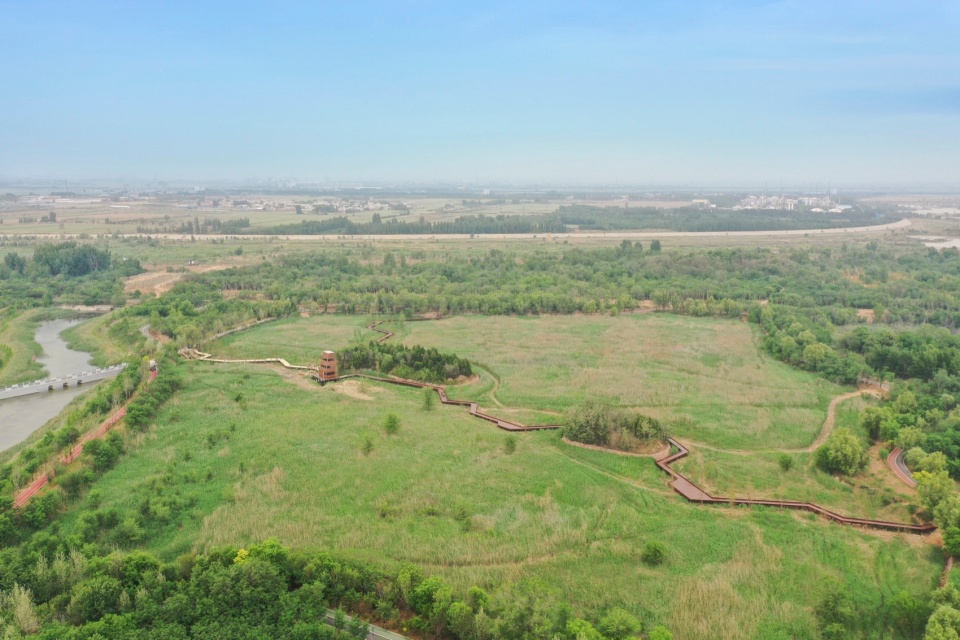
▼邢襄生态园建筑群鸟瞰图,Aerial view of the architecture in Xingxiang Ecological Park
关于建筑原型及类型的思考是贯穿整个现代主义直至当下的话题。传统中国园林建筑的布局和形式是基于环境的某种长期形成的共识,这种共识让传统园林的基本组织模式在当代仍然充满着生命力,提炼其原型能够帮助我们重新认识当代的日常生活,并将传统的文脉延续。
Reflections on architectural prototypes and types have been a recurring theme throughout modernism and continue to be so today. The layout and form of traditional Chinese garden architecture are based on a long-established consensus regarding the environment. This consensus has ensured that the basic organizational model of traditional gardens remains vibrant in the contemporary era. Extracting its prototype can help us re-examine contemporary daily life and continue the traditional cultural context.
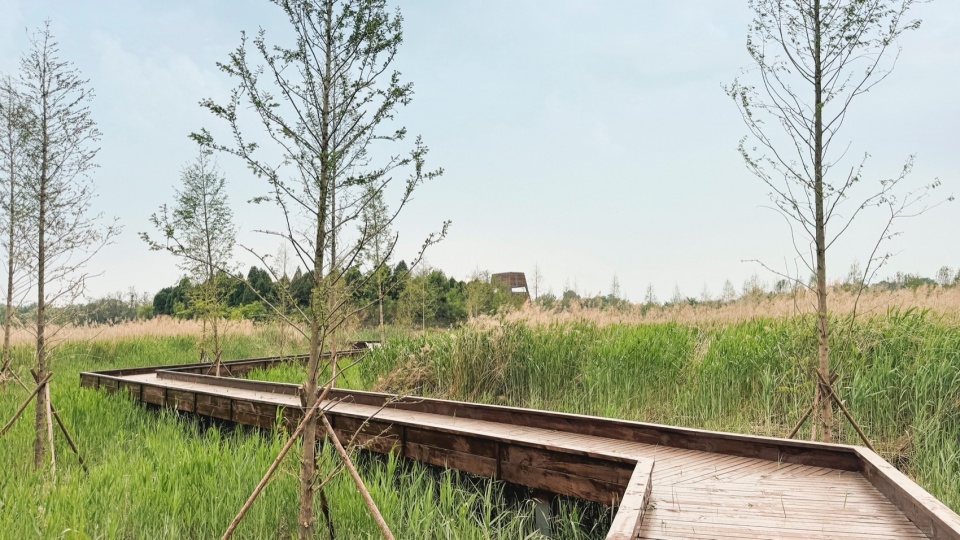
▼湿地区木质栈道,Wooden Walkway in a Wetland area
通过日常的观察,我们可以发现,路径(path)、通道(tunnel)、岛(island)、桥(bridge)、台(terrace)都是跨文化存在的类型,并非一种东方或西方独有的形式原型,这是一种跨越文脉和地域的共识,也是建筑遵循的本源规则之一。在本案中,我们尝试了其中若干种类型,它们是桥(bridge)、塔(tower)、台(terrace)和廊(corridor)。
Through daily observation, we can see that path, tunnel, island, bridge, and terrace are all types that exist across cultures. They are not forms unique to either the East or the West. This is a consensus that transcends cultural contexts and geographical regions, and it is also one of the fundamental rules that architecture follows. In this project, we have explored several of these types, including bridge, tower, terrace, and corridor.
▼湿地区木质栈道,Wooden Walkway in a Wetland area
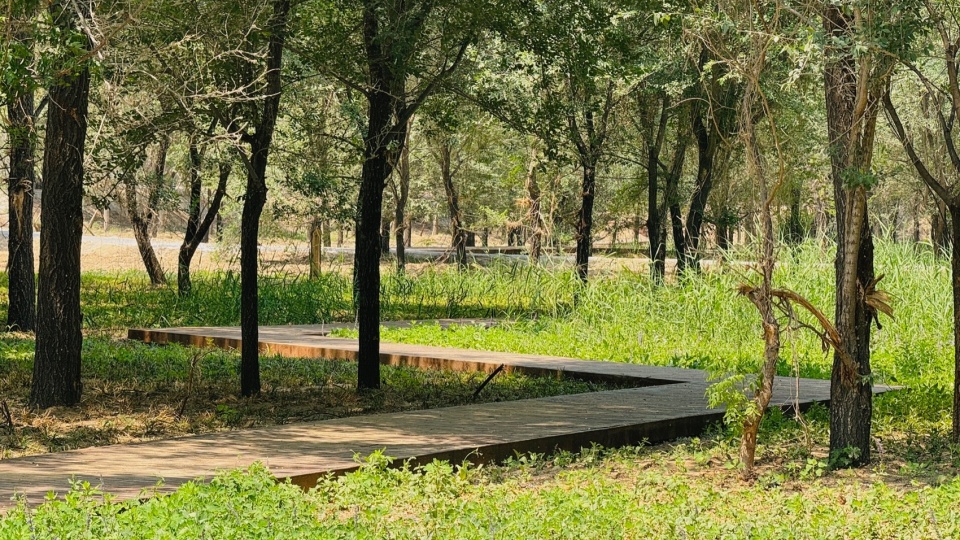
邢襄生态园系列建筑以“生态共生、自然相融”为核心理念,采用耐候钢、天然木材等可持续材料,打造低干预、低能耗的生态建筑群落。设计以自然为灵感,使建筑既成为观景节点,又融入景观本身,形成和谐统一的生态界面。
The Xingxiang Ecological Park Series Architecture is designed around the core concept of “ecological symbiosis and natural integration.” They use sustainable materials such as corten steel and natural wood to create a low-impact, low-energy ecological building complex. The design draws inspiration from nature, making the buildings both viewing points and part of the landscape itself, forming a harmonious and unified ecological interface.
▼与芦苇丛相融的芦苇廊, The Reed Pavilion blends in with the reed beds
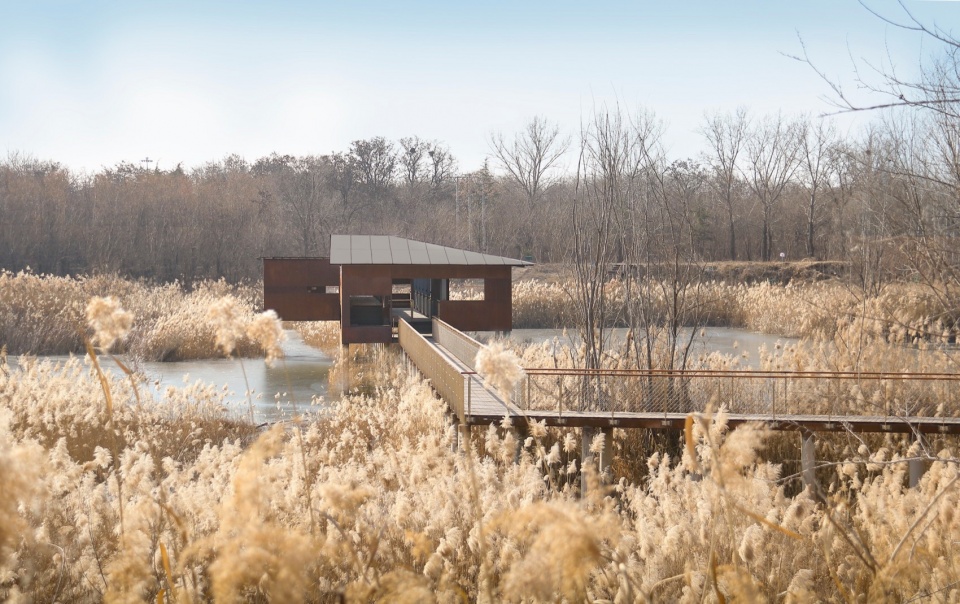
桥–芦苇廊Bridge – Reed Pavilion
芦苇廊位于邢襄生态园湿地区,是一座以观鸟功能为主的生态构筑物。设计紧扣“郊野在地性”主题,通过链接、材料、看与被看三重维度,实现建筑与自然的诗意对话。我们发现了这个场地。起初,这里是一片野生的芦苇滩,在整个公园的最深处,鸟类在这里筑巢,鱼儿在这里产卵。我们需要在这里连接起公园的主要道路,希望这个架在水中的桥,不仅仅是一个通道,而是成为停留的廊。
▼轴测图,Axonometric drawing
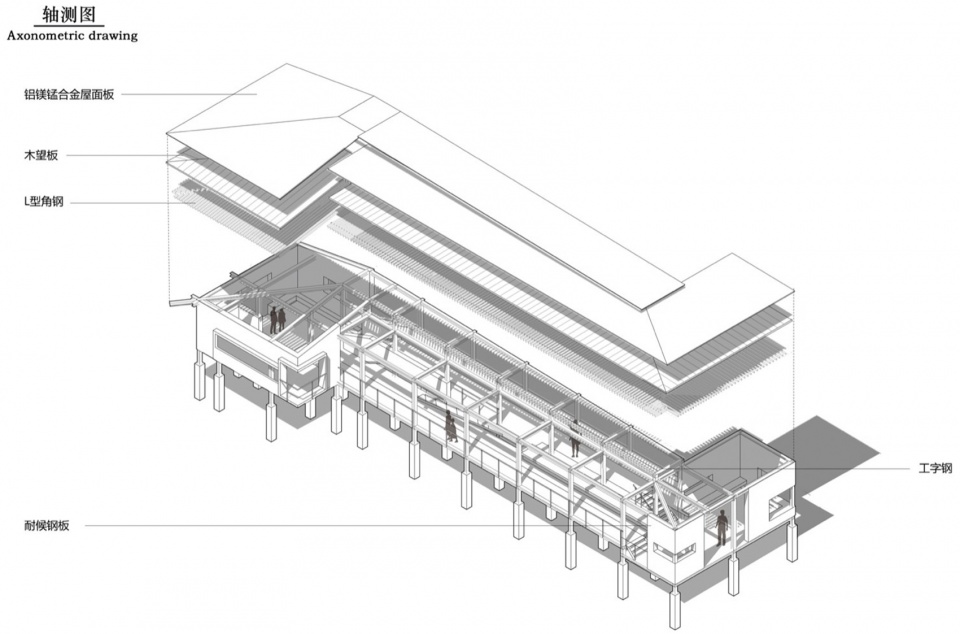
The Reed Pavilion is located in the wetland area of Xingxiang Ecological Park and is an ecological structure designed primarily for bird watching. The design closely follows the theme of “suburban locality” and achieves a poetic dialogue between architecture and nature through three dimensions: connection, materials, and seeing and being seen. We discovered this site. At first, it was a wild reed bed in the deepest part of the park, where birds nested and fish spawned. We needed to connect the main road of the park here, hoping that this bridge over the water would not only be a passageway but also a corridor to stay.
▼远观芦苇廊视角,Viewing the Reed Pavilion from afar
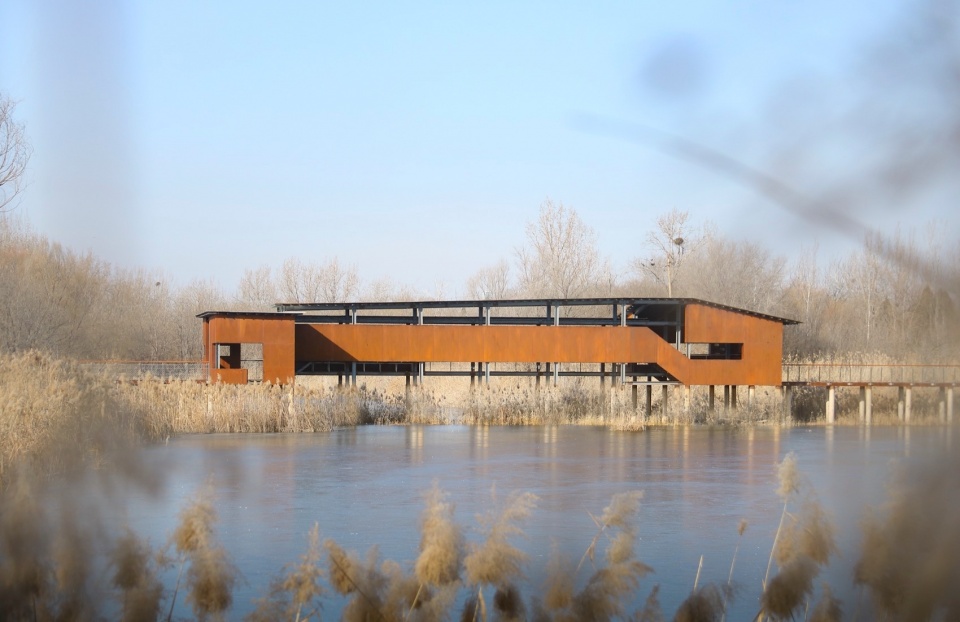
▼芦苇荡自然延伸到构筑周围,为观察鸟类提供一个隐蔽视角,The reed marshes naturally extend around the structure, providing a concealed vantage point for bird watching
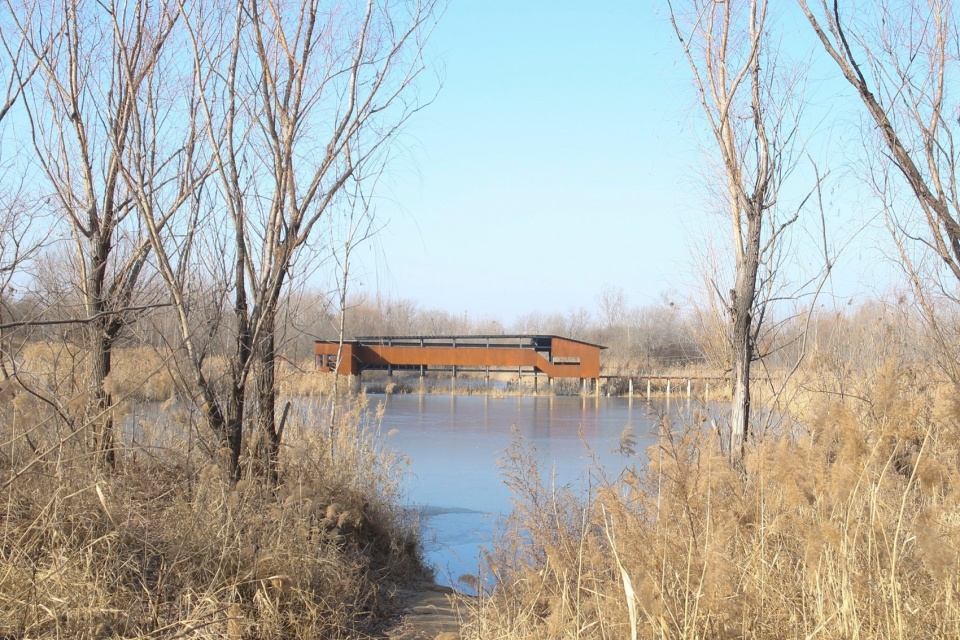
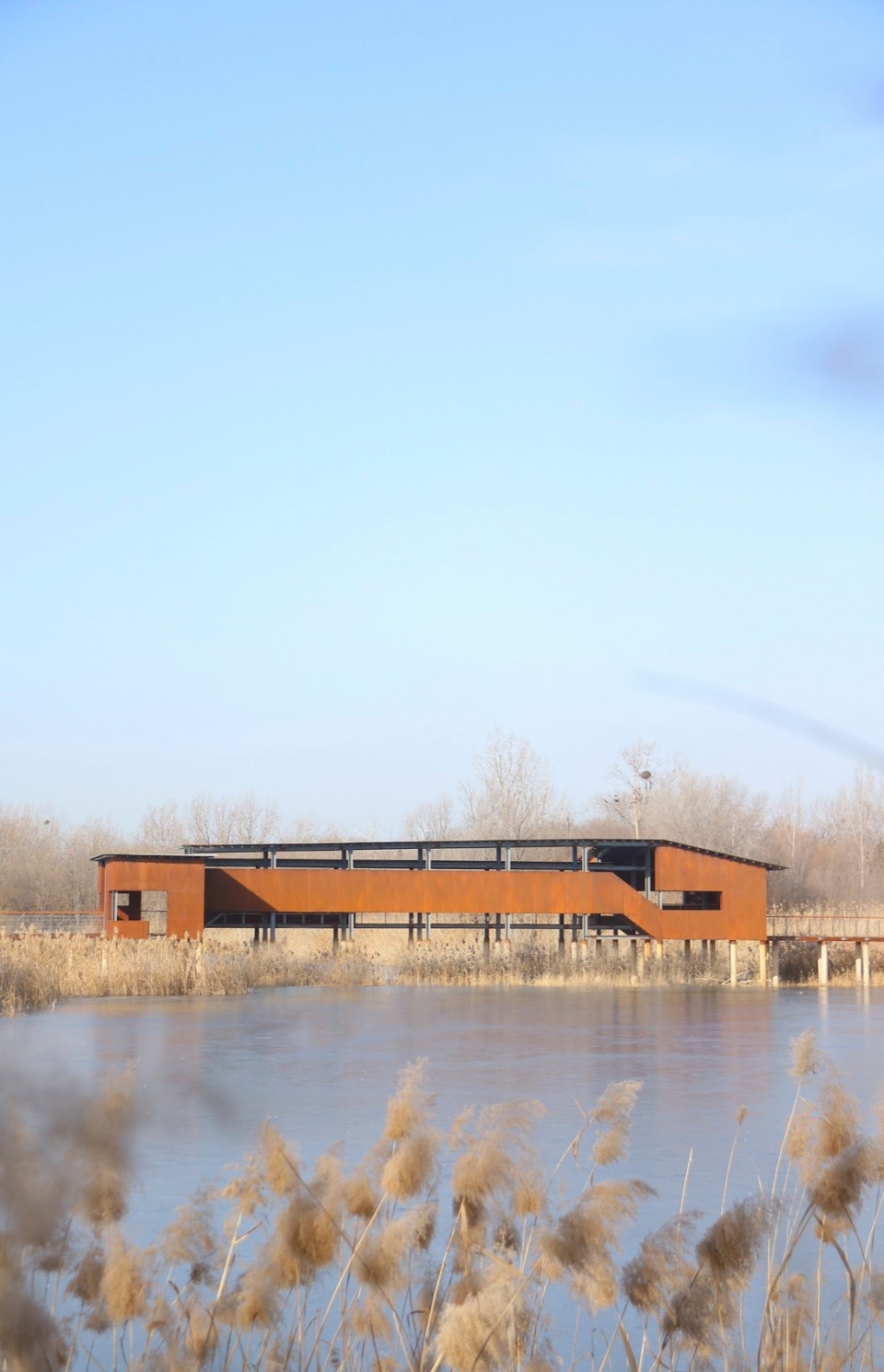
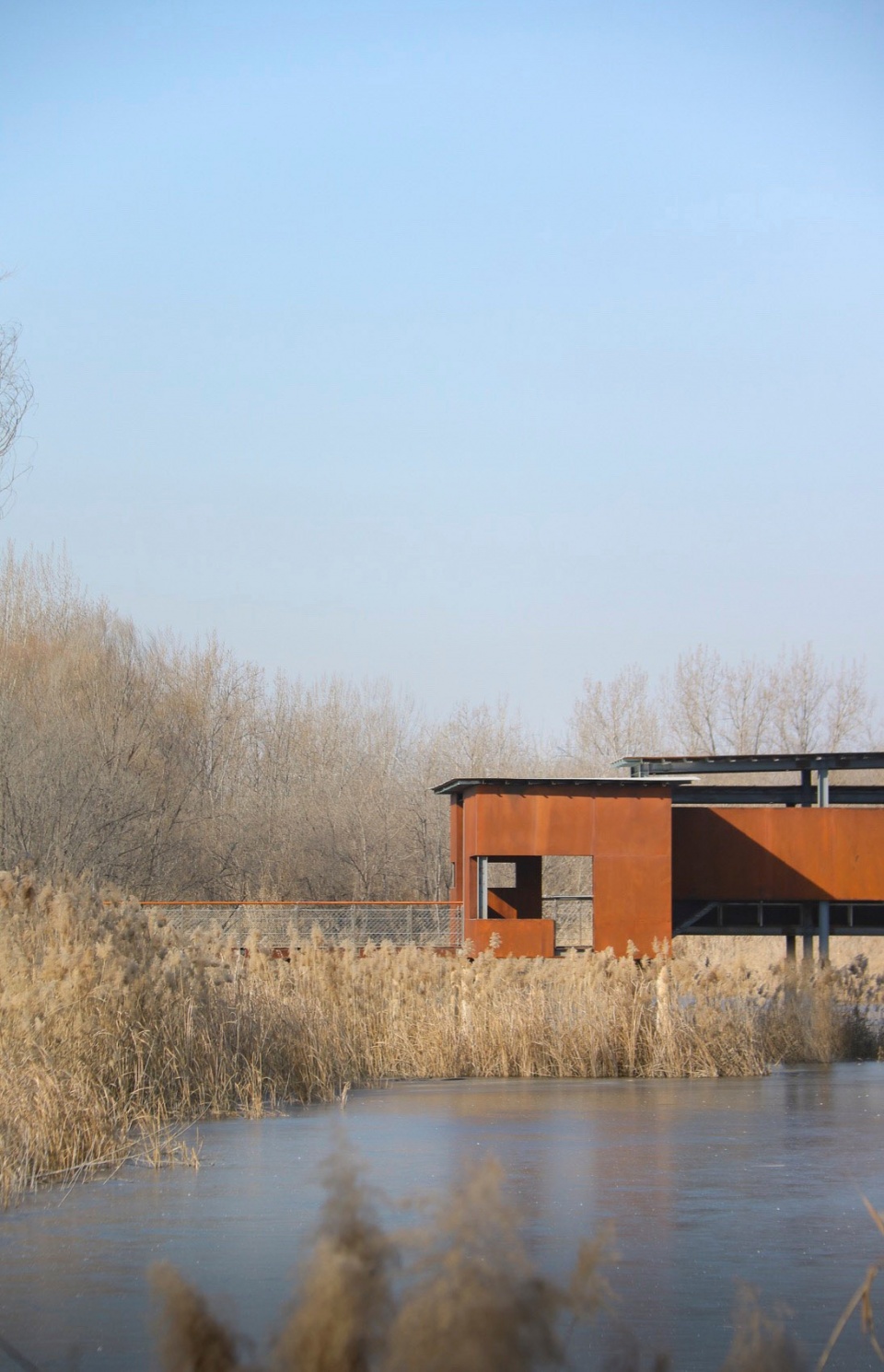
在链接层面,长廊以轻盈的姿态横贯湿地,木栈道与耐候钢围栏形成线性引导,串联起水域与陆地的生态界面。其架空的姿态减少对水文环境的干扰,同时为访客提供沉浸式的湿地穿行体验,强化人与自然的互动关联。
At the link level, the corridor spans the wetland with a light touch, with wooden walkways and corten steel panels forming a linear guide that connects the ecological interface between the water and land. Its elevated structure minimizes interference with the hydrological environment while providing visitors with an immersive wetland experience, strengthening the interactive connection between people and nature.
▼栈道串连建筑与湿地两岸,The boardwalk connects the architecture with both sides of the wetland
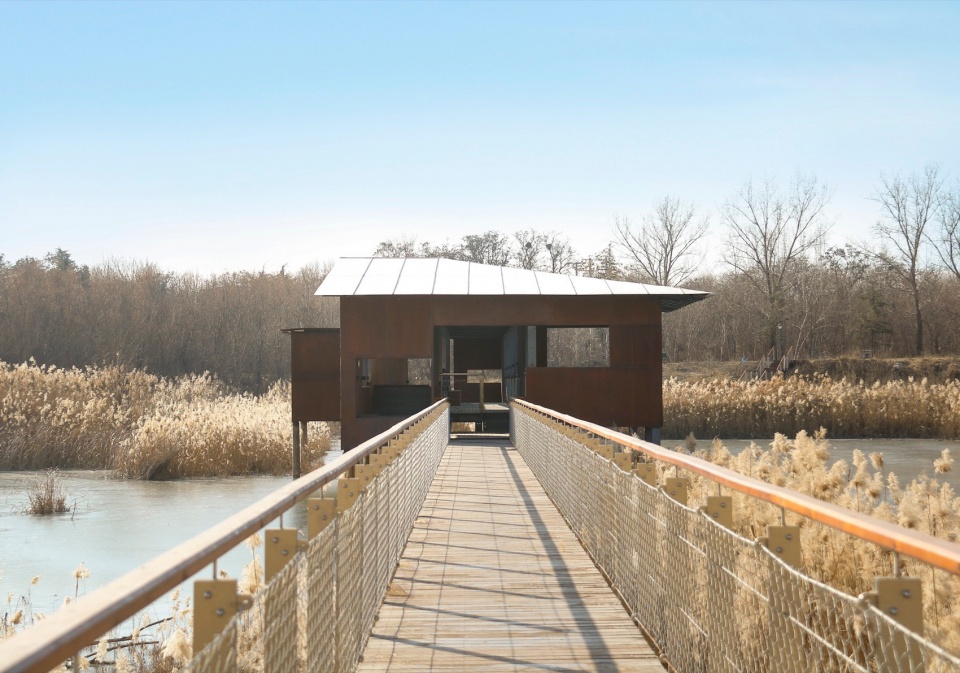
以架空的姿态悬浮于湿地之上,钢格栅铺就的步道让访客仿佛行走于自然与人工的边界,低头可见湿地水波潋滟,植物的生命力从格栅间隙蓬勃钻出,野花、芦苇与钢结构的碰撞诉说着野性与秩序的共生。
▼地面采用钢格栅网,随着季节水位的变化,不同植物从底部间隙钻出,营造自然野趣,The ground is covered with steel grating, and as the water level changes with the seasons, different plants sprout from the gaps at the bottom, creating a natural, rustic atmosphere
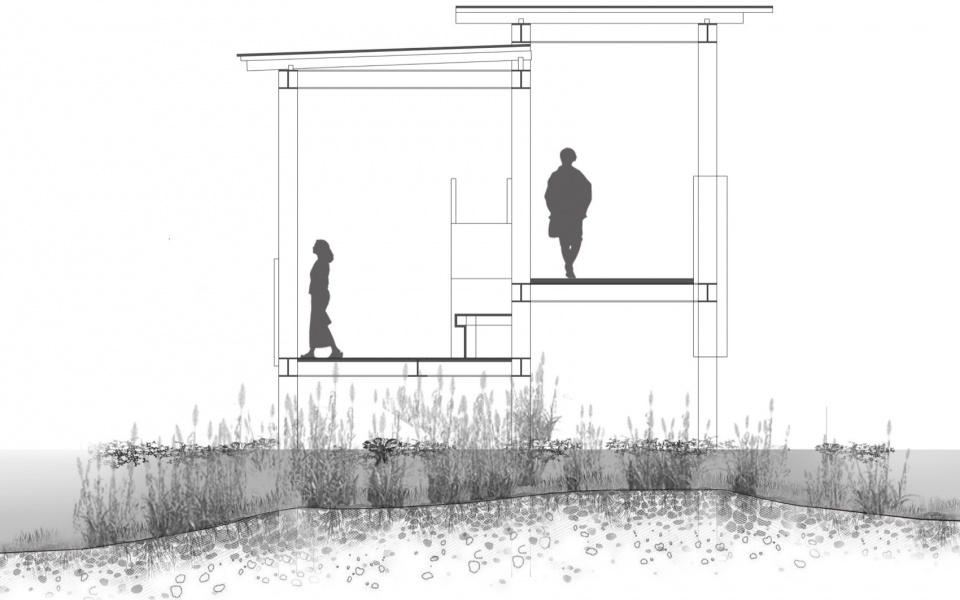
Suspended above the wetland in an elevated posture, the steel grating walkway allows visitors to walk along the boundary between nature and artificiality. Looking down, one can see the rippling water of the wetland, while the vitality of plants bursts forth from the gaps in the grating. The collision of wildflowers, reeds, and steel structures narrates the symbiosis of wildness and order.
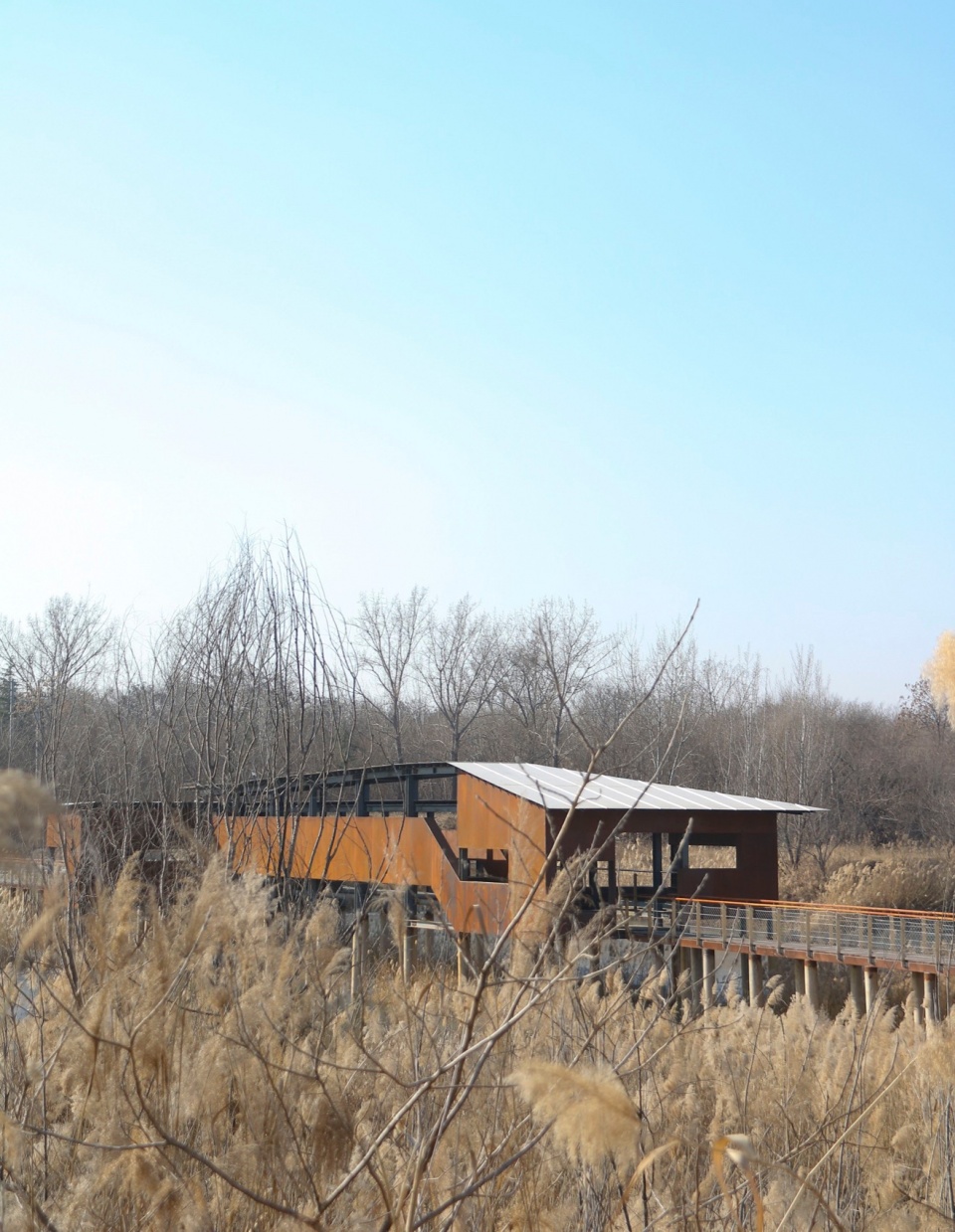
▼芦苇丛环绕建筑,Reed beds surround the architecture
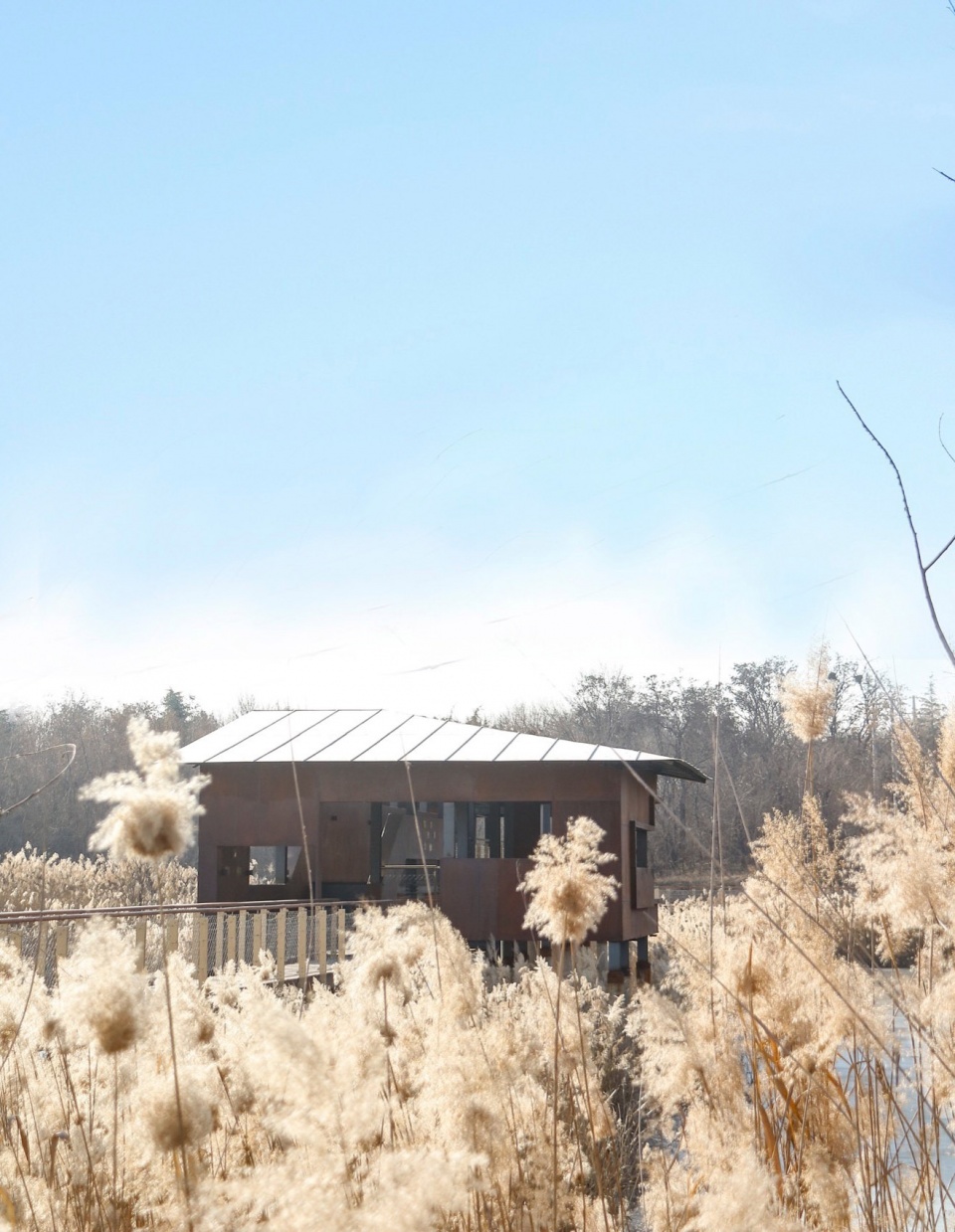
▼建筑四周植物自然生长,Plants grow naturally around the architecture
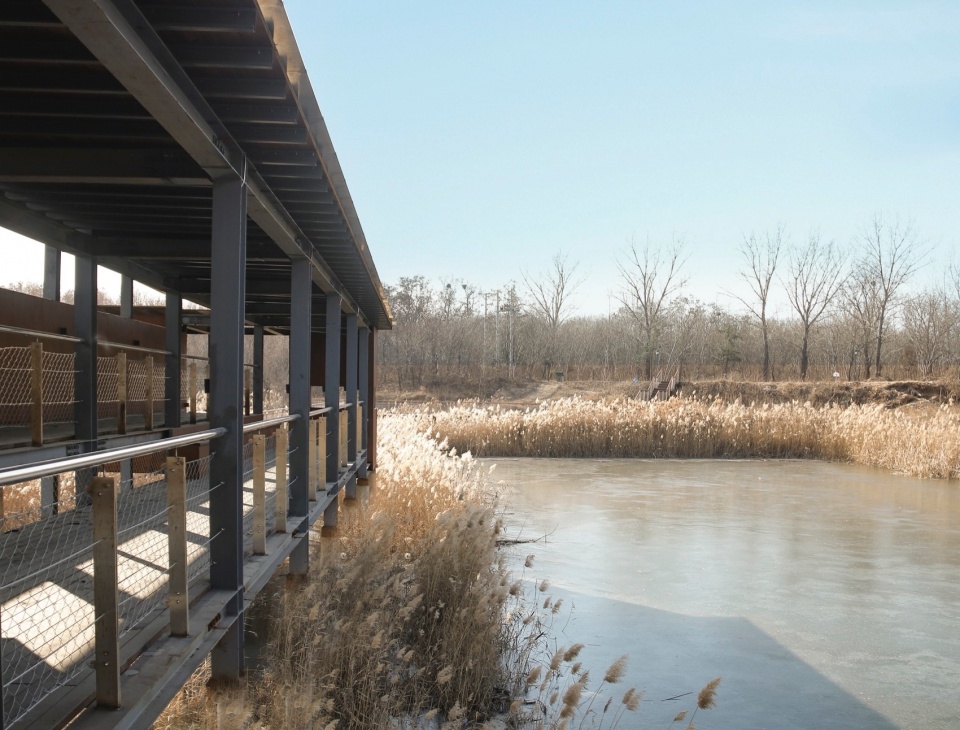
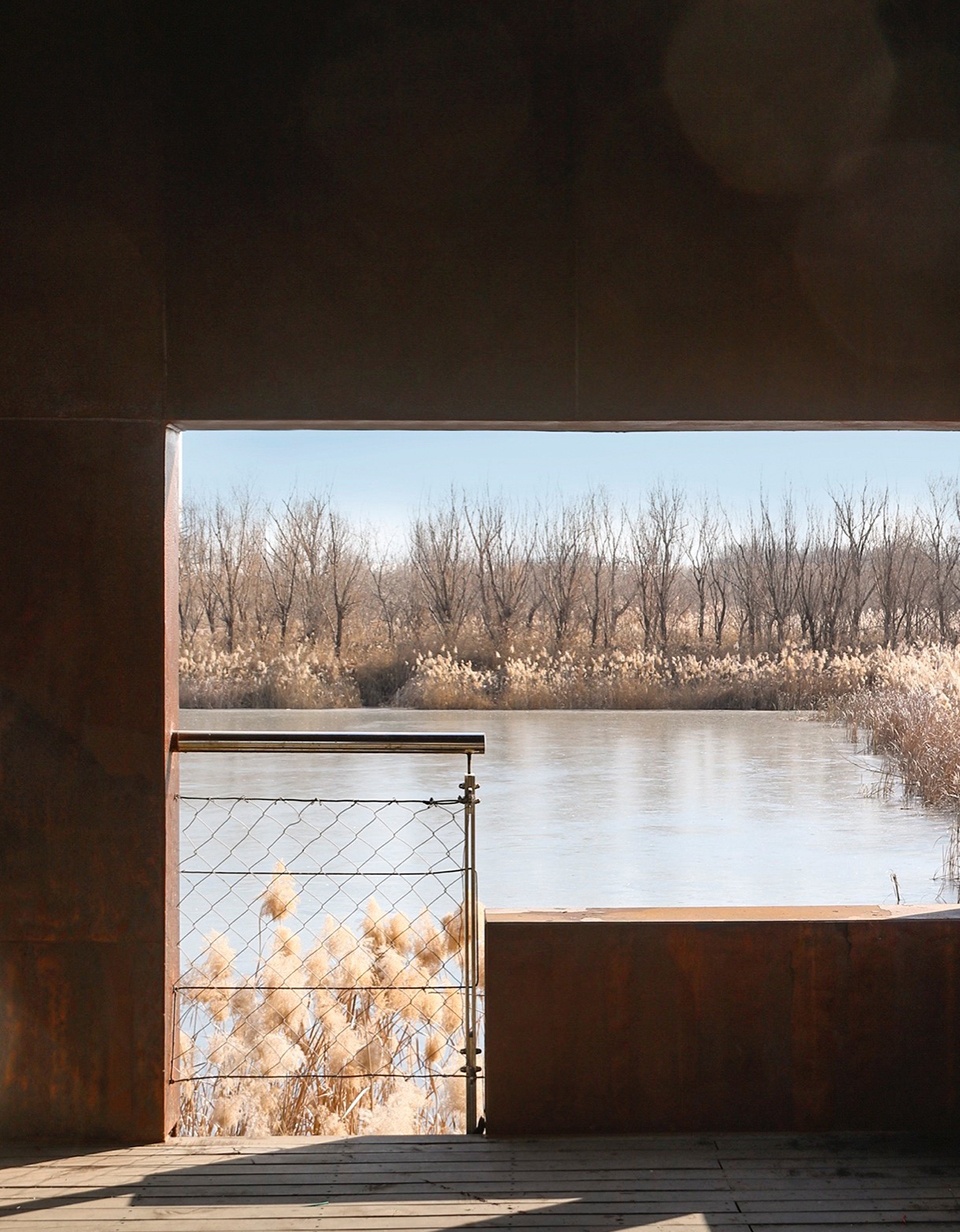
在材料的选用上,构筑物采用耐候钢与木材的材质组合,粗粝的锈色随时间沉淀,与芦苇荡的枯黄季相呼应。木结构的温润质感则柔化了工业材料的冷感,使建筑如同从湿地自然生长而出。倾斜的镂空墙体与错动的平台构成抽象几何语言,既作为视觉焦点,又消解体量,实现“隐于野”的在地性表达。
▼芦苇廊材质图,Material
In terms of material selection, the structure combines corten steel panels with wood. The rough rust color deepens over time, echoing the withered yellow hues of the reed marshes in their dormant season. The warm, organic texture of the wooden structure softens the industrial materials’ coldness, making the building appear as though it has grown naturally from the wetland. The slanted, perforated walls and offset platforms form an abstract geometric language, serving both as visual focal points and as a means to dissolve the building’s mass, achieving a sense of “blending into the wild” and expressing a sense of place.
▼耐候钢窗洞与木地板的结合,The combination of corten steel windows and wooden floors
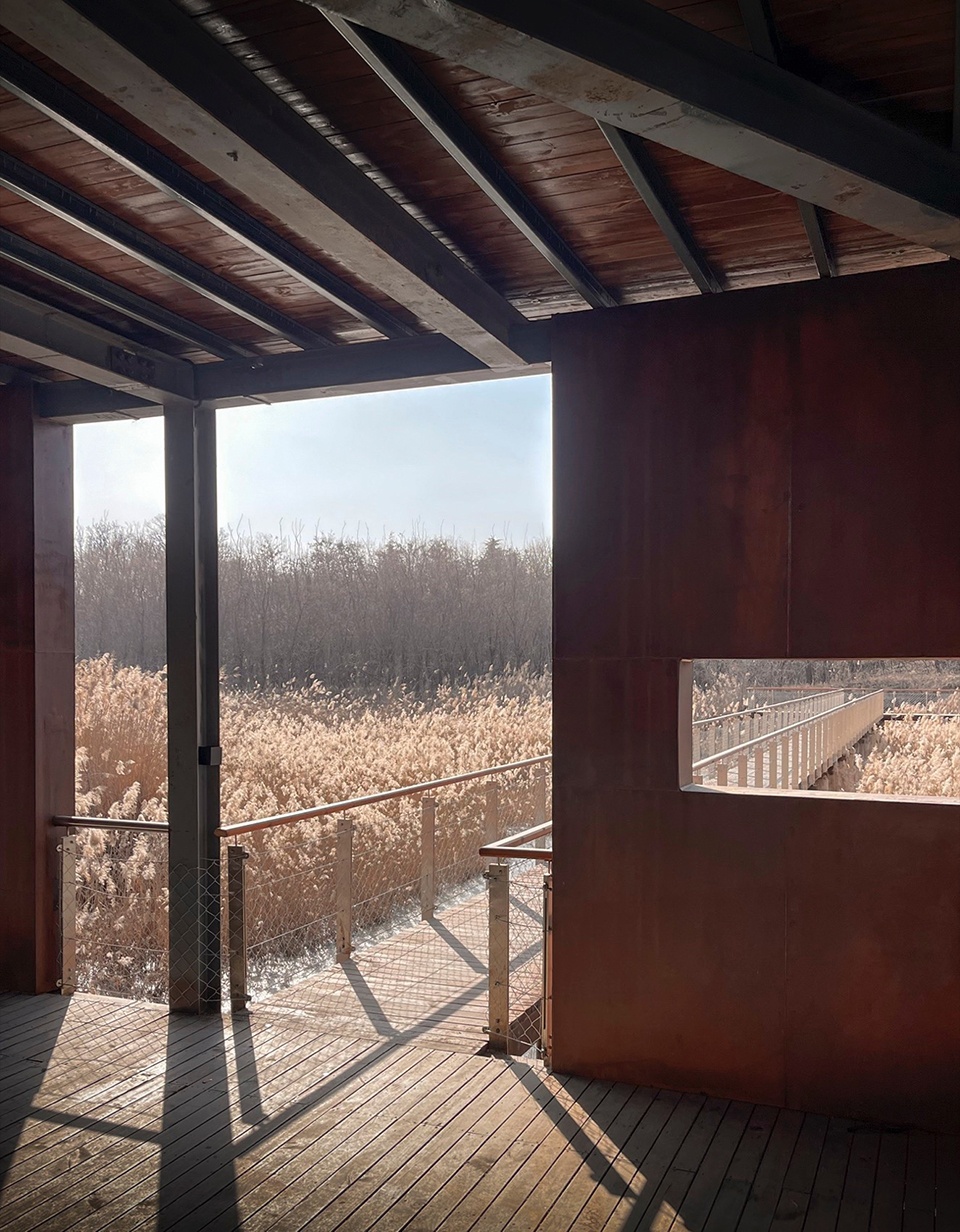
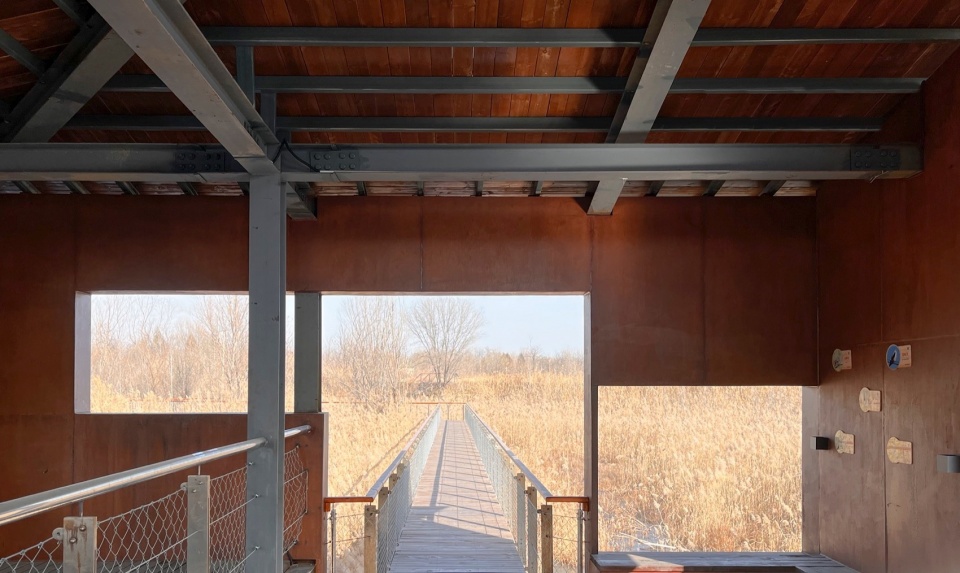
▼内部图,Internal Views
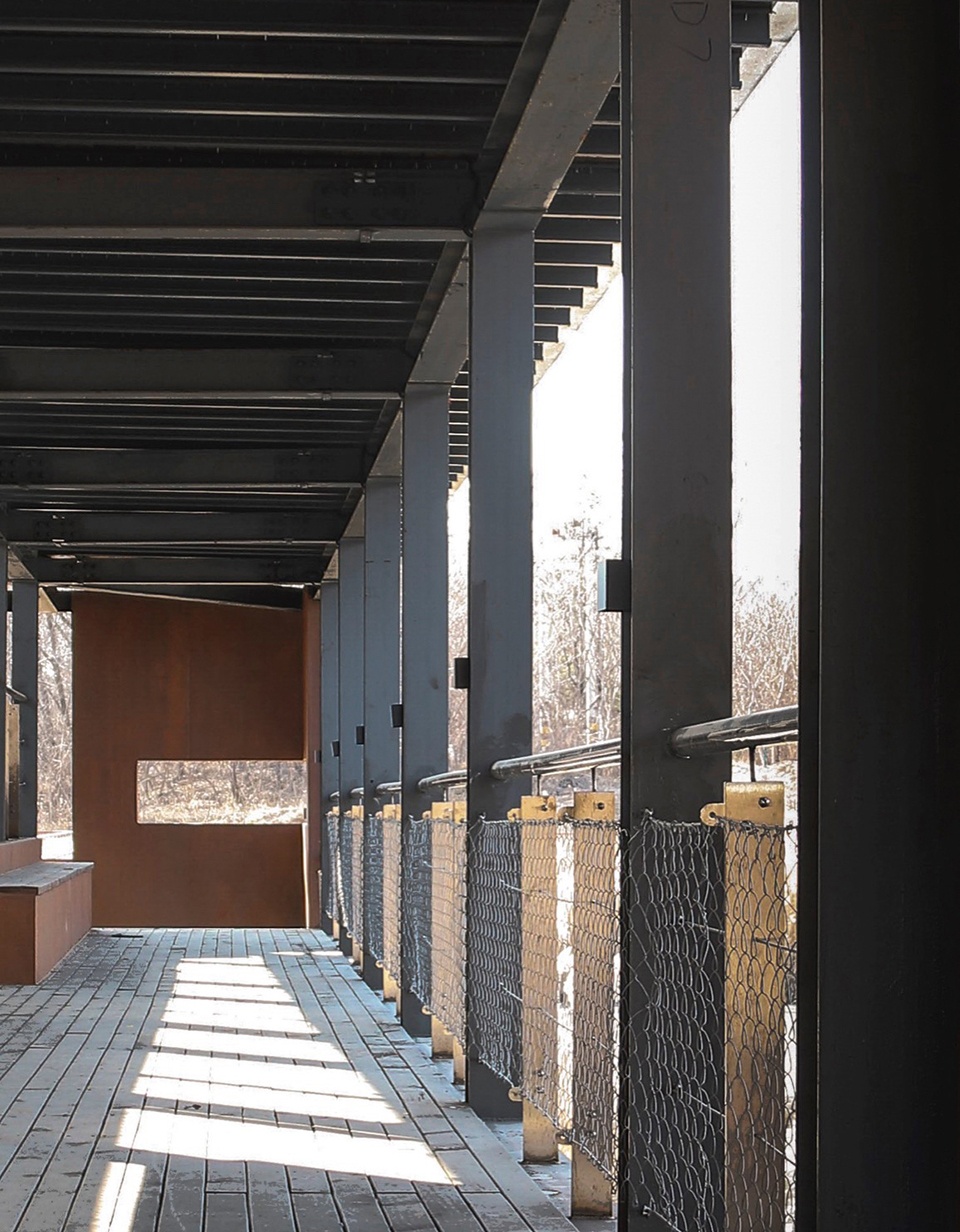
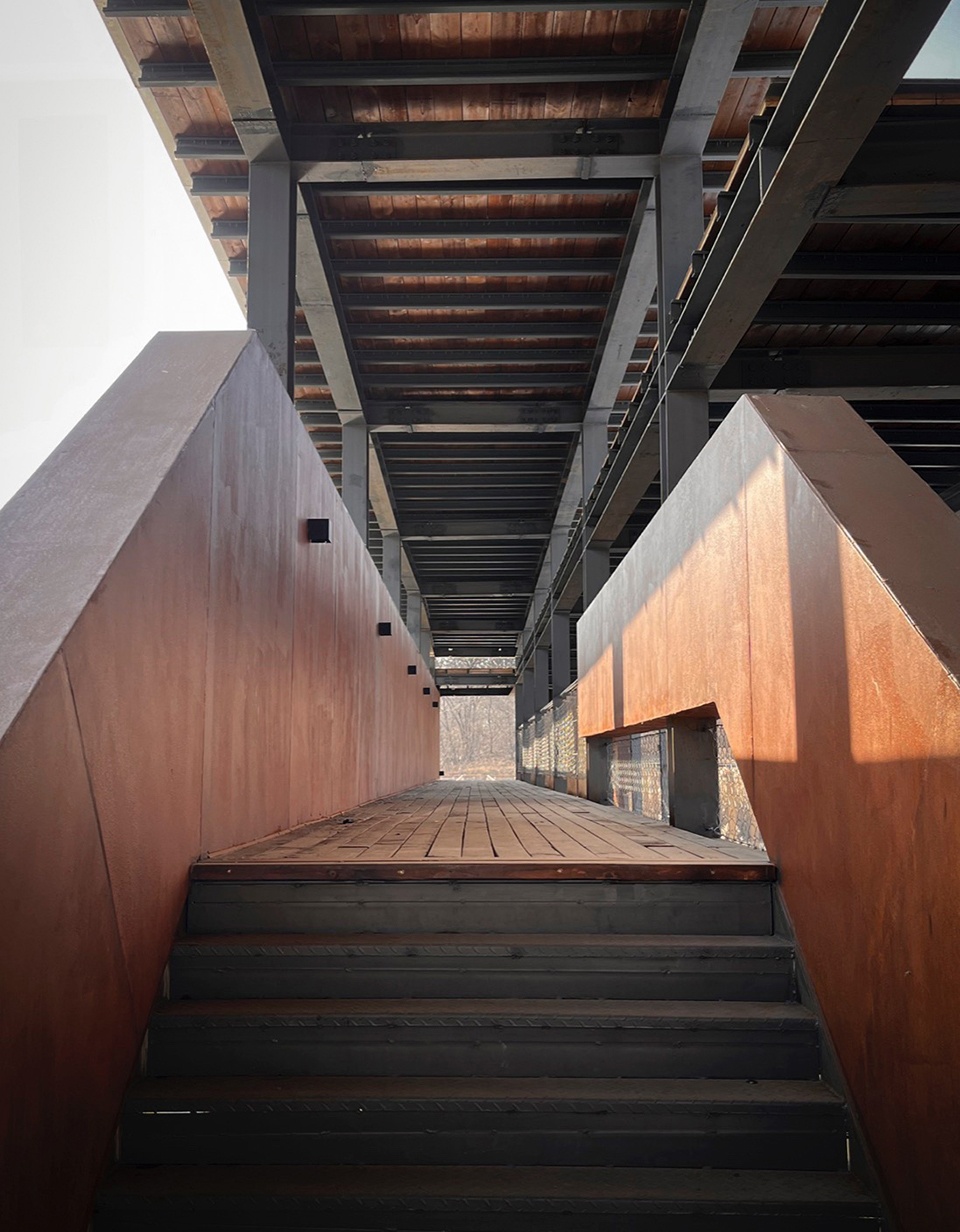
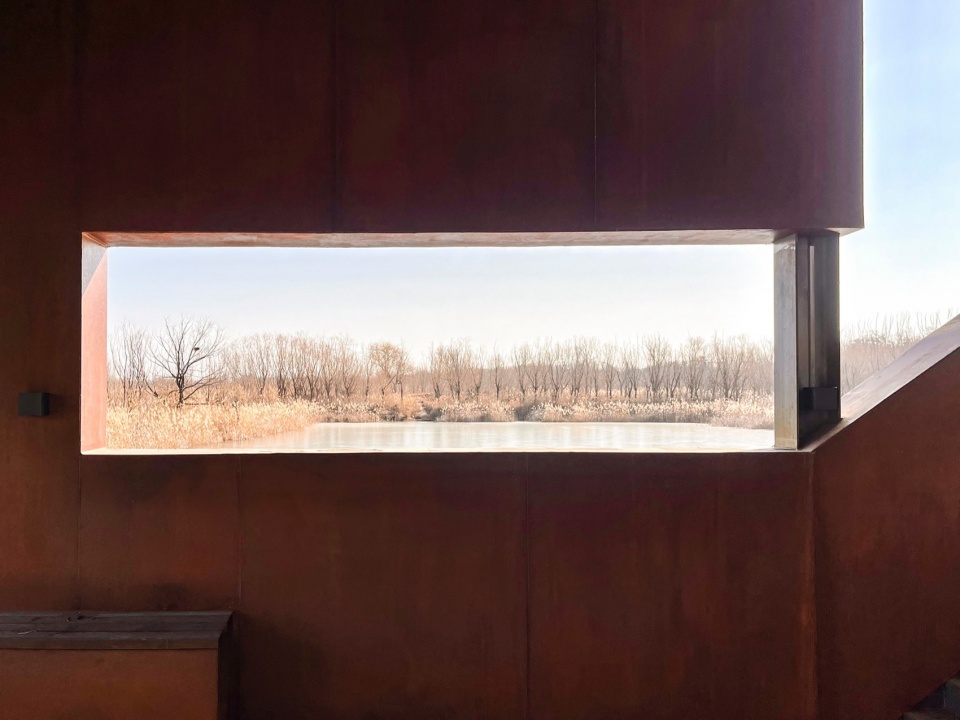
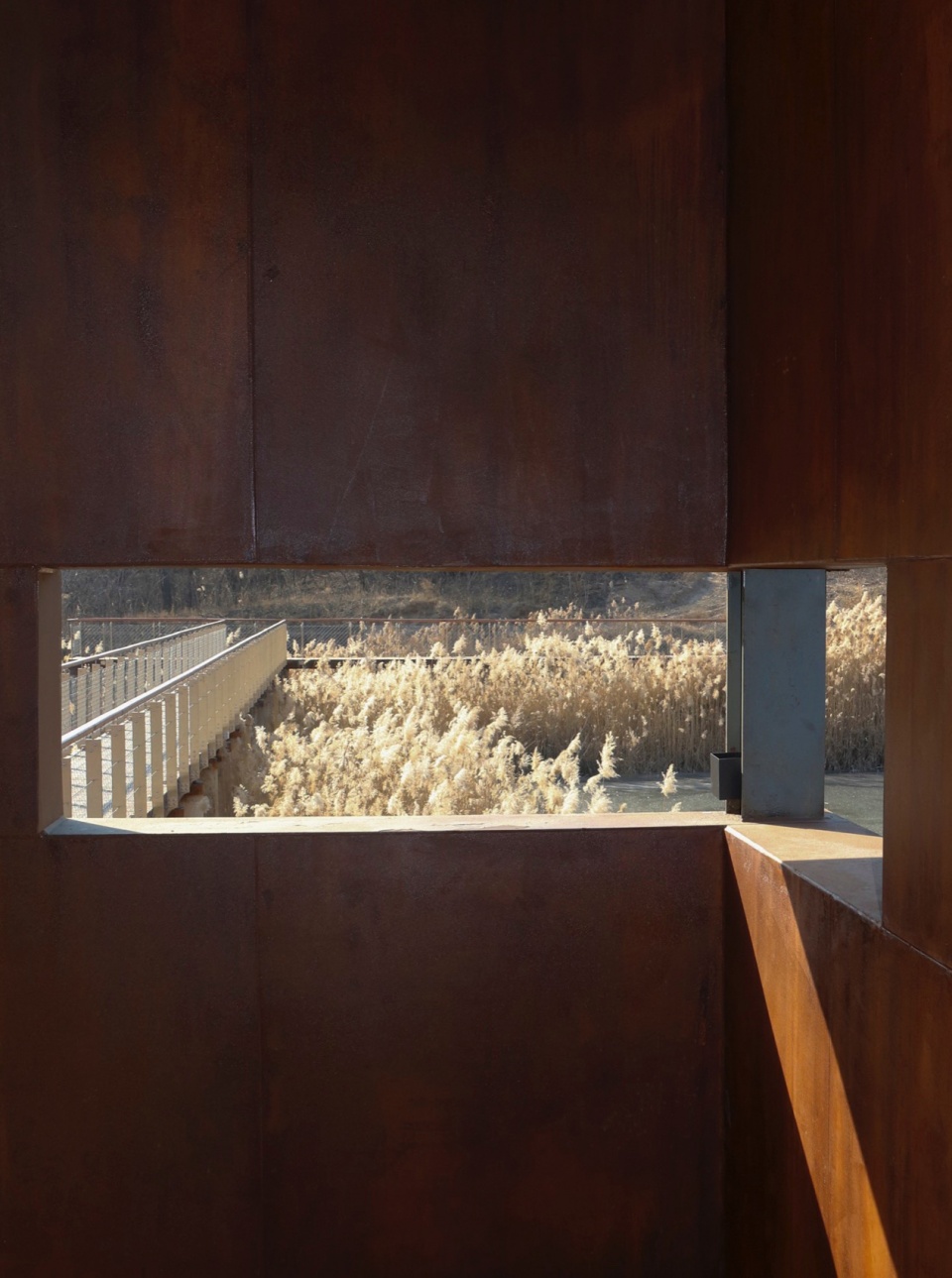
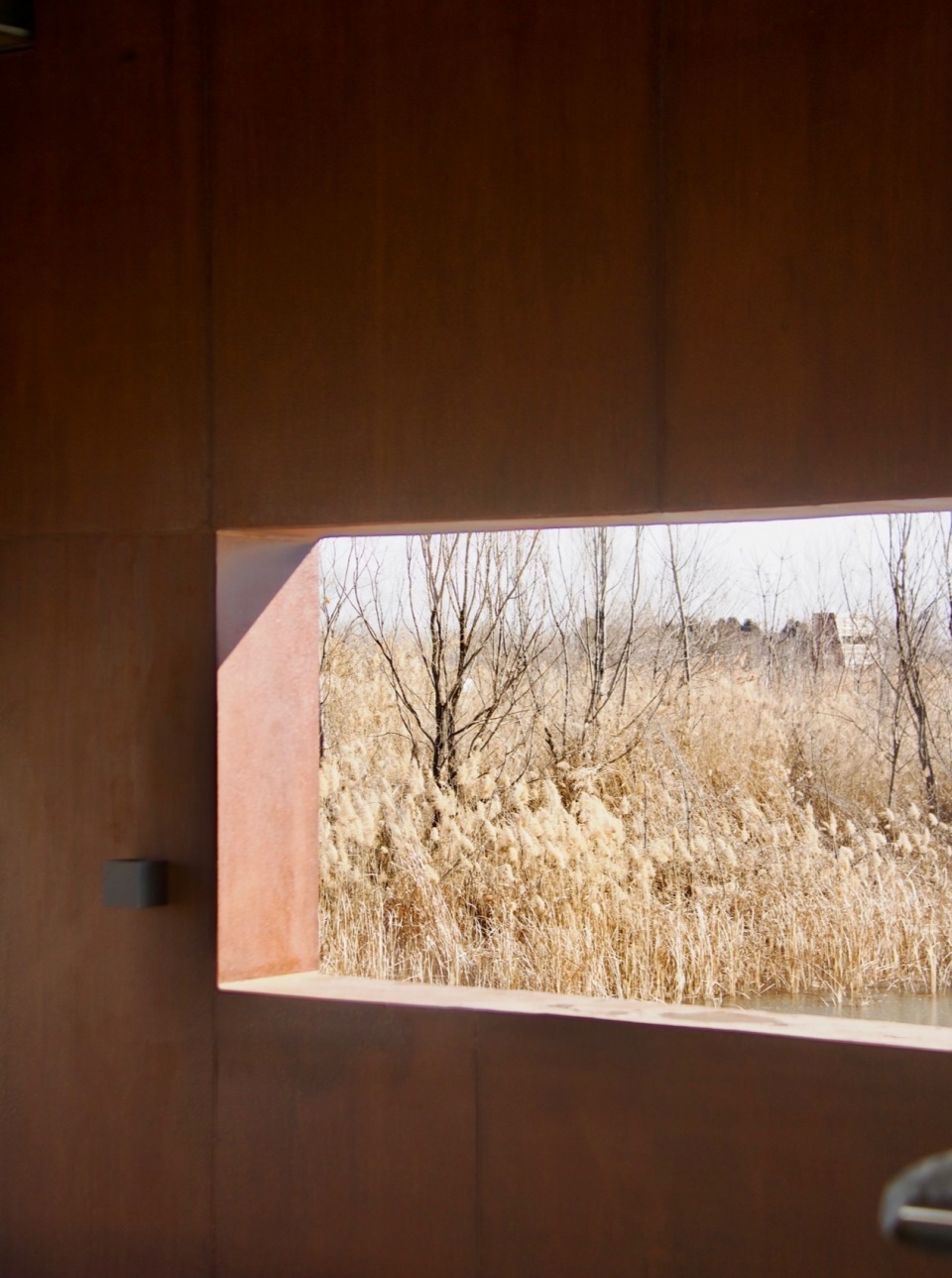
看与被看的叙事贯穿设计——观鸟者透过耐候钢缝隙窥探候鸟栖息,自身亦成为风景的一部分;镂空的墙体切割光影,框取湿地晨昏的天光水色,让观察行为本身升华为艺术化的自然体验。长廊最终成为一处“生态剧场”,模糊观察者、建筑与荒野的界限,诠释邢襄生态园的生命张力。
The narrative of observation and being observed runs through the design—birdwatchers peer through the gaps in corten steel panels to observe migratory birds nesting, becoming part of the landscape themselves; perforated walls slice through light and shadow, framing the morning and evening hues of the wetland’s sky and water, elevating the act of observation into an artistic natural experience. The corridor ultimately becomes an “ecological theater,” blurring the boundaries between observers, architecture, and wilderness, interpreting the vital energy of Xingxiang Ecological Park .
▼设计多个不同高度、尺寸的窗洞,从建筑内部向外望去,形成不同框景效果,Design multiple windows of different heights and sizes to create different framing effects when looking out from inside the building
▼几何窗洞,Geometric Window
▼成为远处芦苇荡最佳观赏点,As the best viewing spot for the distant reed marshes
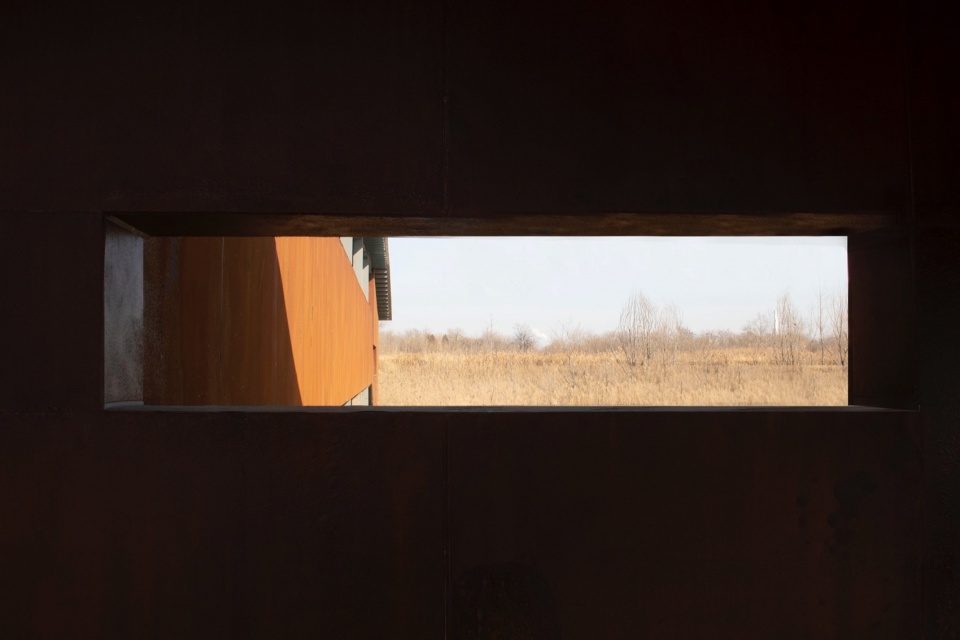
▼几何窗洞,Geometric Window
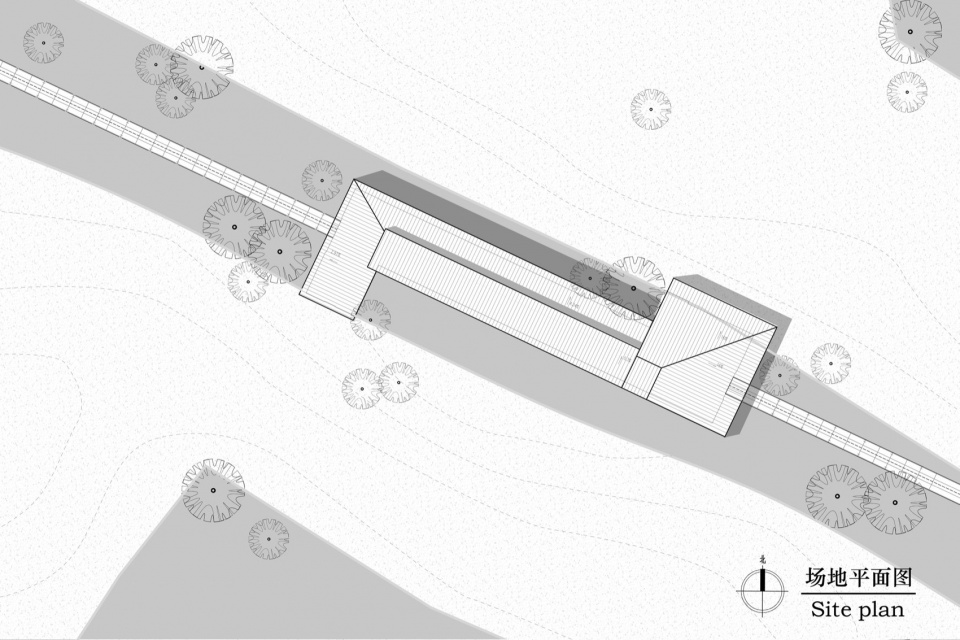
▼总平面图,Site Plan
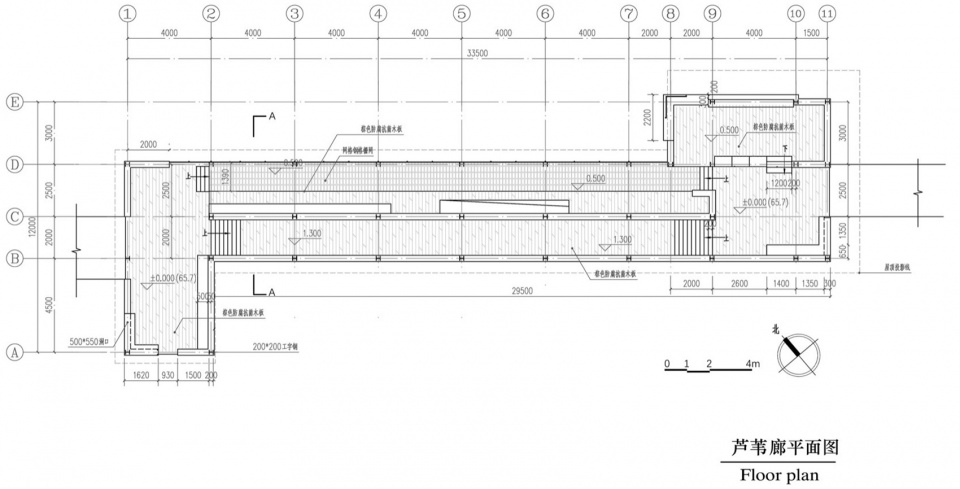
▼平面图,Plan
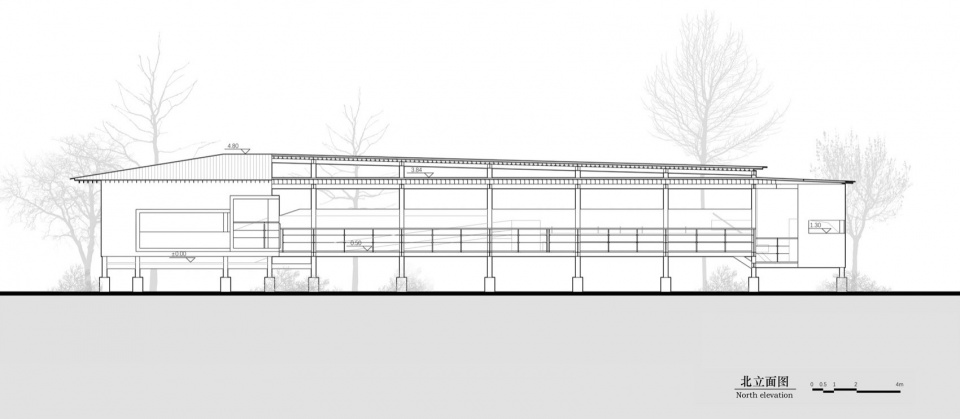
▼立面图,Elevation
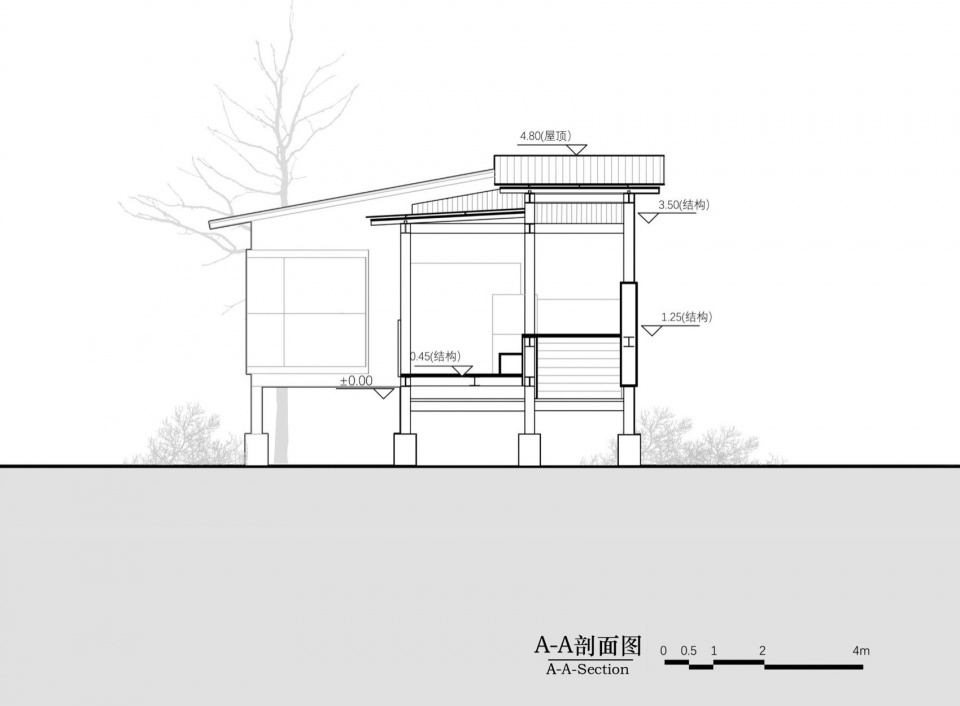
▼剖面图,Section
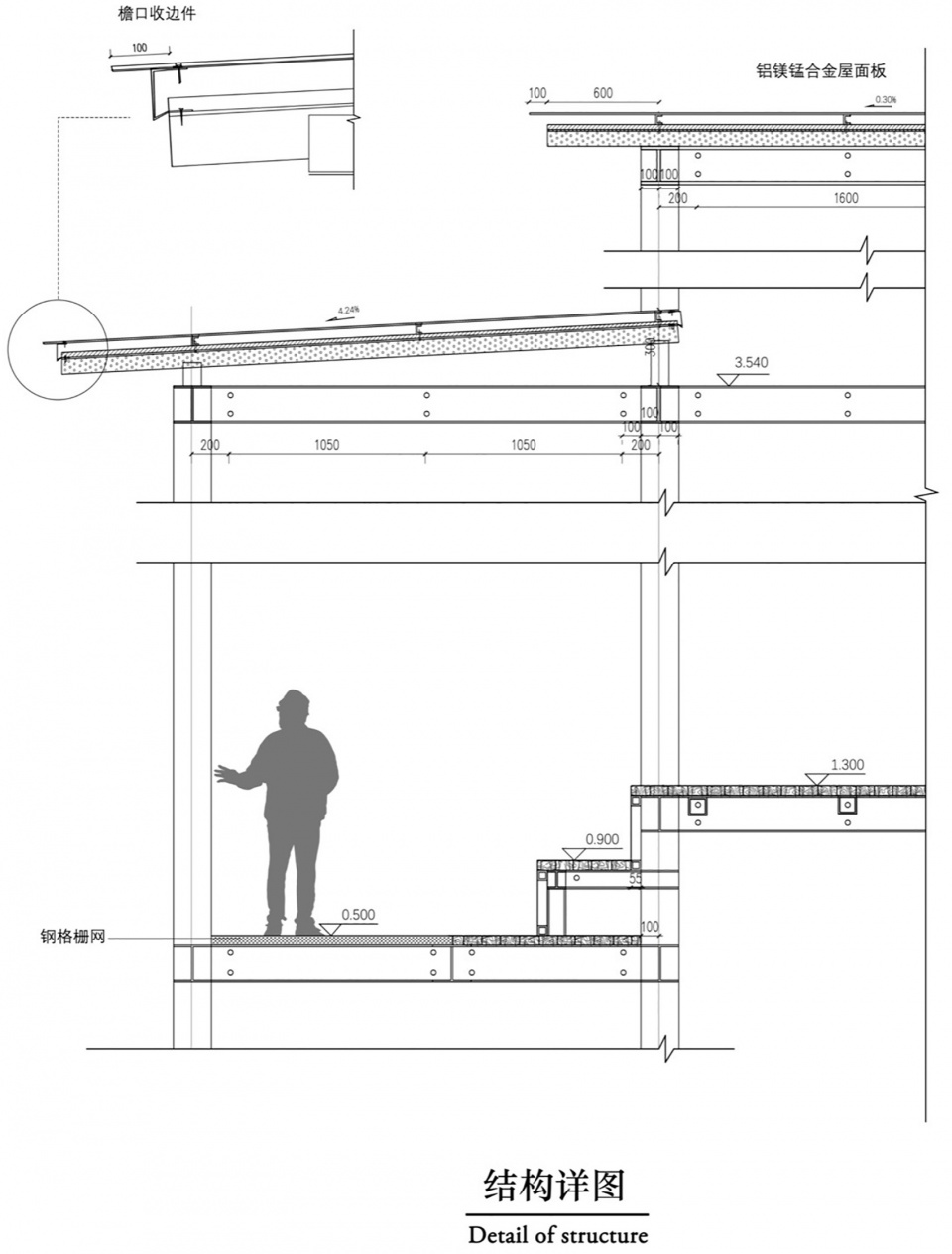
▼结构详图,Detailed structural drawing
廊–西大门Corridor – West Gate
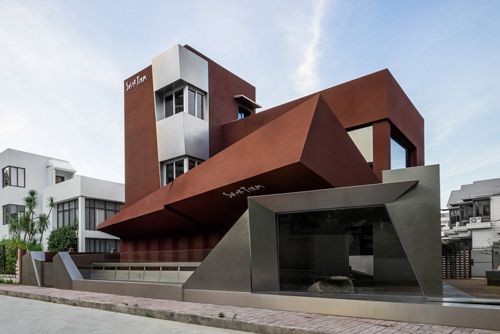
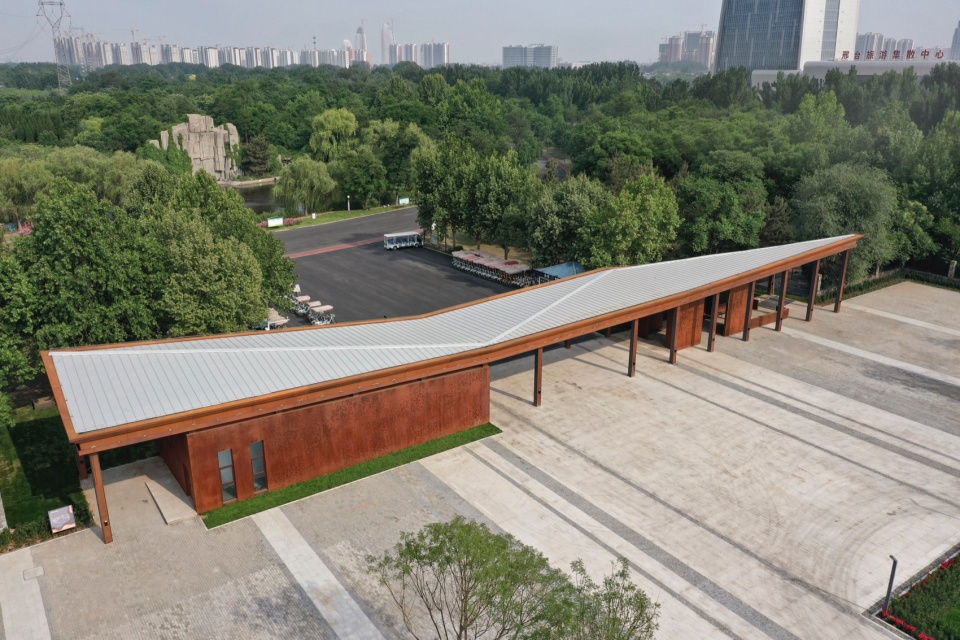
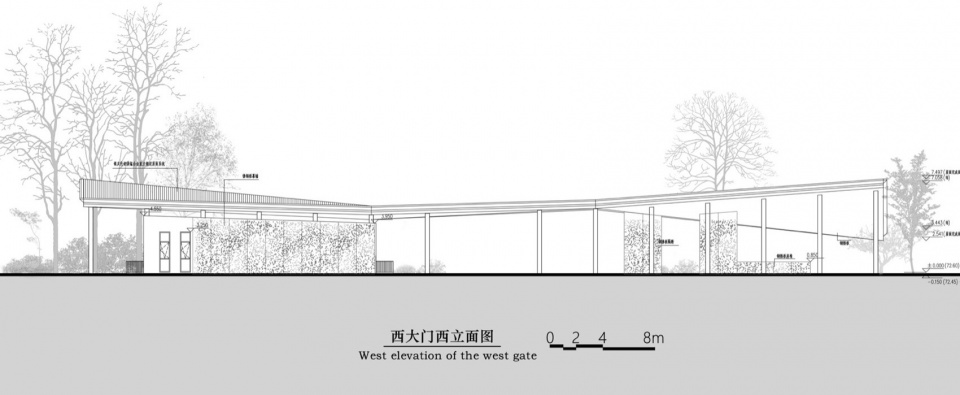
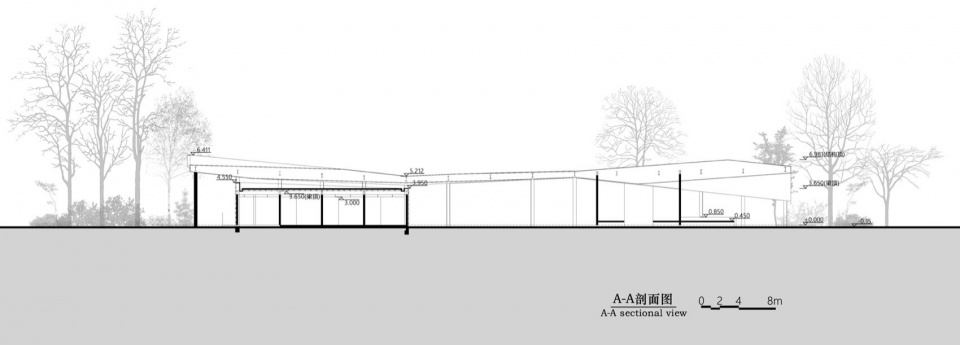
作为邢襄生态园的主入口,西大门以“在地焕新”为理念,通过现代设计语言重构场域的仪式感与功能性。设计保留了原有建筑结构,以谦逊的介入方式赋予其新生——一侧以耐候钢构筑起伏的门式框架,形成强烈的序列感和导向性。另一侧则将原始建筑包裹其中,新旧交融,既延续历史记忆,又塑造鲜明的入口标识。
▼轴测图,Axonometric drawing
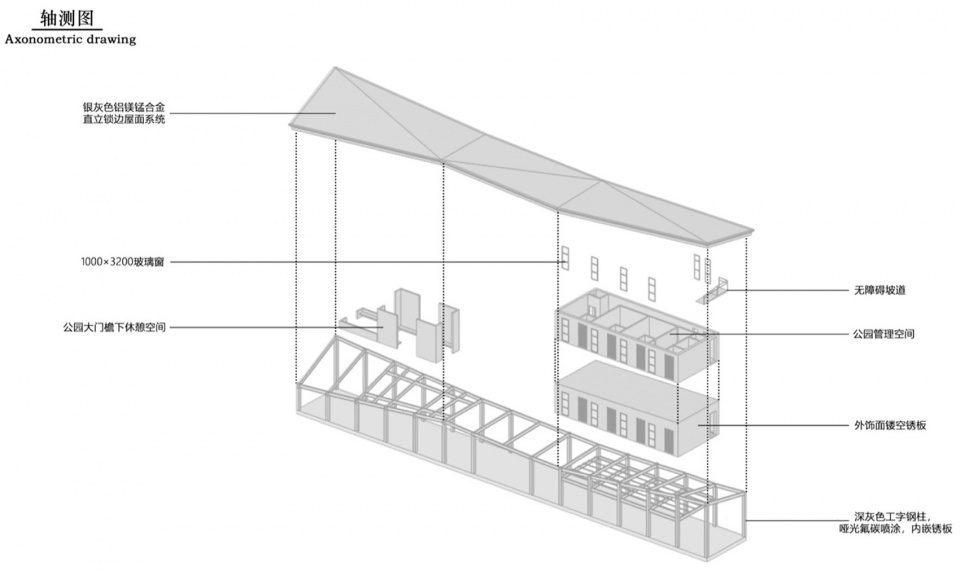
As the main entrance to the Xingxiang Ecological Park, the West Gate embodies the concept of “renewal through local context,” retaining the site’s ceremonial and functional qualities through modern design language. The design retains the original building structure, rejuvenating it through a modest intervention—one side features a corten steel panel framework forming a rhythmic, arched structure that creates a strong sense of sequence and directionality. The other side wraps the original building within, blending old and new to preserve historical memory while establishing a distinctive entrance identity.
▼西大门外观,West Gate
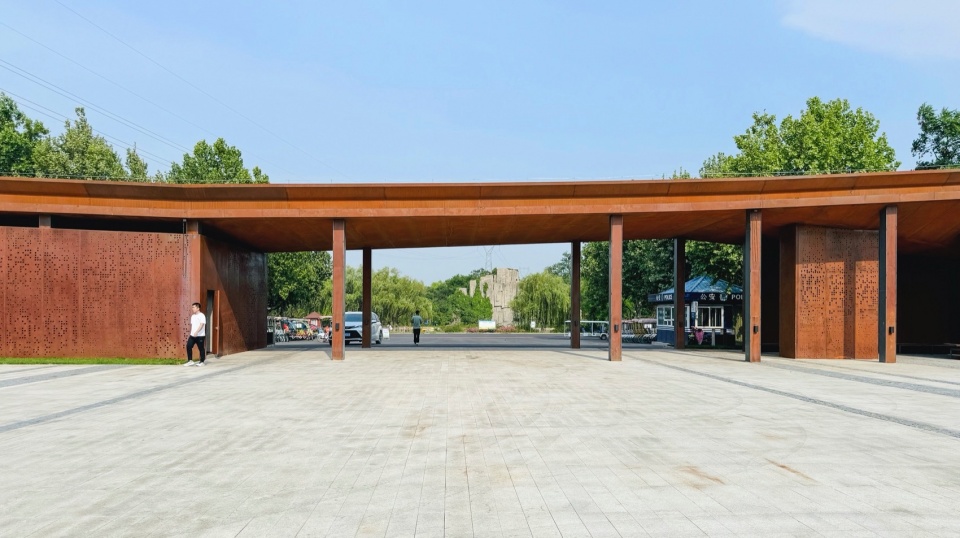
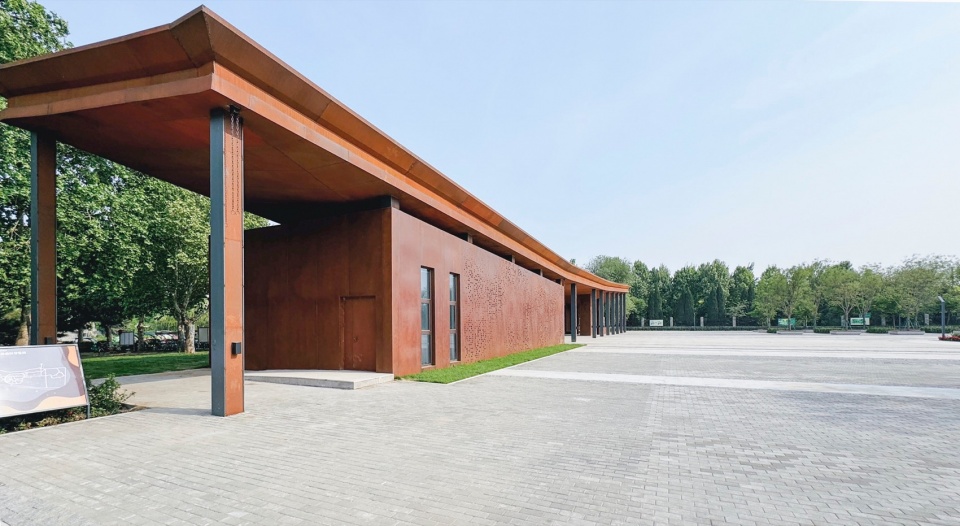
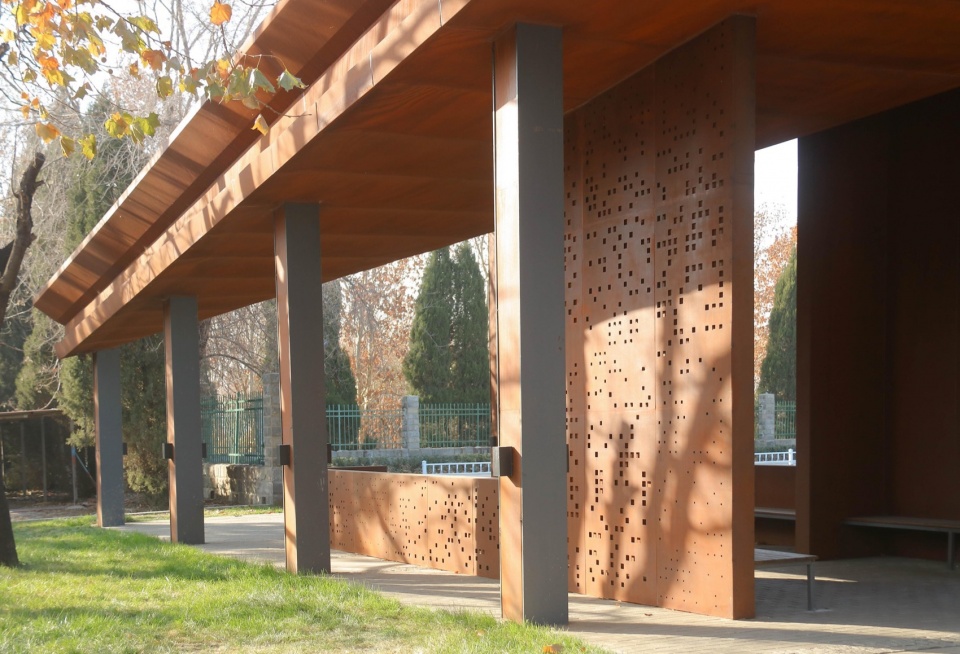
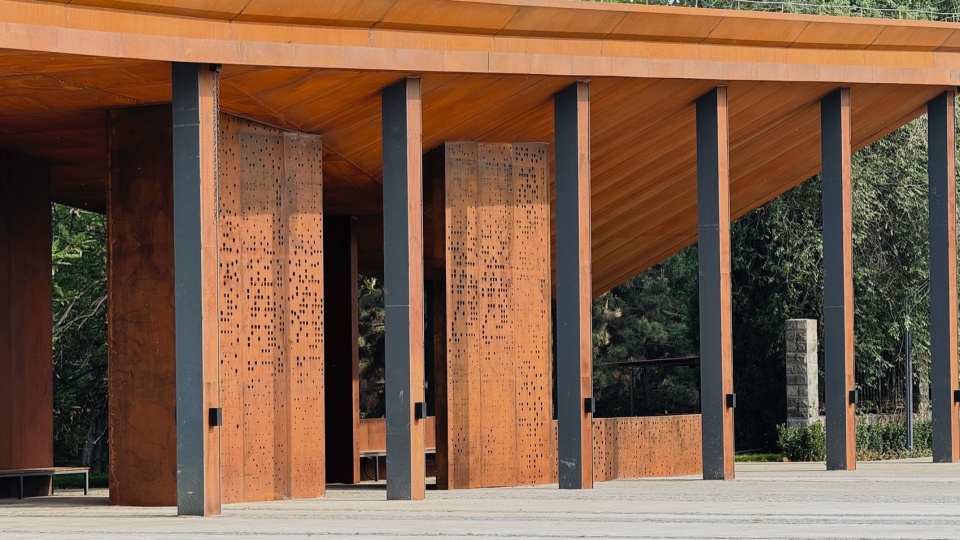
▼曲折起伏的屋顶,Wavy Roof
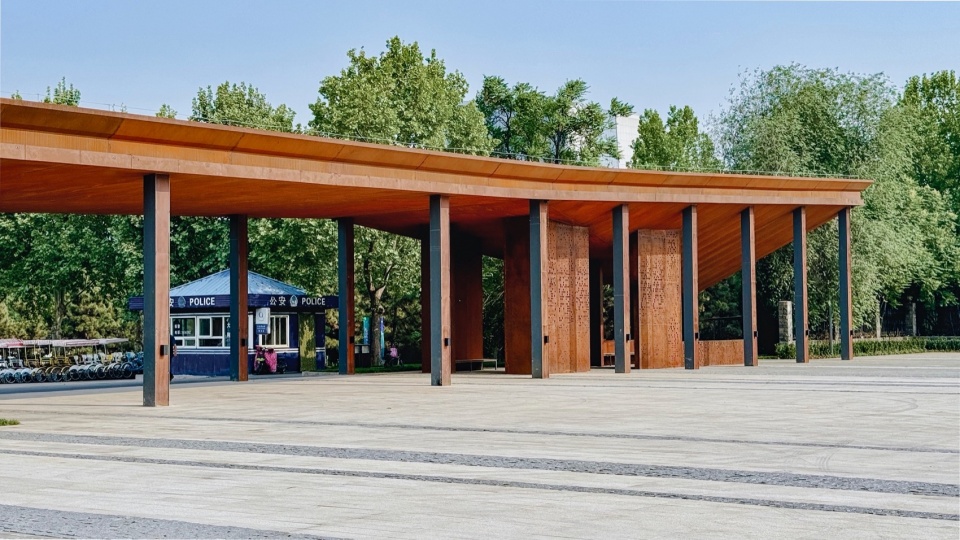
▼场地原始大门建筑,The original gate on the site
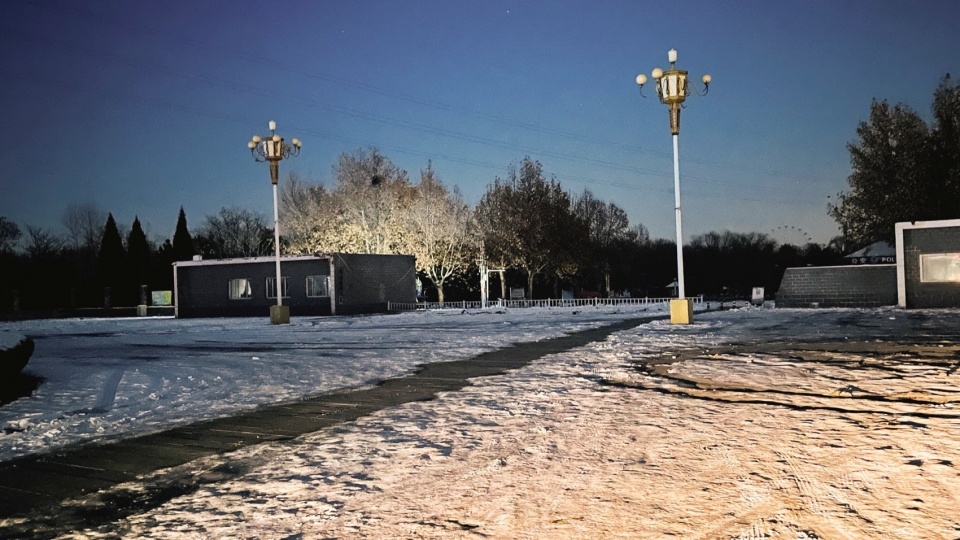
▼保留原始建筑,将其包裹作为新建筑一部分,Retain the original building and incorporate it as part of the new building
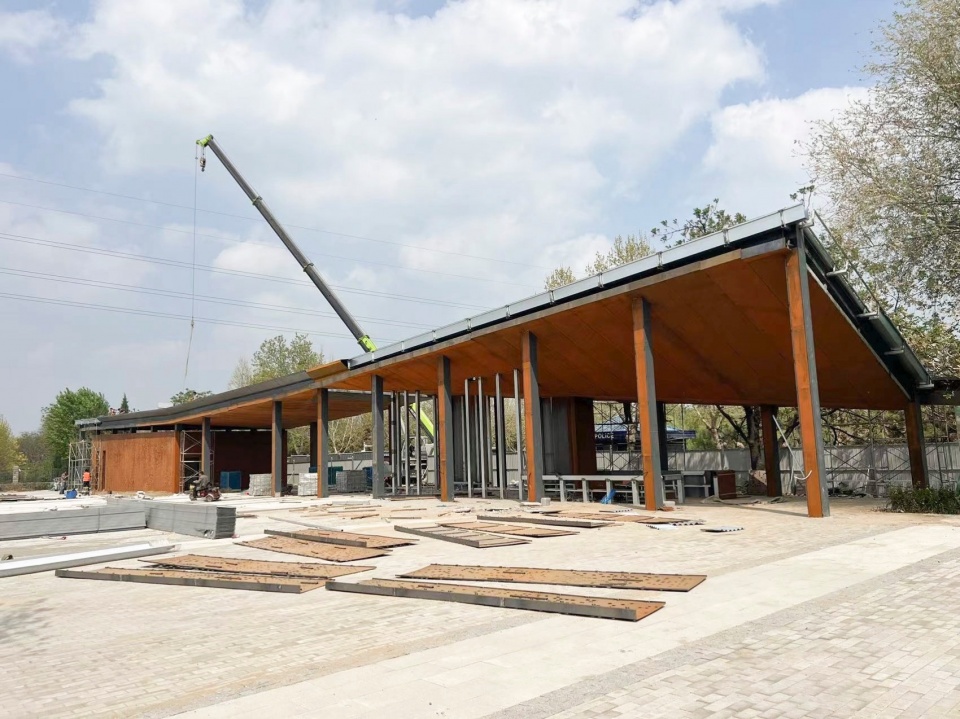
▼西大门内部构造,Internal structure of the West Gate
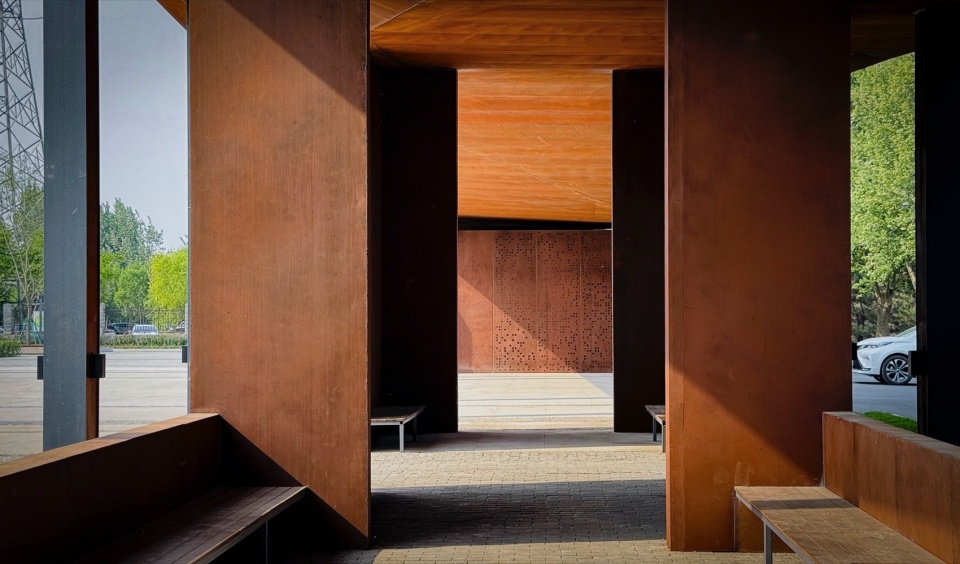
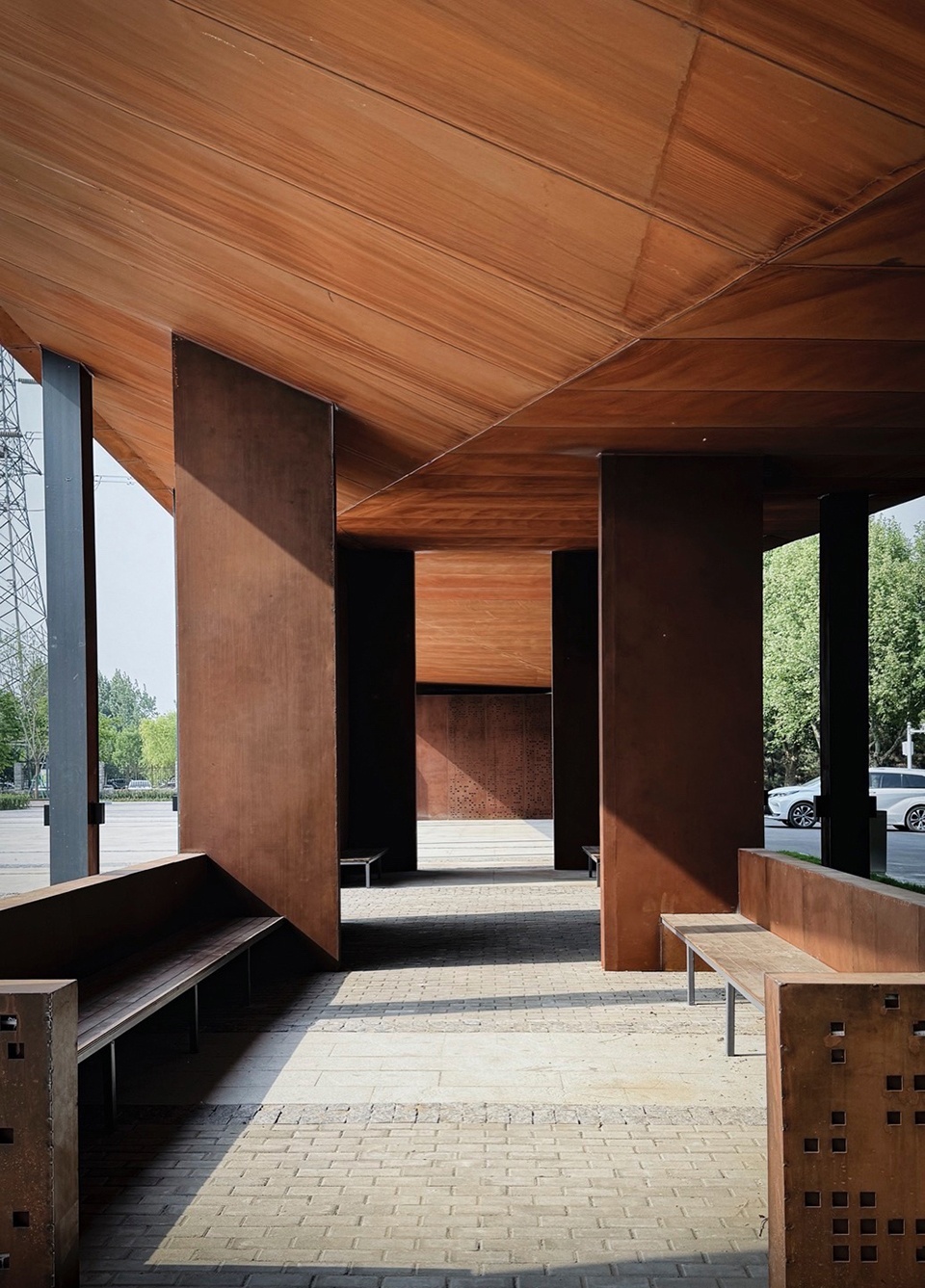
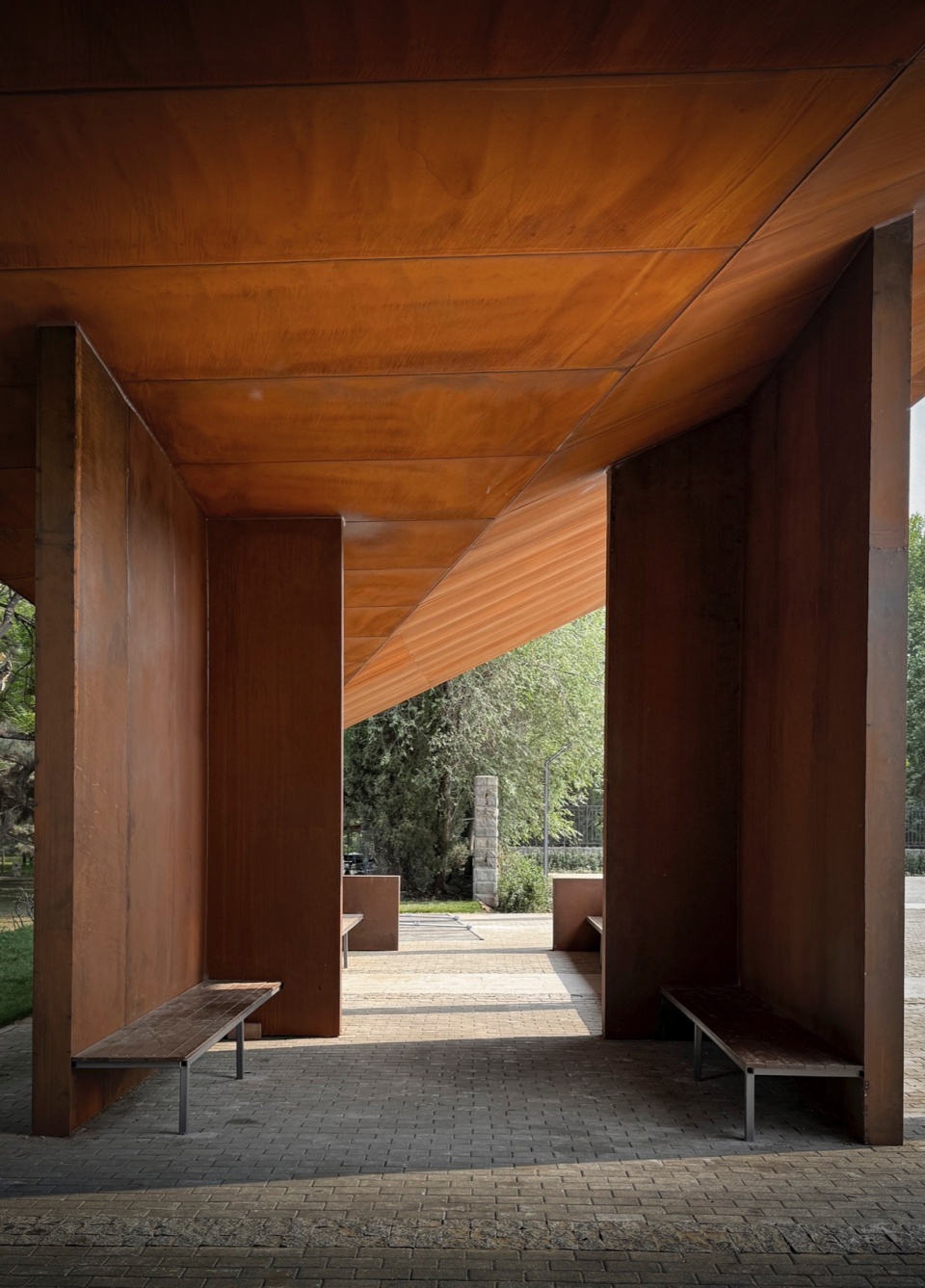
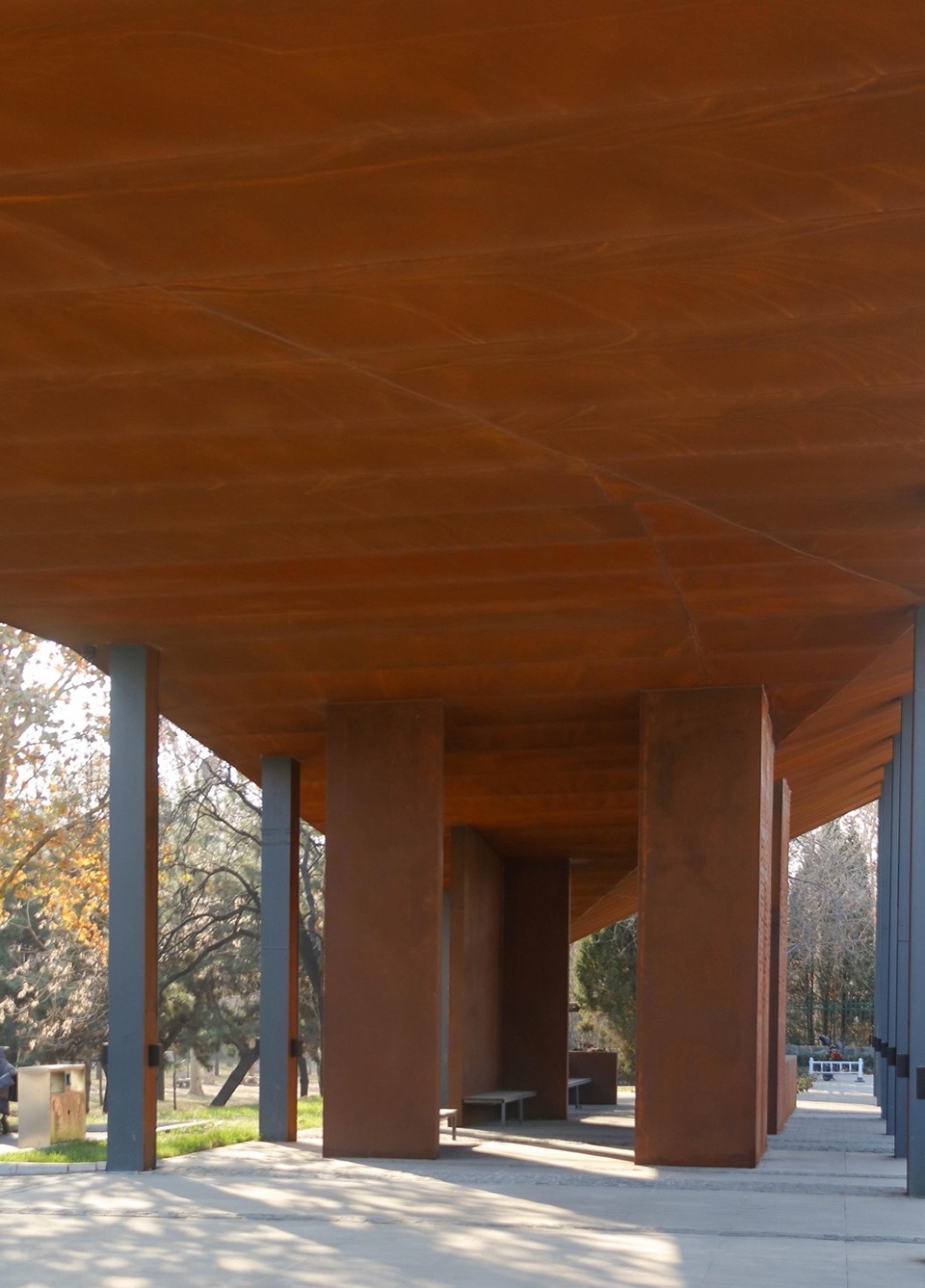
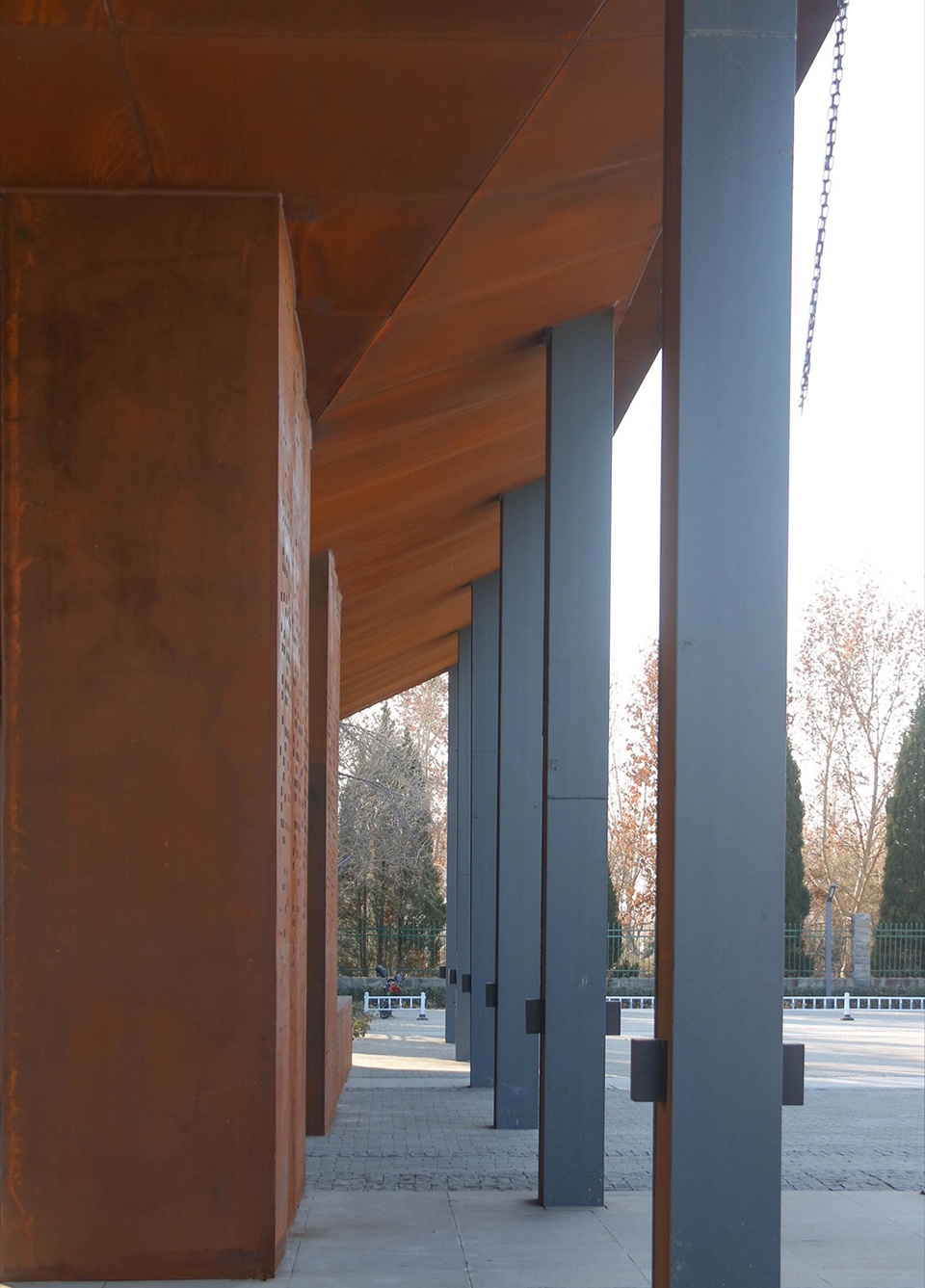
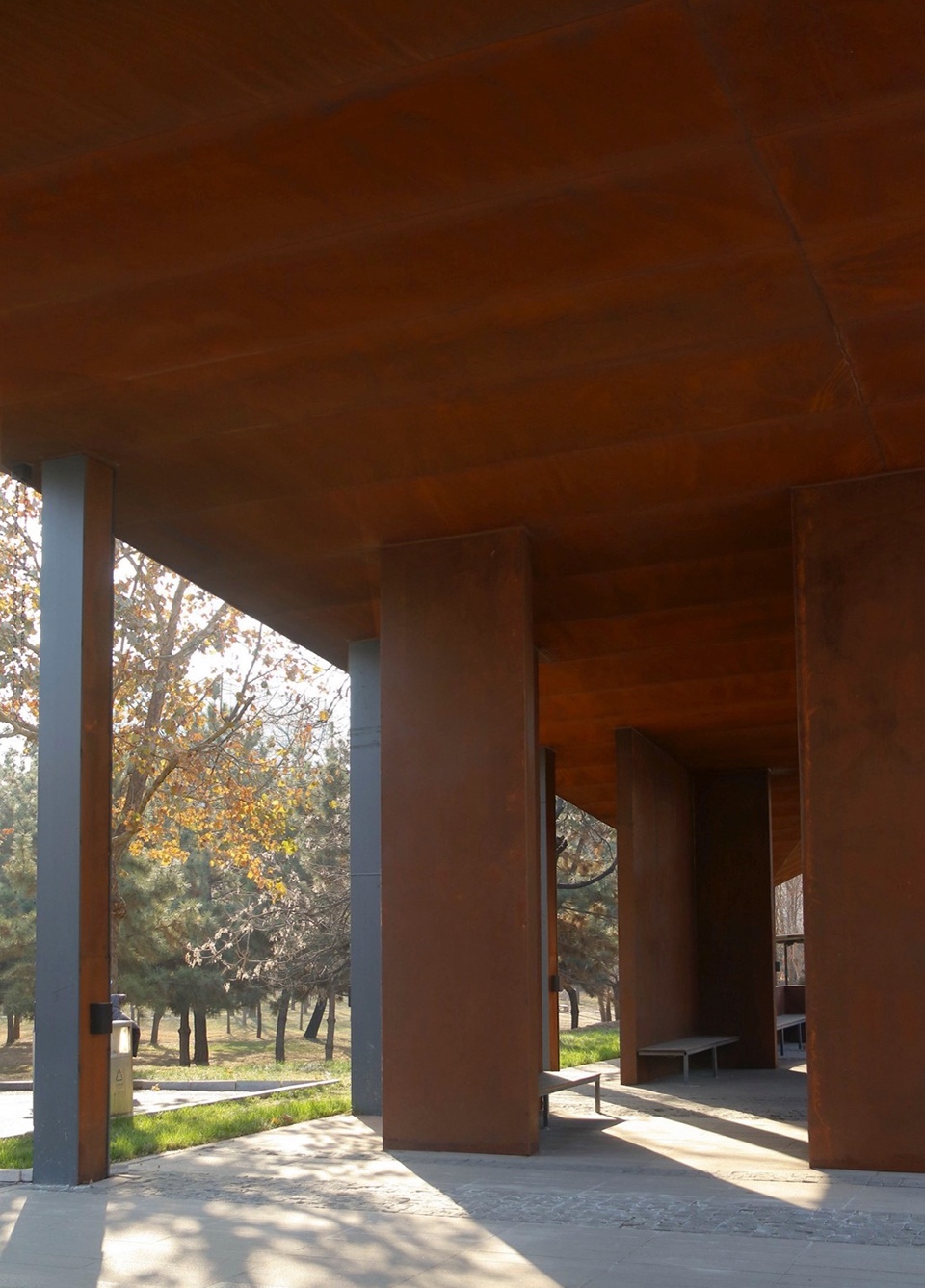
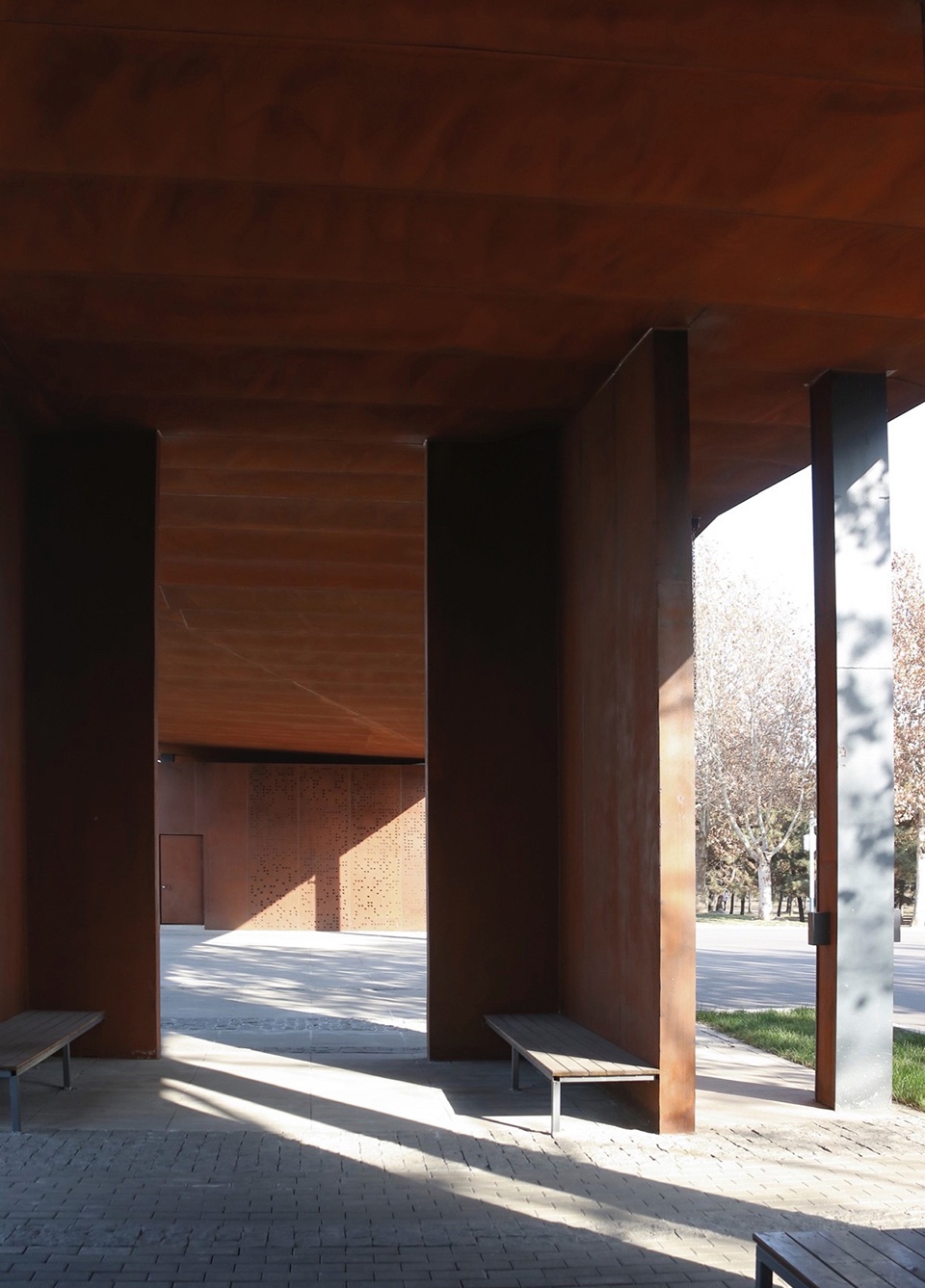
耐候钢的厚重肌理与动态折线形态,构成大门的仪式性张力,在自然环境中形成人工与荒野的对话。同时,穿孔铝板以叶片纹样镂空点缀,光线透过孔洞投射出斑驳光影,隐喻生态园的植物群落,弱化工业材料的冷硬感。
The heavy texture and dynamic zigzag shape of the corten steel panel create a ceremonial tension for the gate, forming a dialogue between the artificial and the wild in the natural environment. At the same time, perforated aluminum plates are embellished with leaf patterns, and light shining through the holes casts mottled shadows, symbolizing the plant community in the ecological park and softening the cold, hard feel of industrial materials.
▼外侧穿孔板,Perforated panel on the outer side of the west gate
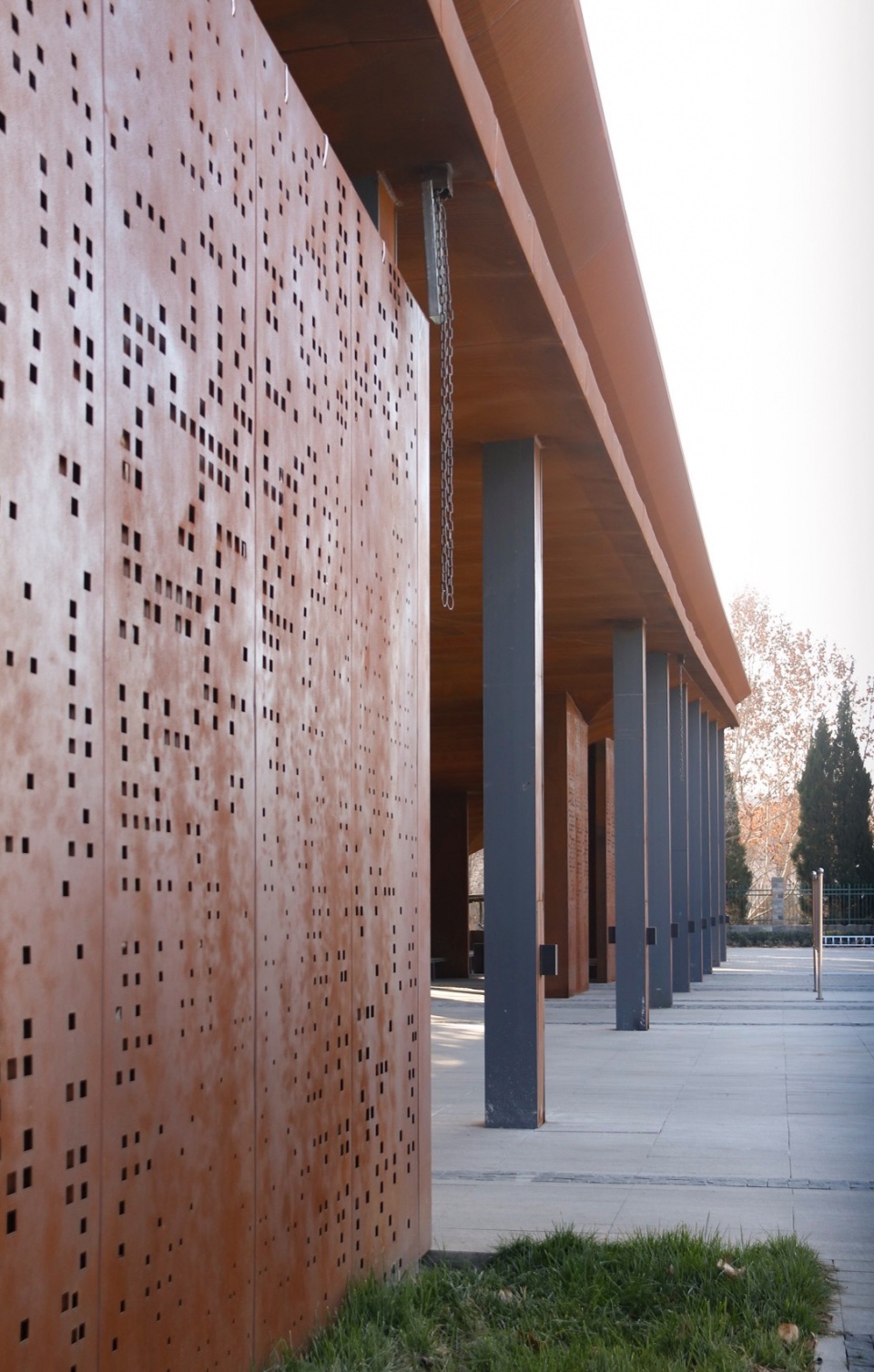
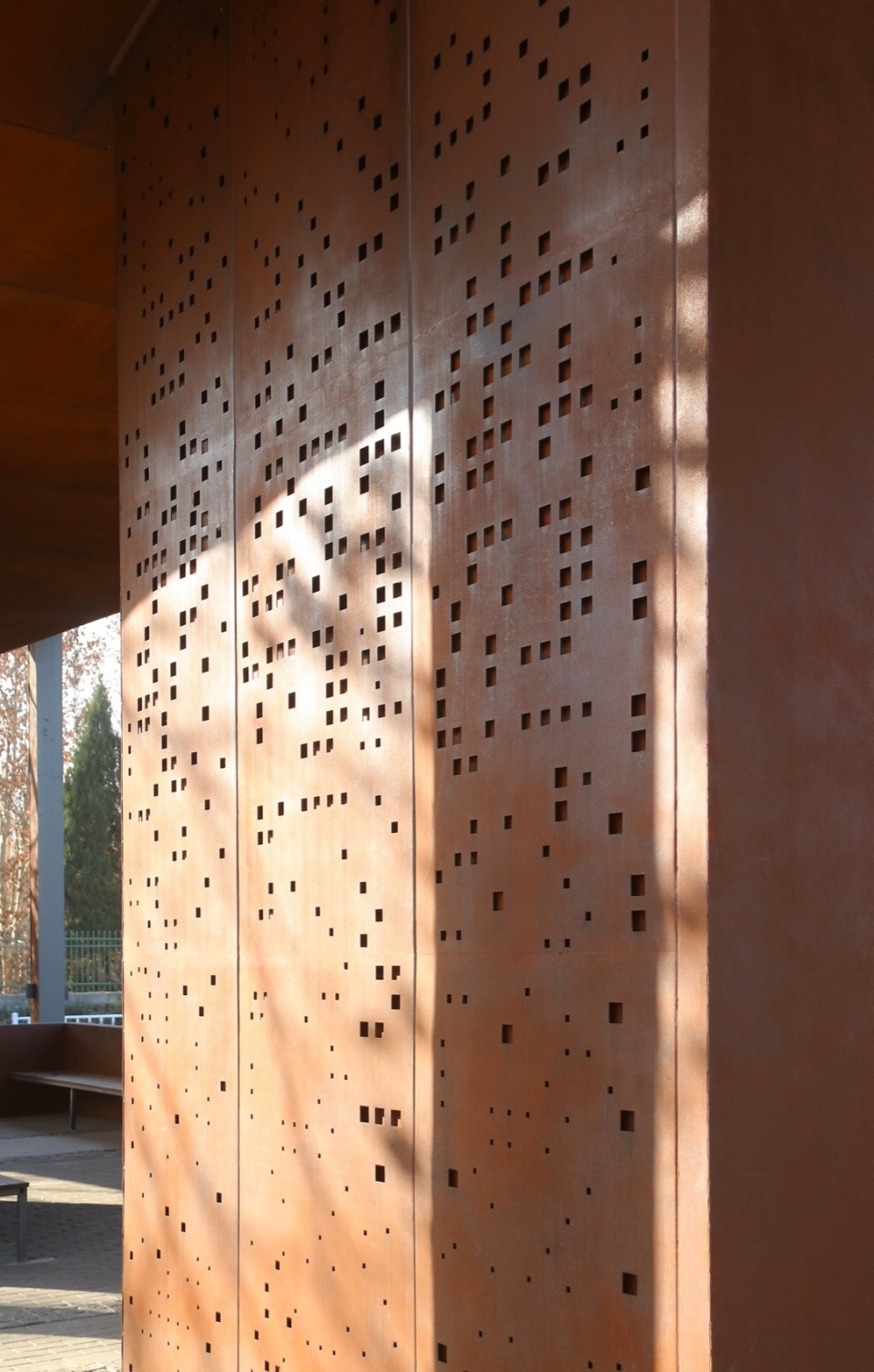
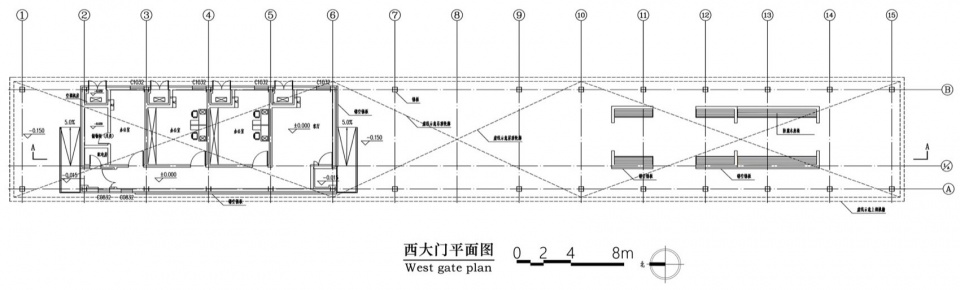
功能布局上,西大门兼顾交通枢纽与游憩节点的双重角色:入口侧满足人流集散与服务需求,另一侧延伸出休憩平台,以阶梯式绿化软化边界,引导游客缓步入园。这一设计既强化了到达的庄重感,又以自然意象消解建筑的压迫性,使“门”成为连接城市与野趣的诗意媒介。
In terms of functional layout, the West Gate serves a dual role as both a transportation hub and a recreational node: the entrance side accommodates pedestrian traffic and service needs, while the other side extends into a rest platform, with stepped greenery softening the boundaries and guiding visitors to enter the park at a leisurely pace. This design reinforces the solemnity of arrival while using natural imagery to mitigate the oppressiveness of the architecture, making the “gate” a poetic medium connecting the city with the wild.
▼平面图,Plan
▼立面图,Elevation
▼剖面图,Section
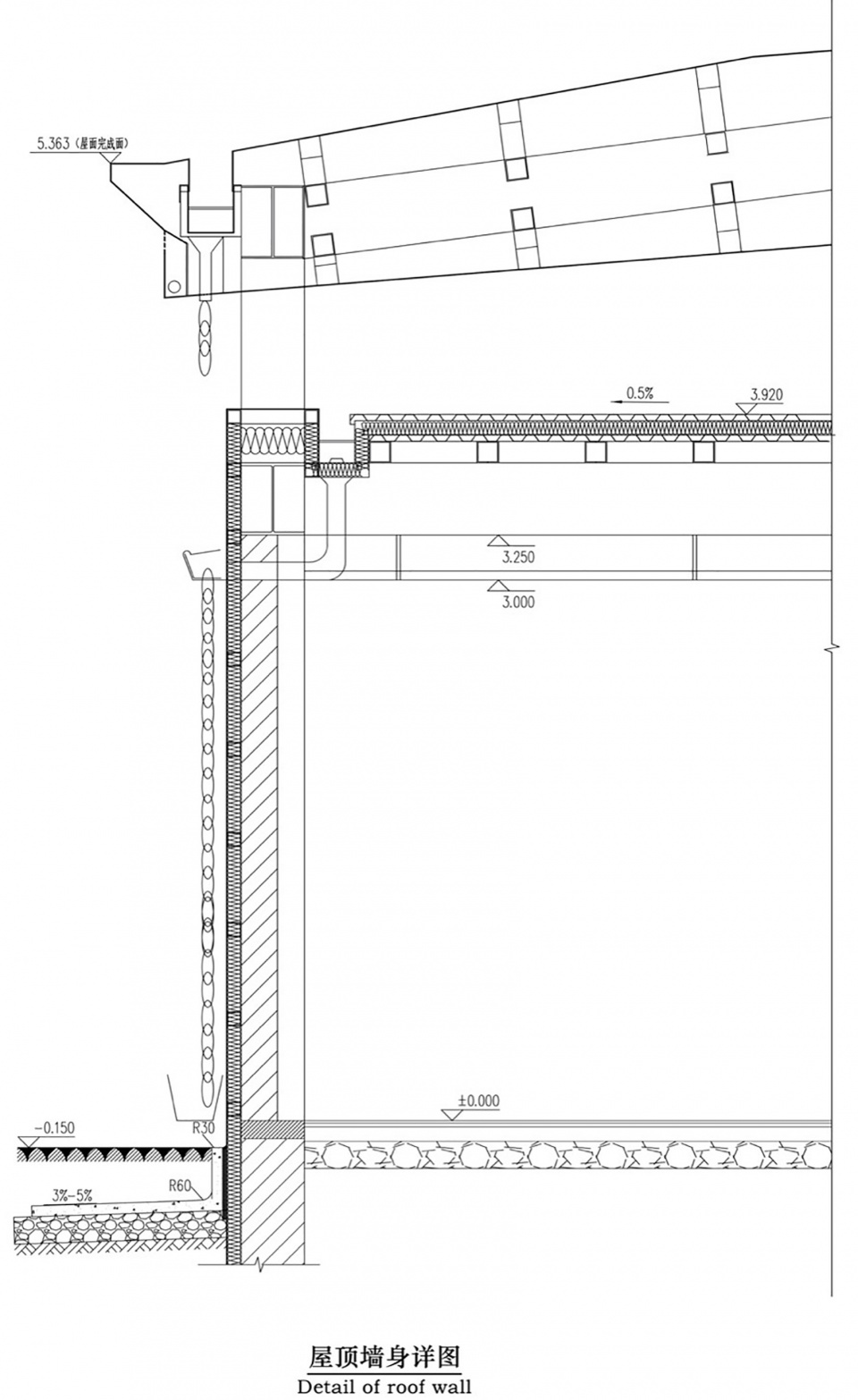
▼墙身详图,Wall detail drawing
塔–观鸟屋Tower – Bird-watching Tower
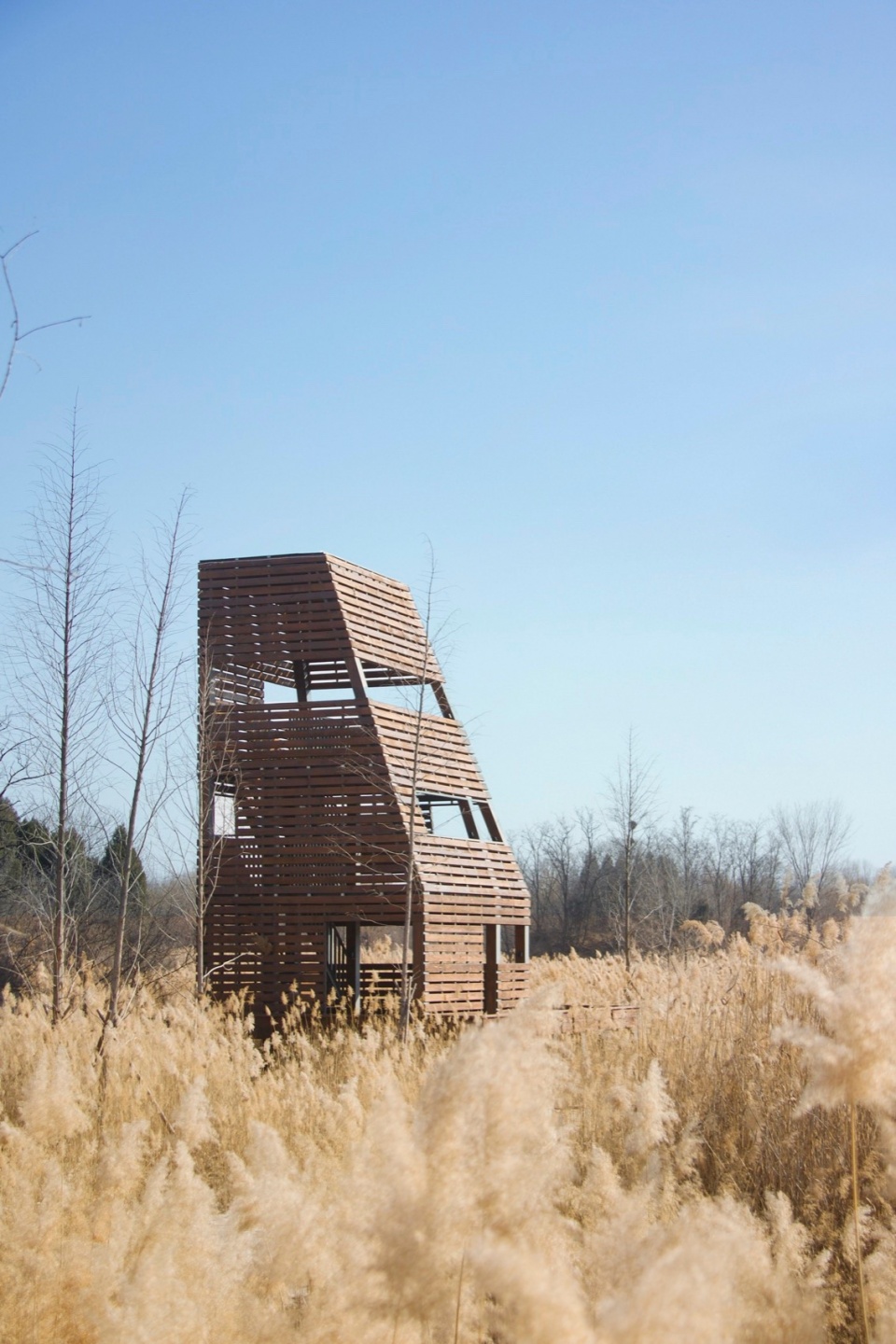
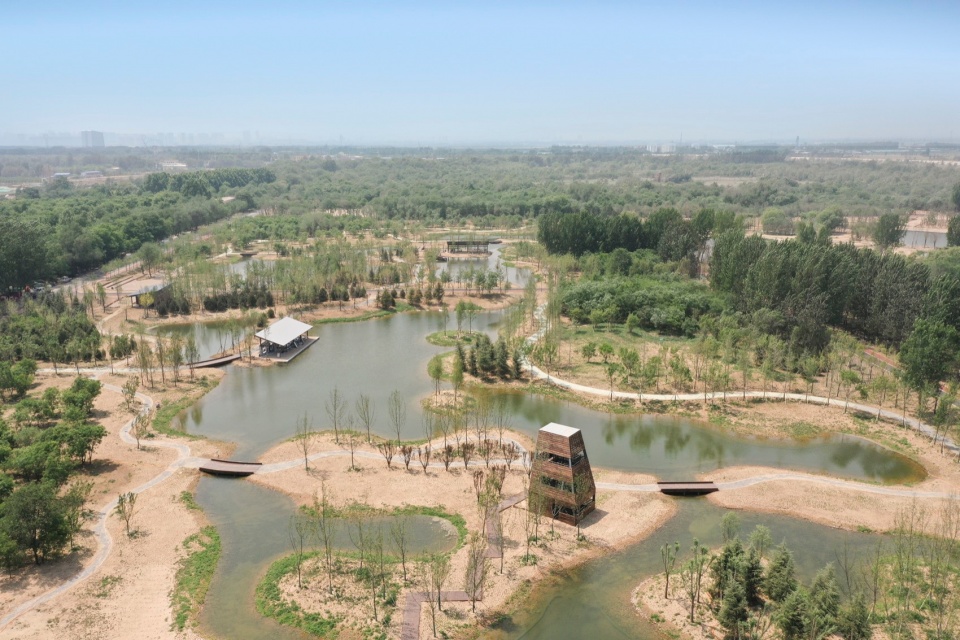
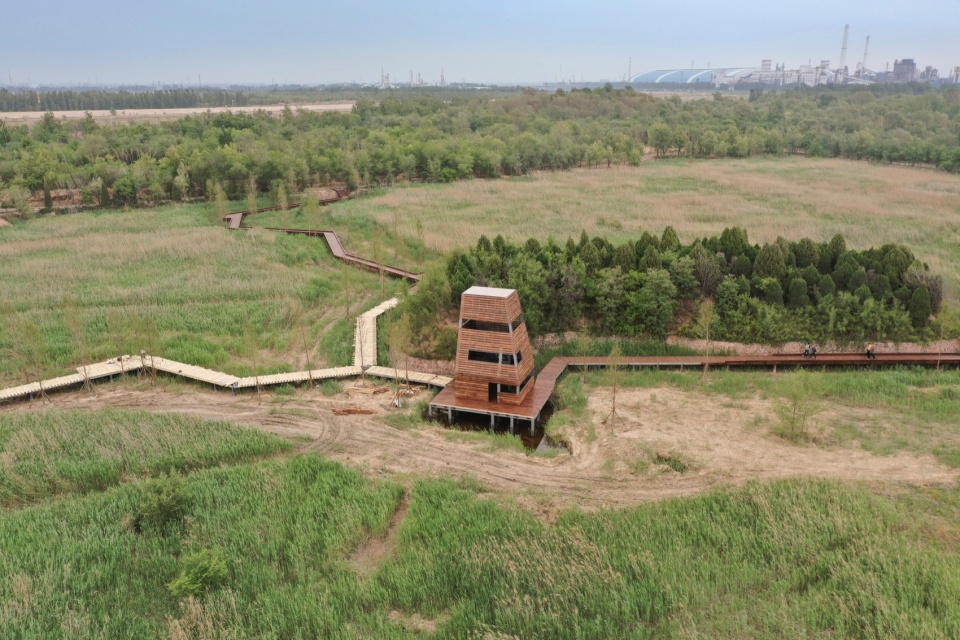
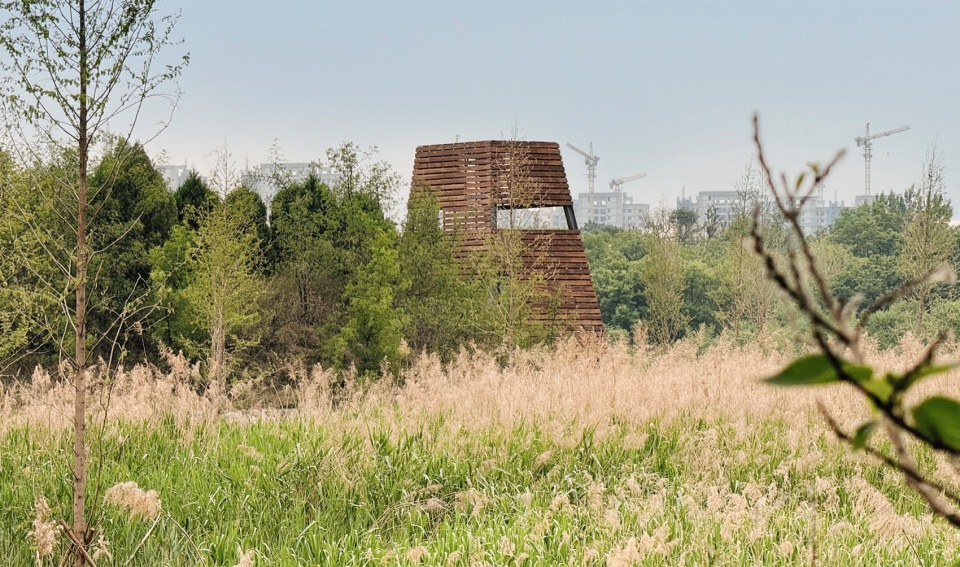
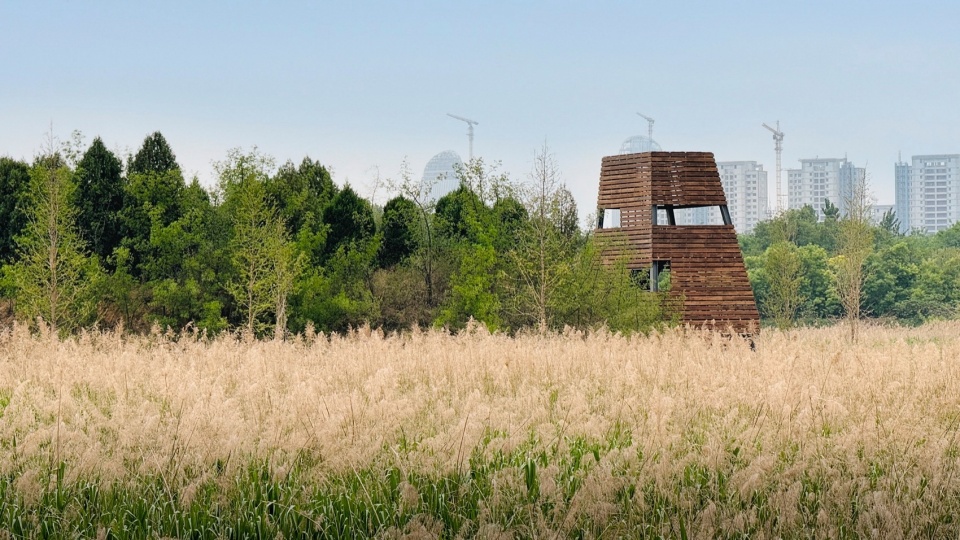
观鸟屋位于邢襄生态园湿地区,是一座兼具隐蔽性与观景体验的生态构筑物。设计以”隐匿的观察者”为理念,通过木质镂空立面与消隐体量,使建筑既融入自然环境,又为访客提供独特的观鸟视角。
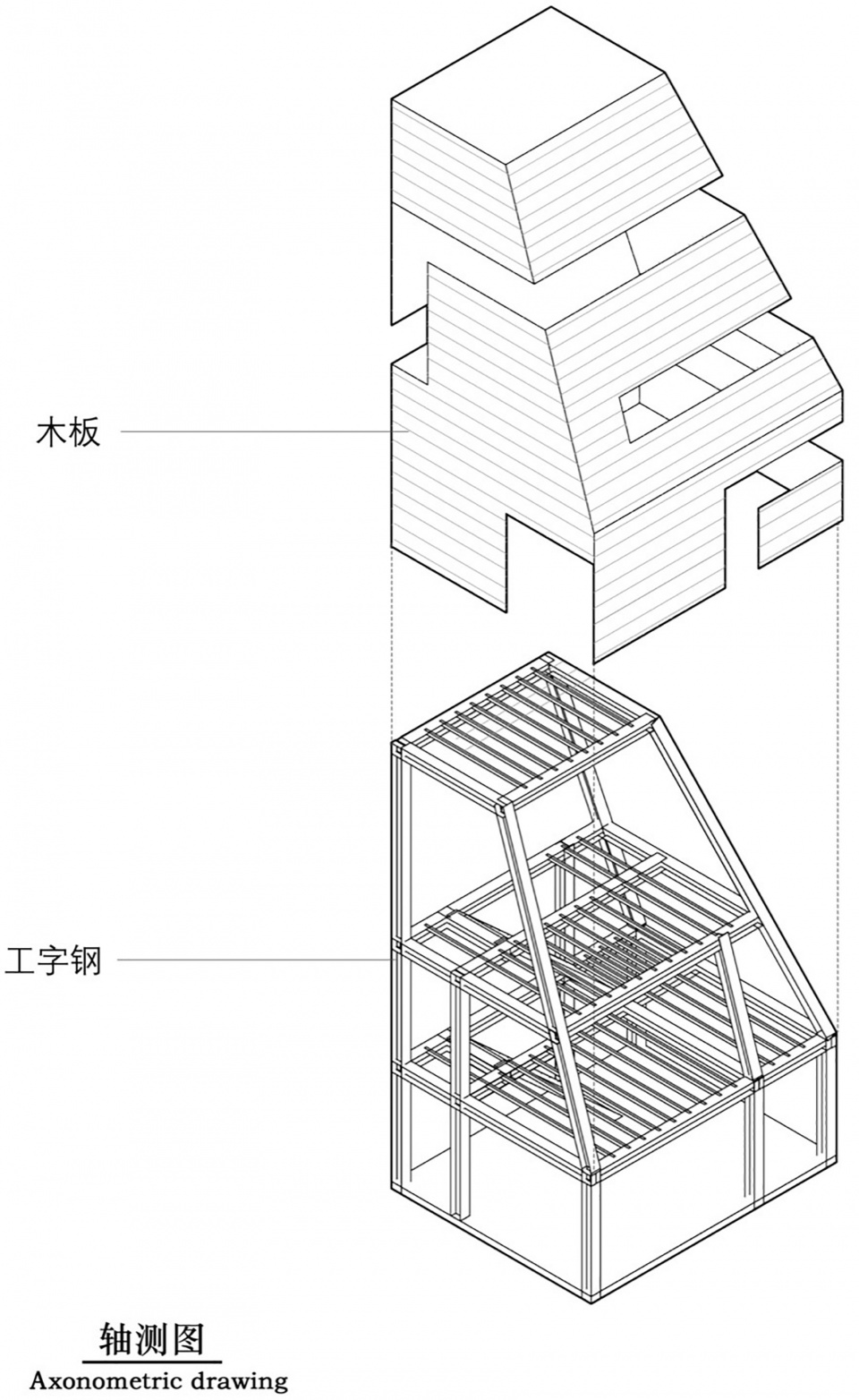
▼轴测图,Axonometric drawing
The Bird-watching Tower is located in the wetland area of Xingxiang Ecological Park. It is an ecological structure that combines concealment with an enjoyable viewing experience. The design concept is based on the idea of a “hidden observer.” The wooden lattice facade and concealed structure allow the building to blend into the natural environment while providing visitors with a unique perspective for bird-watching.
▼观鸟屋,Bird-watching Tower
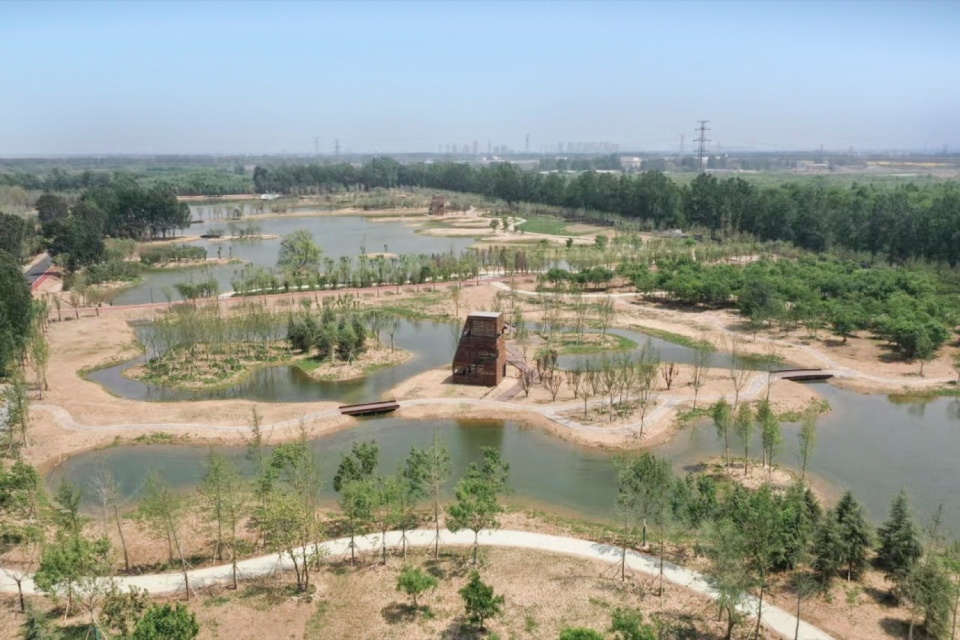
▼观鸟屋,Bird-watching Tower
▼观鸟屋,Bird-watching Tower
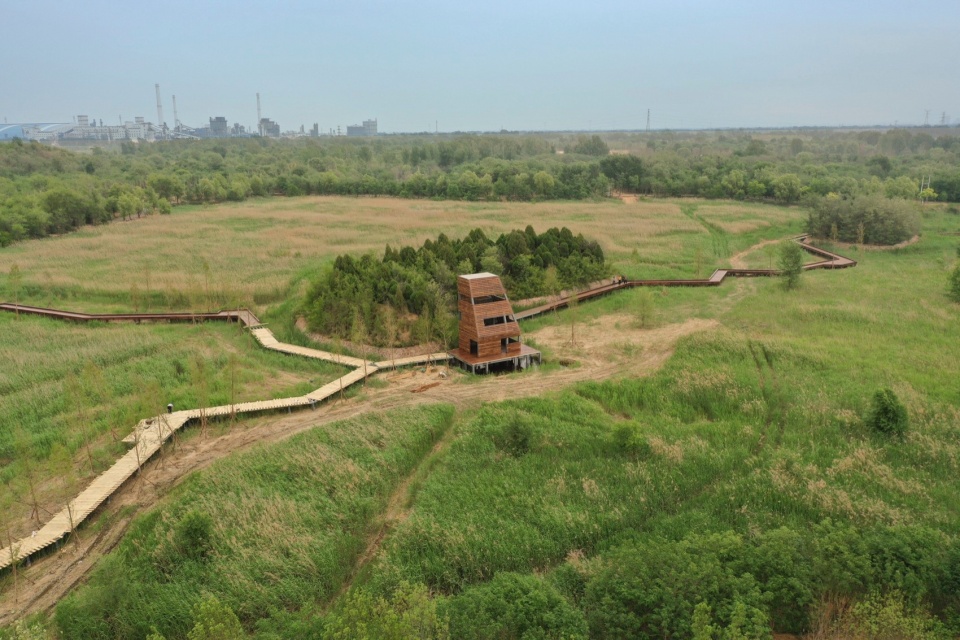
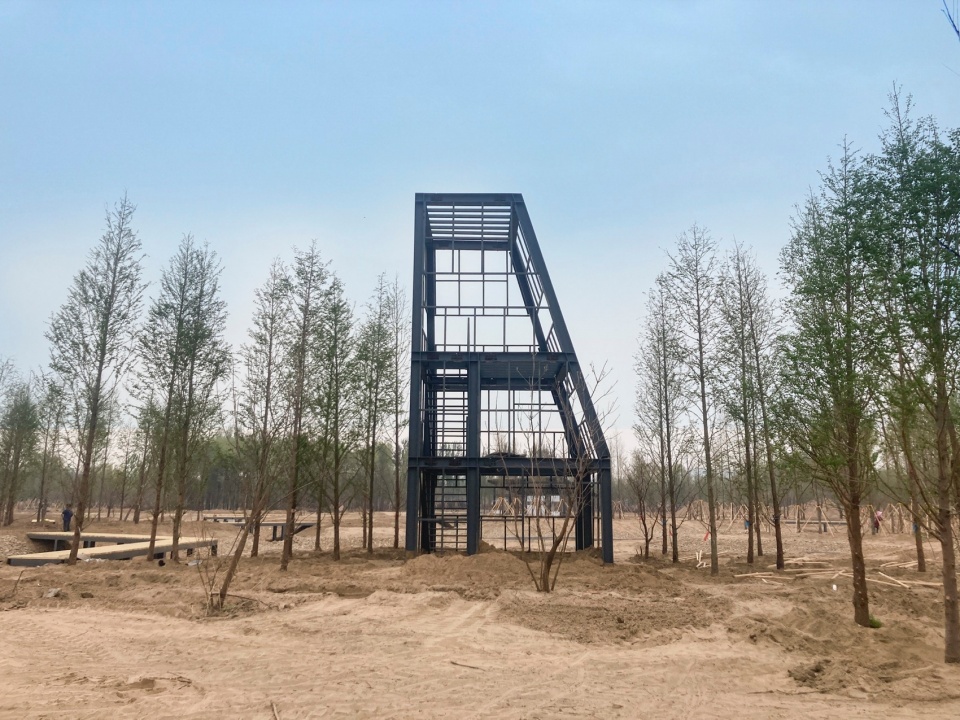
在形态处理上,塔体采用竖向木板条编织的镂空表皮,形成半透明的视觉屏障。木质肌理与周围芦苇荡的质感相呼应,使建筑在远观时自然隐于环境;而近距离观察时,镂空的缝隙成为天然的取景框,观鸟者透过不同角度的开口,捕捉湿地中鸟类栖息的生动画面。
In terms of form, the tower features a perforated exterior made of vertically woven wooden slats, creating a semi-transparent visual barrier. The wooden texture echoes the tactile quality of the surrounding reed marshes, allowing the building to blend naturally into its surroundings when viewed from a distance. Upon closer inspection, the perforated gaps serve as natural viewfinders, enabling birdwatchers to capture vivid scenes of birds nesting in the wetlands through openings at various angles.
▼工字钢框架结构,I-beam frame structure
▼木板编织镂空表皮,The exterior is made of hollowed-out wooden panels
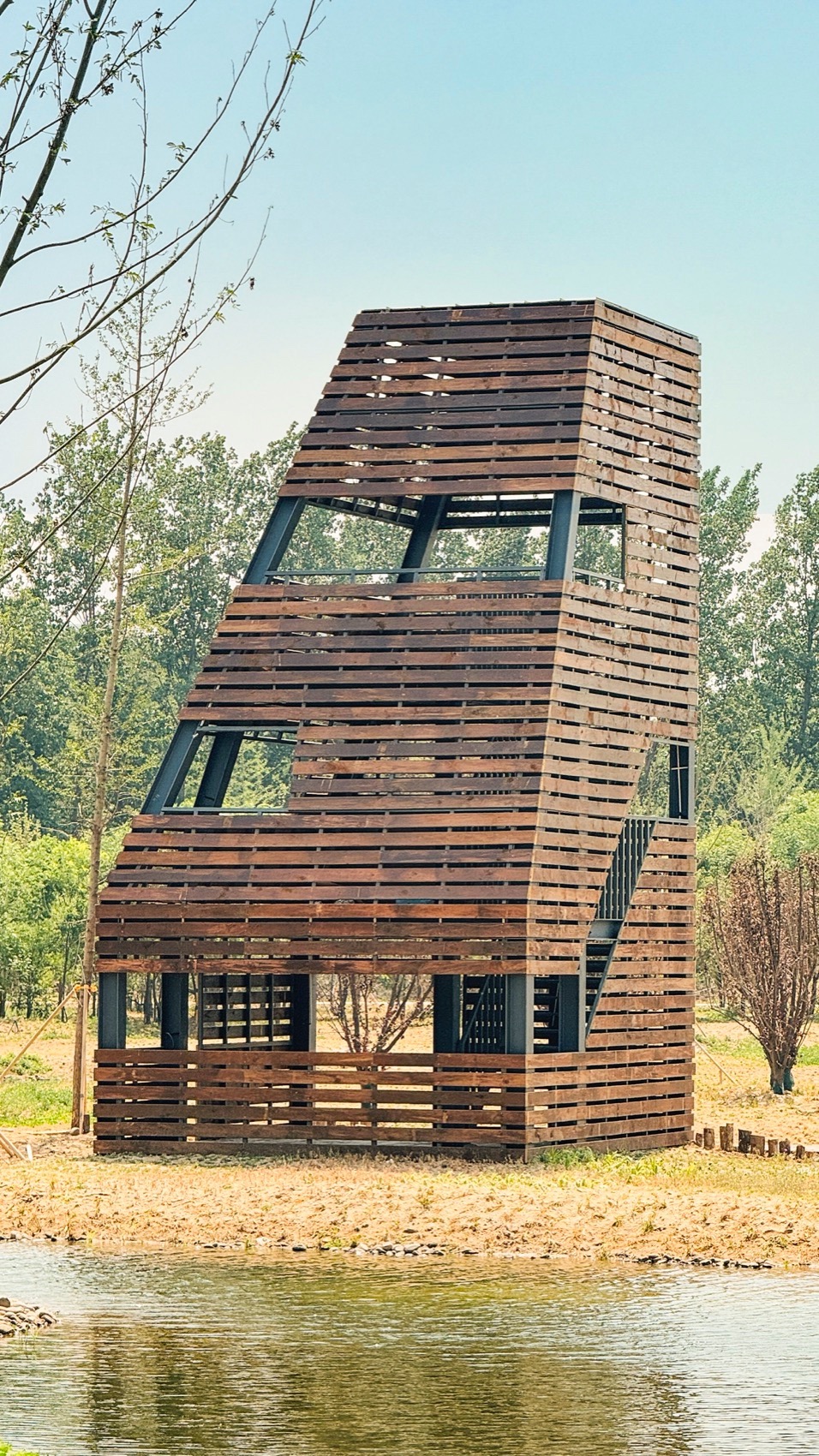
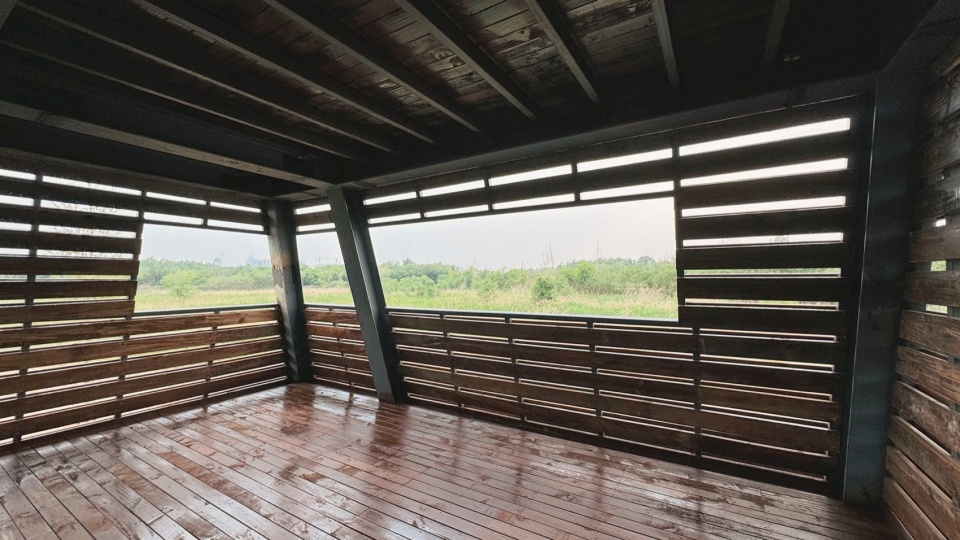
设置多层观景平台,高度逐级变化,适应不同鸟类的观测需求。木板立面的疏密经过精确计算,既能遮挡人类活动对鸟类的干扰,又能保证观察视线的通透性。顶部平台采用悬挑设计,提供360度的全景视野,将湿地景观尽收眼底。
The tower features multiple viewing platforms at varying heights to accommodate the observation needs of different bird species. The density of the wooden panels on the facade has been precisely calculated to block human activity from disturbing the birds while ensuring unobstructed views. The top platform features a cantilevered design, providing a 360-degree panoramic view of the wetland landscape.
▼不同高度的镂空景窗,Windows at different heights
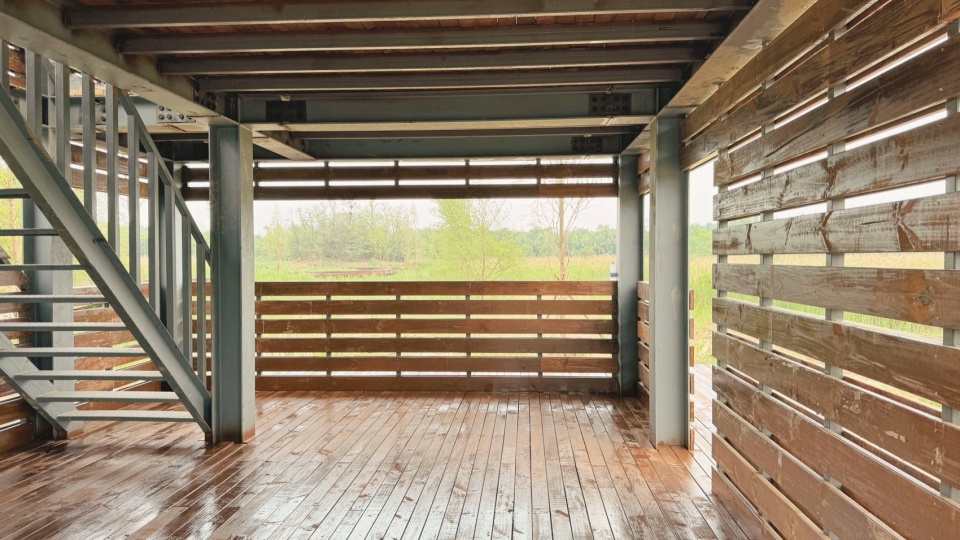
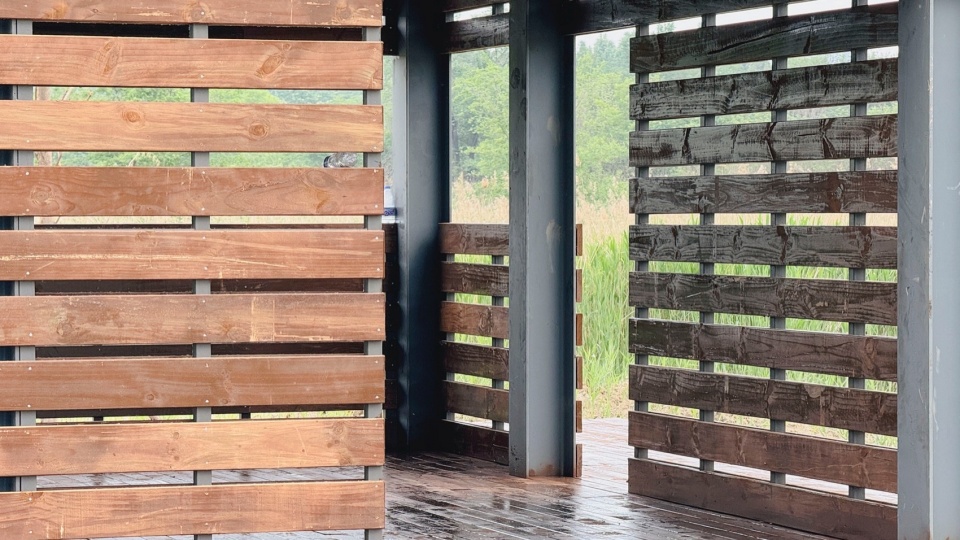
▼与周边环境相融合 The architecture blends in with the surrounding environment
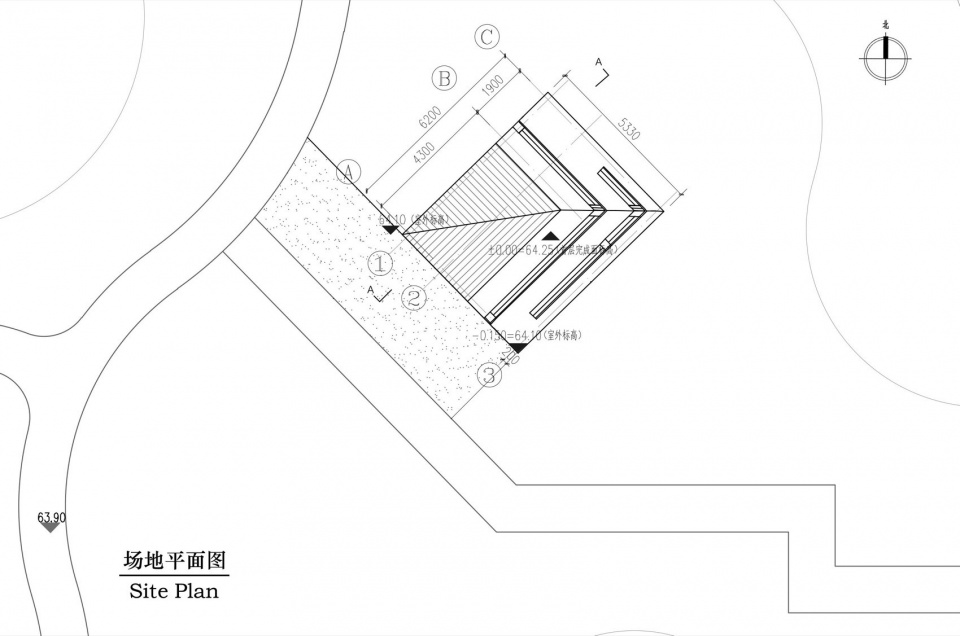
▼平面图,Plan
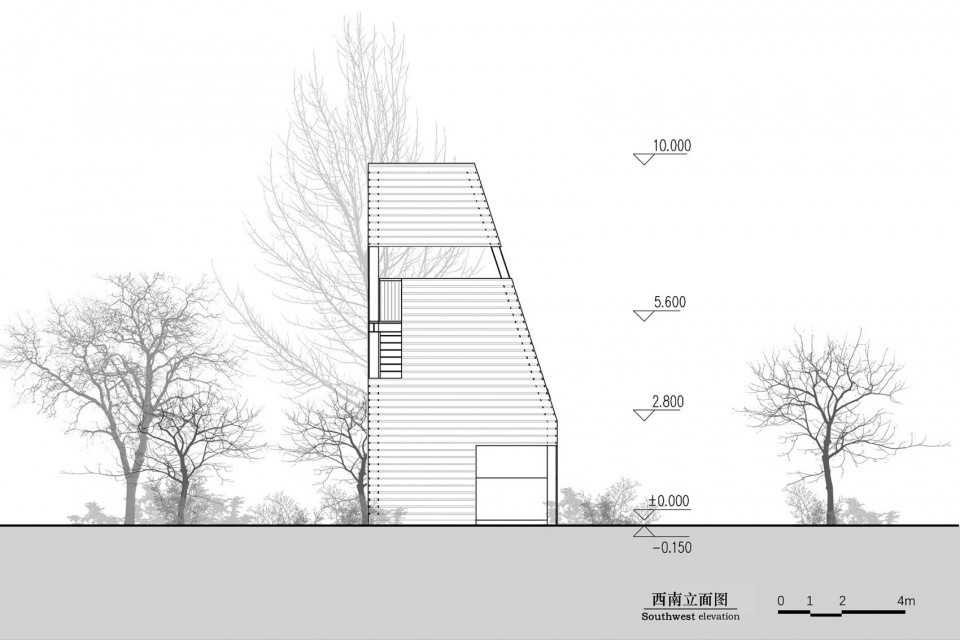
▼立面图,Elevation
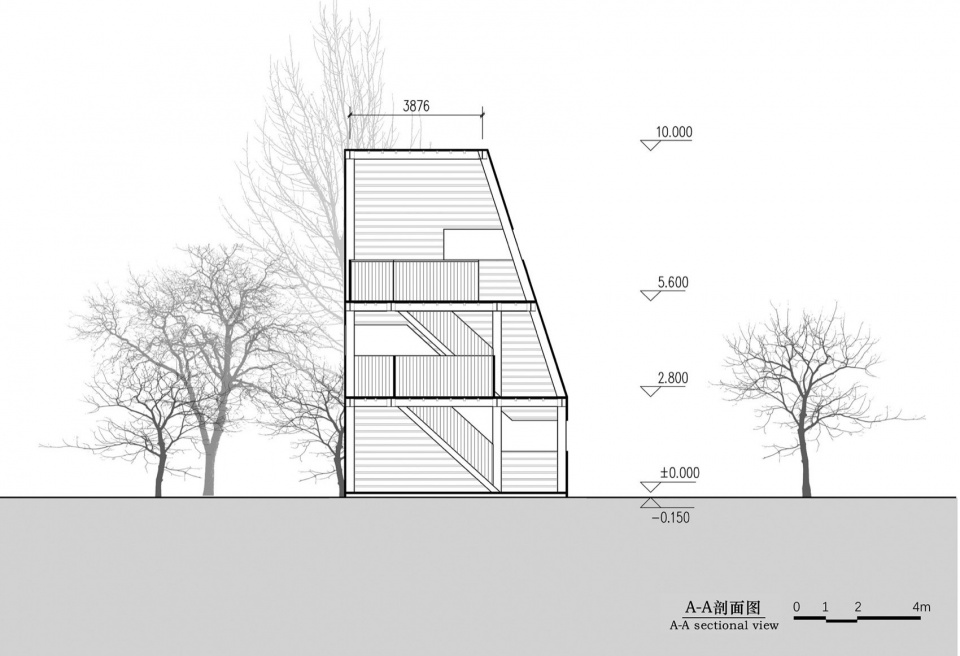
▼剖面图,Section
台–休憩亭Terrace – Rest Pavilion
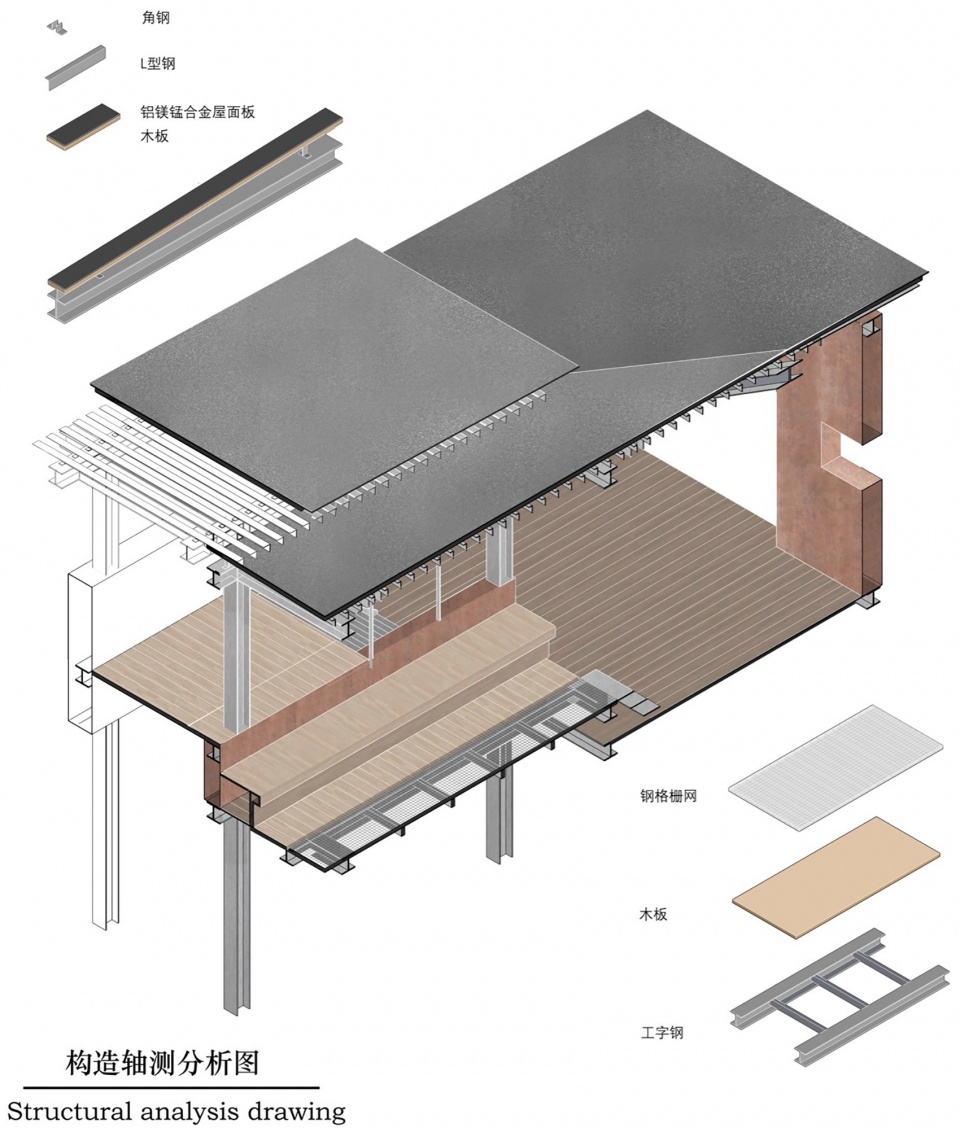
主体结构采用工字钢框架,以线条构筑空间骨架,屋面选用银灰色铝镁锰合金板,材质轻韧耐久,随光线变化呈现细腻的金属质感。
▼轴测图,Axonometric drawing
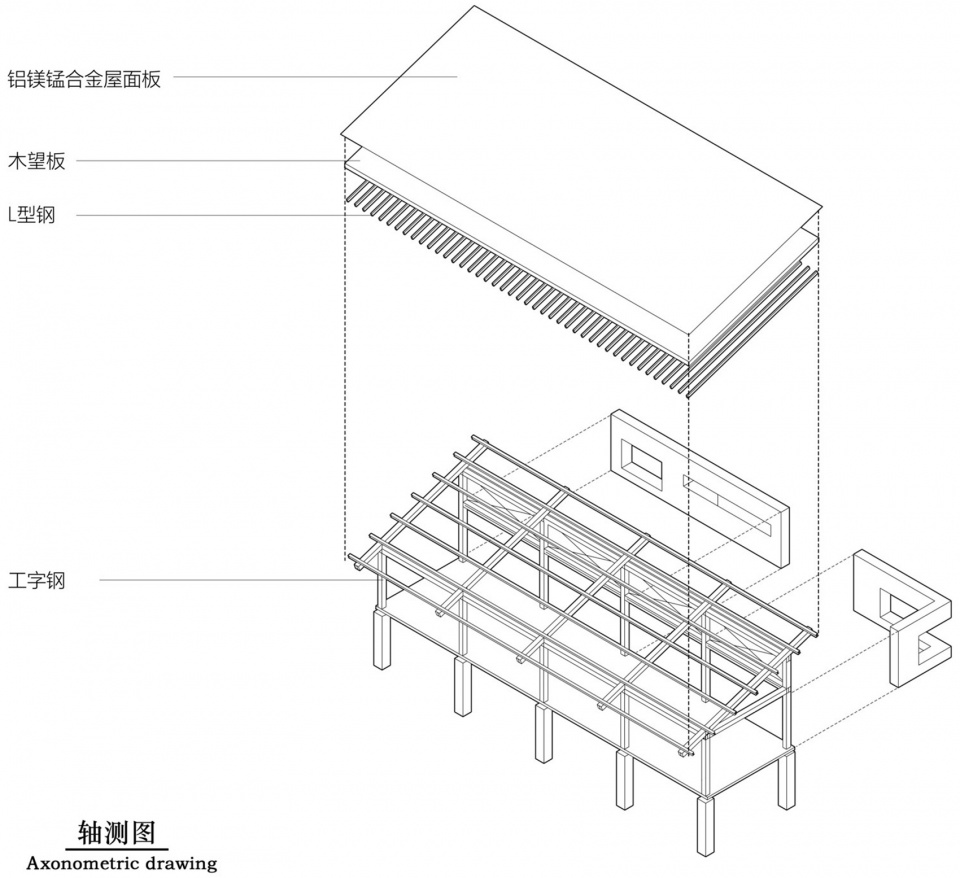
The main structure uses an I-beam frame to construct the spatial skeleton, while the roof is made of silver-gray aluminum-magnesium-manganese alloy panels, which are lightweight, resilient, and durable, and exhibit a delicate metallic texture as the light changes.
▼台–休憩亭,Terrace – Rest Pavilion
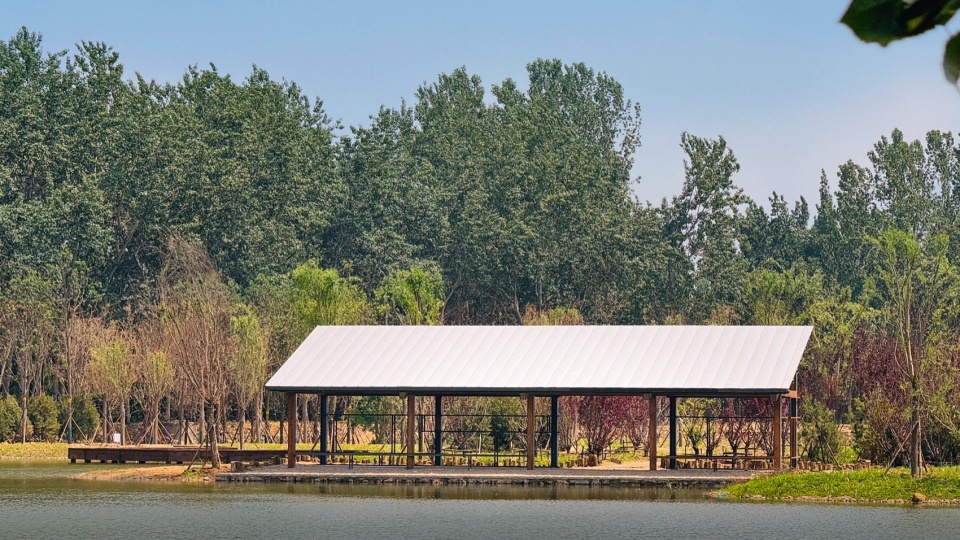
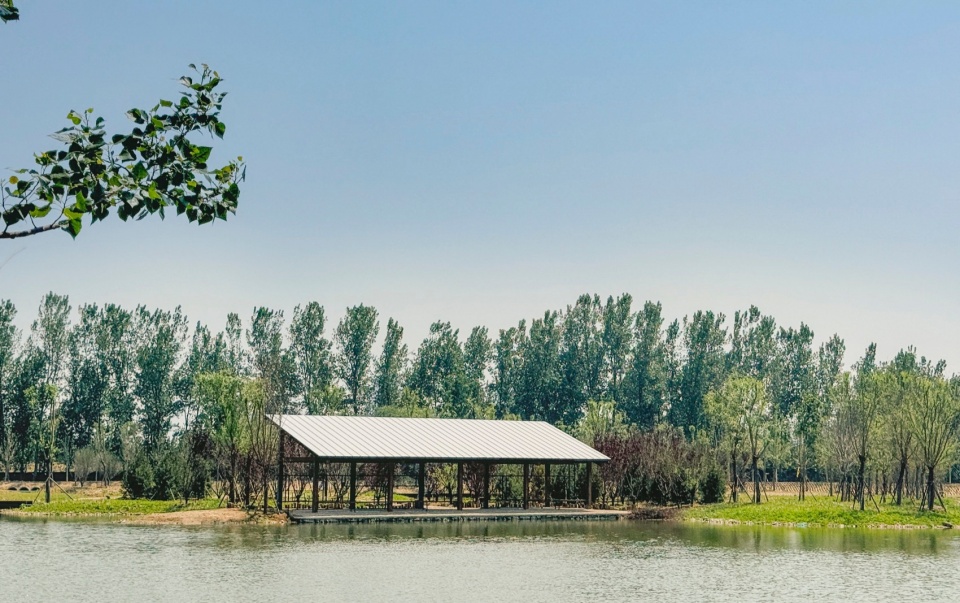
倾斜的屋面向上舒展,形成视觉张力。侧墙错落开设的几何窗洞,既引入光影变幻,又框取周边绿景,实现”透景成画”的交互体验。基座延伸为木质休憩平台,模糊建筑与自然的界限,为使用者提供可坐、可观、可游的复合空间。
The sloping roof extends upward, creating visual tension. Geometric window openings on the side walls are arranged in a staggered pattern, introducing shifting light and shadow while framing the surrounding greenery, achieving an interactive experience where the view becomes a painting. The base extends into a wooden resting platform, blurring the boundaries between architecture and nature, providing users with a multifunctional space for sitting, viewing, and exploring.
▼平面图,Plan
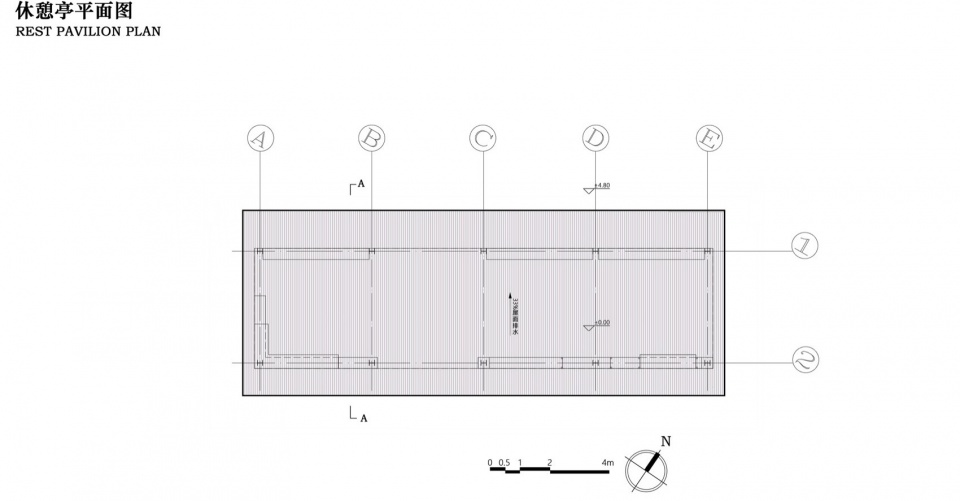
▼立面图,Elevation
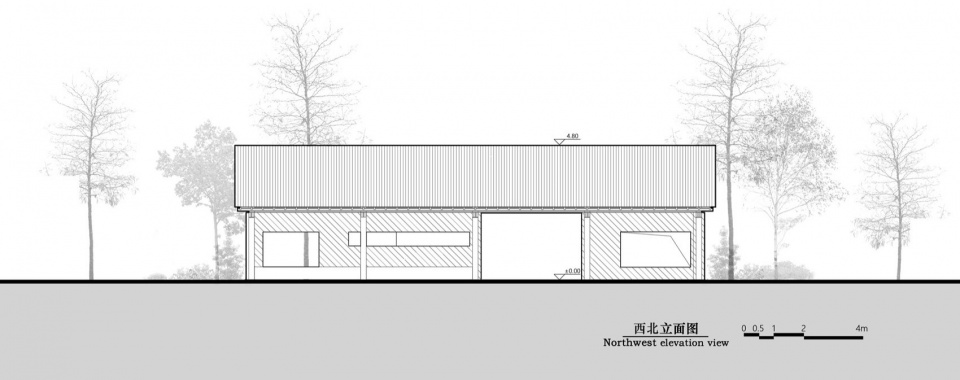
▼剖面图,Section
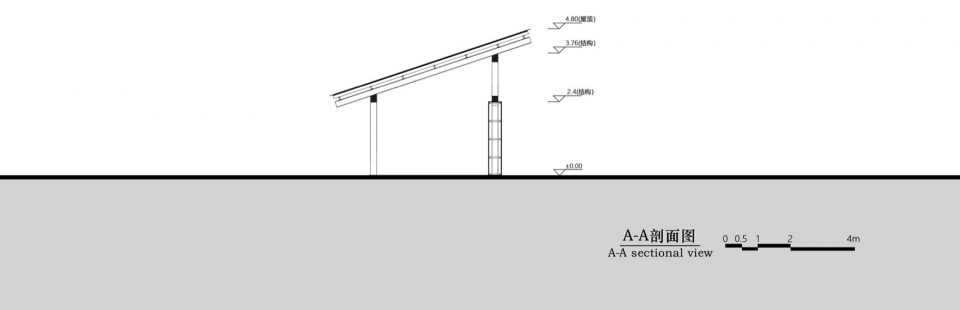
▼屋顶结构详图,Roof structural drawing
Project name:Reed Pavilion, Bird-watching Tower –Park service building series in Xingxiang Ecological Park
Project type: Architecture(Completed projects)
Design: Atelier Folie -Duan Wei Studio/Shanghai Lingwo Landscape – Li Di Studio
Contact e-mail: duanwei@bjfu.edu.cn, Atelier_Folie@163.com, dilee831@outlook.com
Design year:2023
Completion Year:2024
Design team :
Leader designer :Duan Wei, Li Di
Architecture :Shan Xiaomeng, Zhang Yangqing, Li Muyu, Zhuang Ji, Qiao Jijie, Wang Yiyan, Wu Zaichen, Xiao Qiang, Zhang Xu
Structure: Dong Chaolin
Photo credit: Atelier Folie, Beijing Forestry University
Landscape Design:Beijing Forestry University Li Xiong Studio