115ARI联排住宅,西班牙 / Vallribera Noray Arquitectes
当这户人家第一次带我们去看那块地时,他们带着些许疑虑。”你确定这里能盖房子吗?这块地这么窄,”他们说道。但在这些疑问之外,他们也明白,这块地给了他们一个改变生活的机会,于是他们将这个挑战托付给了我们。
When the family first showed us the plot, they did so with some skepticism. “Are you sure a house can fit here? It’s such a narrow site,” they said. But beyond these doubts, they also understood that this parcel offered the chance to change their lives, and they trusted us with the challenge.
▼住宅外观,exterior of the residence
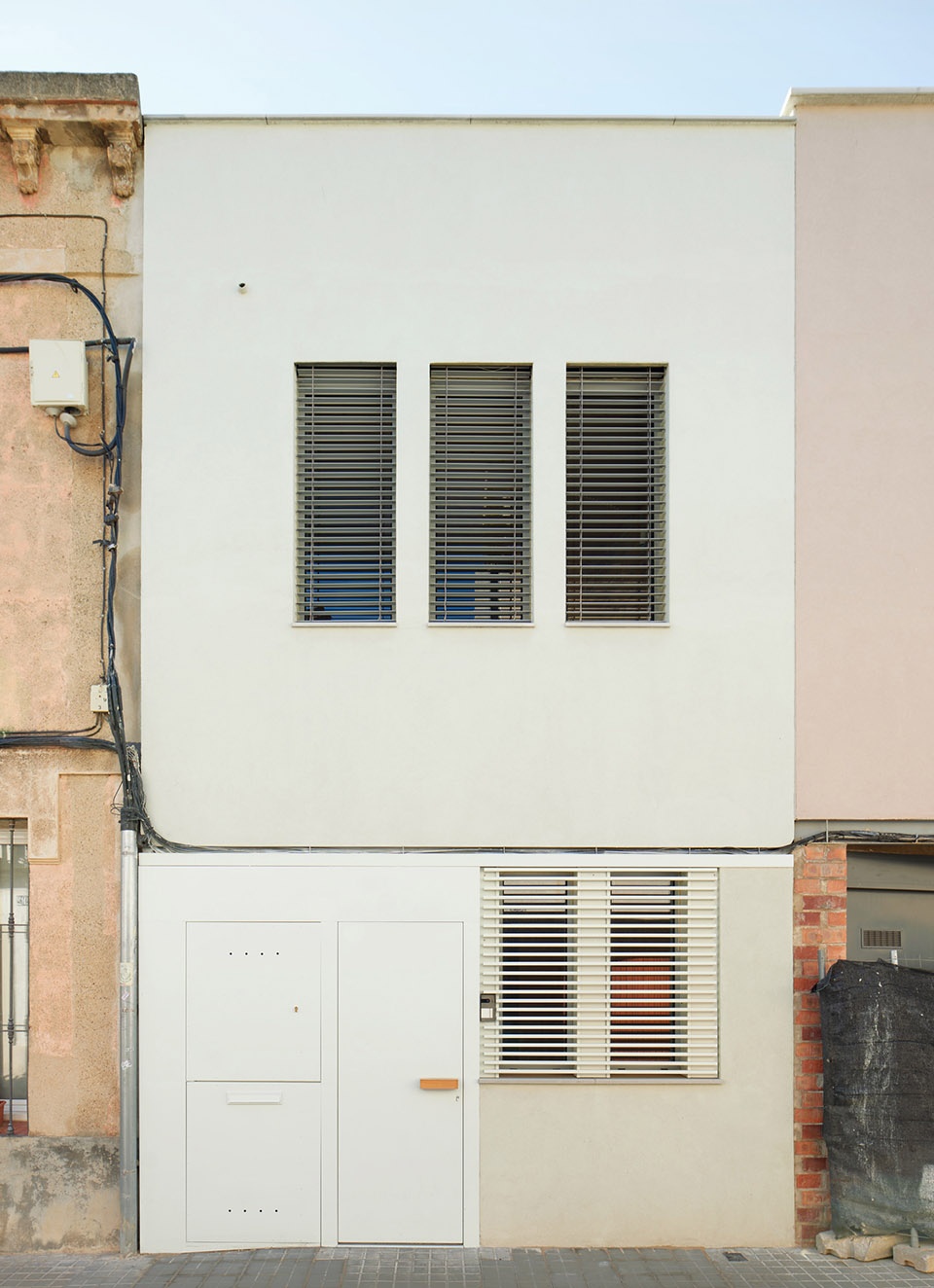
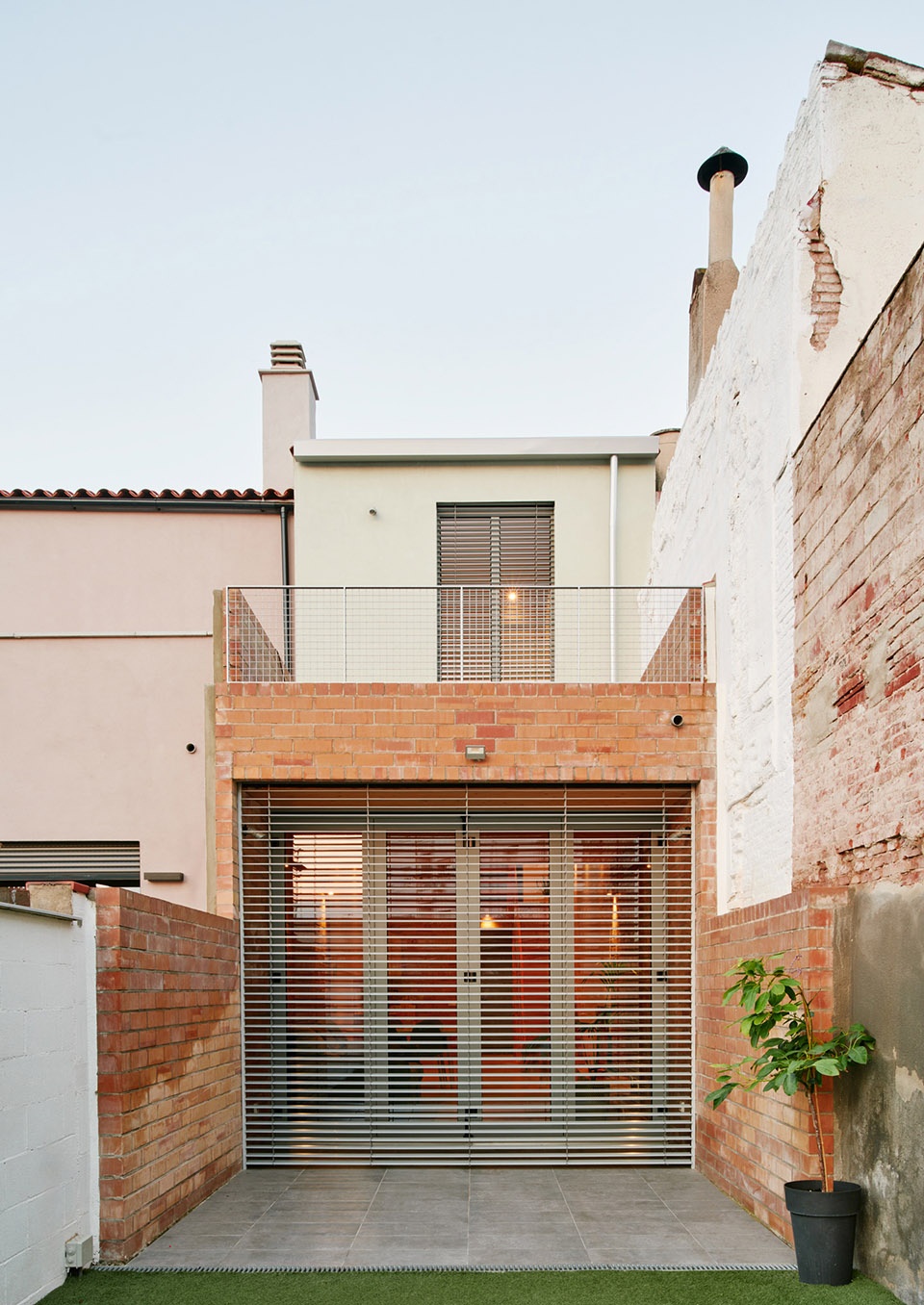
这块地是我们见过的最窄longest 的地块之一:宽度仅有3.8米,两侧是高大的邻居房屋。然而,它也有极佳的朝向、一个宽敞的庭院,以及一个决心建造一所让他们更接近理想生活方式的家庭。我们迅速接受了挑战,仅几天后,便开始了项目设计。
▼总平面图,Master plan
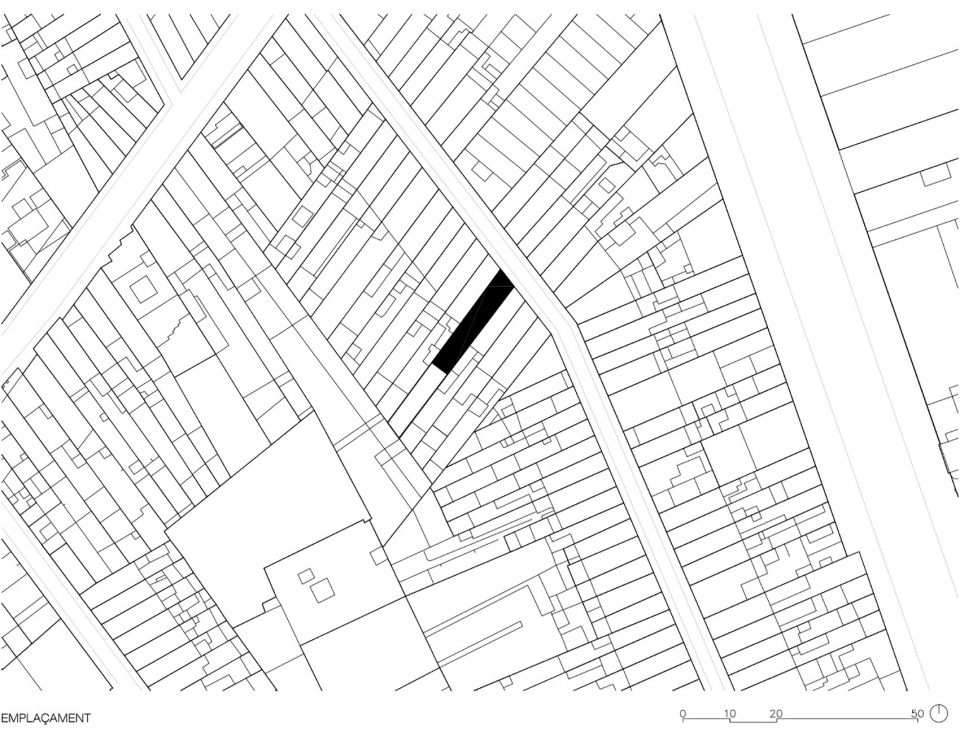
The plot was one of the narrowest and longest we had ever come across: just 3.80 meters wide, flanked by very tall neighboring houses. Yet it also had excellent orientation, a large courtyard, and a family determined to build a home that would bring them closer to the lifestyle they were seeking. We quickly accepted the challenge and, only a few days later, began working on the project.
▼入口玄关,The entrance
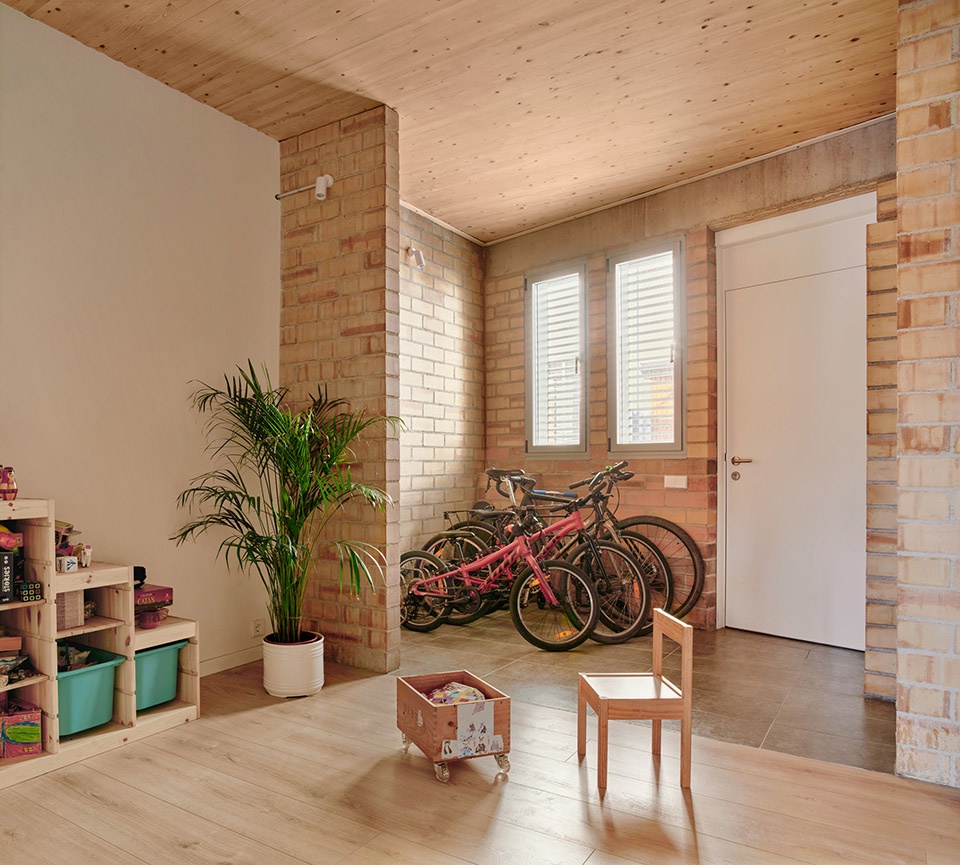
为了防止新房在两侧分户墙之间感到压抑,我们按规划许可的最大深度进行建造。但由于这个家庭并不需要如此大的房子,我们掏空了中心部分,将主要房间布置在这个内庭院与建筑立面之间。
▼设计草图,Sketch
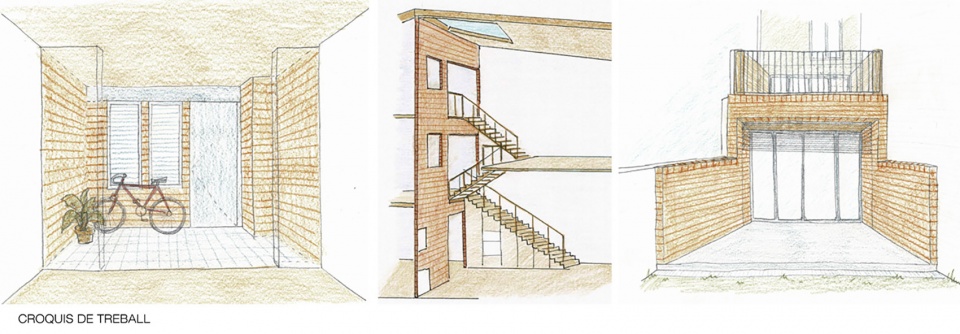
To prevent the new house from feeling trapped between the party walls, we built to the full depth allowed by regulations. But since the family didn’t need such a large home, we carved out the central section, placing the main rooms between this inner courtyard and the façades.
▼入口望向客厅,view to living room
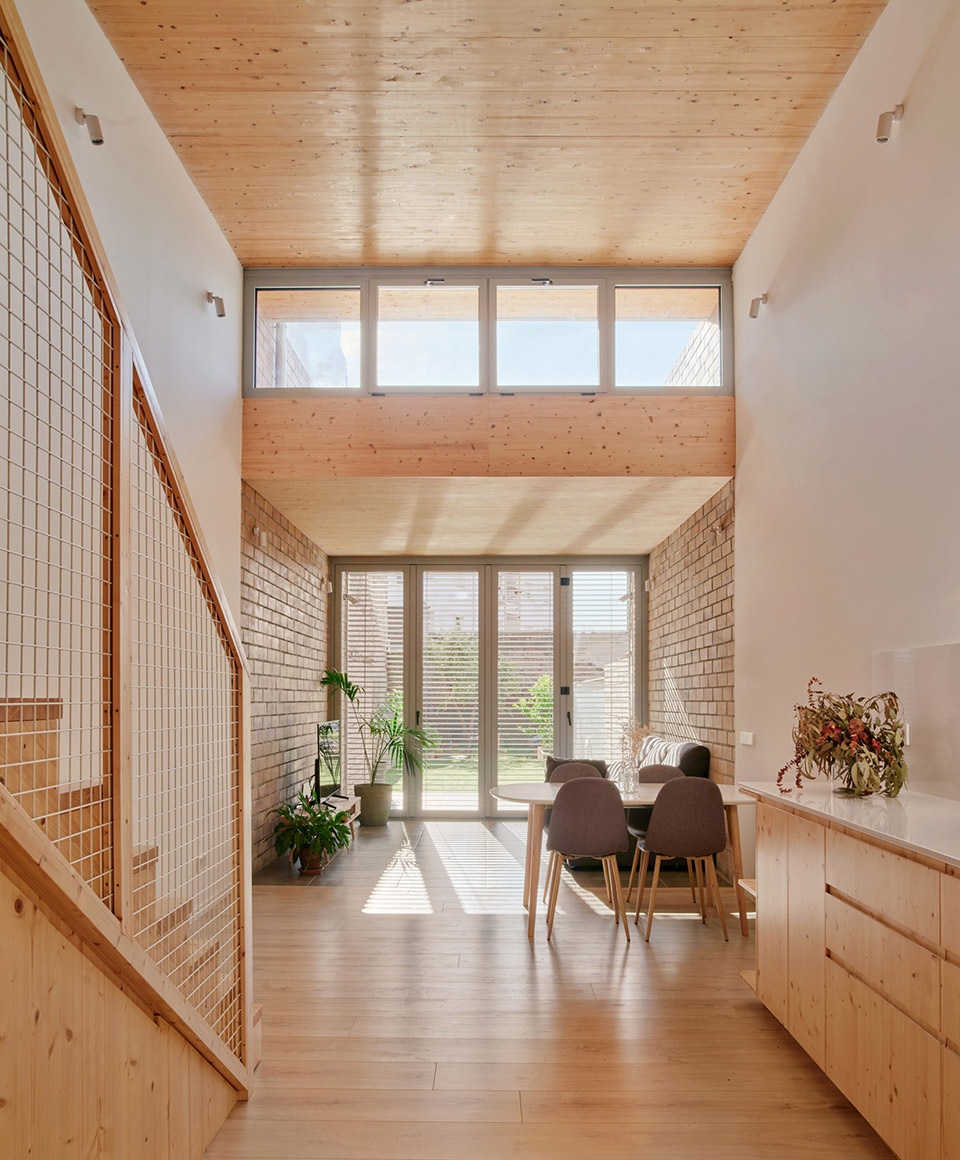
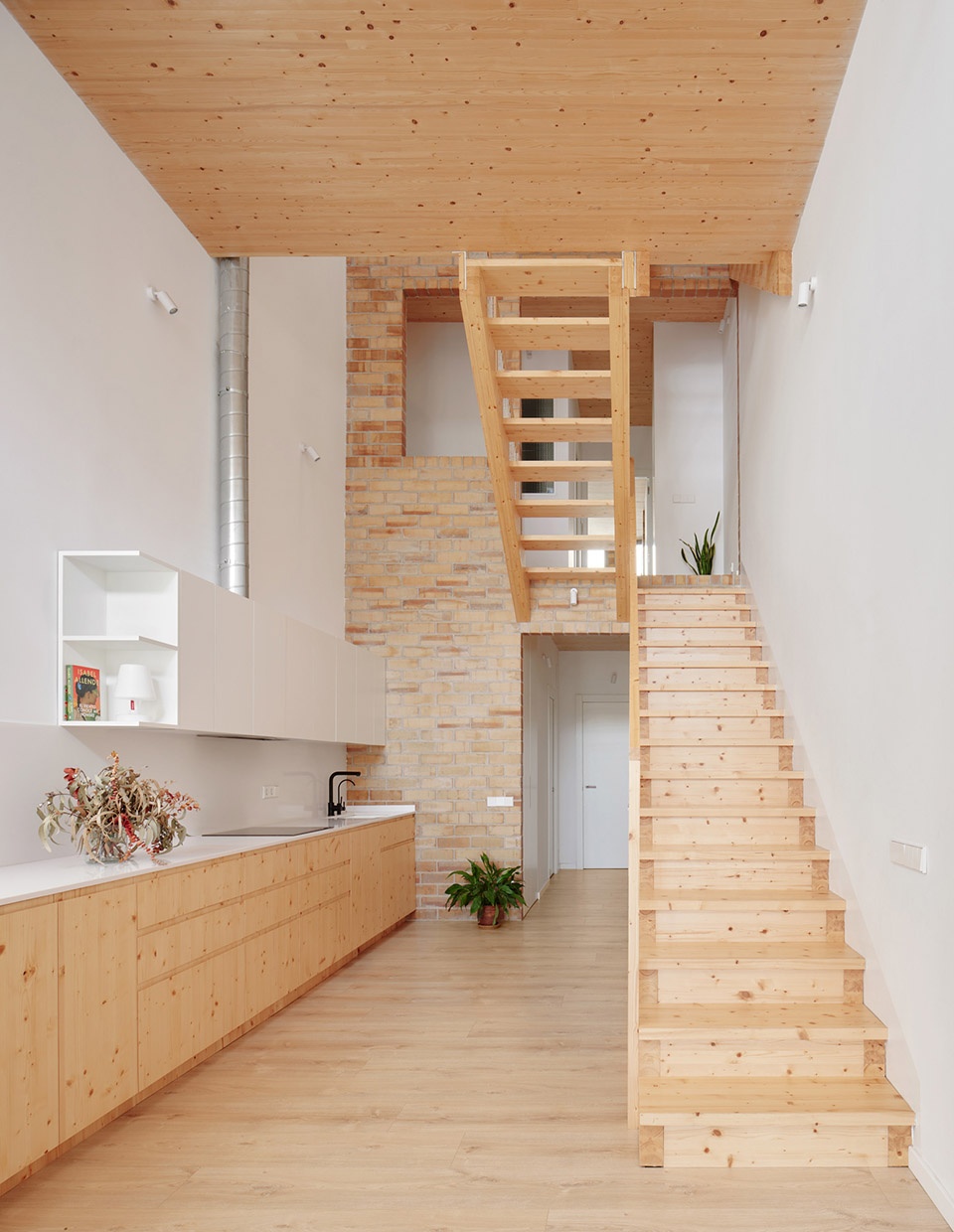
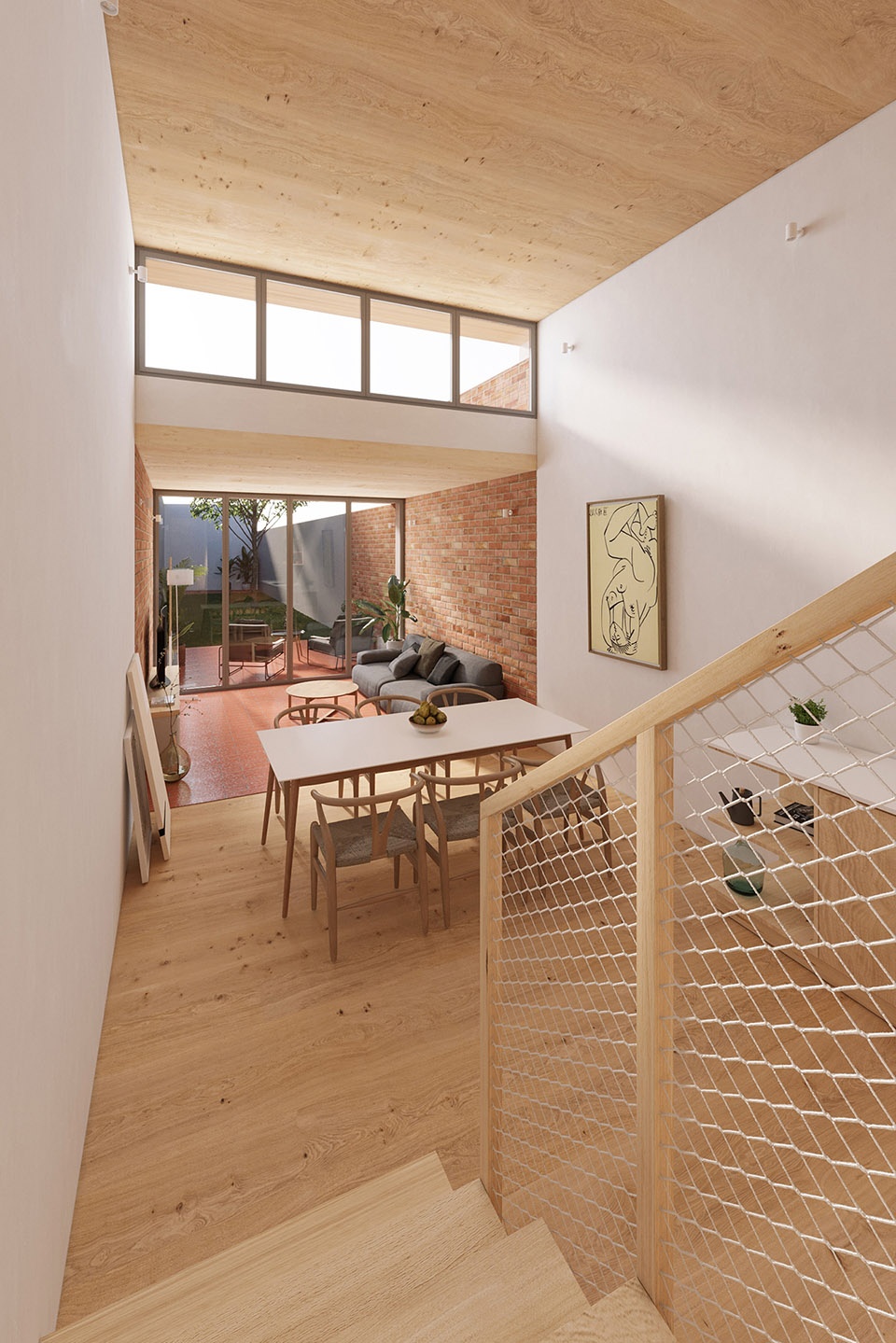
在房子的最高处,一面内墙开敞,面向一个垂直通高空间和一个巨大的天窗,这个设计连通了所有楼层,并让自然光充盈整个家的核心。功能空间围绕这个中心区域组织:一侧是厨房、餐厅和书房;另一侧是游戏室、浴室和洗衣房。三个卧室则被安排在临街和临院的立面。
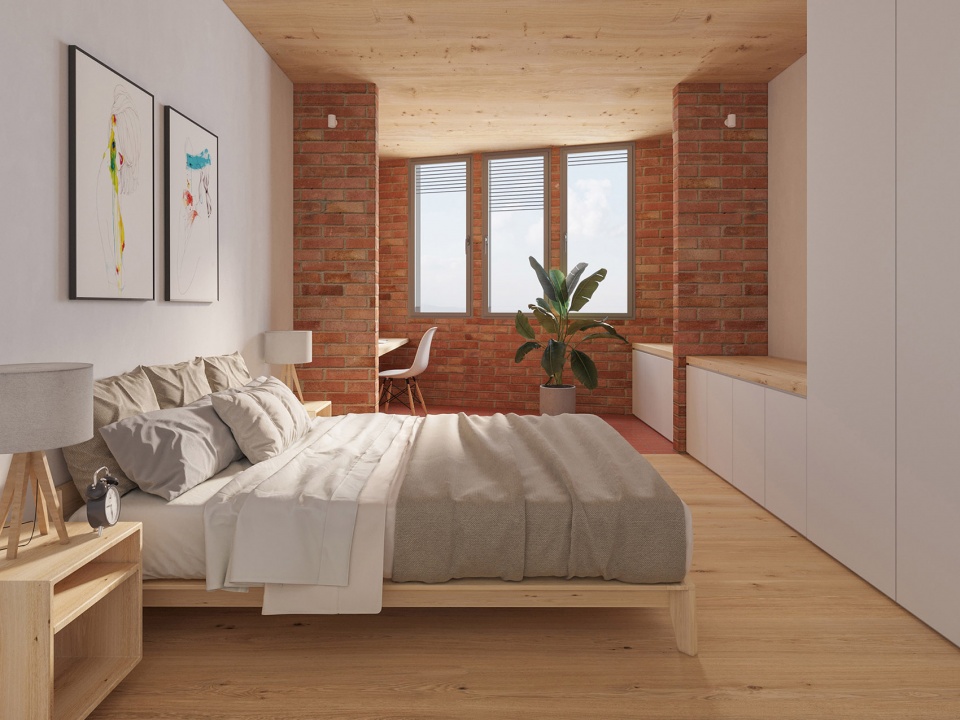
At the highest point of the house, an interior façade opens onto a vertical void and a generous skylight, which connect all floors and flood the heart of the home with natural light. The program is organized around this central space: on one side, the kitchen, dining room, and study; on the other, a playroom, bathrooms, and laundry. The exterior façades are reserved for the three bedrooms.
▼厨房,Kitchen
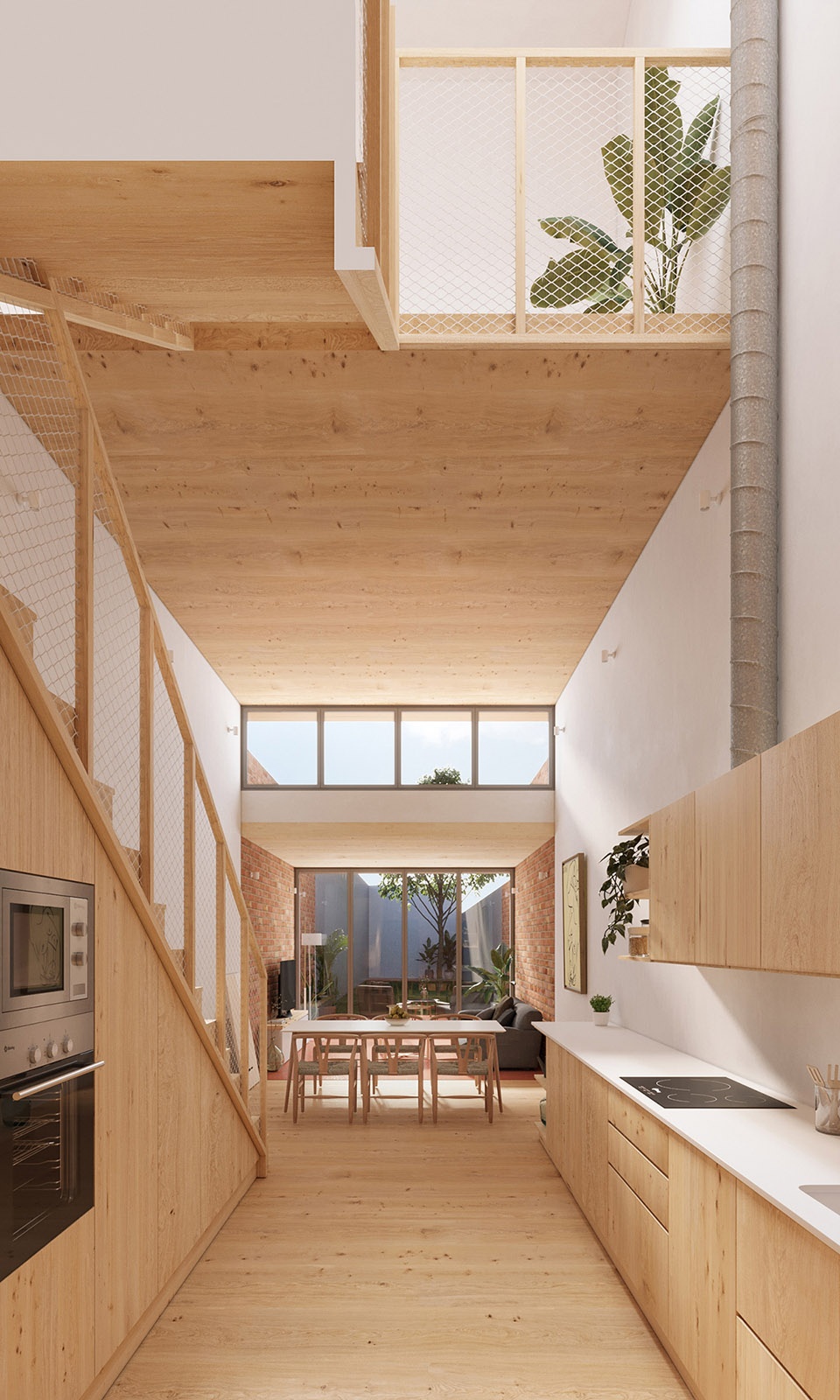
▼厨房,Kitchen
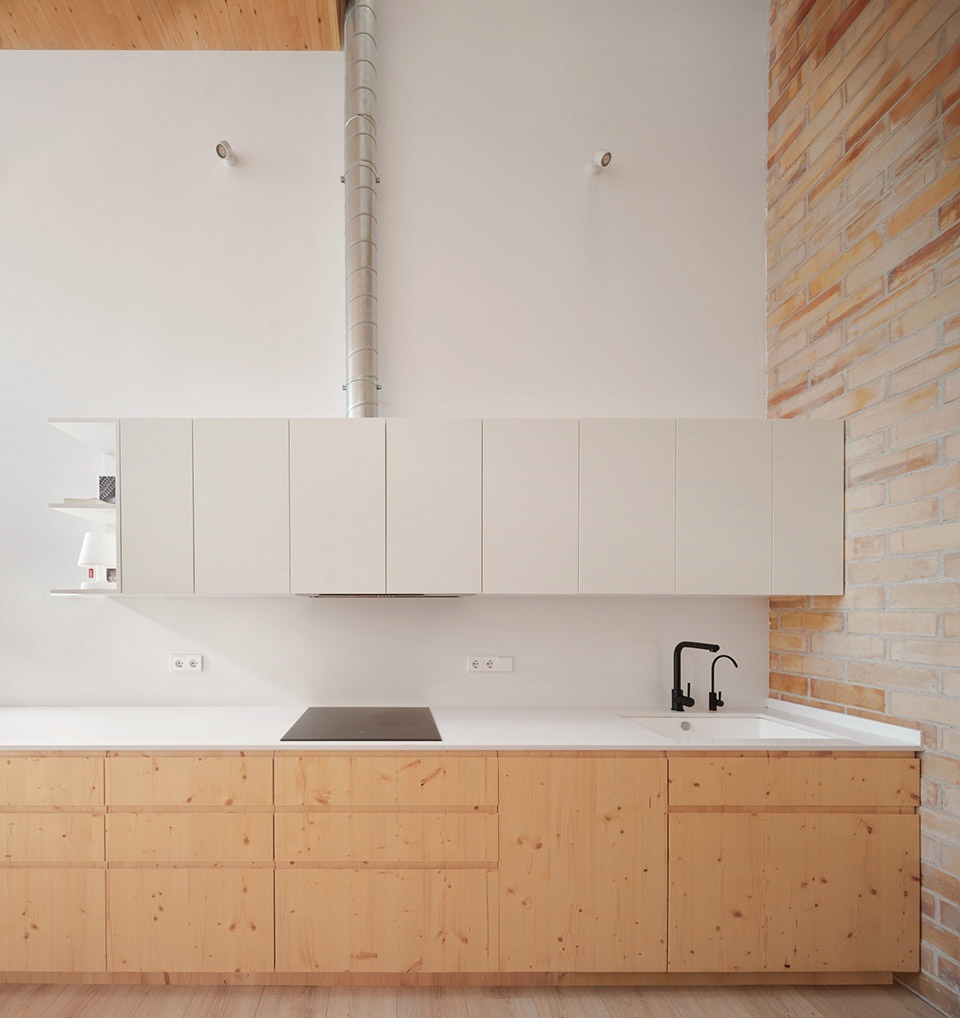
▼餐厅形态,Dining space
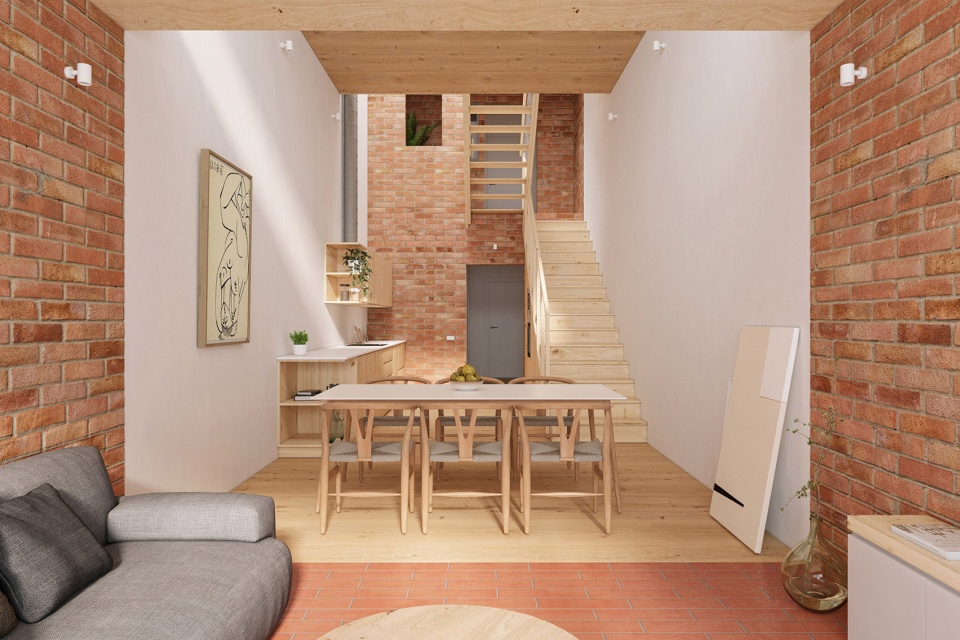
▼客厅,Living room
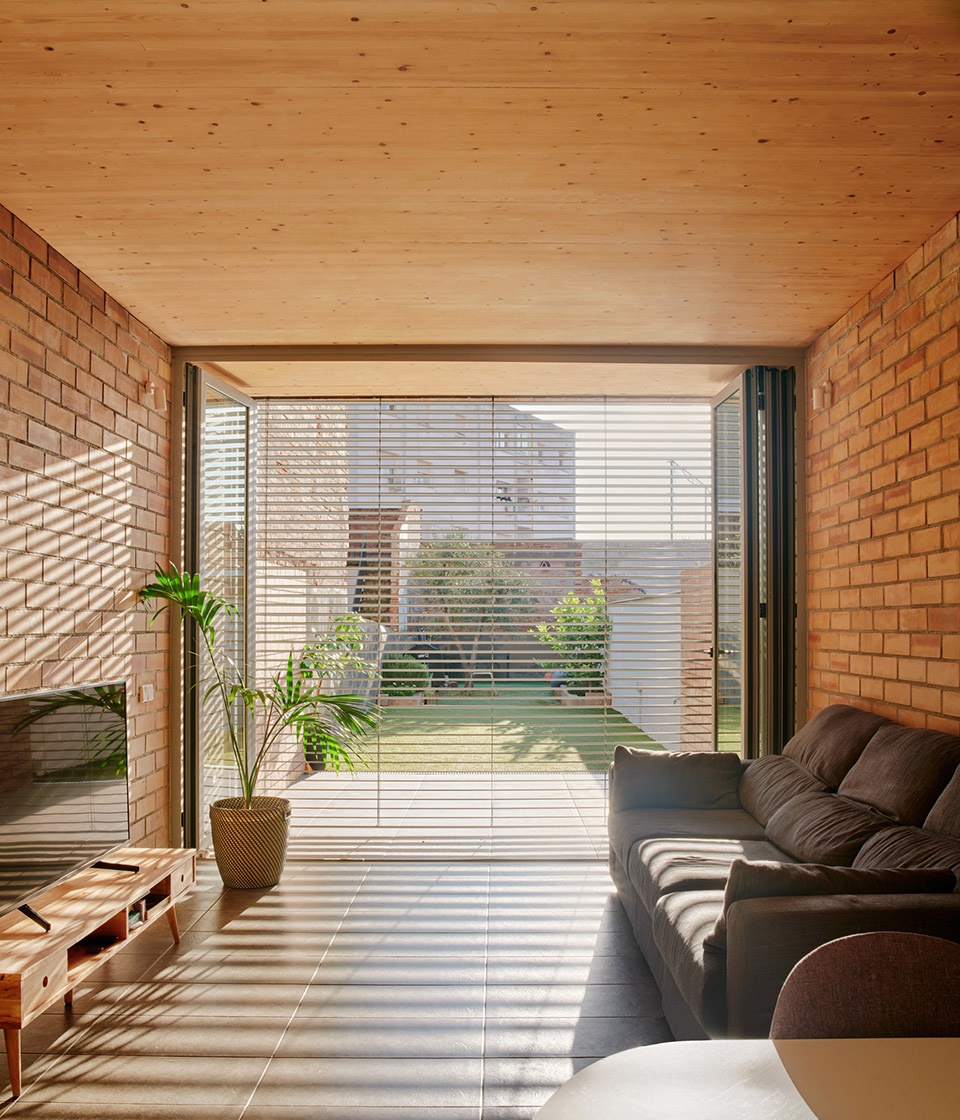
我们选择了混合建造体系,将木材与传统砌体相结合。实木天花板采用互锁梁建造,允许分阶段组装,仅以保护性清漆饰面。屋顶和立面采用轻型木框架结构,外覆桦木胶合板,保持裸露状态。清水砖墙则被用于内立面、露台以及与室外连接的过渡空间。
We opted for a mixed construction system that combines timber with traditional masonry. The solid wood ceilings are built with interlocking beams, allowing phased assembly and finished with just a protective varnish. The roof and façades use light timber framing, clad with birch plywood panels left exposed. Exposed brickwork is reserved for the inner façade, terraces, and transitional spaces that connect with the outdoors.
▼首层主要空间,First floor space
▼首层主要空间,First floor space
▼卧室,Bedroom
▼室内清水砖墙,Brickwork for the inner façade
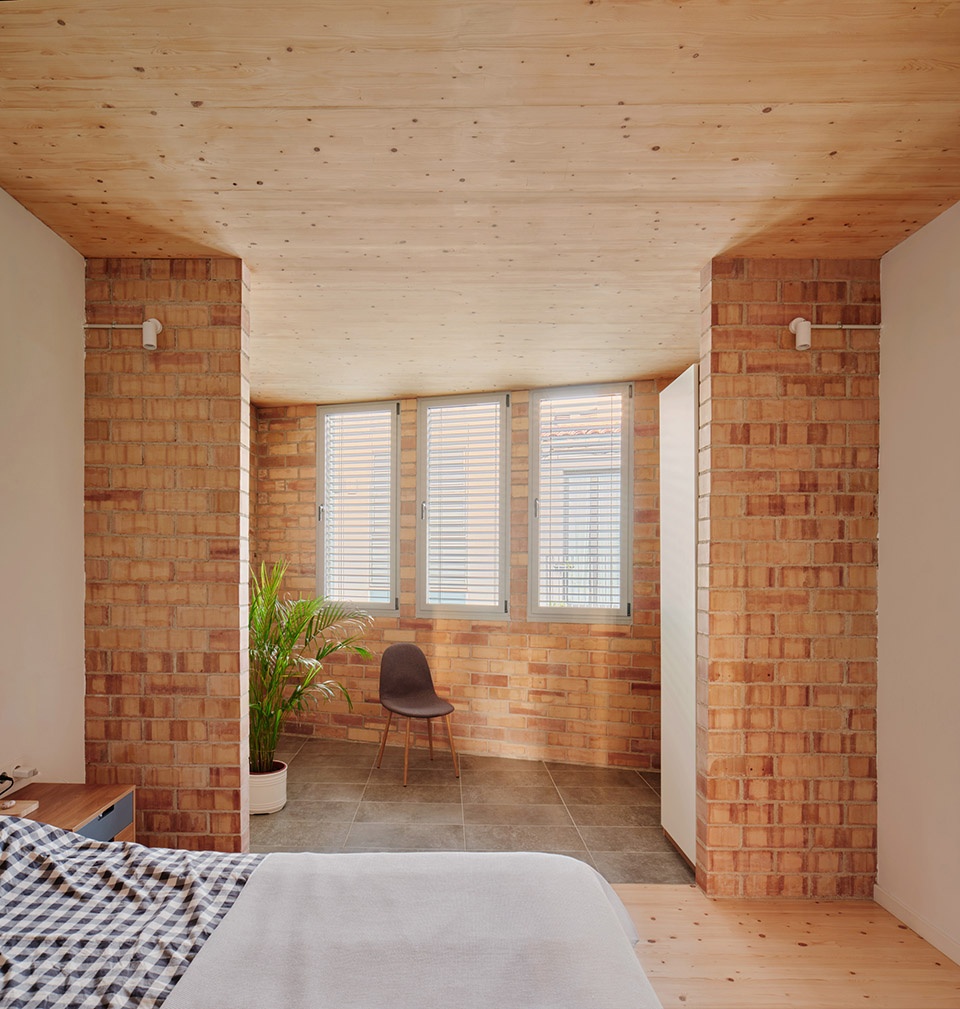
这些半室外区域被处理成廊道空间。砖墙和瓷砖地面吸引着植物的入驻,模糊了室内外的界限。这一策略不仅增强了自然采光——尤其是通过餐厅的天窗——也柔化了进深带来的压迫感,在狭窄的尺度中创造出开阔的感觉。材料的组合和多变的室内层高,在房子的正中心营造出了高品质的空间。
These semi-exterior areas are treated like galleries. Brick walls and tiled floors invite the presence of plants, blurring the boundary between inside and outside. This strategy not only enhances natural light—especially through the dining room skylight—but also softens the perception of depth, creating a sense of openness despite the narrow proportions. The combination of materials and varying interior heights results in quality spaces at the very center of the house.
▼廊道空间,Galleries space
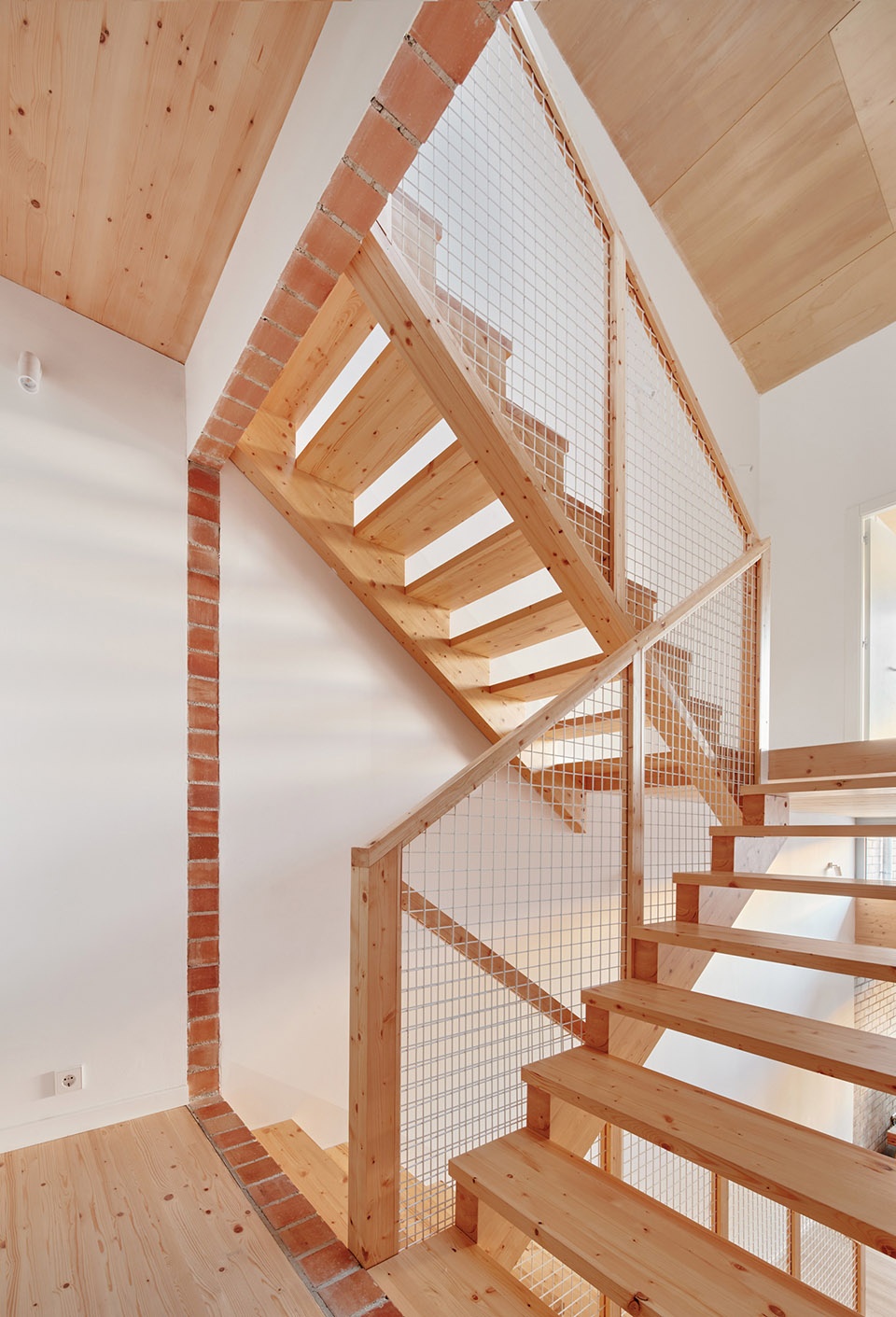
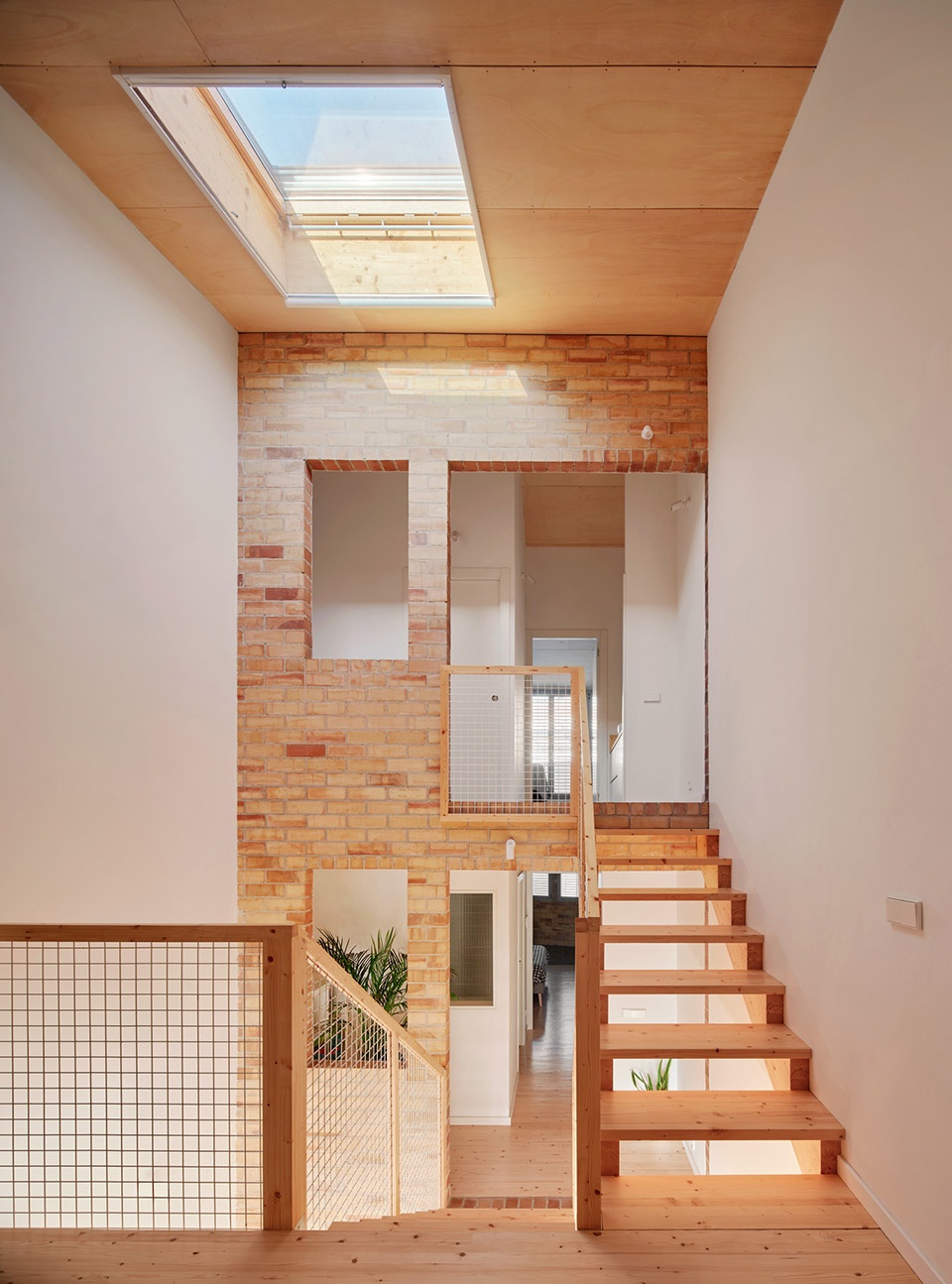
▼增强自然采光,Enhances natural light
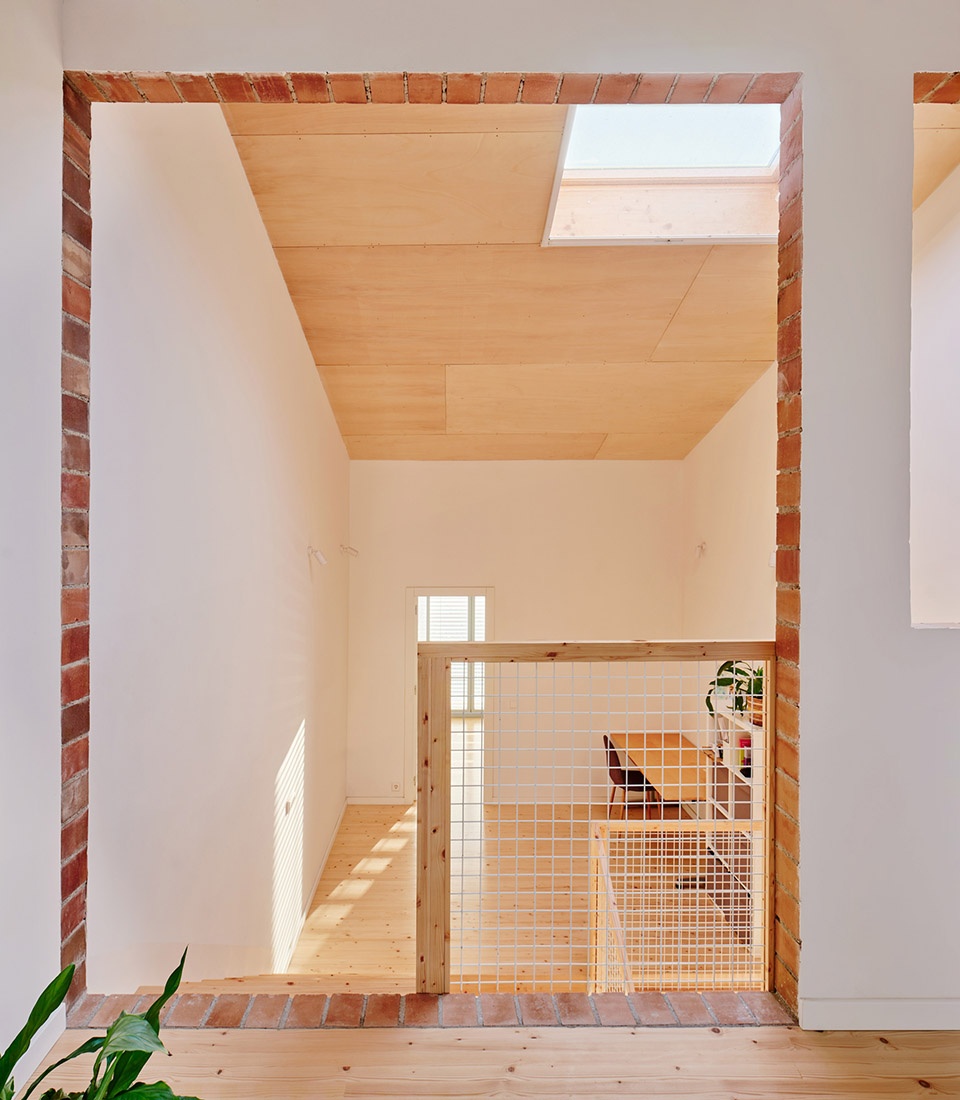
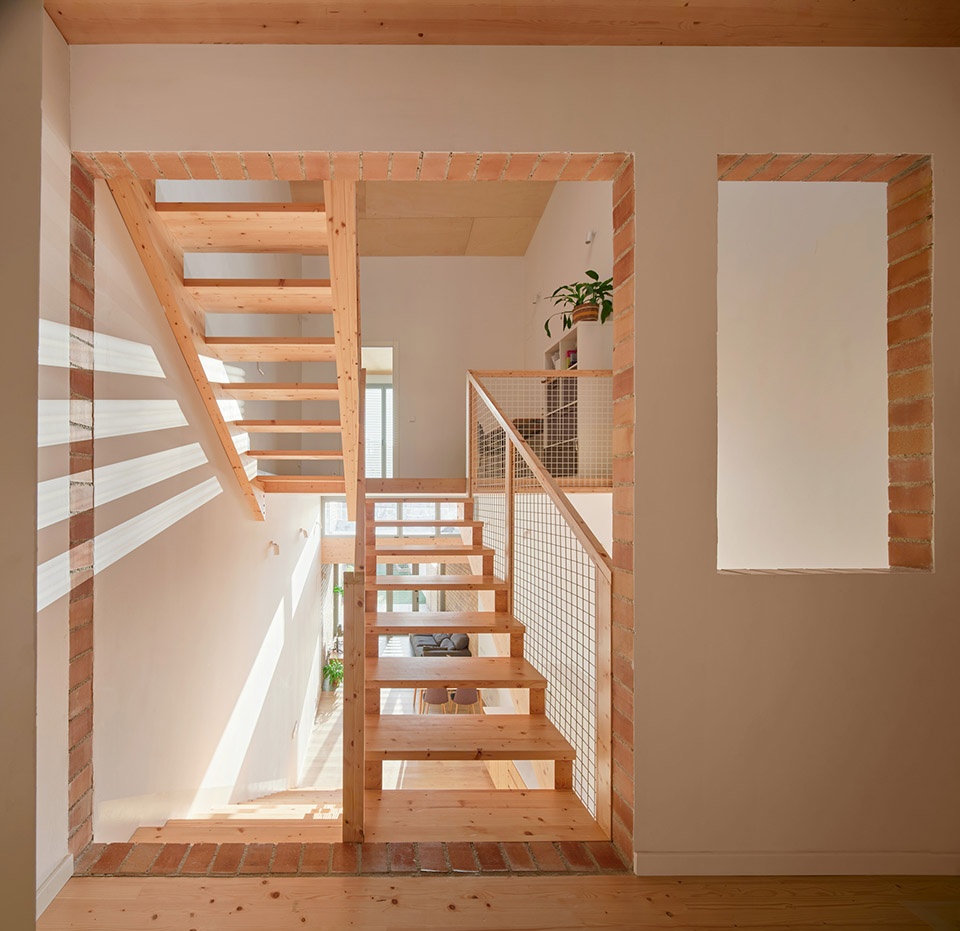
▼天窗,Skylight
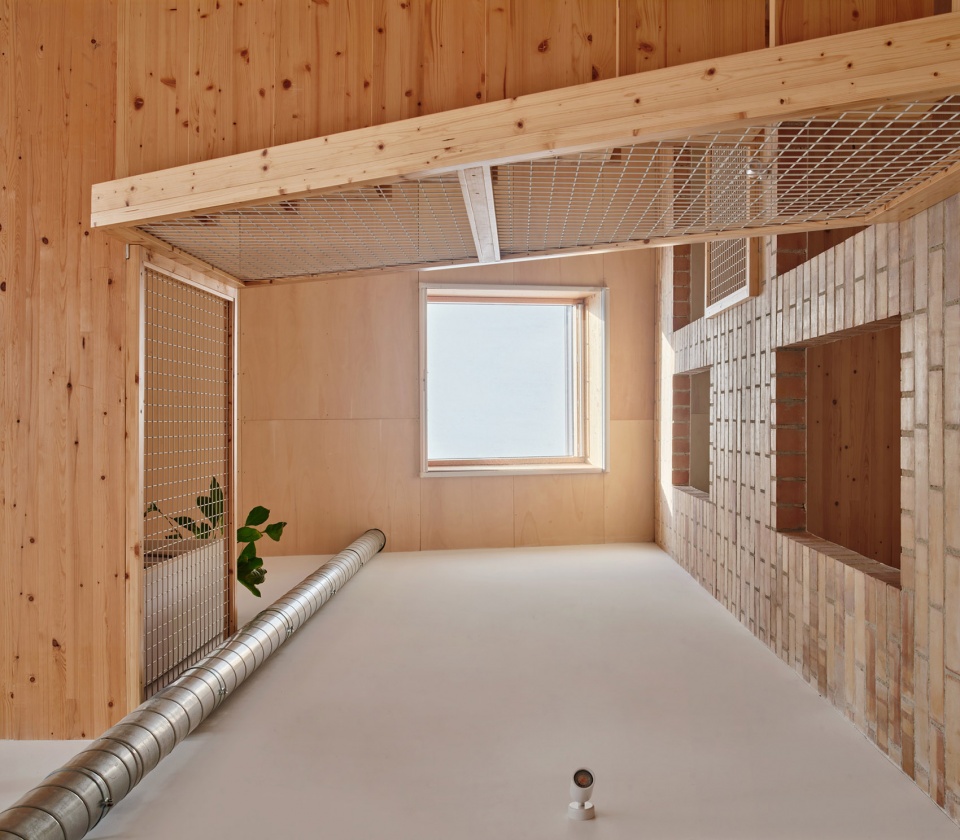
所有这些设计选择都遵循被动式建筑原则,以优化能源性能。冬季,朝南的开口和天窗充当天然的太阳能收集器;砖墙和陶瓷地面在白天储存热量,夜晚释放。夏季,屋檐和可调节百叶窗阻挡直射阳光,而天窗则促进交叉通风和夜间降温。
All these design choices follow passive construction principles to optimize energy performance. In winter, the south-facing openings and skylight act as natural solar collectors; the brick walls and ceramic floors store heat during the day and release it at night. In summer, overhangs and adjustable shutters block direct sunlight, while the skylight enhances cross-ventilation and nighttime cooling.
▼优化能源性能,Optimizing energy performance
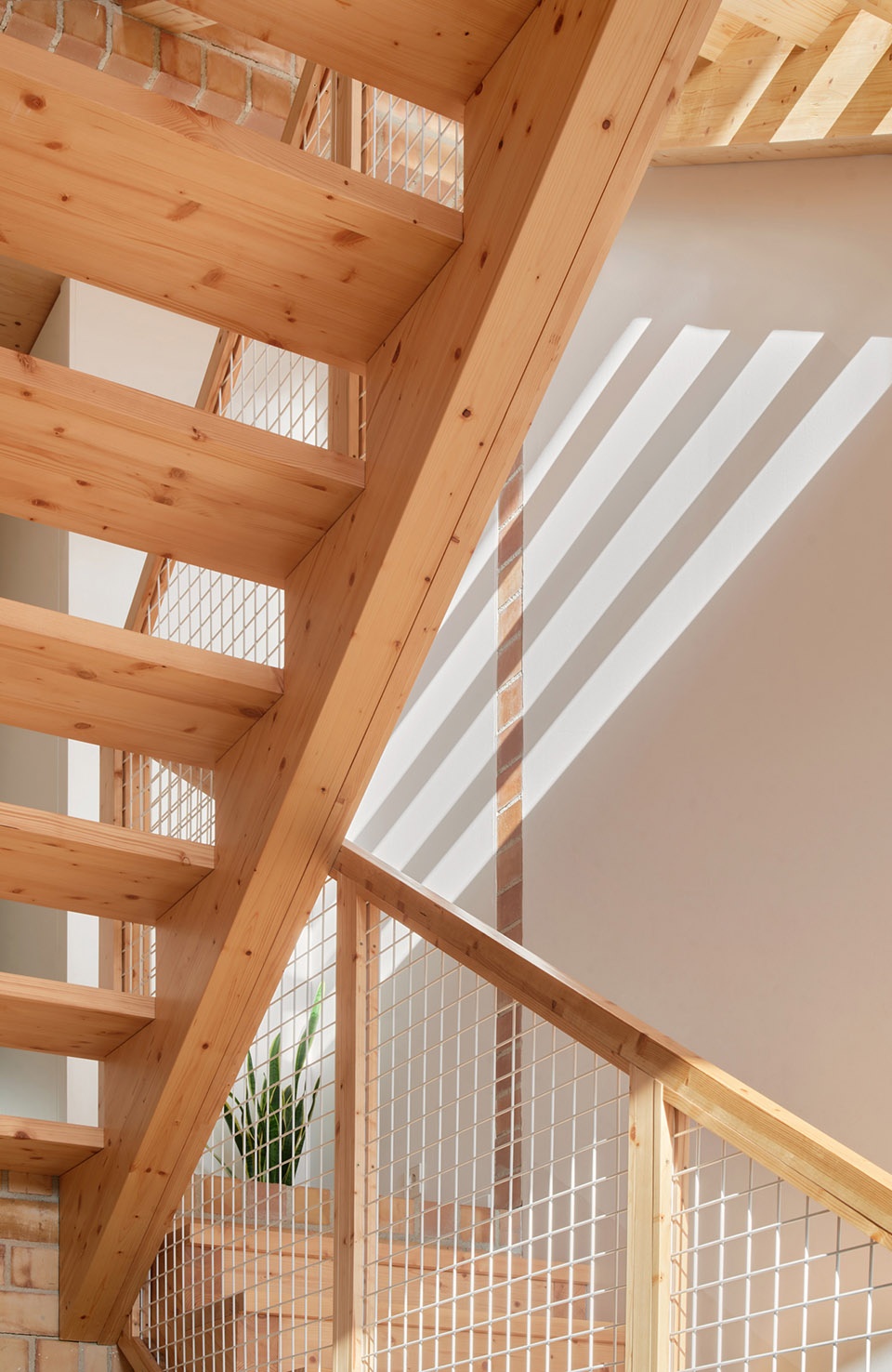
得益于这些被动式系统和良好的保温,房子完全无需主动供暖或制冷。取而代之的是,光伏板满足了其全年大部分的能源需求。
Thanks to these passive systems and proper insulation, the house eliminates the need for heating or mechanical cooling. Instead, photovoltaic panels supply most of its annual energy demand.
▼洗漱空间,Washroom
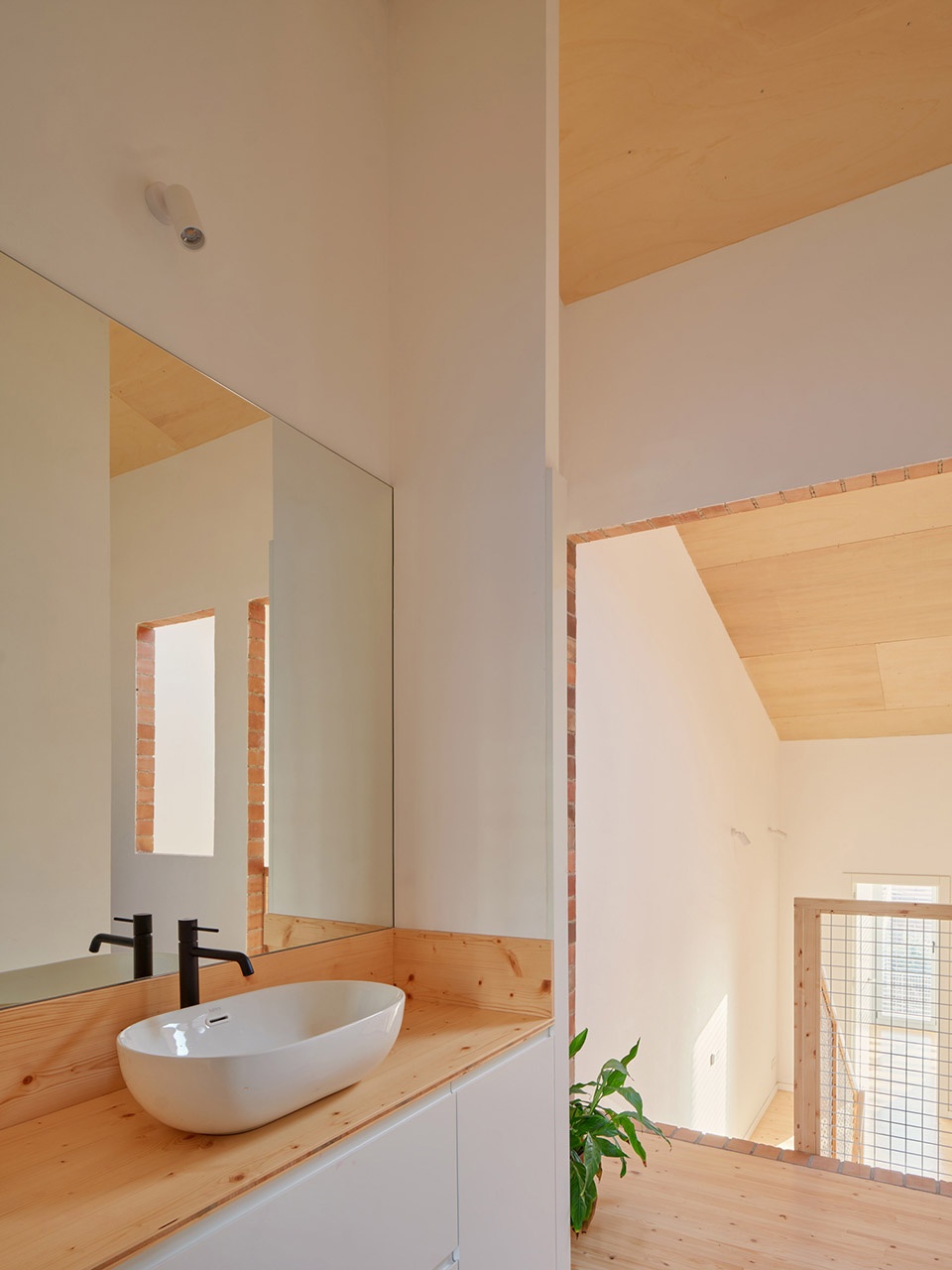
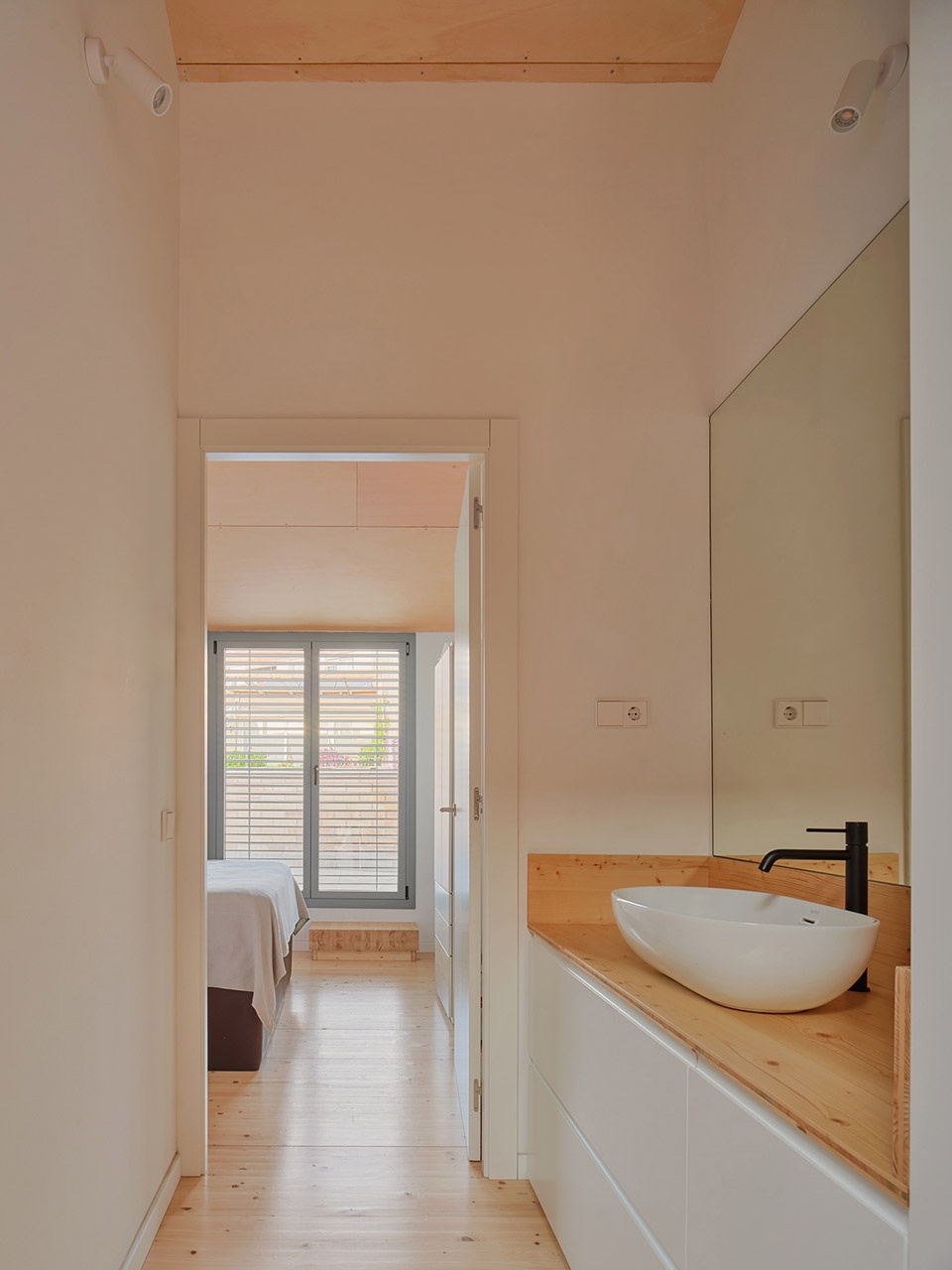
▼绿植,Green plant
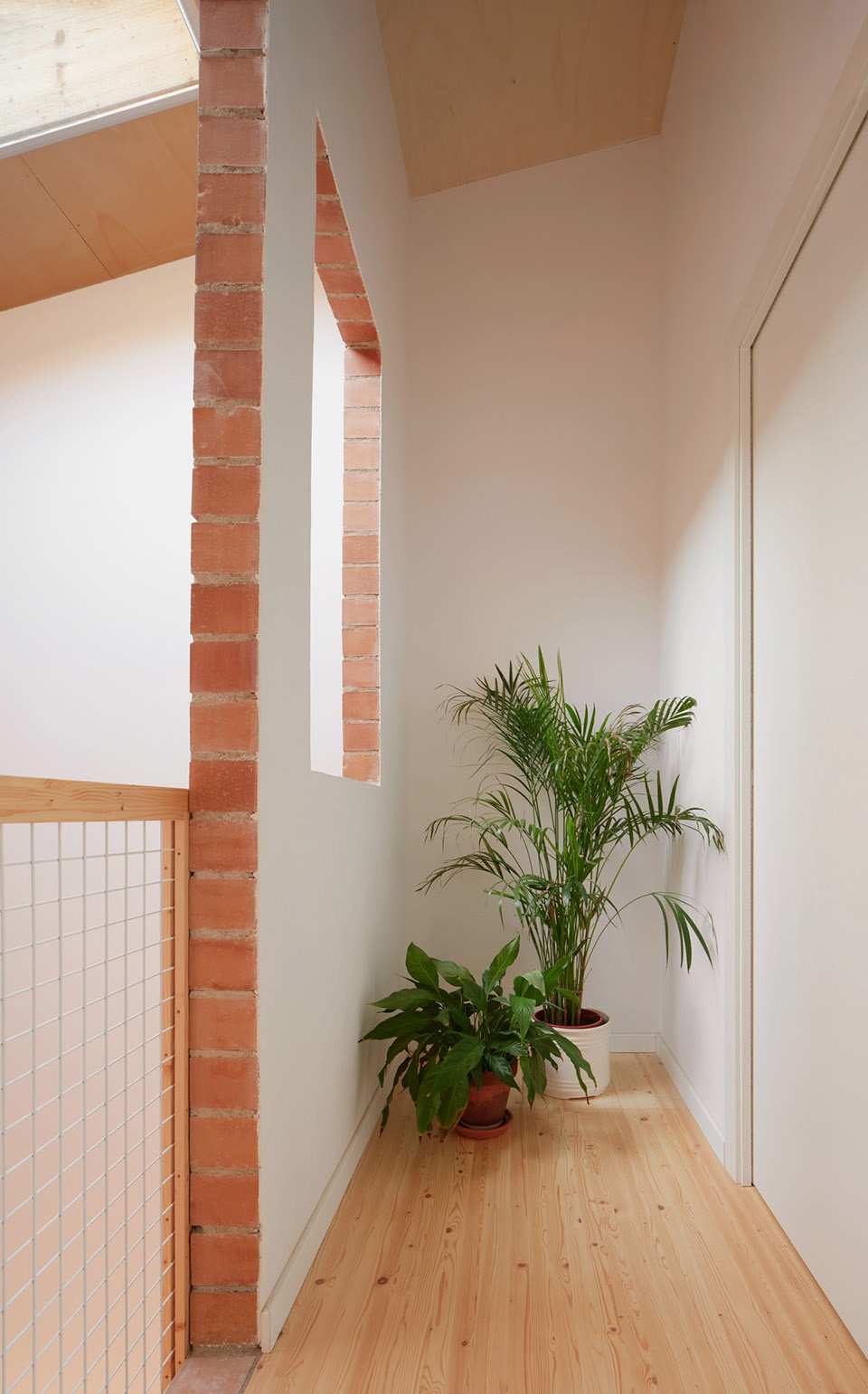
如今,所有关于这块狭长地块的疑虑都已烟消云散。取而代之的是一座宽敞、明亮、舒适的家,它完美契合了一个懂得识别不起眼机会背后隐藏价值家庭的生活方式。
Today, all the doubts about this narrow, elongated site have vanished. In its place stands a spacious, bright, and comfortable home, perfectly aligned with the lifestyle of a family who knew how to recognize the hidden virtues of an unlikely opportunity.
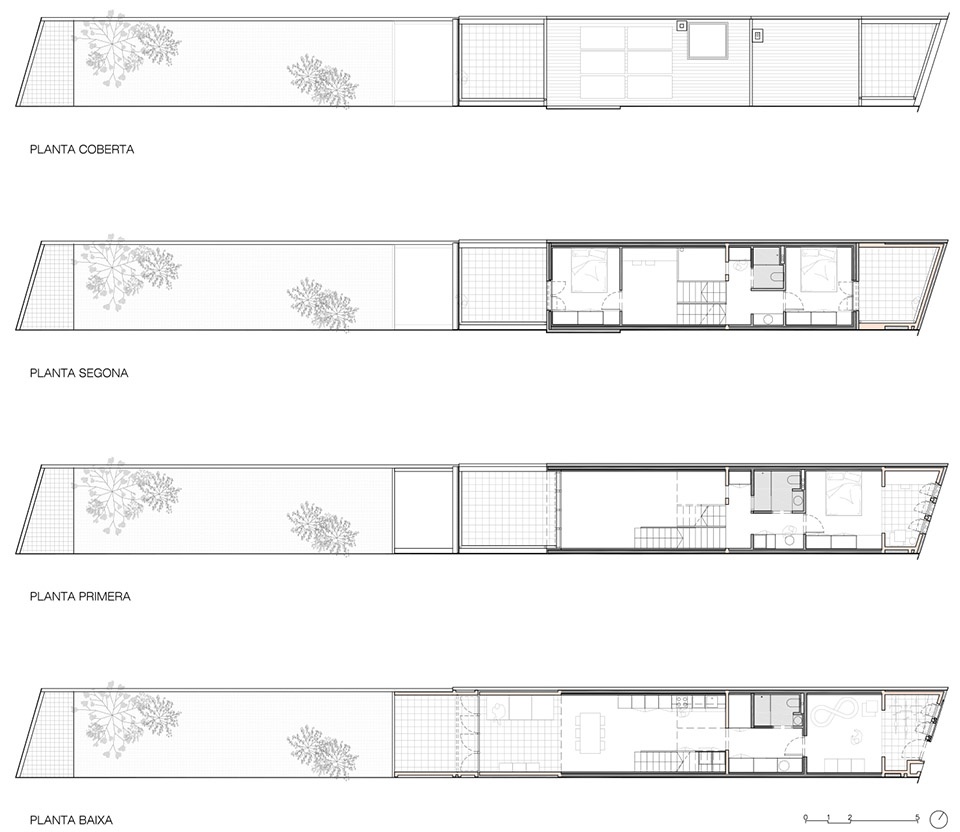
▼平面图,Floor plan
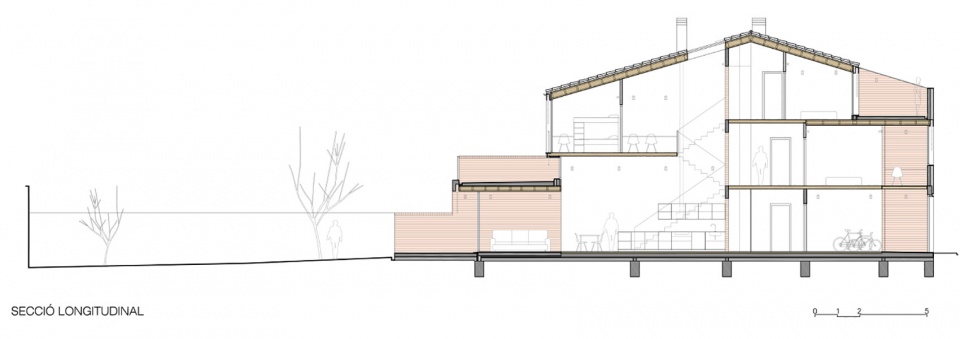
▼剖面图,Section
Project: 115ARI New construction of a row house in Sabadell
Location: Sabadell, Barcelona
Phase: Finished construction
Gross floor area: 175 m²
Design date: 2022
Construction date: 2023-2024
Developer: Private Architects: Llorenç Vallribera Farriol, Aleix Gil Noray
Collaborators: Sergi Ballester, architect; Joan Fontanet, quantity surveyor; Míriam Molina, structural consultant; Daniel Vilavedra, energetic and environmental consultant; Nacho Villegas, infographic Primary non-renewable energy consumption: 3,69 kWh/m² year
Total CO2 emissions: 0,78 KgCO2/m² year
Heating demand: 3,06 kWh/m² year
Cooling demand: 4,42 kWh/m² year
EPC rating: A
Photographs: © José Hevia