UTAMED线上大学,西班牙 / Flow 81 Architecture Lab
该项目始于对一座典型的“Big Four”办公楼的改造。这栋建筑建于21世纪初,是PTA(安达卢西亚科技园,又称马拉加科技园)最早建成的办公楼之一。建筑为低层体量,共三层,由连续的玻璃幕墙完全包裹,采用承重金属结构与组合楼板体系。其最初被设计为呼叫中心,因此几乎没有保温措施,也缺乏适当的空调系统。室内布局高度碎片化、隔间密集,而玻璃幕墙产生的温室效应又因大量内部隔断阻碍自然通风而被进一步放大,导致建筑存在严重的过热问题。
The project began with the transformation of a typical “Big Four” office building from the early 2000s, one of the first office buildings constructed in the PTA (Andalusia Technology Park, also known as Malaga Techpark). The low-rise building has three floors and is completely enclosed by a continuous curtain wall façade with a load-bearing metal structure and composite slab flooring. Originally intended as a call centre, the building had virtually no insulation or adequate air conditioning systems. Its internal layout was highly fragmented and compartmentalised, and overheating was a serious problem due to the greenhouse effect generated by the glazed façade, which was amplified by the numerous internal subdivisions that prevented proper natural ventilation.
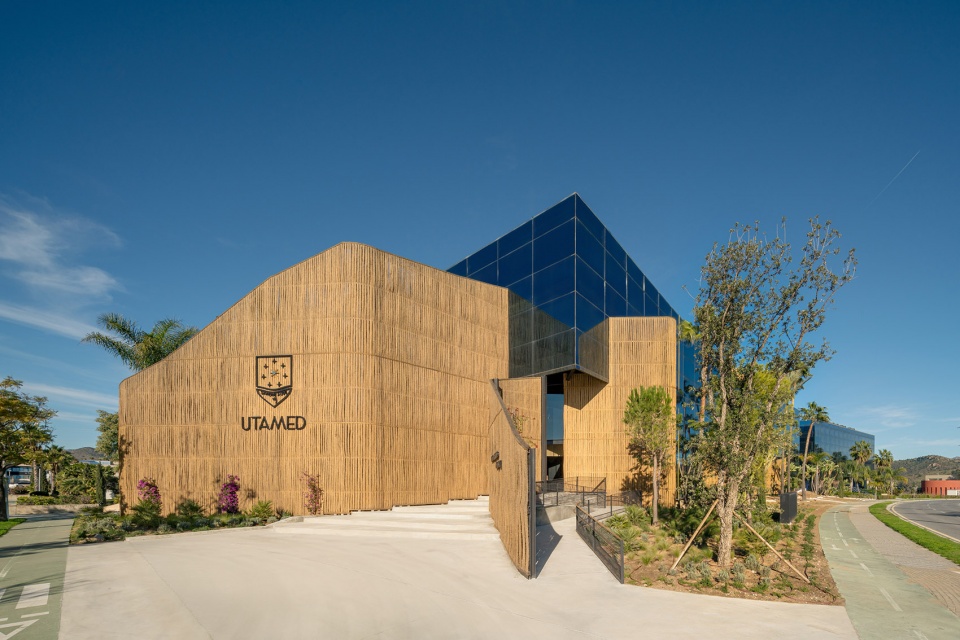
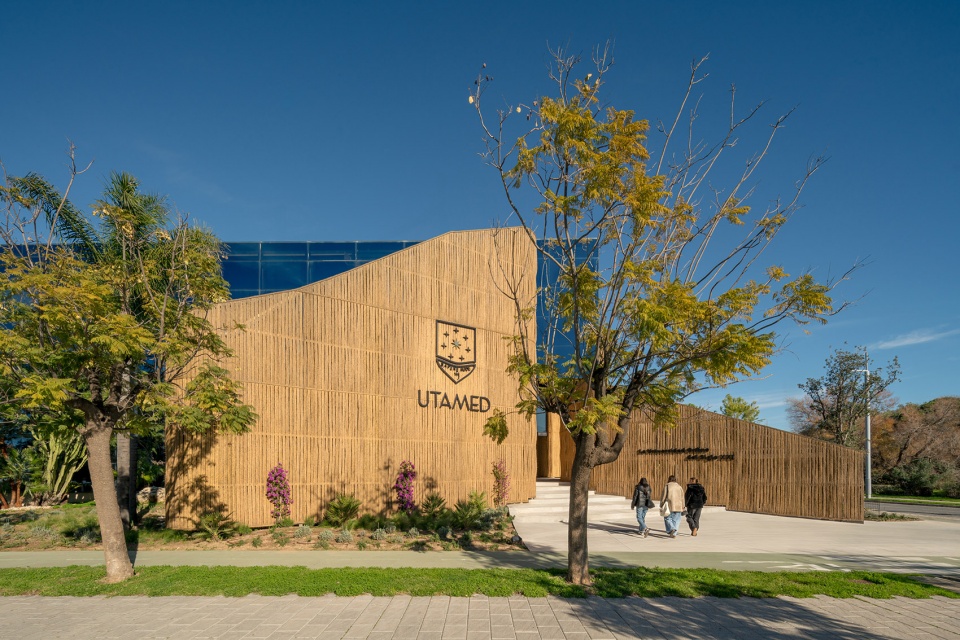
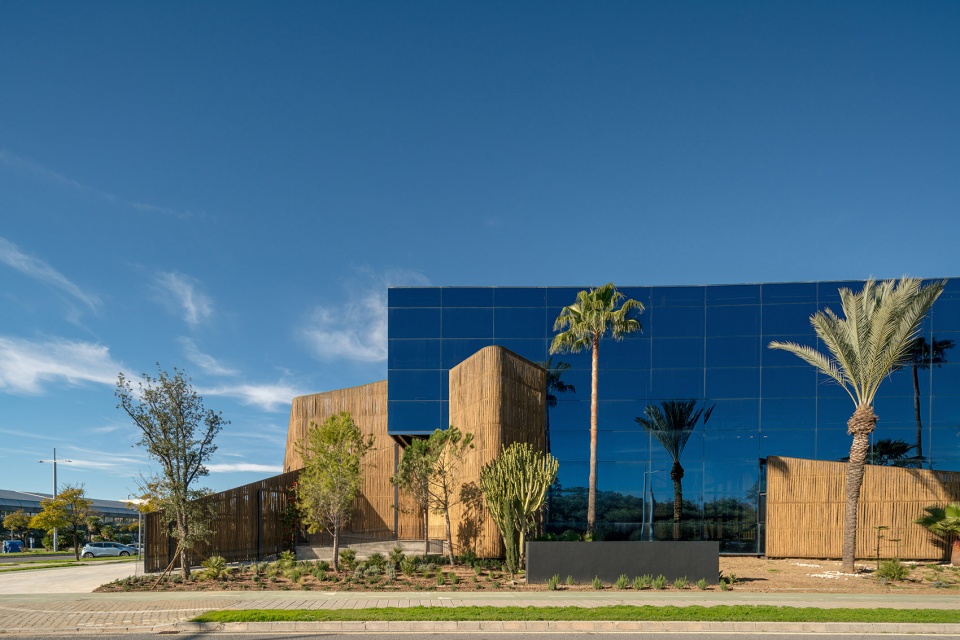
▼项目外观,facade of the project
功能转变:一所完全线上大学的诞生Change of destination: a fully online university is born.
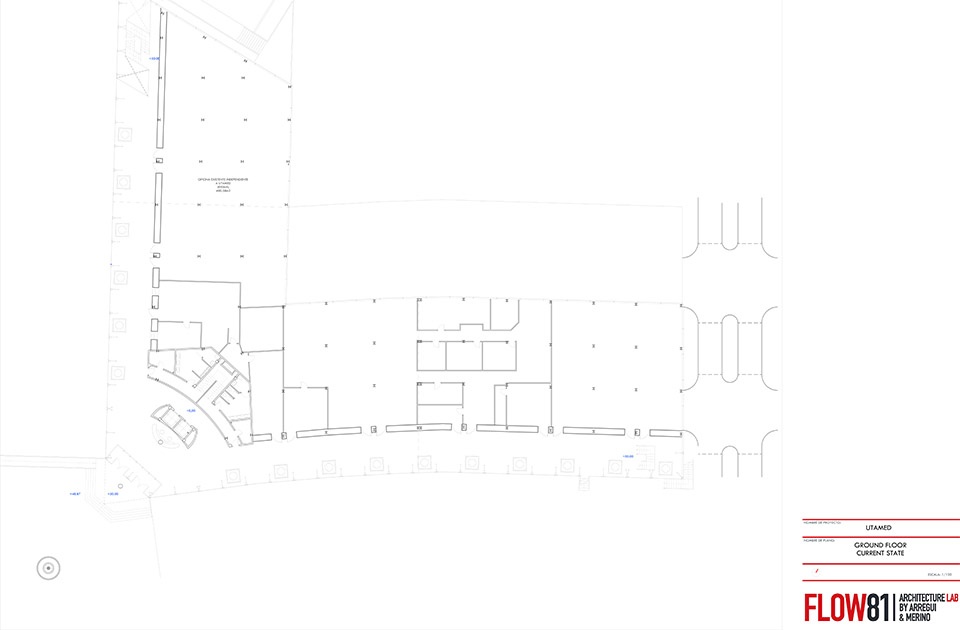
此次改造项目旨在打造一所线上大学,包括供教职员工使用的办公空间,以及专为学生考试设置的教室。这是安达卢西亚首所完全线上大学,其创立目标在于让高等教育能够覆盖该地区小城镇中的社区居民,以及那些无力迁居或长期生活在传统大学集中的大城市中的人群。
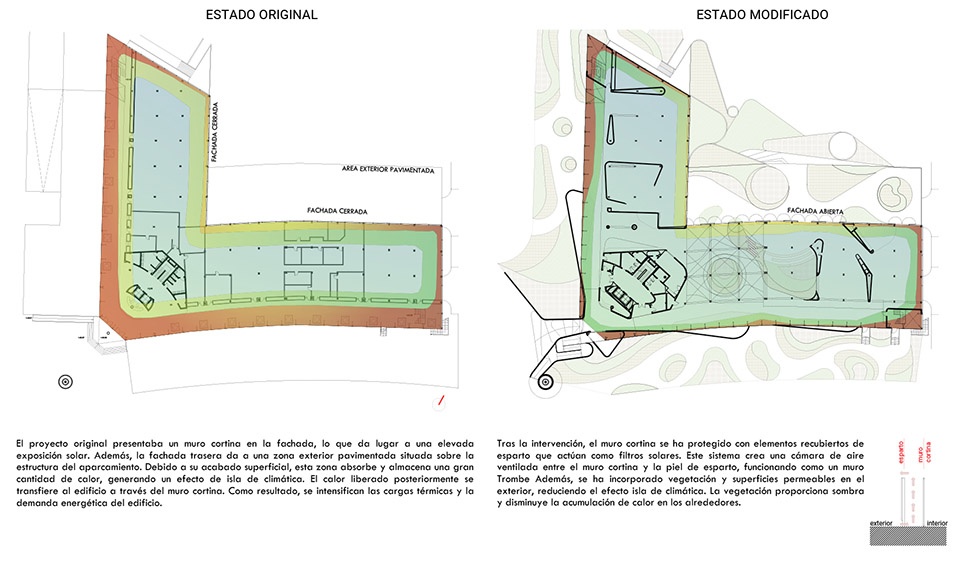
▼改造前后平面图,before & after plan
The conversion project involves creating an online university with workspaces for staff and dedicated classrooms for student exams. This is Andalusia’s first fully online university, created with the aim of making university education more accessible to communities in small towns across the region, as well as to those who cannot afford to move or live in large cities where traditional universities are concentrated.
▼项目外观,facade of the project
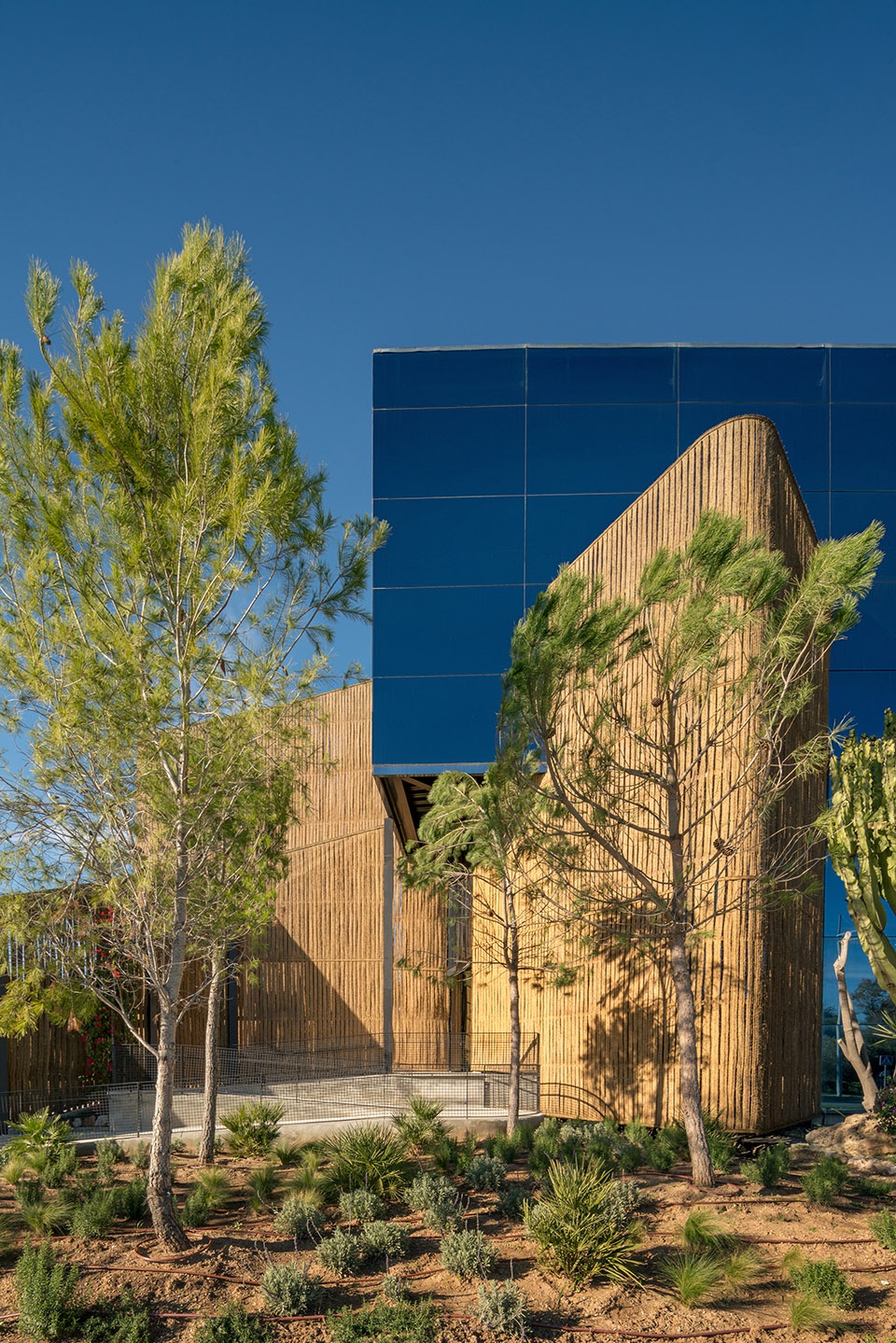
▼项目外观,facade of the project
身份感与归属感:一栋建筑中的校园Sense of identity and belonging: a campus in one building
从项目伊始,设计目标便十分明确:尽管学生在整个求学过程中仅会有限次数地来到建筑内,仍需营造出强烈的大学身份认同感。为此,设计团队提出了“浓缩于单一建筑中的校园”概念,通过一栋建筑营造归属感、识别感与社区感,同时保持与安达卢西亚建筑传统之间的紧密联系。
From the outset, the project’s objective was clear: to foster a strong sense of university identity, despite students only visiting the building on limited occasions throughout their academic career. The solution was to design a campus concentrated within a single building, capable of evoking a sense of belonging, recognition and community, while maintaining a strong link with Andalusian architectural tradition.
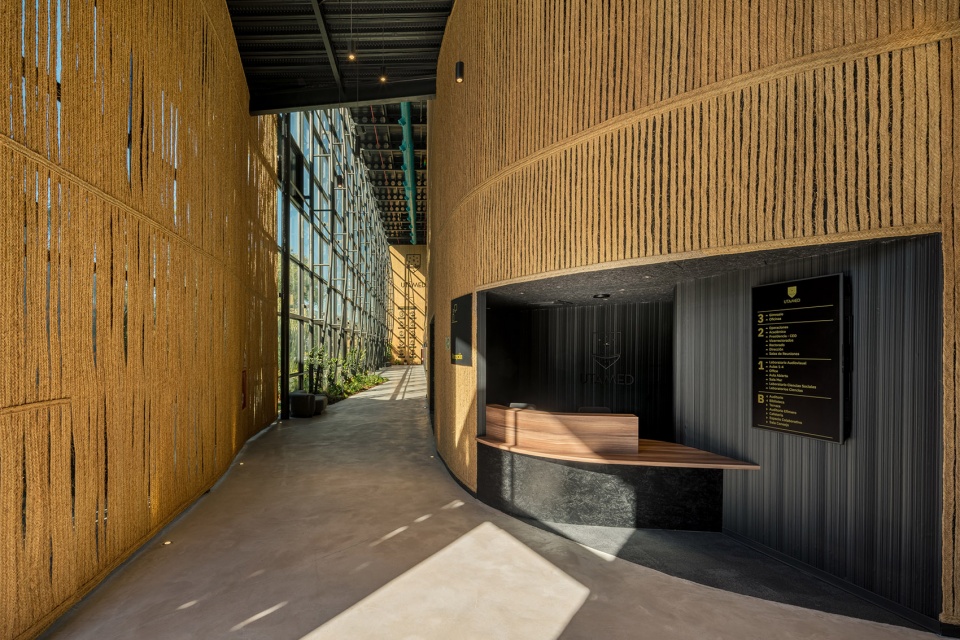
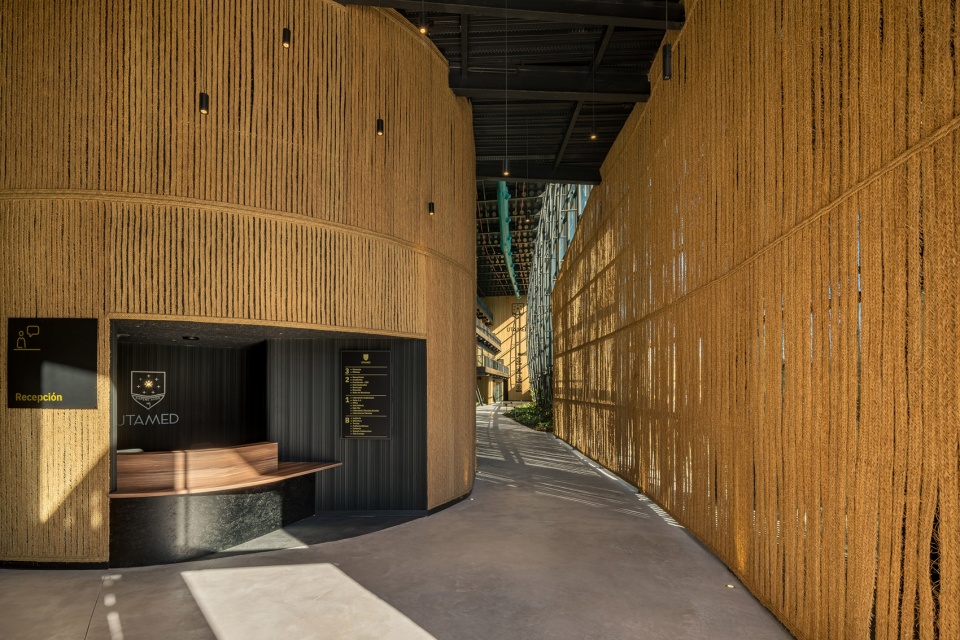
▼入口接待处,the reception at the entrance
规范更新与结构重塑Regulatory adaptation and structural remodelling
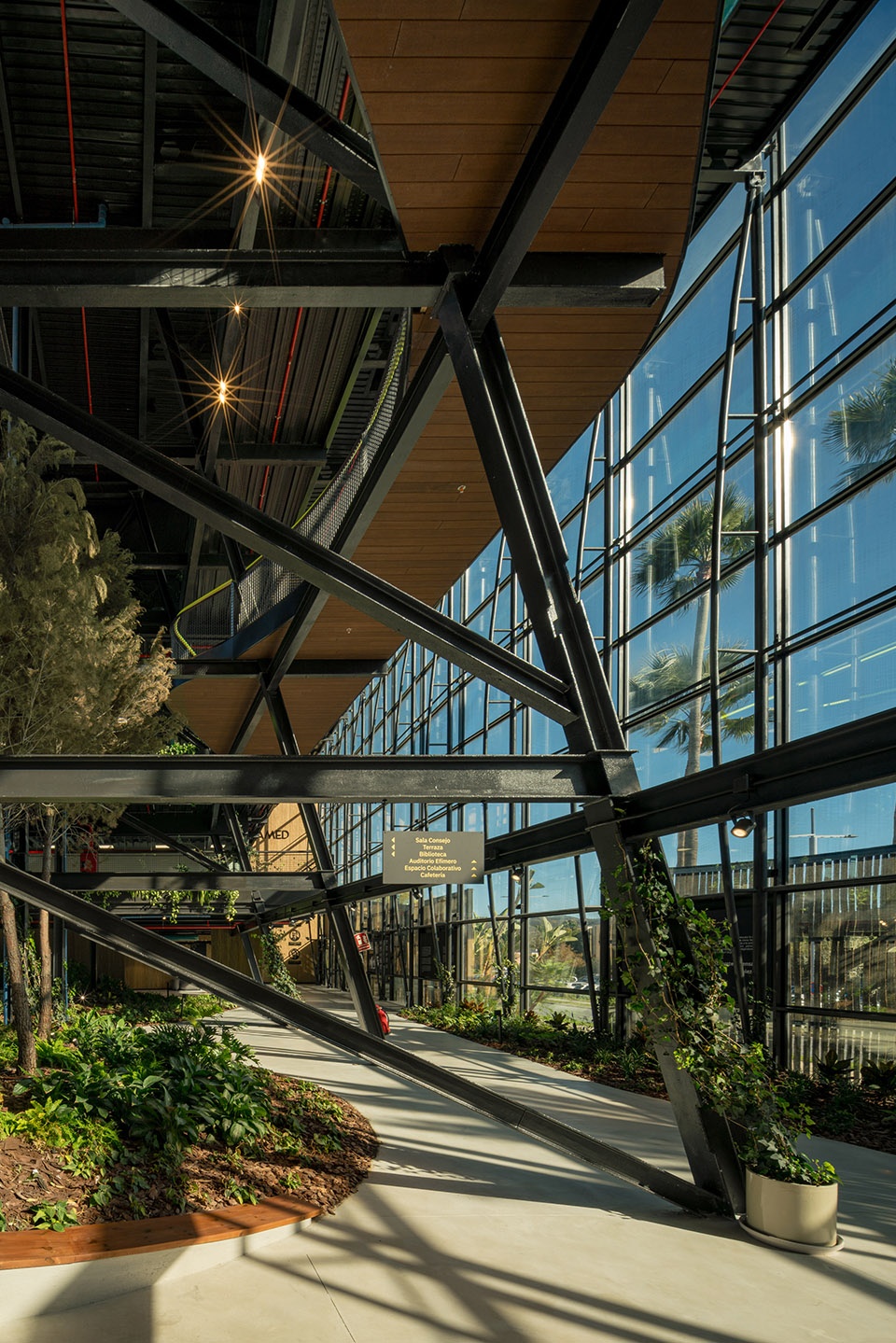
原有建筑并不符合《建筑技术规范》,尤其是在建筑热工围护性能方面。因此,项目必须全面更新设备系统,并提升建筑的环境性能。同时,结构与消防安全系统也需要介入改造:原有缺乏防火保护的金属结构进行了全面防火处理,部分区域由于原始柱截面不足,还进行了结构加固。
The existing building did not comply with the Technical Building Code, particularly with regard to the performance of the thermal envelope. For this reason, the facilities had to be completely renovated and the building’s environmental performance improved. At the same time, the structural and fire safety systems required intervention: the metal structure, which lacked fire protection, underwent complete fireproofing and some areas were reinforced due to insufficient original pillar sections.
▼结构加固后的大厅,the structure reinforced atrium
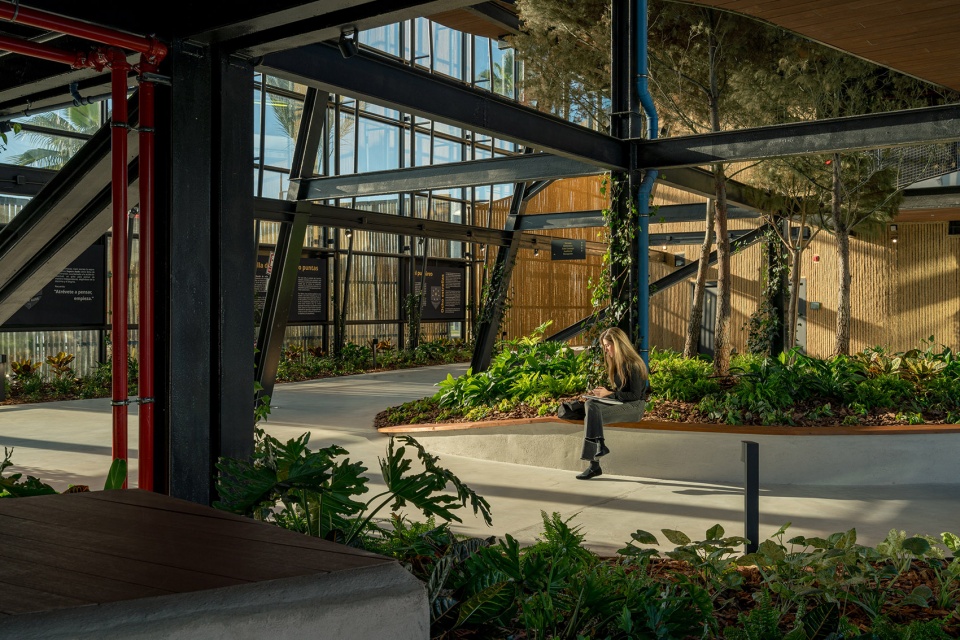
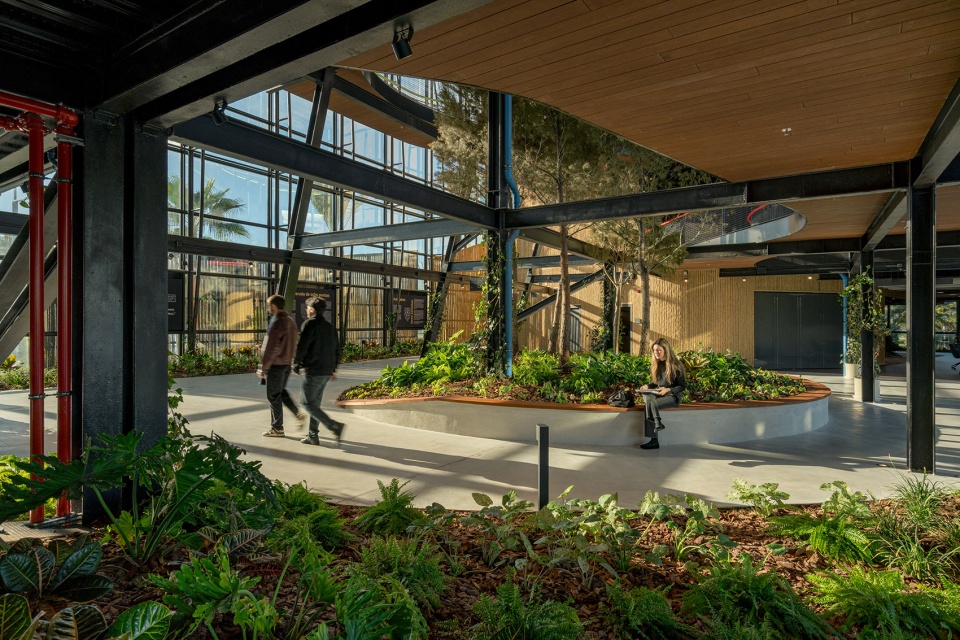
▼结构加固后的大厅,the structure reinforced atrium
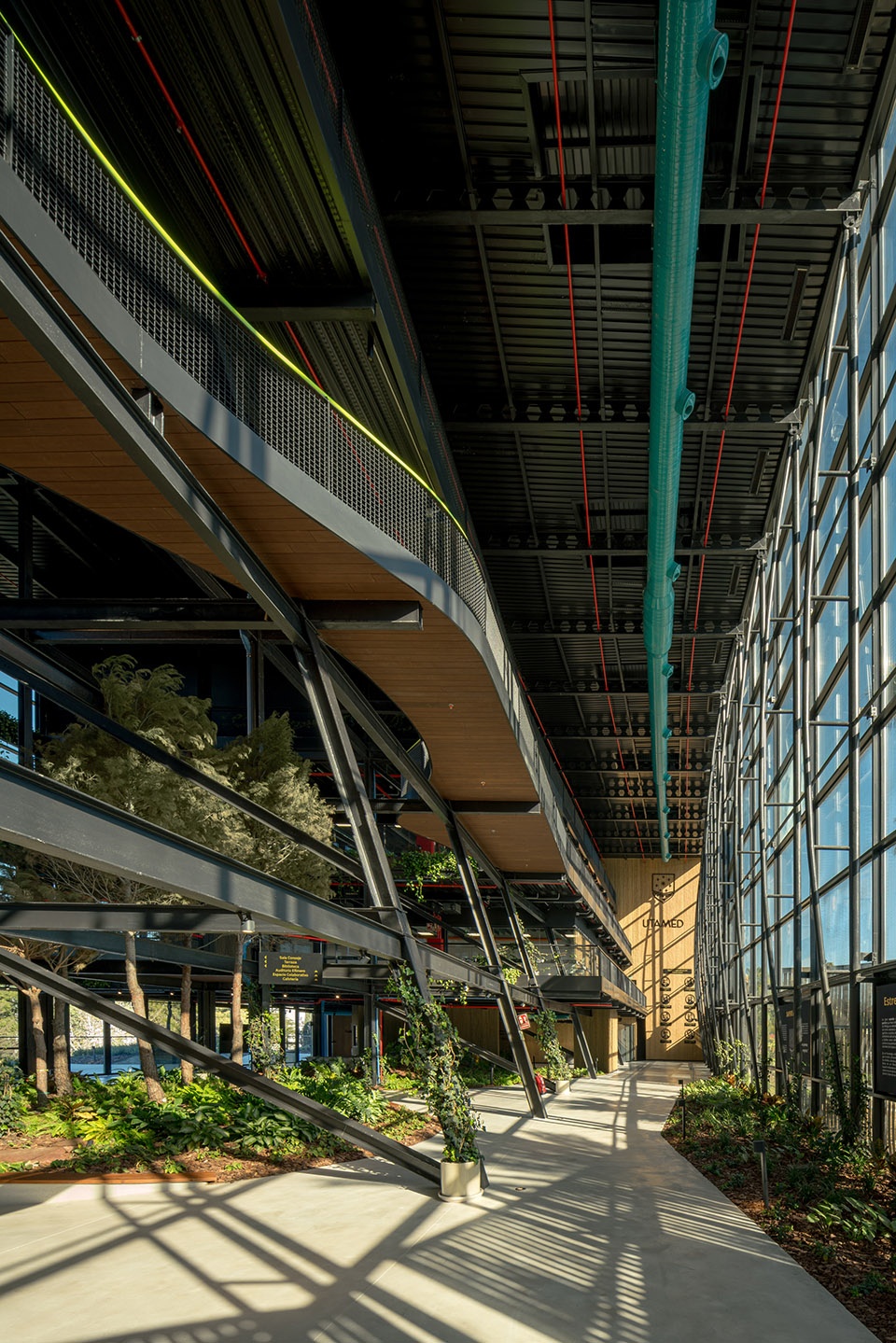
安达卢西亚庭院:校园的核心The Andalusian courtyard is at the heart of the campus.
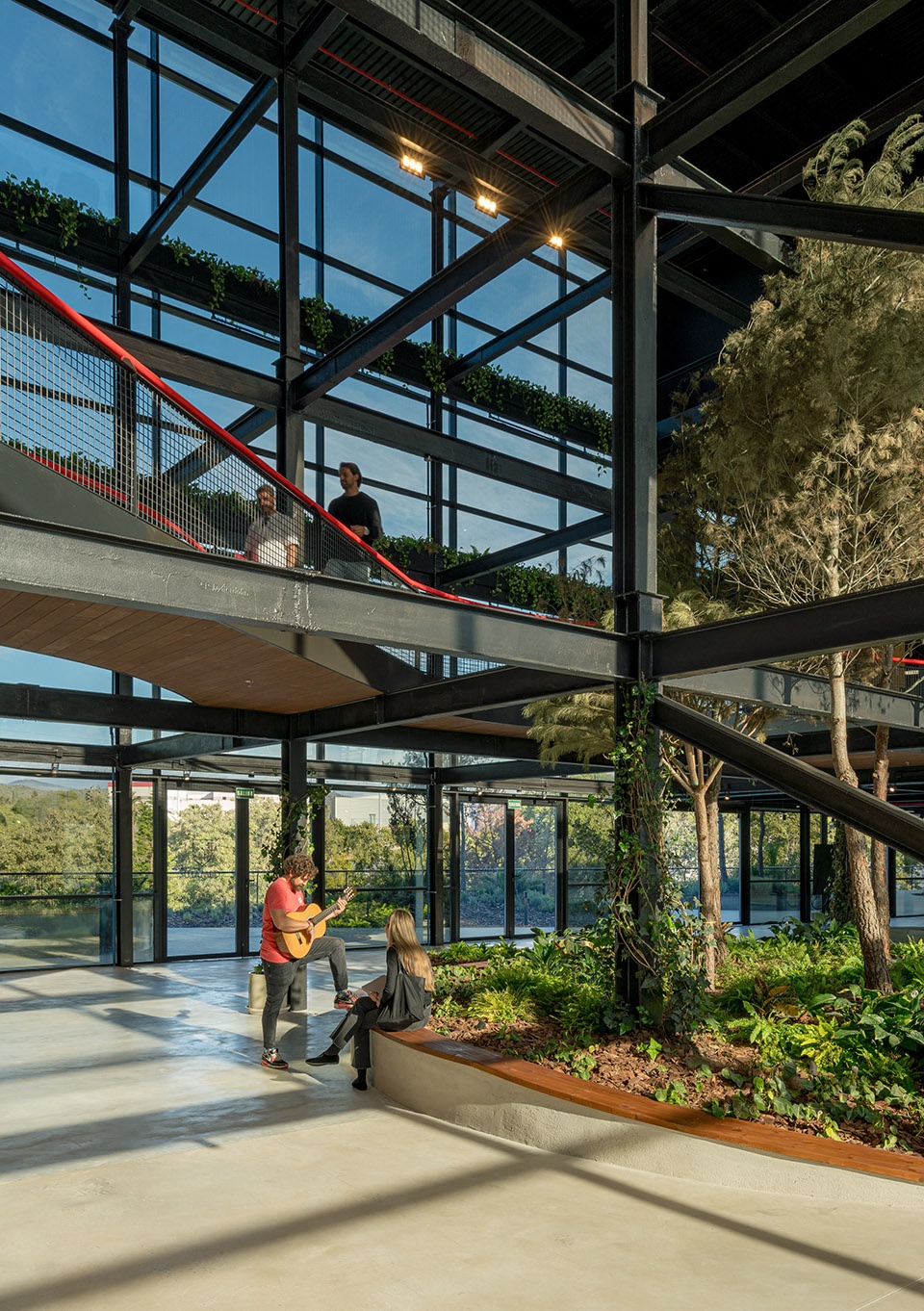
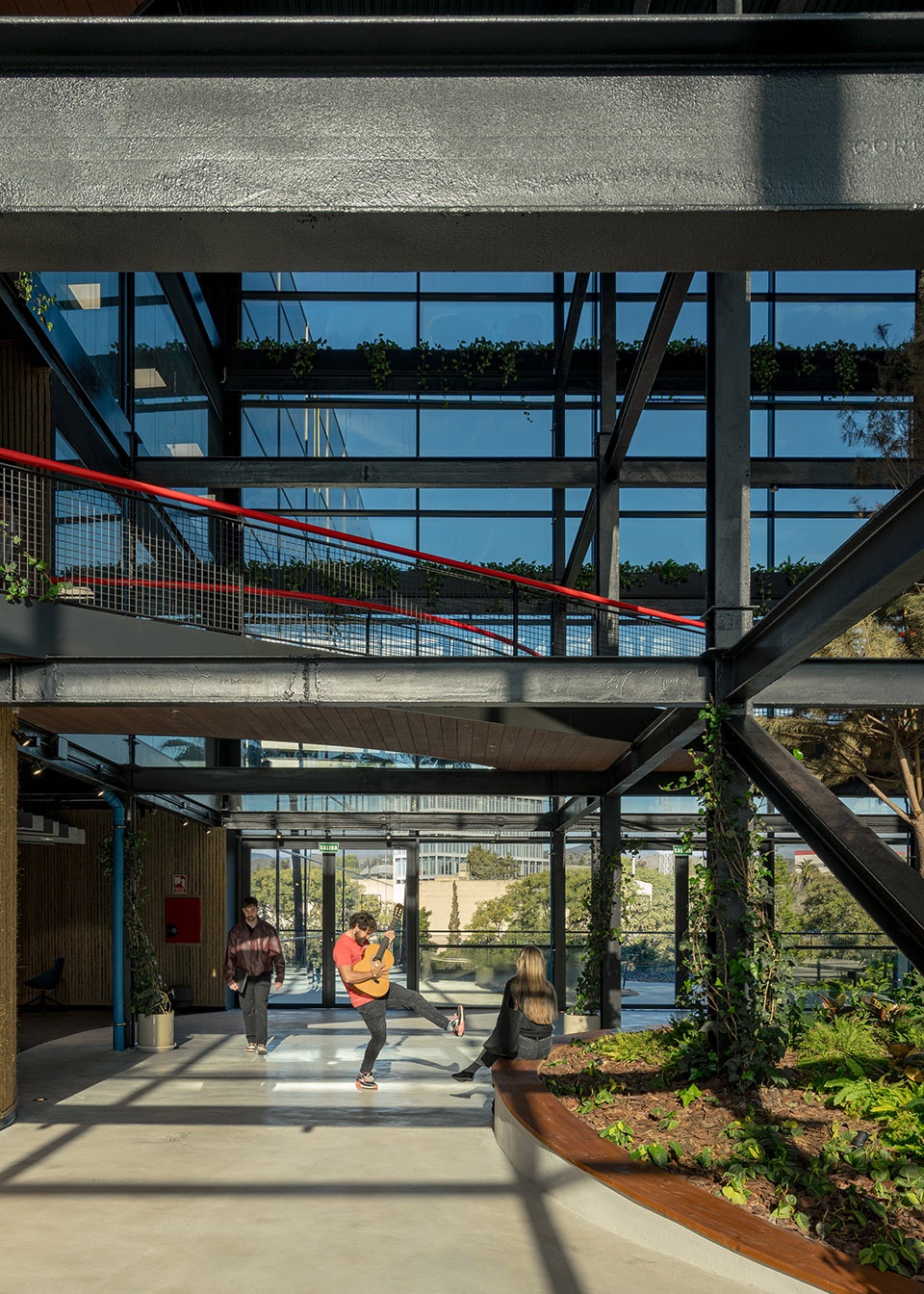
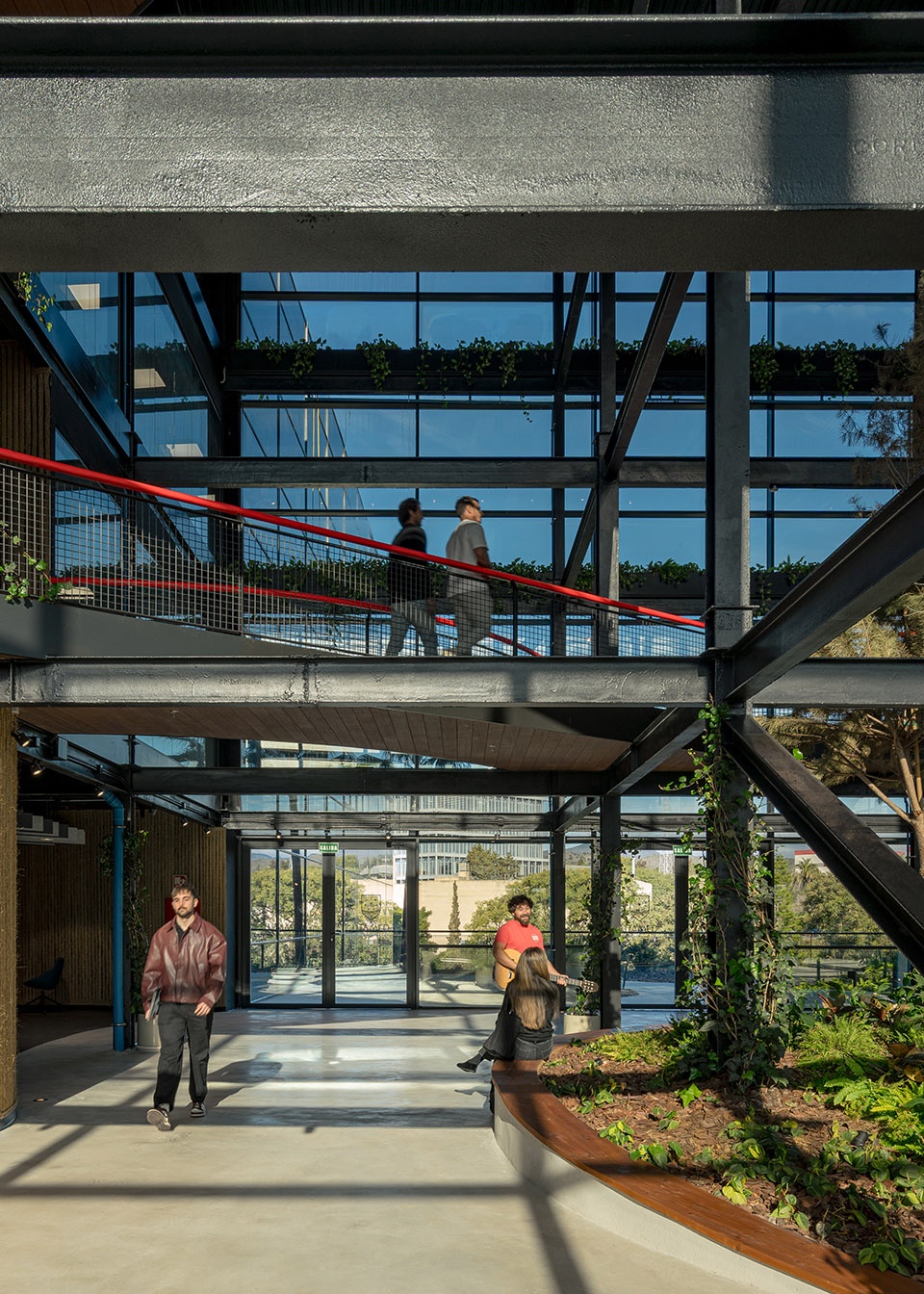
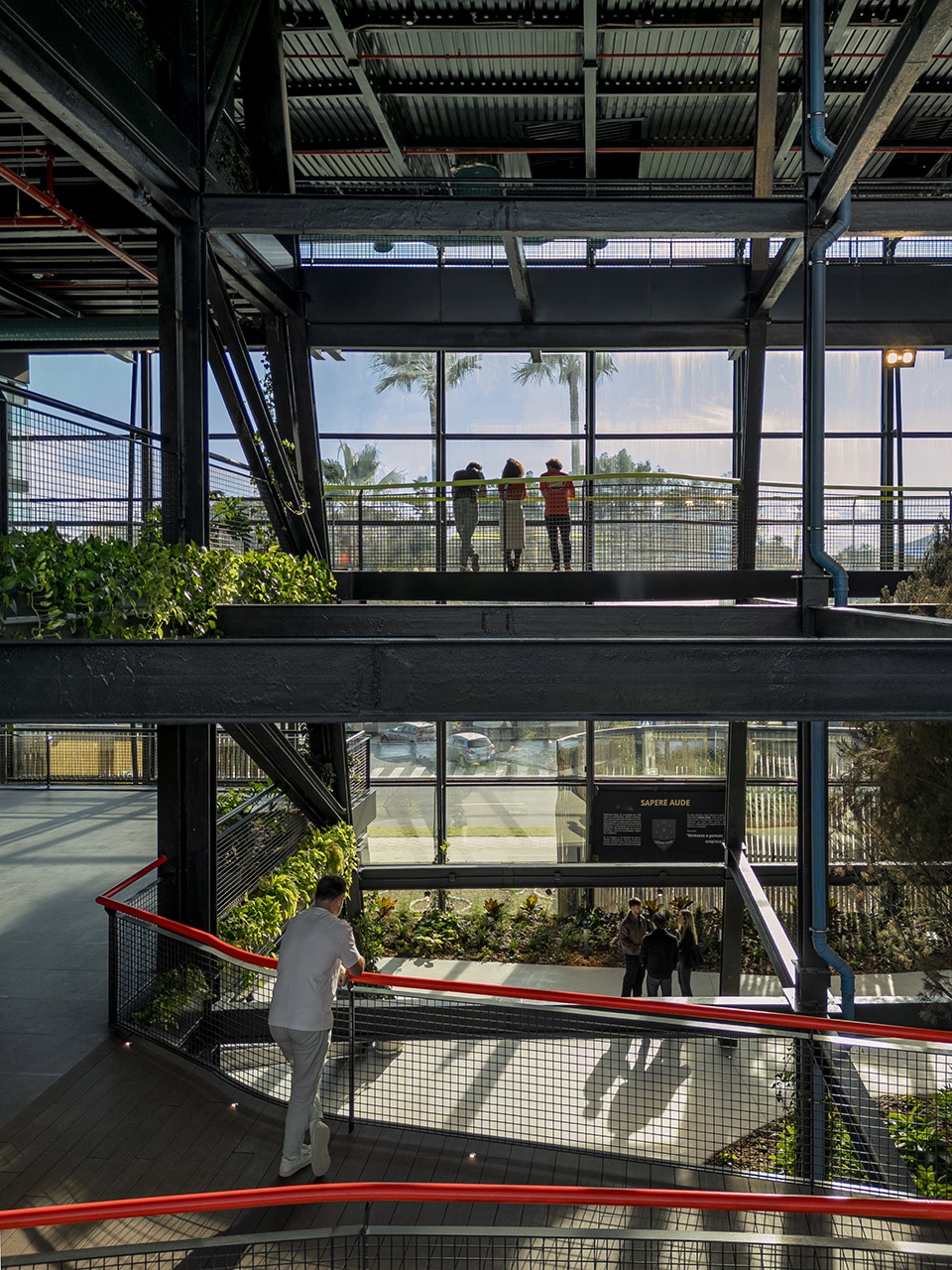
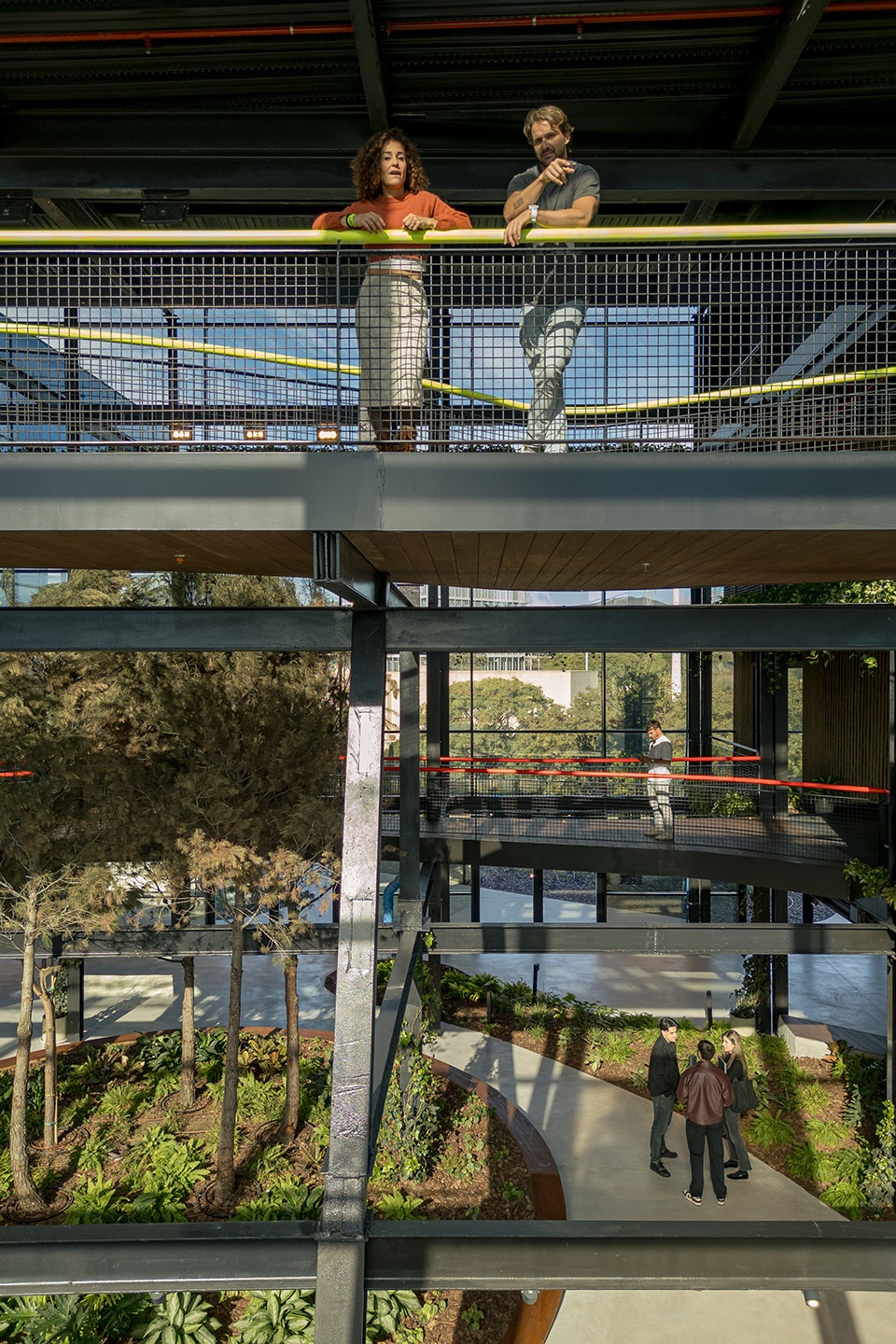
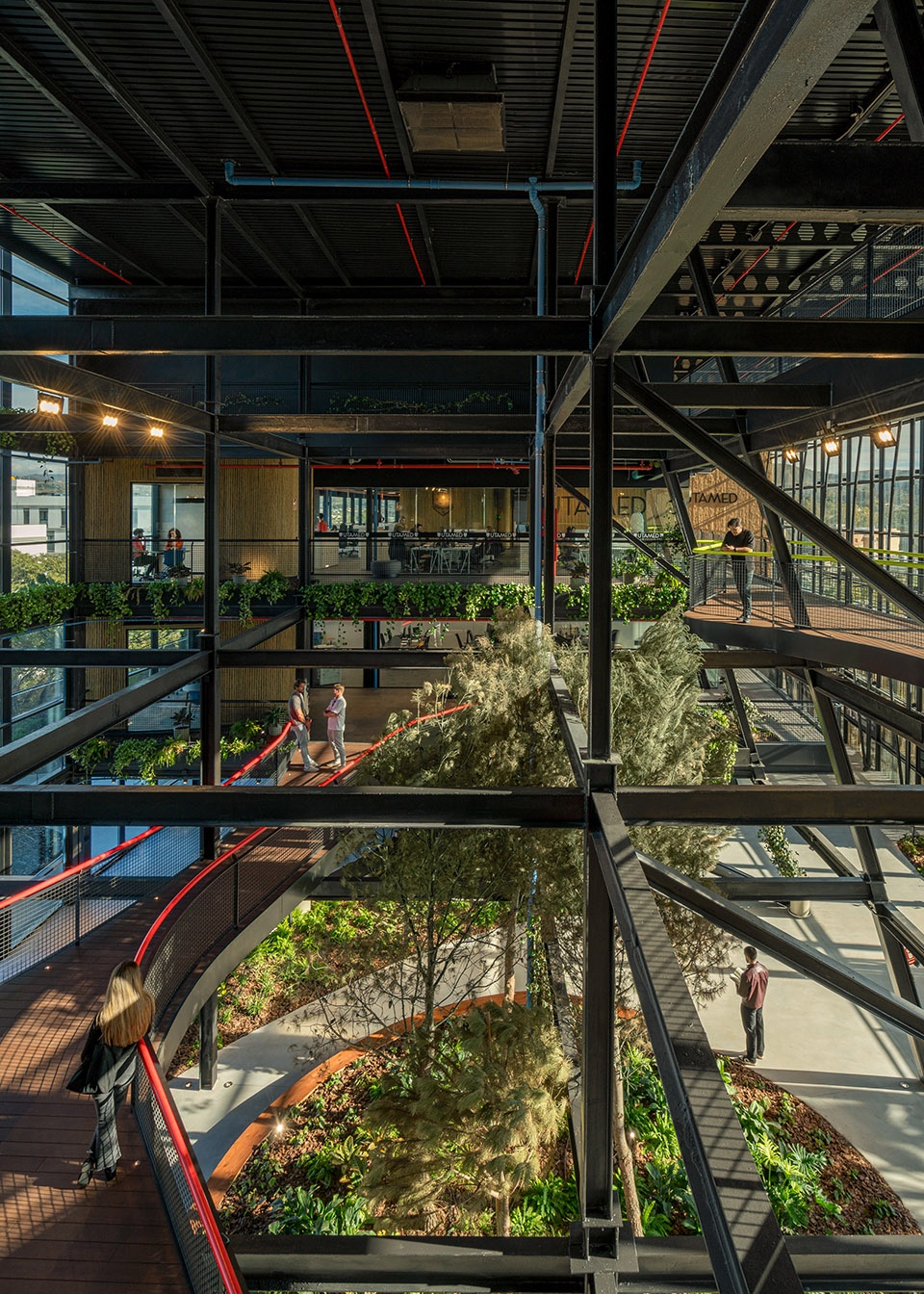
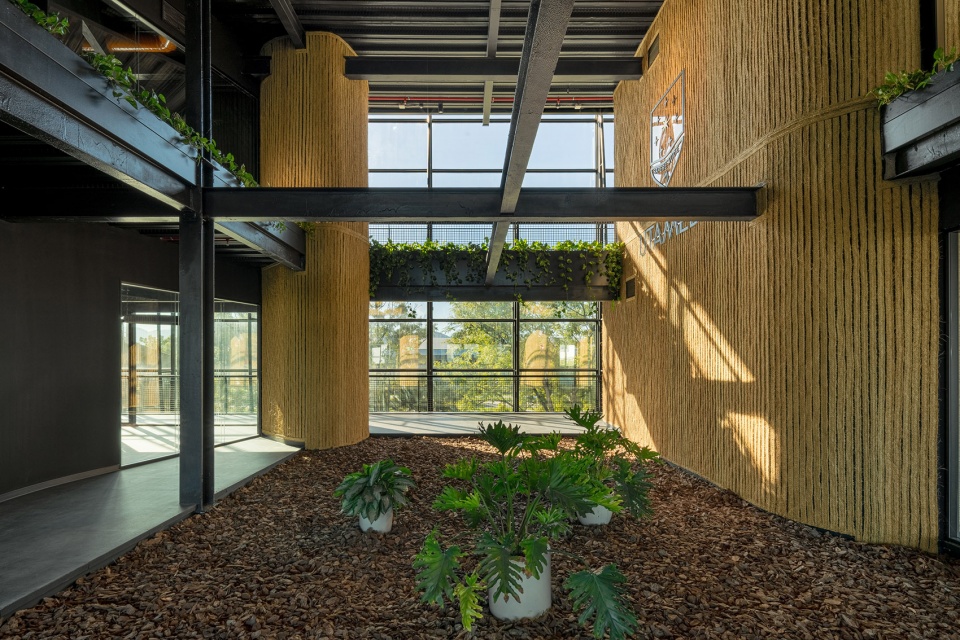
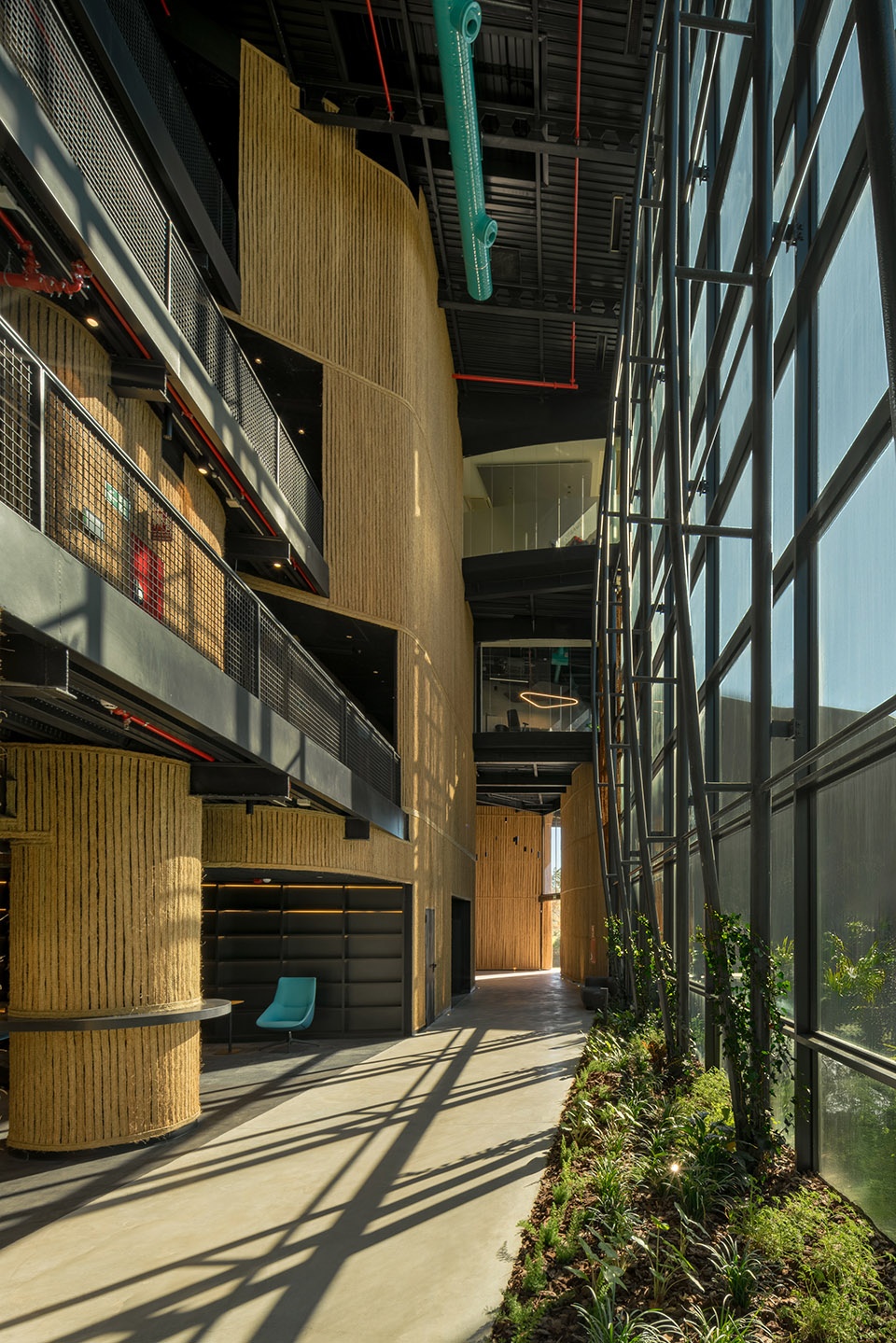
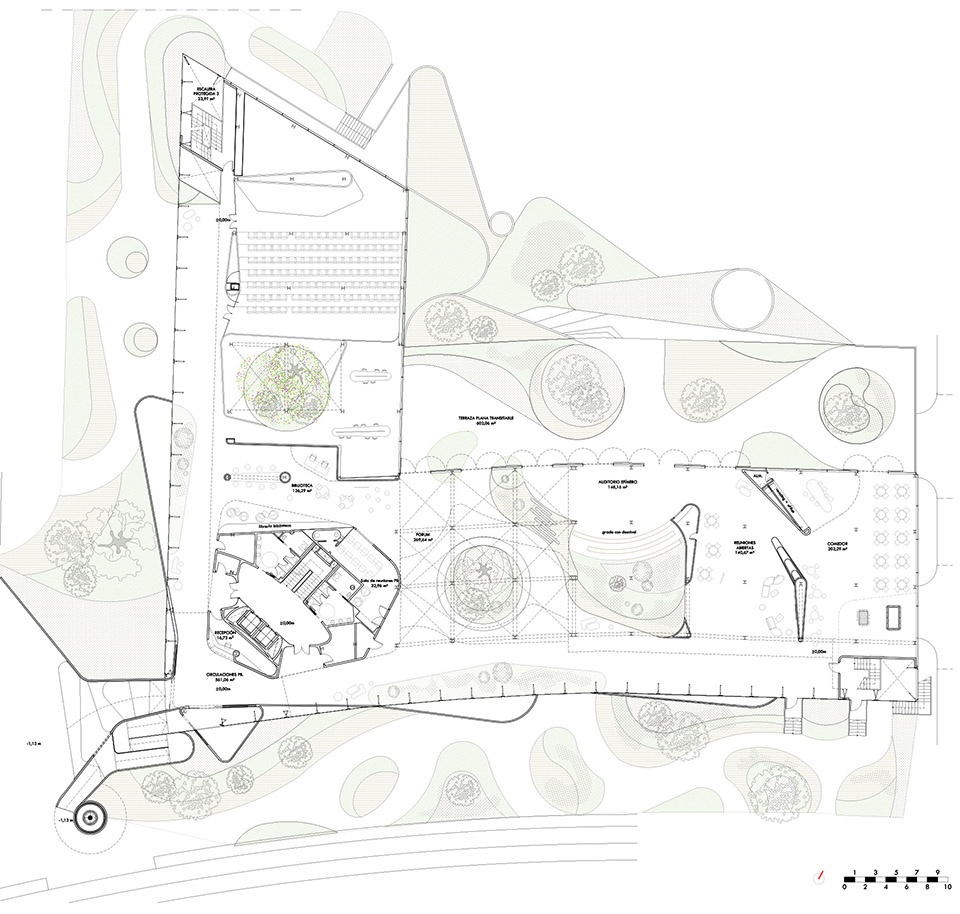
项目源于对室内空间开放性的追求,以及对传统安达卢西亚庭院的重新诠释。为此,建筑中央被打通为一个高达四层的巨大中庭,所有大学生活都围绕这一空间展开。各楼层如同一座微型垂直城市般组织,并形成由公共到私密的梯度关系:首层最开放、最公共、最易抵达,而顶层则设置校长办公室及其他需要更高私密性的行政空间。尽管功能各异,所有空间都通过中央庭院保持视觉上的对话关系。庭院因此成为校园真正的交流核心,为使用者提供物理与情感上的共同参照。
The project stems from the desire to open up interior spaces and reinterpret the traditional Andalusian courtyard. A large, four-storey-high void has been created in the centre of the building to this end, around which all university life is organised and takes place. The floors are arranged like a small vertical city, with a gradient of privacy: the ground floor is the most public, open and accessible, while the top floor houses the rector’s office and other administrative spaces where greater confidentiality is required. Despite their different functions, all these spaces maintain a visual dialogue with each other thanks to the central courtyard, which becomes the campus’s true relational heart, providing a physical and emotional reference point for its inhabitants.
▼高达四层的巨大中庭,A large, four-storey-high void
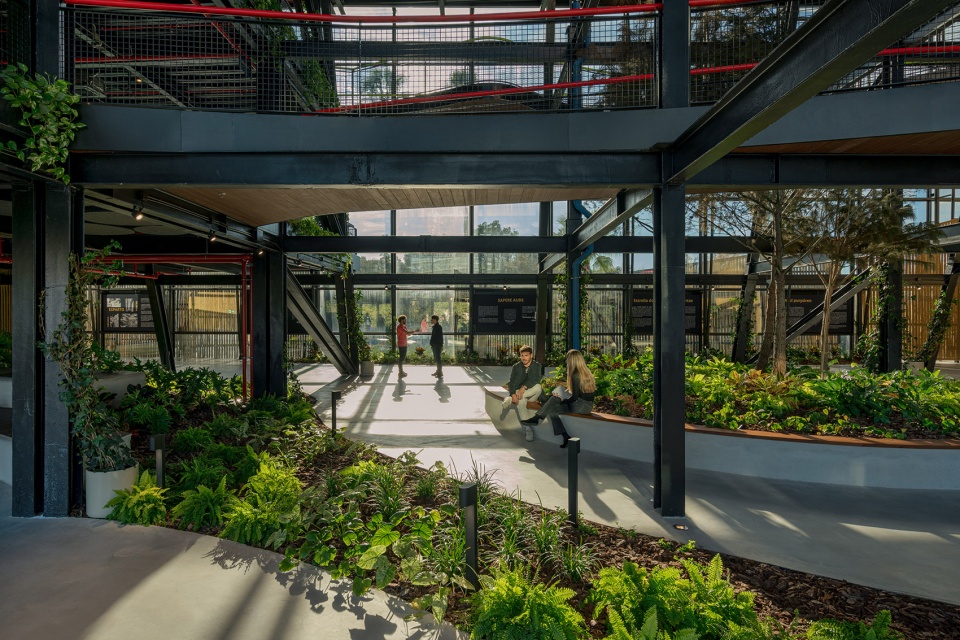
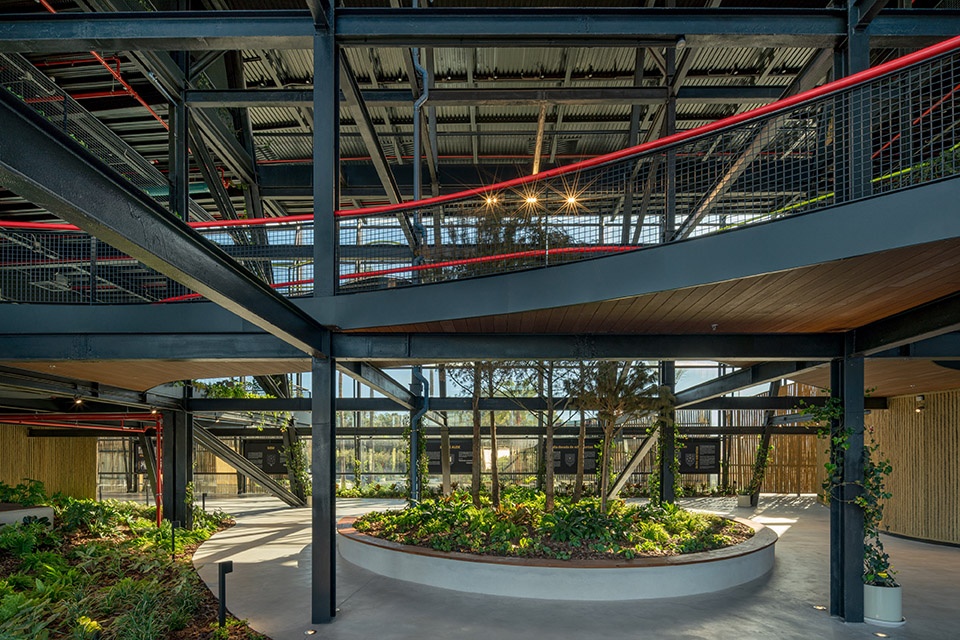
▼所有空间都通过中央庭院保持视觉上的对话关系,
all these spaces maintain a visual dialogue with each other thanks to the central courtyard
与既有结构对话的悬浮连桥Suspended walkways in dialogue with the existing structure
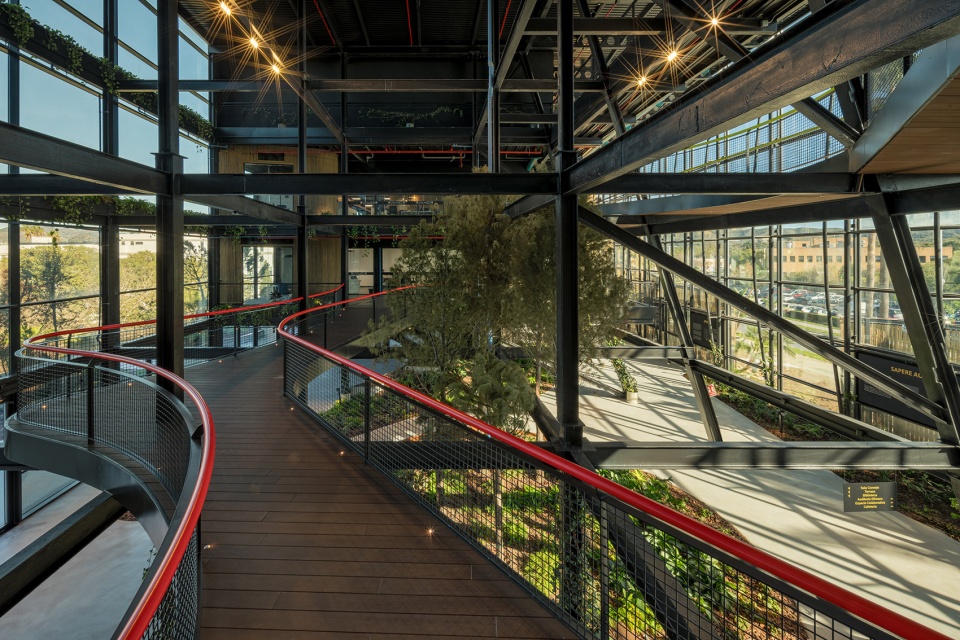
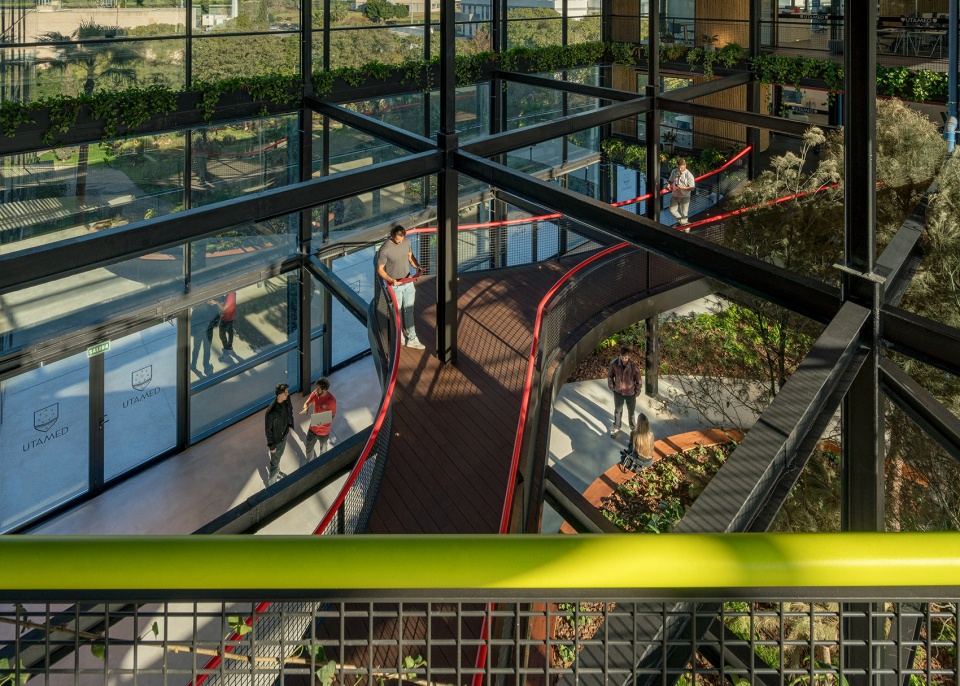
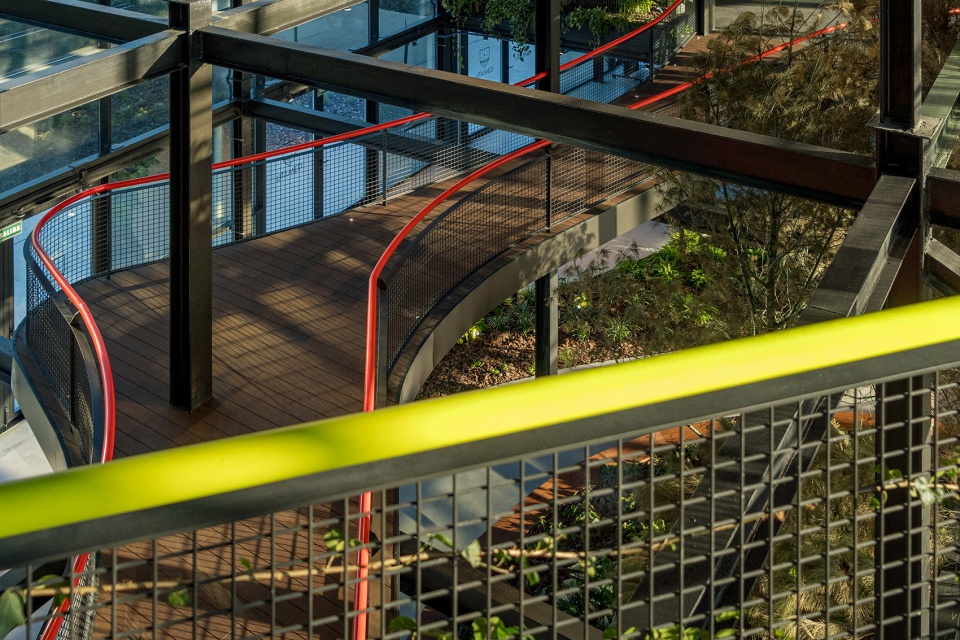
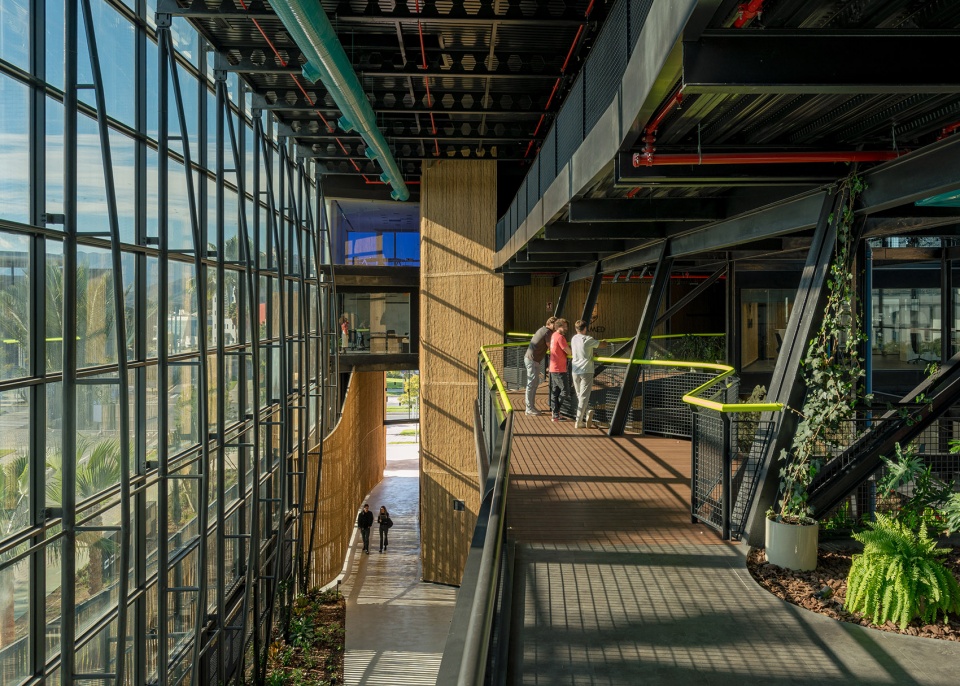
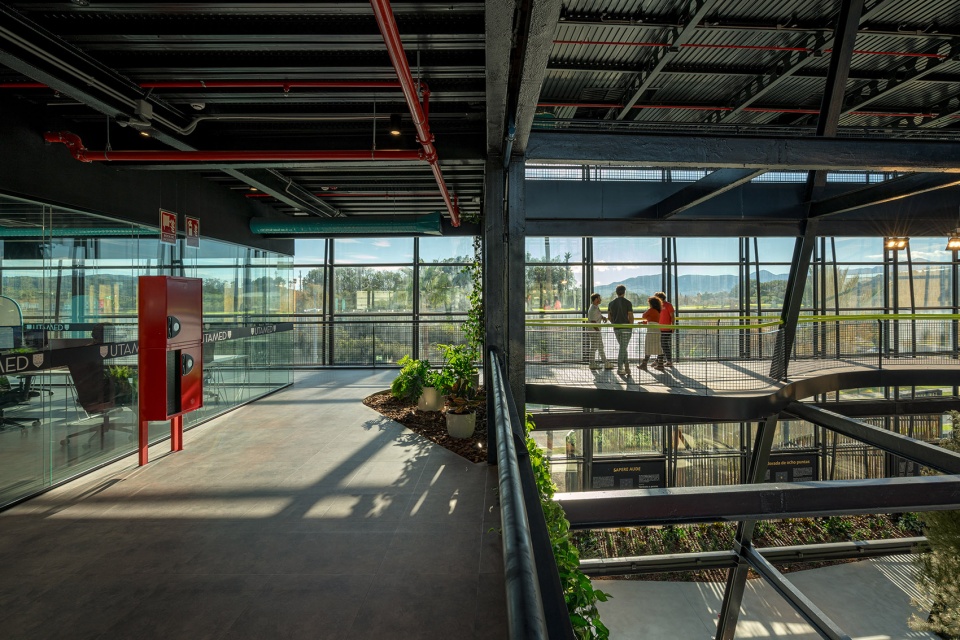
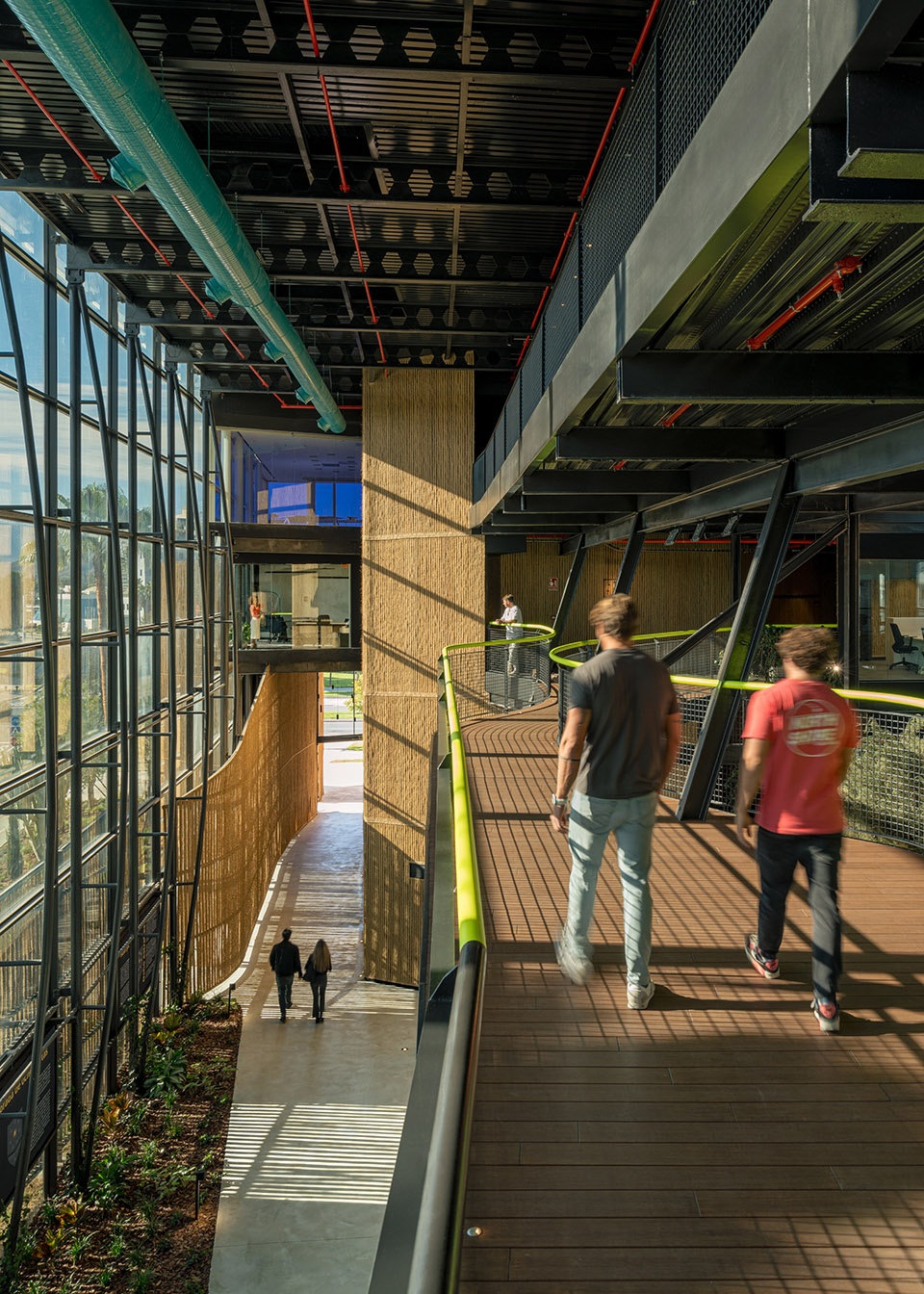
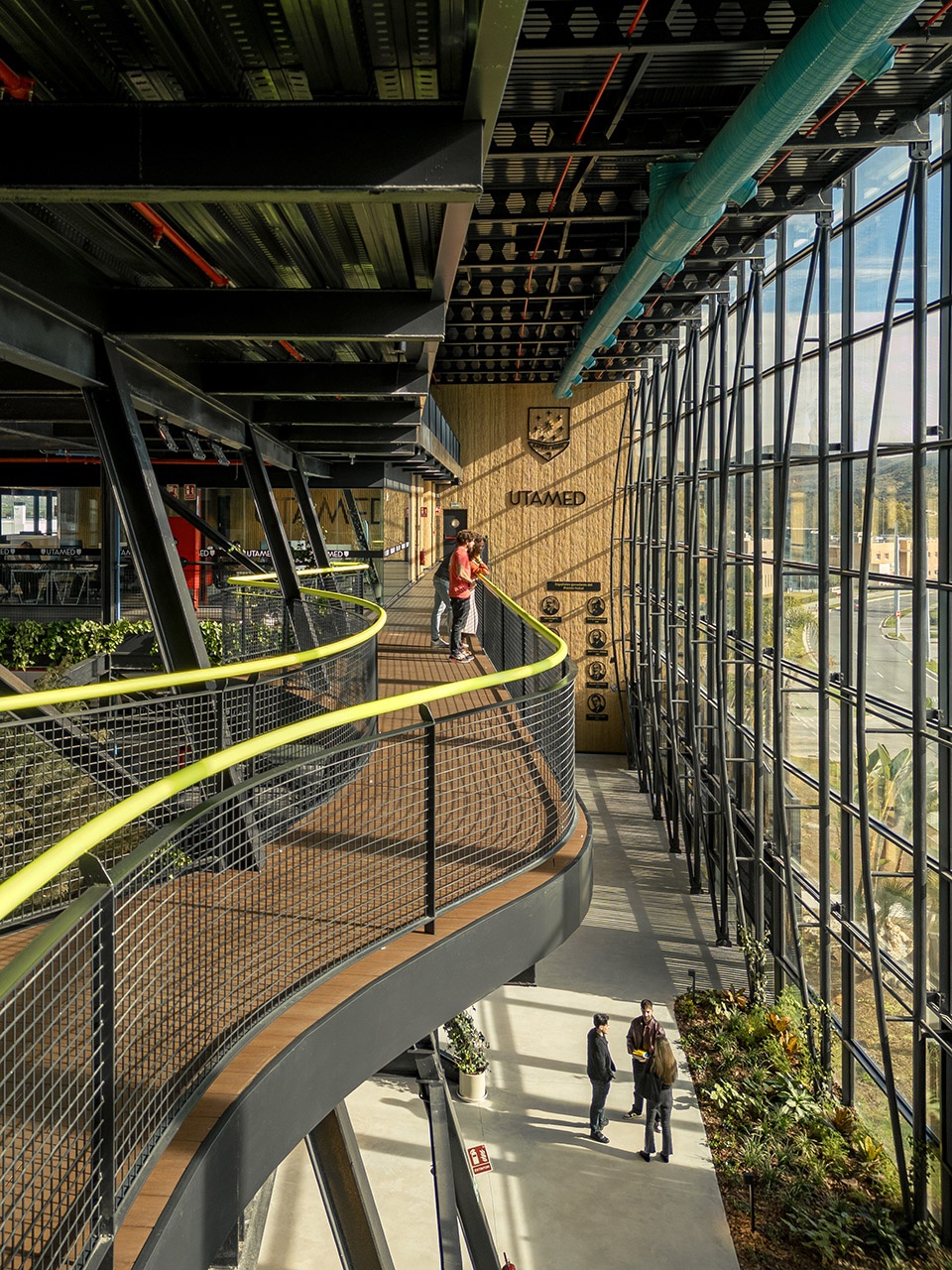
一系列弧形木质连桥被设置于中央中庭内部,用以连接不同楼层。这些连桥悬浮于中庭之中,在裸露金属结构形成的深色背景下尤为突出。设计保留并直接呈现原有结构,不添加多余修饰,以强调“建造真实”的主题,并凸显原始结构本身。连桥采用金属结构包覆木材,并依托于拆除旧楼板后保留下来的原有梁体进行支撑。栏杆所使用的对比色象征着学生在接触新知识时所经历的“思维爆炸”——那些看似不兼容的观念在此进入对话。
▼悬浮连廊设计,suspended walkway design
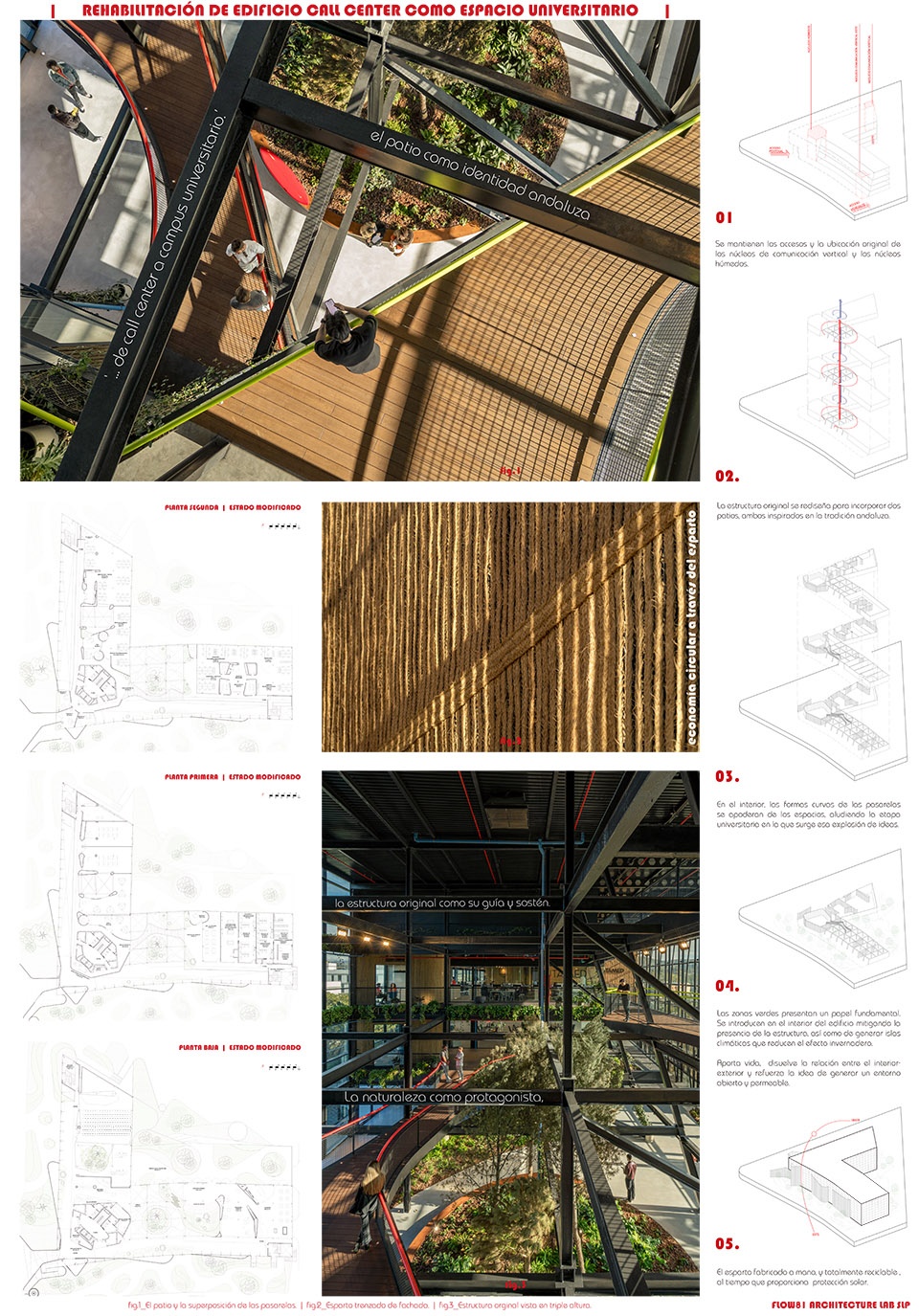
A series of curved wooden walkways have been installed to connect the different levels, suspended inside the central void. Crossing the courtyard, these walkways stand out against the dark background of the exposed metal structure. This has been left free of any superfluous artifice to emphasise the theme of constructive truth and enhance the original structure.
The walkways have a metal structure clad in wood and are supported by existing beams that were preserved when the old floors were demolished. The contrasting colours of the railings symbolise the “mental explosion” experienced by students as they access new knowledge, where seemingly incompatible ideas enter into dialogue.
▼弧形木质连桥,curved wooden walkways
▼连桥悬浮于中庭之中,
walkways suspended inside the central void
曲线作为空间语言The curve as spatial language
室内空间的组织方式由曲线的象征性与构图性使用所主导。它象征着学生开启大学旅程的时刻:思想向新的刺激、人际关系与观念敞开,并开始挑战原有的确定性。
The arrangement of interior spaces is guided by the symbolic and compositional use of the curve. This represents the moment when students begin their university journey, opening their minds to new stimuli, relationships and ideas that challenge their existing certainties. Incorporating curved forms within a rigidly rectangular building creates a dialectic between order and freedom, generating continuous spatial fluidity.
▼室内空间的组织方式由曲线所主导,The arrangement of interior spaces is guided by the symbolic and compositional use of the curve
▼室内空间的组织方式由曲线所主导,
The arrangement of interior spaces is guided by the symbolic and compositional use of the curve
▼曲线布局的教室与走廊,Curved-layout classrooms and corridors
▼休息区,resting area
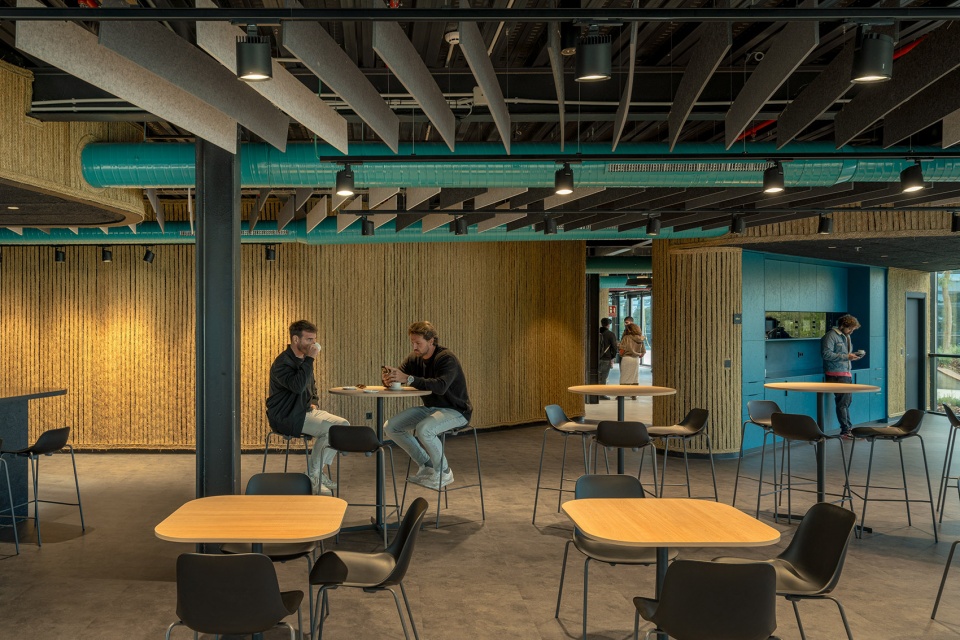
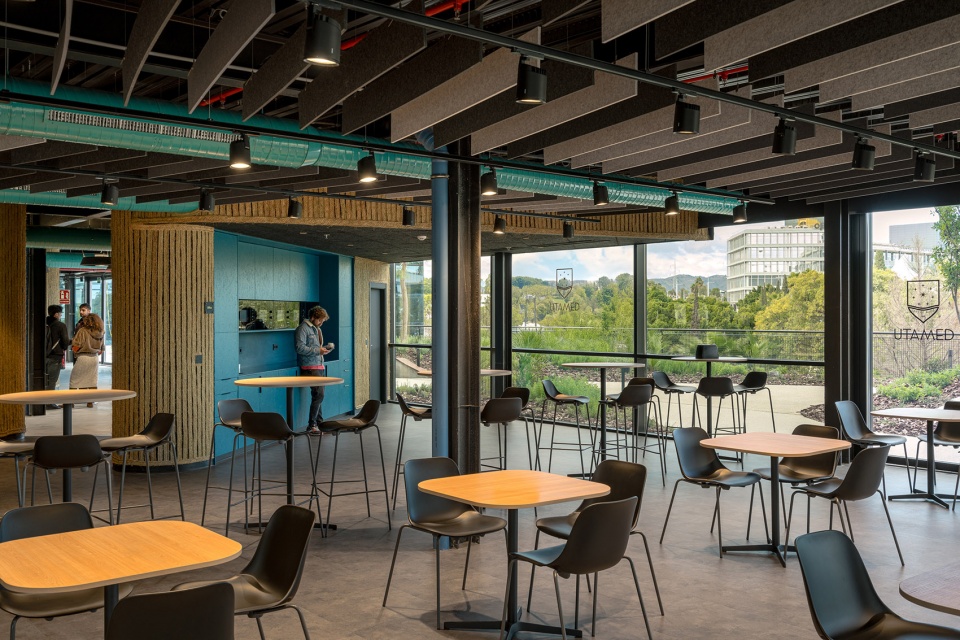
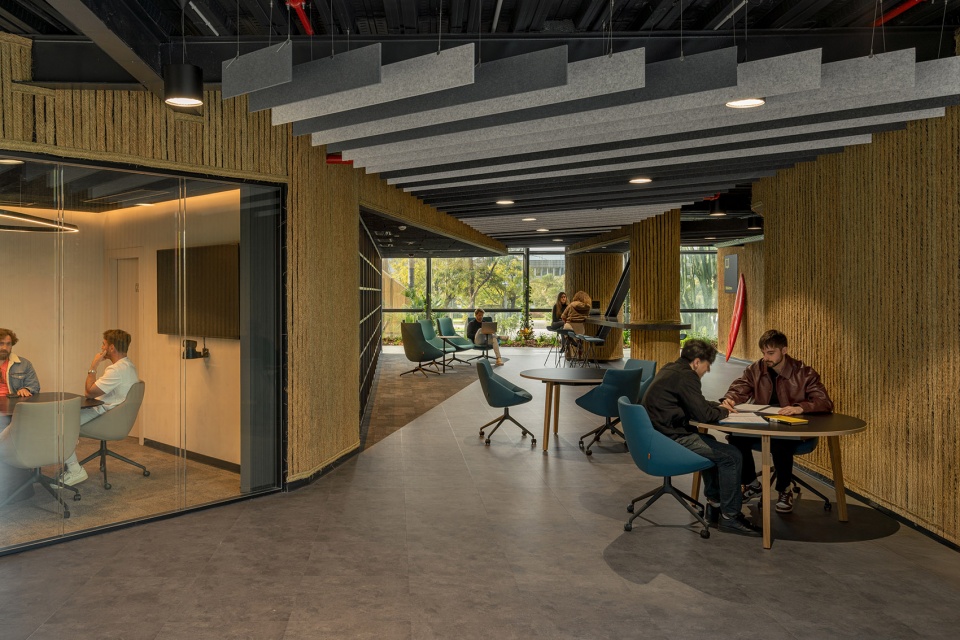
在严格矩形的建筑内部植入曲线形态,形成了秩序与自由之间的辩证关系,创造出连续流动的空间体验。这些曲线从内部向外部延伸,同时又从外部反向渗透至内部,构建出视觉上彼此关联、但仍保持功能独立的空间环境。尤其在首层,空间从不被完全封闭或隔离;相反,它们更像是“空间格栅”,提供通透的视线关系,并强化建筑作为一个 cohesive、彼此联结整体的感知。
The curves act from the inside out and vice versa, creating visually connected environments that retain their functional autonomy. These spaces are never fully enclosed or isolated, particularly on the ground floor. Instead, they function as ‘spatial lattices’, providing unobstructed views and reinforcing the perception of the building as a cohesive, interconnected whole.
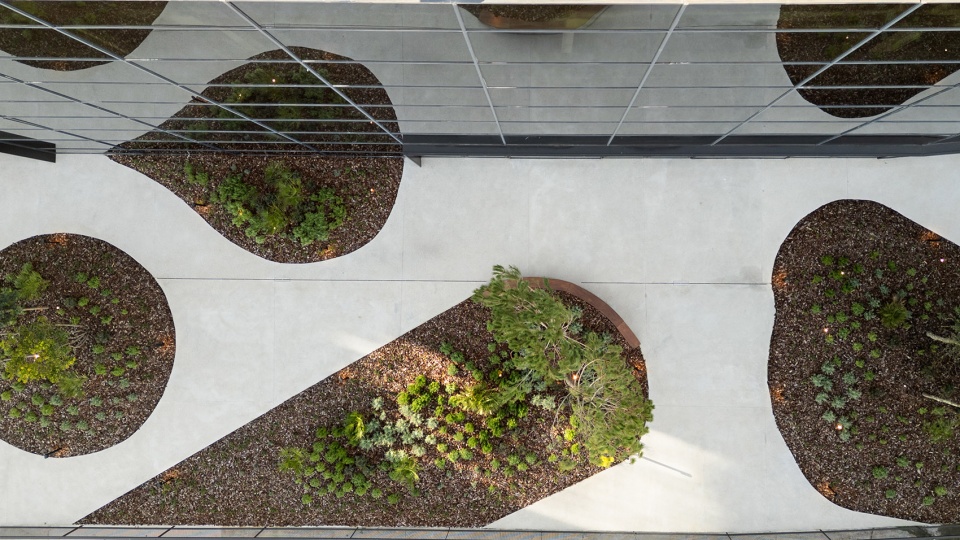
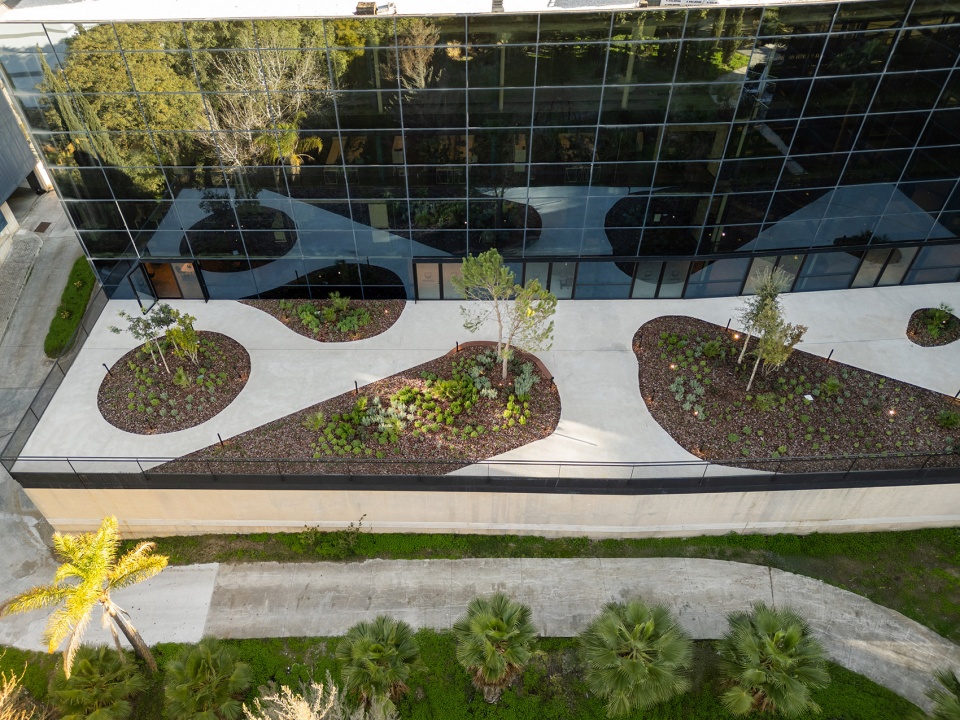
▼景观设计同样延续室内的曲线语言,The landscape design also continues the curvilinear language seen in the interior
西班牙草编:身份、记忆与可持续性Esparto: Identity, Memory and Sustainability
一种传统的安达卢西亚材料A Traditional Andalusian Material
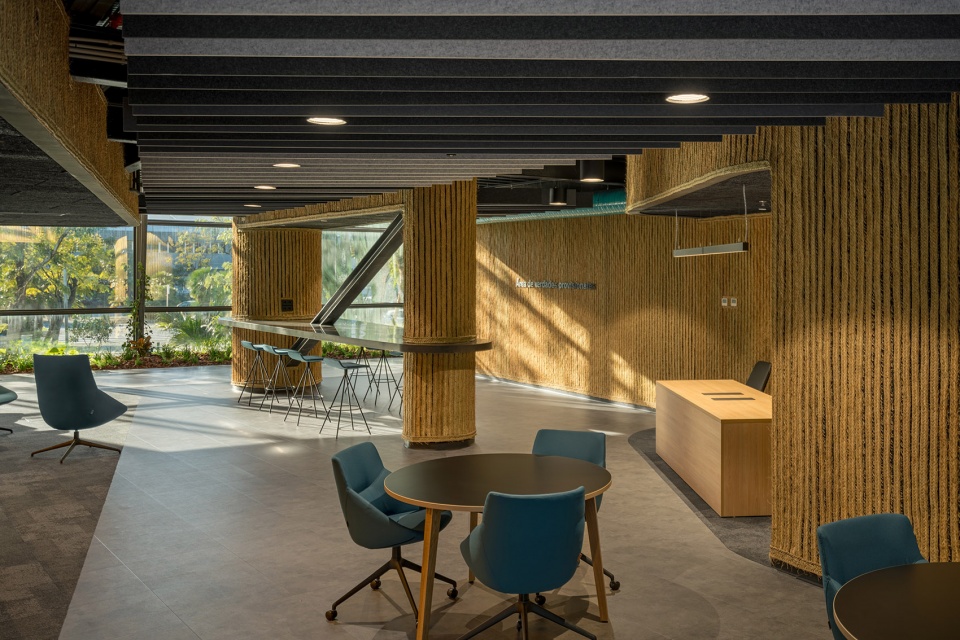
西班牙草编(Esparto)是项目身份的重要组成部分,它是西班牙建造历史中最古老的材料之一,尤其广泛存在于南部地区,特别是安达卢西亚。这种天然纤维主要由纤维素(55–65%)、木质素(25–30%)和半纤维素(10–15%)构成。这种成分组合赋予了西班牙草结构强度、柔韧性以及极佳的耐久性。传统上,它被用于制作织物、绳索、垫席与日常器具,并保留了其所有原始特性:耐用、可塑、可生物降解,并完全契合面向可持续性与自然资源再利用的设计理念。
Esparto is a key element of the project’s identity as it is one of the oldest materials in Spanish construction history. It is particularly prevalent in southern regions, especially Andalusia. This natural fibre is composed mainly of cellulose (55–65%), lignin (25–30%) and hemicellulose (10– 15%). This combination gives esparto grass structural strength, flexibility and remarkable durability over time. Traditionally used for producing fabrics, ropes, mats and utensils, esparto grass retains all its original qualities: it is hard-wearing, malleable, biodegradable and fully compatible with a design approach geared towards sustainability and the reuse of natural resources.
▼西班牙草编在室内的运用,The use of Esparto in interior space
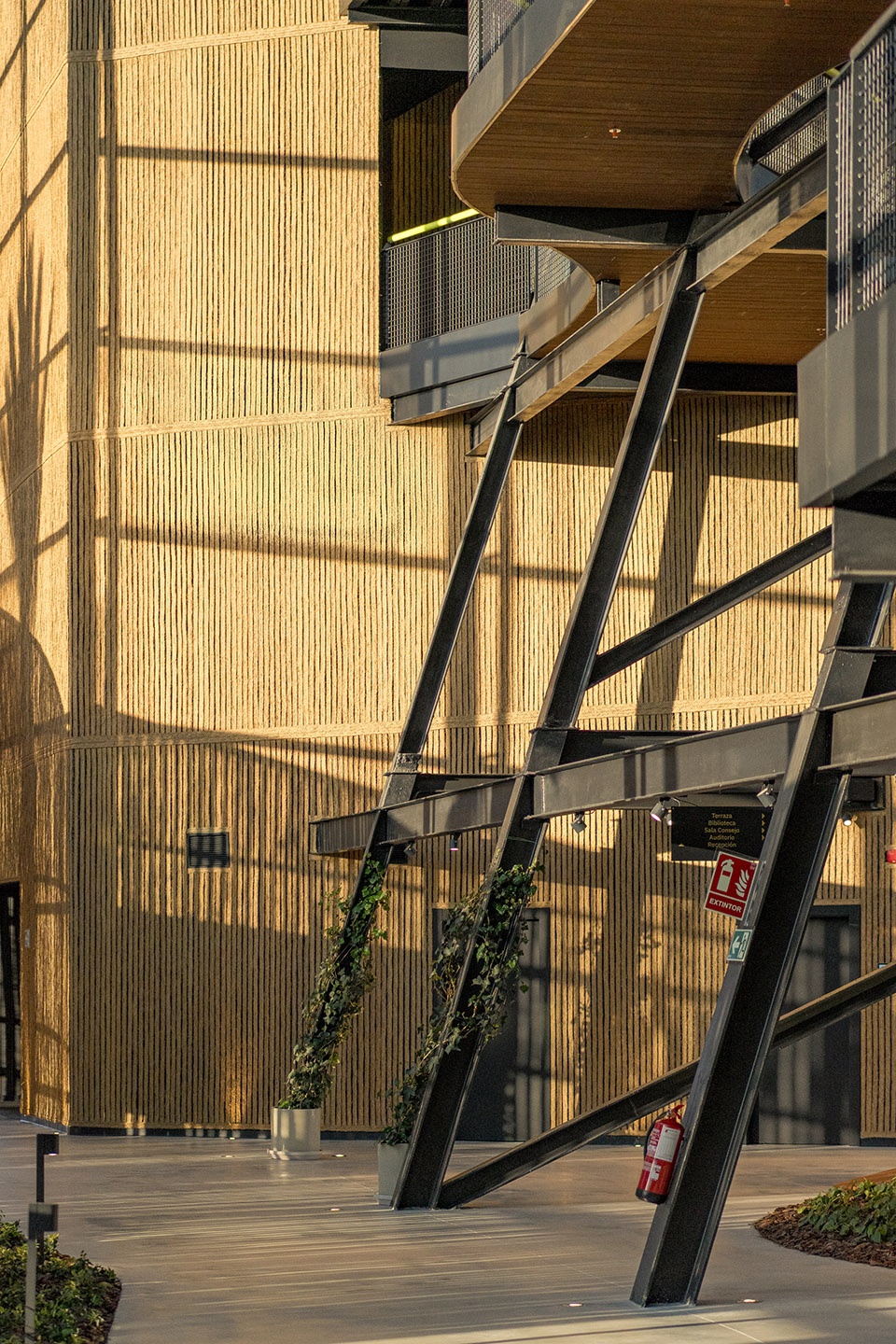
▼西班牙草编细部,The Esparto detail

选择西班牙草的价值远不止于建造层面。新的大学总部不仅是传播当代知识的空间,同时也是传承濒临消失传统手工技艺的媒介。重新使用这种材料,意味着保留那些日益稀缺的手工技能,为其寻找新的应用方式,并将其传递给下一代。与此同时,对西班牙草的使用也重新激活了一条几近消失的生产链,支持地方经济,并推动一种基于材料再利用、重视本地资源、减少高环境负荷工业链条的循环经济模式。
The choice of esparto grass is valuable for reasons that go beyond purely constructional considerations. The new university headquarters is not just a space for disseminating contemporary knowledge; it also serves as a means of transmitting traditional craft skills that are in danger of disappearing. Using this material again means preserving increasingly rare manual skills, finding new ways to use them and passing them on to new generations. At the same time, using esparto grass reactivates an almost extinct production chain, supporting local economies and promoting a circular economy model based on reusing materials, valuing local resources, and reducing industrial chains with a high environmental impact.
▼西班牙草编在室内的运用,The use of Esparto in interior space
遮阳系统与环境舒适性Sun protection and environmental comfort.
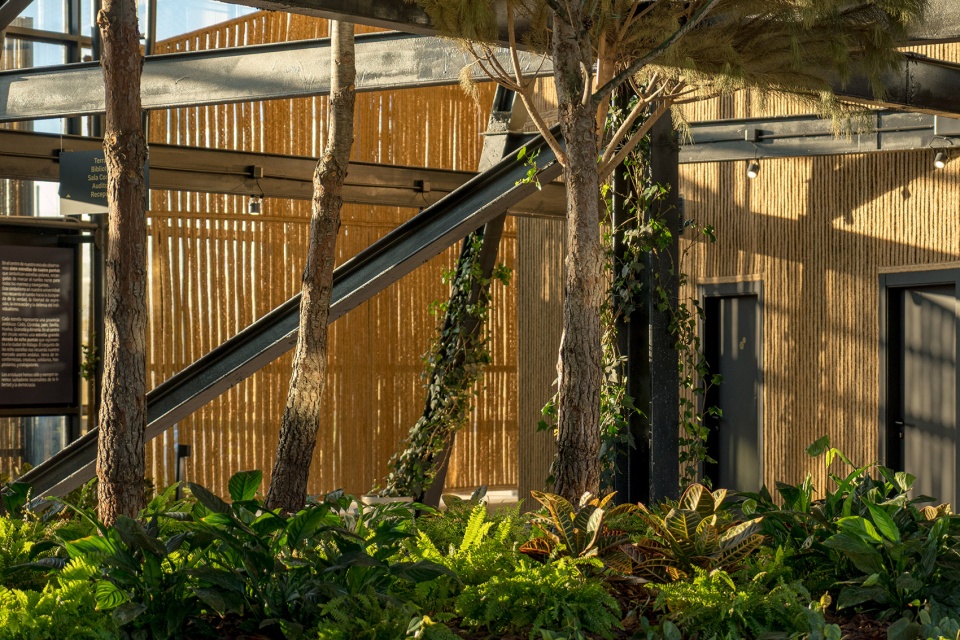
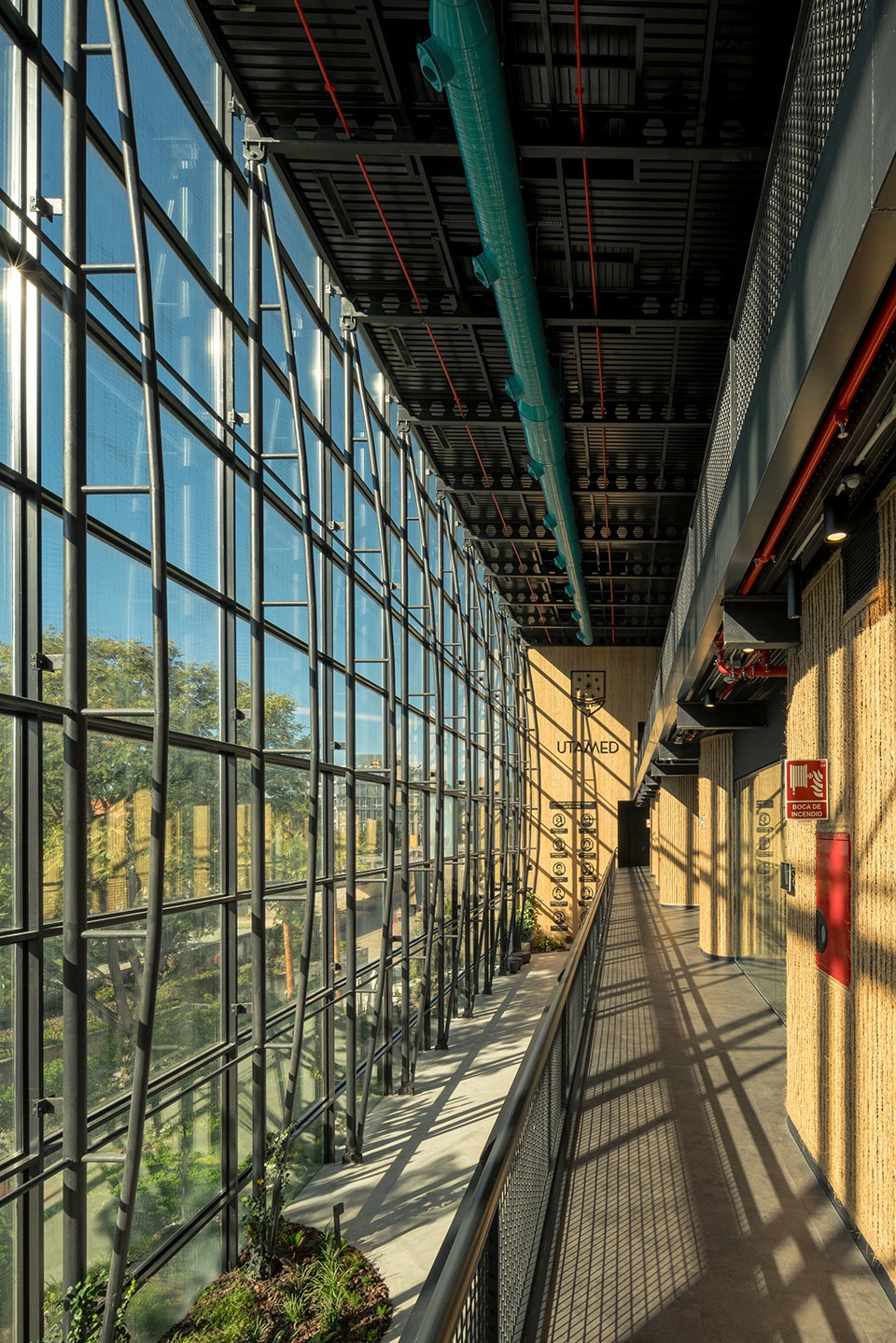
尤其是在受太阳辐射最强烈的南立面与西立面,草编格栅在保护玻璃围护结构方面发挥了关键作用。它们能够减少40%至60%的直射辐射,并使室内温度降低约4至5摄氏度。
Especially on the south and west façades, which are most exposed to radiation, the lattices play a fundamental role in protecting the glazed enclosure. This is because they reduce direct radiation by between 40% and 60%, while lowering the interior temperature by between 4 and 5 °C.
▼草编格栅在保护玻璃围护结构方面发挥了关键作用,the lattices play a fundamental role in protecting the glazed enclosure
▼草编格栅在保护玻璃围护结构方面发挥了关键作用,
the lattices play a fundamental role in protecting the glazed enclosure
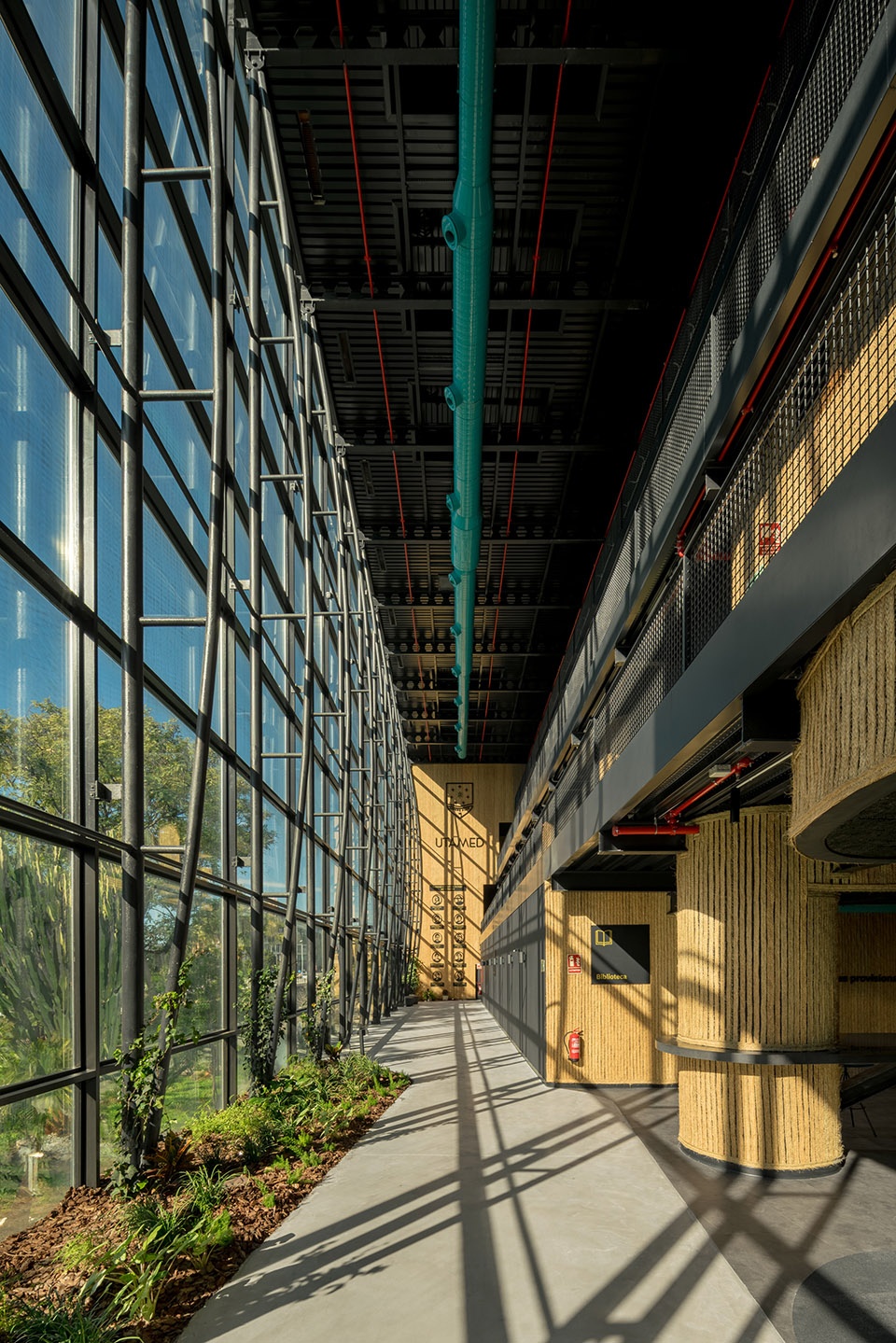
遮阳屏与立面之间形成了一层自然通风的空气腔体,可持续促进空气流动,减少辐射热传递,并显著提升建筑整体热工性能。由此,这一被动式微气候控制系统将植被的使用与项目中的交叉通风策略相结合,共同提升建筑环境品质。
The space between the screens and the façade creates a naturally ventilated air chamber that promotes continuous airflow, reduces heat transfer by radiation, and significantly improves the building’s overall thermal performance. Thus, the passive microclimate control system integrates the use of vegetation with the cross ventilation provided for in the project.
▼一层平面图(现状),ground floor plan- current state
▼一层平面图(预估状态),ground floor plan-projected state
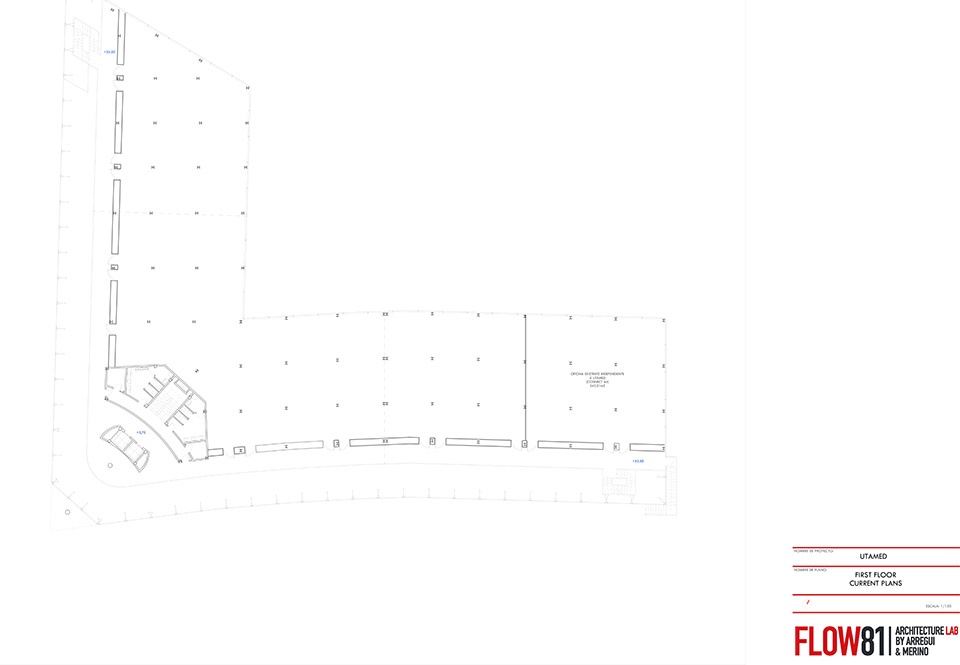
▼二层平面图(现状),first floor plan- current state
▼二层平面图(预估状态),first floor plan- projected state
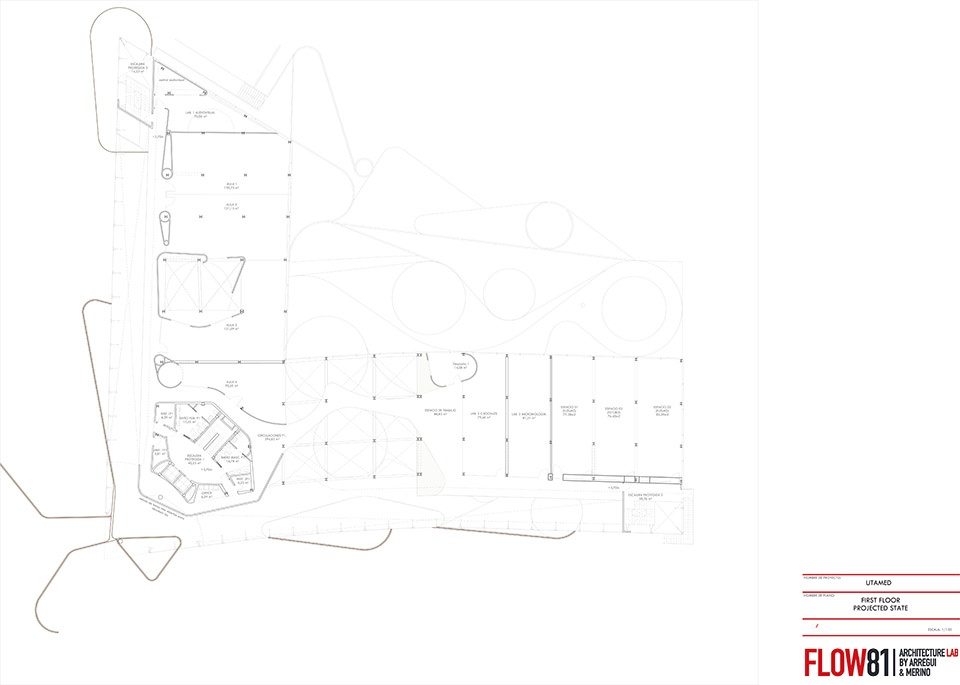
▼三层平面图(现状),second floor-current state
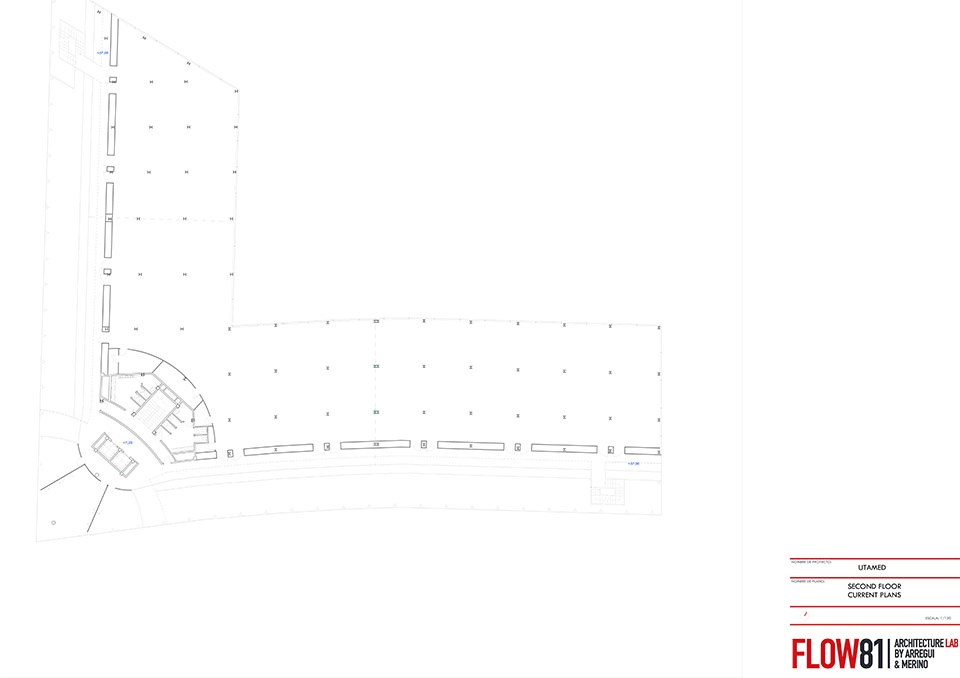
▼三层平面图(预估状态),second floor- projected state
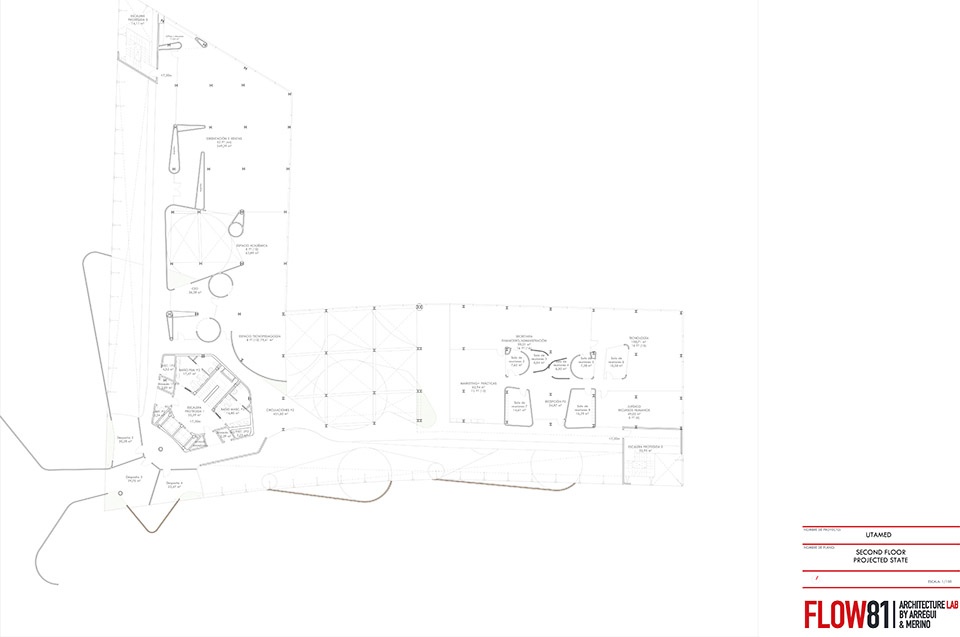
▼四层平面图(现状),third floor- current state
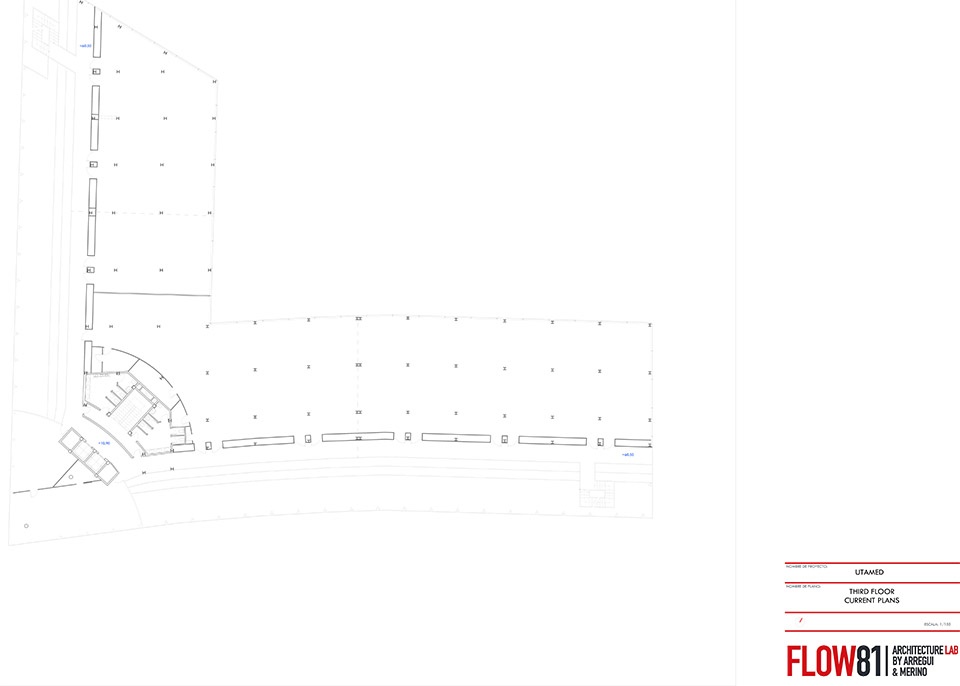
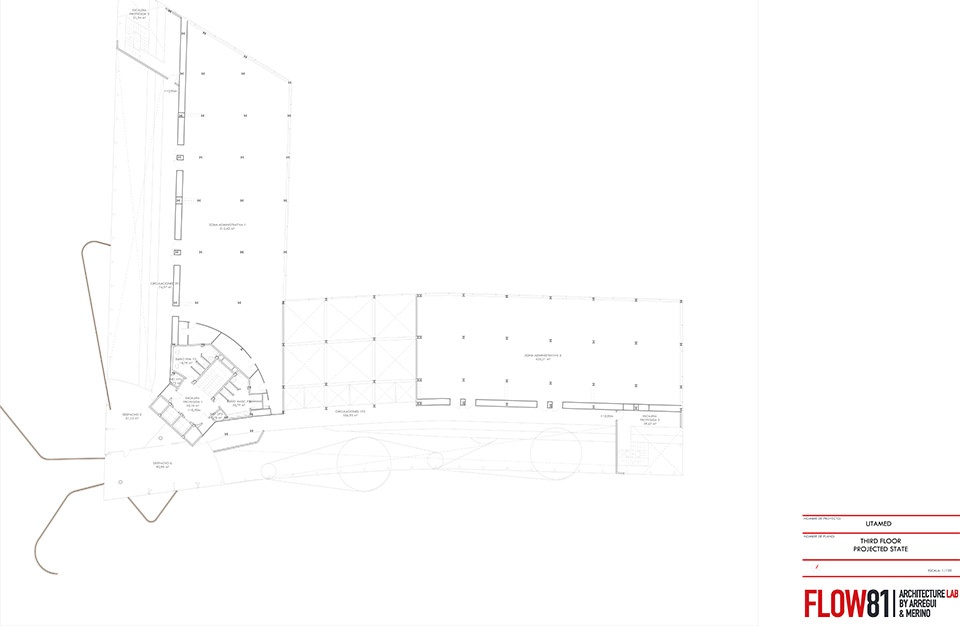
▼四层平面图(预估状态),third floor- projected state
Type of intervention: renovation and conversion into a university campus.
Surface area: 7,000 m².
Location: Malaga, Spain.
Start date: January 2025 Completion time: 8 months
Completion date: August 2025
Construction company: Revestimientos Ruiz Sl
Budget: €742/m² total €5,200,000
Photo credits: Fernando Gómez Loveladrillo