铁力士塔,瑞士 / Herzog & de Meuron
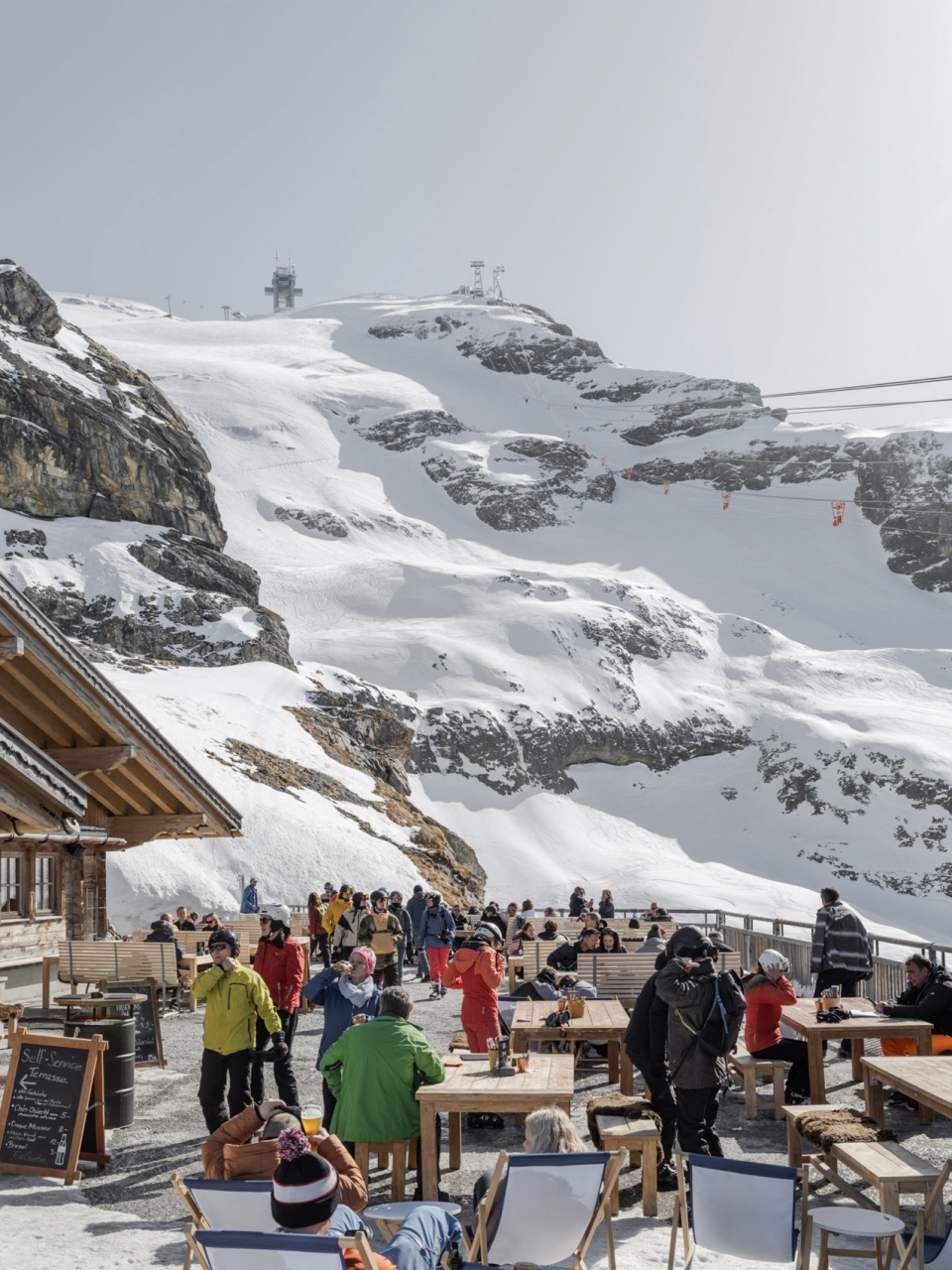
海拔超过3000米的铁力士峰(Titlis)是瑞士最著名的高山旅游目的地之一,每年吸引来自世界各地的运动爱好者和观光游客。其山顶可俯瞰壮丽的360度全景:南侧是冰川景观,北侧则是广阔的瑞士高原。凭借其位于恩格尔贝格(Engelberg)上方、交通便捷的中心位置,以及邻近卢塞恩(Lucerne)的区位优势,铁力士峰成为瑞士游客量最高的旅游目的地之一。1967年,首条通往小铁力士峰(Klein Titlis)的缆车正式开通,终点距离险峻山顶仅约200余米。这一里程碑事件开启了当地旅游基础设施持续扩建的发展历程。如今,铁力士峰每年接待约110万名游客,其中约四分之一为传统冬季运动爱好者,其余大部分则是前来体验高山景观的国际游客。数十年来,这里逐渐形成了完善而多样的旅游设施体系,包括餐厅、商店、冰川洞穴、悬索桥等多种旅游项目。
At over 3,000 meters above sea level, Titlis is one of Switzerland’s best-known mountain destinations, attracting sports enthusiasts and sightseers from around the world. Its peak offers an impressive 360-degree panorama, with the glacial landscape to the south and the Swiss Plateau to the north. Thanks to its central, easily accessible position above Engelberg and its proximity to Lucerne, Titlis is one of the most visited destinations in the country. The opening of the first cableway to Klein Titlis in 1967, just over 200 meters below the rugged summit, marked the beginning of a continuous expansion of the existing infrastructure. Today, around 1.1 million people visit Titlis each year, roughly a quarter of them traditional winter-sports guests. The majority are international travelers who come to experience the mountain and its landscape. Over the decades, this has given rise to a varied tourist infrastructure, including restaurants, shops, a glacier cave, and a suspension bridge, amongst other attractions.
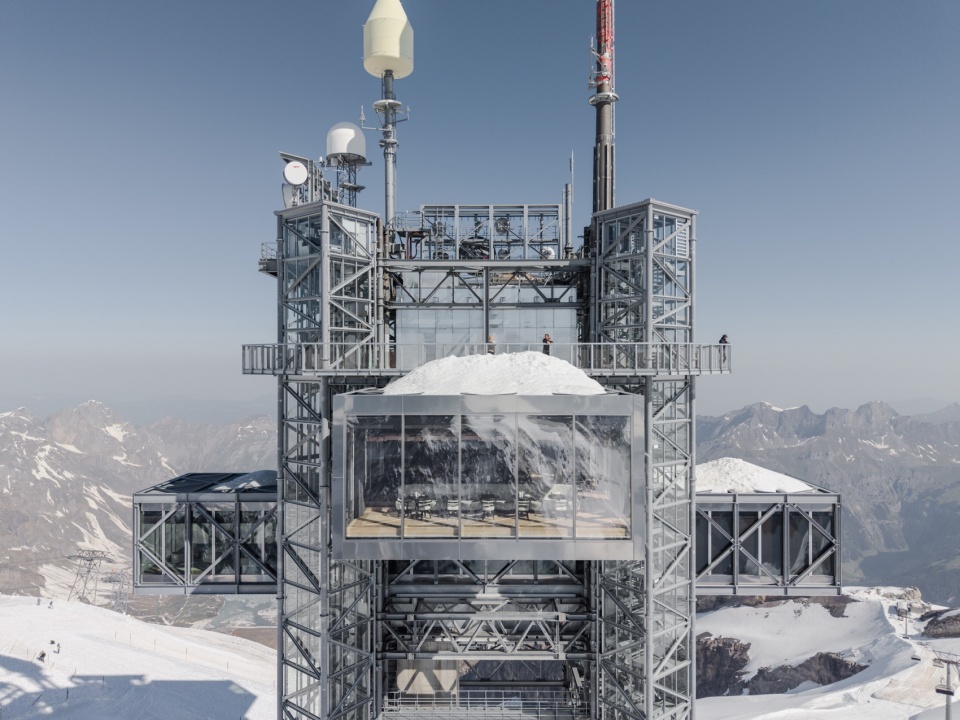
▼雪地景观中的地标建筑,Landmark structure within the snowy landscape
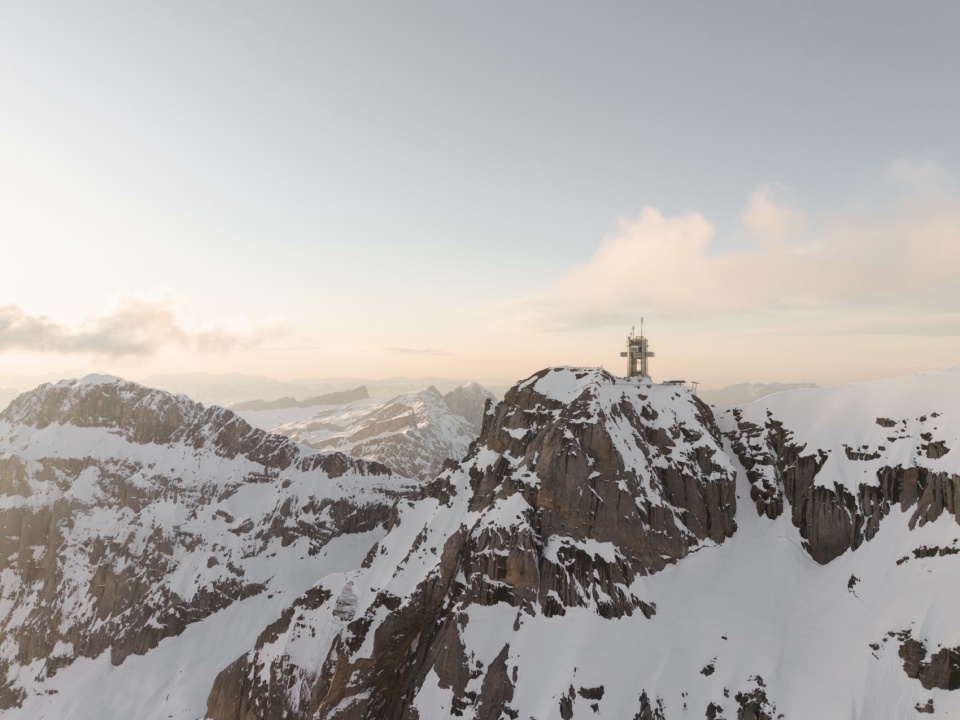
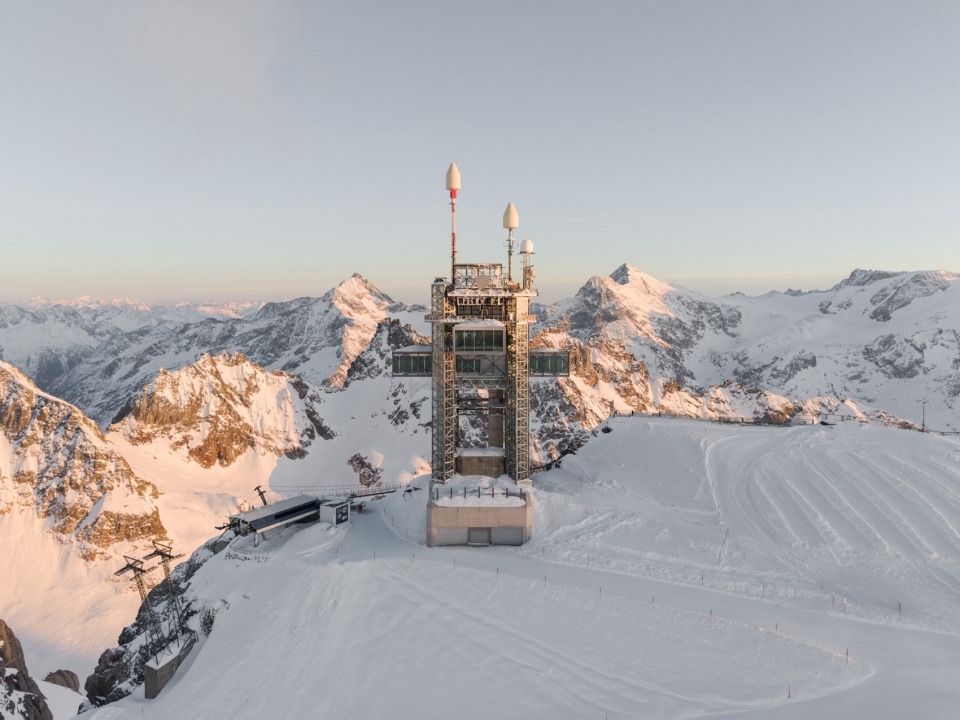
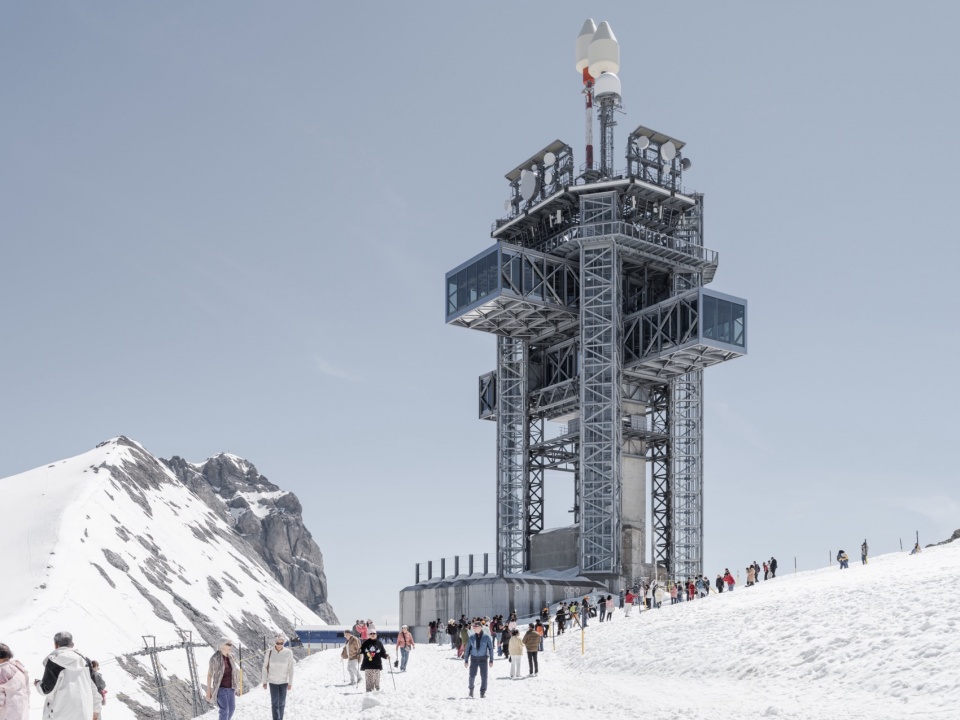
▼矗立于山脊的钢结构塔楼,Steel tower rising above the ridge
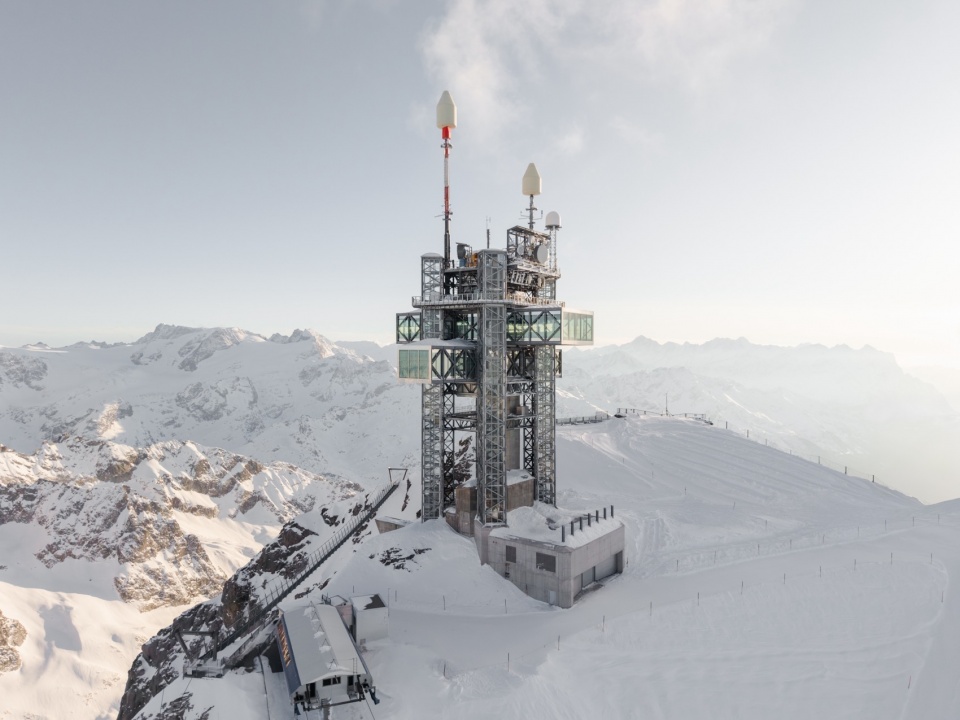
然而,这一自发演化形成的综合体如今已达到发展极限。历次扩建不断叠加,使山顶站逐渐演变为一个复杂而臃肿的系统,已无法满足当下对容量、导向和游客流线组织的需求。与此同时,铁力士缆车公司(Titlis Bergbahnen)收购了瑞士军方于20世纪80年代建造的天线塔,该设施还包含一条地下隧道,可直接连接山顶站与下方的冰川洞穴。这座塔楼成为我们重新思考旅游基础设施体系的起点,并促使我们从单纯的功能性建筑转向一个整体化的建筑设计概念,以回应当代需求。
This organically evolved ensemble has reached its limit. Successive additions have resulted in a complex mountain station that no longer meets today’s requirements for capacity, orientation, and visitor flow. The acquisition by Titlis Bergbahnen of the 1980s antenna tower from the Swiss Army added a further element, including an underground tunnel connecting the tower directly to the mountain station and glacier cave below. This tower was our starting point for rethinking the tourist infrastructure and designing it for today’s needs: moving beyond purely functional structures towards an integrated architectural concept.
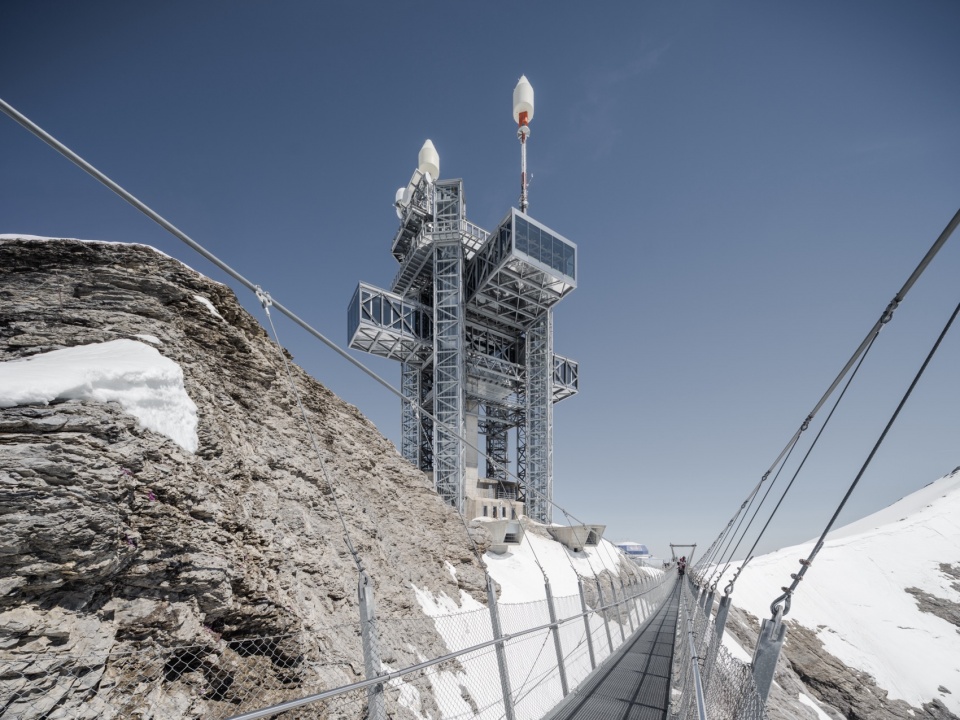
▼观景设施与游客动线,Observation facilities and visitor circulation
总体概念 Overall Concept
2017年,赫尔佐格与德梅隆(Herzog & de Meuron)受委托为整个山顶区域制定总体规划,并更新山顶站,同时将天线塔改造为游客体验体系的一部分。方案的核心理念之一是在尊重资源的前提下利用现有建筑结构。包括塔楼、地下隧道以及缆车站在内的重要设施均被保留,并整合进新的整体系统之中。针对现有山顶站,特别是其承重结构的评估表明,仅通过改造已无法从根本上解决流线组织、空间导向以及容量不足等问题。因此,虽然部分建筑元素将被保留再利用,但现有建筑的一部分仍将被新建体量所取代,新建筑将包覆现有缆车站。与此同时,通过智能化建筑技术,塔楼、山顶站及所有相关建筑的能源消耗都将得到显著降低。
In 2017, Herzog & de Meuron was commissioned to renew the mountain station as part of a masterplan for the entire summit, and to transform the antenna tower into part of the visitor experience. A central element of the concept is the resource-conscious development of the existing structures. Elements including the tower, the tunnel, and the cableway station are retained and integrated into the new overall system. An assessment of the existing mountain station, particularly its load-bearing structure, showed that a conversion of this building would not be able to sufficiently resolve the fundamental issues of circulation, orientation, and capacity. While some elements of the mountain station are being kept for reuse, a portion of the existing structure will be replaced by a new building that encloses the existing cableway station. The energy consumption of all buildings, including the tower and mountain station, will be significantly reduced through intelligent building technology.
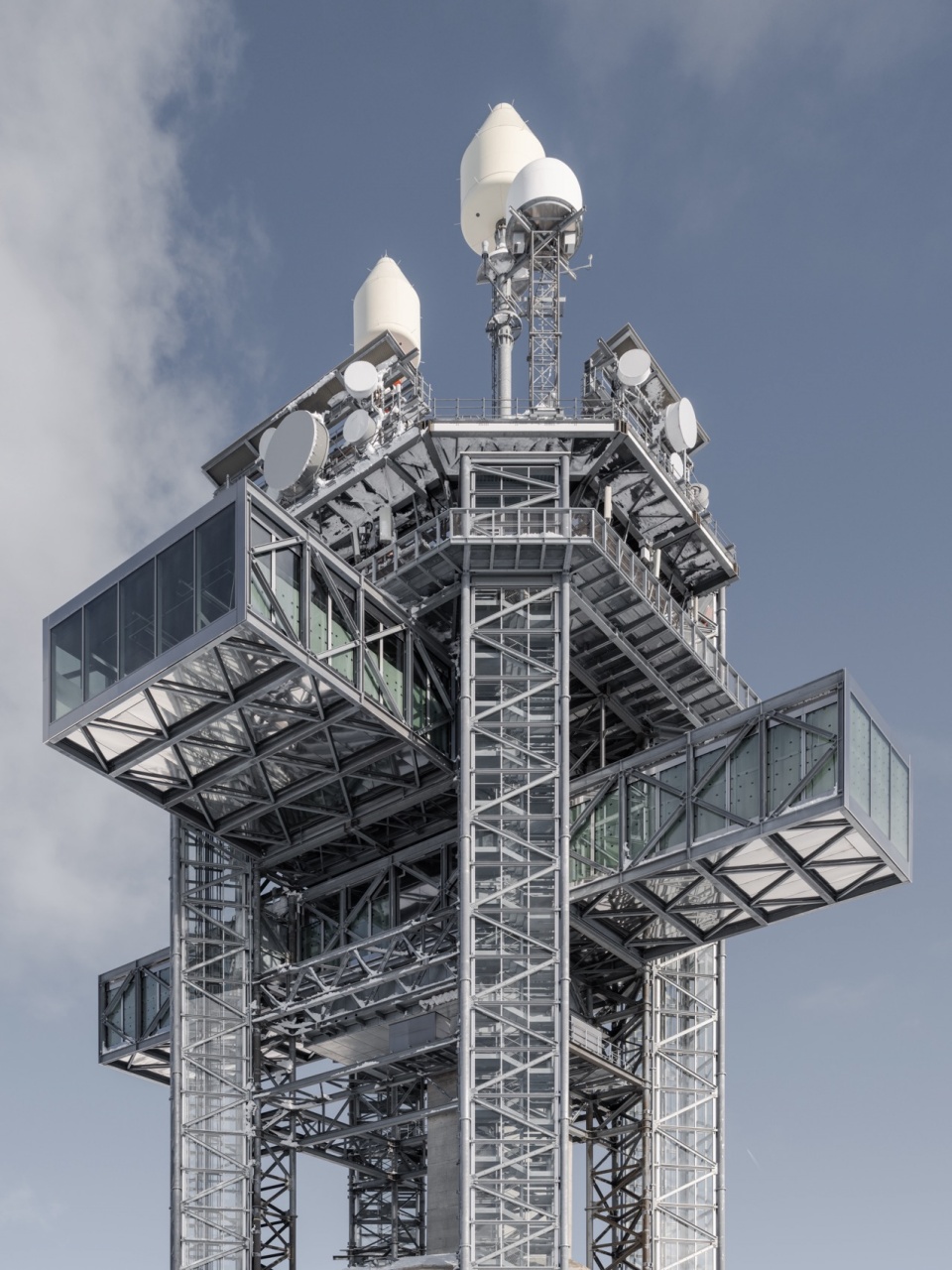
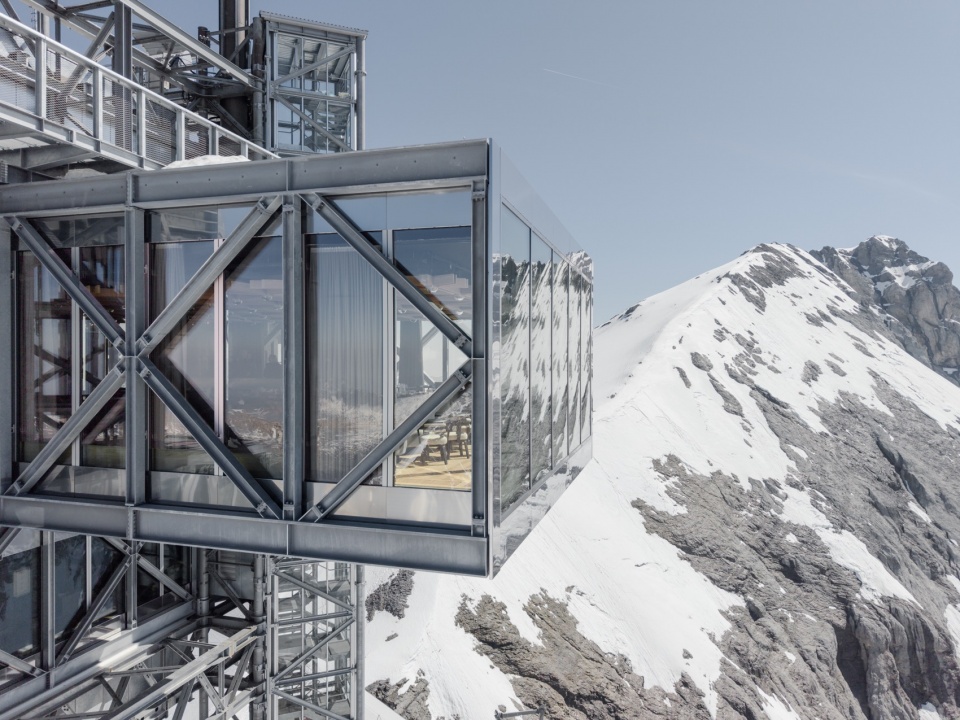
▼悬挑观景空间与塔顶结构,Cantilevered viewing volumes and tower structure
▼游客停留与观景场景,Visitor gathering and viewing area
塔楼:在既有基础上的再建造 The Tower – Building on the Built
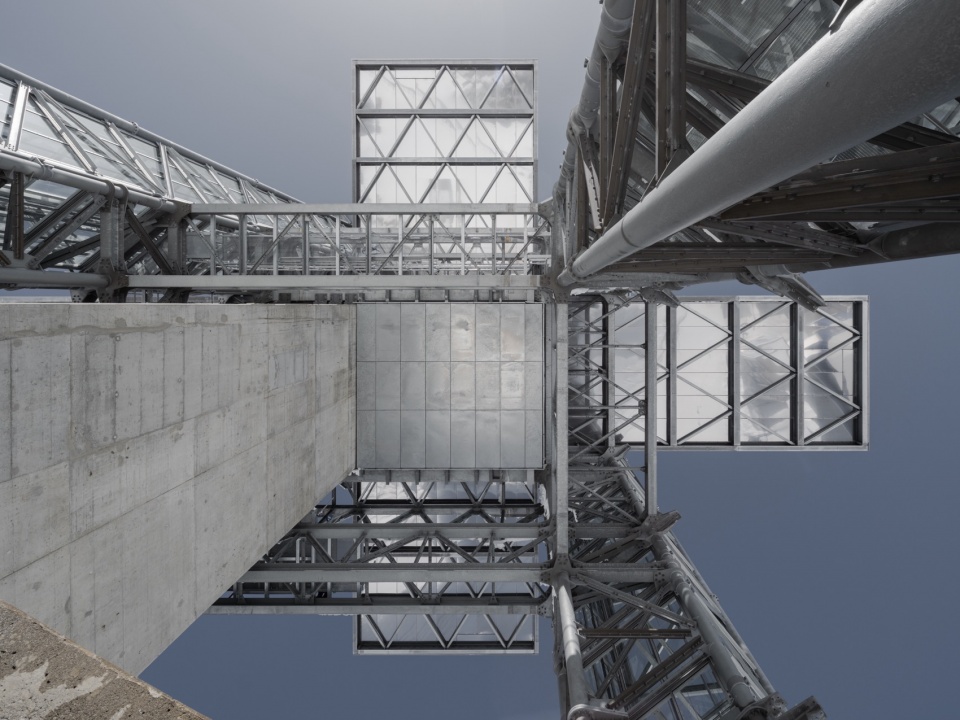
高56米的铁力士天线塔建于20世纪80年代中期,最初作为通信基础设施的一部分而建。由于其位于海拔3000多米的极端环境中,塔楼通过混凝土结构深深锚固于石灰岩山体之中,并采用近乎纤细轻盈的钢结构框架建造而成。设计以既有钢结构为基础,通过增加两个水平体量和四座垂直交通塔,对原有结构进行延展与再发展。外露式承重体系使两个新增体量内部保持完全无柱空间。与此同时,原有混凝土基座被扩建,形成集入口、导览空间、技术用房以及压雪车车库于一体的首层区域。
▼设计策略,Design strategy
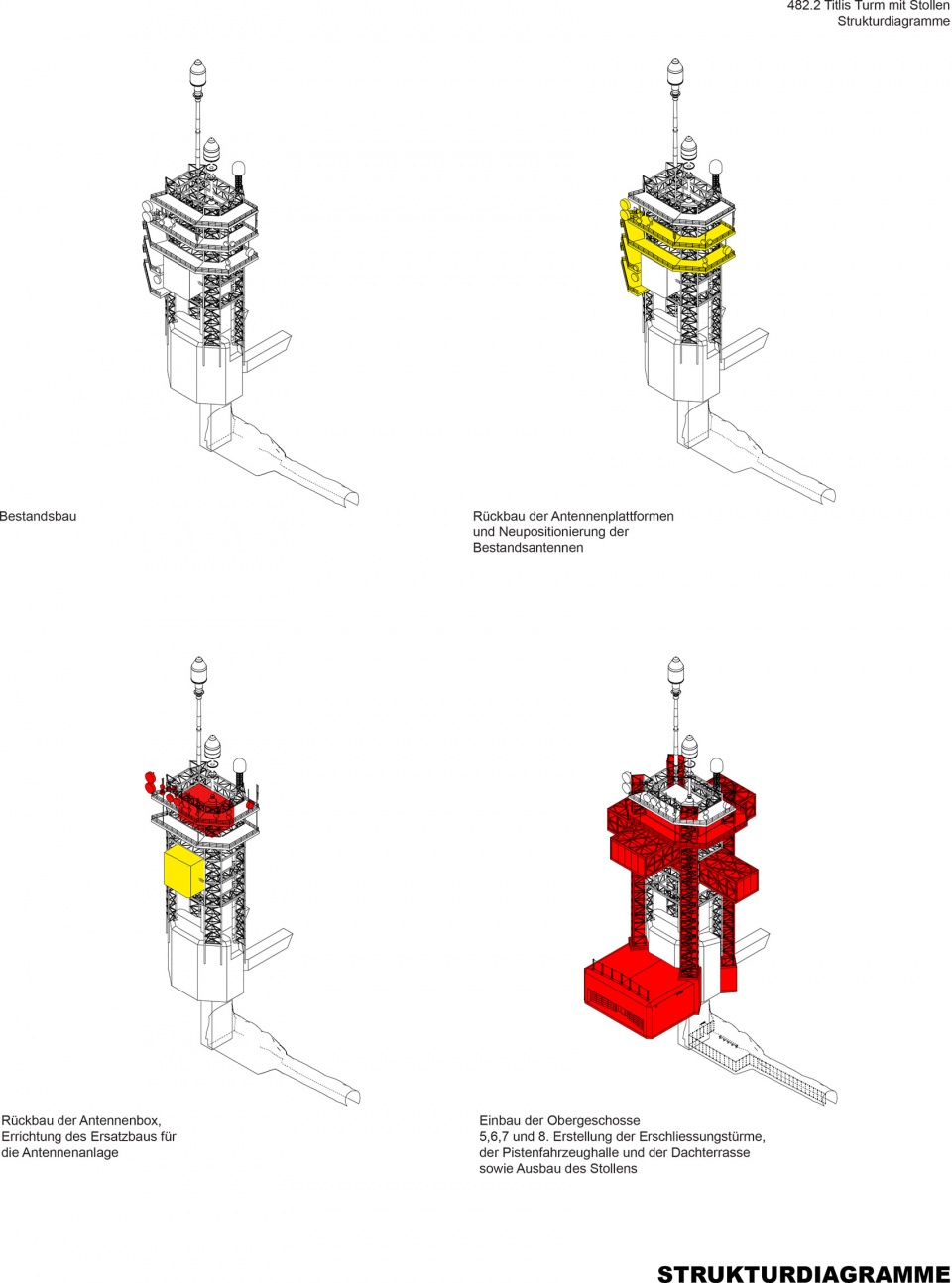
The 56-meter-high Titlis antenna tower was built in the mid-1980s as an element of telecommunications infrastructure. Due to its exposed location over 3,000 meters above sea level, the tower is anchored deep into the limestone mountain by a concrete structure and built with an almost filigree steel framework. The tower is defined by this existing steel structure, which we extend and develop with the addition of two horizontal volumes and four vertical circulation towers. The external load-bearing structure allows the interiors of the two new volumes to remain entirely column-free. The existing concrete base has been enlarged to create an entrance and orientation level, bringing together visitor access, technical areas, and a garage for trail grooming vehicles.
▼塔楼底部仰视,Looking up from the bottom of the tower
▼钢框架中的全景观舱,Panoramic viewing pods within the steel frame
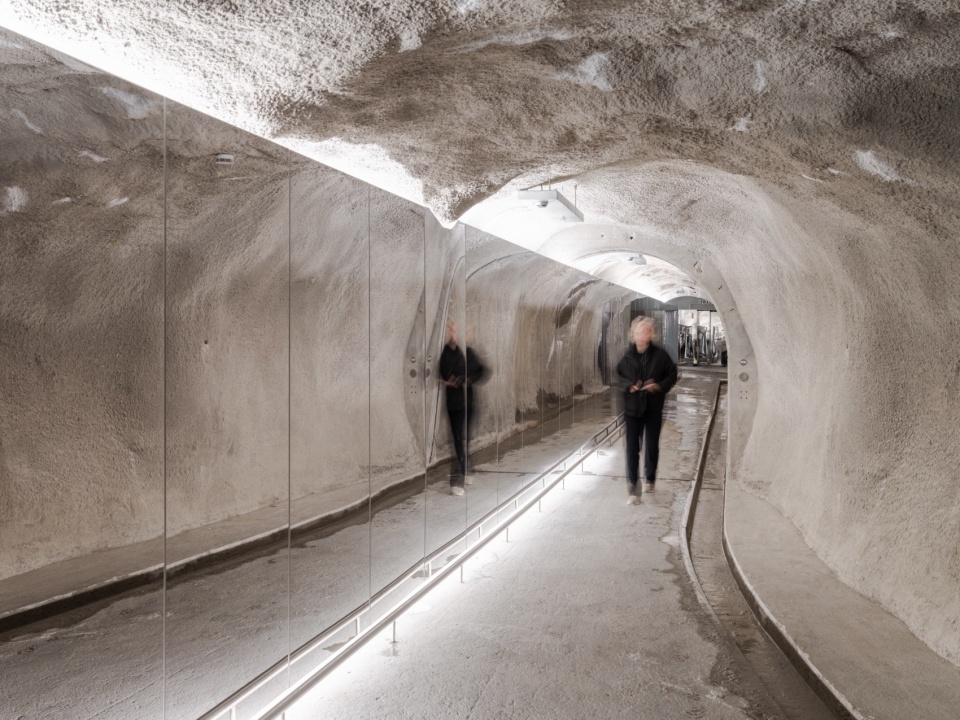
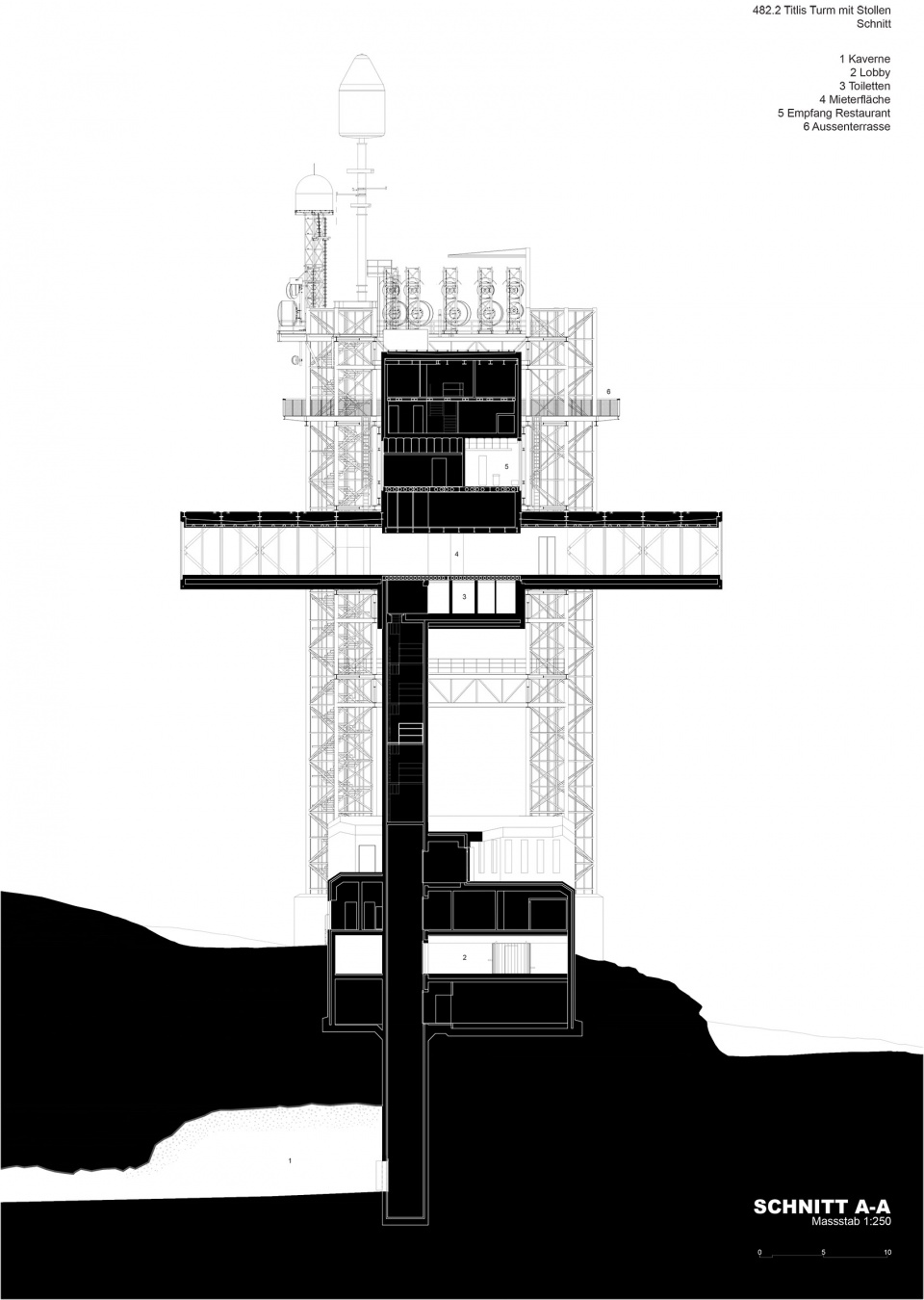
与原塔楼同期建造的地下隧道,为游客提供了一条从塔楼直达山顶站的全天候通道;同时也连接冰川洞穴,并承担技术设施之间的联系功能,犹如深藏于山体内部的基础设施“脐带”。与隧道原始粗犷的材料质感形成对比的是,一条反射不锈钢带引导游客从山顶站前往塔楼。在隧道尽端,路径进入一个洞穴般的大厅空间。嵌入钢带中的两块大型LED显示屏提供周边山地景观信息,并帮助游客在地下空间中完成方位识别。
The underground tunnel, built at the same time as the original tower, provides a direct, weather-protected connection from the tower to the mountain station; It also gives access to the glacier cave and serves as a technical link — an infrastructural umbilical cord within the rock. In contrast to the raw materiality of the tunnel, a reflective steel band guides visitors from the mountain station towards the tower. At the end of the tunnel, the path opens into a cavern-like hall. Two large-format LED screens integrated into the steel band provide information about the surrounding mountain landscape and help visitors orient themselves within the underground space.
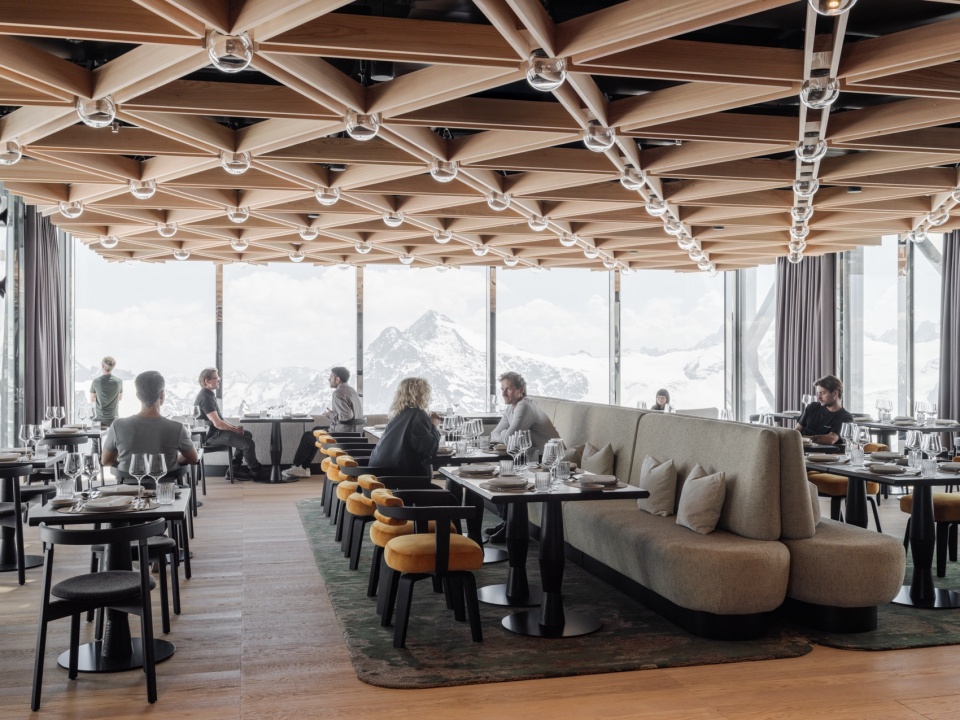
▼面向群峰的观景餐厅,Restaurant with views towards the mountain peaks
▼通往观景塔的地下通道,Underground passage leading to the observation tower
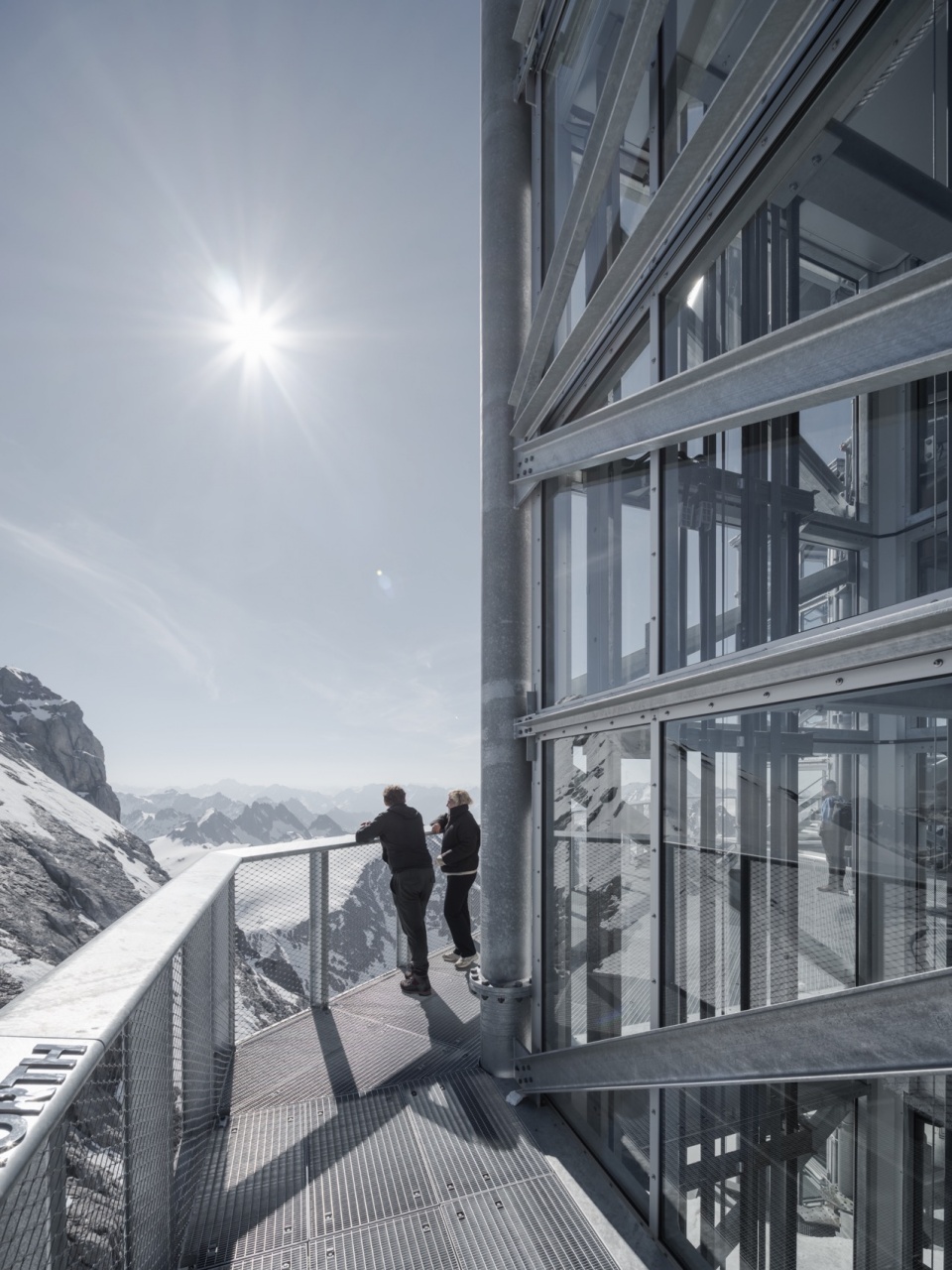
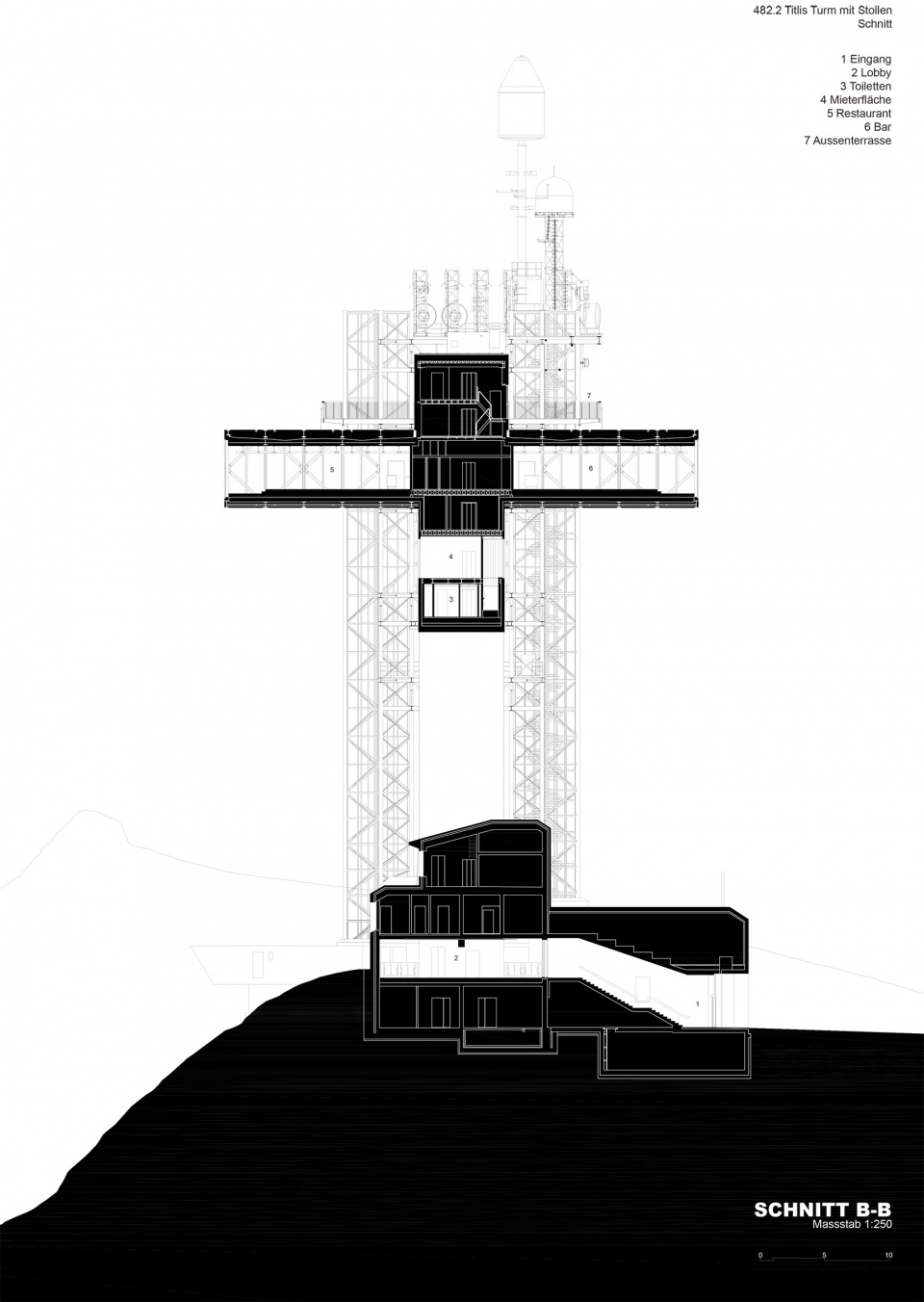
游客从塔楼基座开始,通过四座垂直交通塔向上攀升。这些交通塔设置于原有钢柱四角,与既有结构形成互补,并一直通达顶部观景平台。其中两座为疏散楼梯,另外两座则设置电梯。两个完全玻璃化的水平体量以大尺度悬挑方式向外伸展,并以十字形交叠布局构成鲜明的建筑形象,使其在远距离即可被识别。同时,建筑内部也因此获得壮观的阿尔卑斯山全景视野。下层体量设置零售空间,上层体量则容纳一间拥有140个座位的餐厅。向公众开放的观景平台位于塔楼顶部,作为整个参观体验的高潮部分,为游客提供无遮挡的360度全景视野,也使塔楼成为整个旅程中最具标志性的目的地。材料策略直接回应既有结构及场地极端气候条件,主要采用镀锌钢、不锈钢、混凝土和玻璃等材料。建筑内部则有意保留材料原本的粗粝质感,现有结构及其历史痕迹均被保留,并通过精准的介入方式加以补充。餐厅空间则形成鲜明对比:其内部完全采用木材包覆,营造出温暖而富有庇护感的氛围。
From the base, visitors ascend through the four vertical circulation towers, which complement the existing steel columns at each corner, leading all the way up to the viewing platform. Two of these steel structures serve as escape stairs, while the other two accommodate lifts. The two fully glazed horizontal volumes extend in far-reaching cantilevers and overlap in a cross-shaped arrangement, creating a striking figure visible from afar while offering impressive panoramic views of the alpine landscape from within. The lower volume contains a retail area, while the upper volume houses a 140-seat restaurant. The publicly accessible viewing platform forms the culmination of the tower, offering an unobstructed 360-degree panorama and making the tower the high point of the visitor experience. The material concept follows directly from the existing structure and the extreme climatic conditions of the site: galvanized steel, stainless steel, concrete, and glass. Inside the building, the raw materiality remains deliberately visible. Existing structures and traces are retained and complemented with precise insertions. The restaurant forms a deliberate contrast: entirely lined in wood, the interior creates a warm, sheltering atmosphere.
▼项目区位图,Site plan
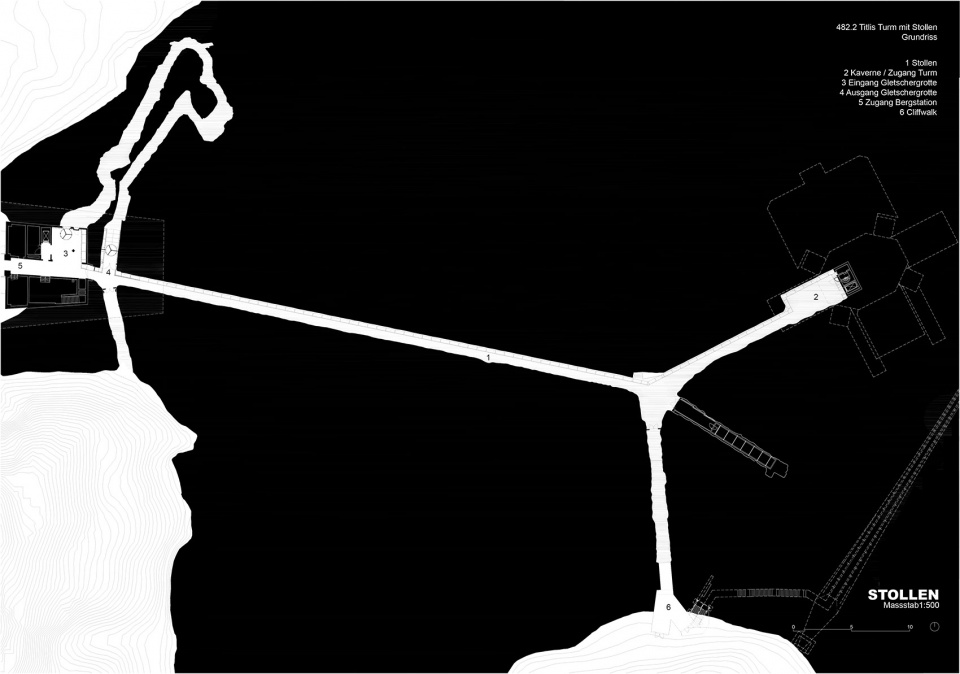
▼地下平面图,Basement floor plan
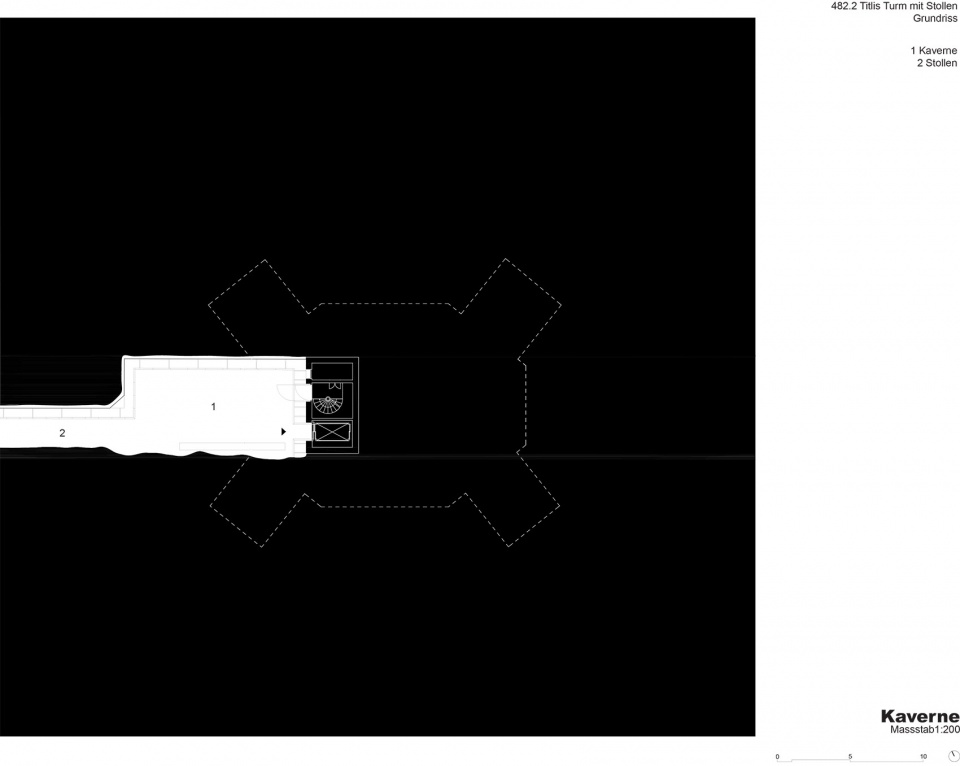
▼一、二层平面,Level 1-2 floor plan
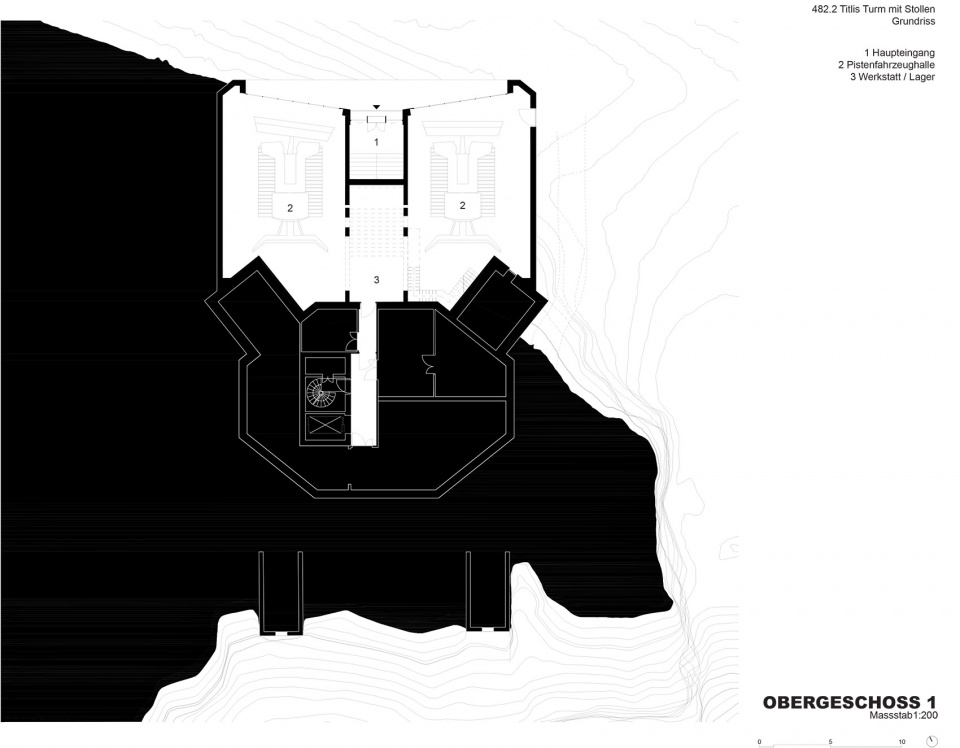
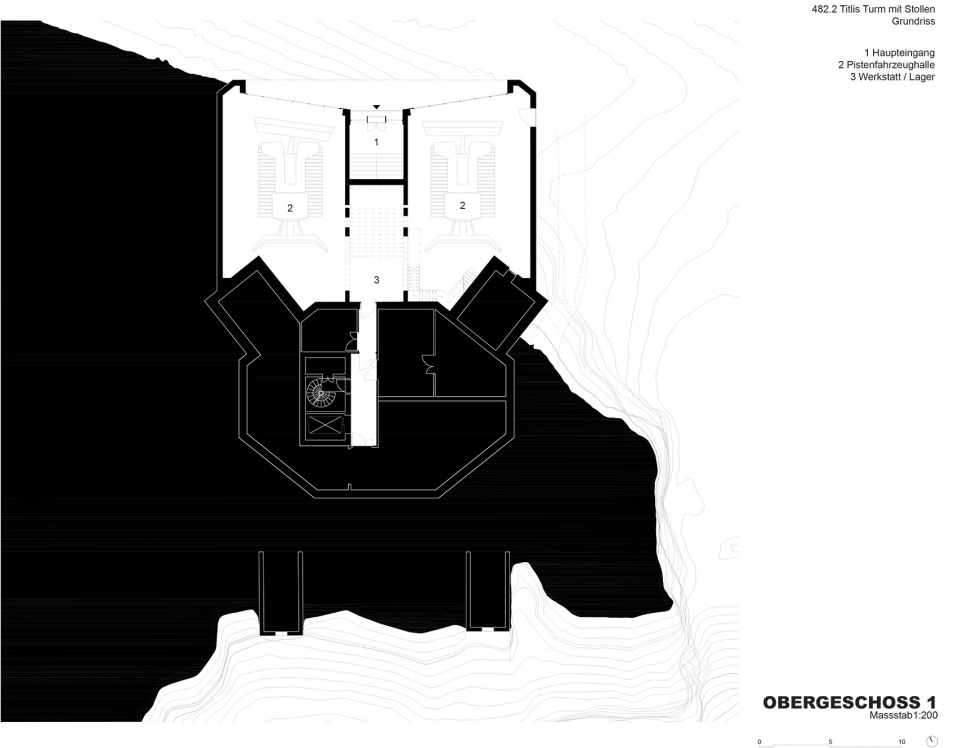
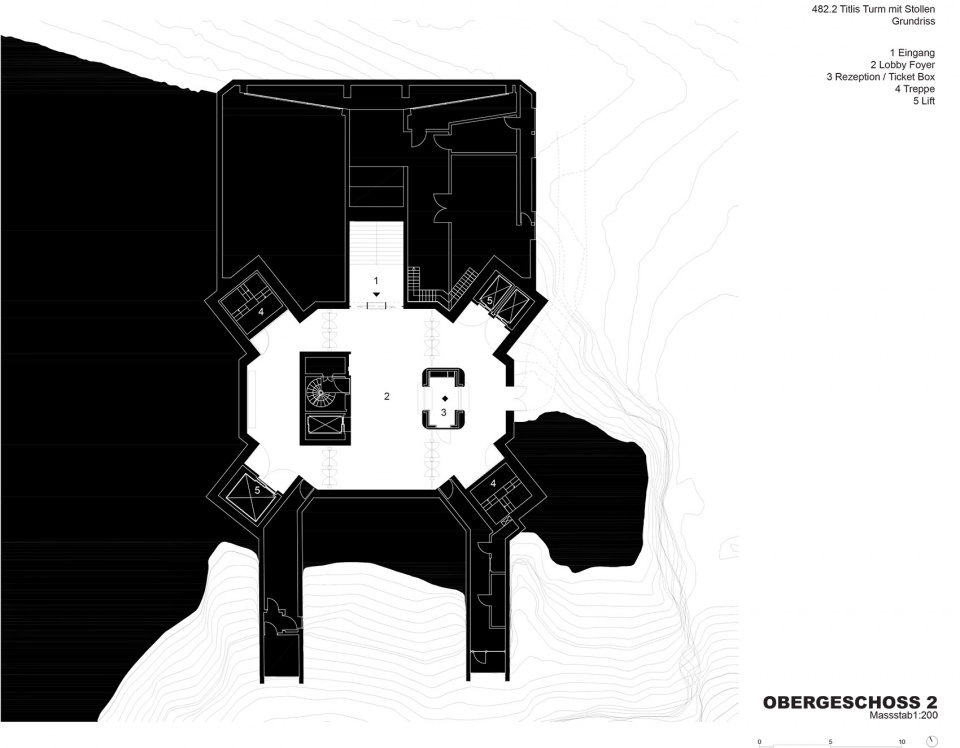
▼五、六层平面,Level 5-6 floor plan
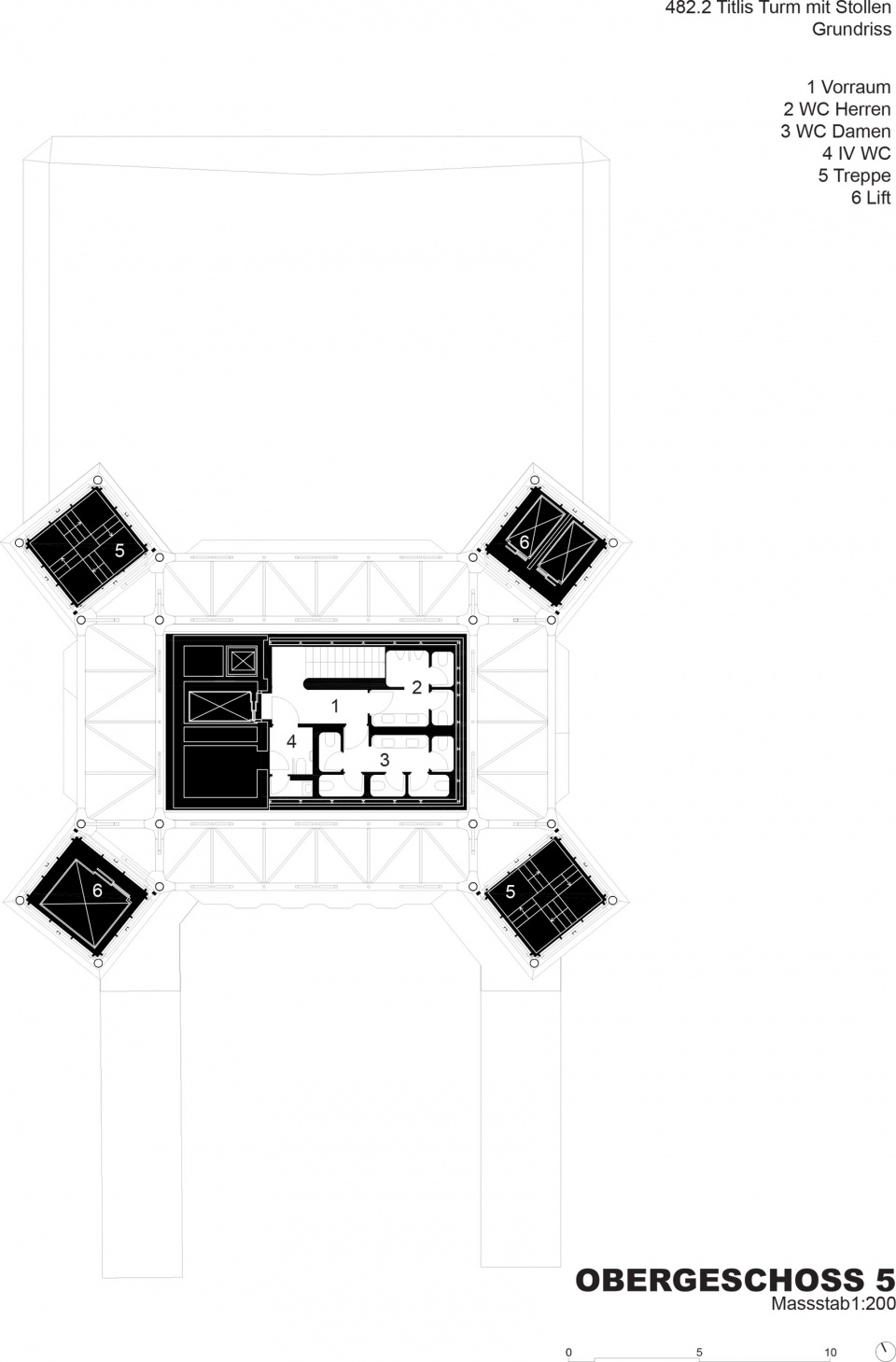
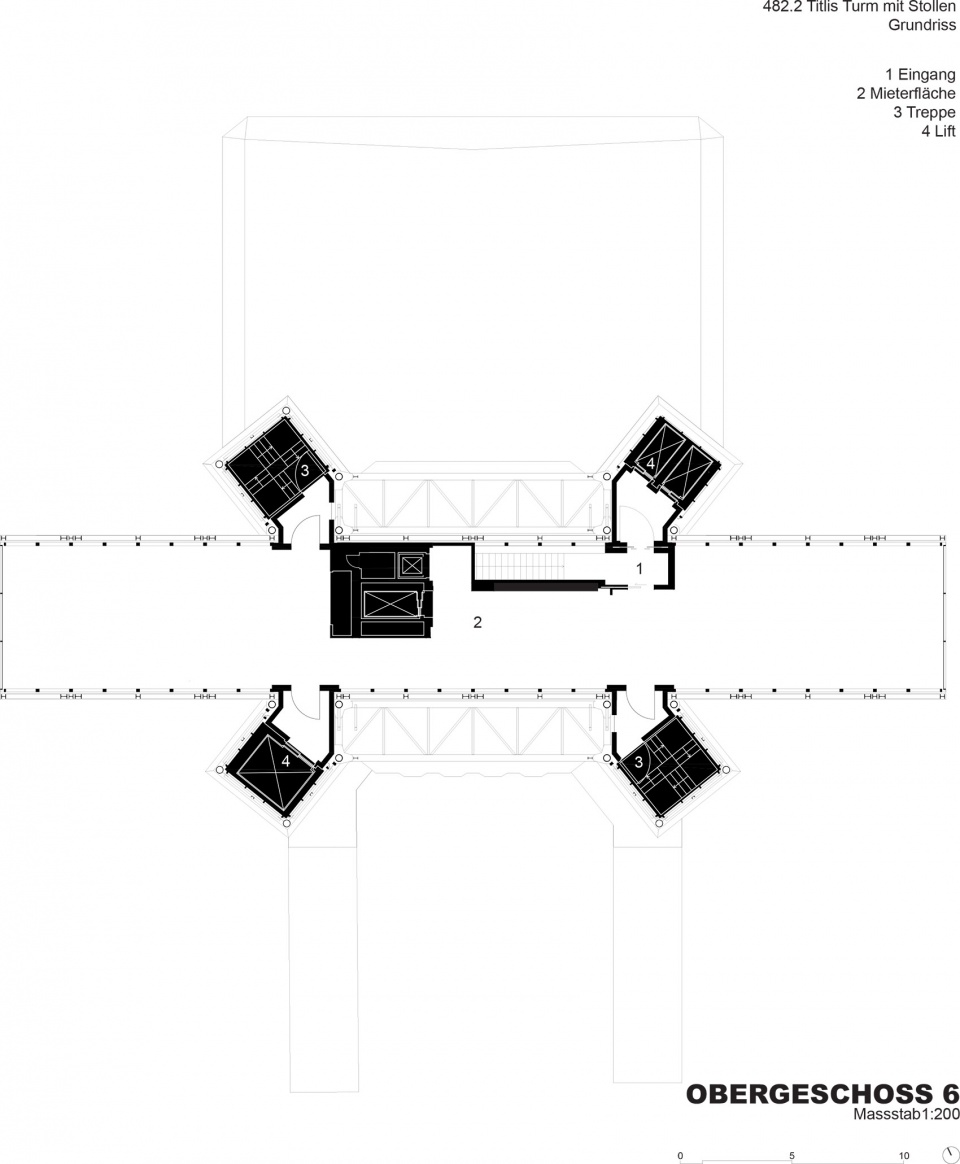
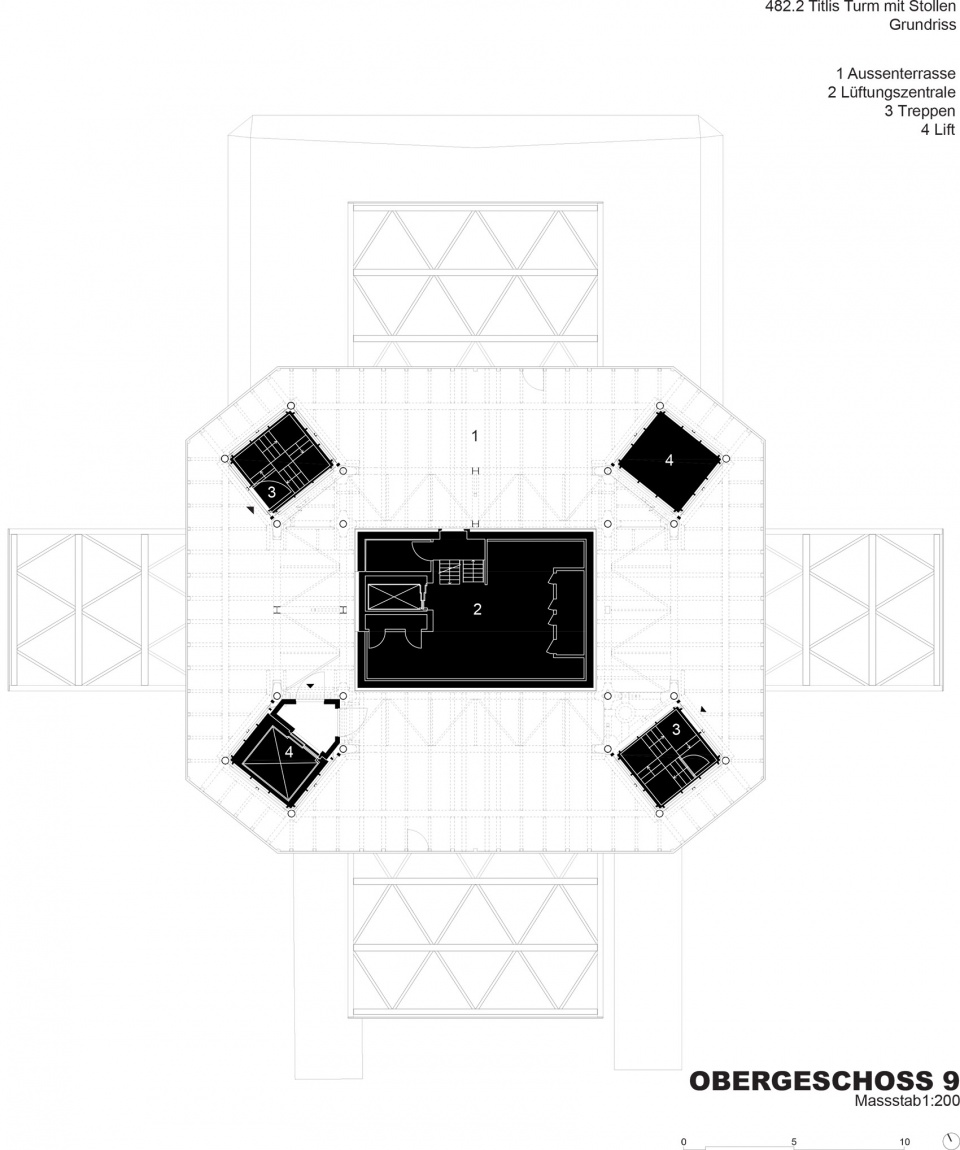
▼八、九层平面,Level 8-9 floor plan
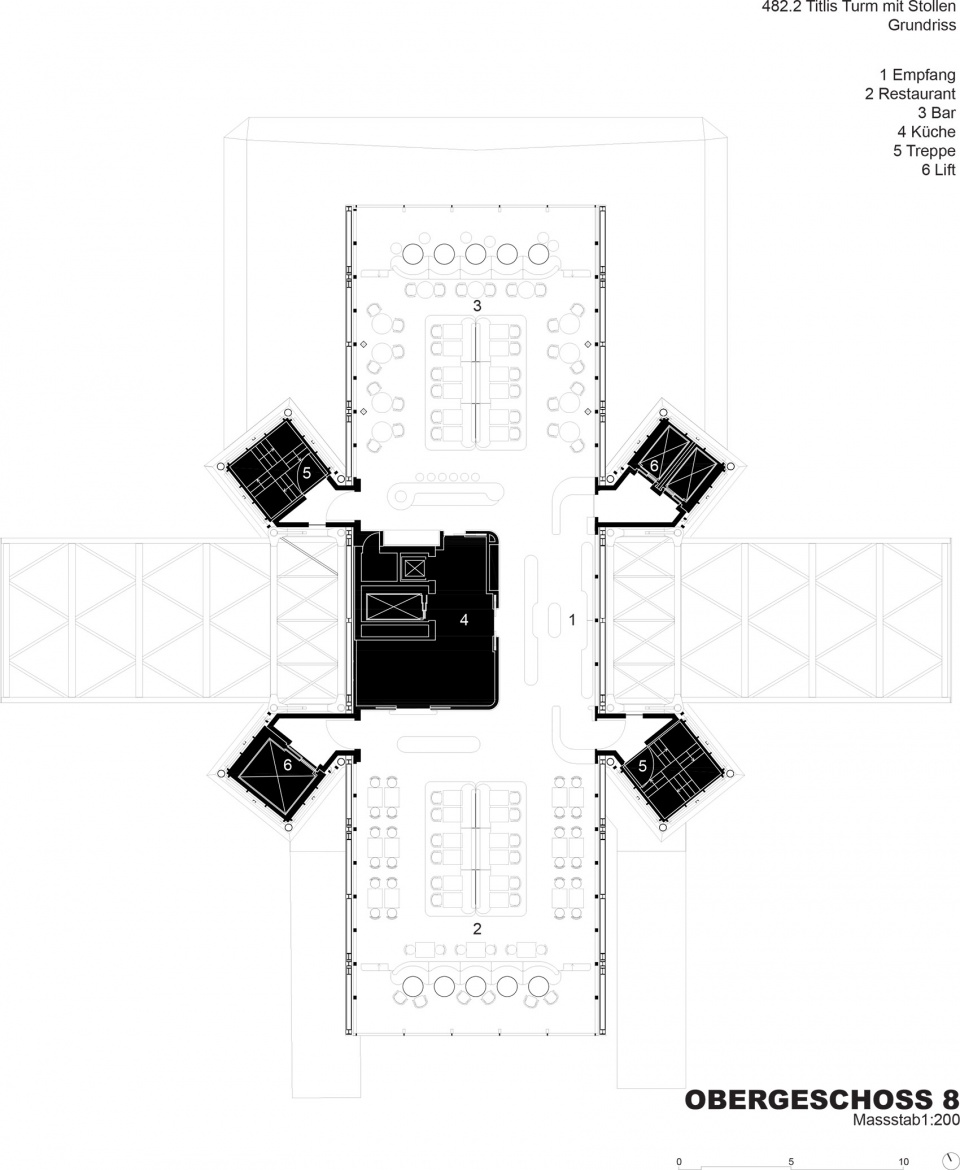
▼剖面图,Section
PROJECT:KEY DATA
Project Number: 482.2
Project Official Name: TITLIS 3020 Tower
Location: Klein Titlis, Engelberg, Switzerland
Project Phases:
Concept Study Aug 2017 – Dec 2017
Schematic Design Mar 2018 – Jun 2018
Design Development Jul 2018 – Mar 2020
Construction Documents Jan 2019 – Dec 2025
Construction Services Jun 2023 – May 2026
Milestones Construction Start 01 Jun 2023
Completion 27 May 2026
Client: Bergbahnen Engelberg-TrübseeTitlis AG, BET, CH, Engelberg, Talststation Trübsee
Client Representative:
Titlis Bergbahnen, Hotels & Gastronomie, Norbert Scholz