南方科技大学图书馆,深圳/建筑
当书不再是唯一知识传播载体的情况下,图书馆的意义也在发生改变。我们在满足图书馆的传统功能要求的同时力图挖掘图书馆与当代社会特征紧密关联的公共性。
When books are no longer the only carrier of knowledge dissemination, the significance of libraries is also changing. While meeting the traditional functional requirements of the library, we try to tap the publicity closely related to the characteristics of contemporary society.
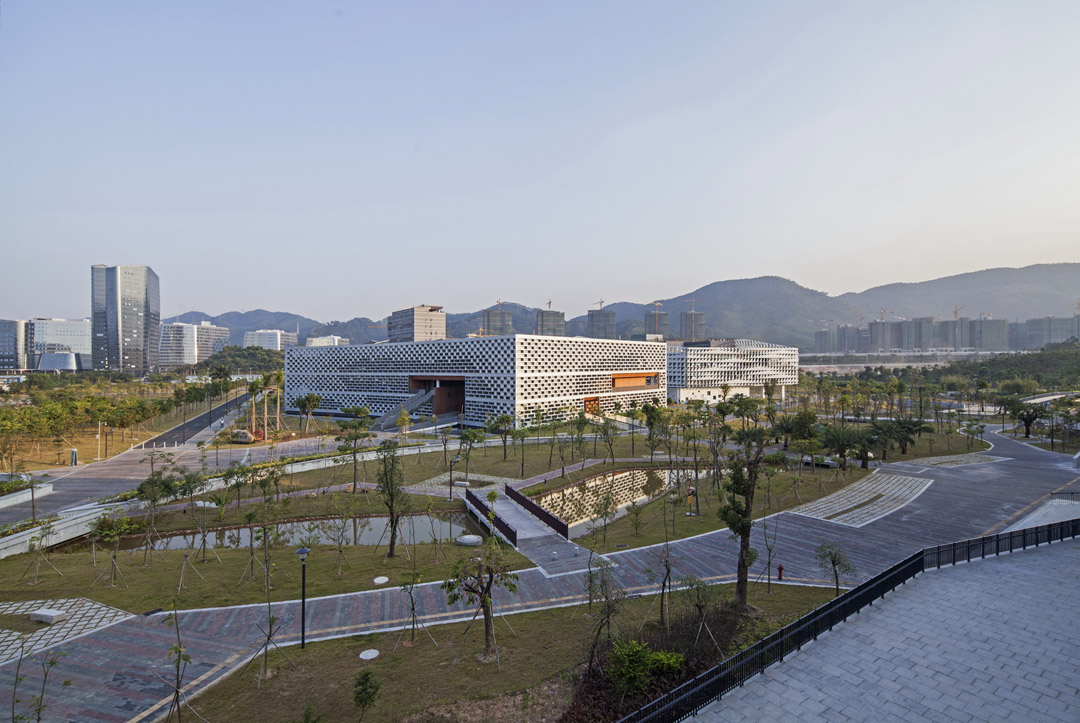
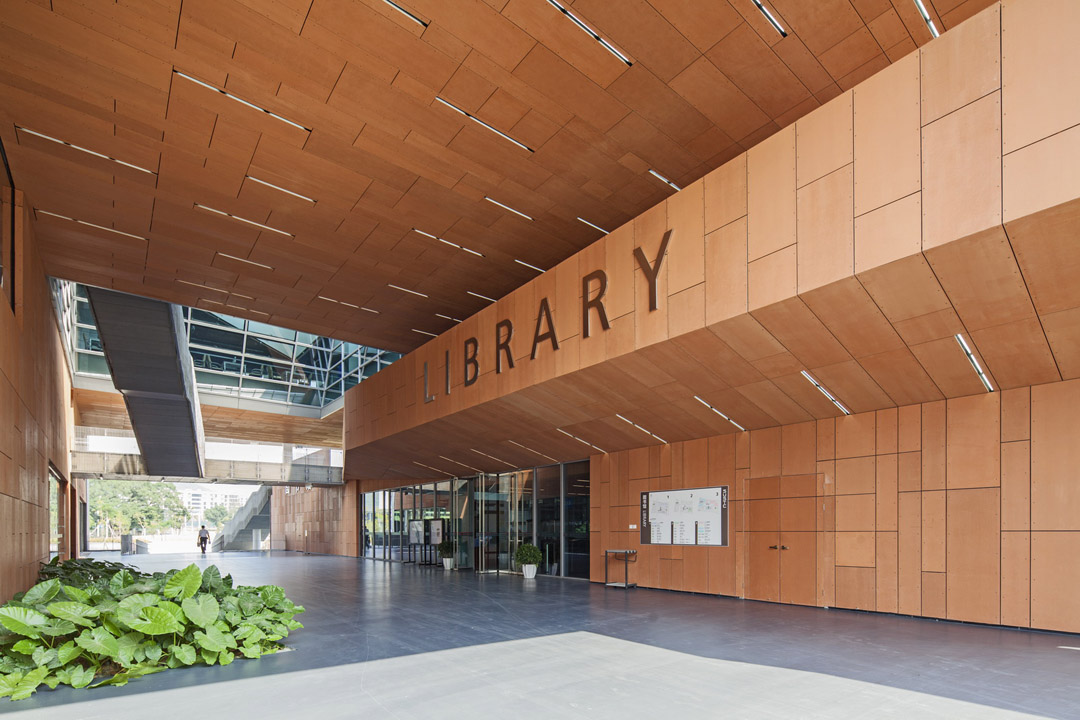
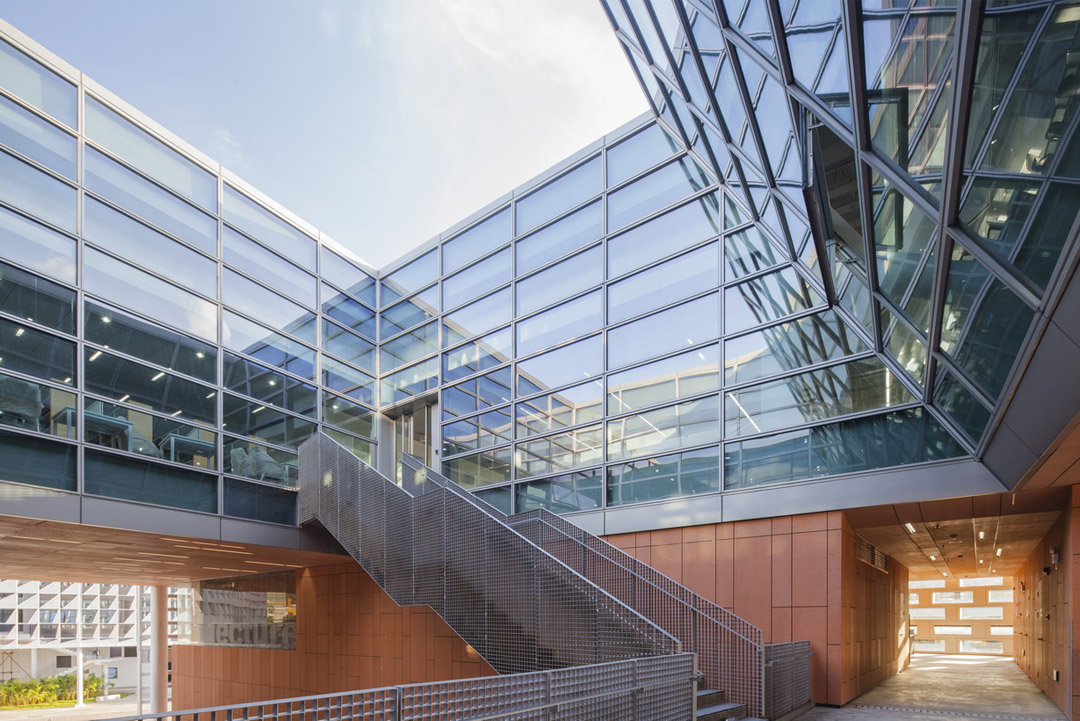
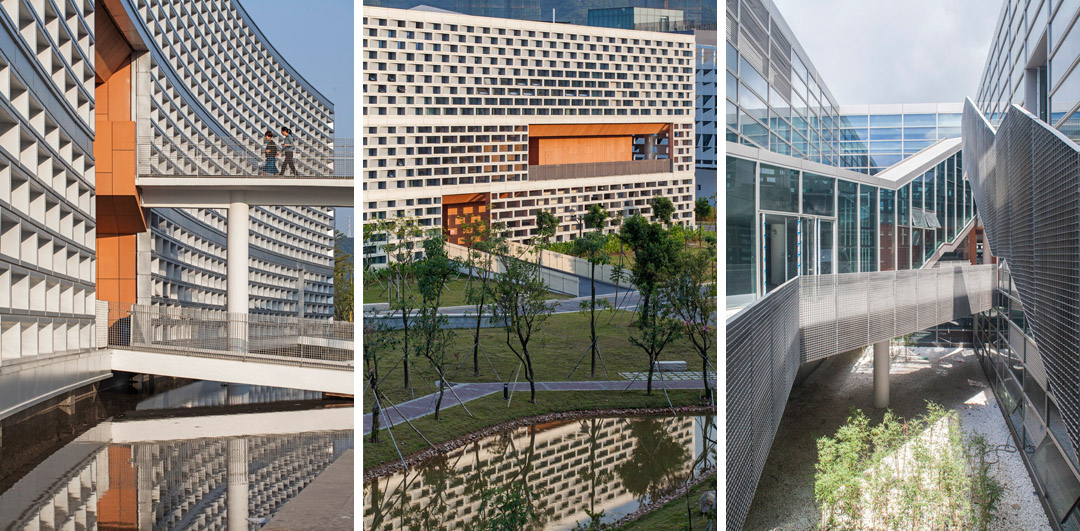
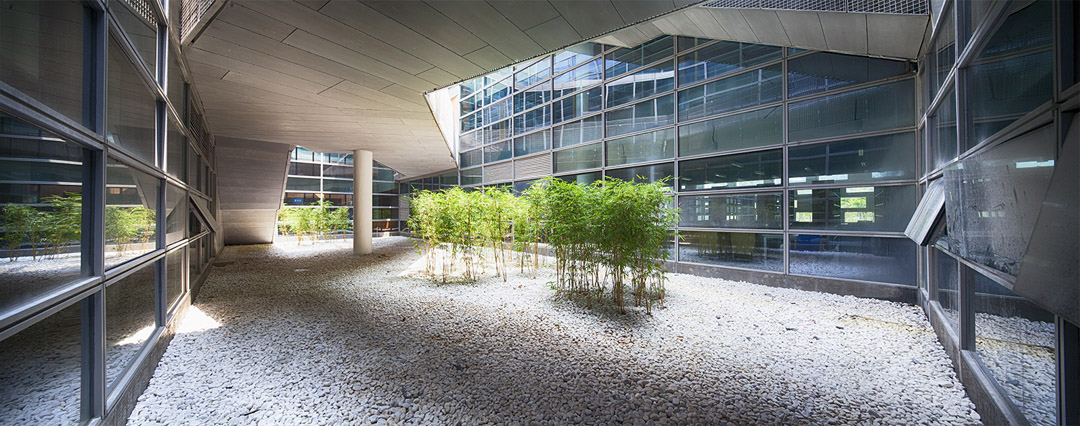
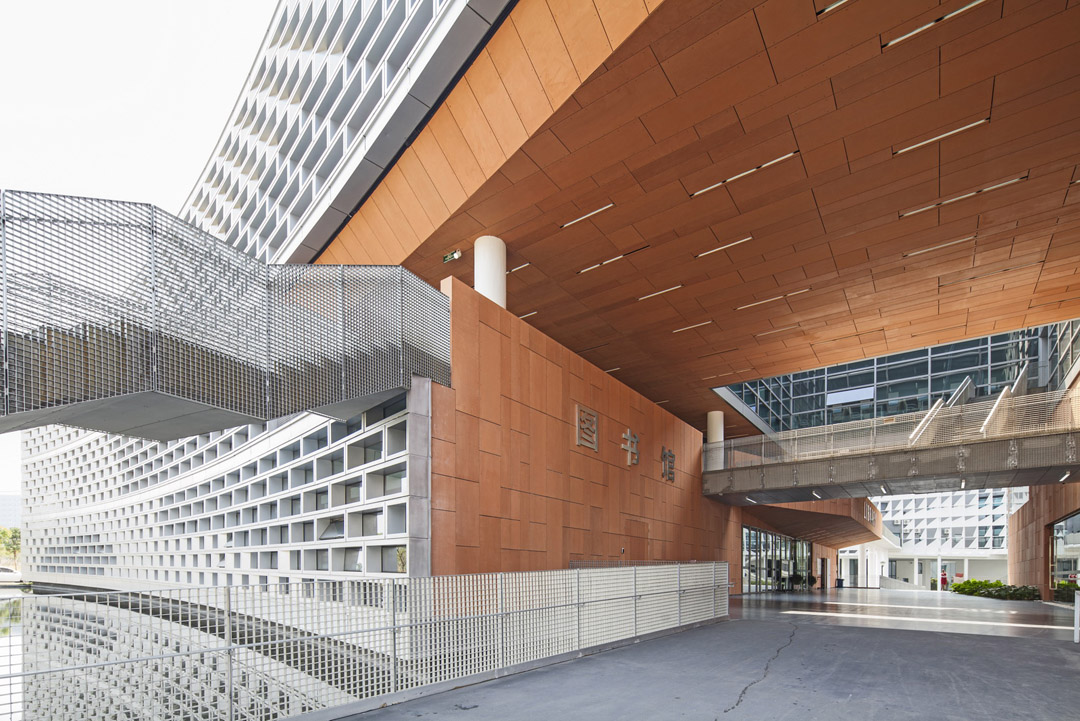
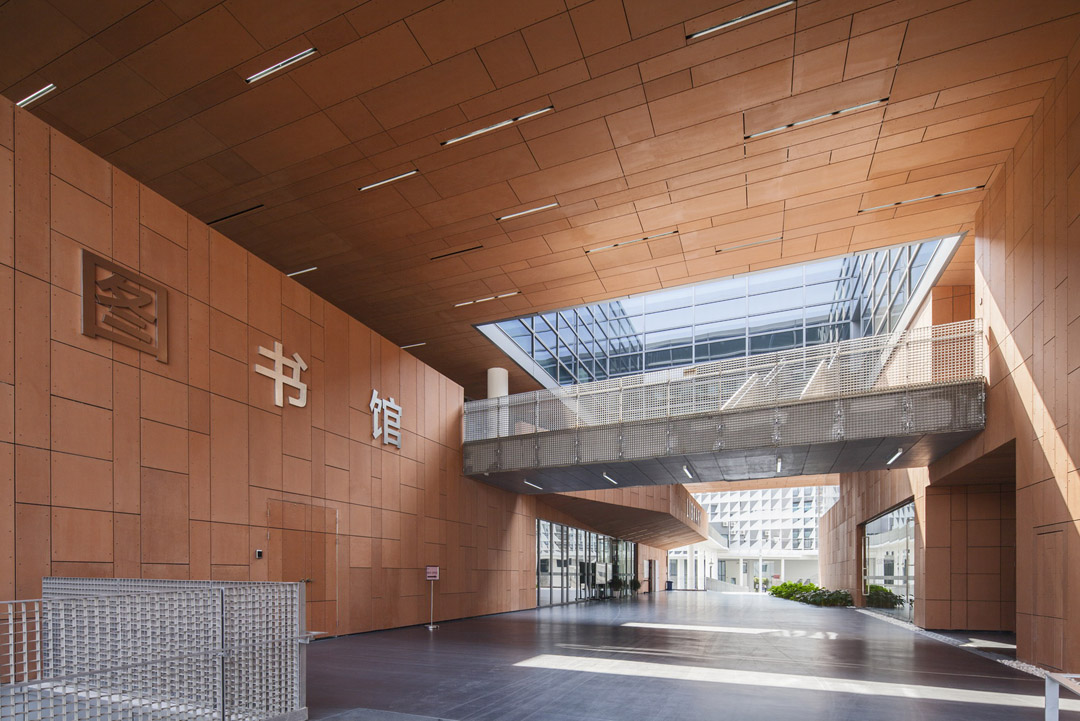
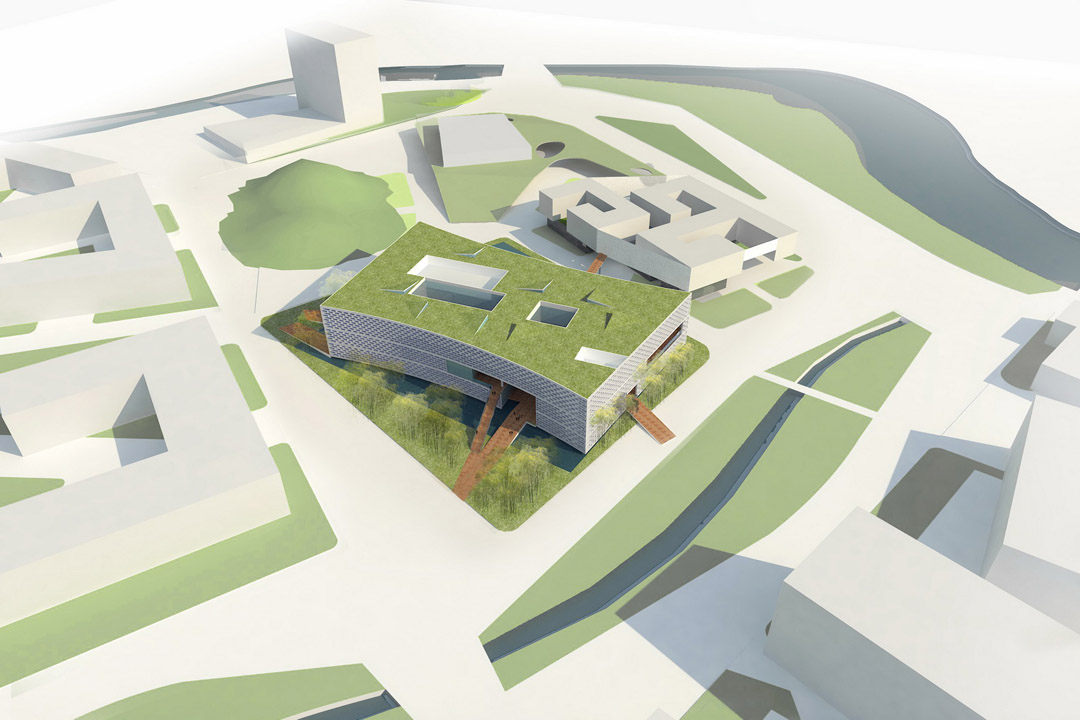
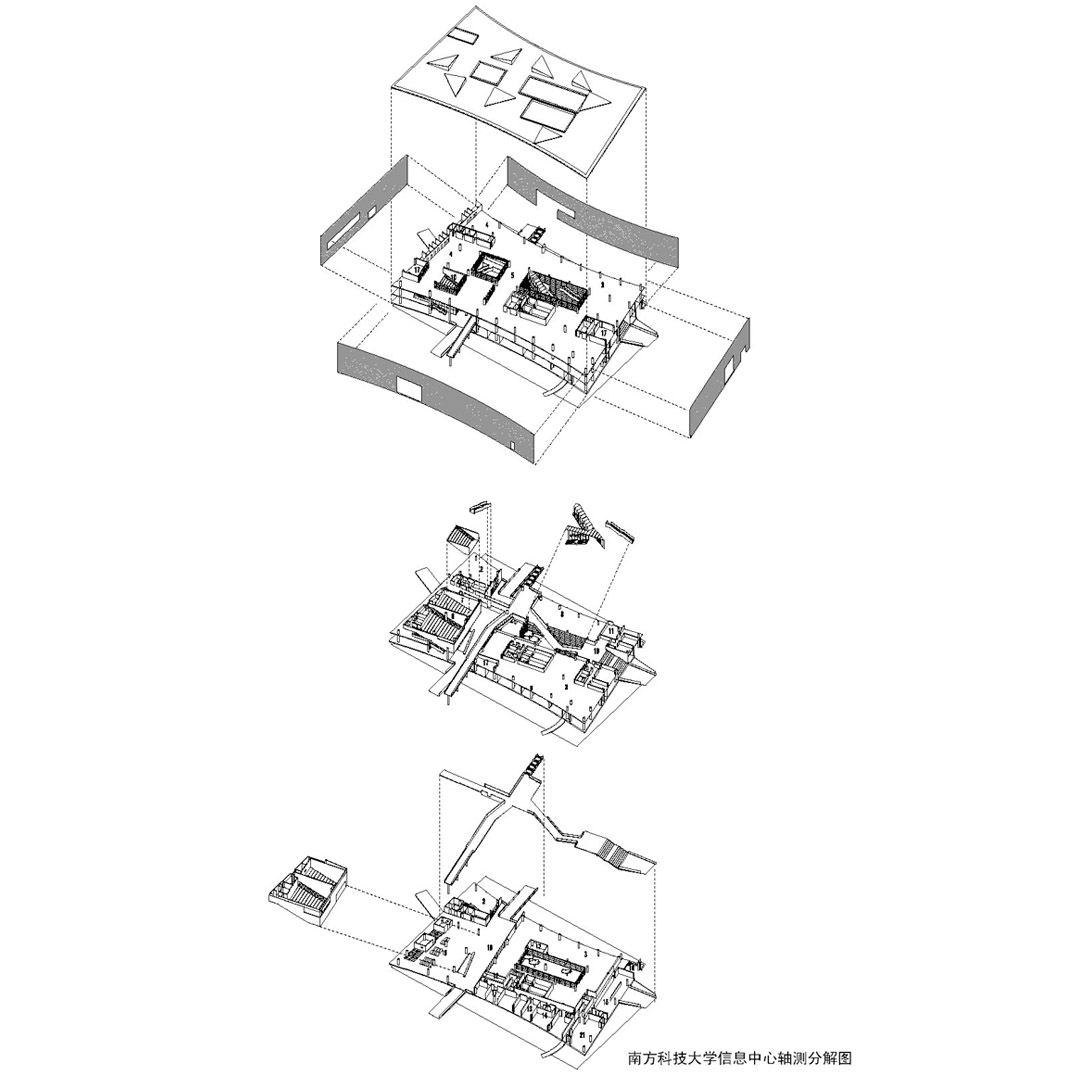
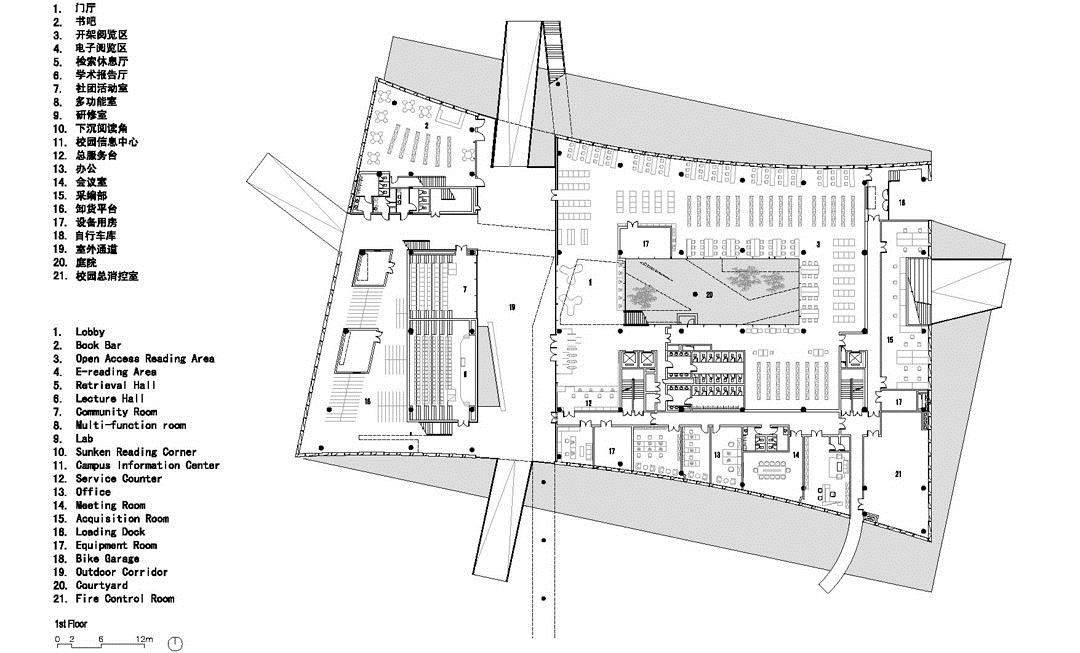
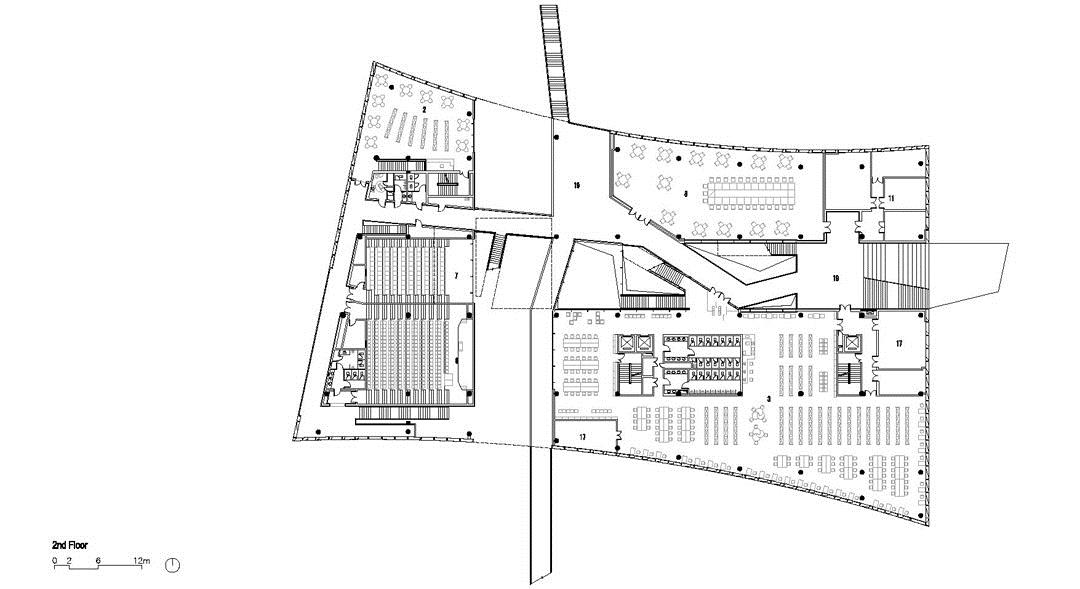
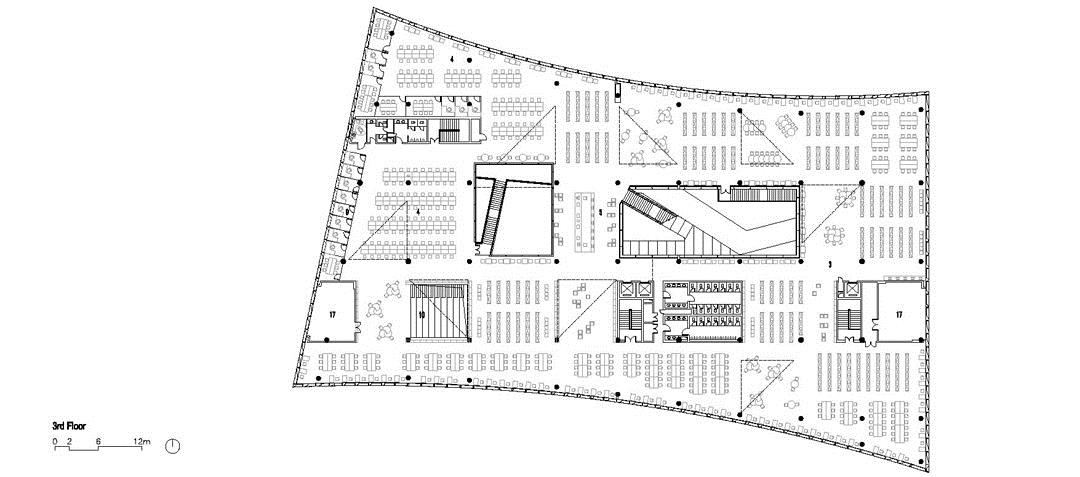
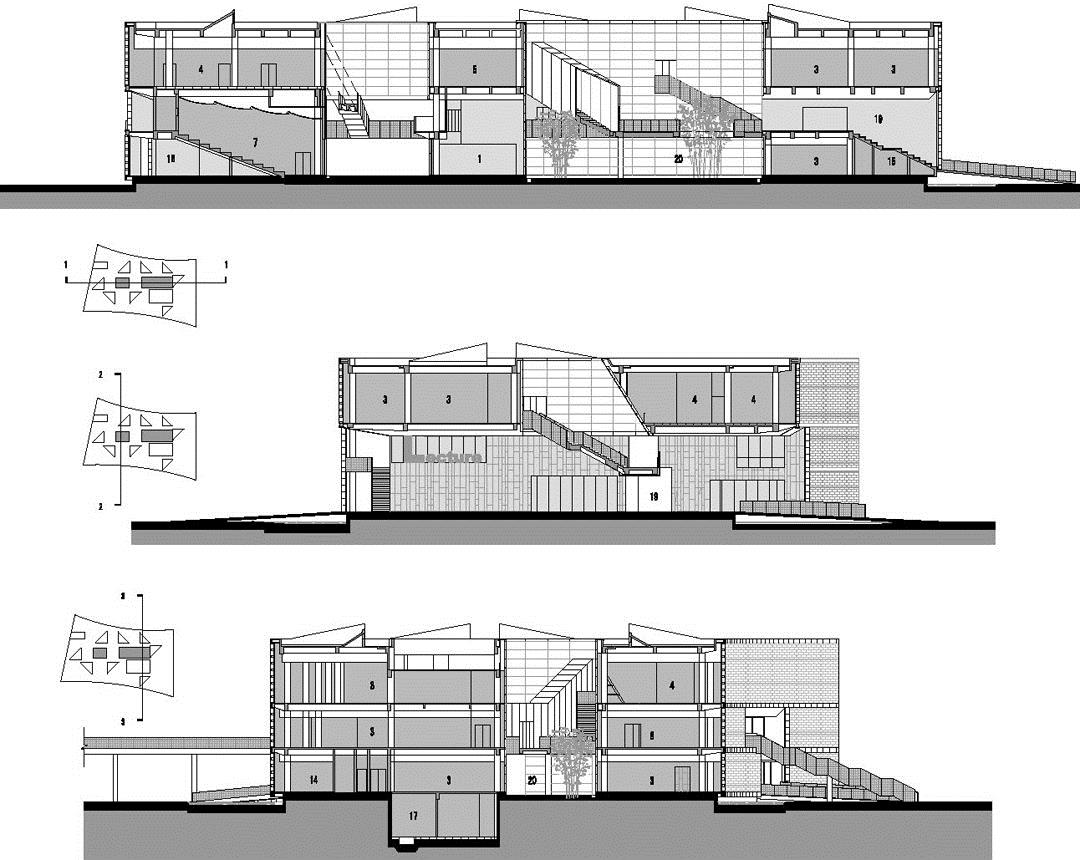
图书馆位于校区中心,略微内凹的弧形轮廓,对环境形成谦逊的姿态。师生每日往返于教学区与生活区时,会从不同方向途经此地。顺应这种动线,生成了穿越建筑的十字形游廊系统。以期像传统的岭南骑楼一样,既能适应深圳的炎热多雨,又能吸引人走进去参与空间活动。主入口门厅、学术报告厅、社团活动室和书吧等公共功能被有意安排在南北向通廊的两侧。二层游廊自西向东途经书吧、天井、多功能厅、竹园、阅览区、半室外台地,最终到达东面的百树园。流线交叉给人们的日常穿越带来相遇和交流,停留、阅览和参与学术生活自然成为生活的一部分。使实体图书馆有机会比虚拟阅读更鲜活有趣。顶层是供开架阅览使用的近3800平方米的开敞式大空间。为便于模数化的藏书区和阅览区日后互换,整层结构板均按藏书区荷载来设计,柱跨统一为8400×10800(mm)。
The library is located in the center of the campus, with a slightly concave arc outline, forming a humble attitude to the environment. When teachers and students travel between the teaching area and the living area every day, they will pass here from different directions. Conforming to this dynamic line, a cross corridor system passing through the building is generated. Like the traditional Lingnan arcade, it can not only adapt to the hot and rainy in Shenzhen, but also attract people to participate in space activities. Public functions such as the main entrance hall, academic lecture hall, community activity room and book bar are deliberately arranged on both sides of the North-South Corridor. From west to East, the corridor on the second floor leads to the book bar, patio, multi-function hall, bamboo garden, reading area and semi outdoor platform, and finally reaches the Baishu garden in the East. Streamline crossing brings encounter and communication to people's daily crossing. Staying, reading and participating in academic life naturally become a part of life. Make physical libraries have the opportunity to be more vivid and interesting than virtual reading. The top floor is a large open space of nearly 3800 square meters for open shelf Reading. In order to facilitate the exchange of modular library area and reading area in the future, the whole floor structural plate is designed according to the load of library area, and the column span is 8400 × 10800(mm)。
▼ 鸟瞰 Bird’s eye view
▼ 外观 exterior
▼ 夜景 night view
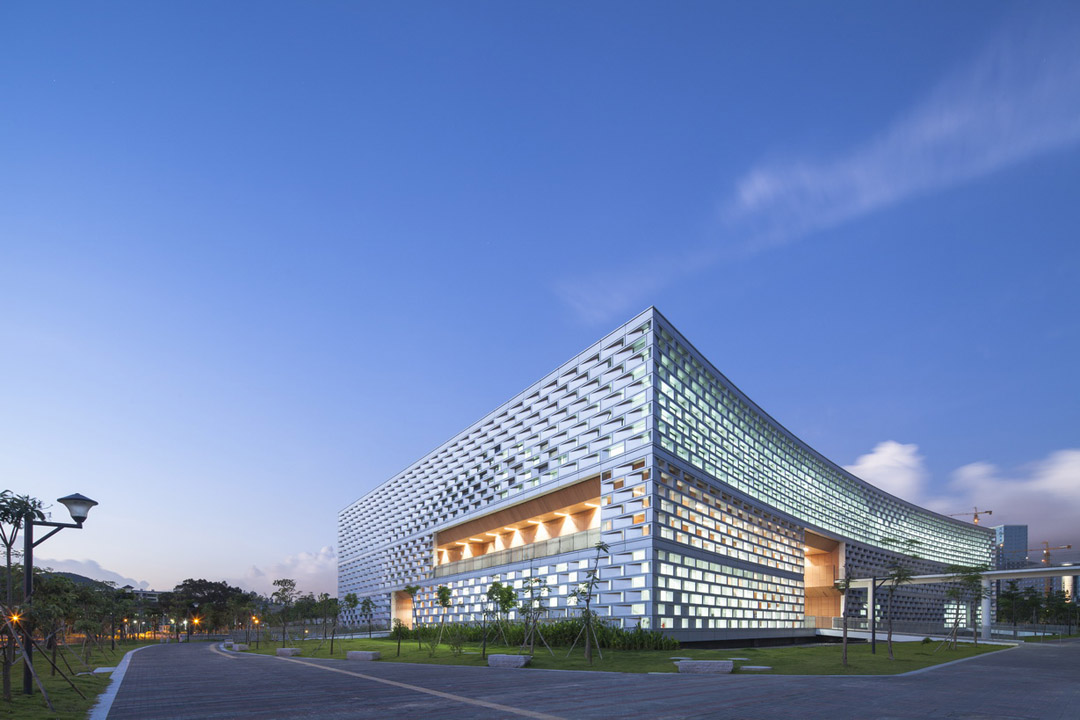
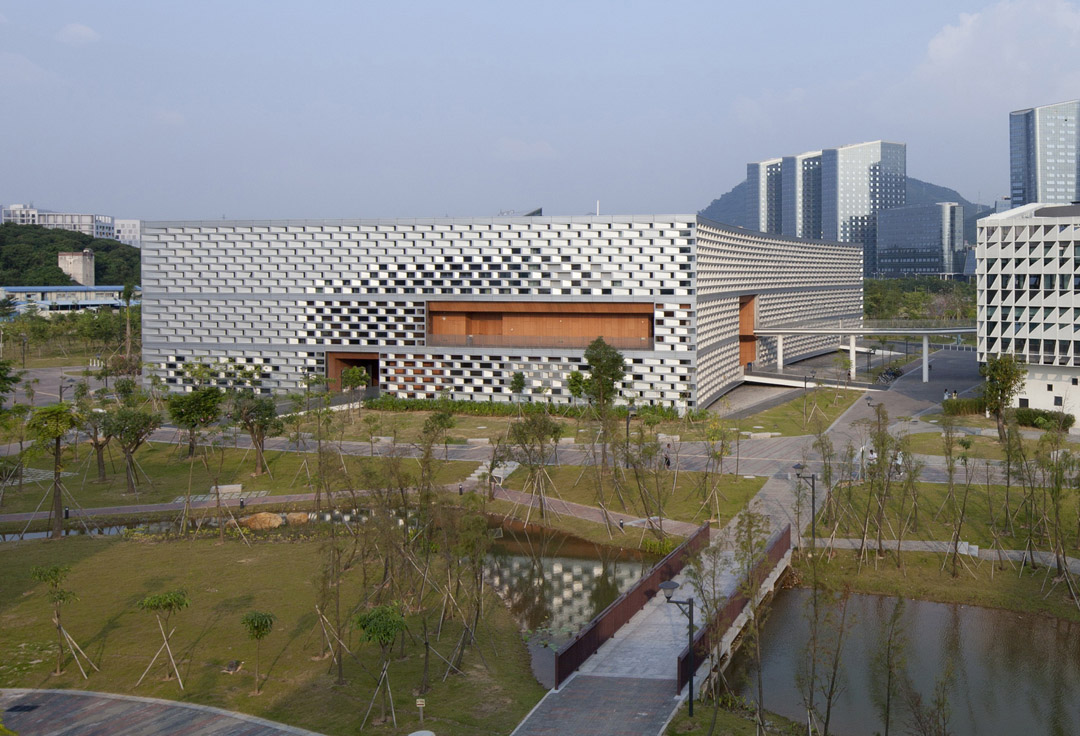
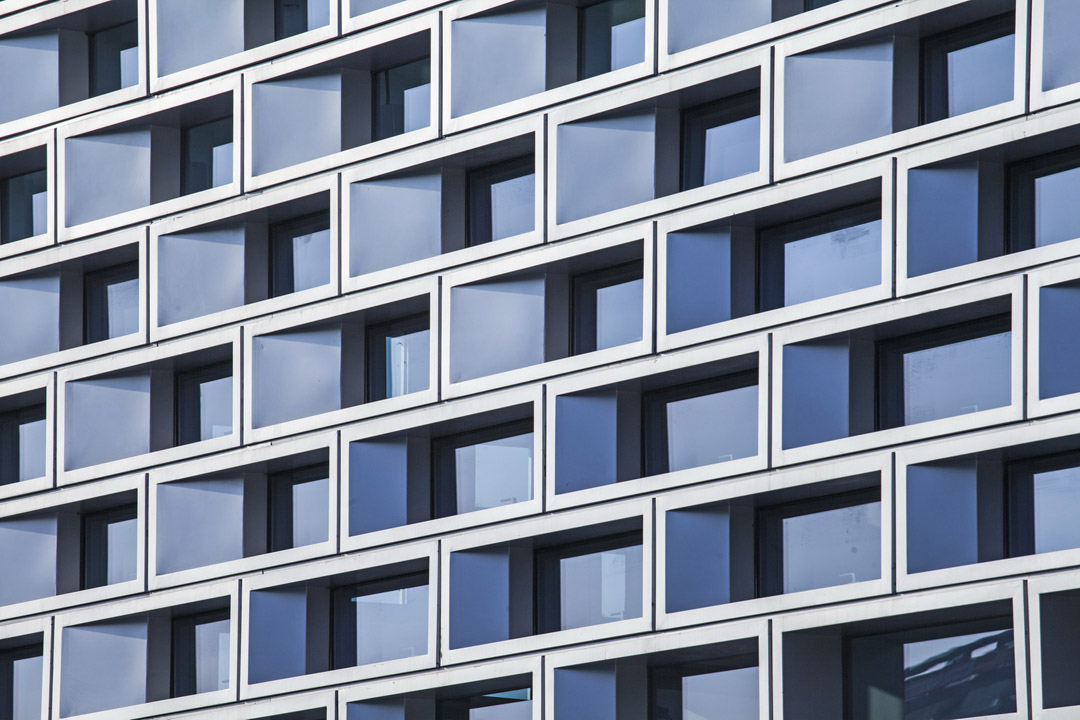
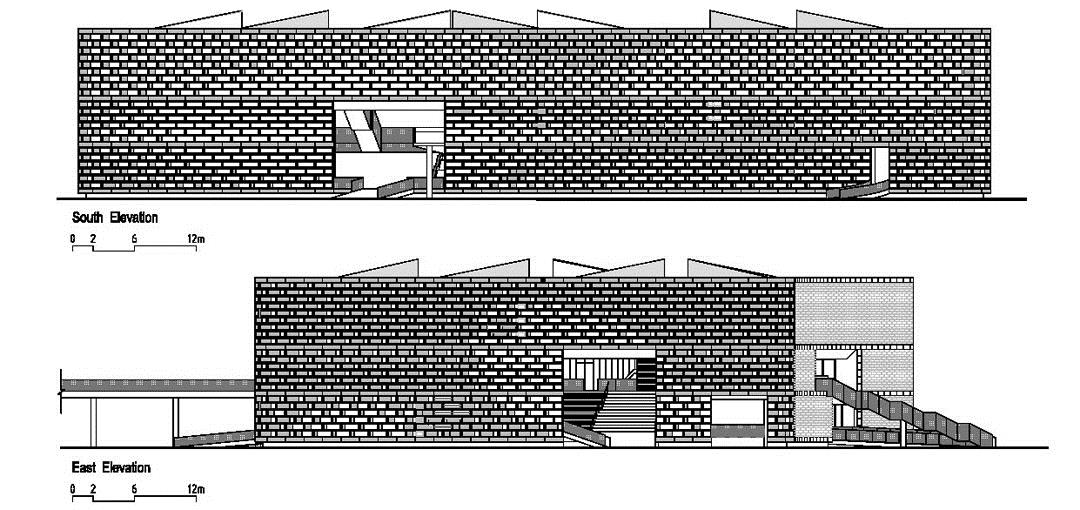
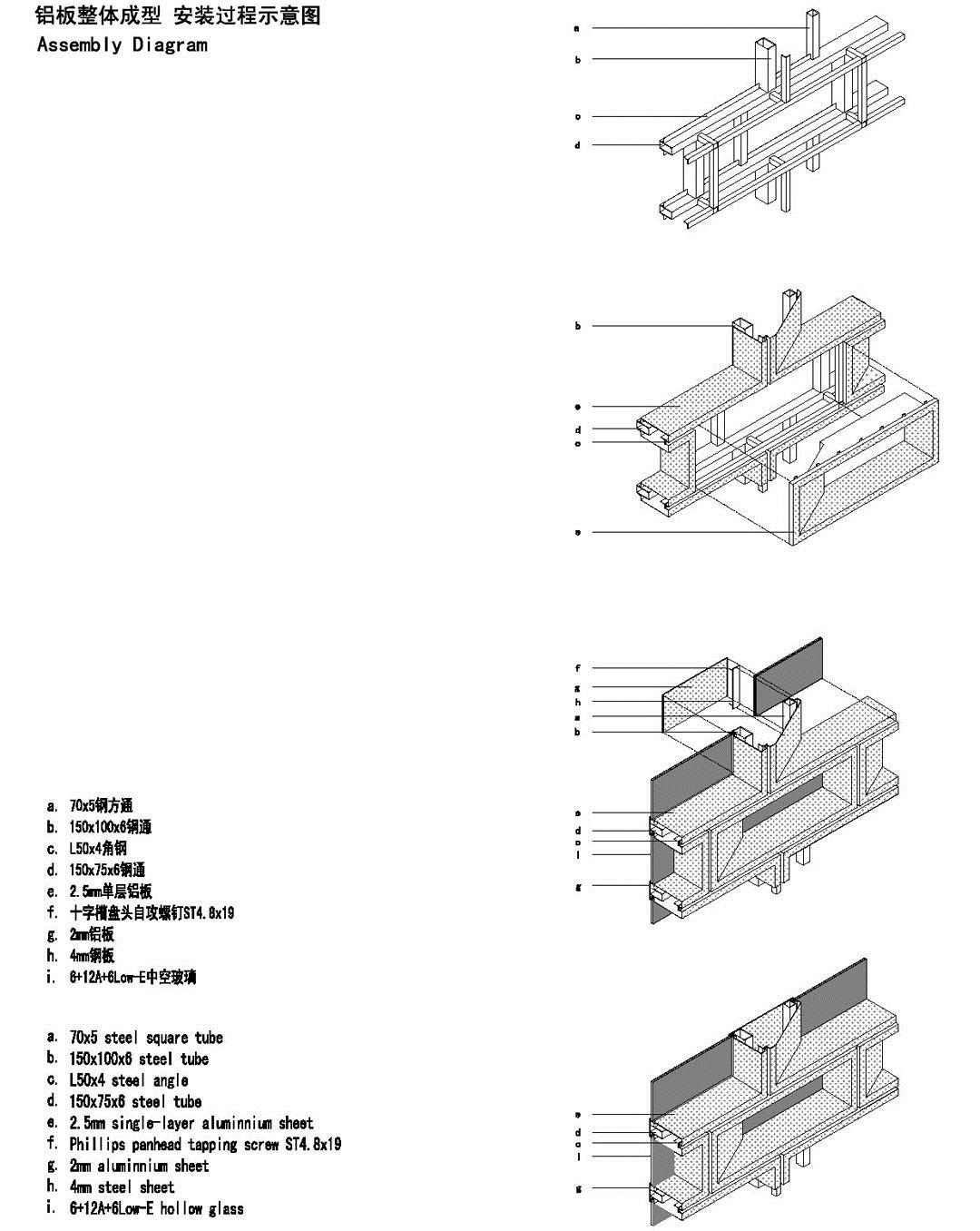
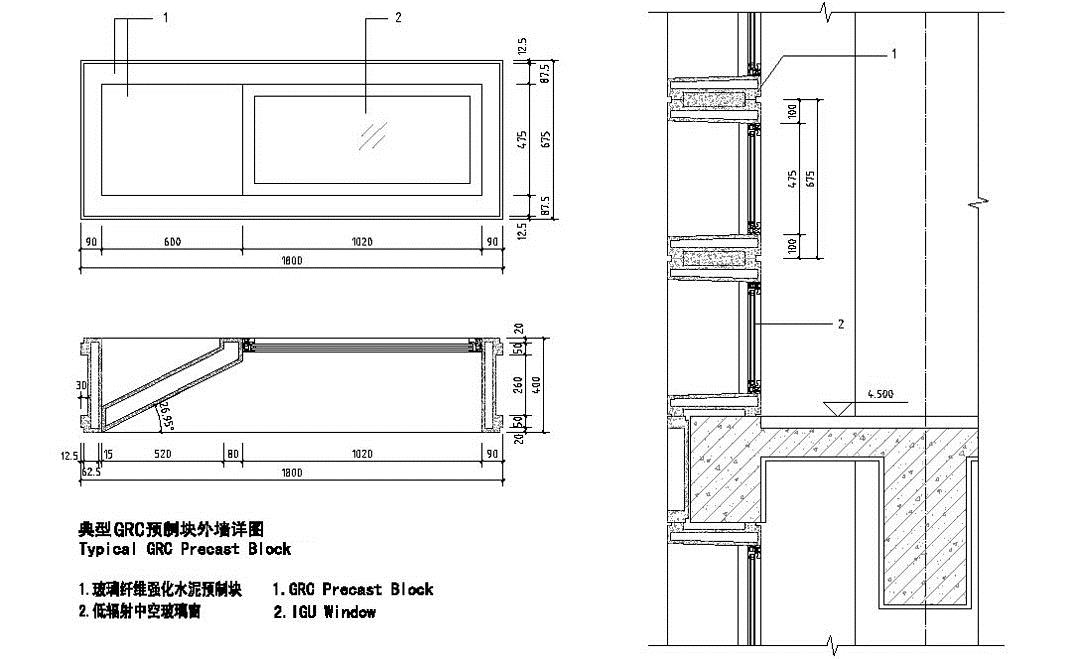
图书馆外墙意图使用GRC(即玻璃纤维增强混凝土),在综合考虑了立面尺度、结构承载力、可加工的构造尺寸、当地遮阳需求等因素后,GRC单元格被设计为尺寸1800×675×400(mm)的轻质高强的空心模块,中间填充保温隔热材料,经脱模养护而成。种种原因,甲方在施工前要求更换为传统材料。最后实施的是银灰色半单元式铝制模块错缝拼装。铝板模块集防水保温自遮阳于一体,延续了原尺寸和拼装方式。与外墙不同,十字形游廊选用了橘色高强度水泥纤维板作为天花和墙面装饰材料。橘色主题从室外公共空间延续至室内的公共区,将人们自然地从游廊引入到建筑中来。
GRC (i.e. glass fiber reinforced concrete) is intended to be used for the outer wall of the library. After comprehensively considering the facade scale, structural bearing capacity, Machinable structural size, local shading demand and other factors, the GRC cell is designed to be 1800 × six hundred and seventy-five × 400 (mm) lightweight high-strength hollow module, filled with thermal insulation materials in the middle, and cured by demoulding. For various reasons, Party A requires to replace with traditional materials before construction. The final implementation is the staggered assembly of silver gray semi unit aluminum modules. The aluminum plate module integrates waterproof, thermal insulation and self shading, and continues the original size and assembly method. Different from the external wall, the cross corridor selects orange high-strength cement fiberboard as the ceiling and wall decoration material. The orange theme extends from the outdoor public space to the indoor public area, which naturally introduces people from the veranda into the building.
▼ 北立面 the north facade
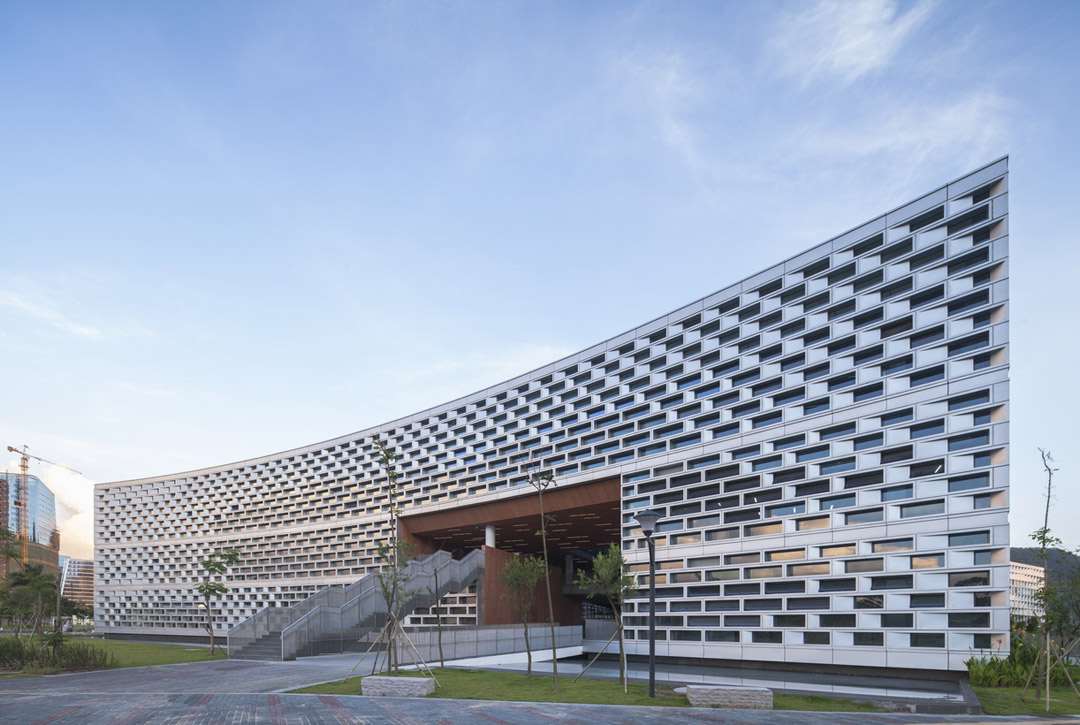
▼ 室外通道 outdoor corridor
▼ 楼梯 the stairs
▼ 南立面入口 the south facade entrance
▼ 内庭竹院 the bamboo courtyard
▼ 南北向游廊 north-south corridor
▼ 南北向游廊 north-south corridor
▼ 开架阅览区 open access reading area
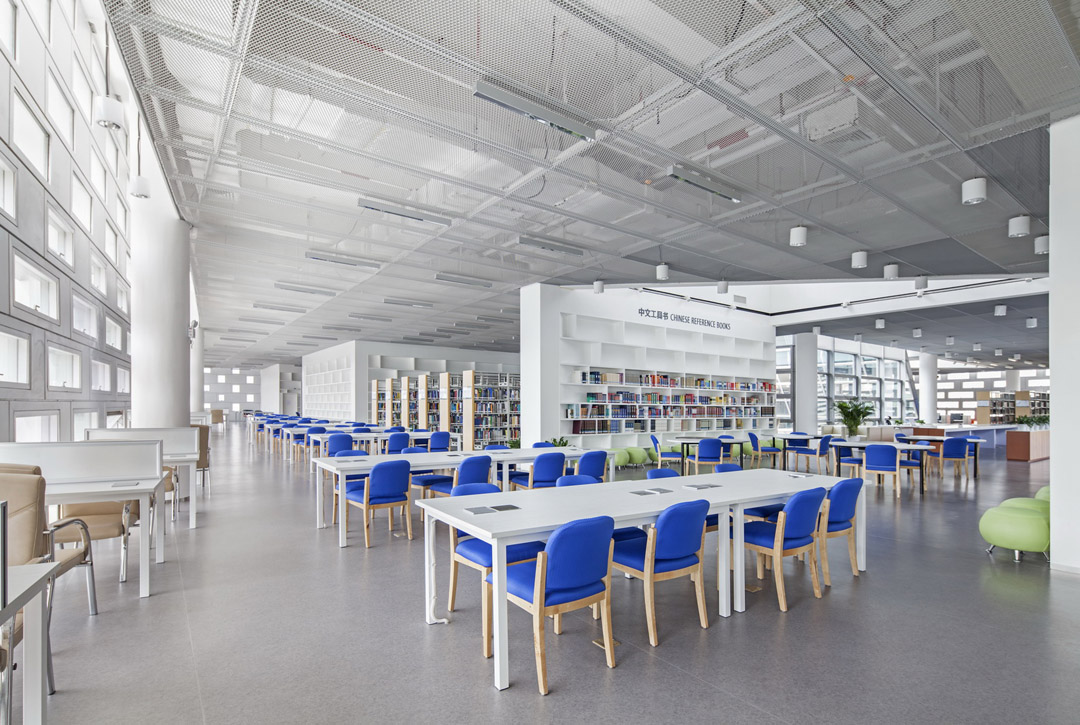
▼ 开架阅览区 open access reading area
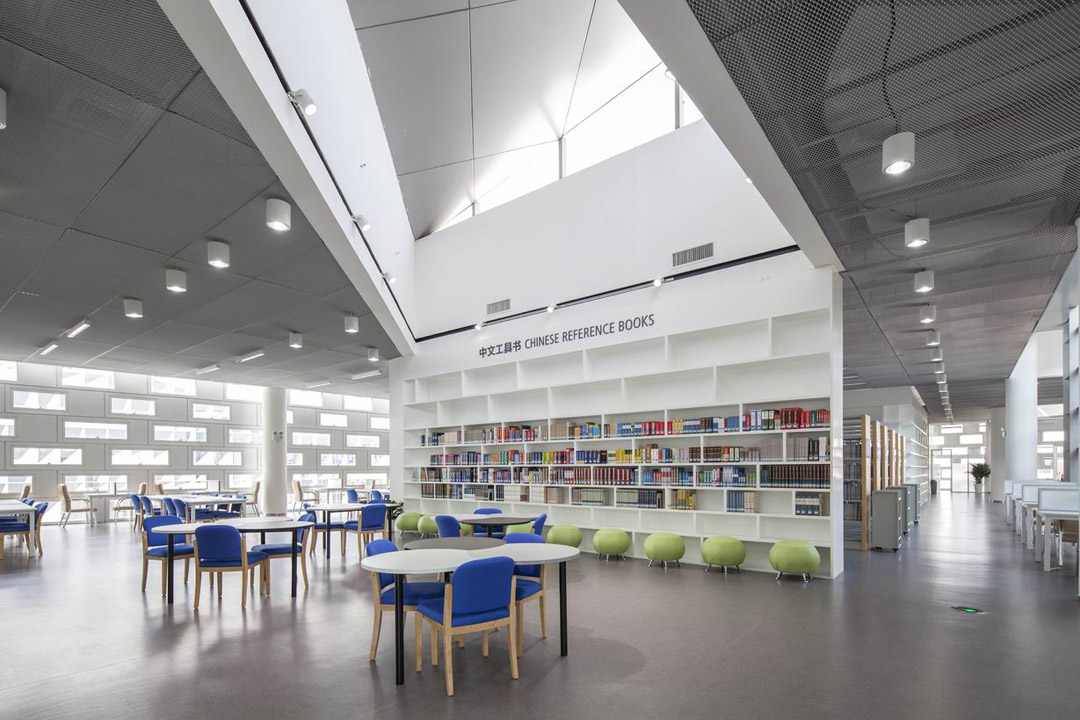
▼ 半单元式铝板幕墙 semi-unitized aluminum curtain wall
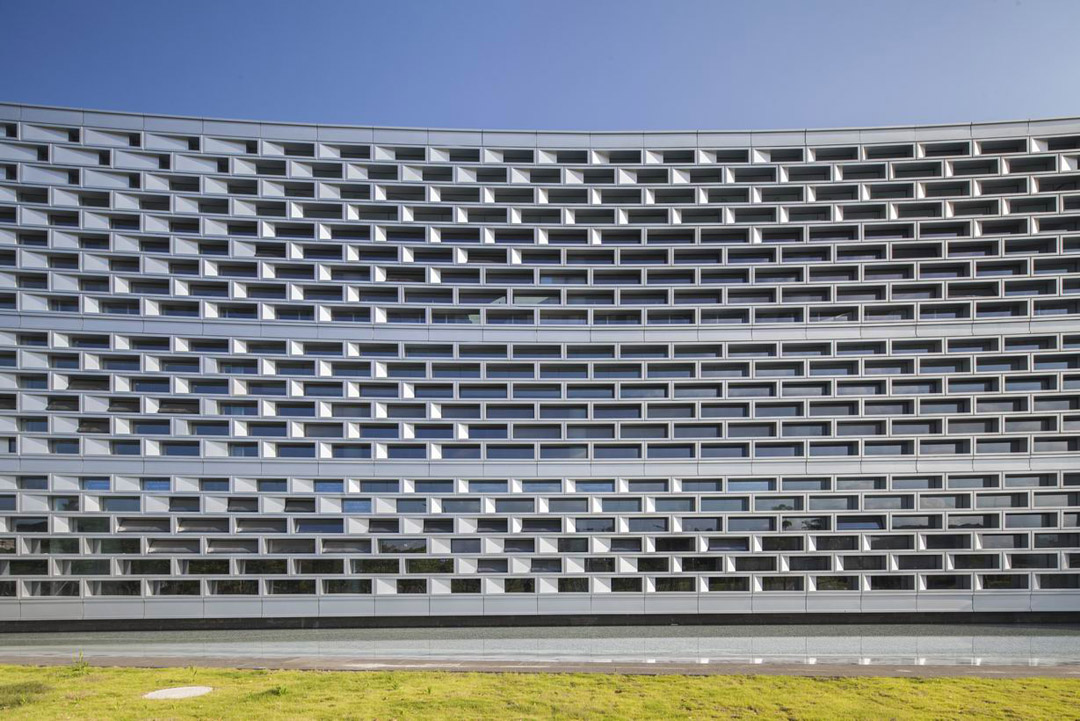
▼ 半单元式铝板幕墙 semi-unitized aluminum curtain wall
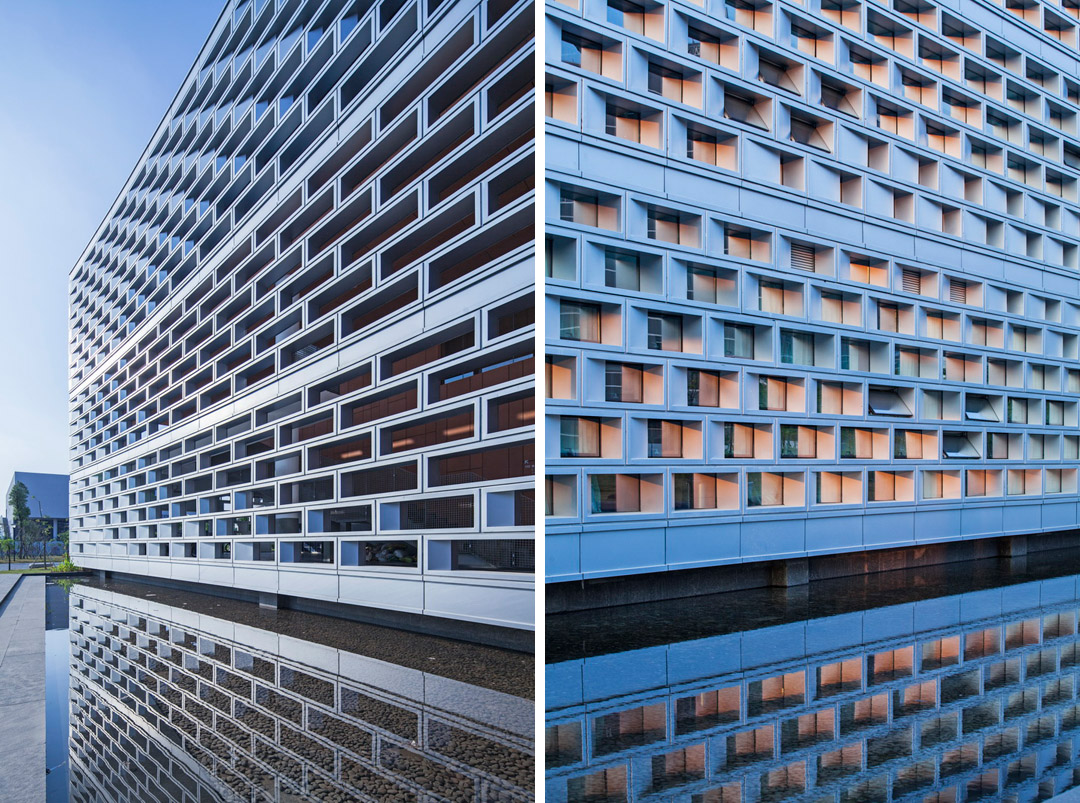
▼ 半单元式铝板幕墙 semi-unitized aluminum curtain wall
▼鸟瞰 Bird’s eye view
▼技术图纸 Technical drawings
项目名称:南方科技大学图书馆
设计公司:都市实践
项目地址:深圳
项目规模:10727.8㎡
Project name: Southern University of Science and Technology Library
Design Firm: Urban Practice
Project address: Shenzhen
Project scale: 10727.8㎡