绍兴大禹陵景区祭禹广场改扩建提升工程,浙江/建筑设计
从历史上来看,祭祀活动曾经在聚落等级上的认定起着关键作用,祭祀设施也表达了古代的权力与地位。祭祀道路(涂)往往建立在一个城邑的主轴线上,周围建筑偶数对开,道路极具向心力与统领性。
Historically, sacrificial activities once played a key role in the identification of settlement levels, and sacrificial facilities also expressed the ancient power and status. The sacrificial Road (TU) is often built on the main axis of a city. The surrounding buildings are even and opposite. The road has great centripetal force and leadership.
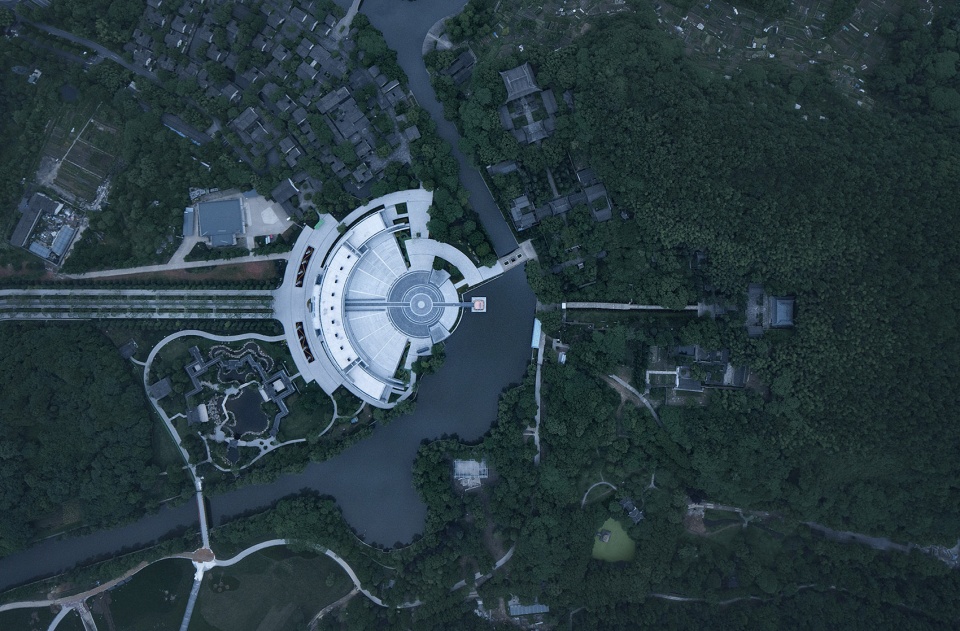
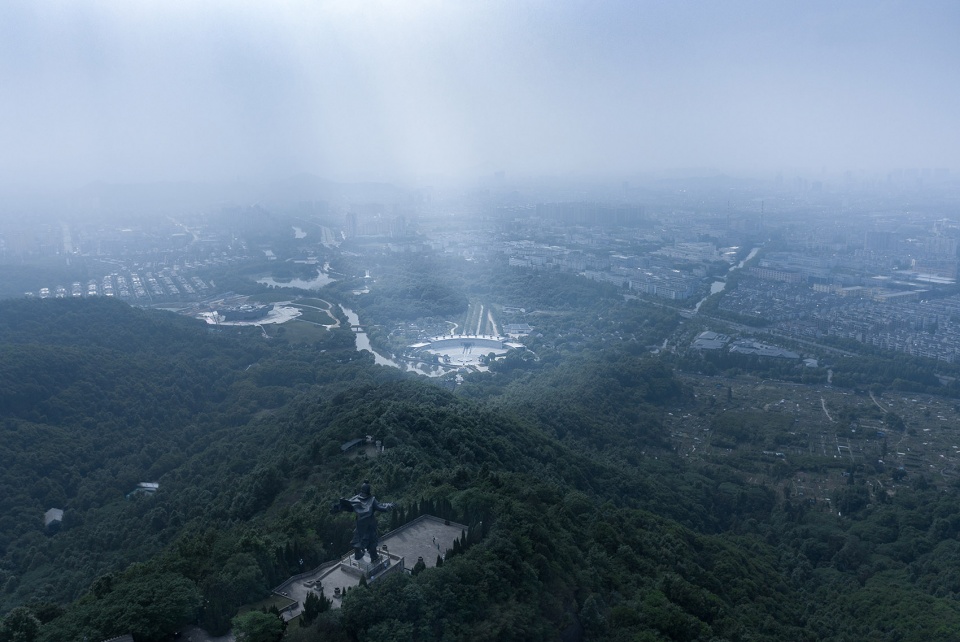
▼改造后的神道与祭禹广场、山中享殿、山顶禹像在一条轴线之上
The reformed Shinto is on the same axis as the Yu Memorial square, the mountain hall and the Yu statue on the top of the mountain
大禹陵位于绍兴城东南六公里处的会稽山麓,占地245亩,背靠会稽山,前临禹池,风光秀美,气势宏伟。大禹是华夏立国始祖、上古治水英雄;大禹文化,更是中华文明的重要核心之一,是民族文化自信的重要支柱,为后世所景仰,各朝各代,展祭不绝。祭禹典礼自夏王启始历经4000年,世代相传,延续至今,至2007年升格为国家级祭祀活动,并定于每年谷雨时节举行。随着时代的变迁和发展,景区需要拓张新的空间以承担更多的社会责任与更大的群众期冀。
Dayu mausoleum is located at the foot of Kuaiji mountain, six kilometers southeast of Shaoxing City. It covers an area of 245 mu. It backs on Kuaiji mountain and faces Yuchi Lake in front. It has beautiful scenery and magnificent momentum. Dayu was the founder of China and the hero of flood control in ancient times; Dayu culture is one of the important cores of Chinese civilization and an important pillar of national cultural self-confidence. It is admired by later generations. There are endless exhibitions in all dynasties. The Yu sacrificial ceremony has been passed down from generation to generation since the beginning of the Xia Dynasty. It was upgraded to a national sacrificial activity in 2007 and is scheduled to be held every year in the valley rain season. With the changes and development of the times, scenic spots need to expand new space to undertake more social responsibilities and greater expectations of the masses.
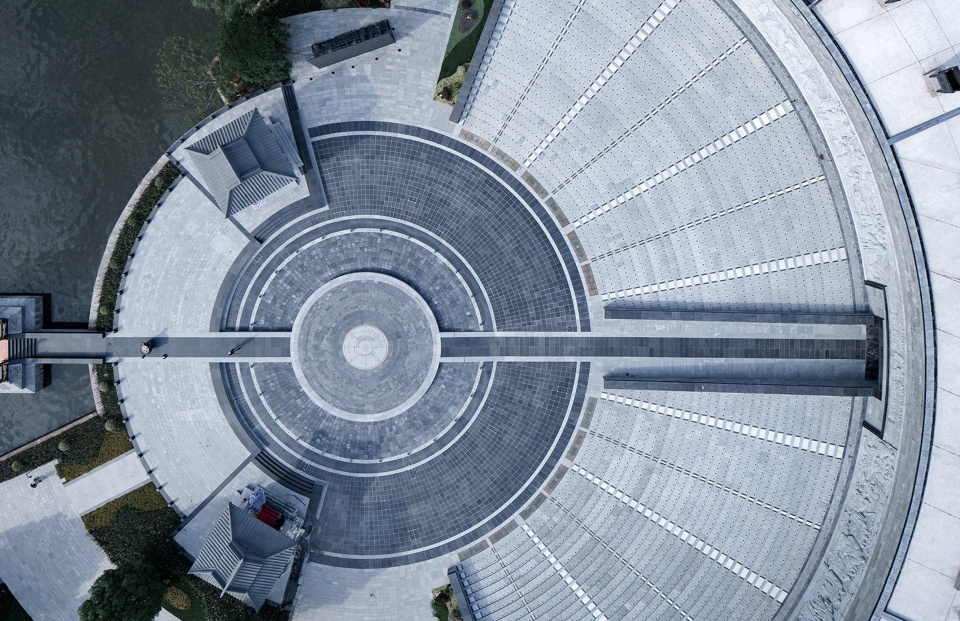
▼从山顶大禹像俯瞰祭禹广场
Overlooking the memorial Yu square from the statue of Dayu on the top of the mountain
▼禹陵空间
Yuling space
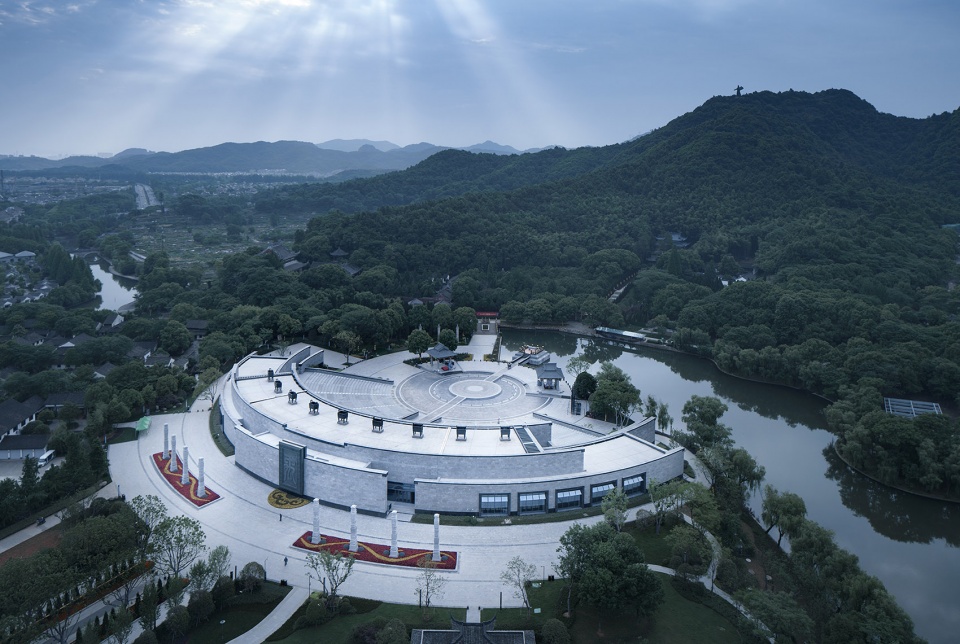
▼神道尽端的祭禹馆
Yu Memorial Hall at the end of Shinto
大禹陵景区改扩建提升工程的目标是对整个景区空间结构的梳理,景区功能的完善,进而推动大禹祭祀文化的传颂,从而让人们在自然和人文景观中更真切地感知、追忆与致敬这位华夏先祖。
The goal of the reconstruction, expansion and upgrading project of Dayu Mausoleum scenic area is to sort out the spatial structure of the whole scenic area, improve the functions of the scenic area, and then promote the spread of Dayu sacrifice culture, so that people can more truly perceive, recall and pay tribute to this Chinese ancestor in the natural and cultural landscape.
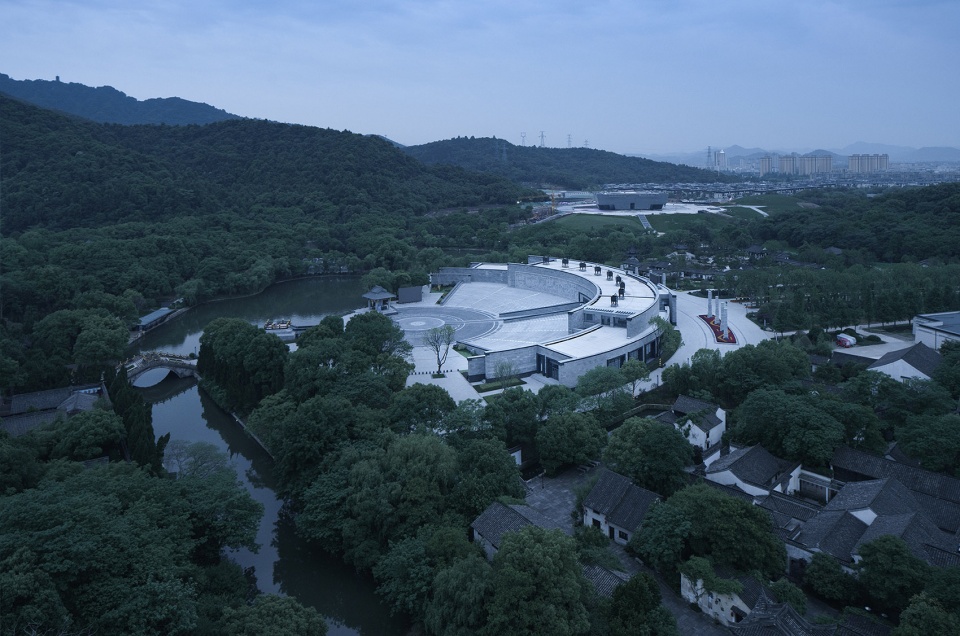
▼改造后的祭禹广场(从山中享殿俯瞰)
Reconstructed Jiyu square (overlooking the hall in the mountains)
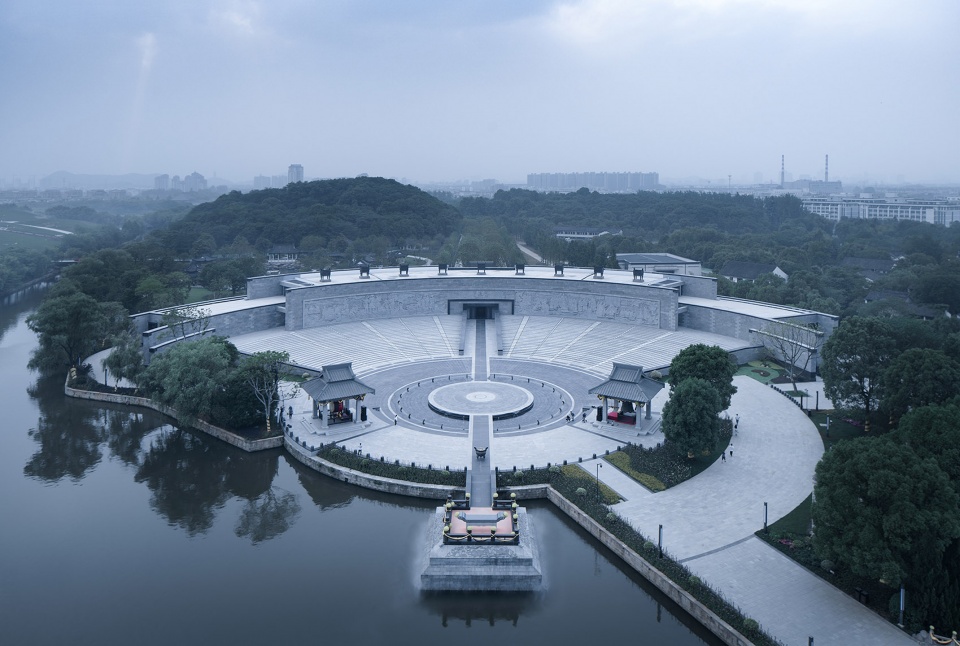
▼同心片墙围合的祭禹馆
Yu memorial hall surrounded by concentric walls
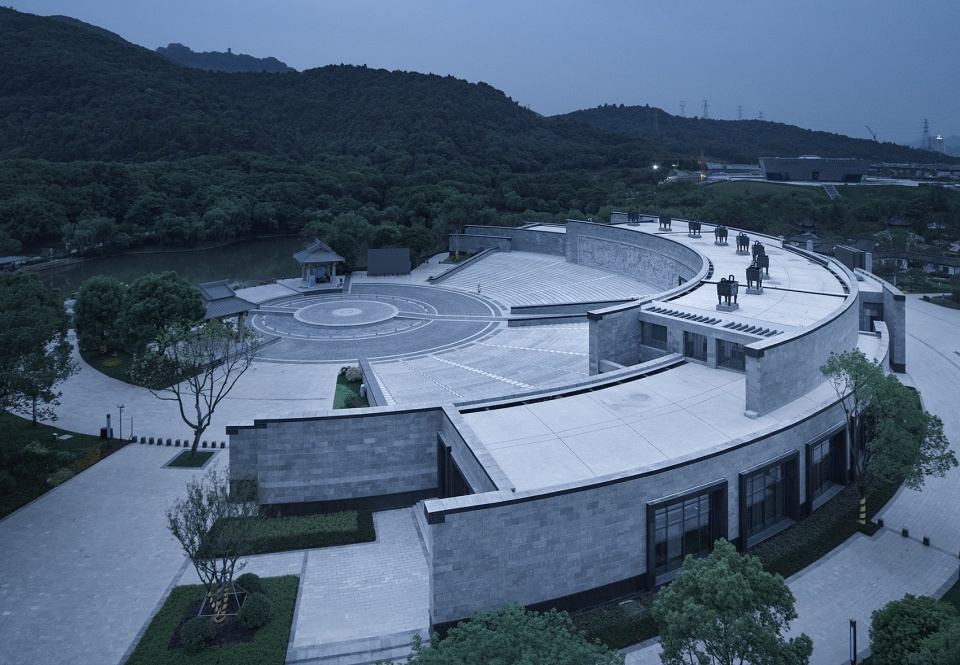
初去大禹陵便感受到大禹陵景区其作为帝陵强烈的礼仪性空间秩序性,但由于受限于之前祭禹广场的规模,神道与祭禹广场、山中享殿、山顶禹像之间的轴线成偏角关系。如何让祭禹之路的空间秩序再度强化与提升?这个思考经过多次的现场考察,并与业主的协商之后,我们提出了一个大胆而坚定的想法,将神道后半段轴线南偏,使其延续与祭禹广场、山中享殿、直至山顶的大禹像保持中正的轴线对位关系。既增强了空间秩序,又恢复了匠人营国中祭祀道路的统领性。
When I first visited the Dayu mausoleum, I felt the strong etiquette and spatial order of the Dayu Mausoleum scenic area as an imperial mausoleum. However, due to the size of the Yu Memorial square before, the Shinto has an oblique relationship with the axis of the Yu Memorial square, the mountain hall, and the Yu statue on the top of the mountain. How to strengthen and enhance the spatial order of the road of sacrificing Yu again? After many site visits and consultations with the owner, we have put forward a bold and firm idea to shift the axis of the second half of Shinto to the south, so that it can continue to maintain a central axis alignment relationship with the Yu Memorial square, the temple in the mountain and the statue of Yu at the top of the mountain. It not only strengthened the spatial order, but also restored the leadership of the sacrifice road in the craftsman camp.
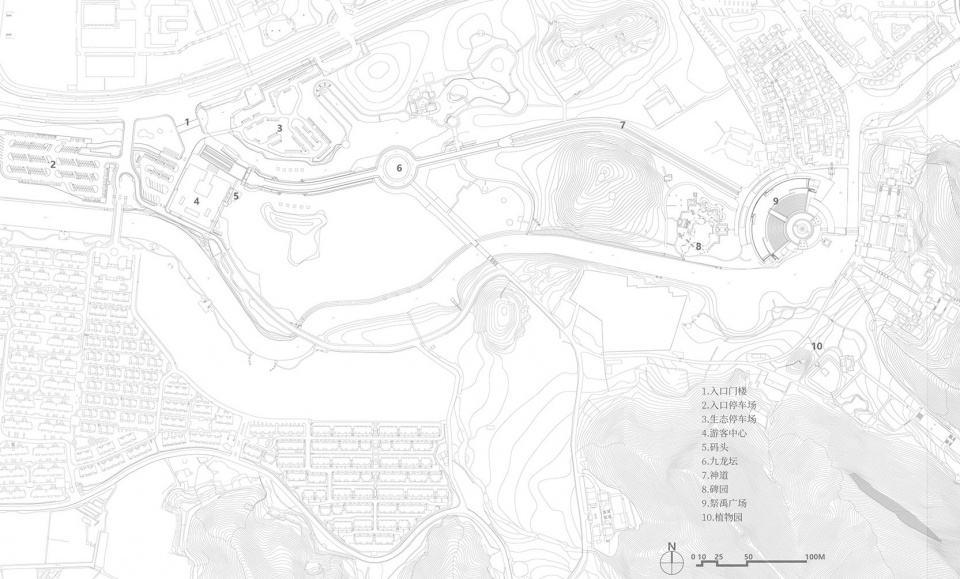
设计调整后的大禹陵景区的空间布局,由西向东共分为六个节点。
The spatial layout of Dayu Mausoleum scenic area after design adjustment is divided into six nodes from west to East.
▼大禹陵景区一期改扩建提升工程总平面
General layout of Dayu Mausoleum Scenic Area Phase I reconstruction, expansion and upgrading project
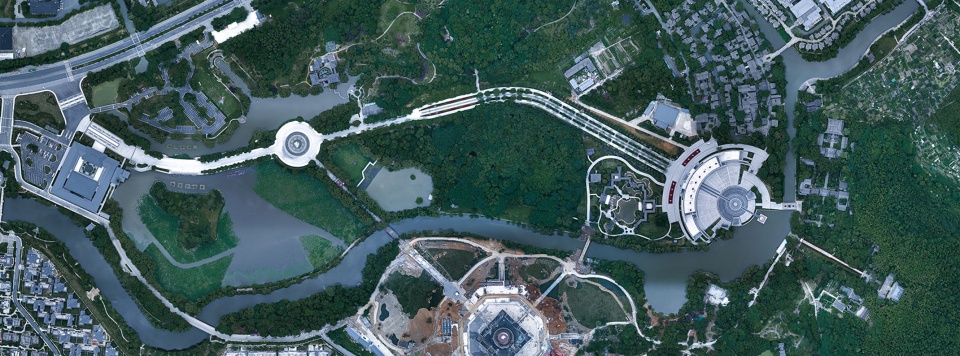
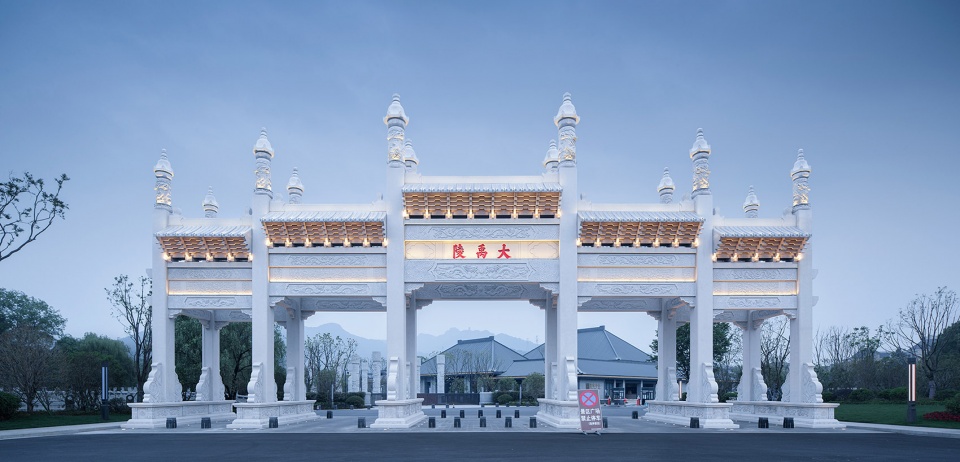
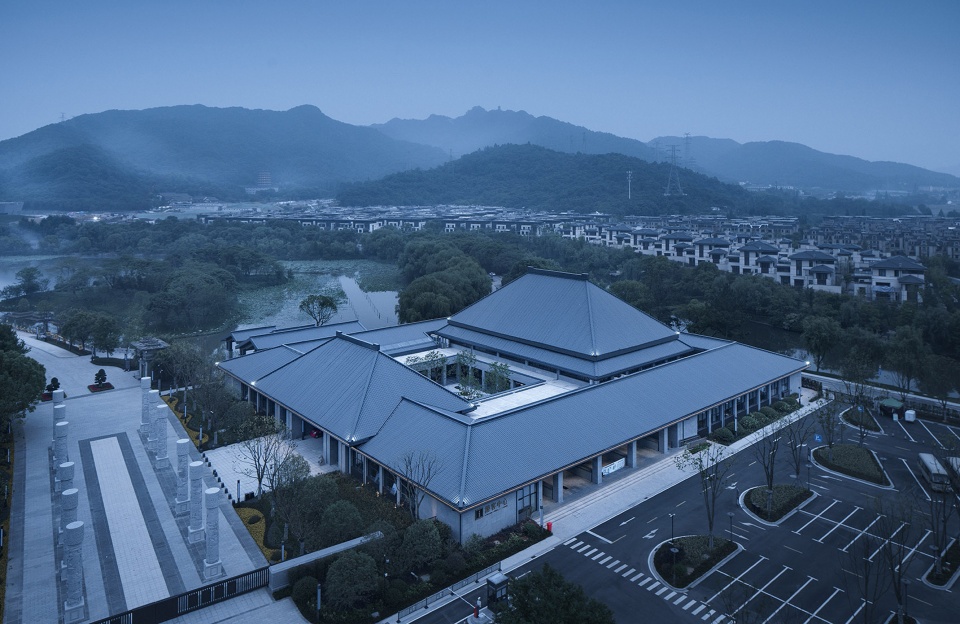
A、景区主入口在保留原门阙的基础上重新整合形象:新建双层石质棂星门以及来源于夏朝“四阿重屋”式宫殿结构为灵感的游客中心,配置大型停车场,构成一体化入口运营服务场所。
A. The image of the main entrance of the scenic spot is re integrated on the basis of retaining the original gate que: a new double-layer stone lattice star gate and a tourist center inspired by the "si'a heavy house" palace structure of the Xia Dynasty, equipped with a large parking lot, constitute an integrated entrance operation service place.
▼景区入口门阙
Gate que at the entrance of the scenic spot
▼新建游客中心鸟瞰图
Aerial view of new tourist center
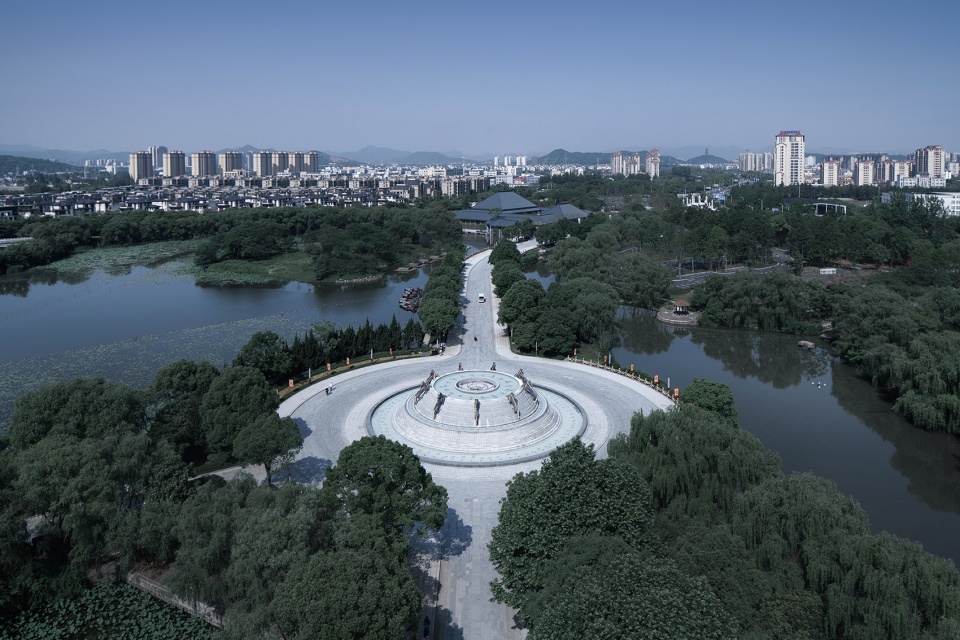
B、九龙坛进行了空间拓升:直径扩至38米、高度增至6米,加强了其外观上与景区提升后的匹配。
B. The Jiulong altar has been expanded in space: its diameter has been expanded to 38 meters, and its height has been increased to 6 meters, which has strengthened the matching of its appearance with that of the scenic spot.
▼提升后的九龙坛
Elevated Jiulong altar
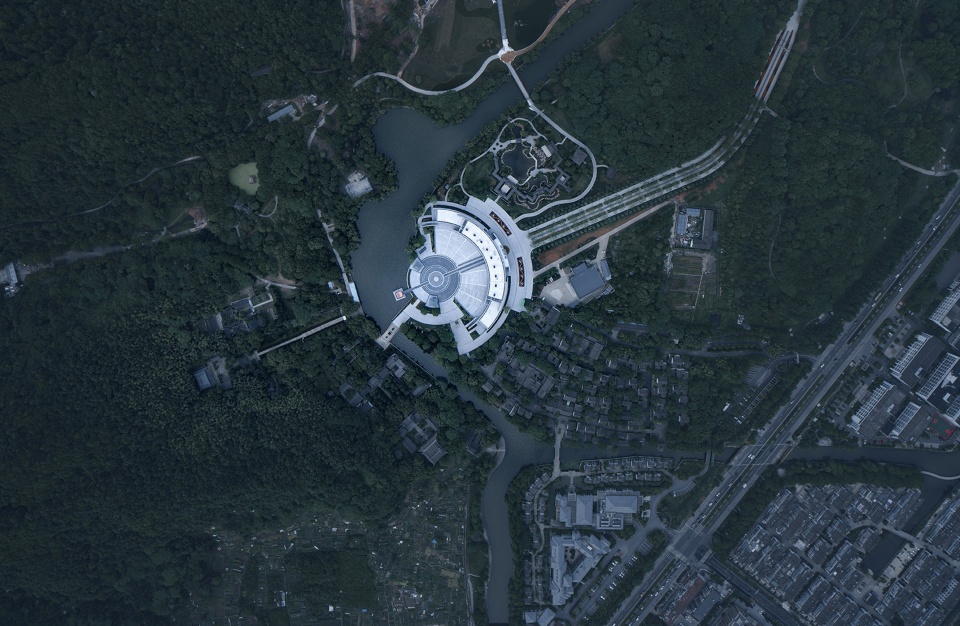
C、神道后半段转向归正:为使整体布局更贴合传统帝陵形制,归正了神道中轴线,使其与洛书台、水上祭坛、大禹陵碑、山中享殿、山顶禹像处在同一轴线上,更加贴合祭祀建筑的礼制,构成了真正意义上的祭禹陵。
C. The second half of the Shinto was turned to normalization: in order to make the overall layout more in line with the traditional imperial mausoleum, the central axis of the Shinto was normalized, so that it was on the same axis with luoshutai, water altar, Dayu mausoleum monument, mountain enjoying hall and Yu statue on the top of the mountain, which was more in line with the ritual system of the sacrificial architecture, forming the sacrificial Yu mausoleum in the true sense.
▼归正后的神道
Reformed Shinto
D、祭禹馆西接神道,神道末端可以看到馆西立面正中处7.2米×10.9米的禹字铜碑,馆顶均布着的象征大禹功德的九鼎,以及远方的大禹神像。祭禹馆建筑通过若干同心的对称厚重弧线石墙形成一道人工屏障,围合出一片独立庄重的祭祀空间,祭禹之路的神秘感与仪式感也得以提升。祭禹馆在形式感极强的弧形墙之间,植入了更多功能,包括候祭室、排练房、休息厅和媒体发布室等。弧形墙的立面主要选用250mm厚度的高级深黑色花岗岩,石材垂直干砌而成,相较传统常用的干挂幕墙更显沉稳厚重,并利用火烧、水洗及抛光等处理手法使石材色调呈现三种深度,在色彩与质感上致敬夏朝尚黑文化。
D. The Yu memorial hall is connected to the Shinto in the West. At the end of the Shinto, 7.2 meters can be seen in the middle of the West facade of the hall × The 10.9-meter-long bronze tablet with Yu character, the nine tripods symbolizing the merits of Yu and the statue of Yu in the distance are distributed on the top of the pavilion. The Yu memorial hall building forms an artificial barrier through a number of concentric symmetrical heavy curved stone walls, enclosing an independent and solemn sacrifice space, and the mystery and ritual of the Yu Memorial Road are also enhanced. Between the arc walls with a strong sense of form, the Yu memorial hall has implanted more functions, including the waiting room, rehearsal room, lounge and media release room. The facade of the arc wall is mainly made of 250mm thick high-grade dark granite, which is vertically dry built. Compared with the traditional dry hanging curtain wall, it is more stable and thick. The stone tone is presented in three depths by means of fire, water washing and polishing, which pays tribute to the black culture of the Xia Dynasty in terms of color and texture.
▼改造后神道尽端的祭禹馆
Yu Memorial Hall at the end of Shinto after reconstruction
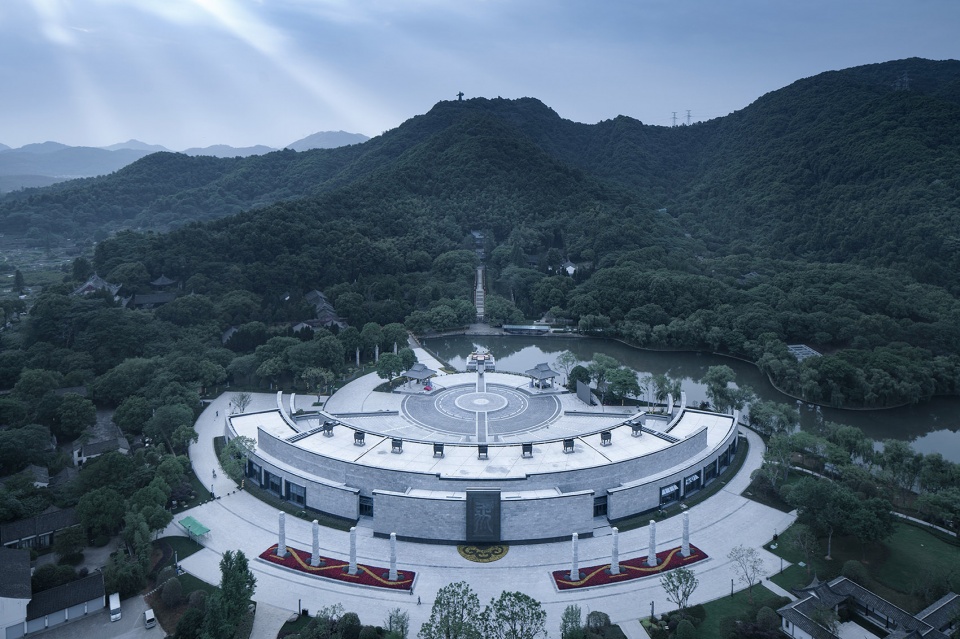
▼神道尽端的祭禹馆
Yu Memorial Hall at the end of Shinto
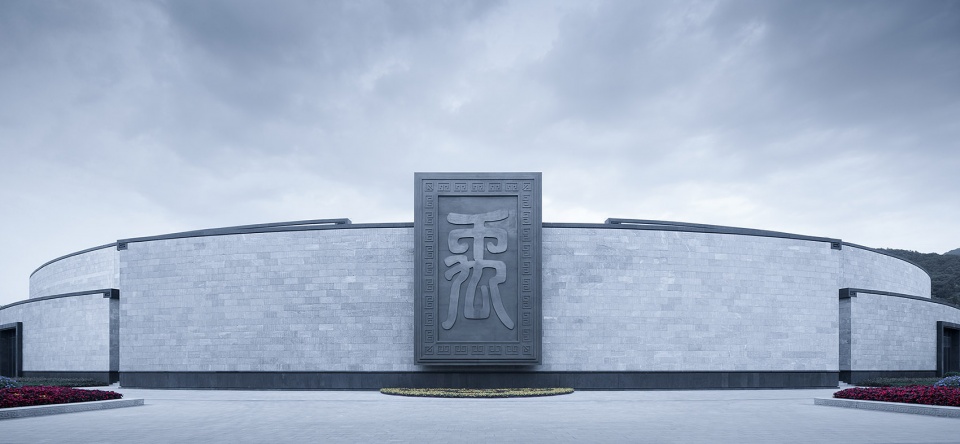
▼神道尽端的祭禹馆
Yu Memorial Hall at the end of Shinto
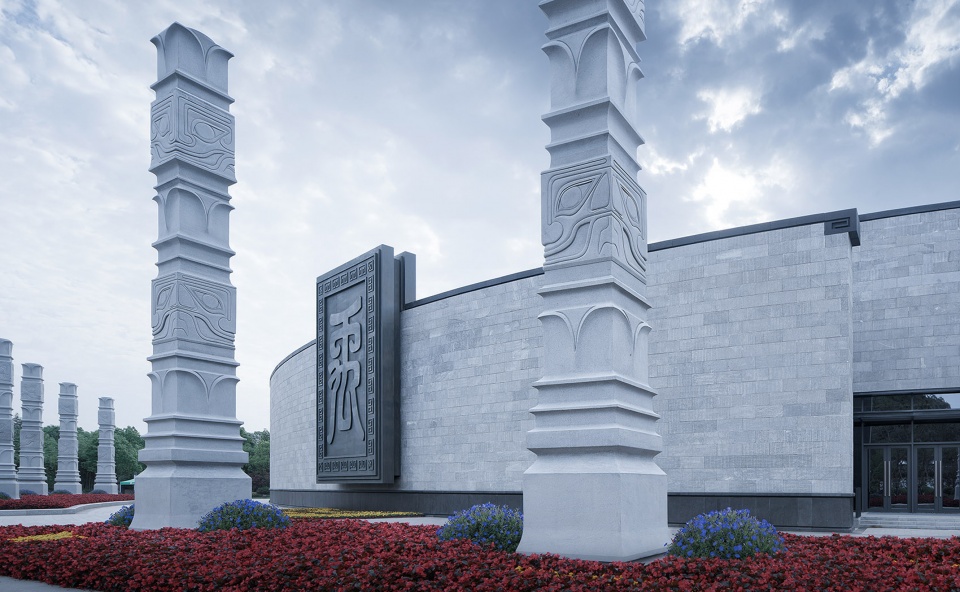
▼三种颜色深度组合的石材干砌片墙
Dry masonry wall with three color depth combinations
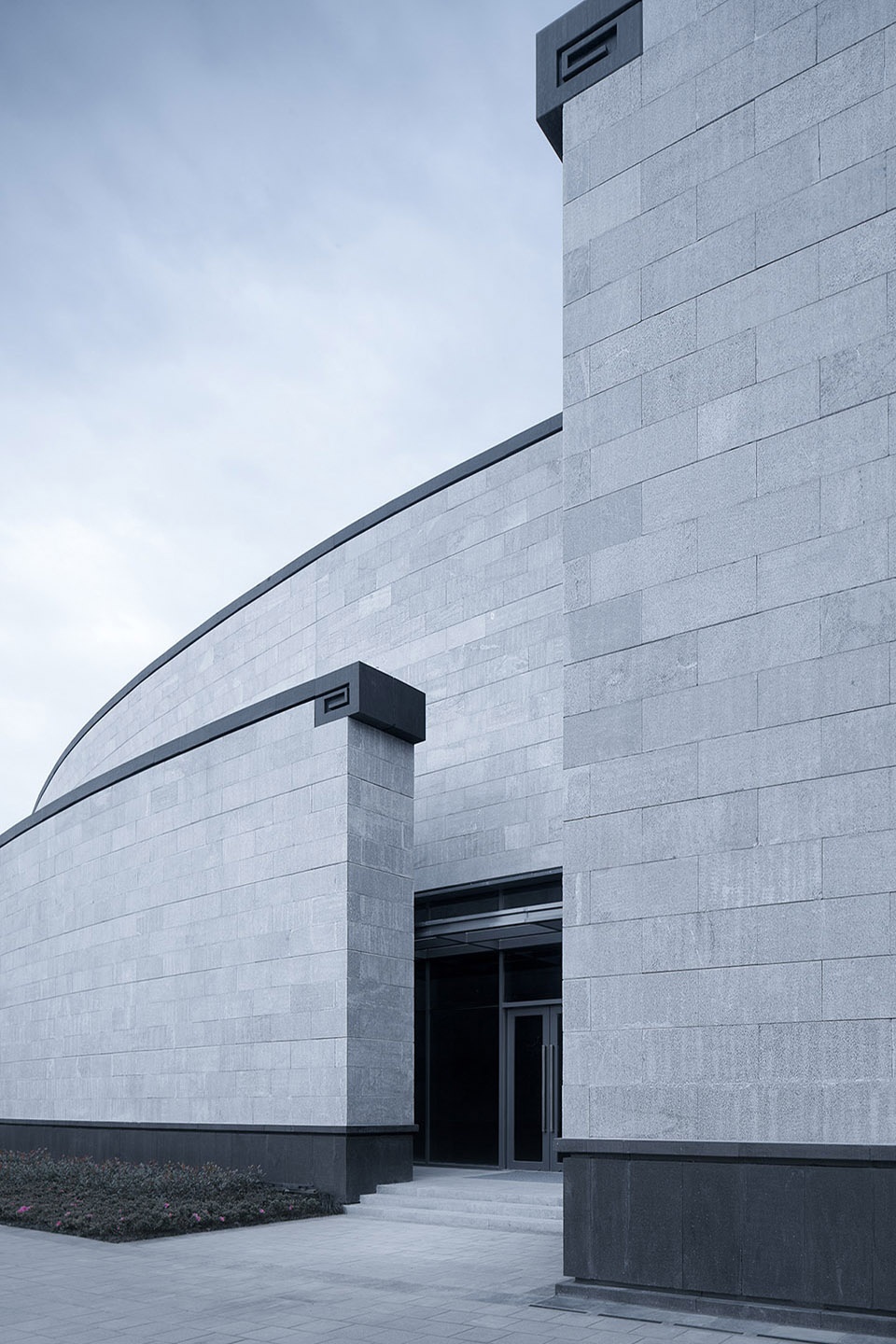
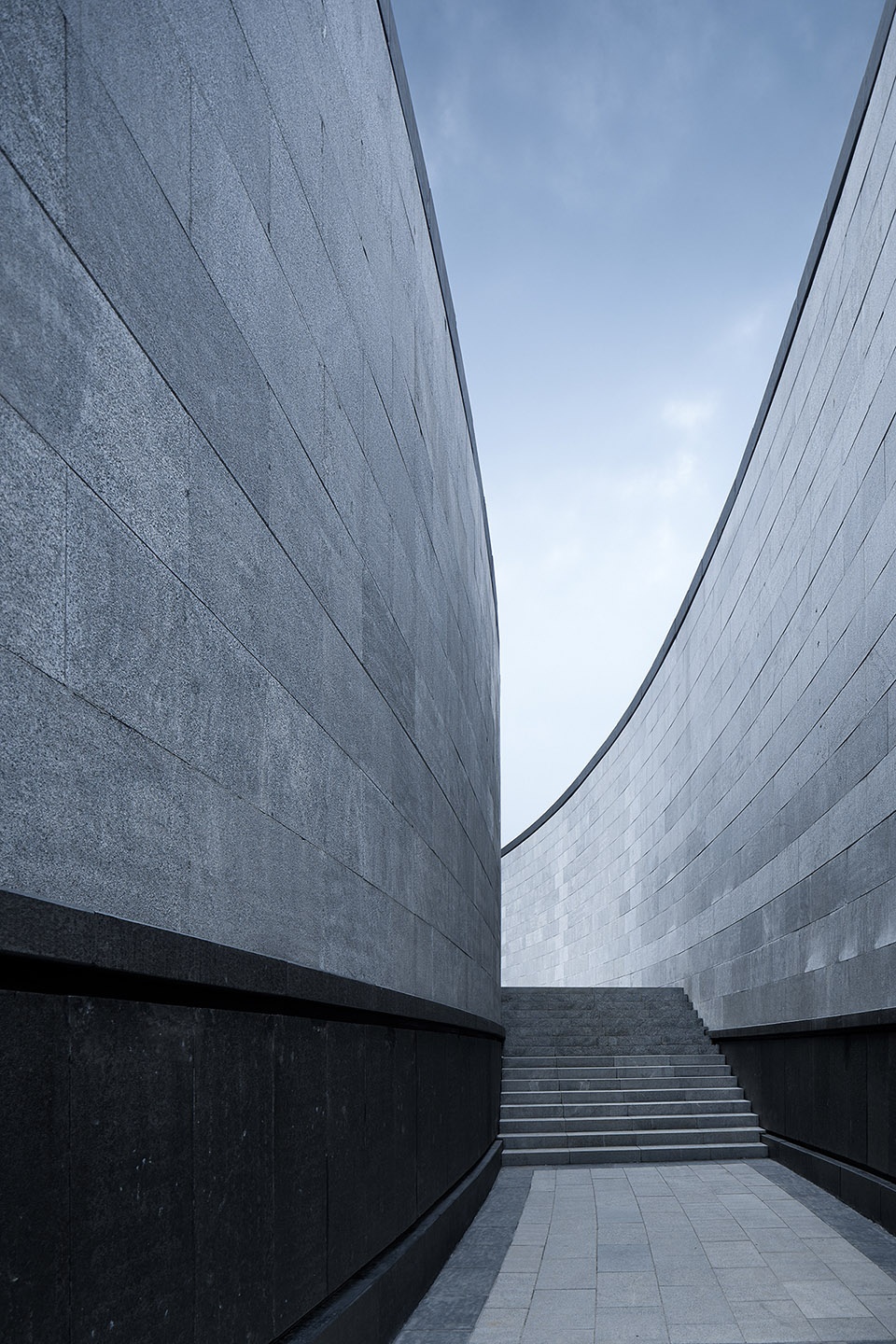
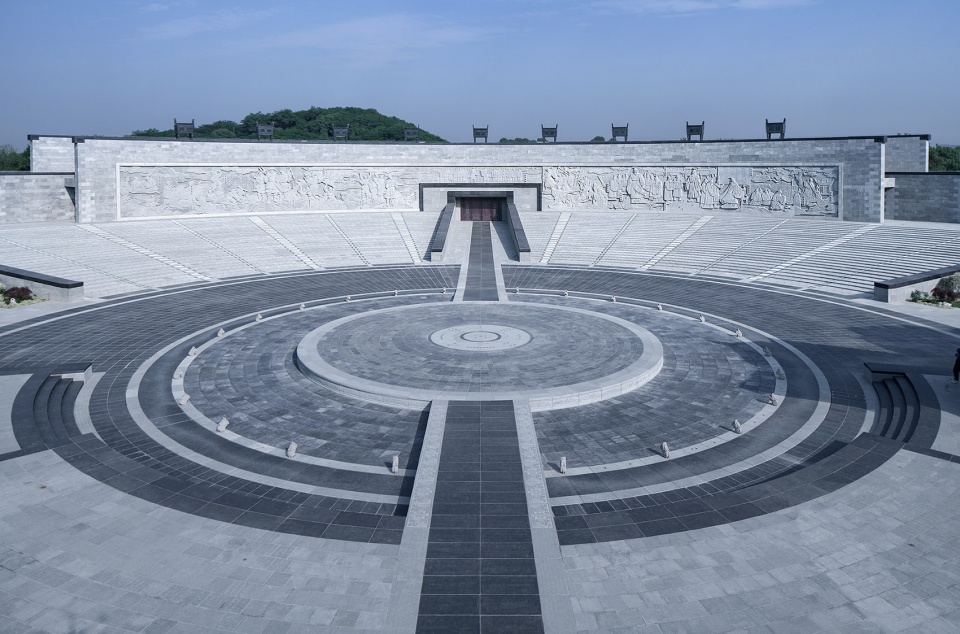
E、祭禹广场由环形祭禹馆围合而成,游人沿神道绕过轴线末端的祭禹馆便可豁然抵达。出于帝陵风水的考量,原广场圆心及两侧的原钟鼓亭、水上祭台的位置保持不变,但将原中心的太极台改为洛书台,与大禹文化更加契合。广场半径扩大至66米,改造后的广场观演容量也将由原来的1000人扩至10000人。为了祭祀仪式时建立观演人员更舒适的视线关系,广场看台采用扇形阶梯式形制,向外升起扩散,呼应同心环形建造的祭禹馆,向心聚集下沉,形成圆形的洛书台。祭祀时主祭人员需要在祭禹馆候祭并从内侧正中的甬道走出,穿过广场中心的洛书台,经6个台阶后到达水上祭台,举行相关的祭祀仪式。
E. The Yu Memorial square is surrounded by a circular Yu memorial hall, and visitors can arrive suddenly by bypassing the Yu Memorial Hall at the end of the axis along the Shinto. In consideration of the geomantic omen of the imperial mausoleum, the positions of the original center of the square and the original bell and drum pavilions and water sacrificial platforms on both sides remain unchanged, but the Tai Chi platform in the original center is changed into the Luoshu platform, which is more in line with the Dayu culture. The radius of the square will be expanded to 66 meters, and the capacity of the transformed square will be expanded from 1000 to 10000. In order to establish a more comfortable line of sight for the audience during the sacrificial ceremony, the square stand adopts a fan-shaped ladder shape, which rises and spreads outward, echoes the concentric ring-shaped sacrificial Yu hall, gathers and sinks centripetally, forming a circular luoshutai. During the sacrifice, the chief priests need to wait for the sacrifice in the Yu memorial hall, walk out from the inner central corridor, pass through the Luoshu platform in the center of the square, and reach the water altar after passing through 6 steps to hold relevant sacrifice ceremonies.
F、大禹陵碑、山中享殿、山顶禹像位于轴线的末端,均以更新保护为主。
F. The monument of the great Yu mausoleum, the hall of enjoyment in the mountain and the Yu statue on the top of the mountain are located at the end of the axis, and they are mainly renewed and protected.
▼绕过祭禹馆后抵达广场
Bypass the memorial hall and arrive at the square
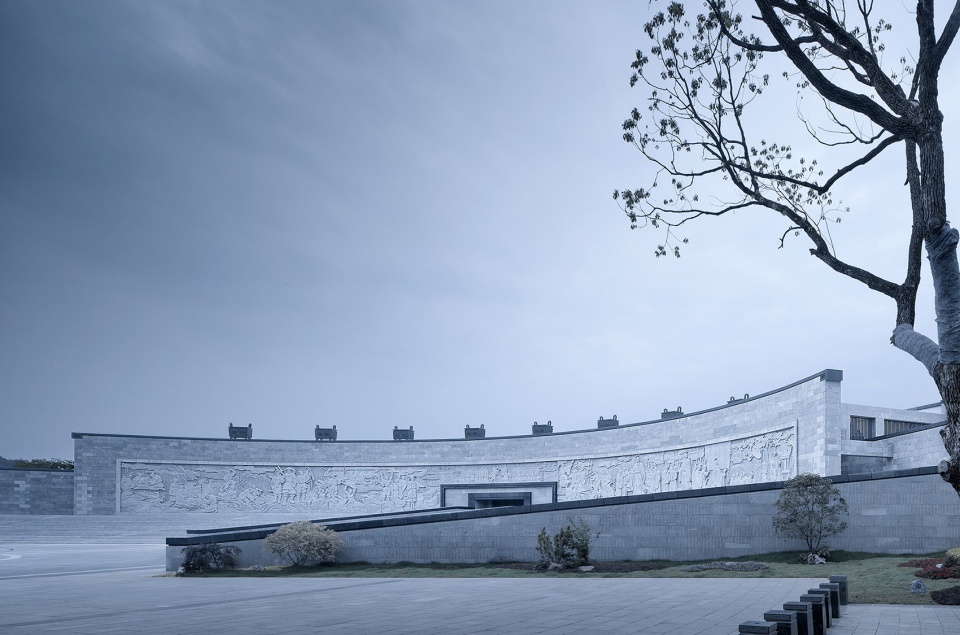
▼祭禹广场正立面
Facade of Jiyu square
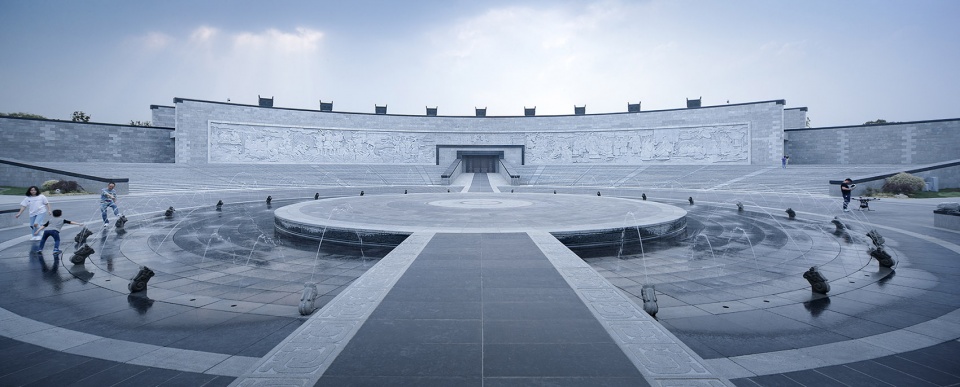
▼扇形阶梯式观演台
Fan shaped stepped stage
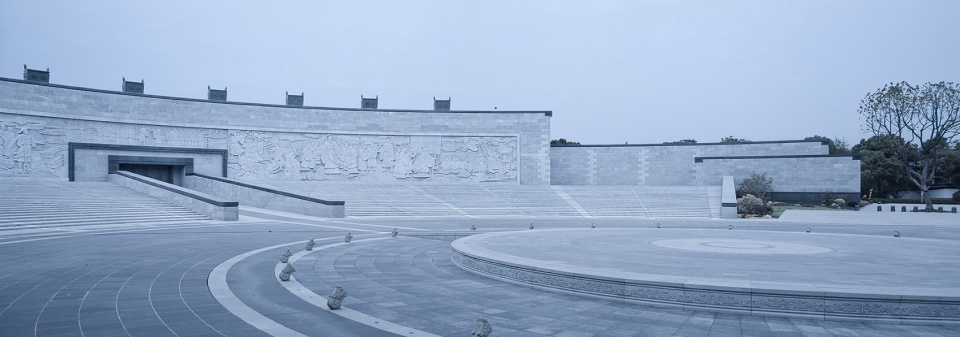
▼广场地坪采用黑色砖石,致敬夏朝尚黑文化
Black bricks and stones are used on the ground of the square to pay tribute to the black culture of the Xia Dynasty
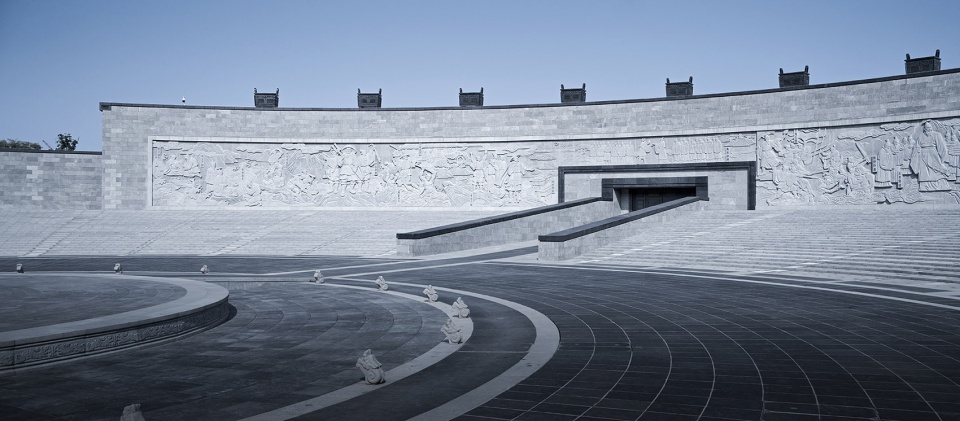
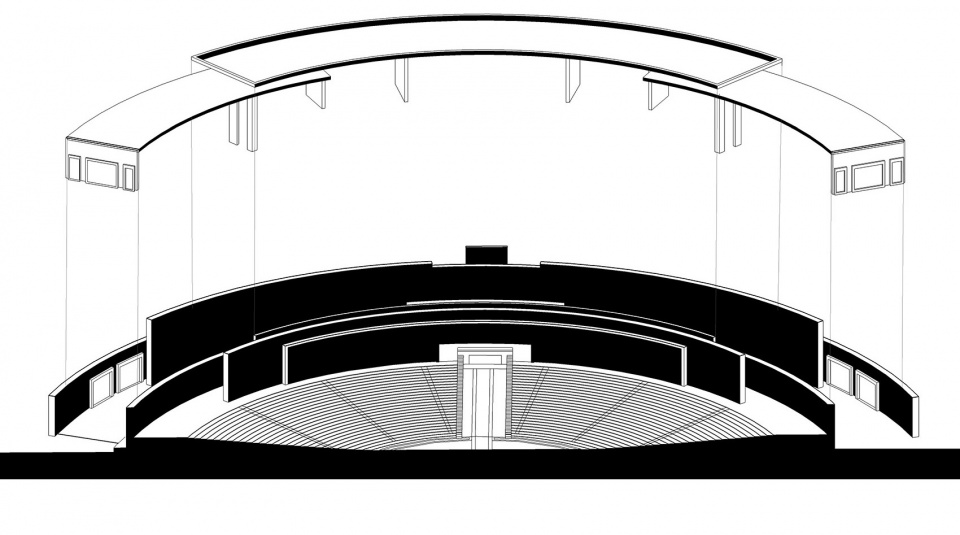
▼祭禹广场分解图
Exploded view of Jiyu square
▼广场圆心和鼓楼
Square center and Drum Tower
▼甬道
Corridor
“天美禹德,而劳其功,使百鸟还为民田”,大禹精神作为民族精神之重要渊源,彰显着中华传统文化的根与魂。祭禹广场——作为禹陵空间之精髓和历史背景下的新作,不主张随心所欲的创作,而应注重综述历史文本前提下的再写。它将兼顾文物保护与景区更新,塑造史今交错、功能复合的纪念性空间,丰富人们的空间体验,引导游人深入感受、思考并传递这一场所的精神实质,这种力量将始终被凝聚、传承与弘扬,并生生不息,源远流长。
As an important source of national spirit, Dayu spirit shows the root and soul of Chinese traditional culture. Yu Memorial square, as the essence of Yu mausoleum space and a new work under the historical background, does not advocate arbitrary creation, but should pay attention to re writing on the premise of summarizing historical texts. It will give consideration to the protection of cultural relics and the renewal of scenic spots, create a memorial space with staggered history and present and complex functions, enrich people's space experience, and guide visitors to deeply feel, think about and pass on the spiritual essence of this place. This power will always be condensed, inherited and promoted, and will continue to grow with a long history.
▼大禹陵一期总平面图
General layout of Dayu mausoleum phase I
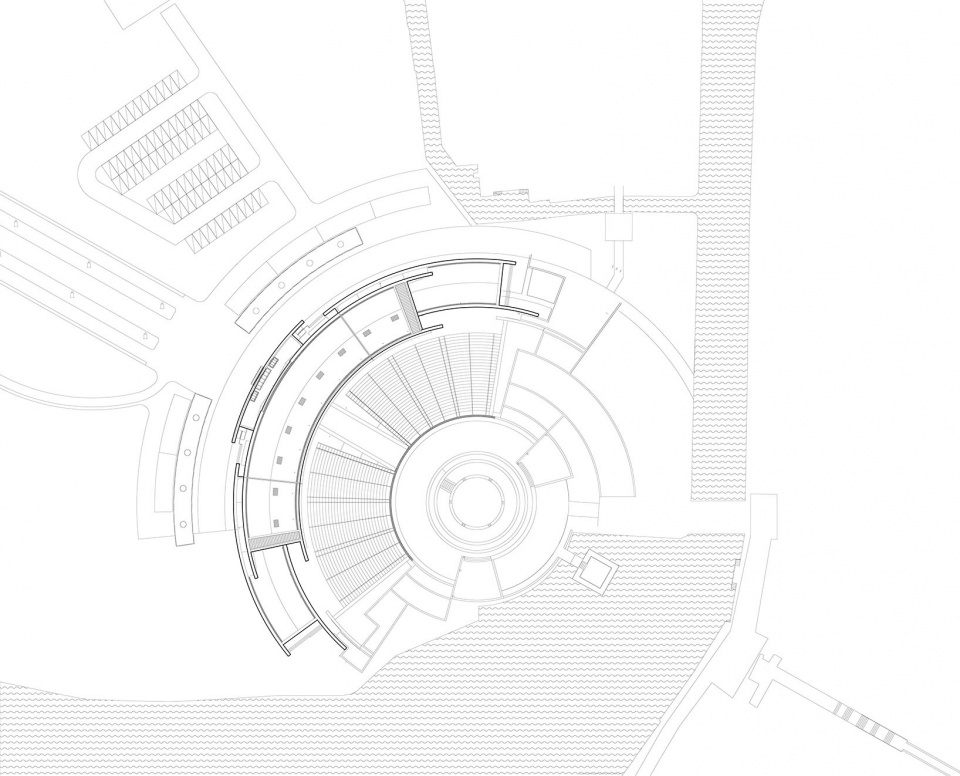
▼祭禹广场屋顶平面图
Roof plan of Jiyu square
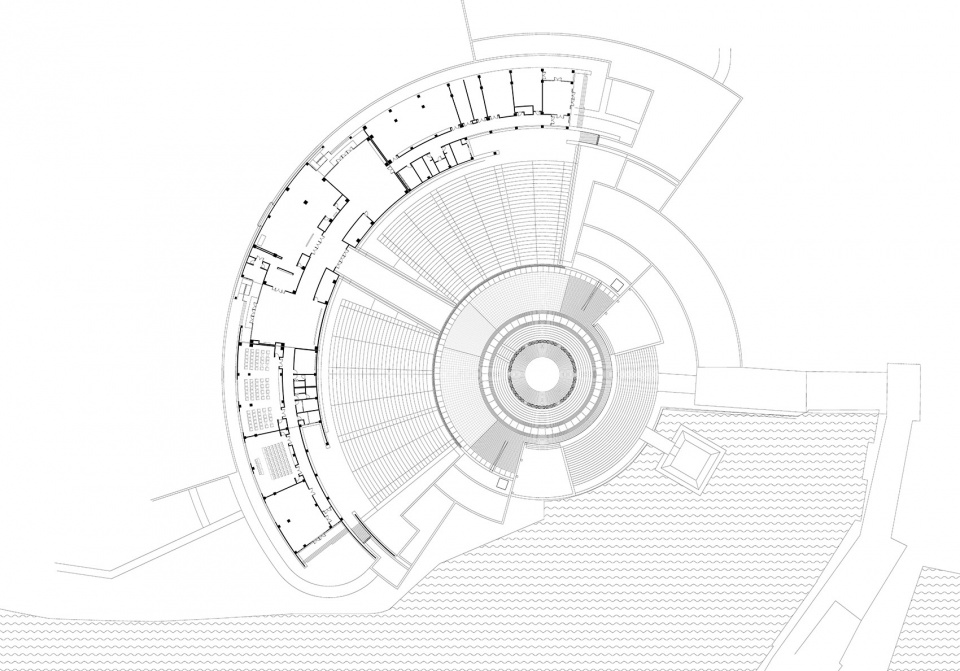
▼祭禹广场一层平面图
First floor plan of Jiyu square
▼祭禹馆西立面
West elevation of Yu Memorial Hall

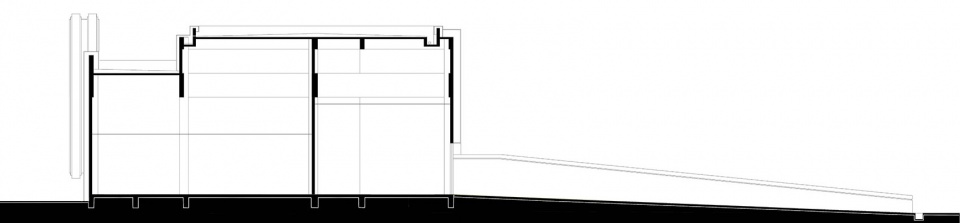
▼祭禹广场剖面图
Profile of Jiyu square
项目信息
项目名称:绍兴大禹陵景区祭禹广场改扩建提升工程
文章分类:景观设计-景区
设计公司:浙江大学建筑设计研究院
项目地址:浙江,绍兴
项目规模:3285.27平方米
竣工时间:2020年6月
项目年份:2019年3月
Project information
Project Name: reconstruction, expansion and upgrading project of Yu Memorial square in Shaoxing Dayu Mausoleum Scenic Area
Article category: Landscape Design - scenic spots
Design company: Architectural Design Institute of Zhejiang University
Project address: Shaoxing, Zhejiang
Project scale: 3285.27 square meters
Completion time: June 2020
Project year: March 2019