里斯本4所模块化幼儿园,葡萄牙 / SUMMARY
在本项目中,SUMMARY事务所首次尝试使用一种基于U形钢筋混凝土构件的三维预制模块化建造体系。这些构件可根据功能需求进行组合与叠加,从而形成建筑。该体系极大加快了施工进度:仅用13个月,4所幼儿园便在里斯本不同地点同步建成。
In this project, the studio explored for the first time a three-dimensional prefabricated and modular system based on U-shaped reinforced concrete pieces, which are grouped and overlapped according to the program’s needs. This system allowed for a significant acceleration of the construction process: in just 13 months, these 4 kindergartens were simultaneously built in different locations across the city of Lisbon.
▼项目概览,overall of the project
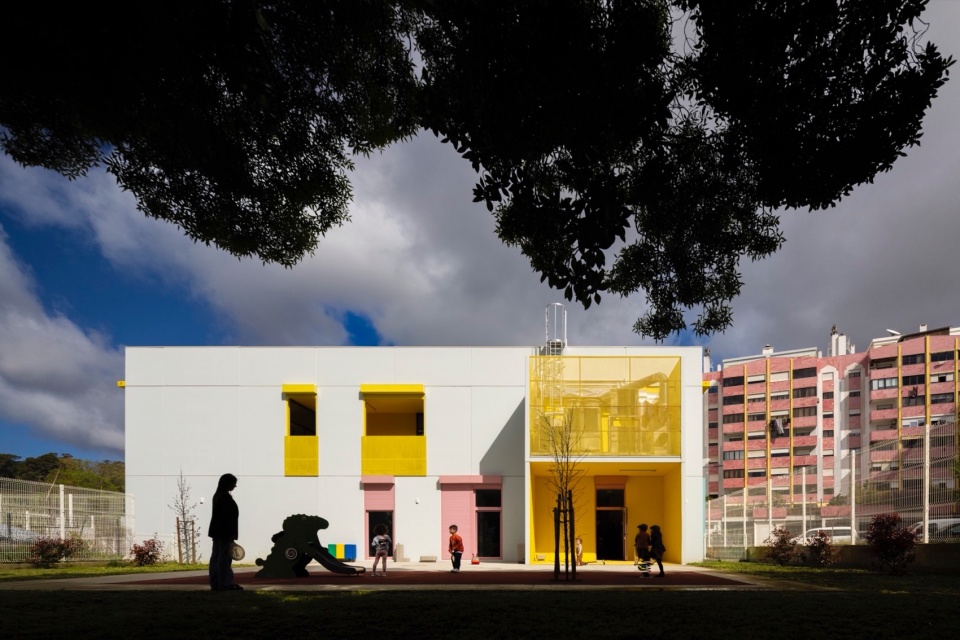
这些建筑是应里斯本市政府发起的公共项目竞赛而建,旨在于城市多个区域新建幼儿园。设计从一套标准化的解决方案出发,追求经济高效、快速建造,同时通过统一的视觉形象,使这些设施在城市中具备辨识度。
▼区位图,location
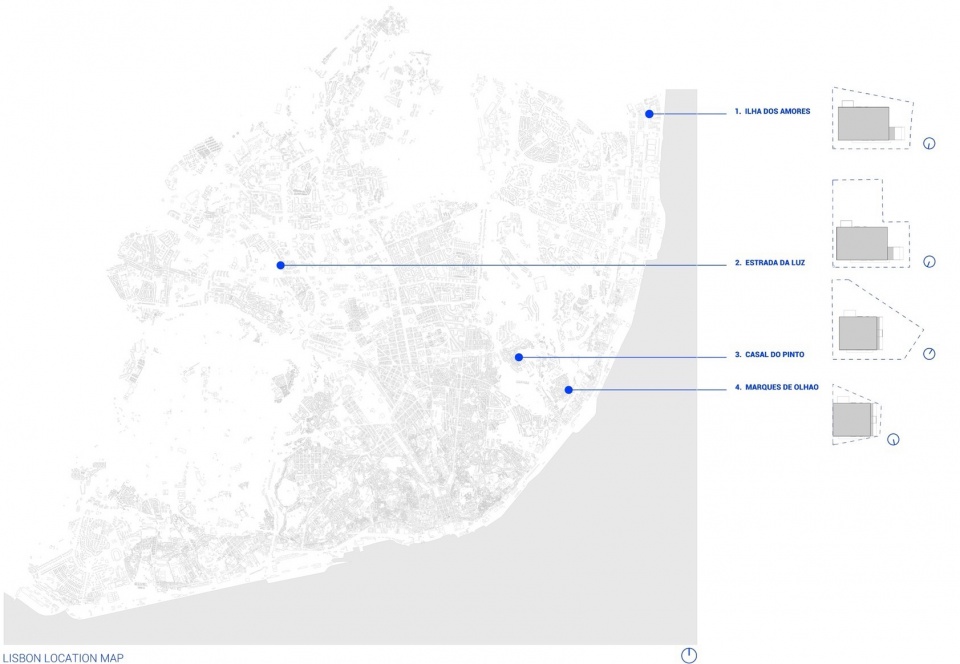
The buildings emerged in response to a public initiative project for the construction of kindergartens in various areas in Lisbon, through a competition launched by the Municipality. The starting point was a standardized solution that allowed for economic intervention, quick execution, and the creation of an identifiable image, making these facilities recognizable throughout the city.
▼建筑立面,facade of the nursery
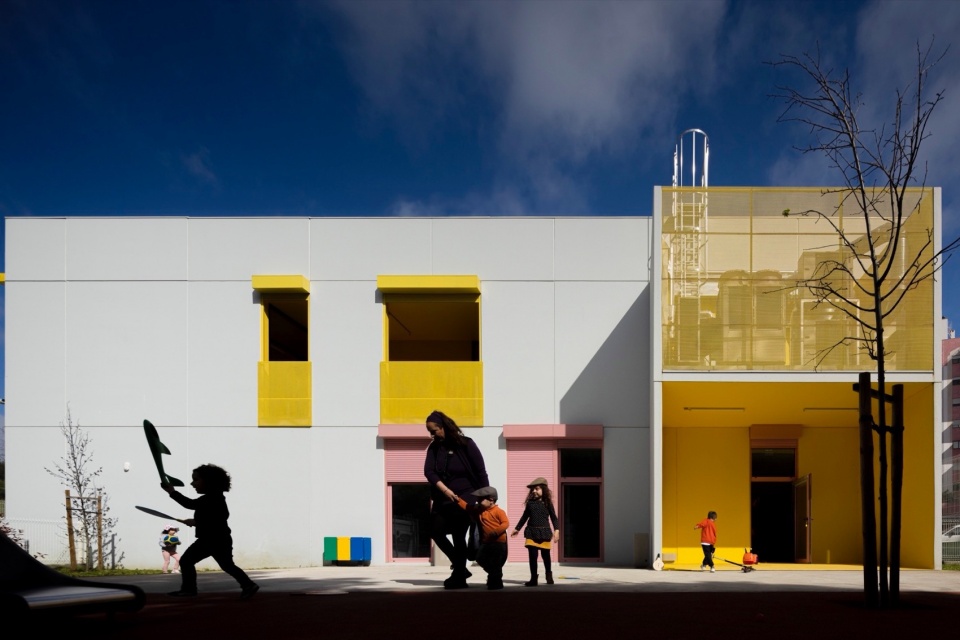
方案基于U形钢筋混凝土结构模块的叠合而成,塑造了建筑的主要表面。该材料的选用不仅与模块化建构体系相关,也回应了竞赛中对“高耐久性、低维护成本”解决方案的明确要求。
▼分析图,analysis diagram

The proposal is based on the overlapping of structural modules in reinforced concrete, with a “U” section, shaping the building’s surfaces. The choice of this material is linked not only to the modular configuration but also to the requirement evident in the competition program to ensure solutions of high and proven durability and low maintenance.
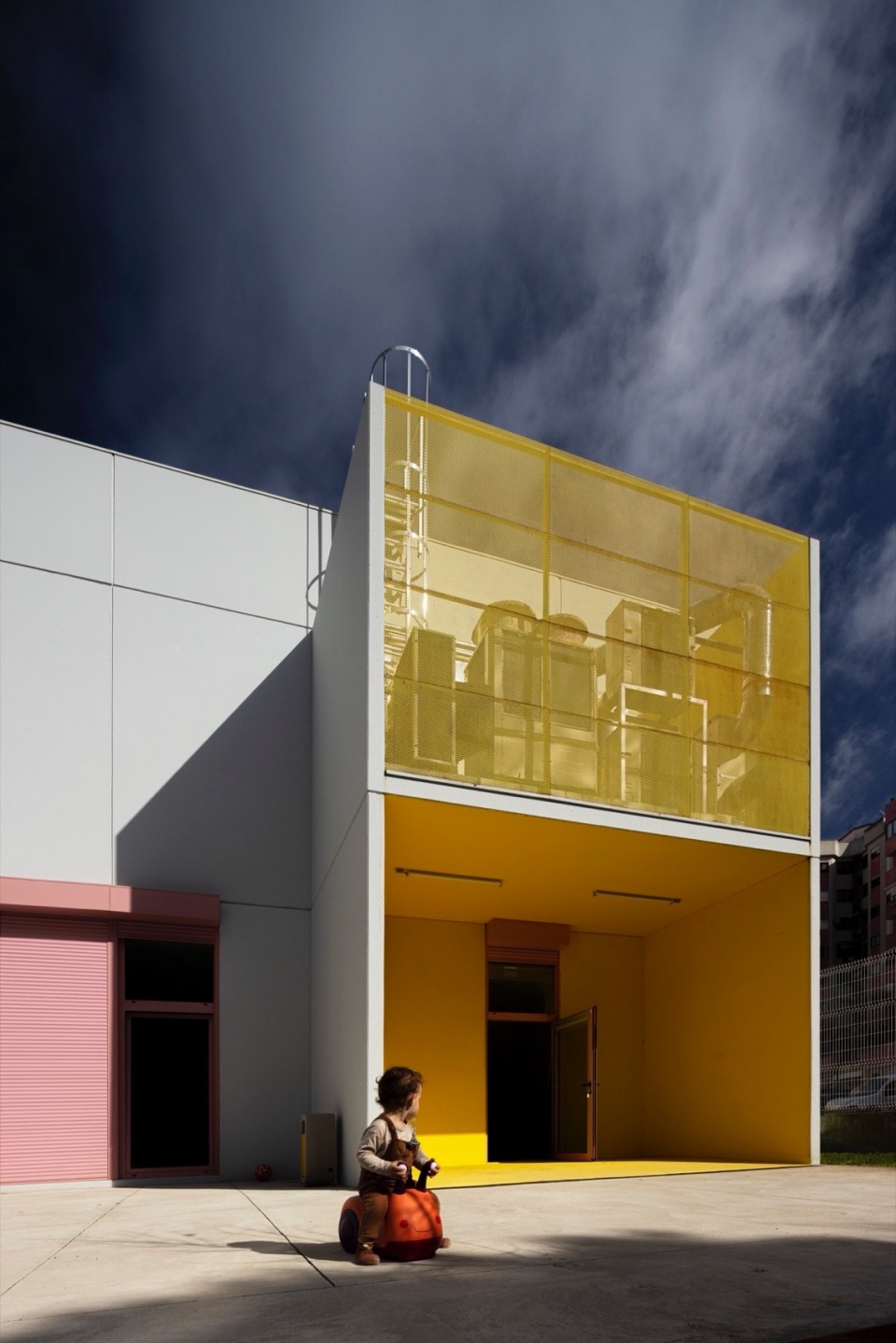
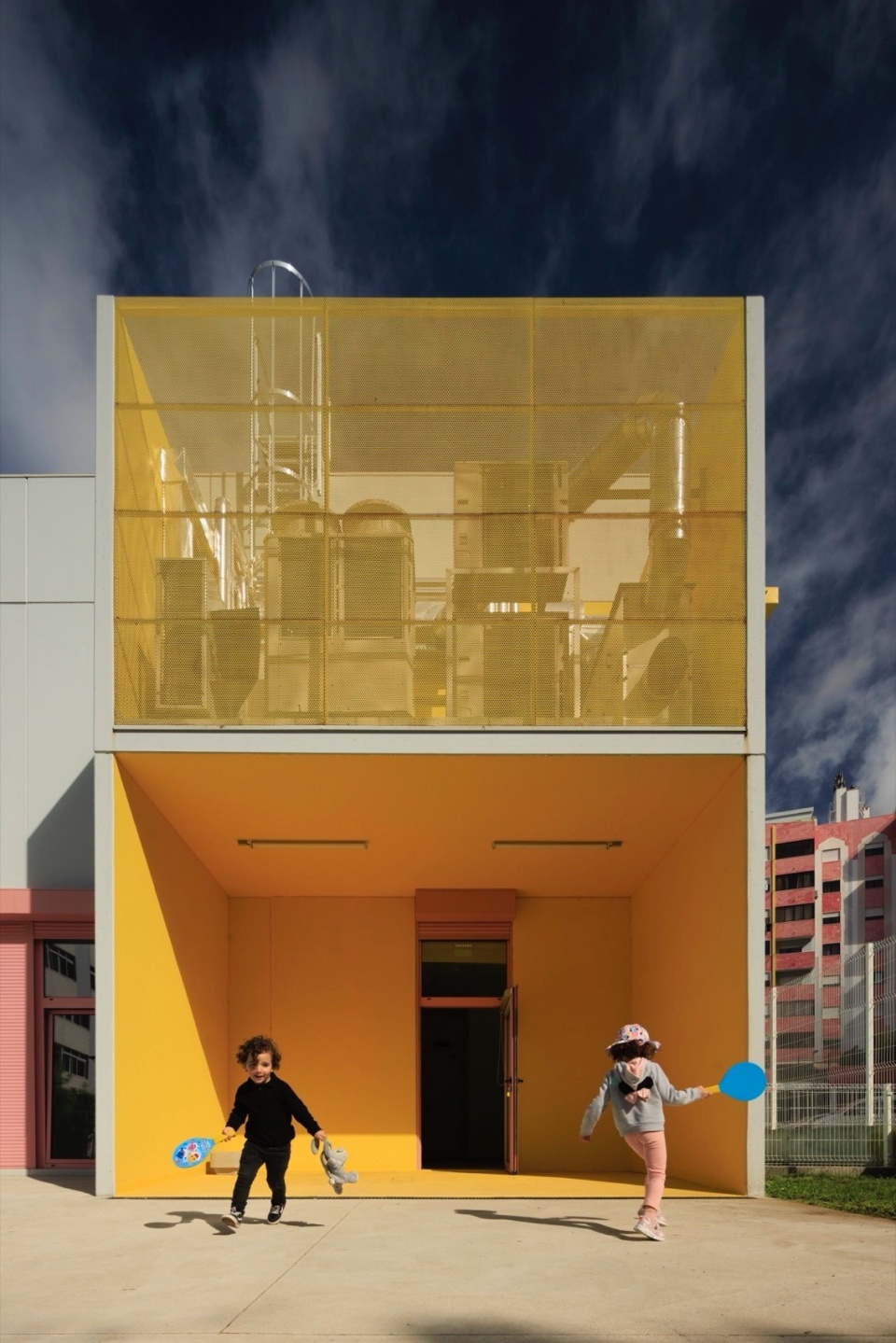
▼入口,entrance
▼彩色立面,colorful facade
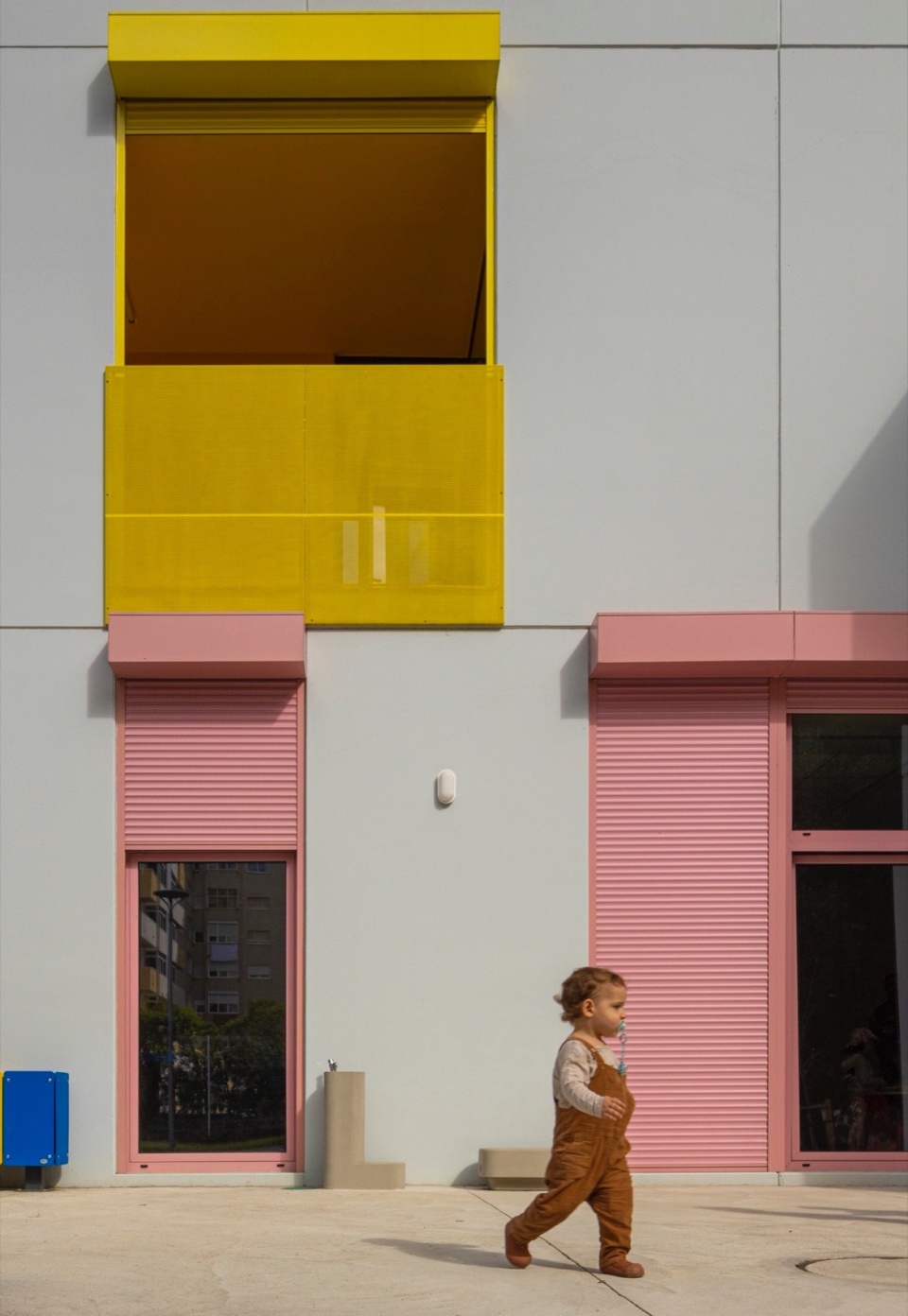
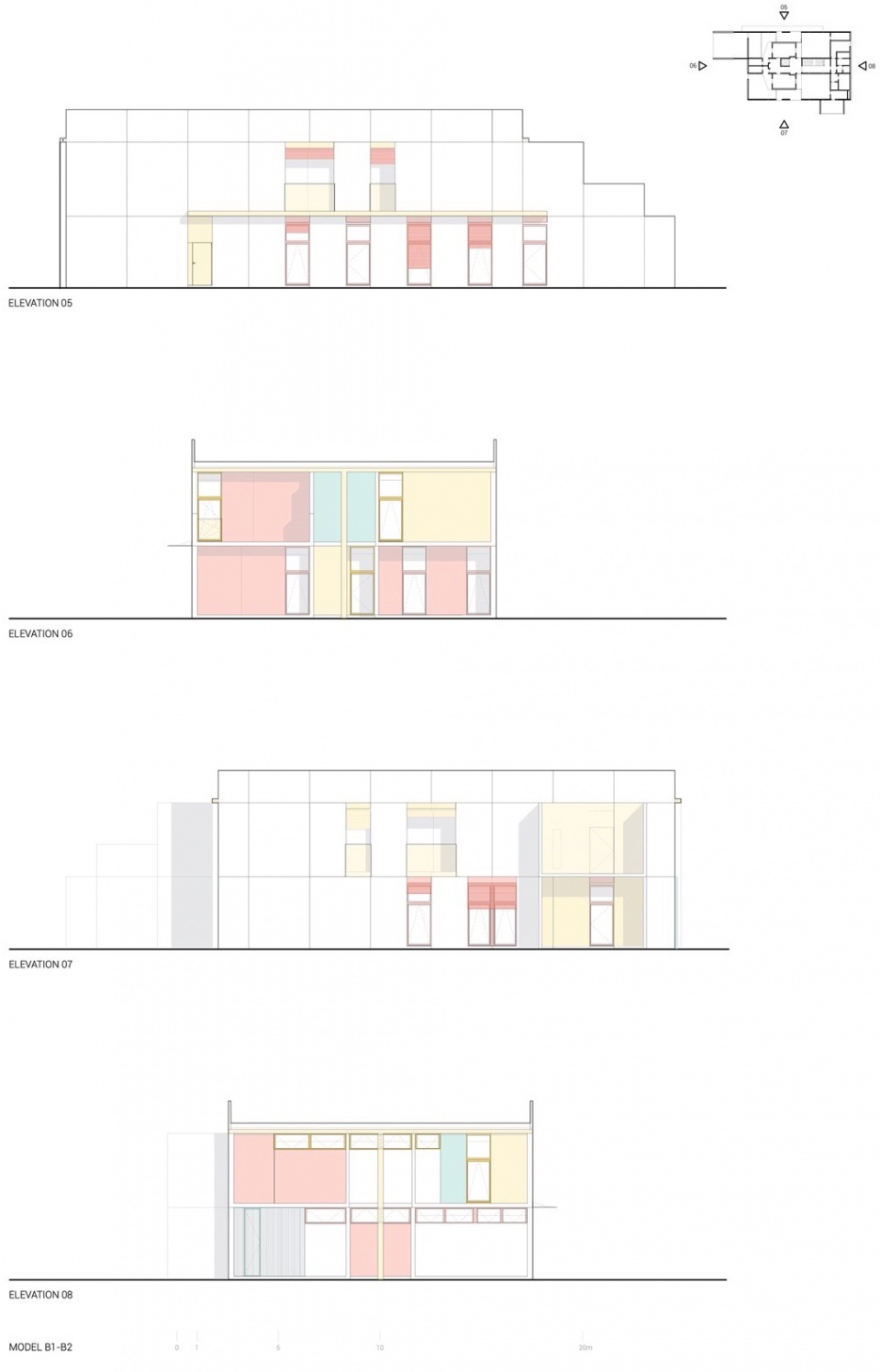
标准化的设计方案自然带来了四所幼儿园在形式上的相似性。建筑的外观形象源自模块化构造系统的特性与限制,从外部可清晰读取其构造逻辑——模块之间的拼缝清晰可见,结构如何组装与支撑也一目了然。
▼分析图,analysis diagram
▼分析图,analysis diagram
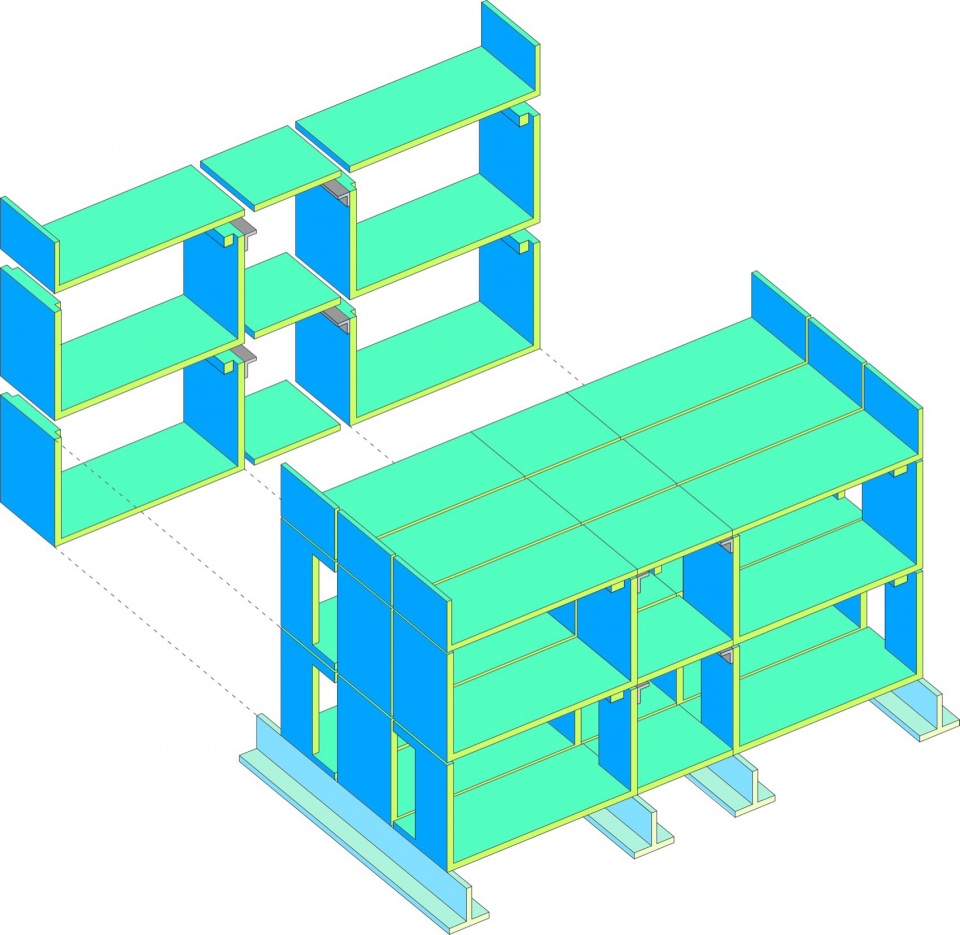
The standardization of solutions naturally implies a formal analogy among the four kindergartens. The image of the buildings arises from the potentialities and limitations imposed by the modular construction system. From the exterior, a clear tectonic reading of the buildings is possible – the joints are visible, and one can discern each of the modules and the way they are arranged and supported.
▼钢筋混凝土结构模块的叠合,
the superimposition of reinforced concrete structural modules
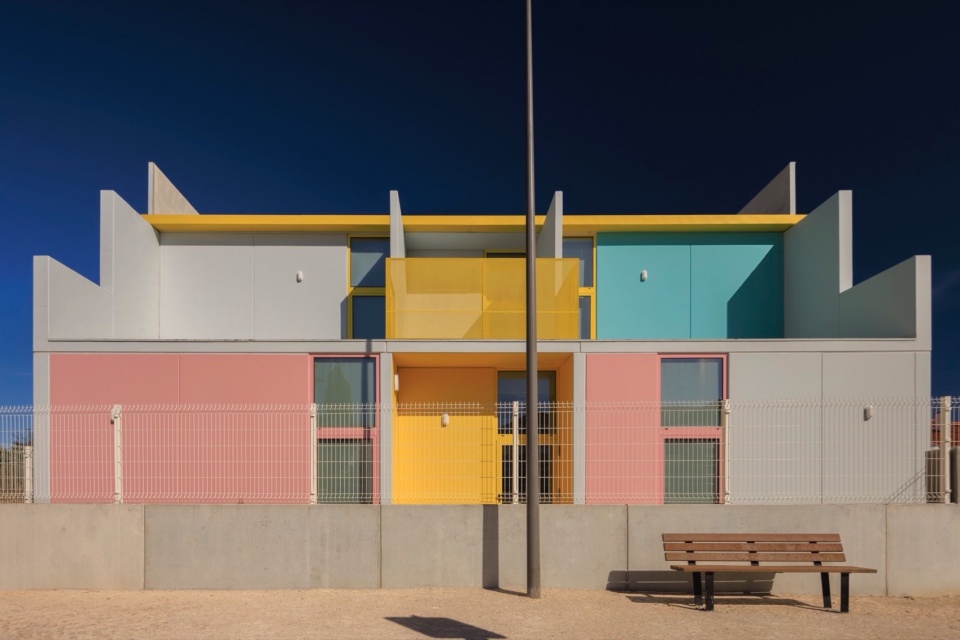
▼模块之间的拼缝清晰可见,the seams between the modules are clearly visible
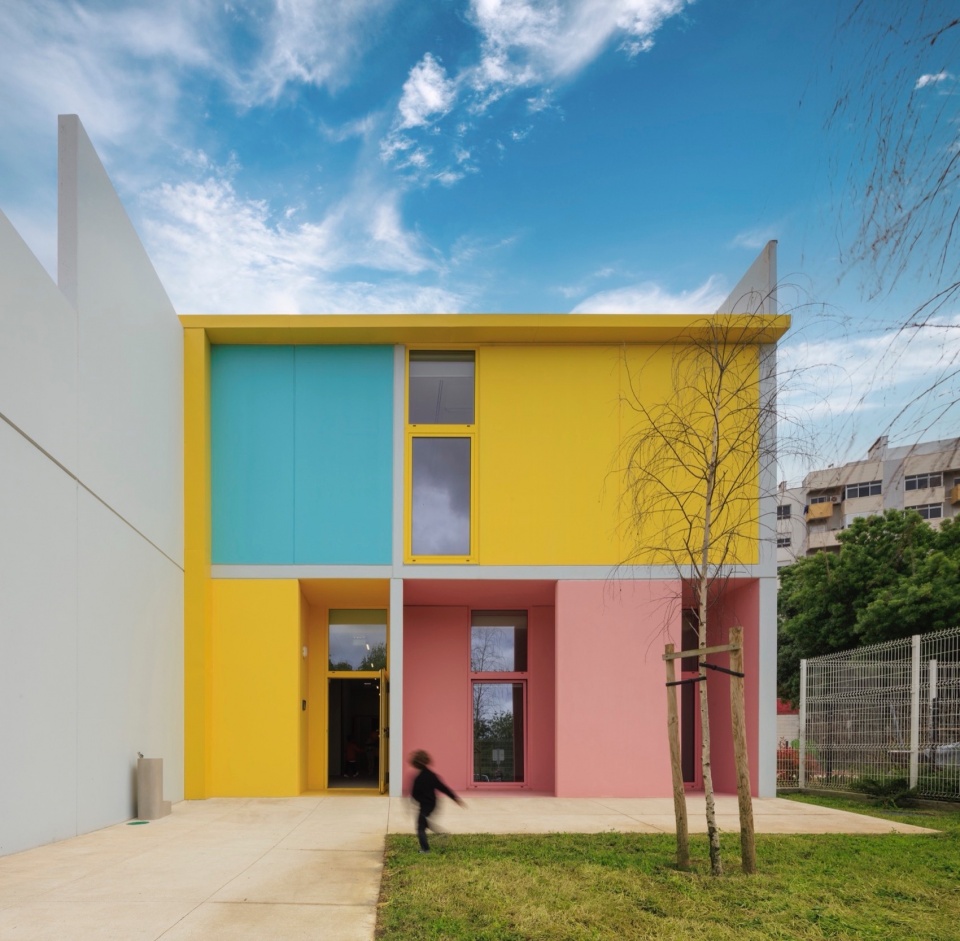
▼色彩的拼合,the combination of colors
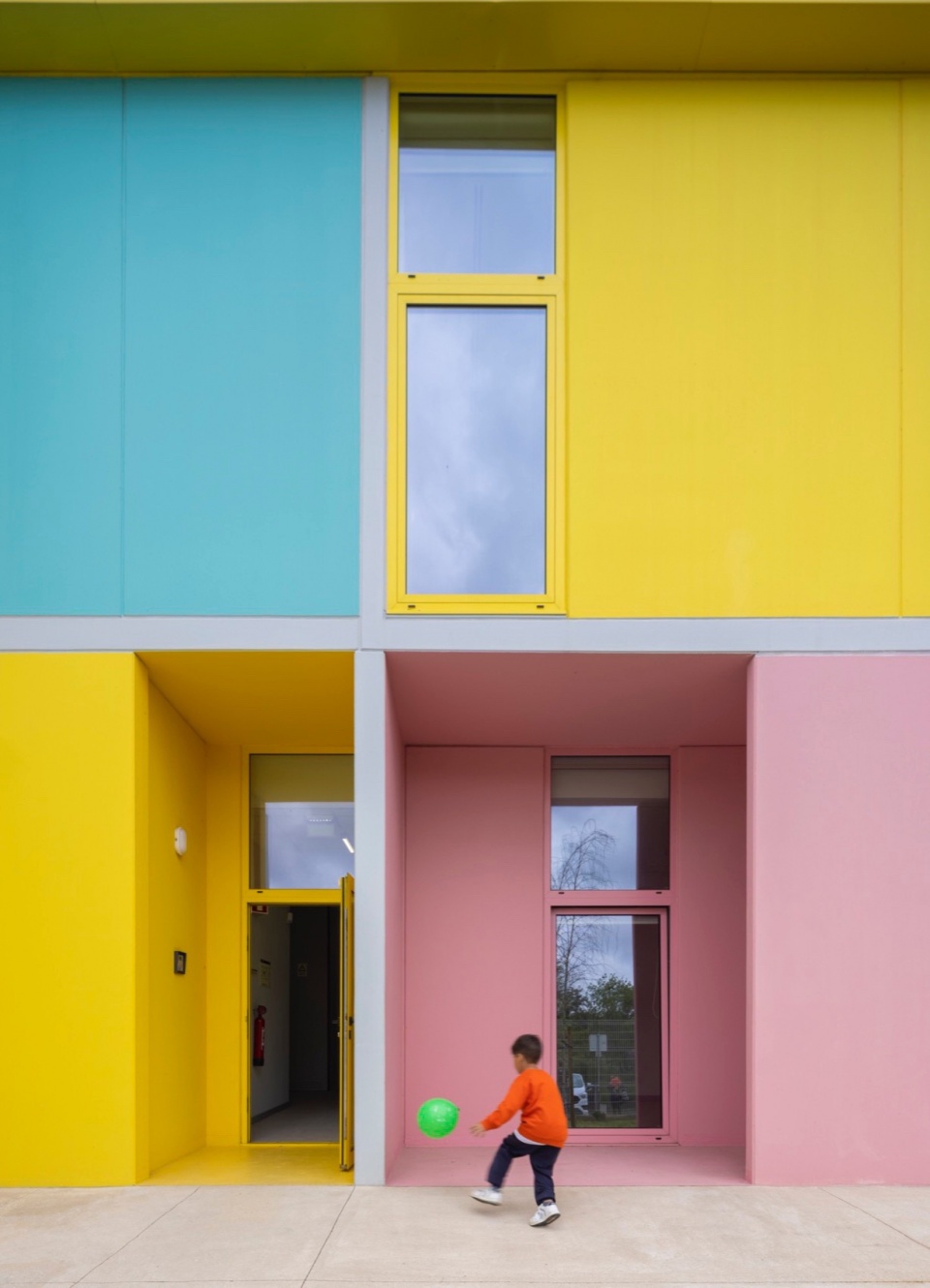
▼立面细部,details of the facade
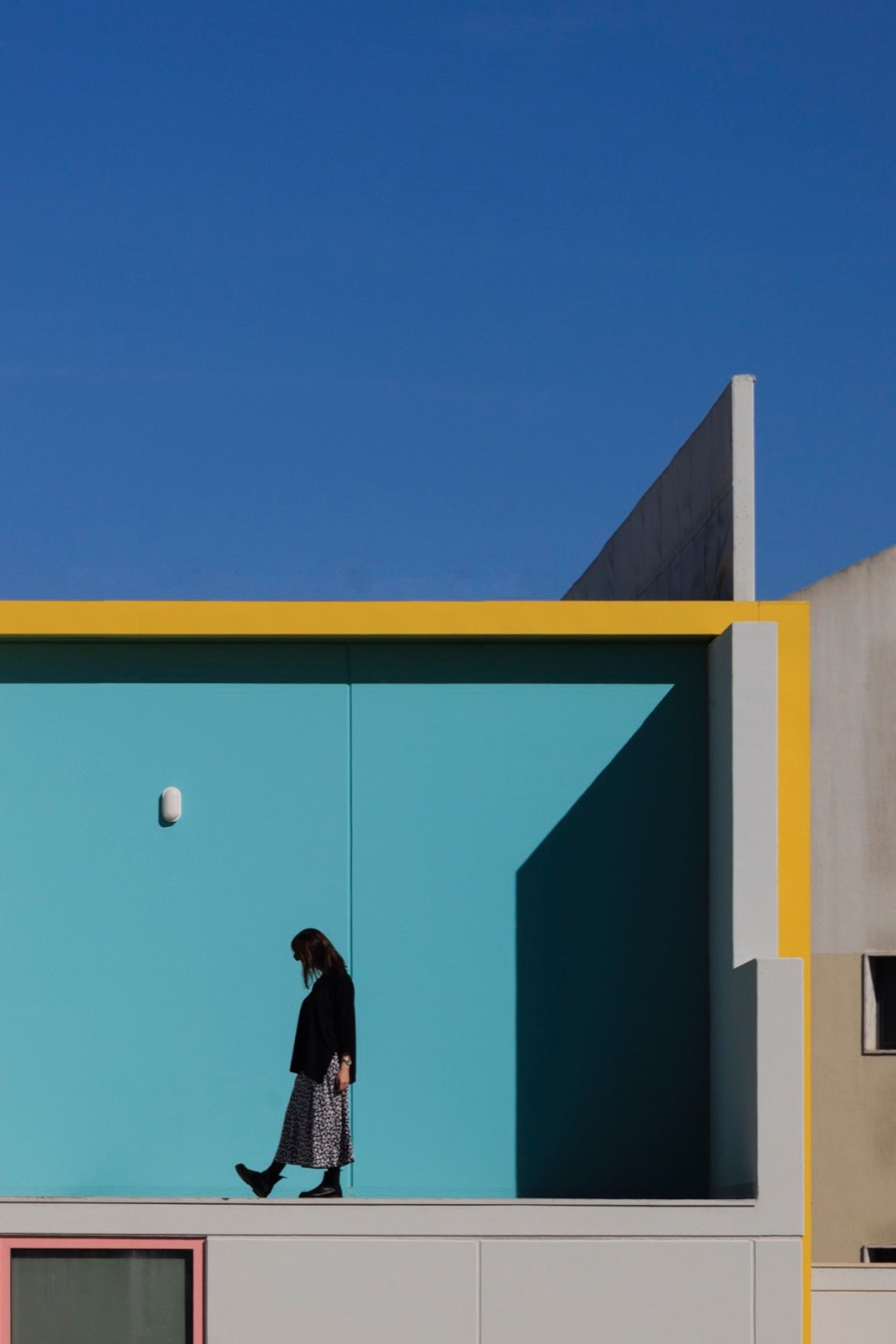
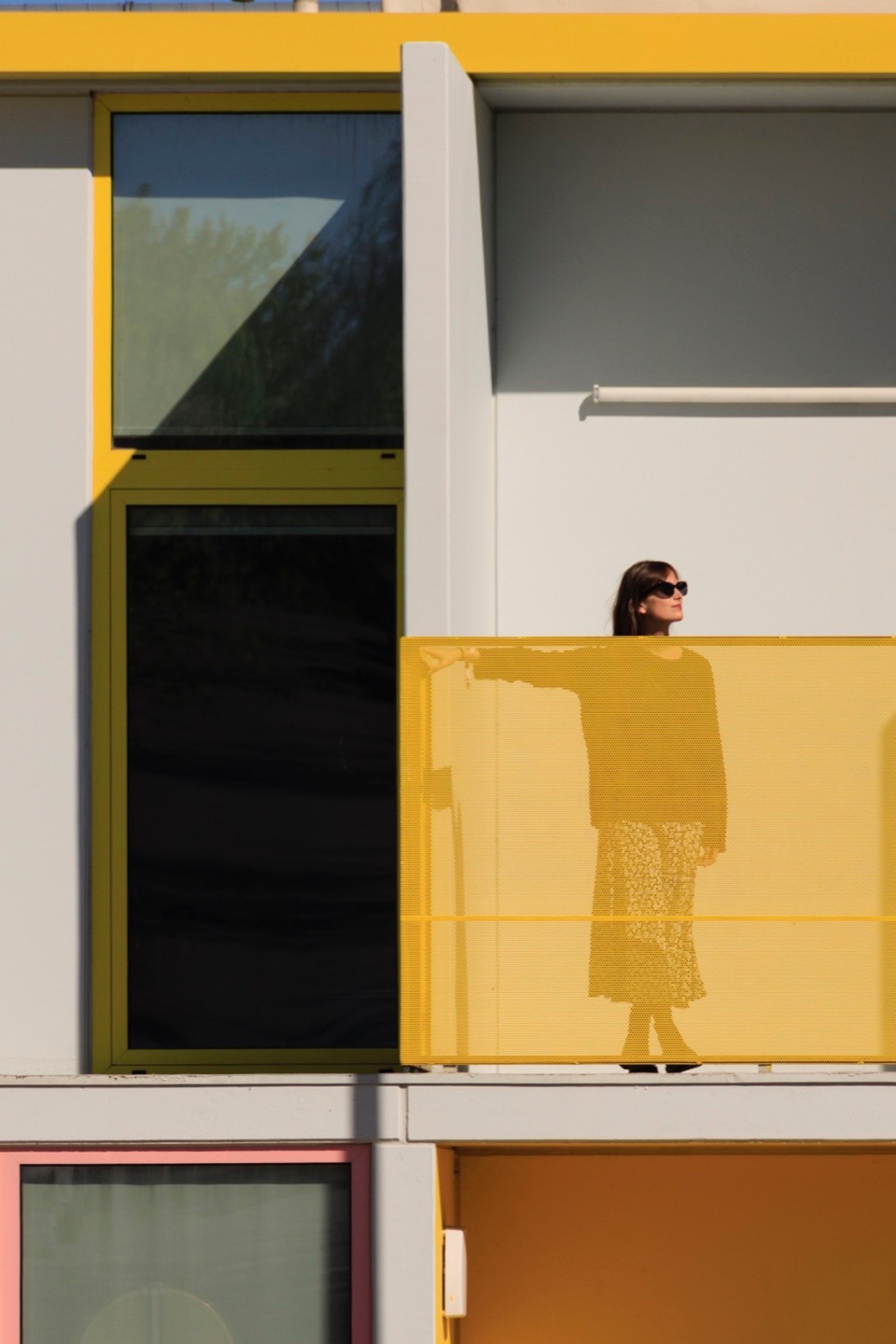
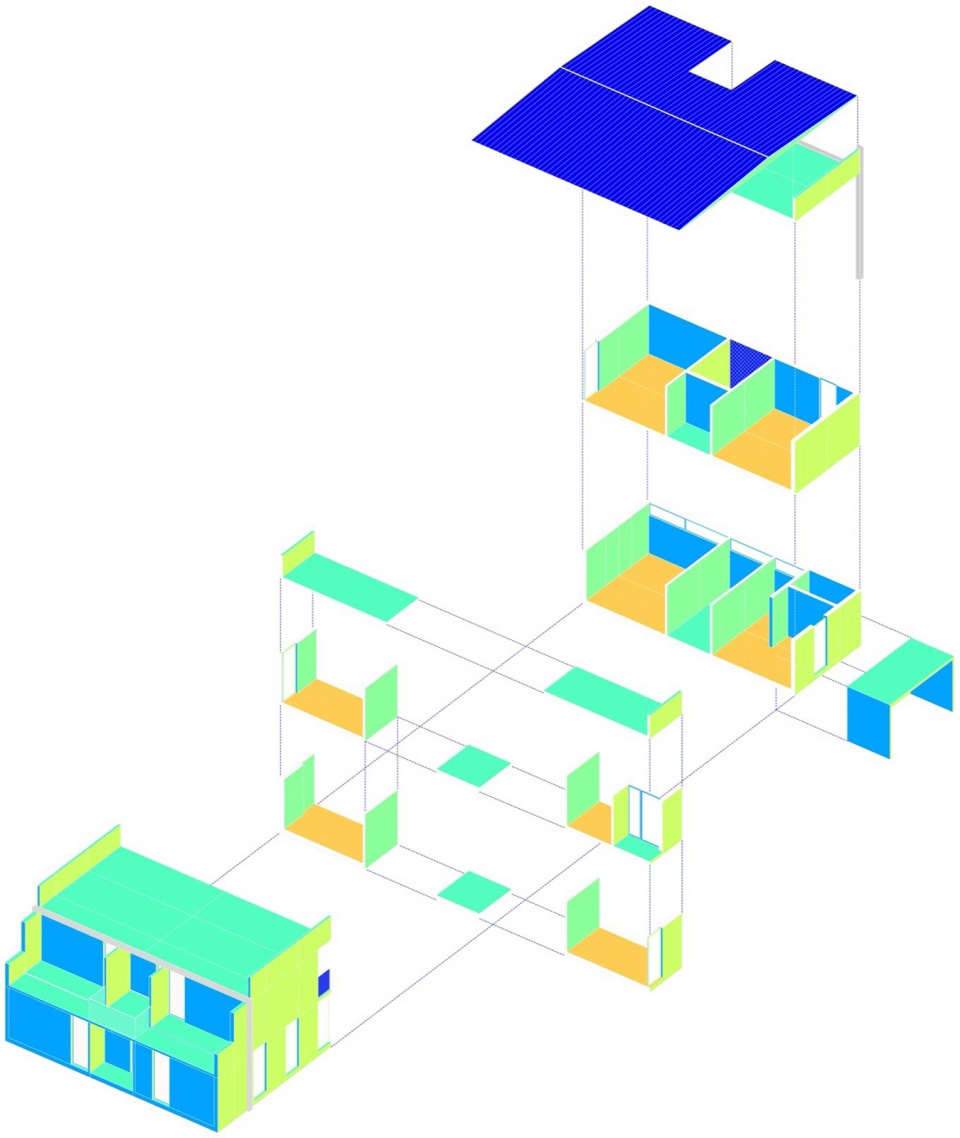
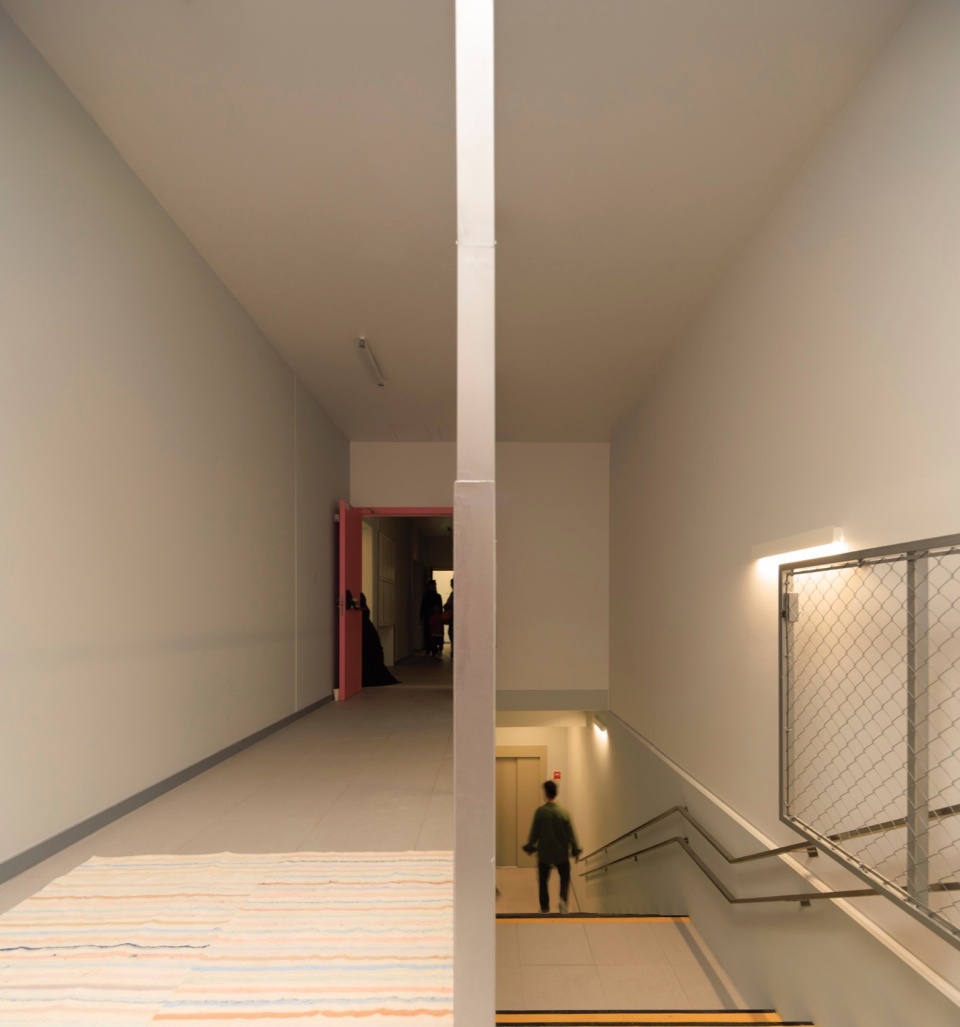
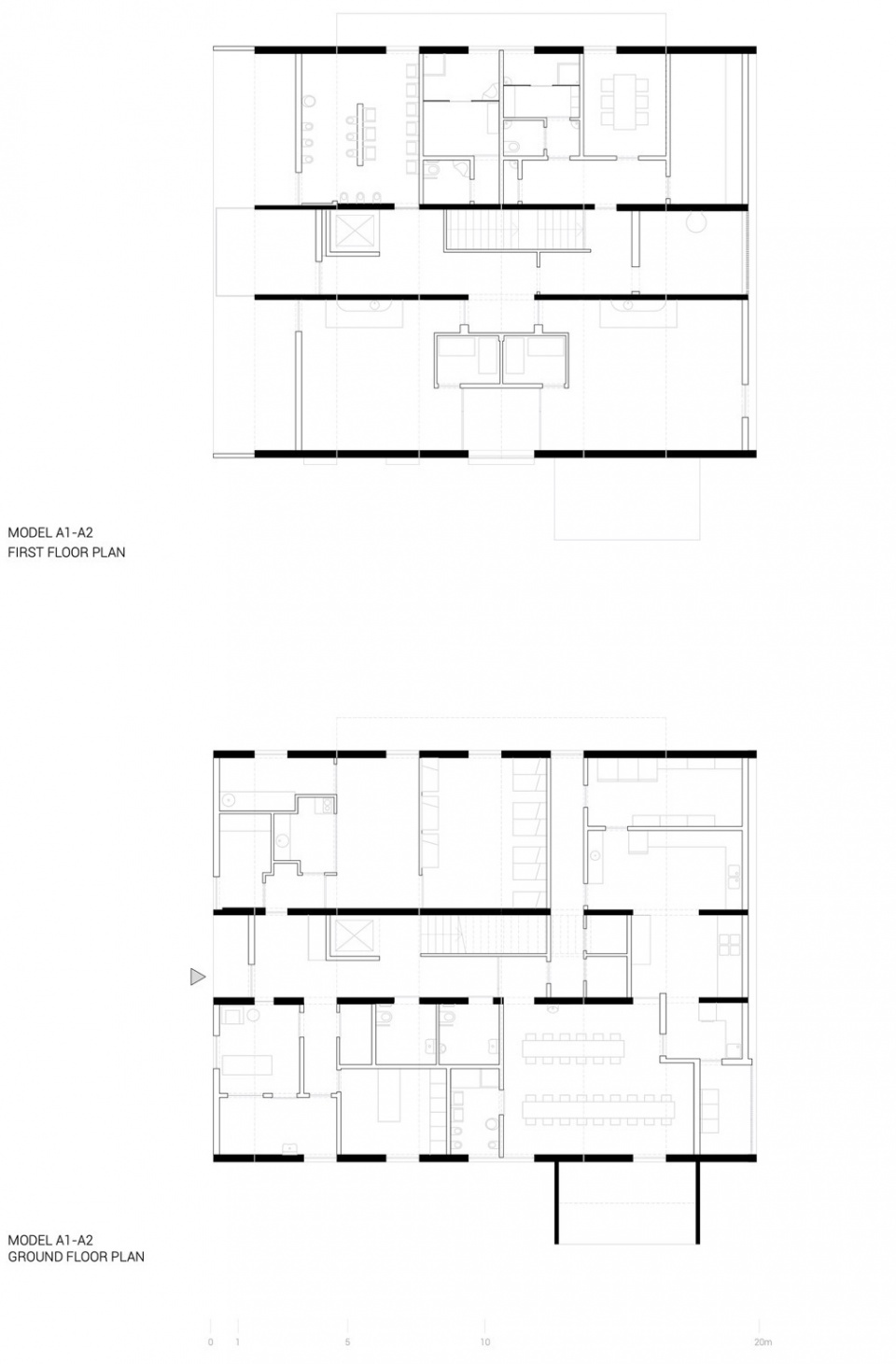
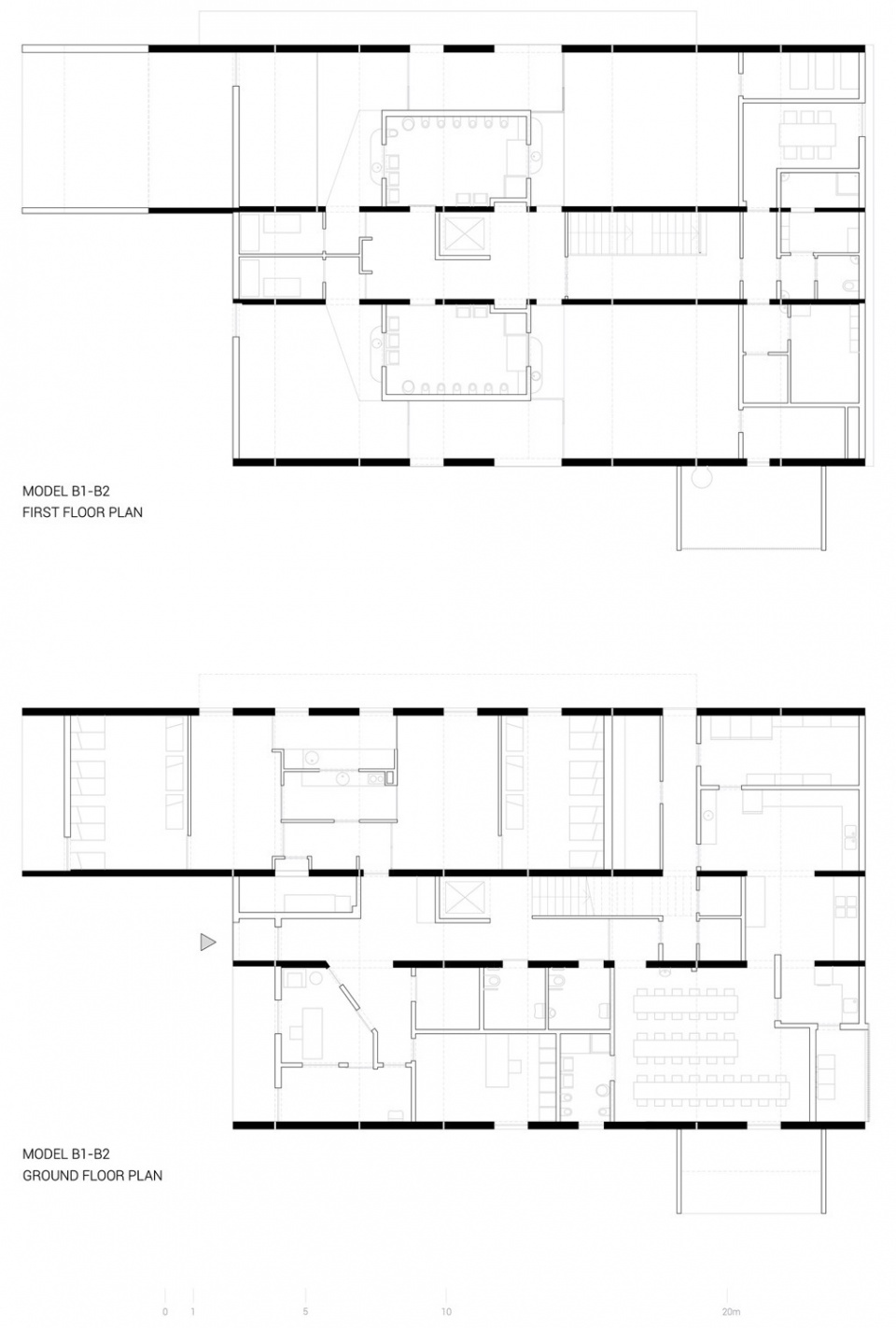
4所幼儿园在空间组织上具有相似的逻辑与功能分布:两个叠合的“U形”模块群体形成多个房间,中间设有一条中央走廊,承担所有的水平与垂直交通(包括通道、楼梯、电梯)。暖通空调系统的主干线也集中布置在这条走廊中,通过侧墙连接至各房间。交通空间线性、直接,提升了使用者的方向感和视线通透性,从而强化了功能性与安全性。
▼轴测图,axonometric diagram
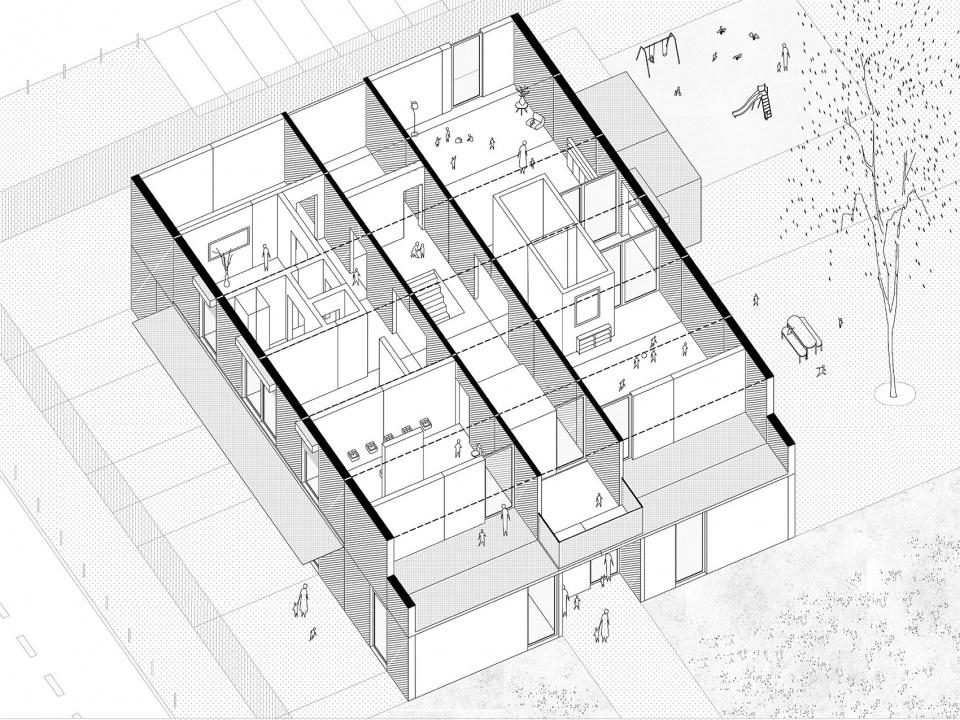
These 4 nurseries feature a similar organic and functional distribution: two groups of overlapping “U-shaped” modules, housing various compartments, and a central corridor between them where all horizontal and vertical circulation takes place (corridors, stairwells, and elevators). It is also within these central corridor lines that the main sections of the heating, ventilation, and air conditioning infrastructure are located, reaching the compartments through the adjacent side walls. The circulation spaces are straight and linear, facilitating user orientation within the building and visibility between all areas, promoting functionality and safety.
▼街景,street view
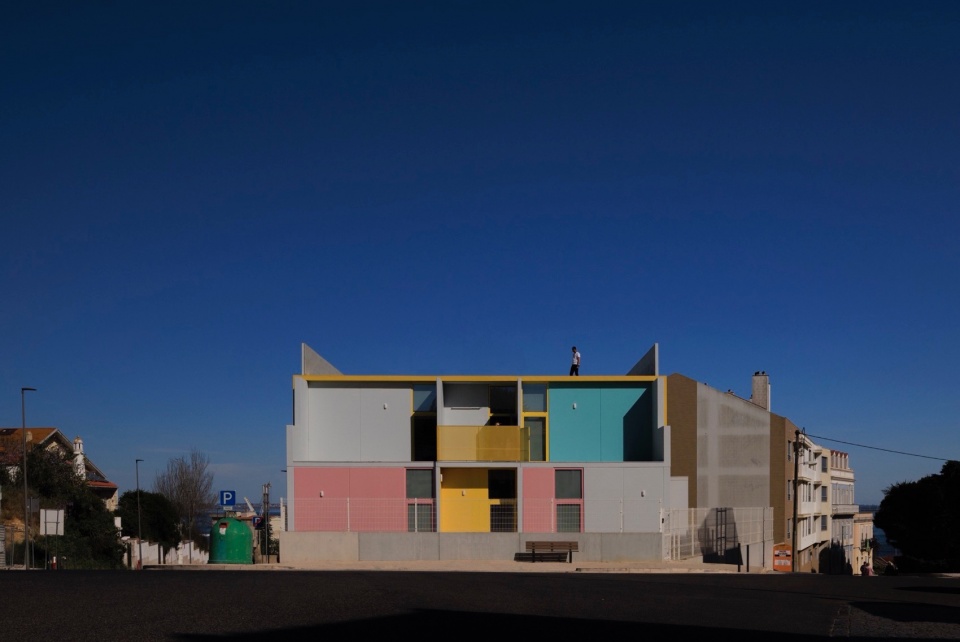
▼立面,facade
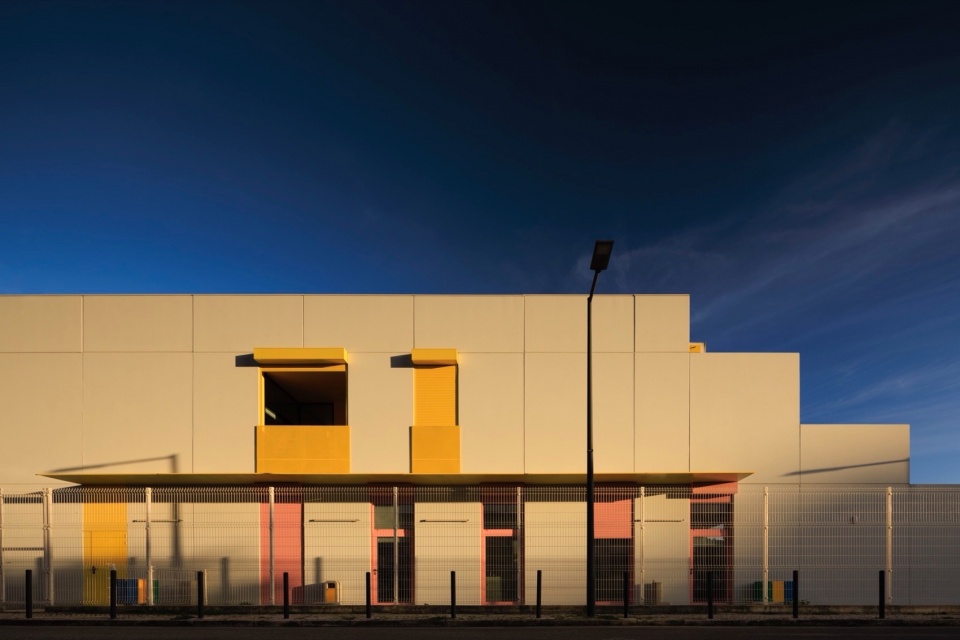
▼色彩,color
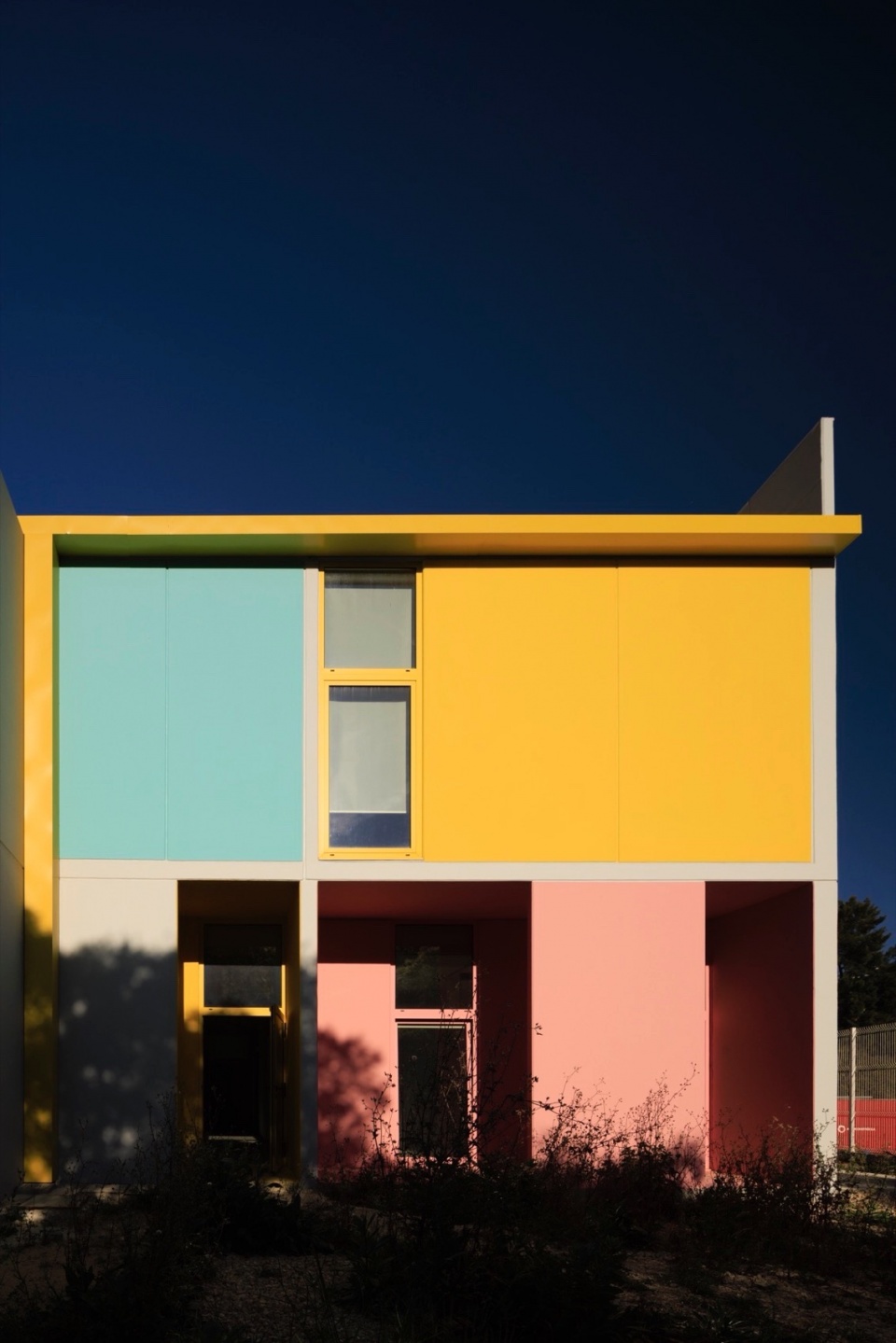
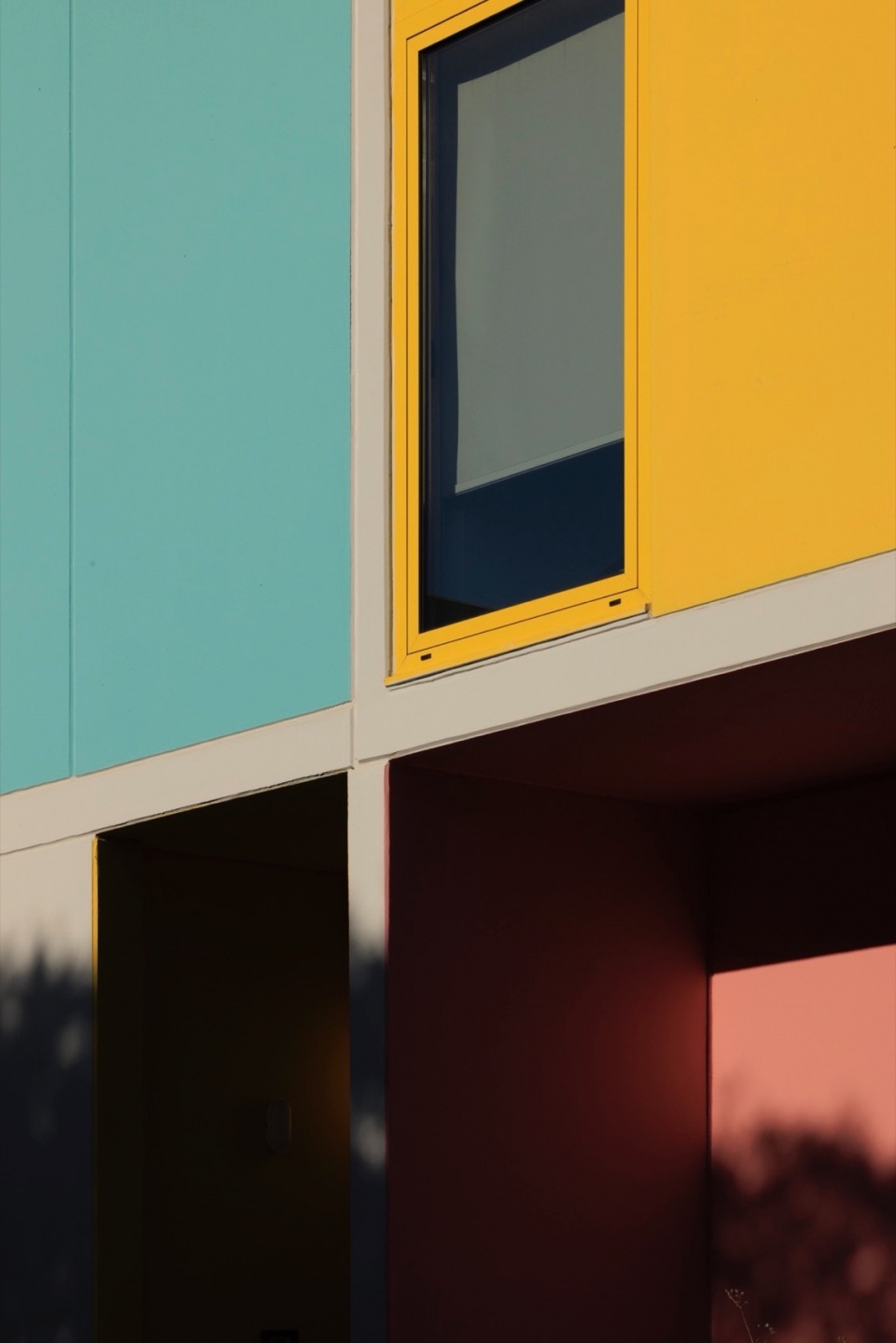
▼细部,details
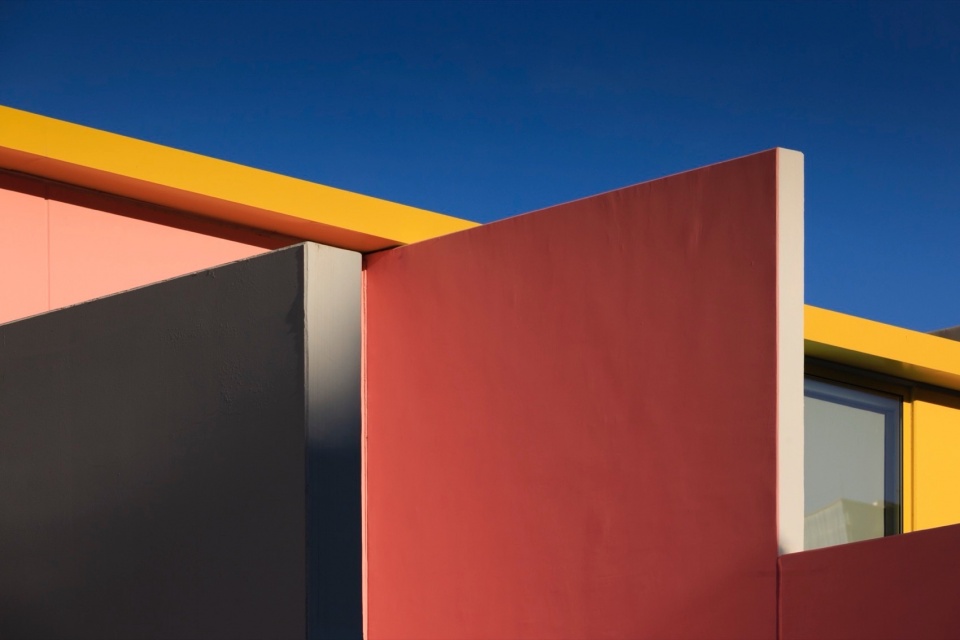
室外空间被视为室内活动的延伸。设计引入防滑铺装区域,便于骑行玩具的使用;也设有绿植区域,用于开展儿童户外活动。大部分外部场地采用植被覆盖,以增强土地的渗透性。植物与树种的选择以适应气候、低水耗及避免致敏为基本原则。
▼剖面图,section
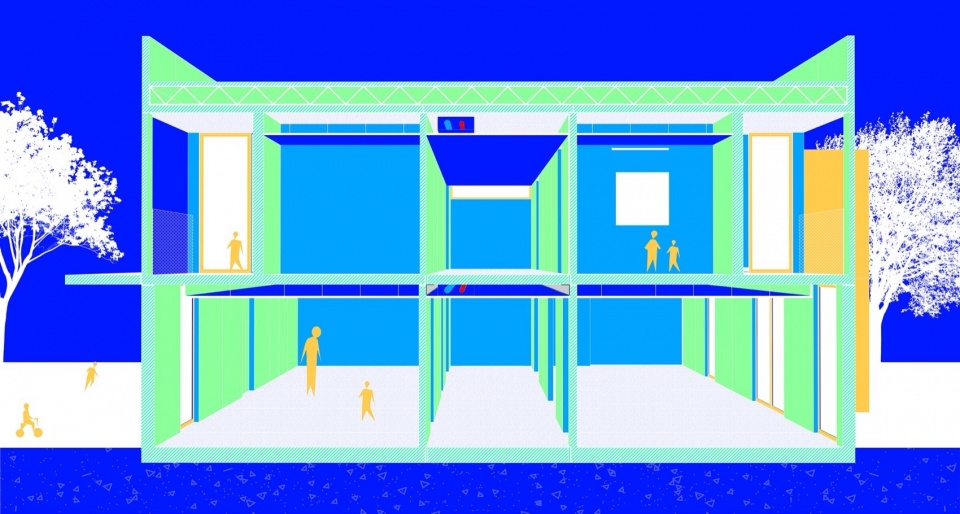
The outdoor spaces have been designed as an extension of the indoor activities. Some non-slip paved areas are proposed, so that wheeled toys can be used. We also considered the existence of garden areas for outdoor activities with the children. The vegetal cover on most of the outside surface contributes to soil permeability. The choice of plant and tree species was based on the criteria of adaptation to the climate, low water requirements and the exclusion of species that could cause allergic problems.
▼幼儿园户外空间,outdoor space of the nursery
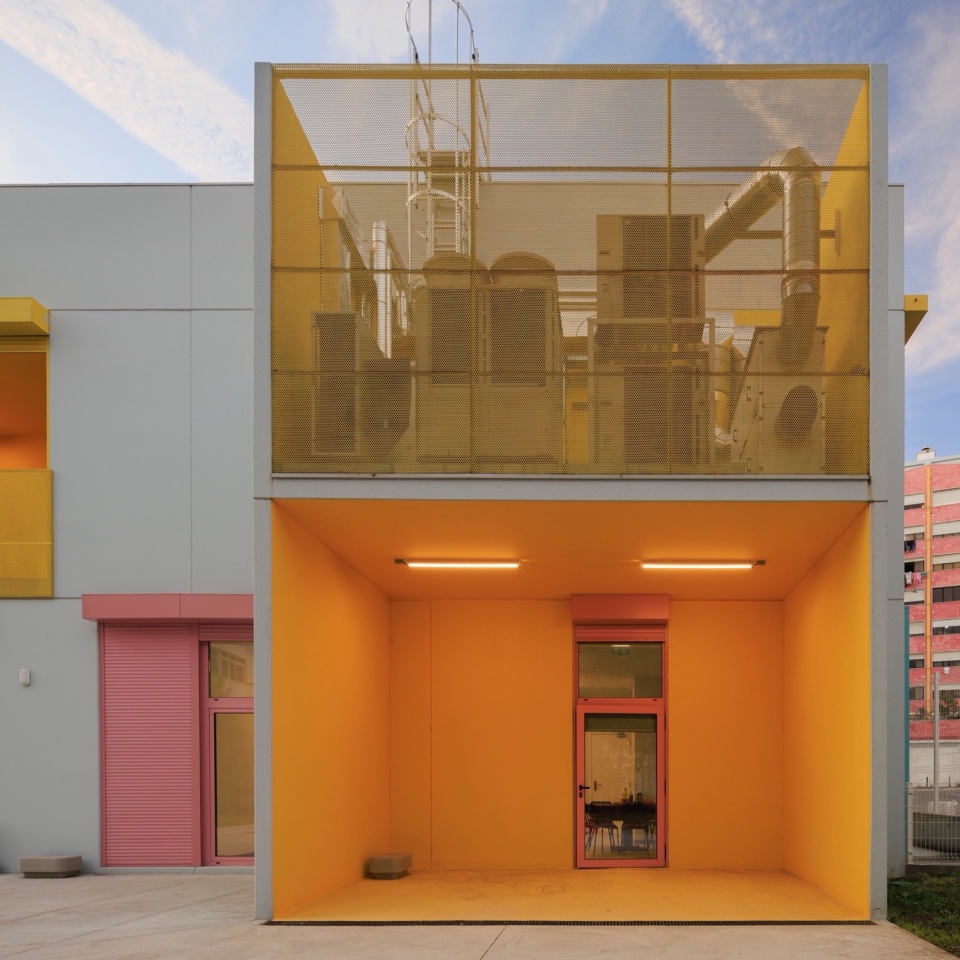
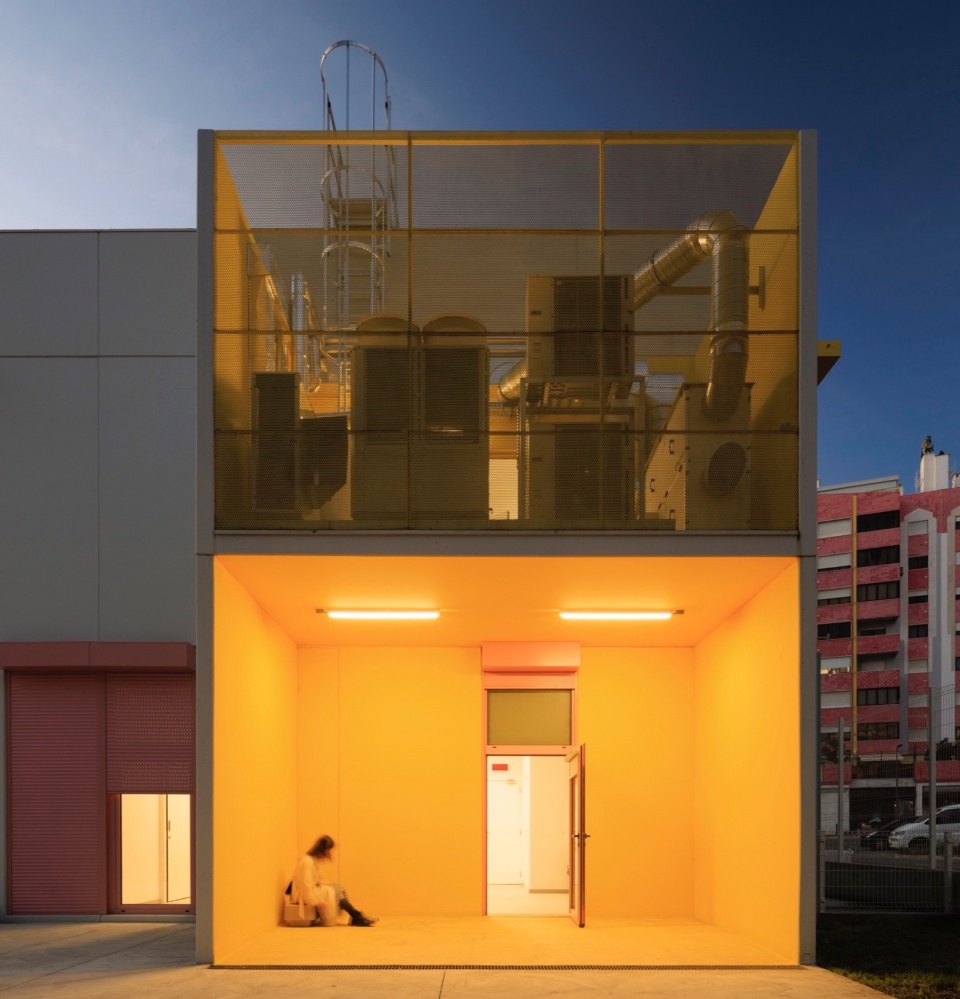
▼彩色金属网隐藏了人们看向设备的视线,
the colored metal mesh conceals people’s gaze towards the device
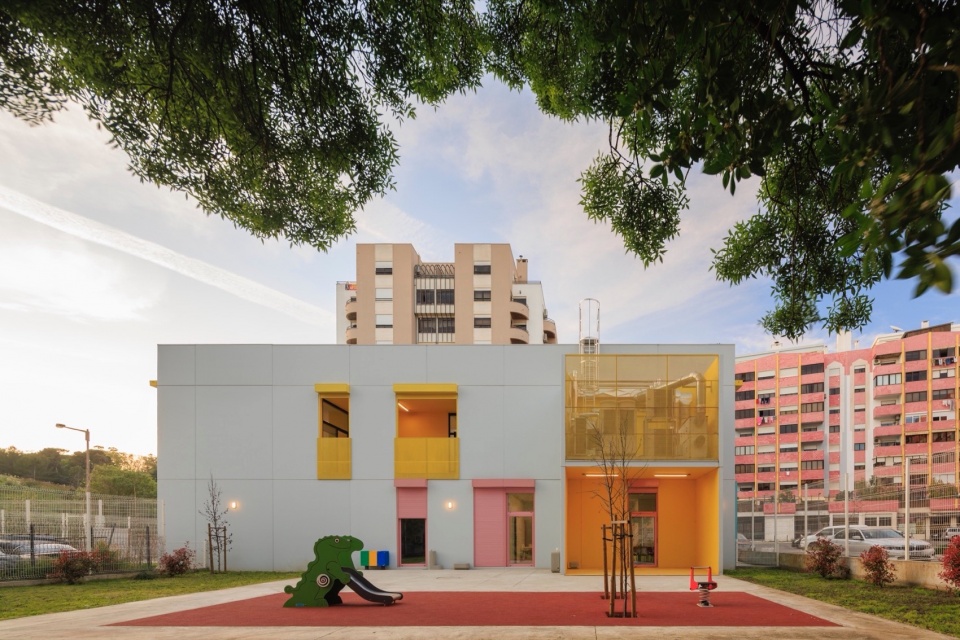
幼儿园为两层建筑,以压缩占地面积,应对城市已建成区域中地块有限的问题,同时最大化户外活动空间。厨房、行政办公、洗衣等基础功能区设于首层,儿童活动空间则分布在两层。所有房间均设有对外出口——一层通向户外游乐场,二层通过露台与外部相连。
The nurseries are distributed across two floors, making them more compact in terms of footprint to address the limited space of the plots (all located in consolidated urban areas) and to maximize external space for recreational areas. The essential service areas (kitchen, administrative zone, laundry, etc.) are situated on the ground floor, while the various activity rooms for children are spread across both floors. All these rooms have direct access to the outside – on the ground floor, to the playground; and on the upper floor, through terraces.
▼入口,entrance
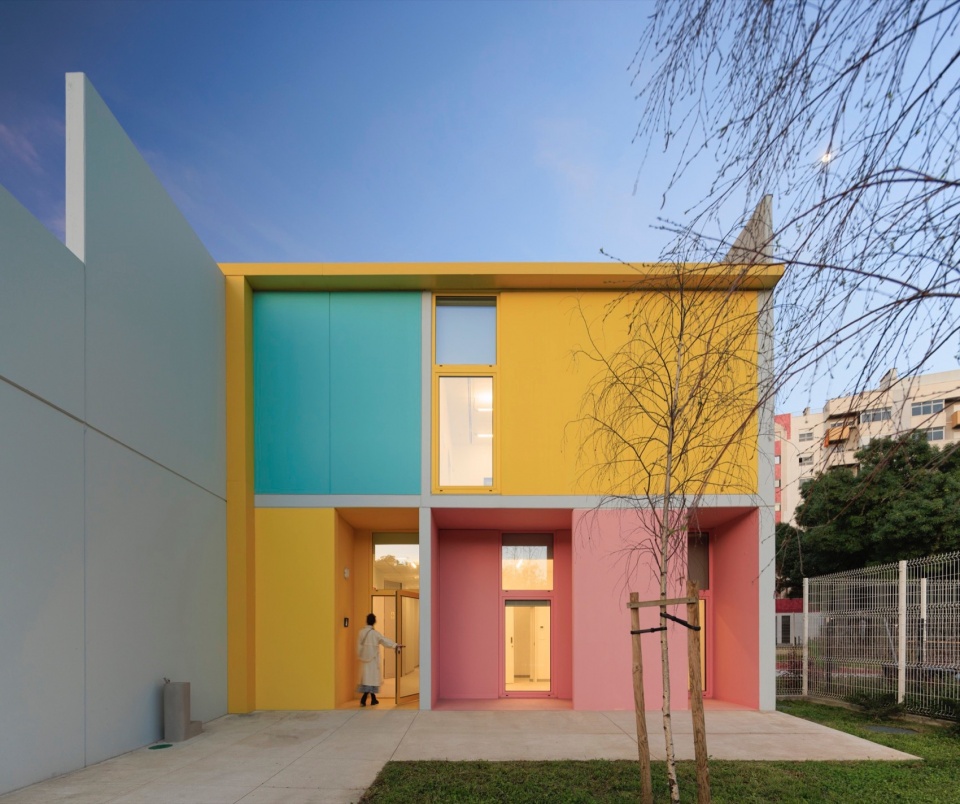
▼由入口看户外活动空间,
viewing the outdoor space from the entrance
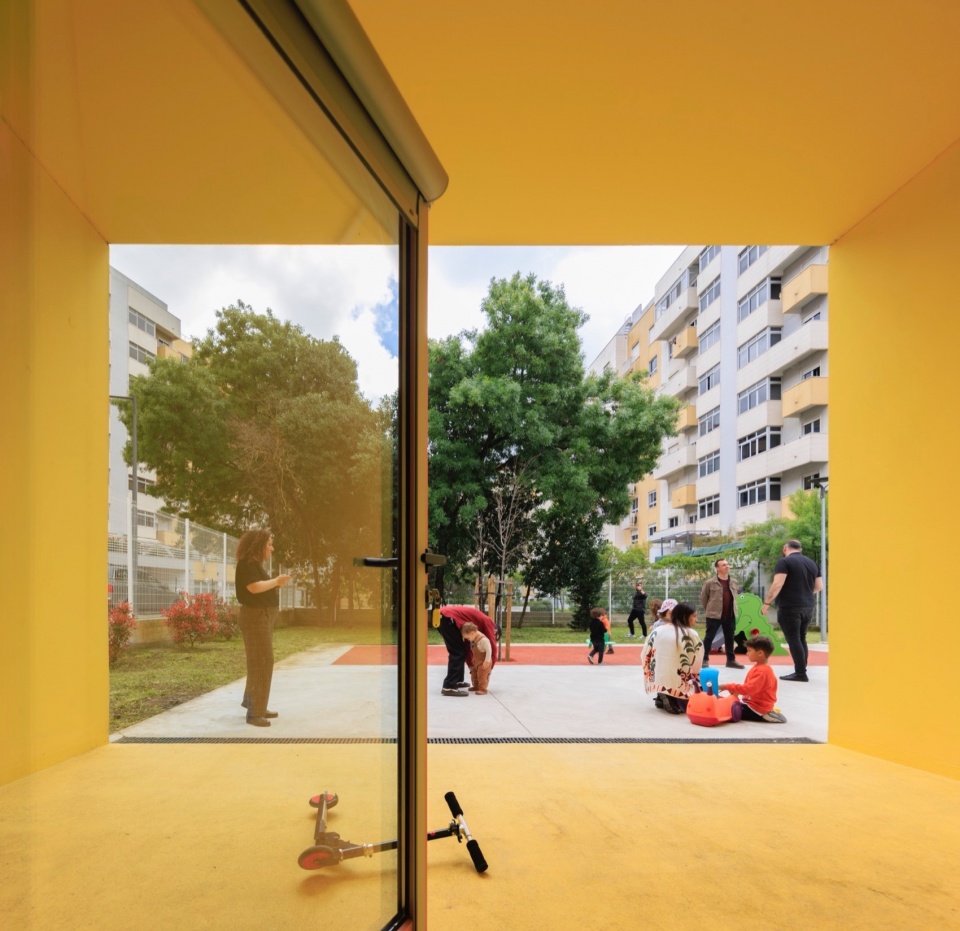
▼室内视角,interior view
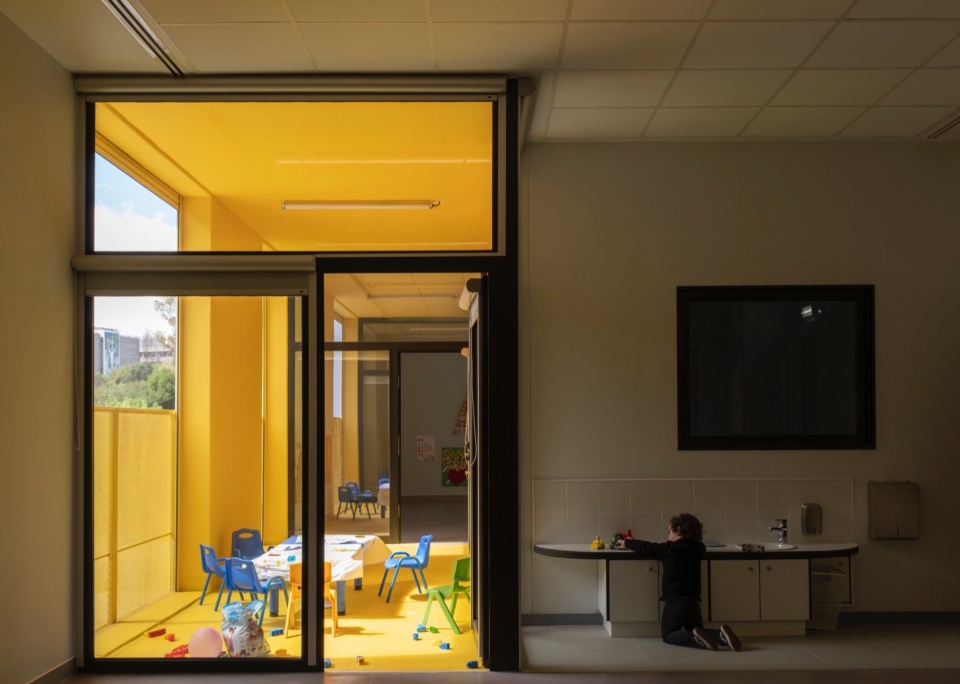
▼露台,terrace
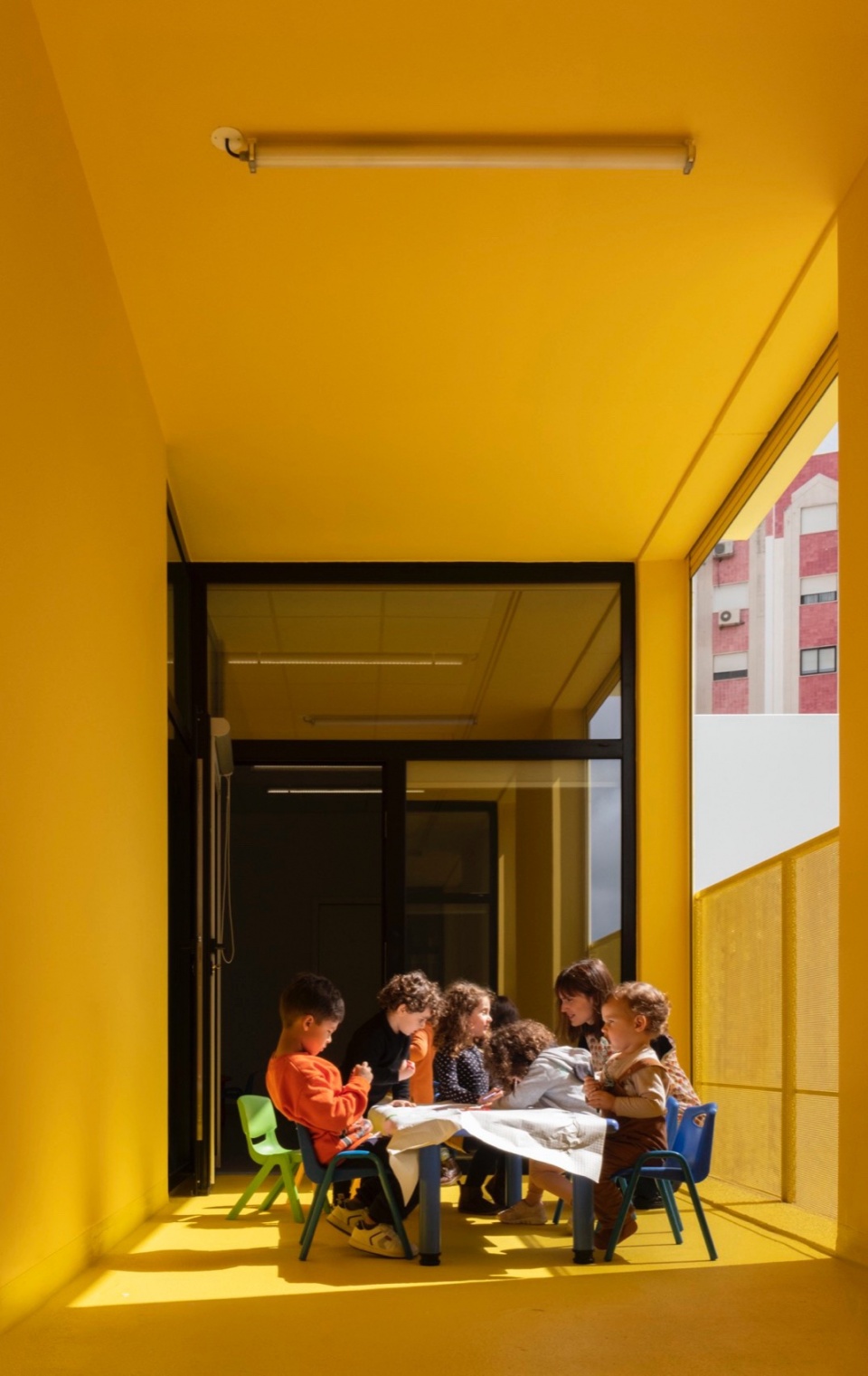
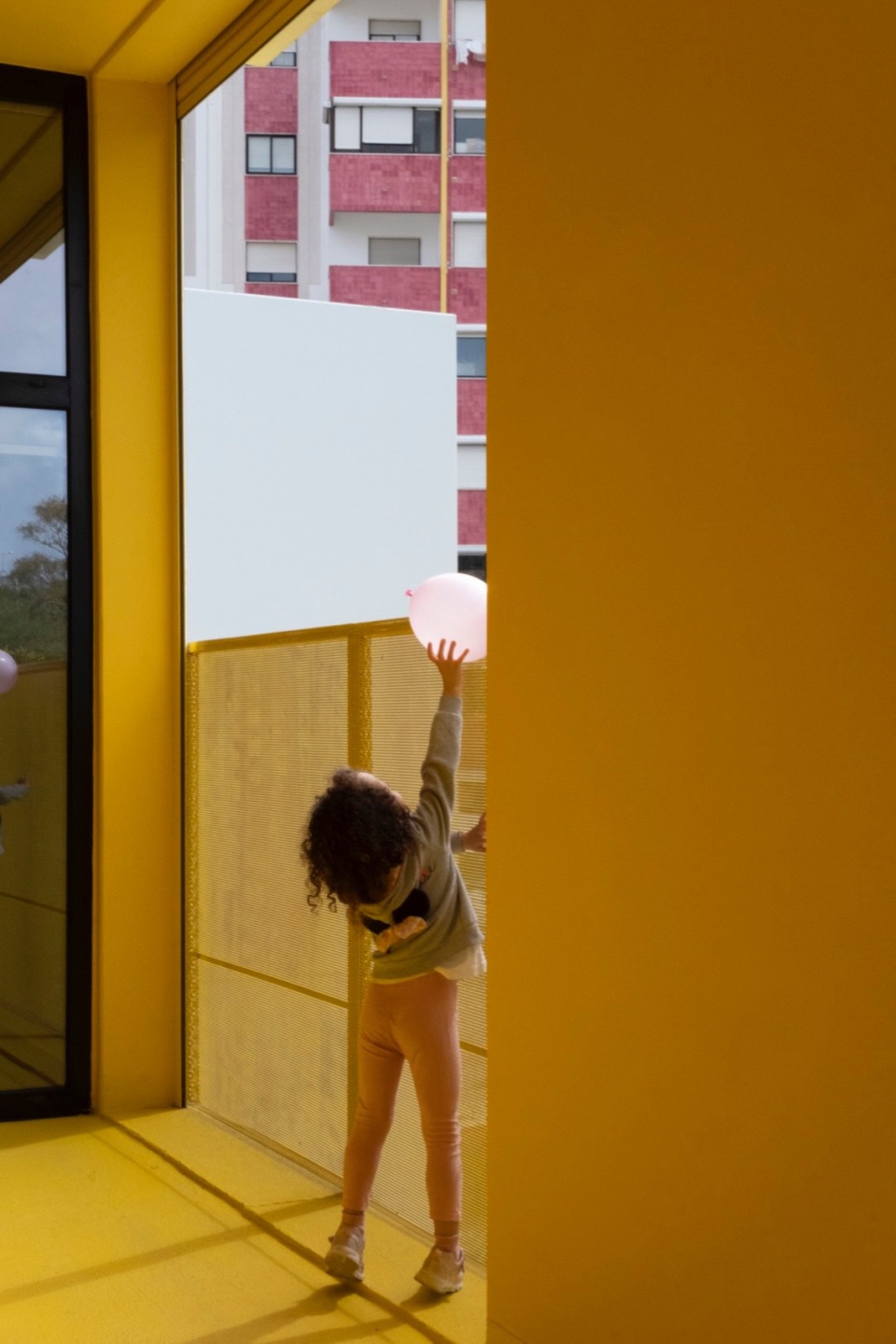
▼由室内看露台,
viewing the terrace from interior
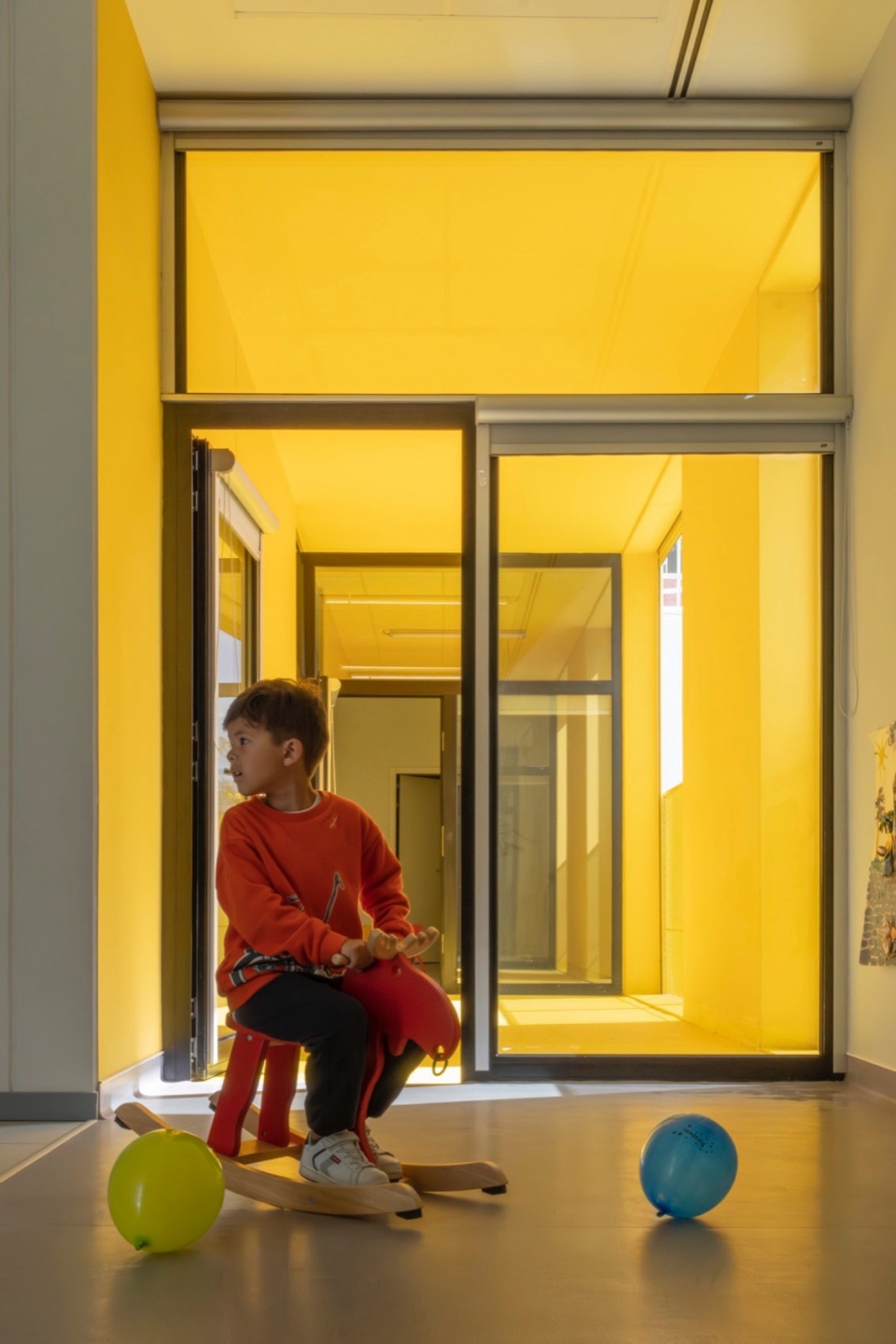
▼教室,classroom
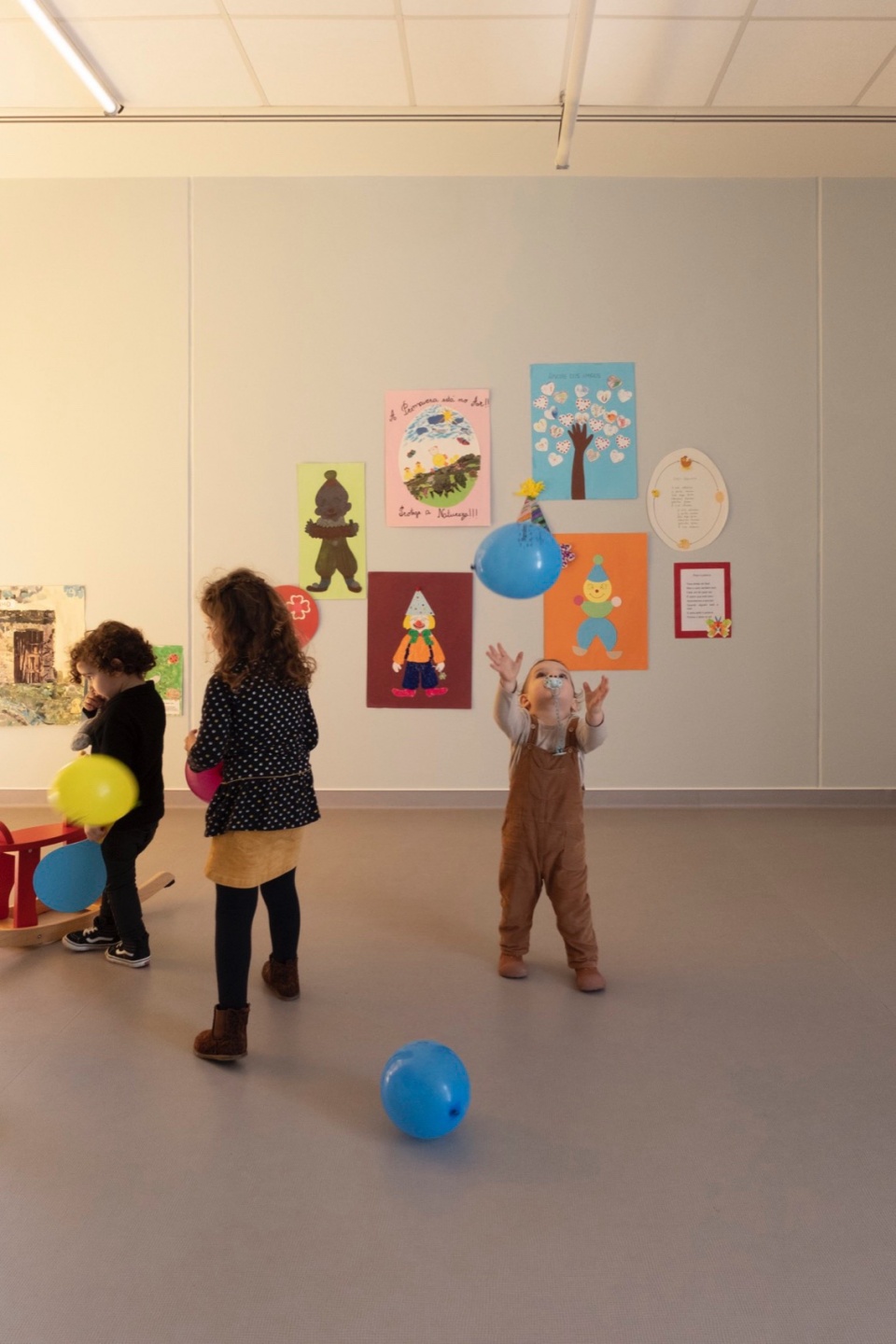
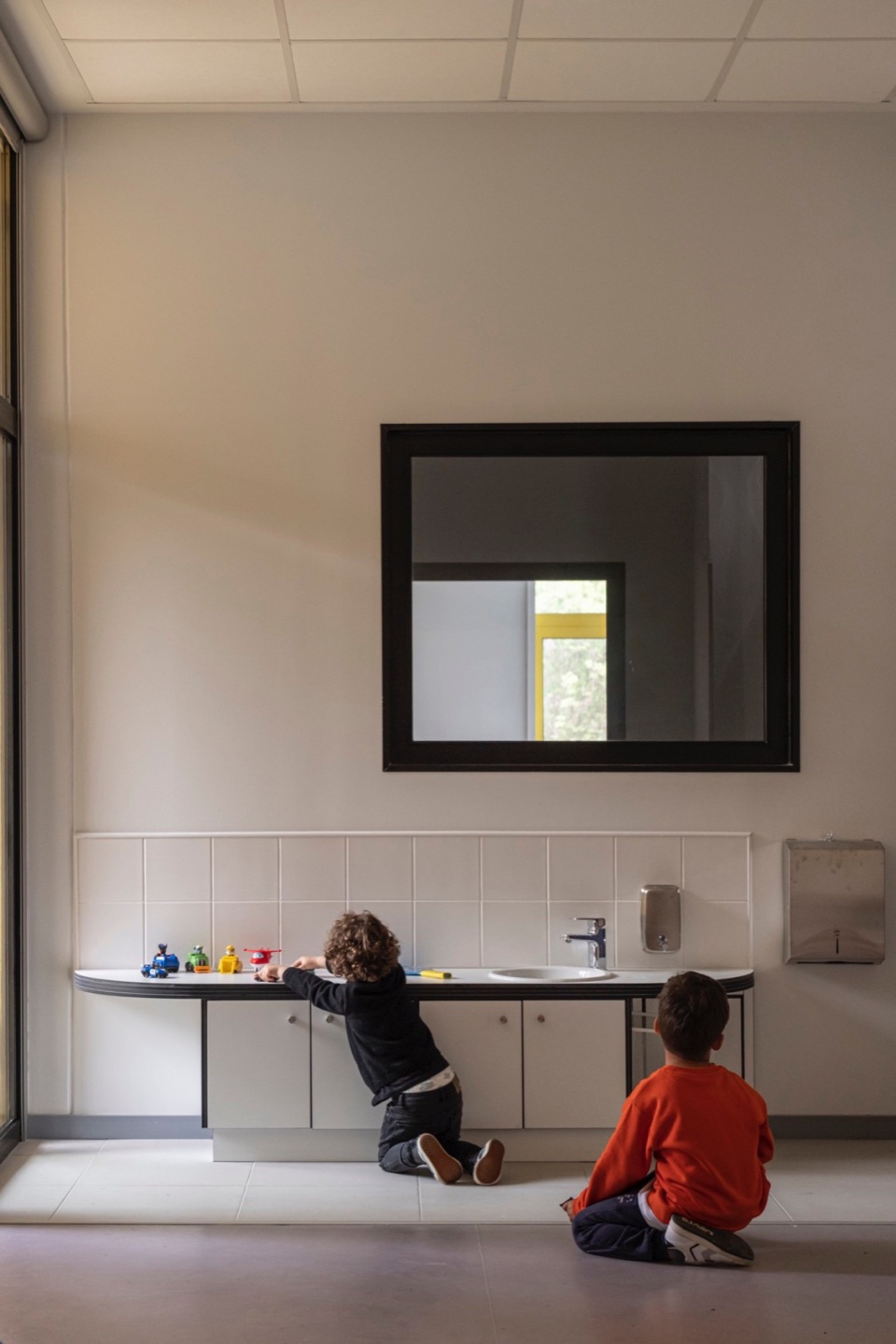
▼适合儿童尺度的家具,
furniture suitable for children’s scale
▼走廊与楼梯,corridor and staircase
建筑的所有结构部件,包括地基,均在工厂内预制完成,并在现场几日内快速组装。这些构件不仅构成了建筑的结构,同时定义了立面、地面与室内空间。该方式加快了建造进程,控制了施工质量,避免了现场现浇混凝土施工所带来的废料、噪音与扬尘。项目旨在扩展城市公共幼儿园网络的同时,尽可能减少对周边社区生活的干扰。施工过程与建筑成果同样被视为达成这一目标的重要组成部分。
All the structural components of these buildings, including the foundations, were prefabricated in a factory under controlled conditions. They were then assembled on-site within a few days. These prefabricated components not only form the structure of the building but also define the facades, floors, and interior compartments. This approach allowed for a faster and more controlled construction process, avoiding on-site concreting, thus reducing waste, noise, and dust. The goal was to increase the city’s network of public kindergartens without disrupting the surrounding neighbourhood during construction. Both the process and the result were equally important in achieving this objective.
▼夜景,night view
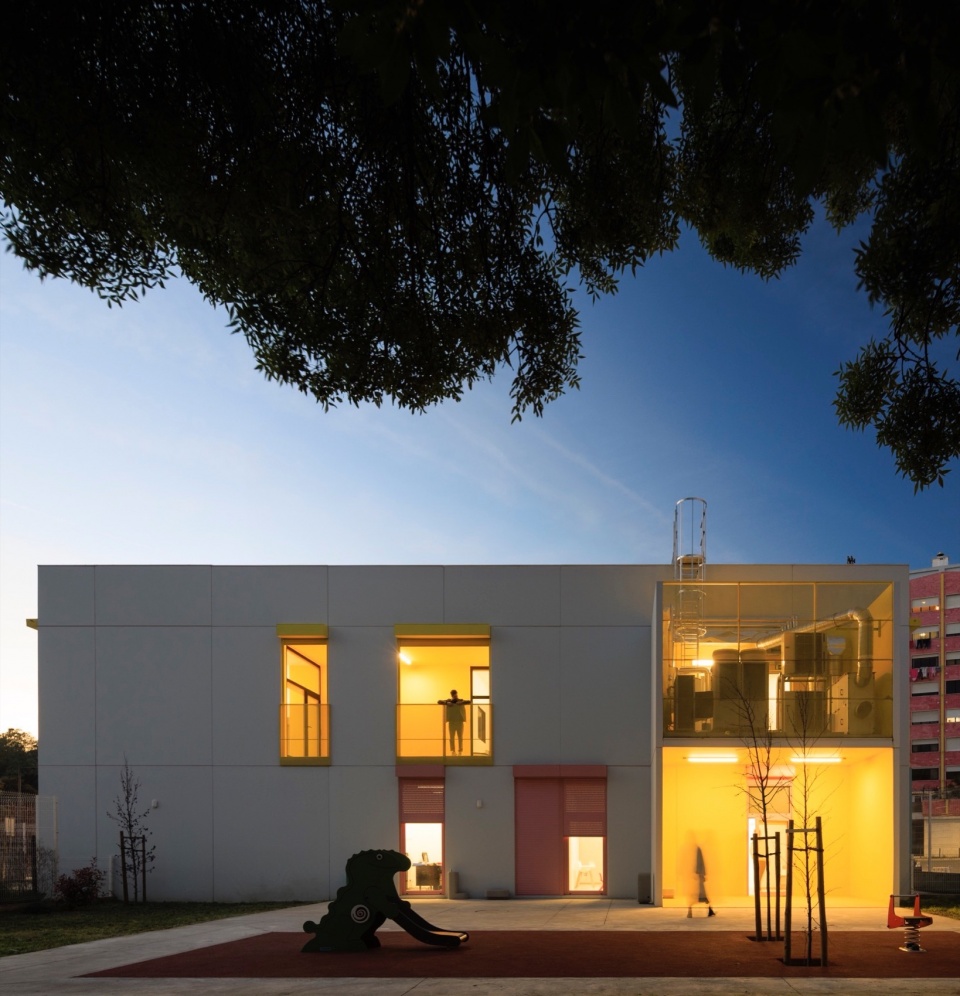
▼入口夜景,night view of the entrance
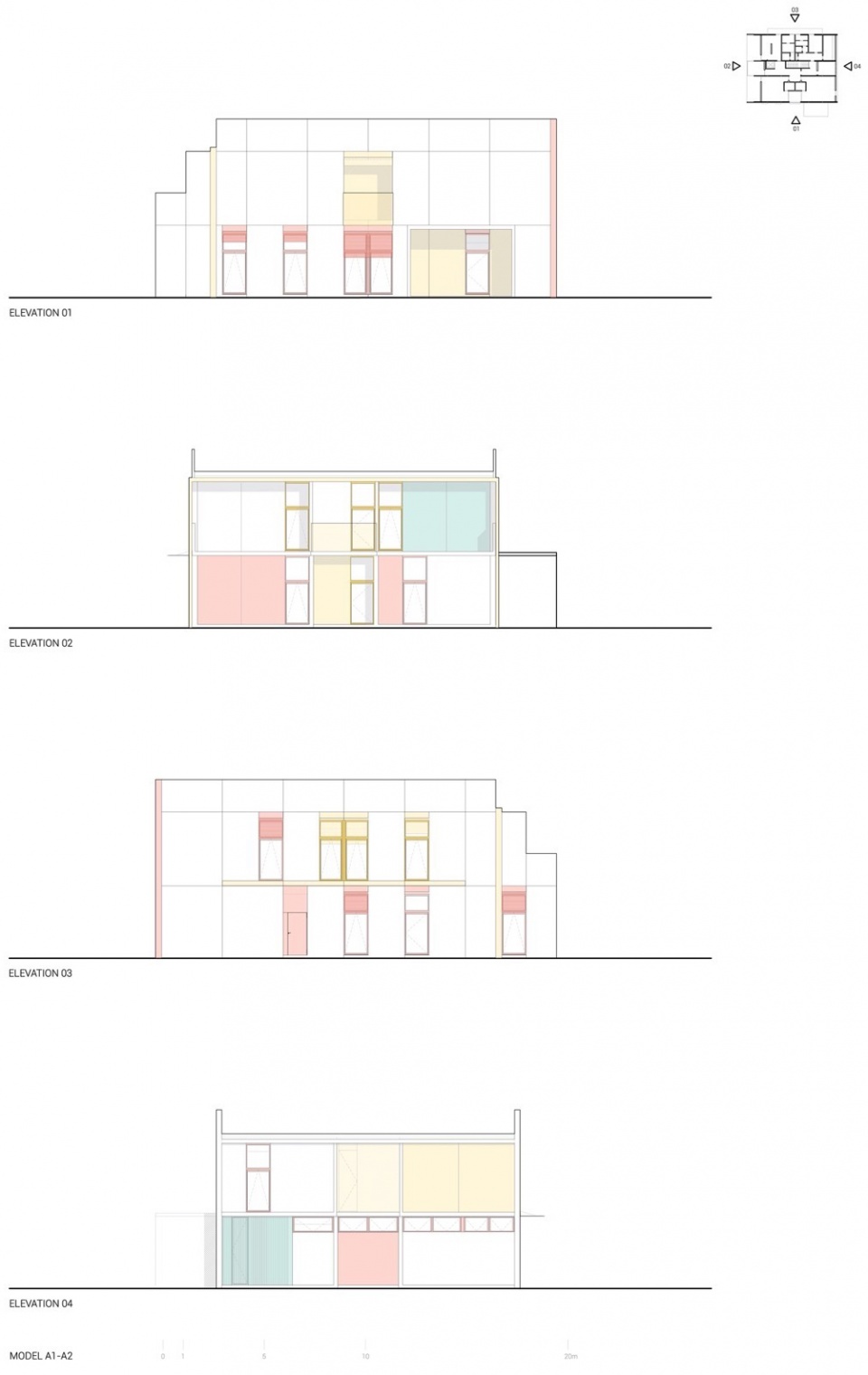
▼立面图,elevations
▼平面图,plans
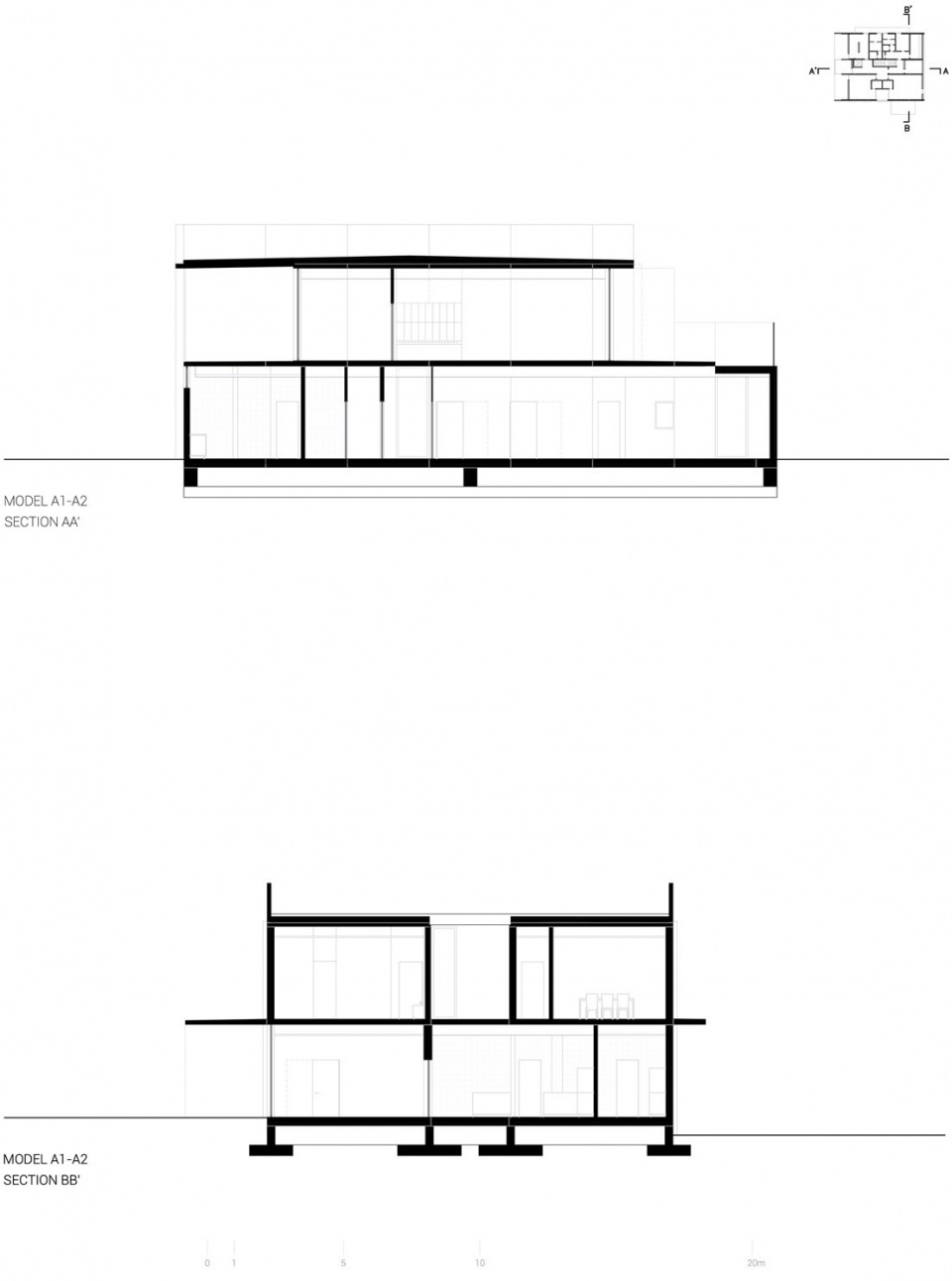
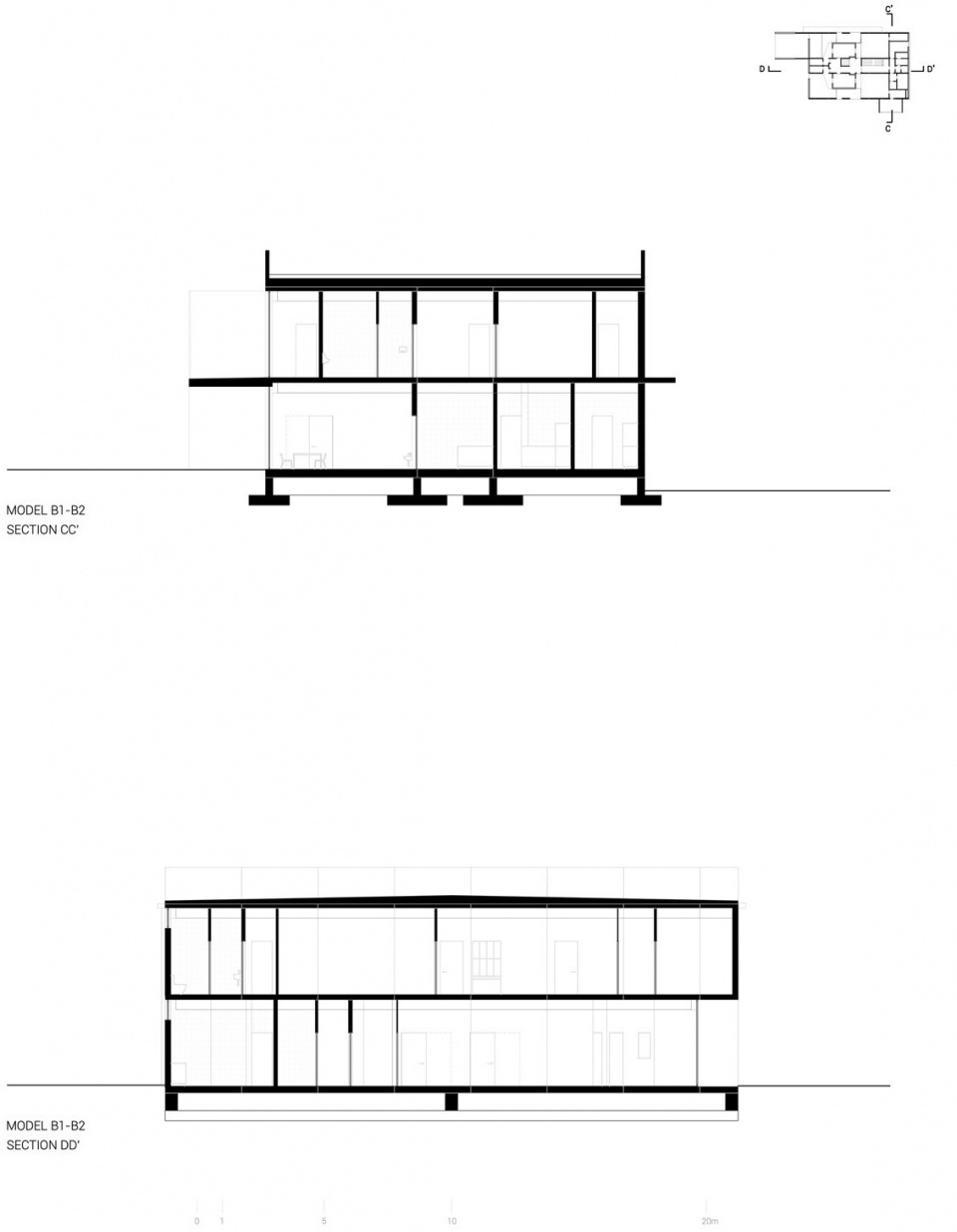
▼剖面图,sections
▼立面图,elevations
▼平面图,plans
▼剖面图,sections
Architecture:
SUMMARY
Team – Samuel Gonçalves (project leader), Inês Rodrigues, João Meira, Sara Perfetti, Adina Staicu
Engineering: FTS, Technical Solutions
Prefabrication and Assembly: Farcimar, Soluções em Pré-Fabricados de Betão
Category: Nursery / Public Buildings
Stage: Built
Building area: 760 m2 + 760 m2 + 570m2 + 570m2
Predominant material: Reinforced Concrete
Location: Lisboa, Portugal
Client: C.M.Lisboa