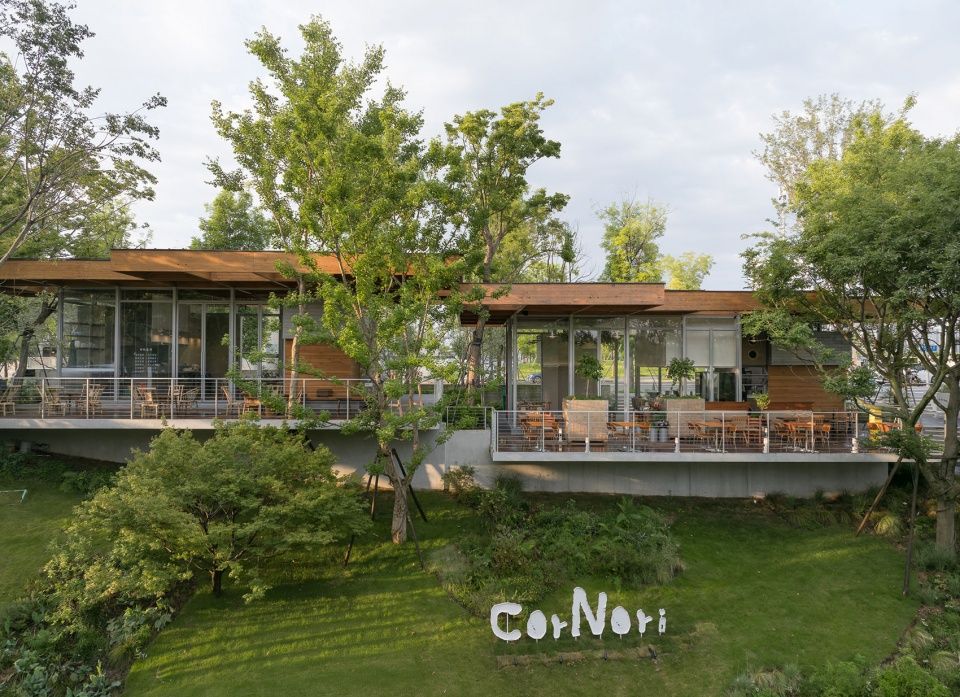
The Lake House美好生活体验馆,上海 / Wutopia Lab
2025年4月18日,Wutopia Lab受中建玖合委托在上海大宁公园内设计的The Lake House美好生活体验馆落成开放。
On April 18, 2025, The Lake House – Life Experience Pavilion, designed by Wutopia Lab at the commission of CSCEC Jiuhe East China Region, officially opened in Daning Park, Shanghai.
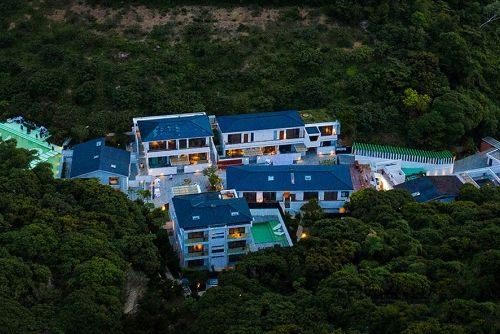
▼鸟瞰,Aerial View
上篇:工 Part I: Working Diary
2月28日,俞挺应要求去公园踏勘在三块基地,并选择其一建设。俞挺要求甲方公司设计部、工程部、营销部以及施工公司和公园方共同参加。公园方要明确这次临时建筑的边界红线要求以及施工限制,包括哪些日子和时间段不能施工。设计部需要确认项目的负责对接人包括建筑、结构和室内。工程部和施工公司需要明确40天里能提供的建筑材料和结构做法,并对施工现场地基做评估。营销部要给出功能,流线以及策展要求。俞挺需要综合所有的信息,给出一个能保证在4月18日落成开幕的建筑方案,包括室内、景观、软装、策展方案。
On February 28, Chief architect YU Ting was invited to survey three potential sites in the park and select one for the new pavilion. Representatives from the client’s design, engineering, and marketing departments, the construction company, and the park authority were all asked to join the visit. The park was to clarify the redline boundary, construction restrictions, and time limitations. The design department was to assign point persons for architecture, structure, and interior coordination. Engineering and construction teams needed to assess the site conditions, define the material supply chain and structural methods feasible within 40 days, and the marketing team was to provide usage programs, circulation plans, and curatorial requirements. Based on all this, YU proposed a comprehensive design—architecture, interior, landscape, soft furnishing, and exhibition—aimed at achieving completion and public opening by April 18.
▼鸟瞰近景,Aerial Close View
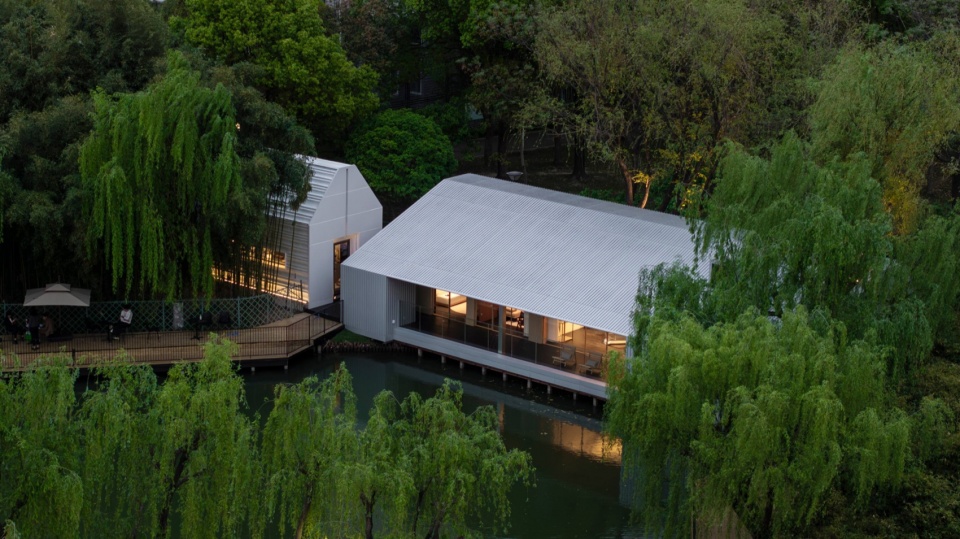
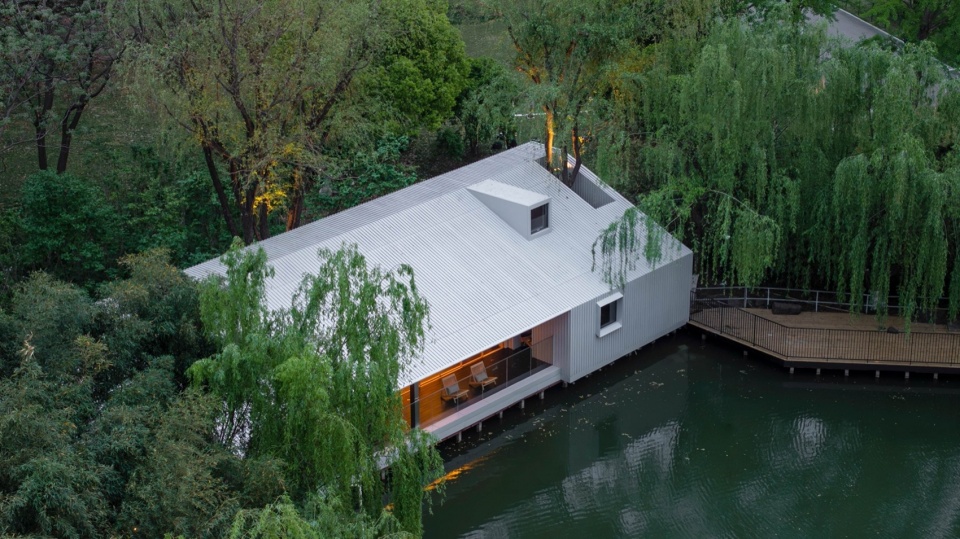
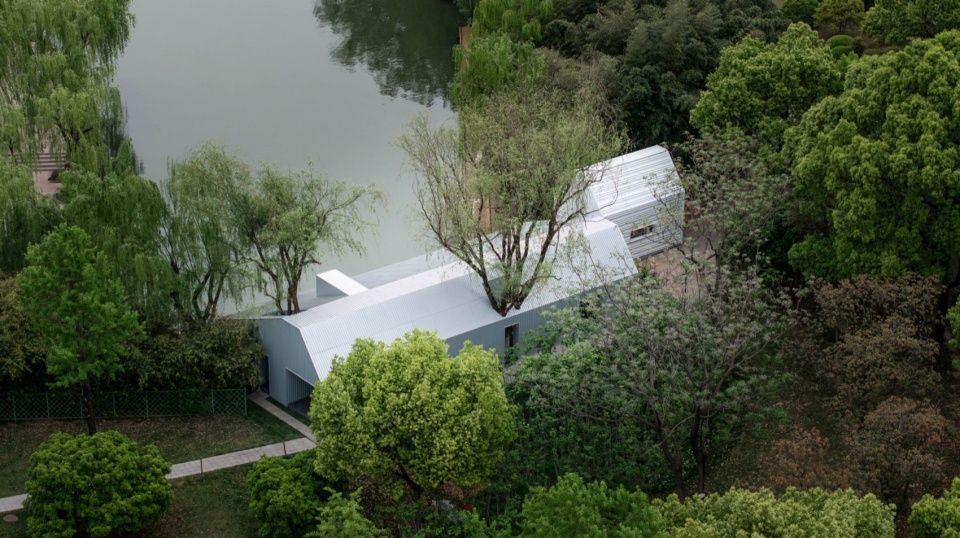
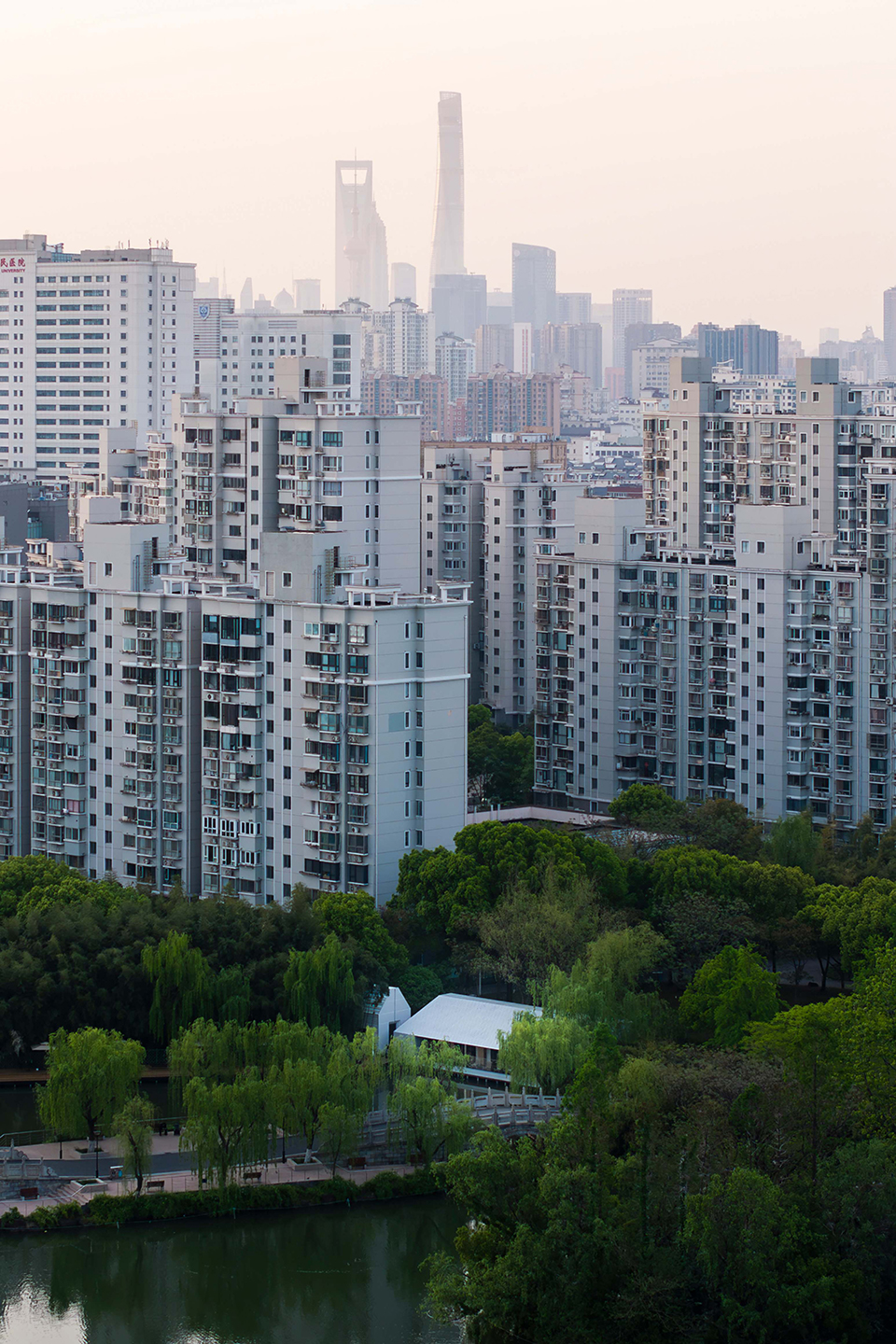
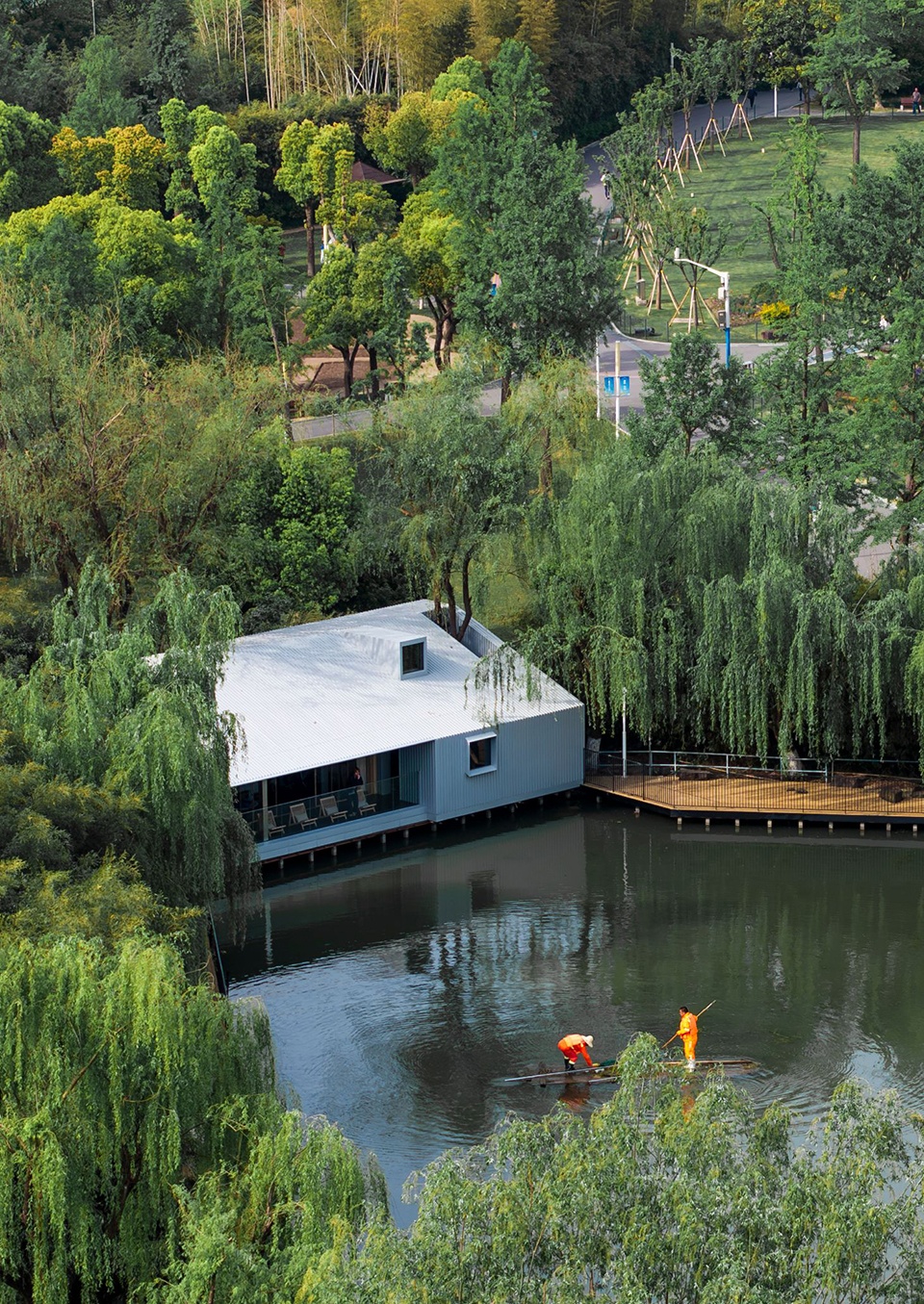
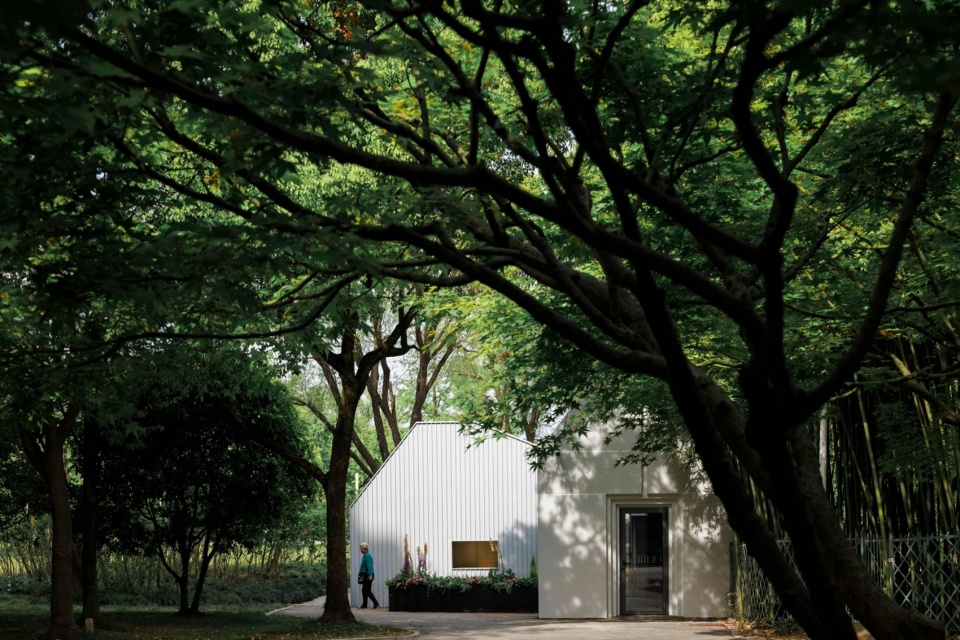
最后俞挺建议选择位于湾里原为水上基地的位置。公园方唯一的要求是不能改变两栋房子的结构以及任何一毫米的绿化和两棵贴着建筑的树。而甲方希望能用上在住宅楼上用过的陶瓷幕墙。
The final site chosen was the former water base by the bay. The only restriction from the park was to preserve the structures of two existing buildings and not disturb even a millimeter of surrounding greenery, including two trees abutting the façades. Meanwhile, the client hoped to incorporate ceramic curtain wall panels previously used in residential developments.
▼南立面,South Elevation
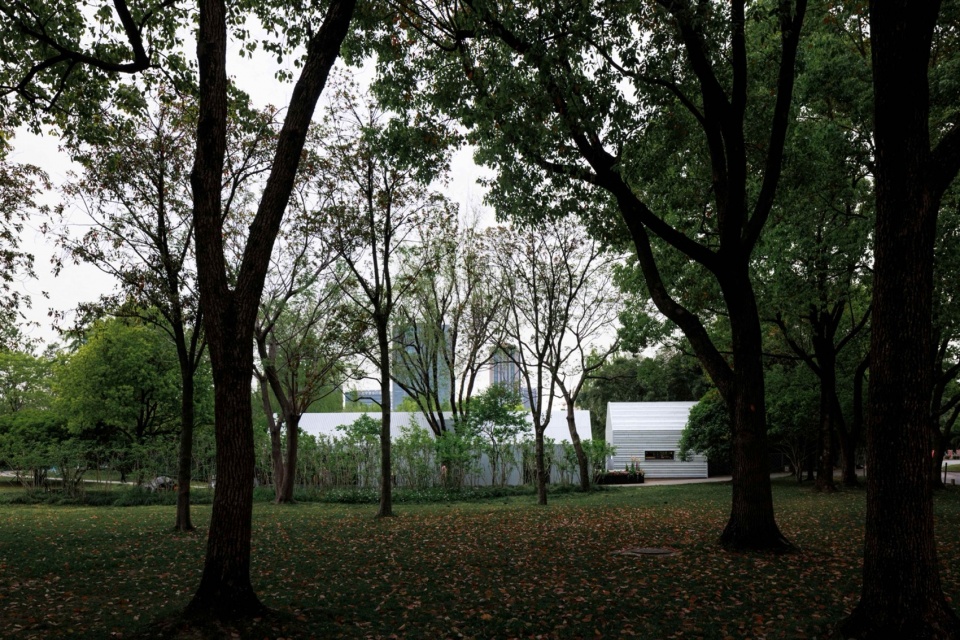
▼东立面,West Elevation
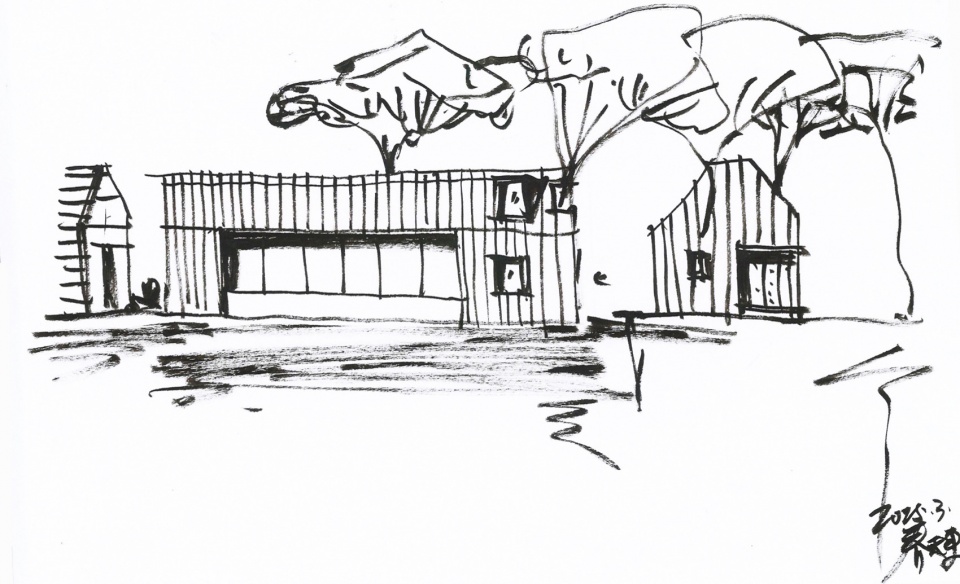
▼草图,Sketch
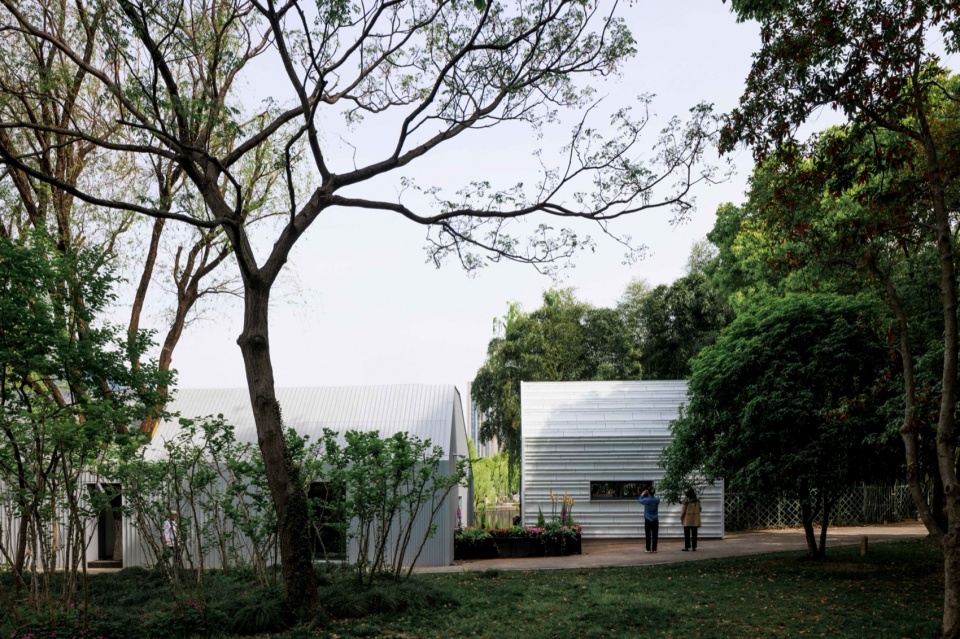
▼南立面近景,South Elevation Close View
3月5日,方案概念文本汇报通过。3月12日,俞挺带孙丽然、黄河在中建玖合华东区域,请设计部召集营销部工程部施工公司进行交底。逐一确认对每个局部的施工节点和建材供货周期,并确定了模数系统。要求所有工种围绕这个模数系统展开施工和落实。
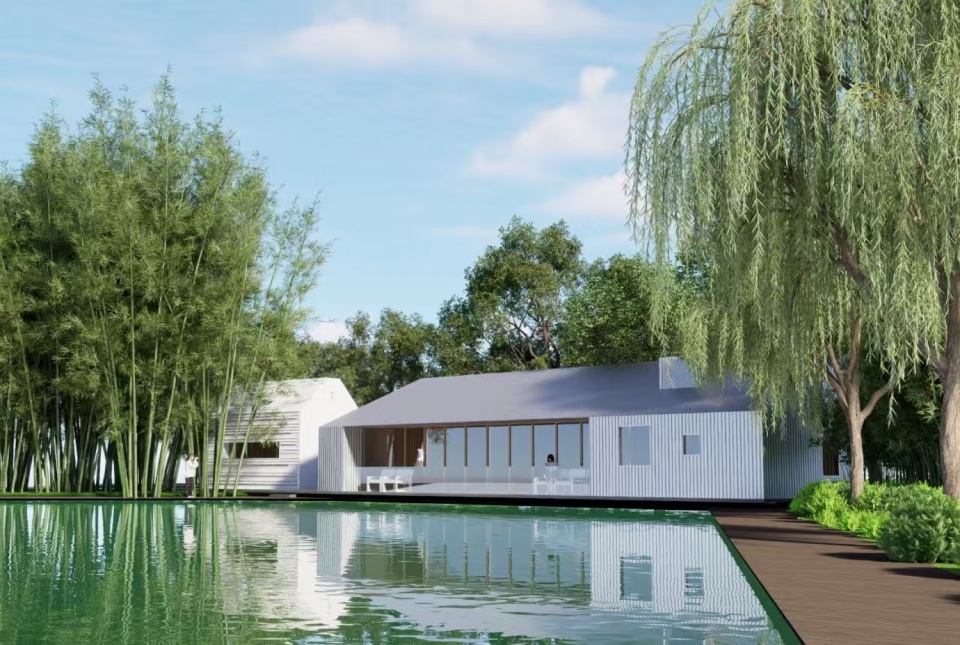
▼渲染图,Render
By March 5, the concept proposal was approved. On March 12, YU, SUN, and HUANG He held a coordination meeting at CSCEC Jiuhe East China Region office with the full team, including construction partners. Every detail—from construction nodes to material delivery timelines—was confirmed, and a modular system was finalized. All trades were instructed to develop around this module.
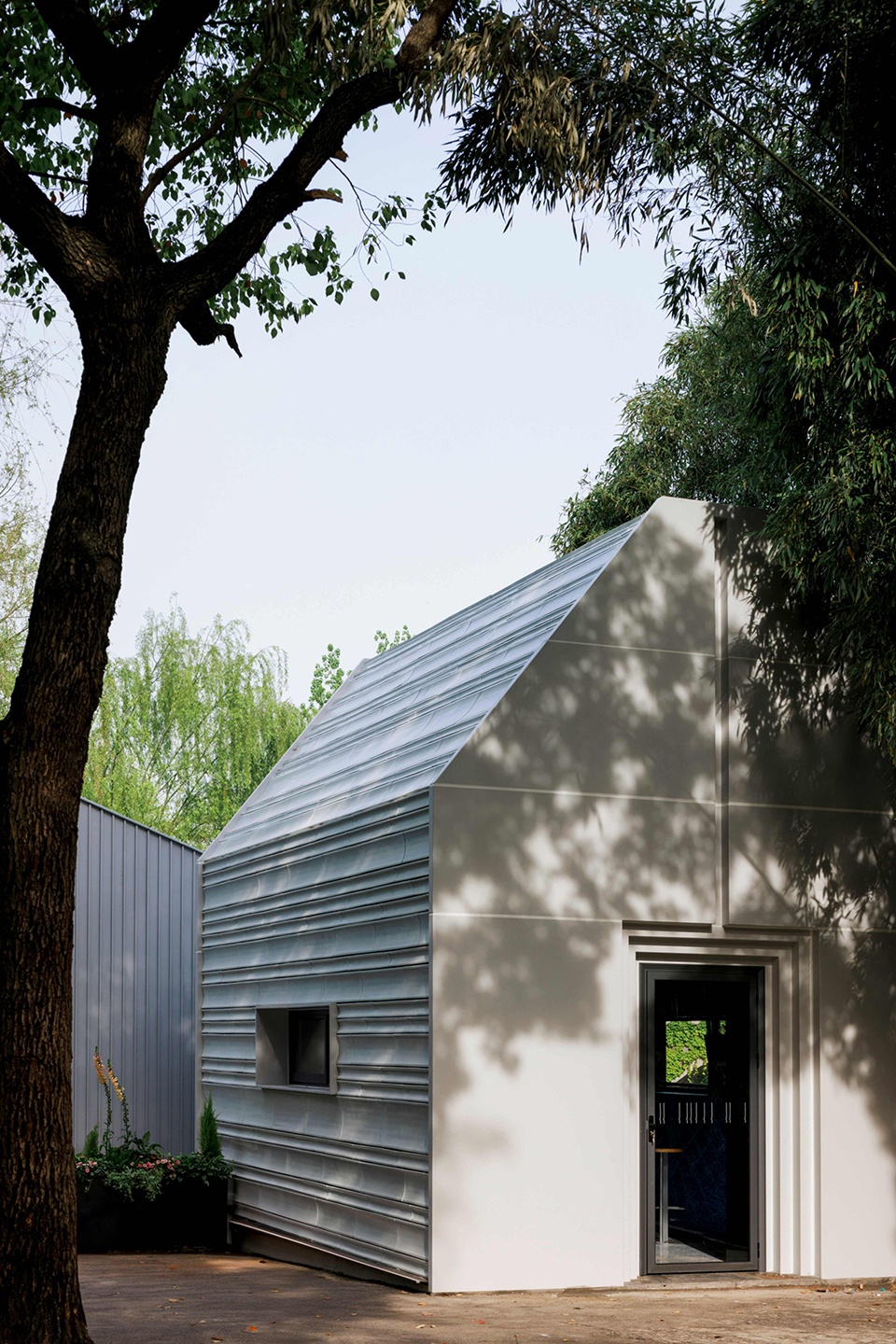
▼陶瓷房子东侧,Ceramic House East Elevation
▼陶瓷房子细节,Ceramic House Detail
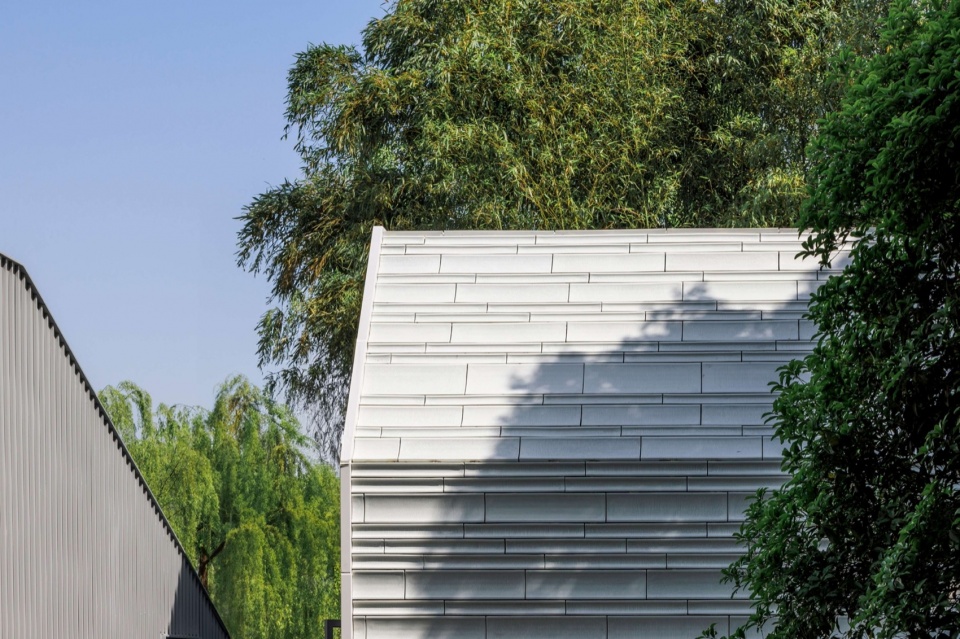
这个会议是Wutopia Lab的设计策略的执行,即1材料前置决策:选用无需定制模具的标准化材料;2工艺流程优化:采用可预制构件,减少现场湿作业;3设计协调集成:在方案阶段综合建筑、结构、室内、景观、照明、软装、标识、策展等完整专业体系,同步锁定关键材料与构造策略。这策略大幅压缩了施工周期,同时也为快速建造类项目提供了可借鉴的模板。
This implemented Wutopia Lab’s core fast-build design strategy: 1. Pre-decided Standard Materials – No custom molds required. 2. Optimized Workflow – Maximize prefabrication, minimize wet work on site. 3. Integrated Systems – Consolidate architecture, structure, interiors, lighting, signage, curation, etc., in the design phase, locking key materials and detailing early. This dramatically shortened the construction cycle and served as a replicable template for rapid-build architecture.
▼金属房子南立面,Metal House South Elevation
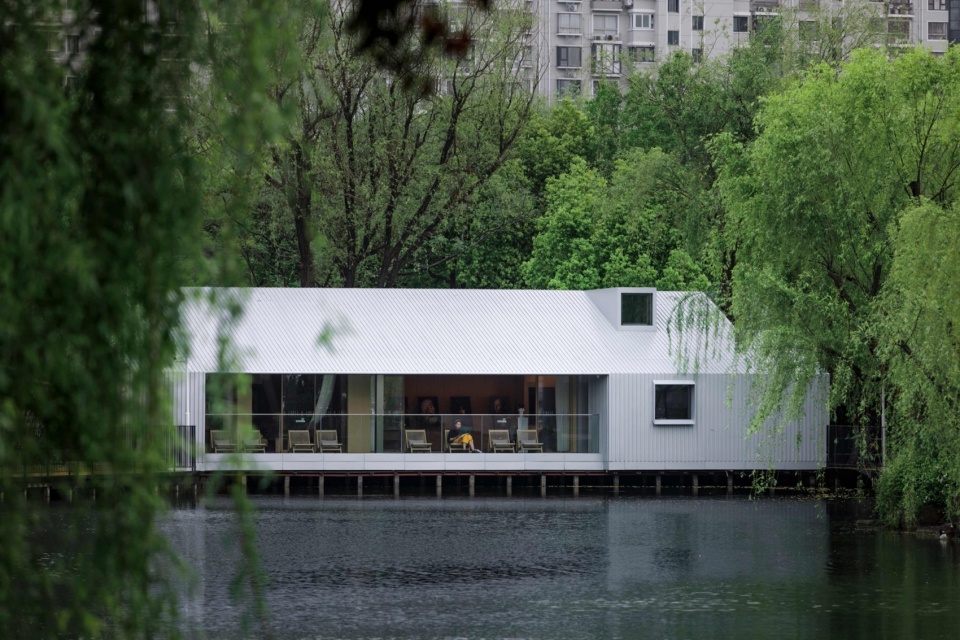

▼金属房子南侧,Metal House South Elevation
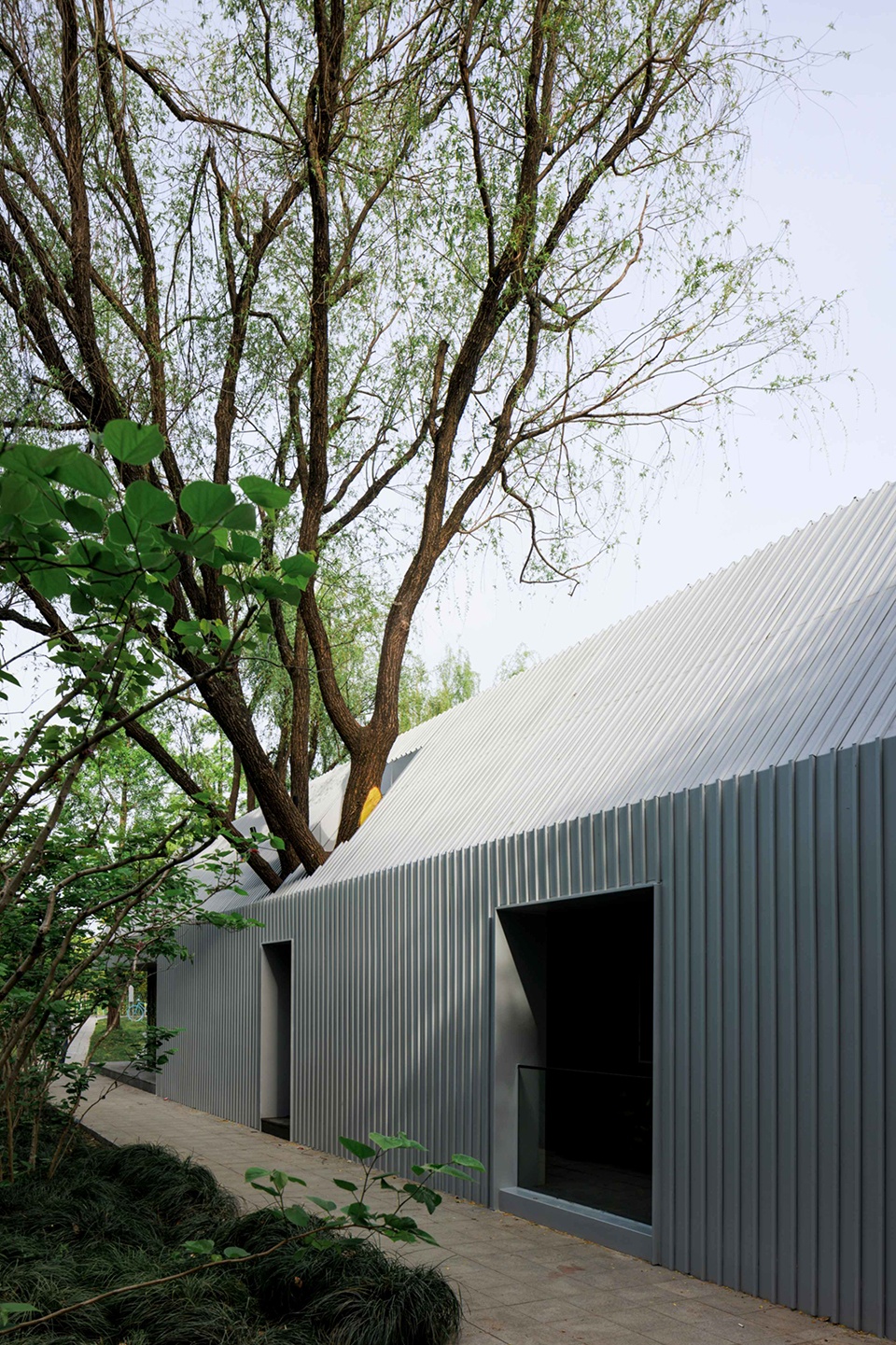
▼金属房子西立面,Metal House West Elevation
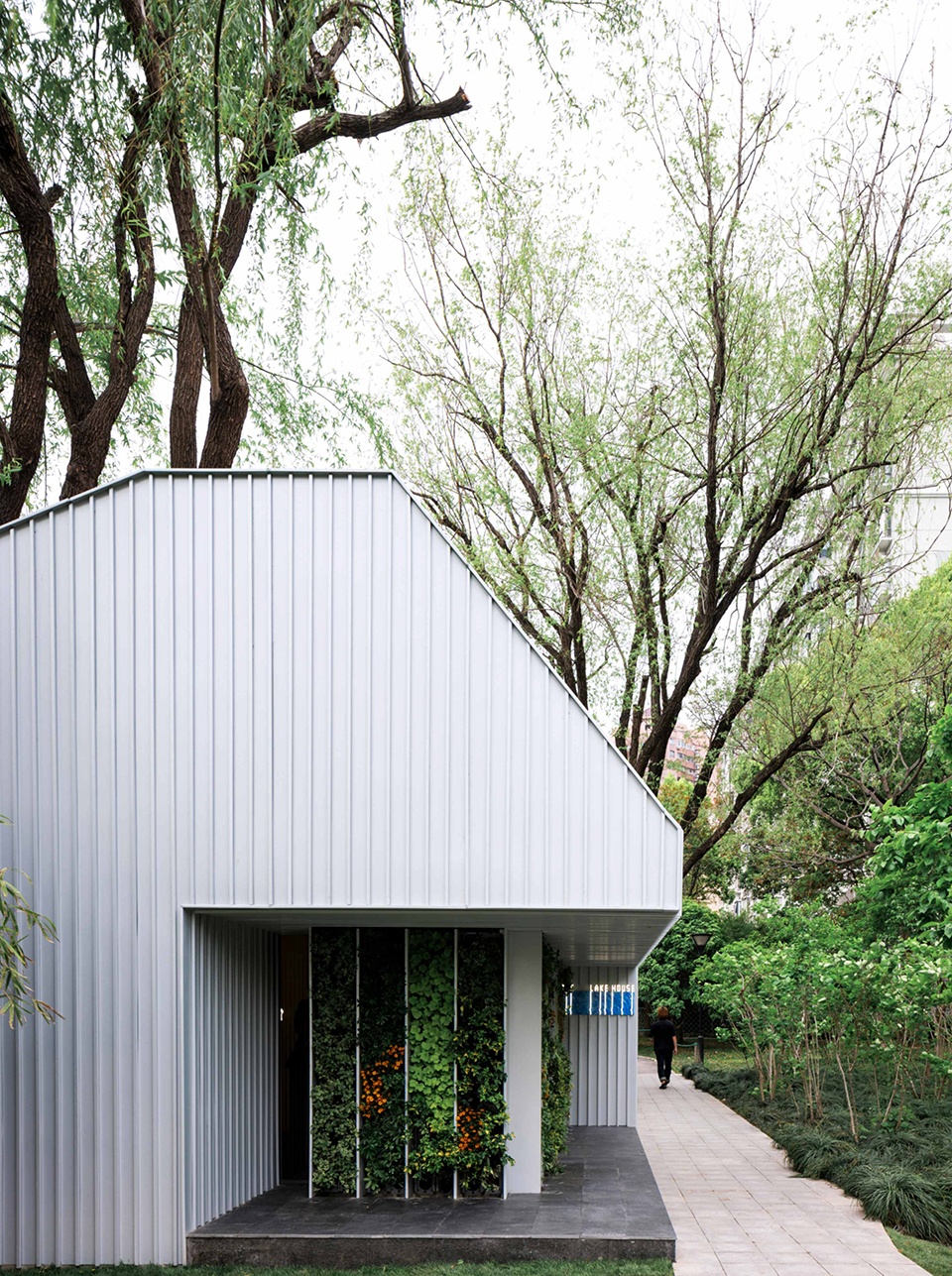
▼金属房子细节,Metal House Detail
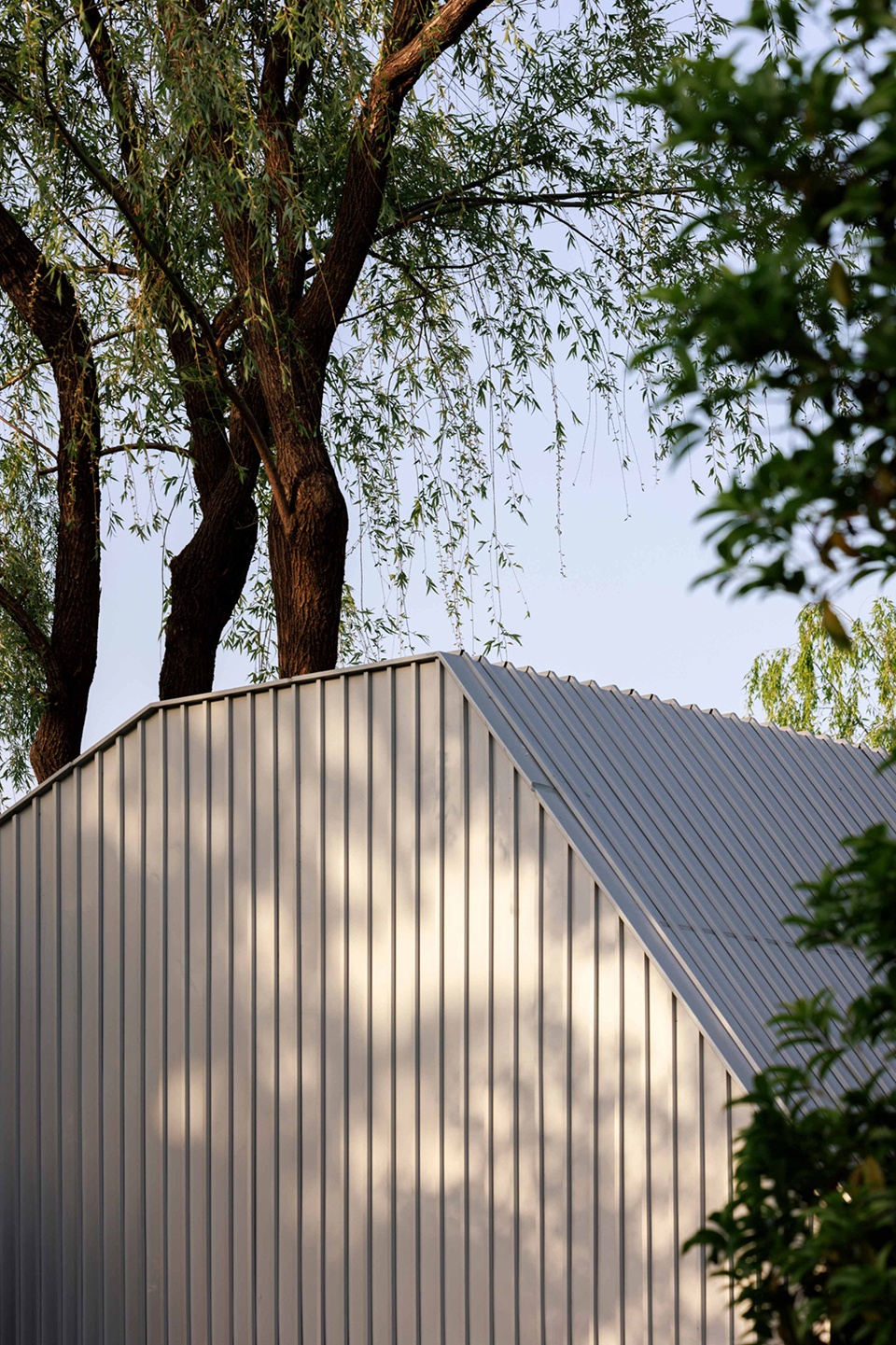
3月13日,缪滨海和工程部朱总在现场讨论了做法。这个懂Wutopia Lab的结构师决定缩小梁柱的尺寸,采用150*150的钢柱和150*150的钢梁。结合建筑表皮的构造和内墙的布置,大幅度的替代建筑构造龙骨,做到了表皮和结构层的构造合一,并在这个合一的结构层上综合铝板、垂直绿化、玻璃轨道移门、轻钢龙骨内隔墙、陶板墙等多种形式,做到俞挺喜欢的模数统一和构造边界平滑过渡。针对施工,他结合现场原有的基础,在临水面和场地较低的西南角采用悬挑基础,在地面主要建筑功能区域形成基面,方便现场快速建造的实现。而朱总和俞挺电话是确认把铝镁锰板换成防水节点可控的铝板。俞挺确认20×20的铝装饰条间隔100毫米布置的原则。这样,总建筑面积约190平方米的美好生活体验中心开始全力推进。
On March 13, MIAO Binhai and engineering head Mr. ZHU visited the site. MIAO proposed downsizing beams and columns to 150×150 mm steel profiles. These were integrated with the façade system, allowing the envelope and structure to become one. The combined system incorporated aluminum panels, vertical greenery, sliding glass partitions, light steel studs, and ceramic panels—achieving both formal unity and material coherence. The foundation, particularly on the waterfront and the lower southwest corner, used cantilevered bases to create a raised platform, facilitating rapid assembly. In a follow-up call, YU and ZHU decided to replace aluminum-magnesium-manganese panels with more waterproof aluminum plates. Decorative aluminum trims (20×20 mm) were set at 100 mm intervals. With that, the 190-square-meter Life Experience Pavilion entered full-speed construction.
▼窗,Windows
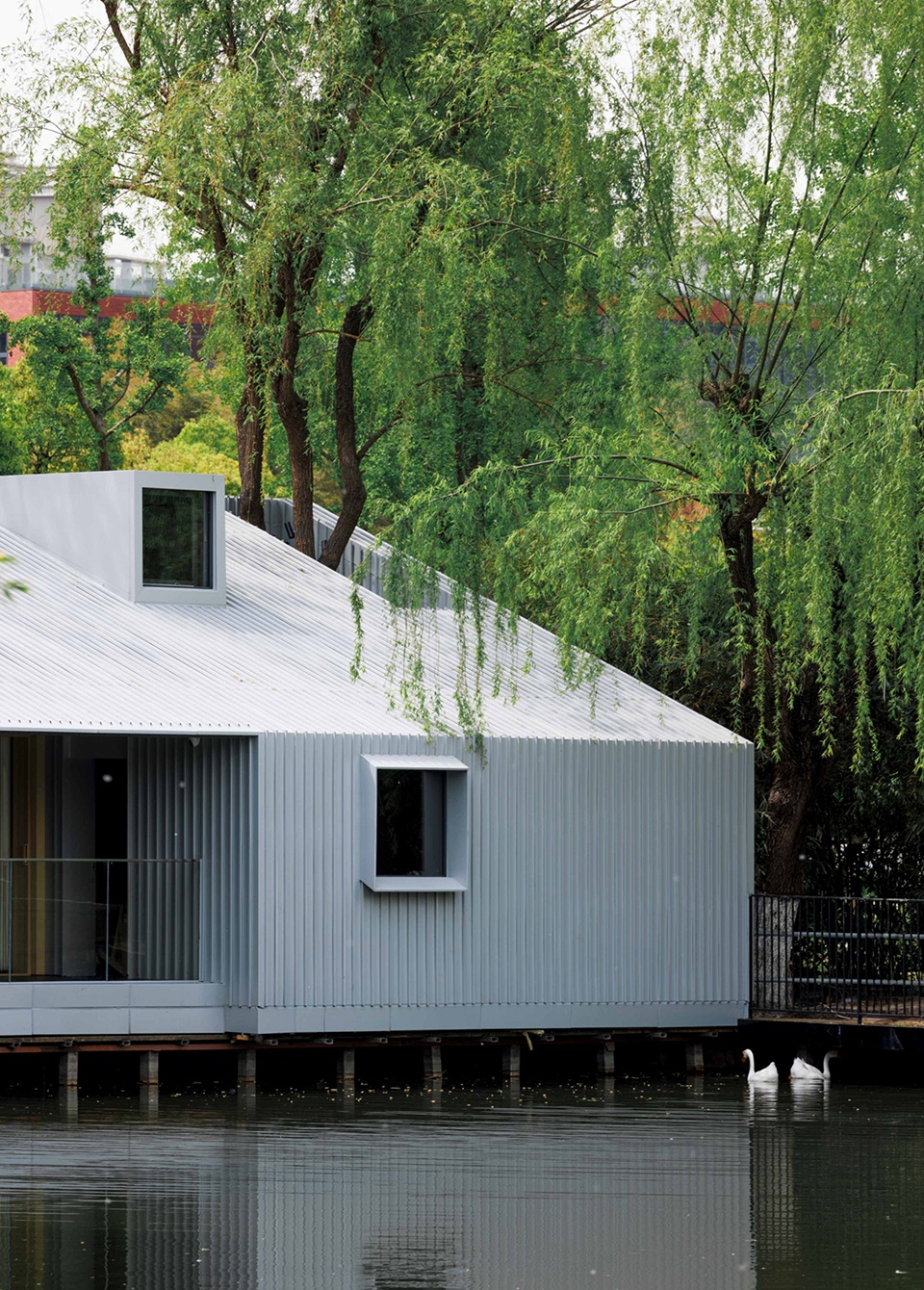
3月20日,标识系统设计完成。21日,所有施工图完成。同时Wuto-Art软装策展设计开始。4月11日,俞挺巡场。14日,建筑落成。16日,软装,展览,标识安装完成。4月18日,The Lake House美好生活体验馆如期正式开放。
March 20: Signage system completed. March 21: All construction drawings issued; exhibition and furnishing design initiated. April 11: Final site review by YU. April 14: Main structure completed. April 16: Soft furnishings, exhibition, and signage installed. April 18: The Lake House officially opened.
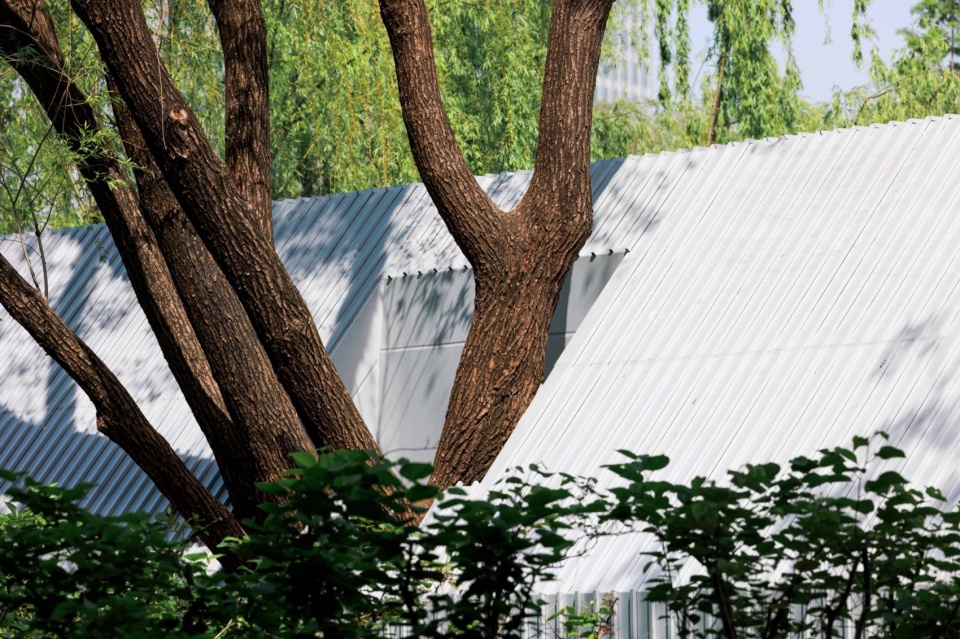
▼树的细节,Tree Detail
下篇:意 Part II: Concept
我在接受采访时候说,中国人对自然有种执念,即便身在钢筋混凝土森林中。这种执念让中国人很容易去珍惜那些看上是废物的东西,所以建筑师用陶板、可回收瓷砖、回收海洋塑料灰泥、回收海洋塑料板、蘑菇皮和光,组织了一条关于光线和空间之外的零碳暗线。这是强化我们中国人的一个生活信念,珍惜。进而去接受零碳生活,创造美好生活。
In an interview, I said that Chinese people have a persistent attachment to nature—even when surrounded by concrete and steel. This sensibility makes us treasure even those things others discard. That’s why this pavilion uses ceramic panels, recycled tiles, marine plastic plaster, marine plastic panels, mushroom leather, and light to form an undercurrent—a zero-carbon narrative that lies beyond light and space. It reflects a core cultural belief: to cherish. From this, we move toward zero-carbon living and a beautiful life.
▼咖啡厅内景与咖啡厅看向竹林,Cafe interior and Cafe looking towards the bamboo
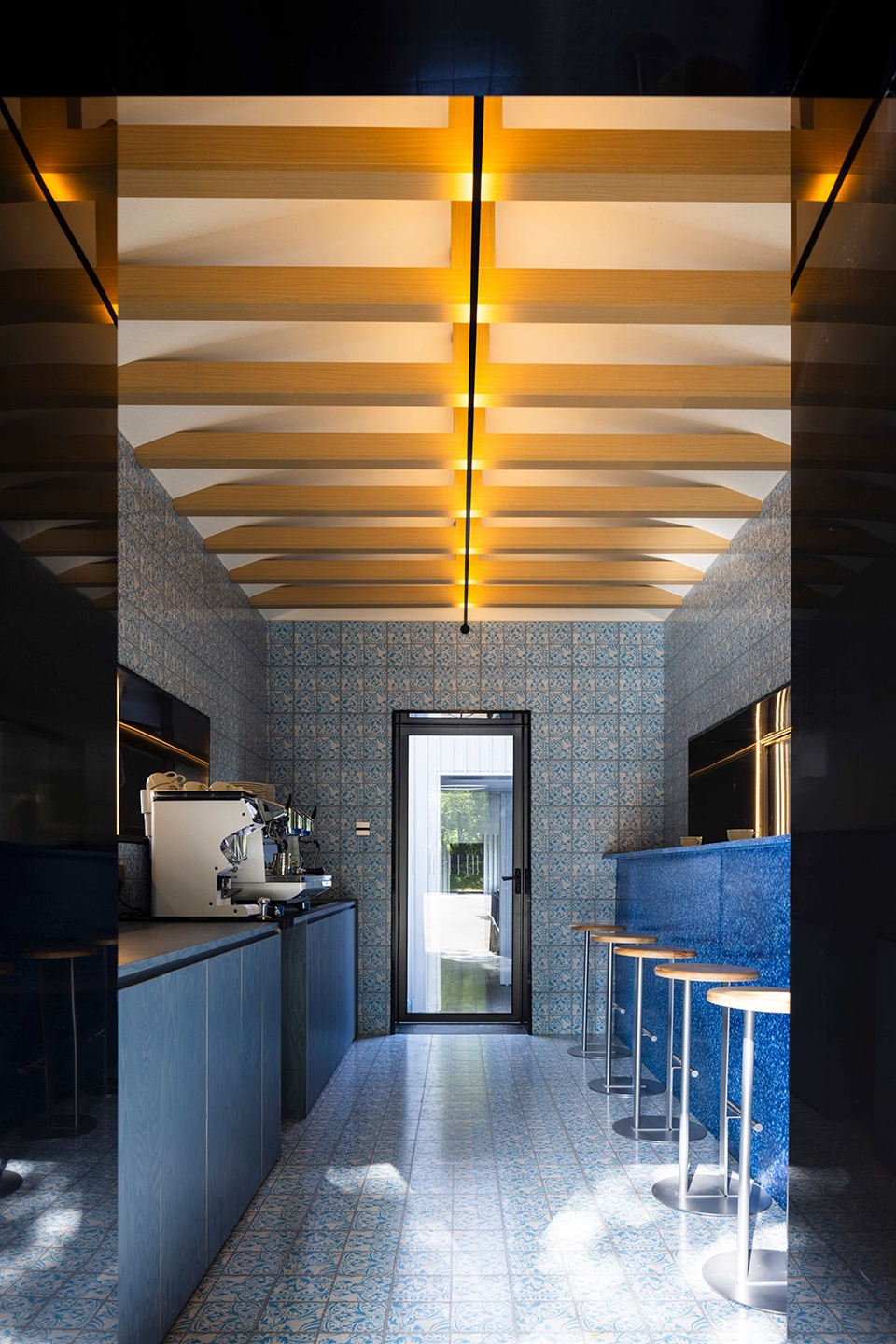
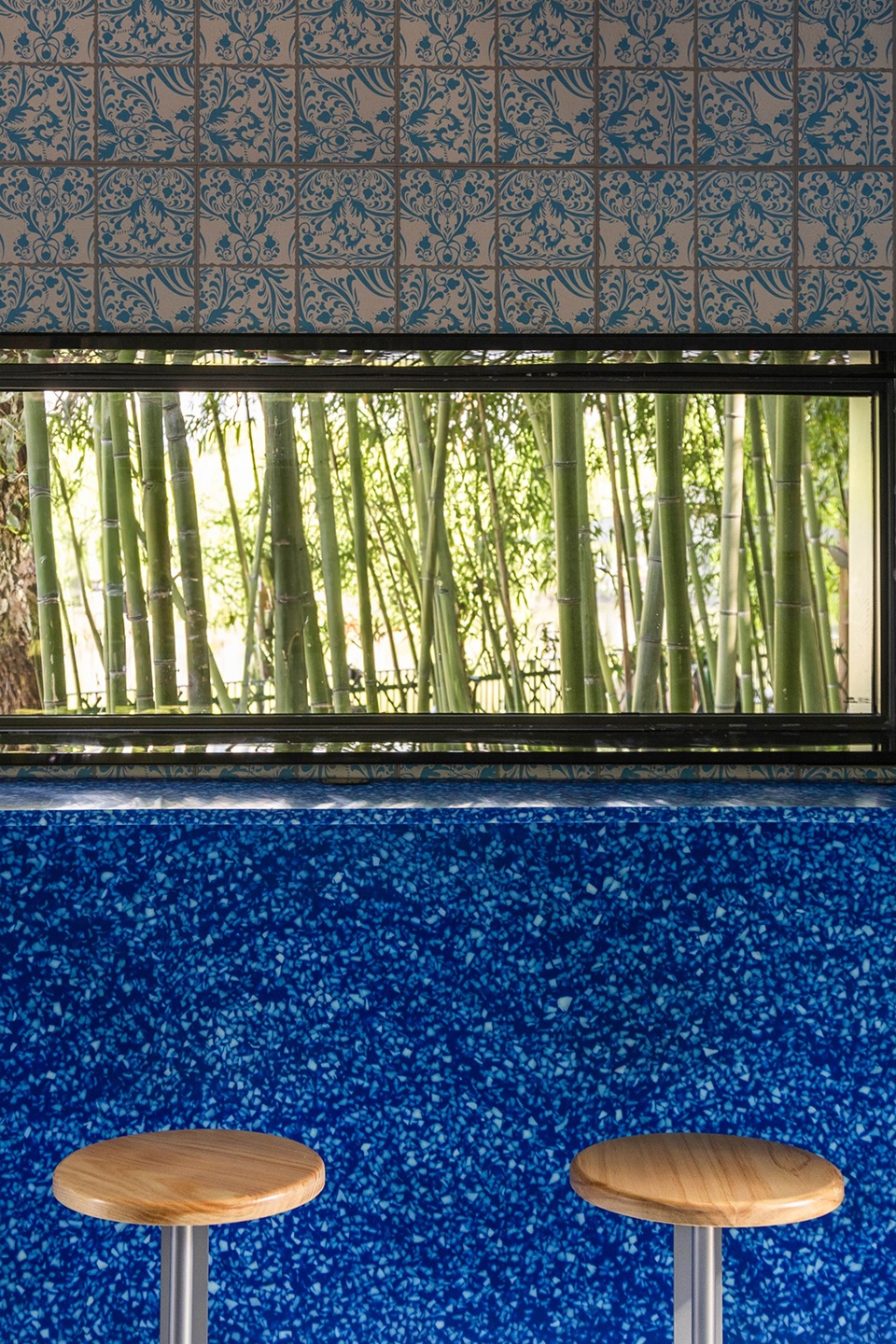
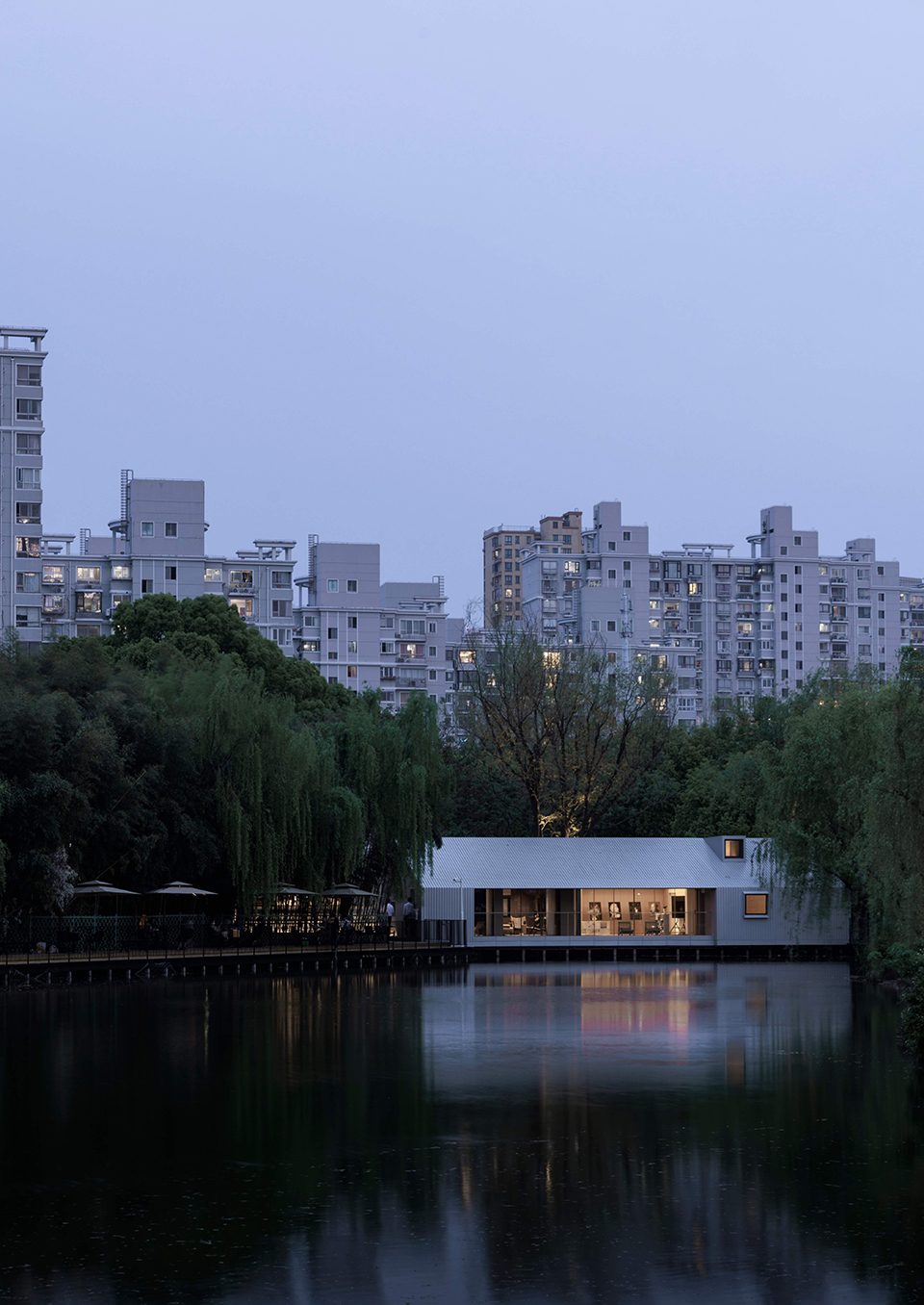
28日,我在桥上看到现在基地那个时刻,赖特和密斯在我的脑海深处立刻复活了。那是水平线,正如中国画长卷徐徐展开,中国人关于美好生活的场景借助于山水的场景,正平静地在水平线上持续不断延续,即便手卷结束,那个意境或者希望依然持续袅袅。
On February 28, standing on the bridge and seeing the site, Wright and Mies reawakened in my mind. It was the horizontal line—like a Chinese scroll unrolling. In our aesthetic tradition, a beautiful life is framed through landscapes, gently unfolding across the horizon. Even when the scroll ends, the scene continues in our imagination.
▼展陈空间看向湖面,Exhibition space looking towards the lake
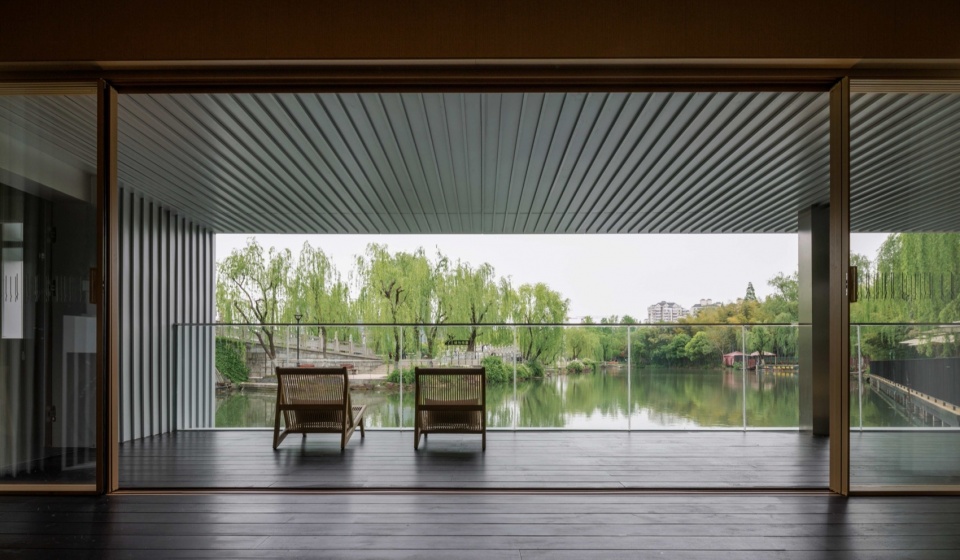
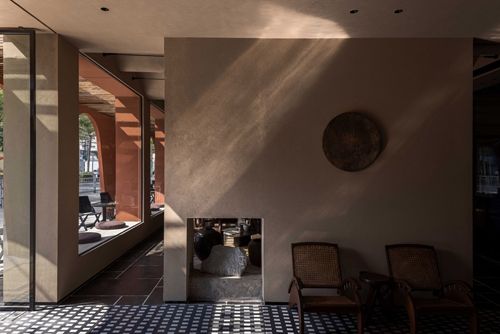
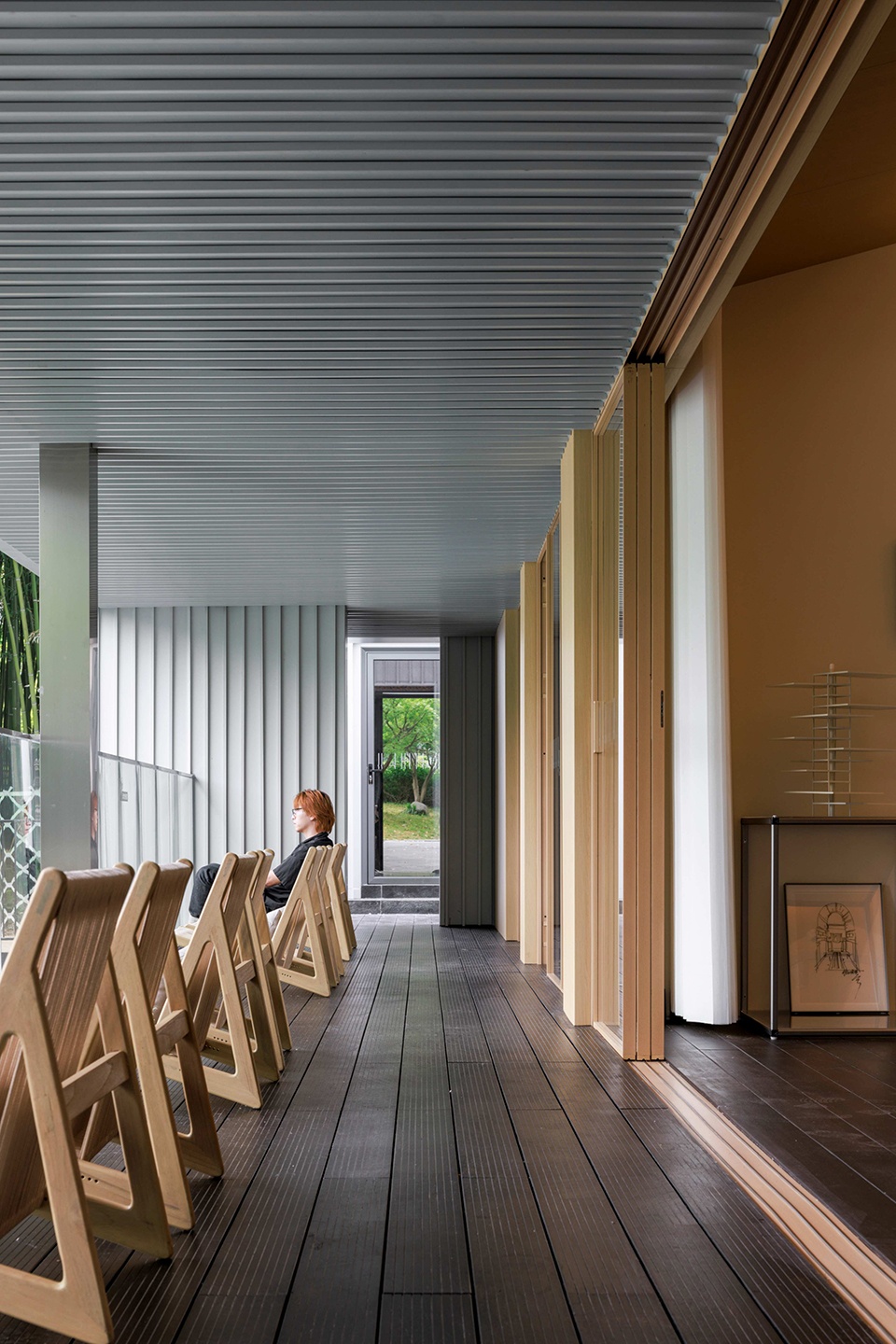
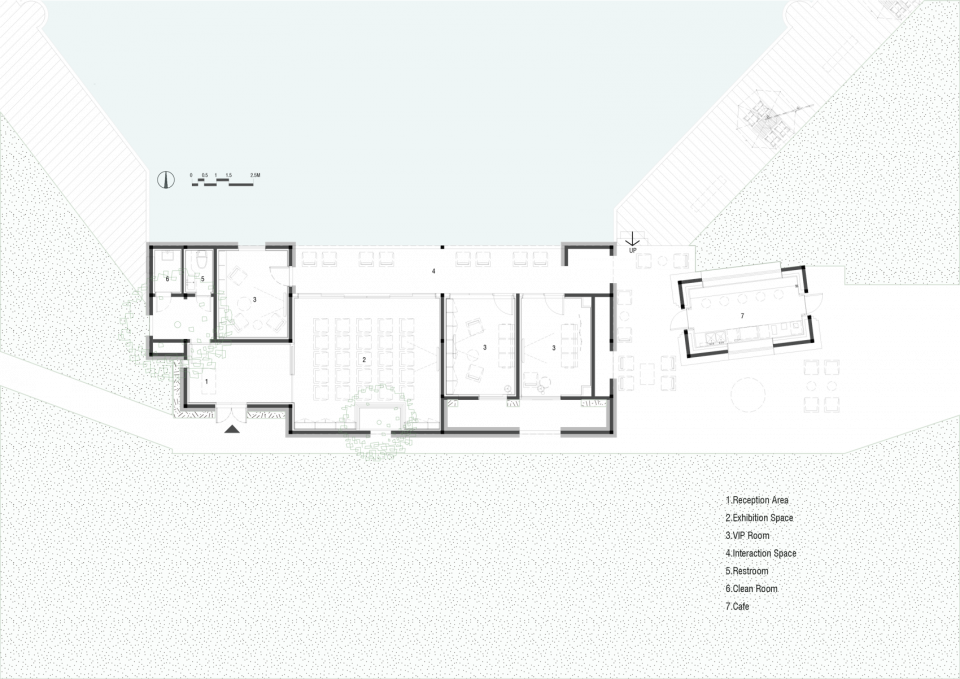
我用明暗交替的水平线把保留的树,垂直绿化,门厅,展览空间,三间主题不同的VIP房间,柳浪微拂的敞廊,平台,栈道和咖啡馆组织成人在其中可居可游的线性空间。模糊室内外的边界以及空间的方向感。在这短暂的迷失中不至于恐慌而是惊喜,因为可以洞悉中国文化的一个奇妙体验,在日常中突然被即时的神圣性感动。
Using horizontal layers of light and shadow, I organized the preserved trees, vertical greenery, lobby, exhibition hall, three uniquely themed VIP rooms, willow-lined colonnade, terrace, boardwalk, and café into a linear spatial journey—inhabitable, walkable. The boundaries between inside and out dissolve. Orientation is gently disoriented, not in fear, but in delight. In these fleeting, sacred moments, one suddenly feels the emotional clarity of Chinese culture revealed in the everyday.
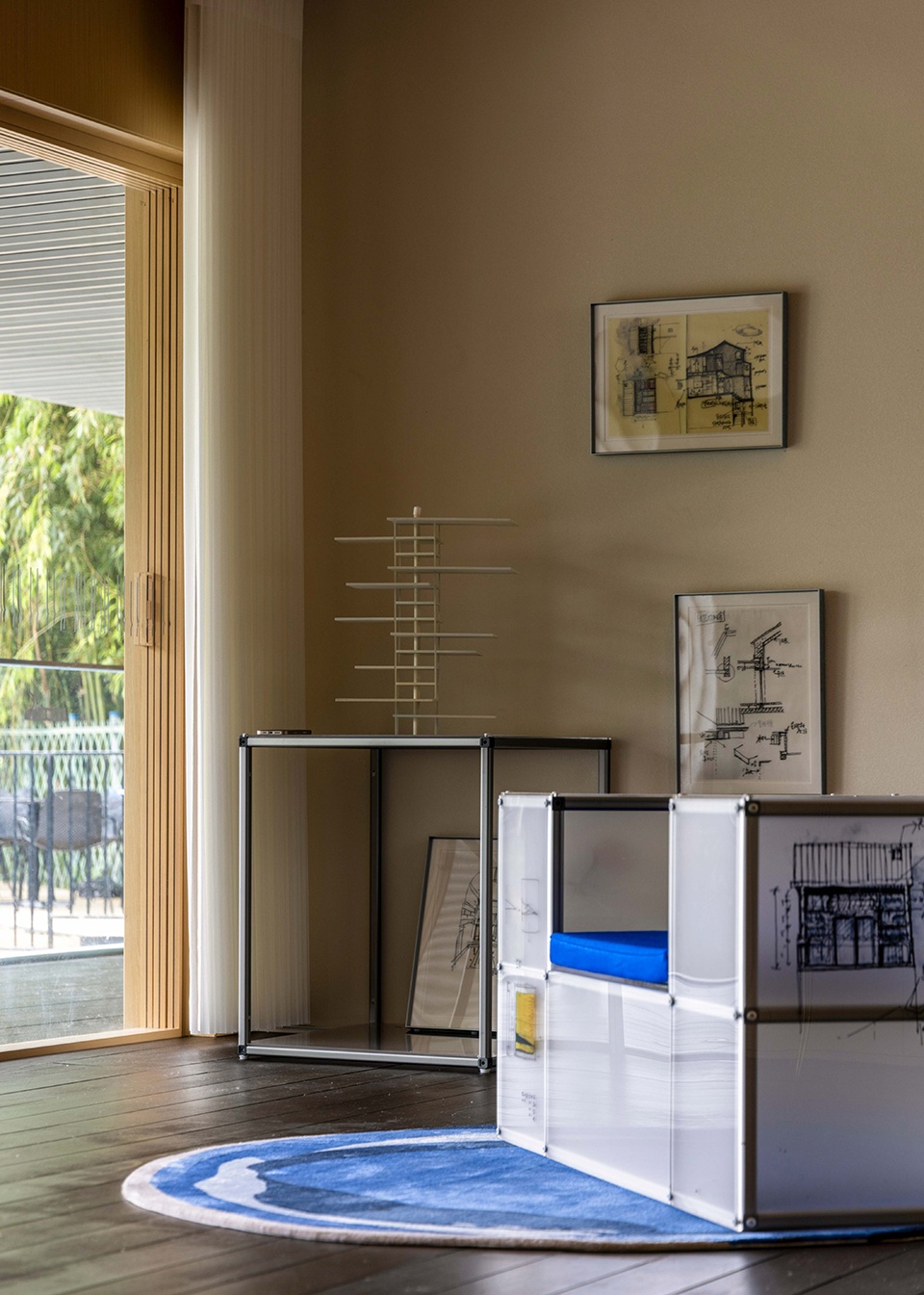
▼互动空间,Interaction Space
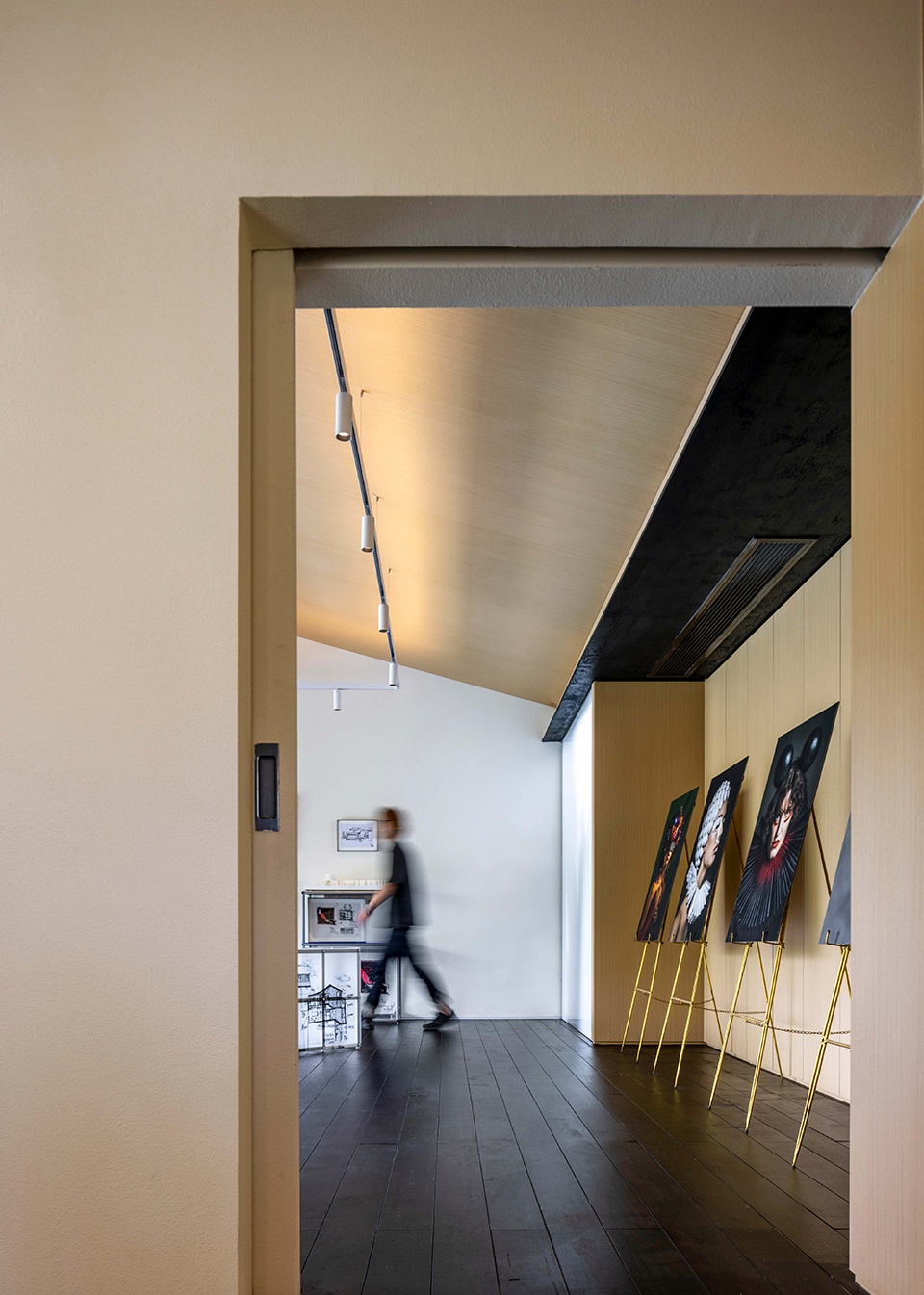
▼展陈空间,Exhibition space
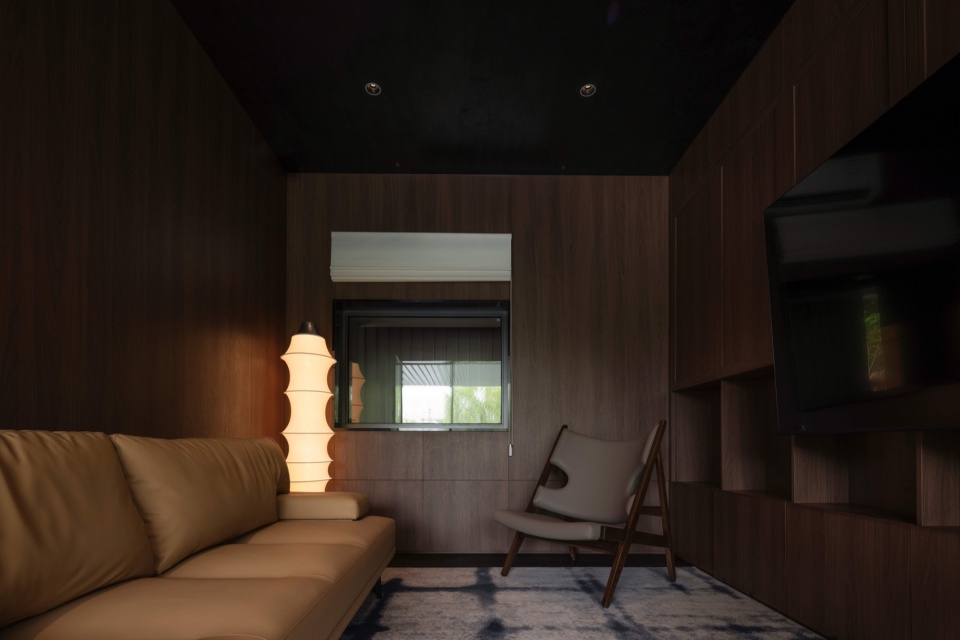
比如在VIP1房间里,大家可以坐下,眼前的窗户就是一幅生动的画。顶上的天光悄悄地散在你我身上,嗯,此处欲言但忘言。
In VIP Room 1, you can sit and gaze at a window that becomes a living painting. The skylight above disperses quietly across you and me. Words fail.
▼VIP房间,VIP Room
▼VIP房间细部,VIP Room Details
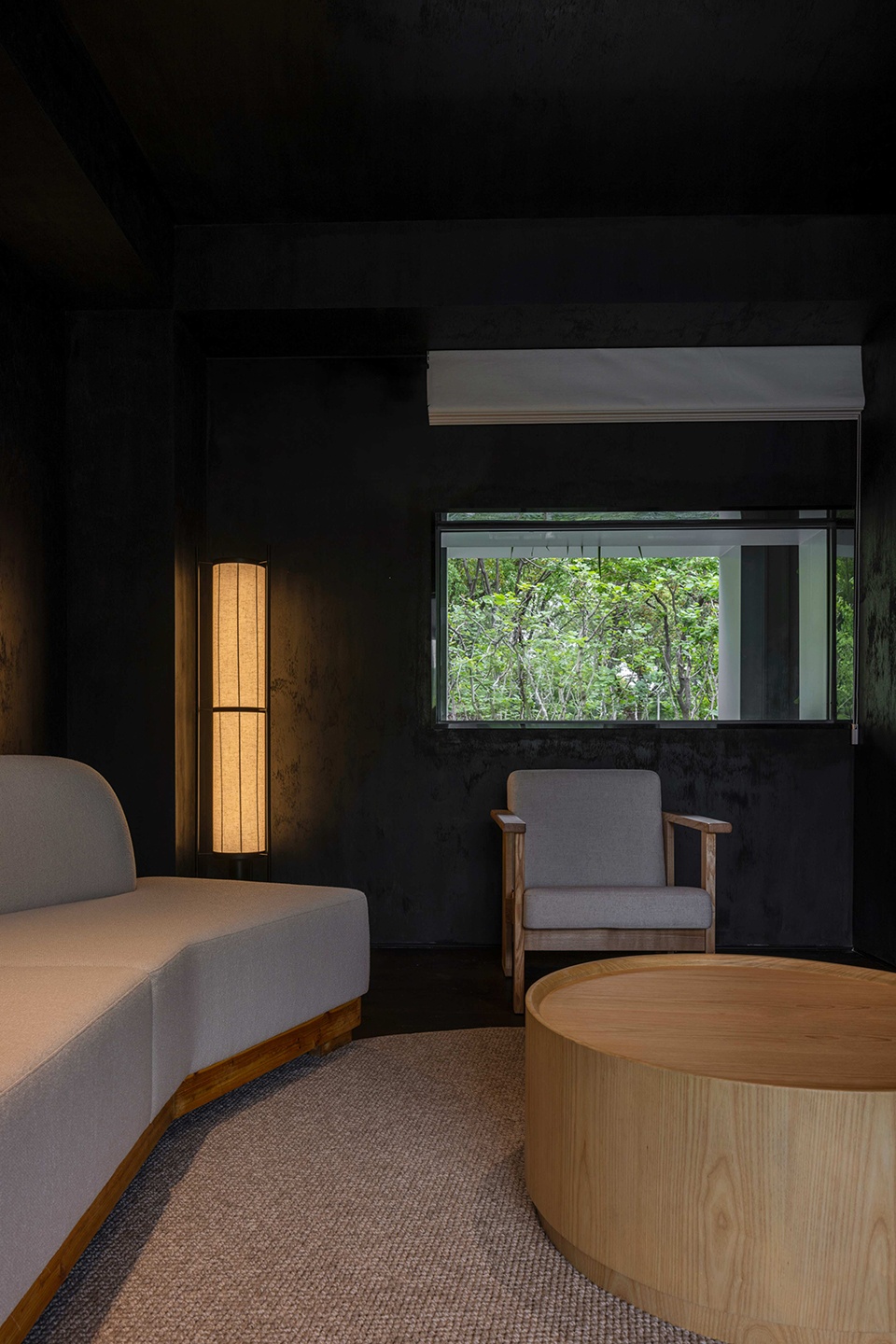
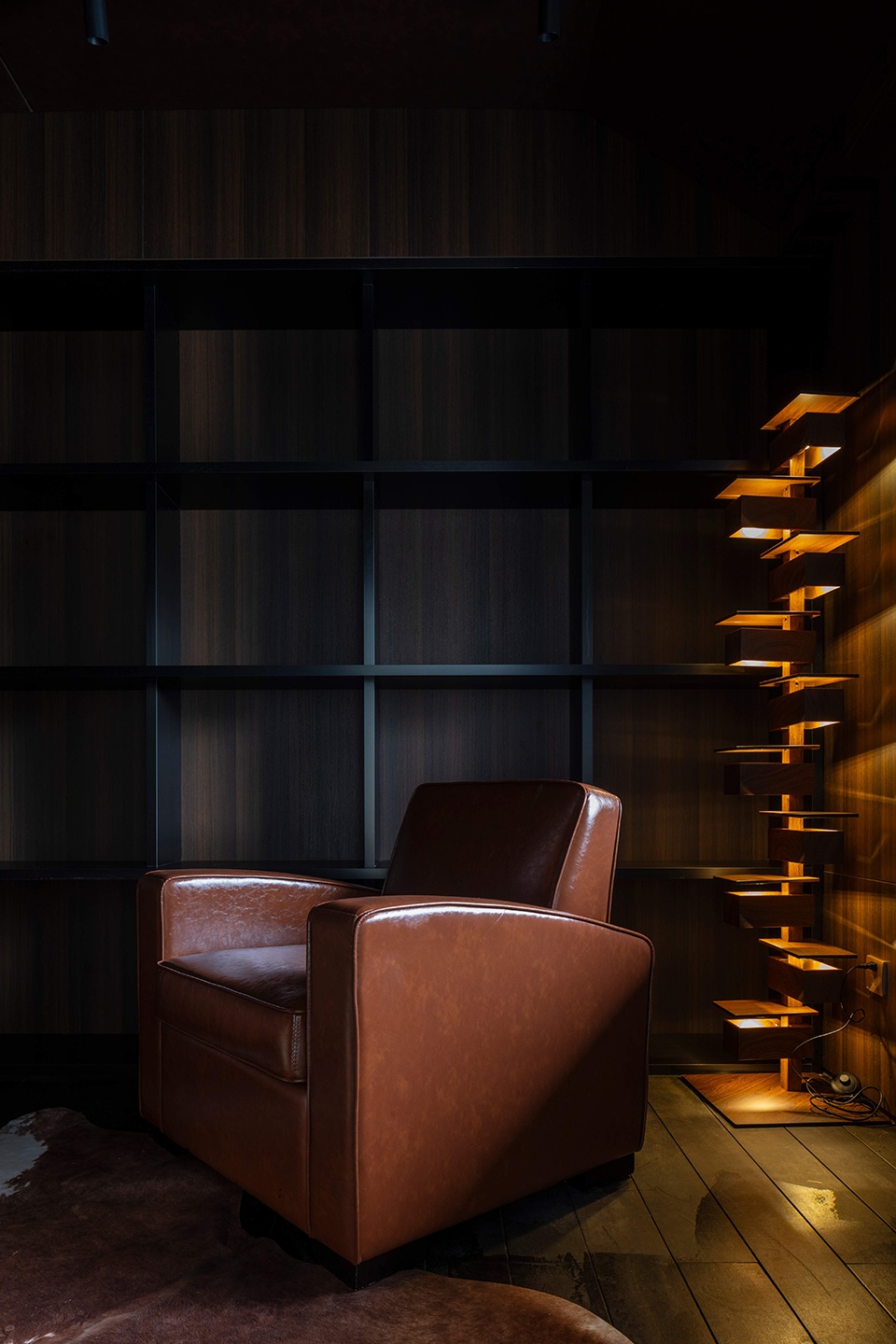
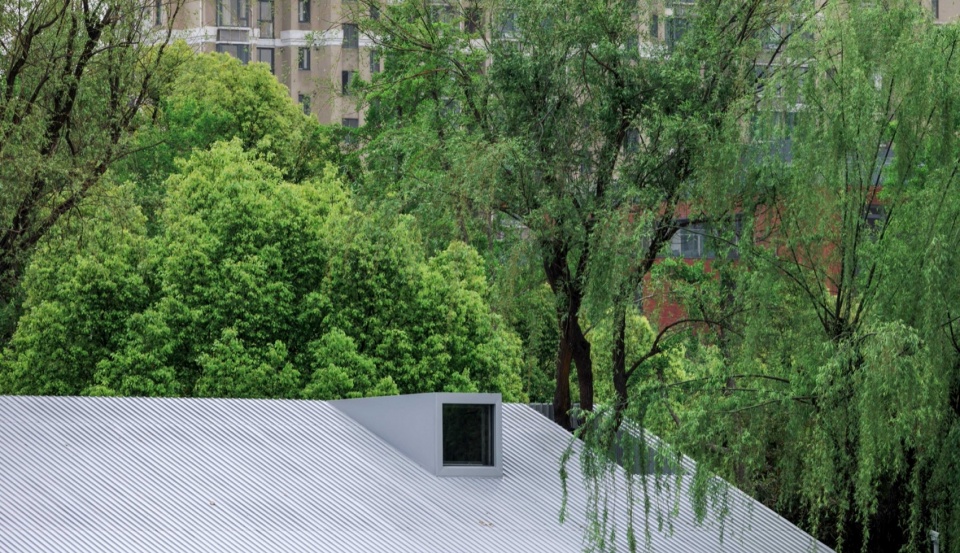
这个天窗原本是我想设计一个楼梯作为瞭望。但地基不允许就去掉了。不过保留天窗会让人联想上海的老虎窗,甚至和边上的树洞形成正负形的对比。这不是事先设计的,而是随机应变的,中国人的乐趣不正是在计划中有一些意外但可控的惊喜吗?
I originally wanted a staircase under the skylight as a lookout, but the park didn’t allow it. We kept the skylight anyway. It now recalls old Shanghai tiger windows, or contrasts with the nearby tree hole as positive and negative space. It was not part of the original design—just improvisation. And isn’t that the charm of Chinese design? Controlled surprise within a plan.
▼天窗,Skylight
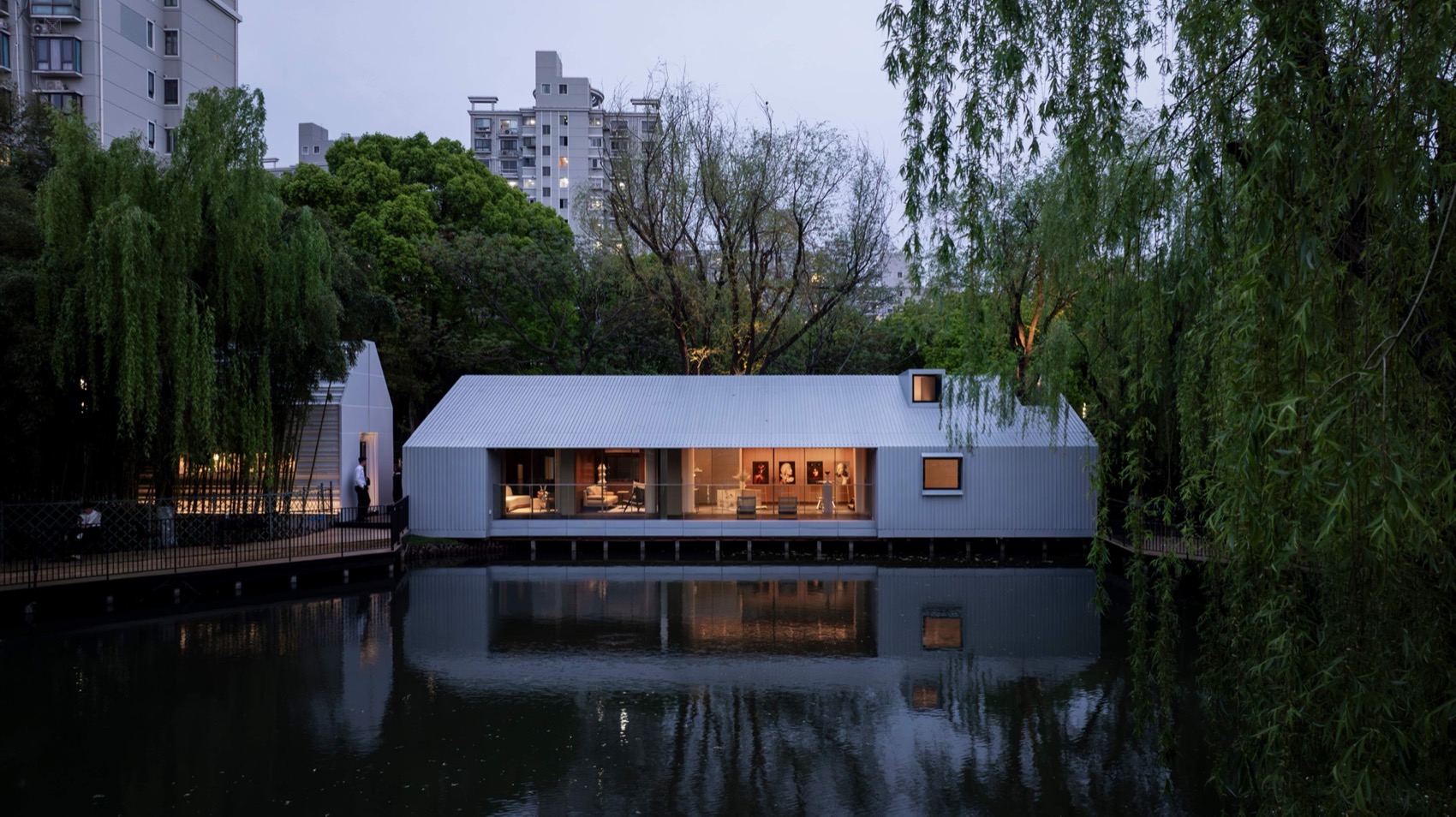
开幕那天,一个路过的老人用手轻轻抚摸瓷房子那个微微有珠光的表面,许久,微笑满足地离开。这一刻,是美好的。
On opening day, a passing elderly man reached out and gently touched the pearlescent ceramic wall. He stood for a long while, then smiled and walked away. That moment—was beautiful.
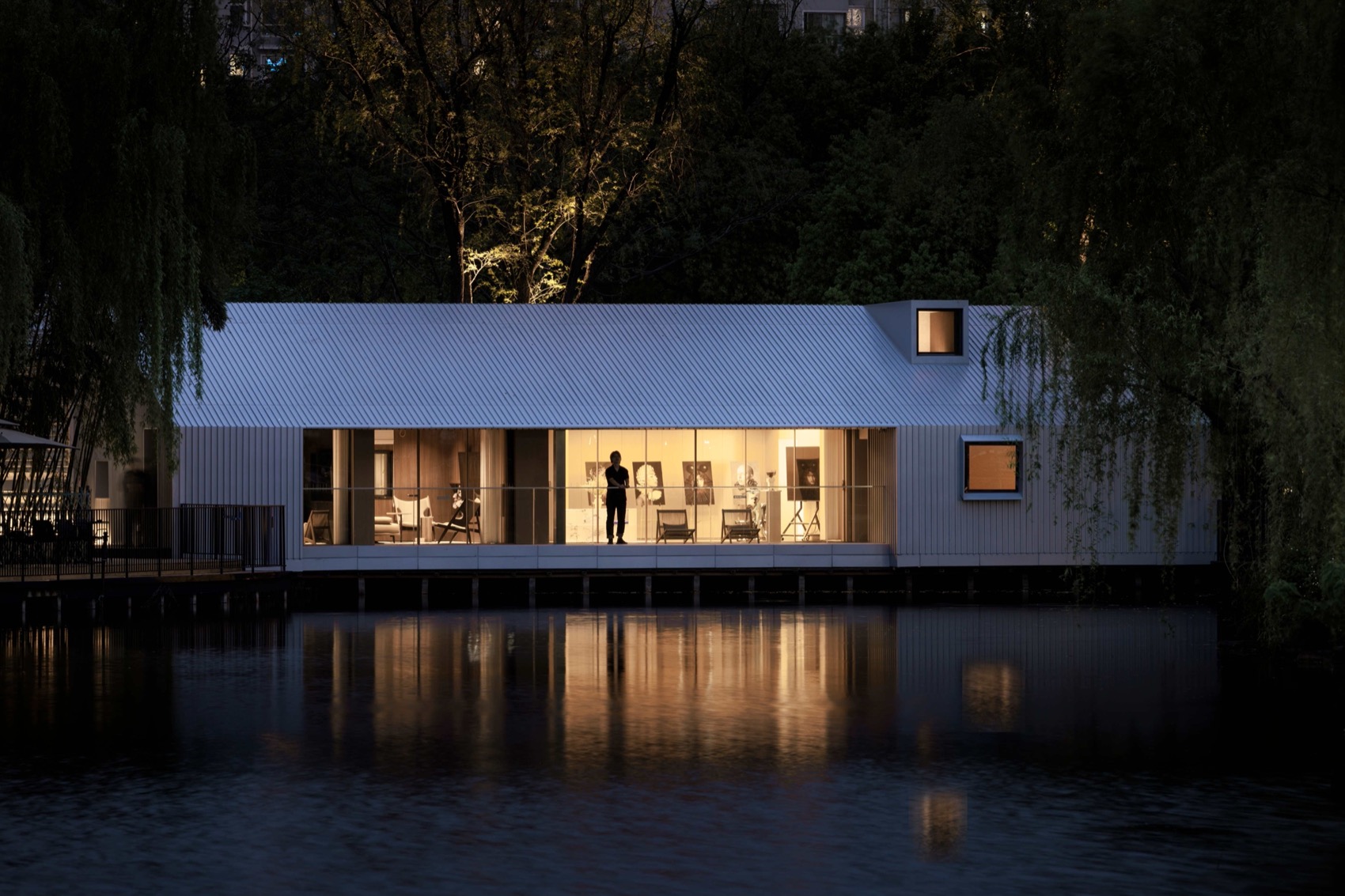
▼夜景远观,Night view from a distance
后记:Space is Spirit Epilogue: Space is Spirit
我们曾经一度以为物质美好就生活美好,但现在才明白,一个微笑,一个克制的惊喜,一个似乎在某个阳光明媚下午突然明白了什么才是美好生活。这时候的建筑就不仅仅是形式故事而是空间戏剧。在能“安放宁静雄心”的空间里,有那么一刻瞬间的神圣,我们觉得一切都是值得的那一刻,生活在向我们展露真相。建筑就是为了揭示这一刻的美好生活而存在的。Wutopia Lab最着迷这一刻,短暂但悠久,Space is Spirit。
We once believed that material wealth defined a good life. Now, we realize a smile, a restrained surprise, or a moment of clarity on a sunny afternoon is the real beauty. In that instant, architecture is no longer form or narrative—but spatial drama. In a place that can host “peaceful ambition,” we experience a brief sacred moment. And in that moment, life reveals its truth. Architecture exists to capture that moment of beauty. At Wutopia Lab, we live for that moment—fleeting yet timeless. Space is Spirit.
▼夜晚近景,Close Night View
▼一层平面图,First Floor Plan
Project Name: The Lake House – Life Experience Pavilion
Design Firm: Wutopia Lab
Chief Architect: YU Ting
Project Manager: PU Shengrui
Project Architect: Liran SUN
Design Team: HUANG He, PAN Dali, XIONG Jiaxing
Interior Consultant: Shanghai C-yu Space Design Co., Ltd.Interior Consultant Team: DAI Yunfeng, CUI Xiaoxiao, ZHAO Ruyi, QIN Liyan, LUO Renwei
Structural Consultant: MIAO Binhai
Lighting Consultant: Chloe ZHANG, WEI Shiyu
Soft Furnishing: Wuto Art, H&J
FF&E Project Manager: MA Liuliu
Signage: Wuto Art, MEEM HOUSE
Curation: Wuto Art
Curator: LU Yan