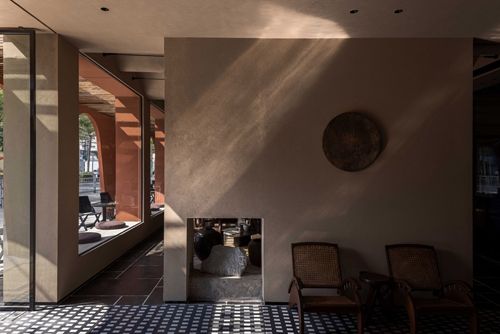
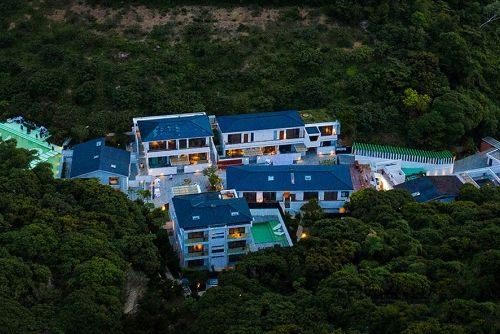
《我与上海不可分割》建筑师俞挺空间概念展,上海 / Wutopia Lab
《我与上海不可分割》建筑师俞挺空间概念展于2026年初登陆上海美术馆,并以七个概念空间陆续上线为线索贯穿全年。建筑师俞挺放弃常规的图像展示,以七个3×3米的真实空间构造,回顾、反思并表达自己与上海千丝万缕的纠葛牵连。
Bound to Shanghai, a spatial concept exhibition by architect YU Ting, opened at the China Art Museum, Shanghai in early 2026 and will unfold throughout the year through the successive unveiling of seven conceptual spaces. Abandoning conventional image-based presentation, YU Ting revisits, reflects on, and gives form to his deeply intertwined relationship with Shanghai through seven real spatial constructions, each measuring 3 × 3 × 3metres.
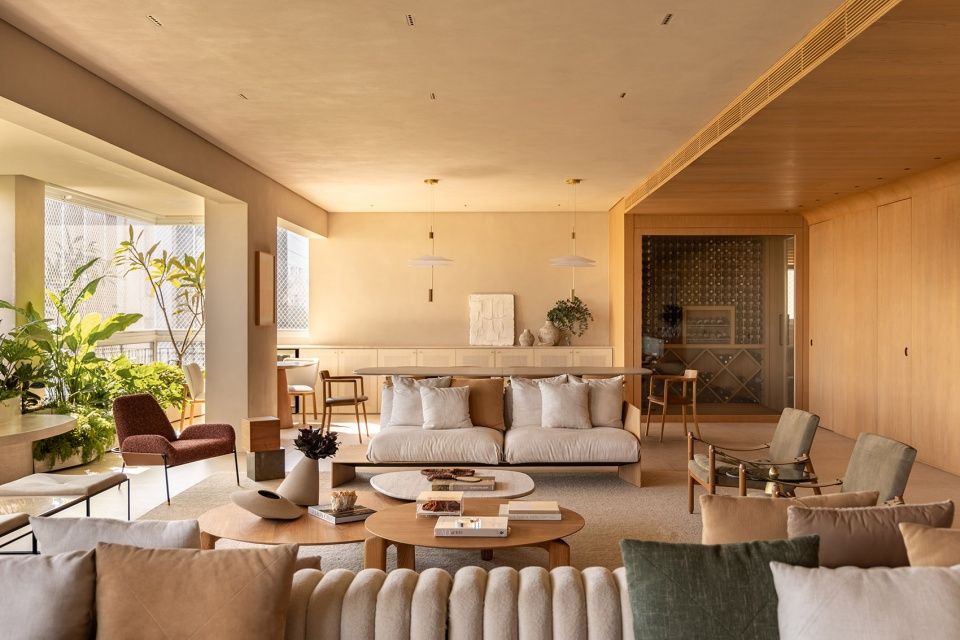
▼展览现场,exhibition site
空间即精神:当建筑展不再依赖图像 Space is Spirit When an Architecture Exhibition No Longer Relies on Images
▼《家·尊严》展览现场,Home · Dignity exhibition site
建筑即情感:我与上海不可分割 Architecture is Affect Bound to Shanghai
我将自己对上海、对建筑的理解,浓缩为七个3×3×3米的空间方块,对应七个空间节点——家、城市、美术馆、咖啡馆、花园、社区,以及神圣空间。七种空间类型,七种材料,七种情绪状态,构成七件可进入、可沉浸,亦可在边缘窥视的空间装置。展览并非一次性展开,而是一年时间里让七个空间逐一在上海美术馆开启。不同的空间经验彼此叠加,逐渐构成一幅关于上海的精神地图。我将这七个空间称为“七重宝函”。它们层层开启,逐步逼近内心。“七重宝函”不只是组织七个展品空间的方式,也是我重新认识自己与上海关系的方式。在三十年的建筑实践中,我曾经只把上海当作创作与实践的阵地。直到被问及“什么是上海性”,我才意识到,上海早已与我的建筑创作和生活不可分割。上海,是我真正的灵感源泉。
I have condensed my understanding of Shanghai and architecture into seven 3 × 3 × 3-metre spatial cubes, unfolding through seven spatial chapters——home, city, museum, café, garden, community and sacred space. These seven spatial types, seven materials and seven emotional states come together as seven spatial installations that can be entered, immersed in, or simply observed from the edges.The exhibition does not unfold all at once. Over the course of a year, the seven spaces will be unveiled one by one at the China Art Museum, Shanghai. Together, the seven spaces form a process of mapping Shanghai through memory, experience and architectural insight.I call these seven spaces the “Seven Treasure Caskets.” One layer opens after another, leading us ever deeper toward the core. The “Seven Treasure Caskets” are not only a way of organising the seven exhibition spaces, but also a way for me to reconsider my own relationship with Shanghai. Over thirty years of architectural practice, I once thought of Shanghai simply as the place where I worked and practised architecture. It was only when I was asked, “What is Shanghai-ness?” that I realised how inseparable Shanghai had already become from my architectural practice and my life. Shanghai is my true source of inspiration.
▼《一个人的美术馆》,One Person’s Gallery
场所即感知:七重宝函的策展实验 Place is Percept The Seven Treasure Caskets as a Curatorial Experiment
“七重宝函”并非是对建筑类型的抽象,而是从我作为建筑师在上海具体而长期的生活经验出发,将观察、记忆与感受等转化为不同的空间表达。我们对上海的感知,发生在具体的场所之中。场所承载着生活,也塑造着我们对城市的理解。
The “Seven Treasure Caskets” are not an abstraction of architectural types. They emerge from my three decades of living and working in Shanghai as an architect—from the observations, memories and experiences that have shaped my understanding of the city. We come to know a city through the places where we live, work and spend our time. These places carry our everyday lives, while quietly shaping how we remember and understand the city.
▼《一个人的美术馆》,One Person’s Gallery
第一重宝函・家
九平米,藏着上海人刻在骨子里的体面
Treasure Casket One: Home
A Nine Square Cube that Holds the Dignity of Shanghai Life
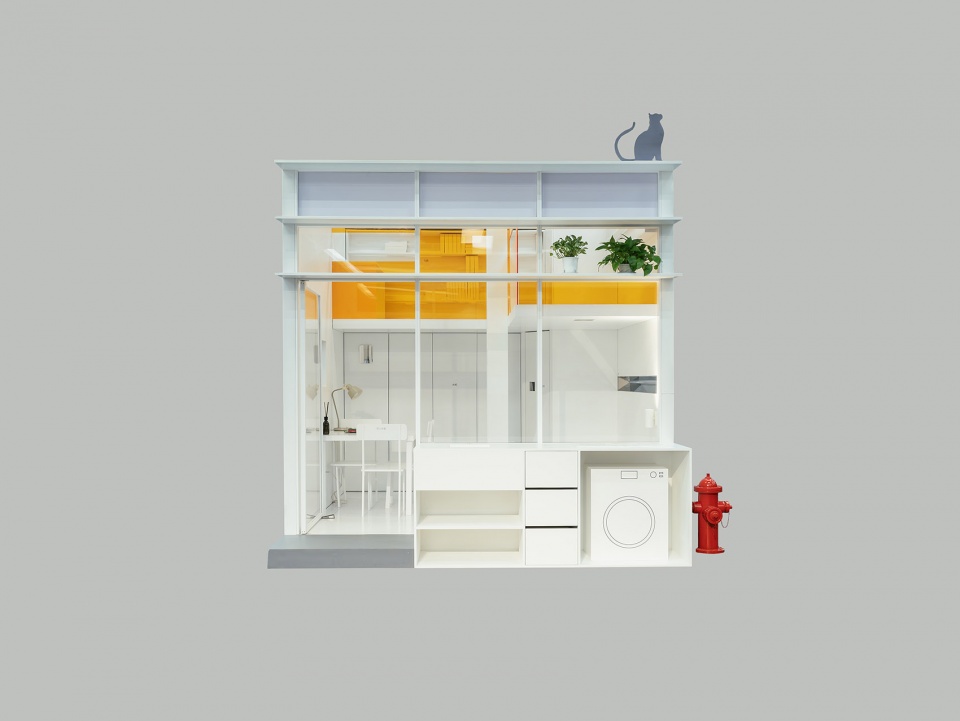
2026年元旦,第一重宝函《家·尊严》率先上线。一个3×3米的白色立方体,容纳了一家三口完整的生活。
On New Year’s Day 2026, the first Treasure Casket, Home · Dignity, was unveiled. A white 3 × 3 metre cube contains the complete life of a family of three.
▼《家·尊严》,Home · Dignity
▼《家·尊严》,Home · Dignity
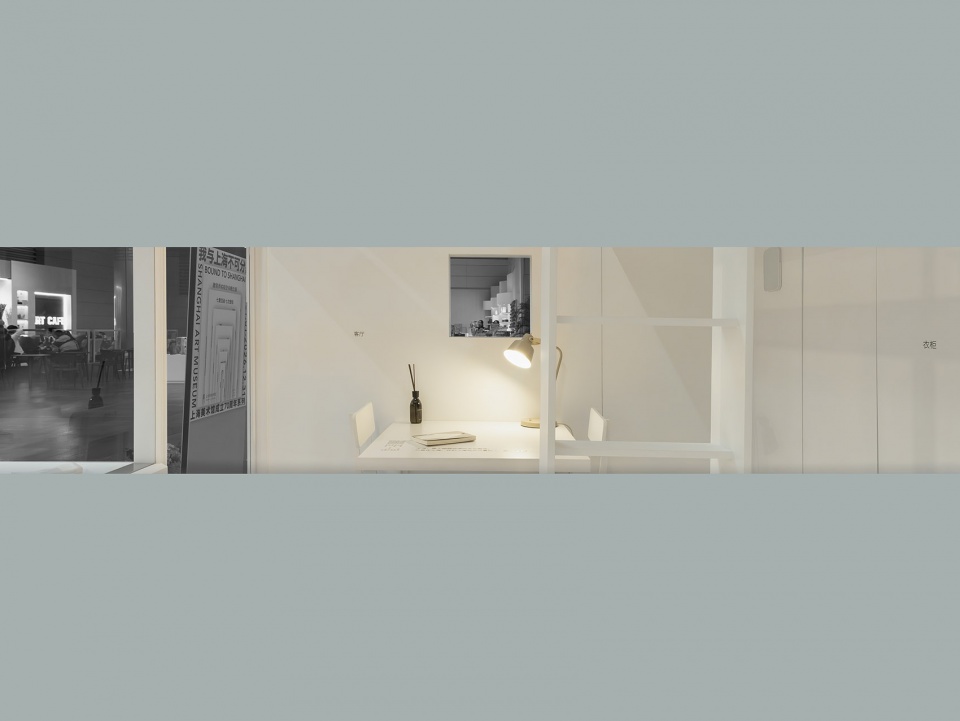
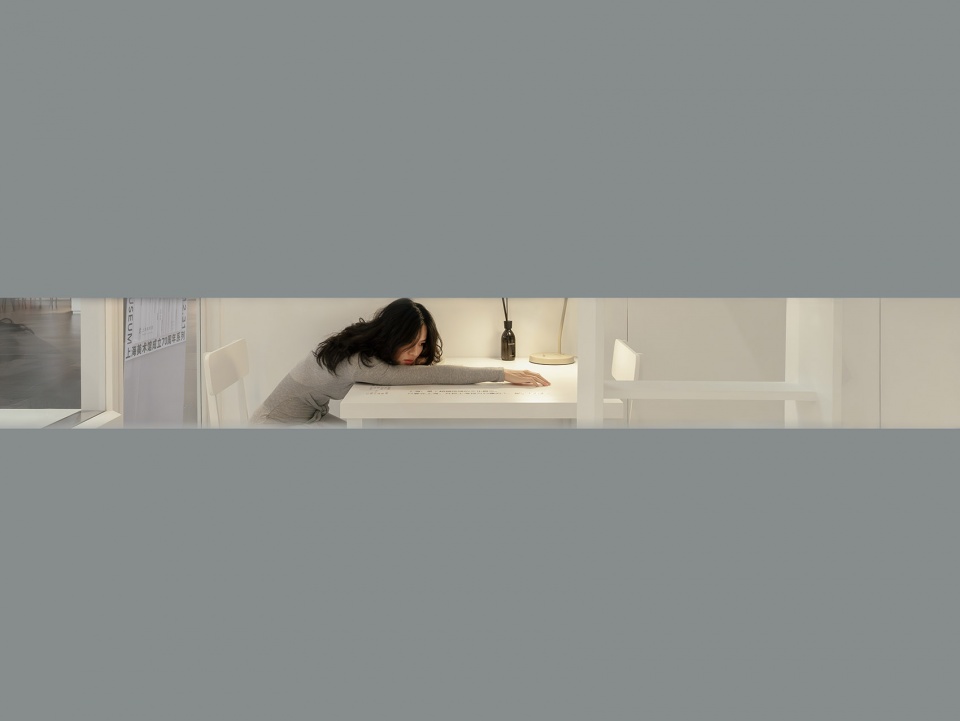
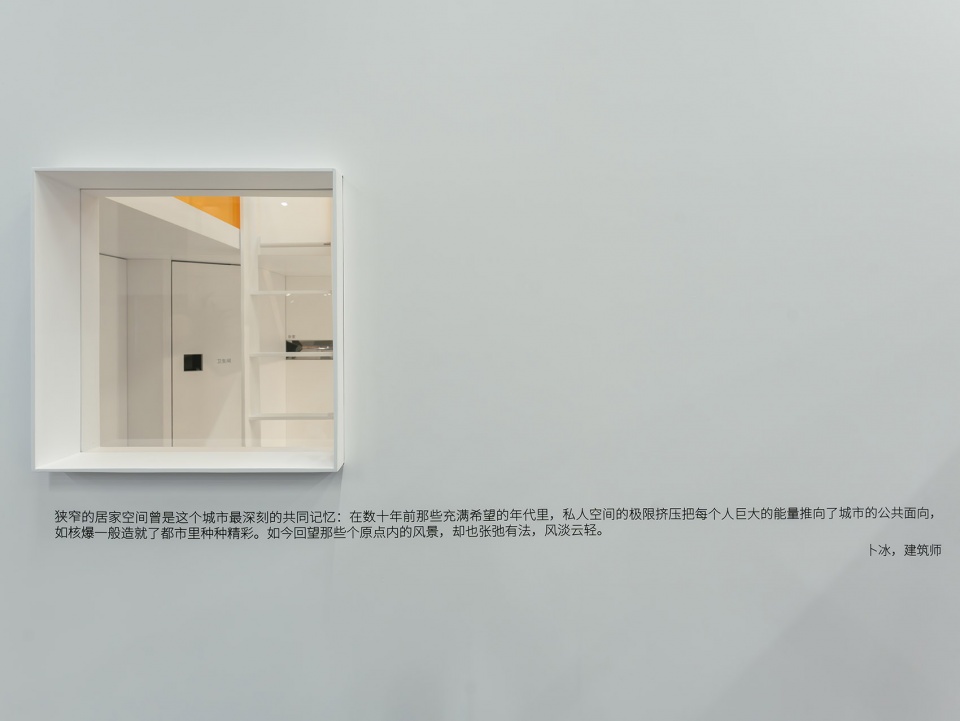
▼狭窄的居家空间成为城市的共同记忆,Narrow living spaces have become a shared memory of the city
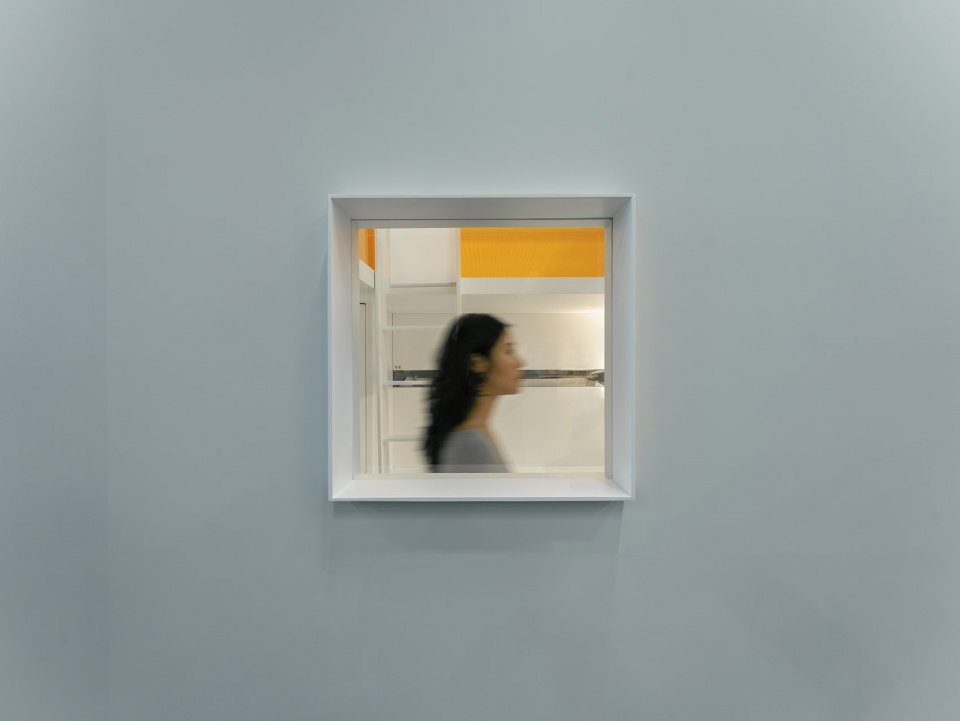
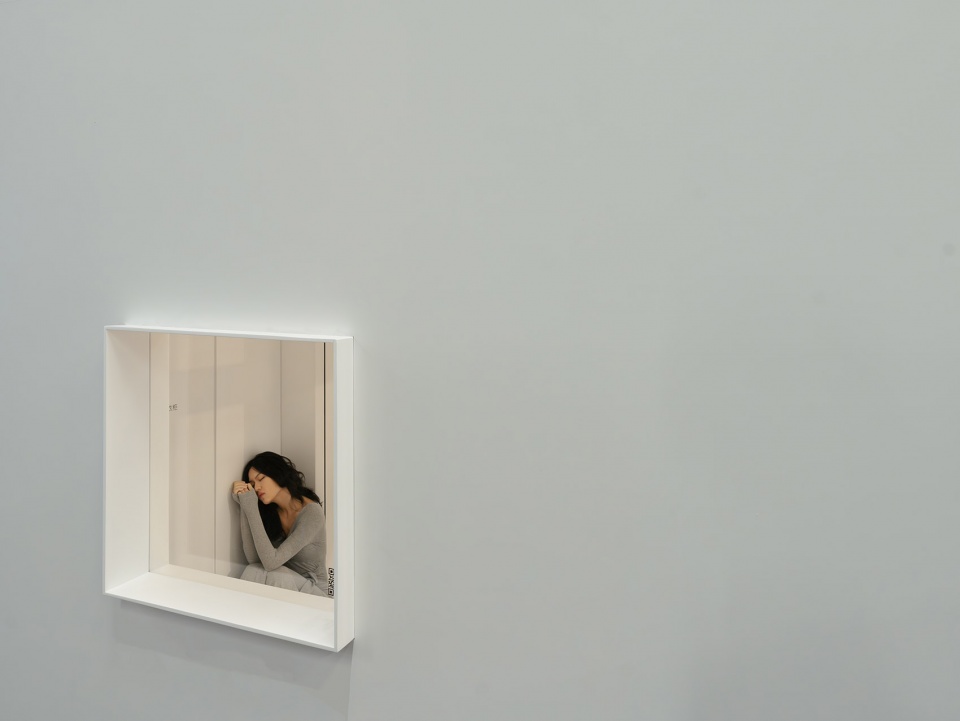
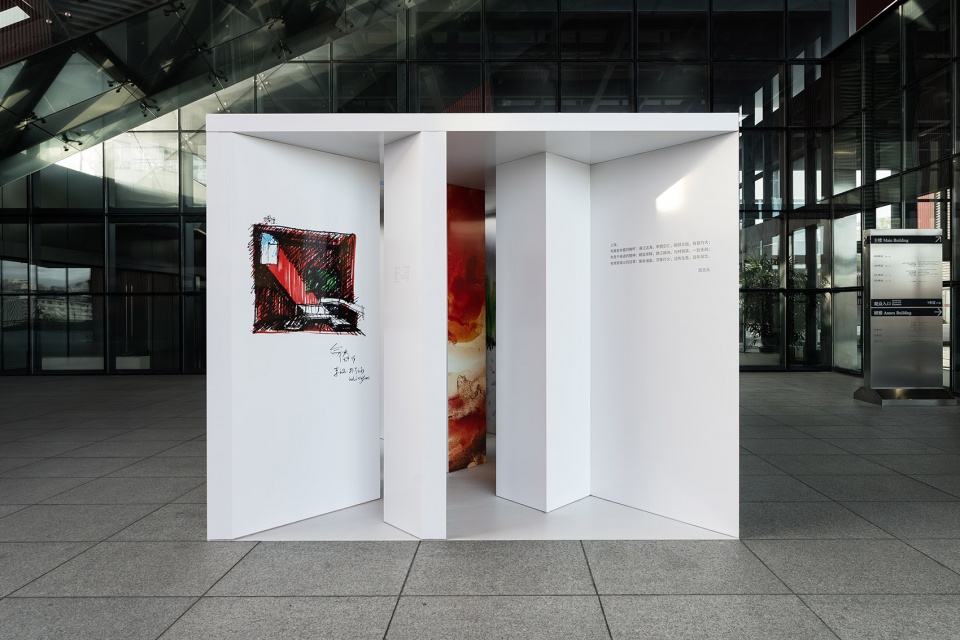
“家”的创作源自我十年前的作品《九平米的尊严》——在那个3×3米的空间里,我曾安排过一家五口的生活。早年间上海人均居住面积仅有四平米,几代人挤在狭小房间里,是许多上海人的共同记忆。但哪怕空间逼仄,上海人依旧会把屋子收拾清爽,在方寸之间把日子过得有秩序、有温度,这就是独属于上海的实用主义与乐观主义。
Home grew out of my work The Dignity of Nine Square Metres, which I created ten years ago. In that 3 × 3 metre space, I once arranged a life for a family of five. Early Shanghai was marked by extremely small living spaces, with several generations often sharing a single room. Yet even in the tightest of spaces, people took pride in keeping their homes orderly, finding clever ways to make everyday life work within just a few square metres. This is the distinctly Shanghai combination of pragmatism and optimism.
▼狭窄的居家空间成为城市的共同记忆,Narrow living spaces have become a shared memory of the city
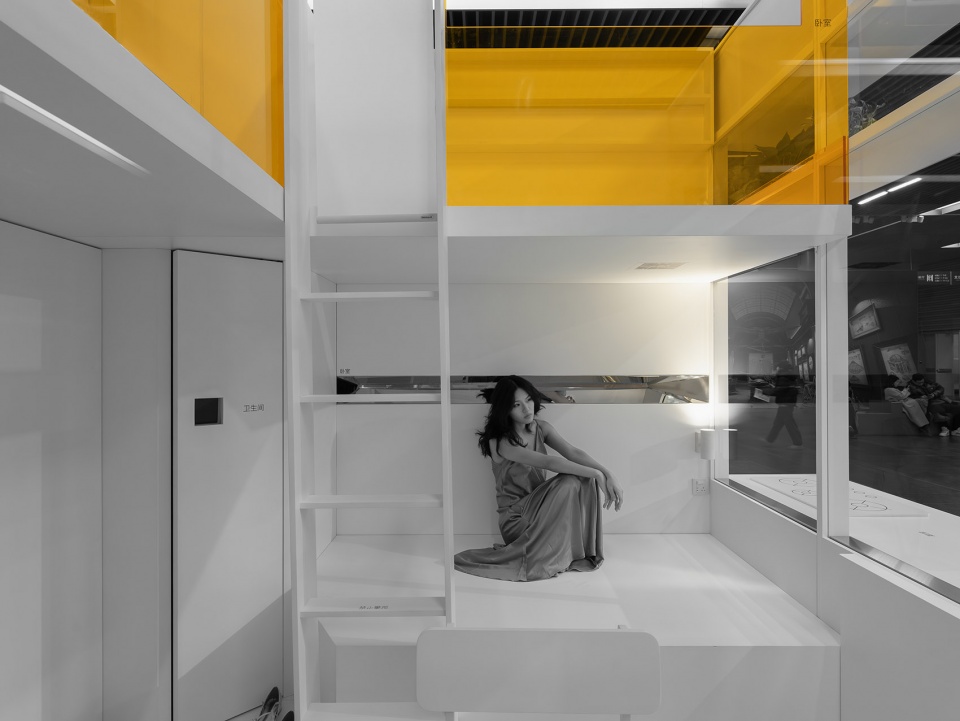
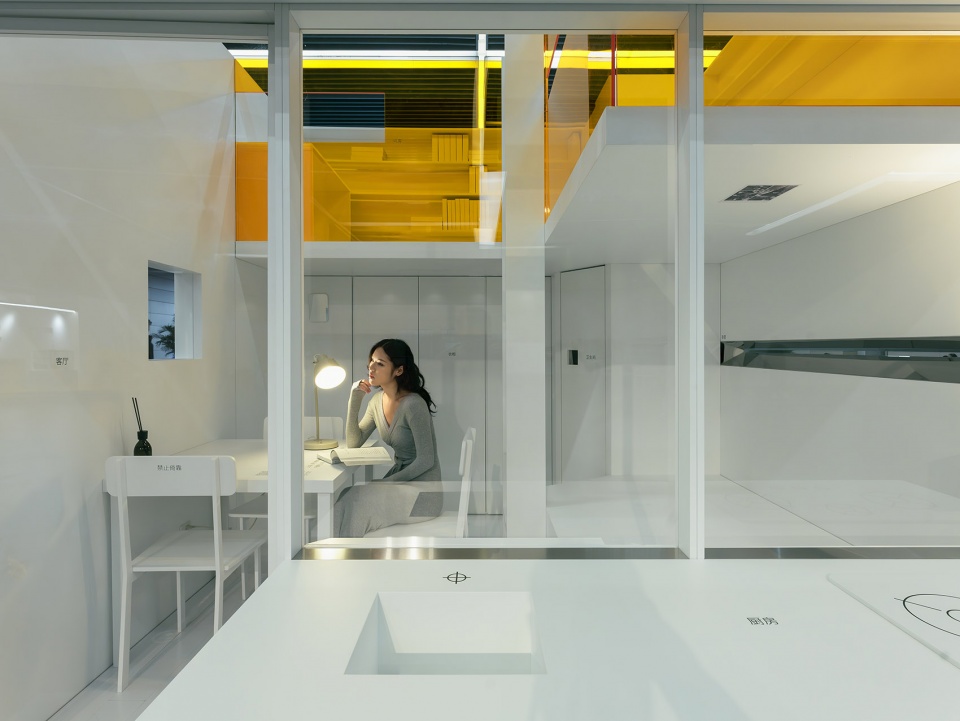
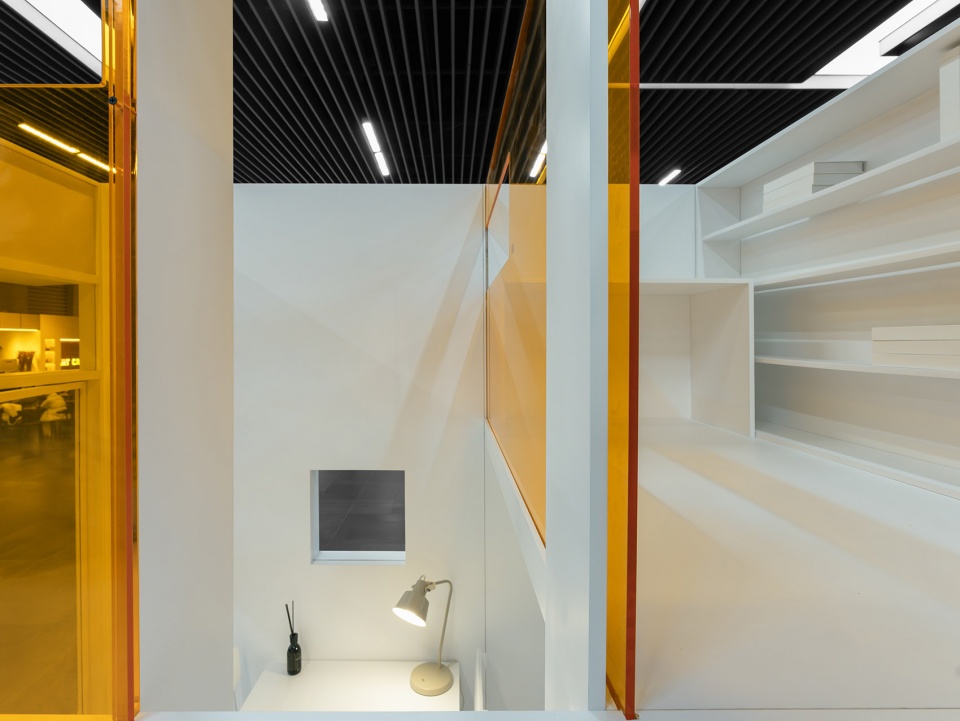
▼方寸之间的温度与秩序,The temperature and order within a small space
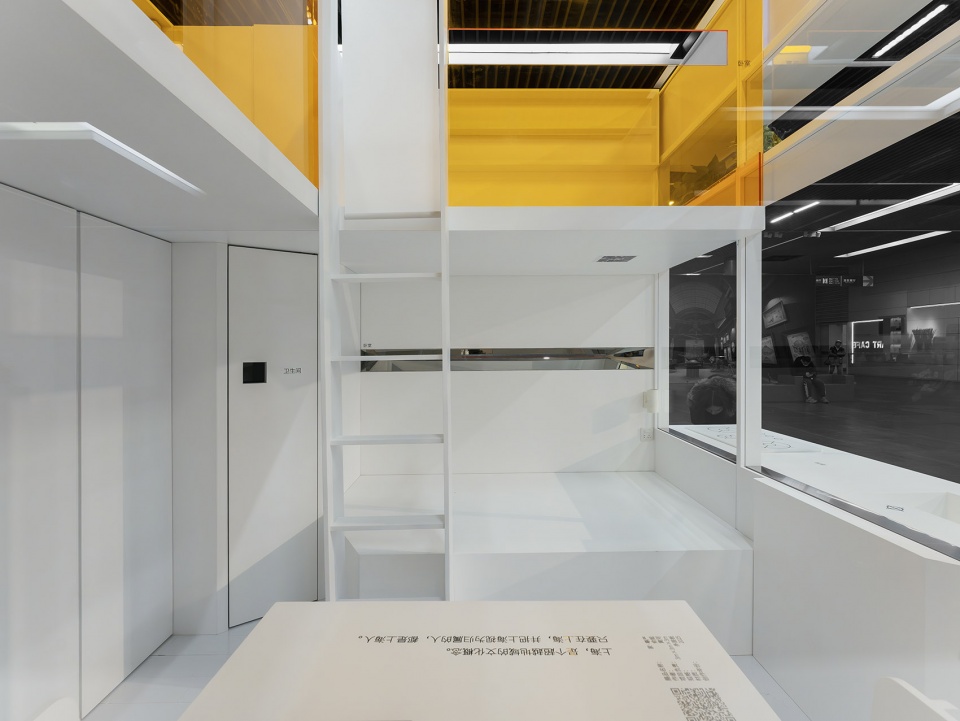
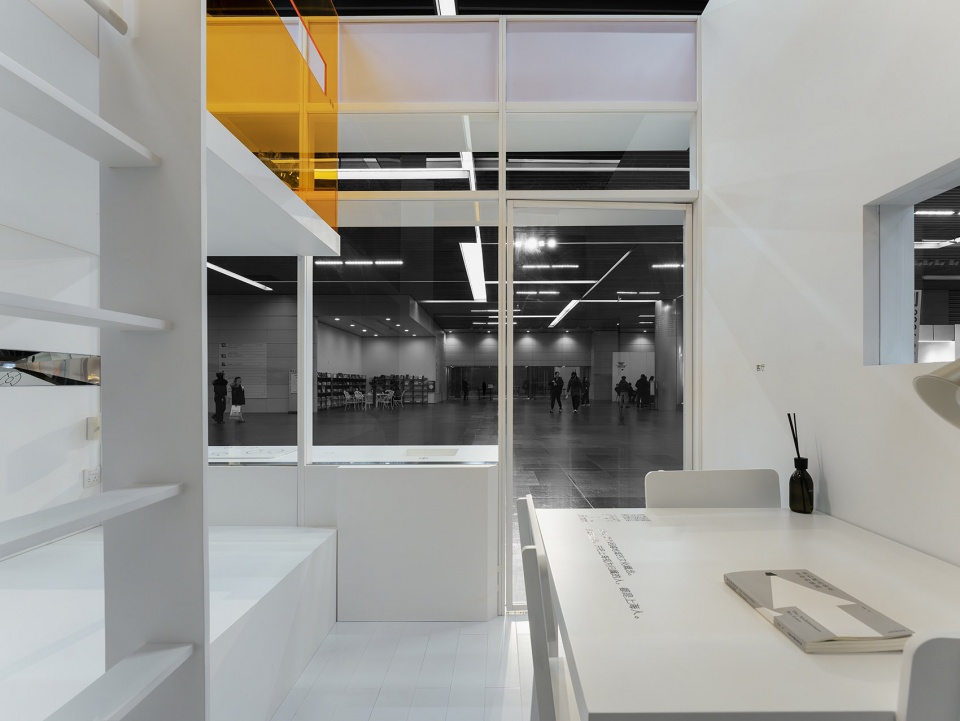
▼独属于上海的实用主义与乐观主义,the distinctly Shanghai combination of pragmatism and optimism
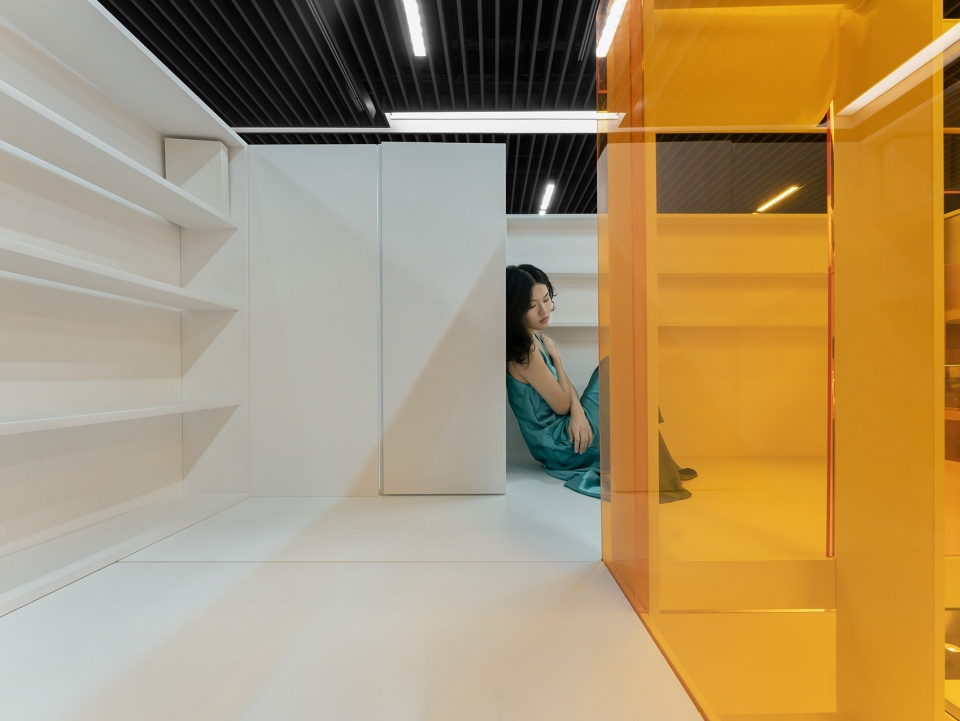
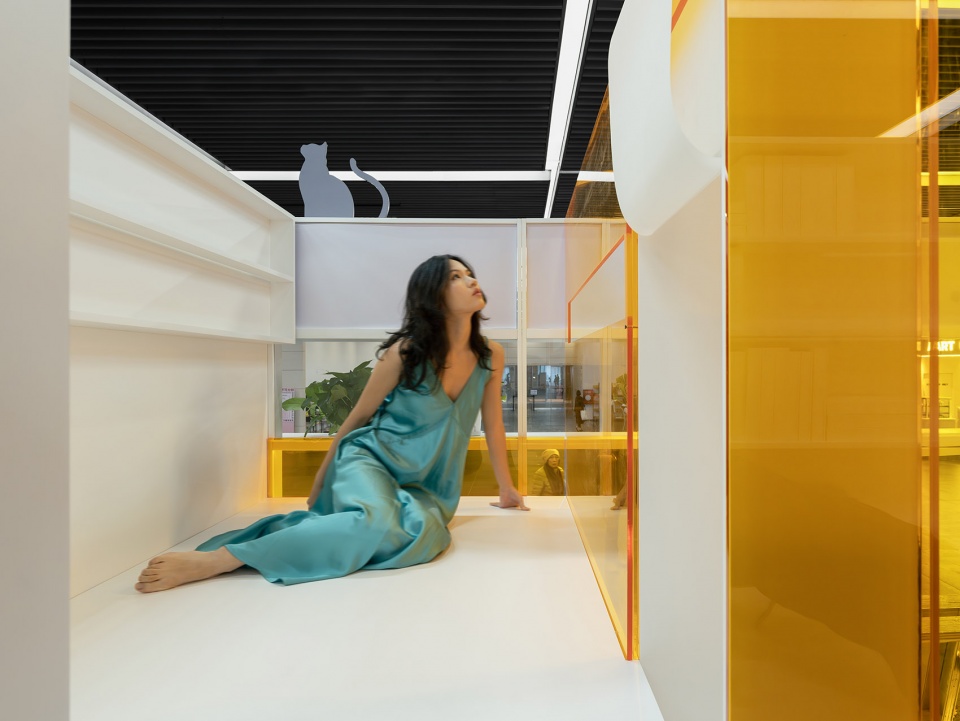
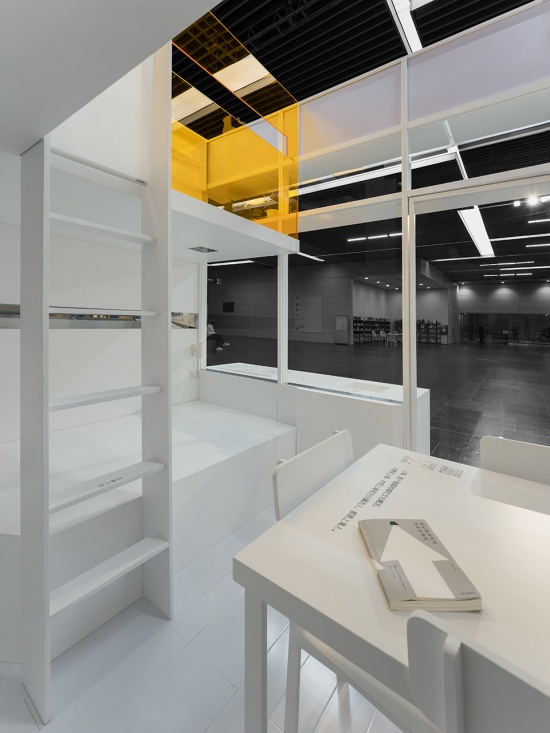
我将空间处理为白色、模型化的状态,使整个居住空间上升为一个艺术装置。你可以看到沙发床、衣柜、独立卫生间,以及上海人常用的多功能饭桌——它既是饭桌,也是书桌,也可以成为接待客人的茶桌。高度的变化,也形成了一个孩子的空间:一张床和书桌,一个属于孩子的小世界。
I constructed the space as a white, model-like environment, turning the entire dwelling into an art installation. Inside are a sofa bed, wardrobe, bathroom and the multifunctional dining table familiar to Shanghai households—a dining table, a desk, and a tea table for receiving guests.The higher part of the space is designed to be a space for the child: a bed and a desk, a small world of their own.
▼白色、模型化的状态,a white, model-like environment
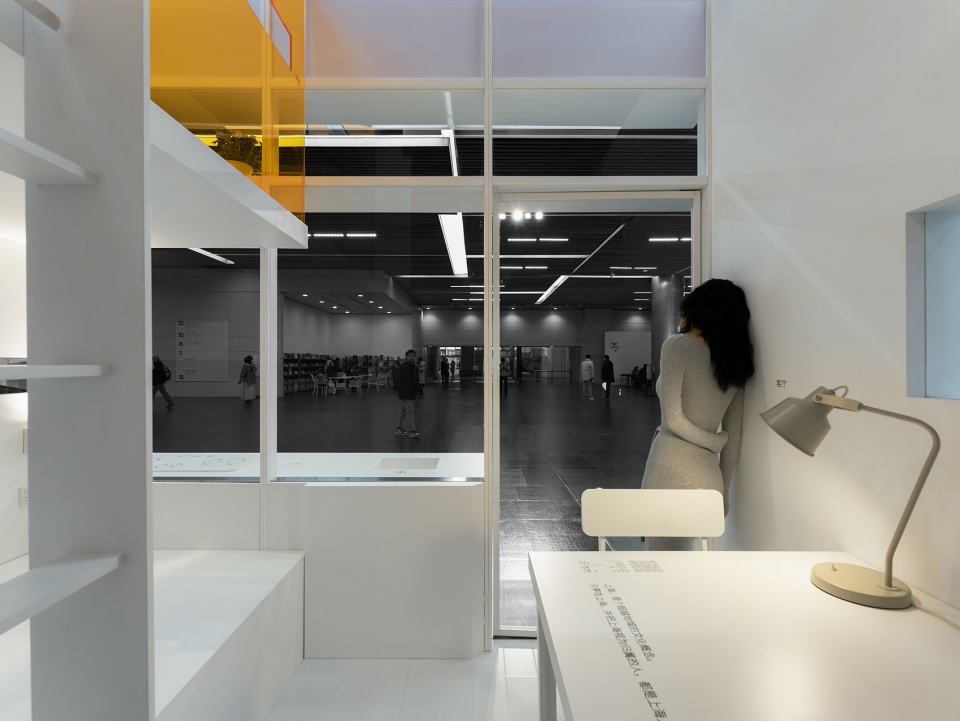
这个“一家三口”的设定,一方面暗示了城市人口结构的变化,另一方面也表达了一个清晰的事实:人均居住面积正在持续增加。
The family of three reflects the city’s changing demographic structure, while also pointing to a broader shift: living space per person continues to grow.
▼白色、模型化的状态,a white, model-like environment
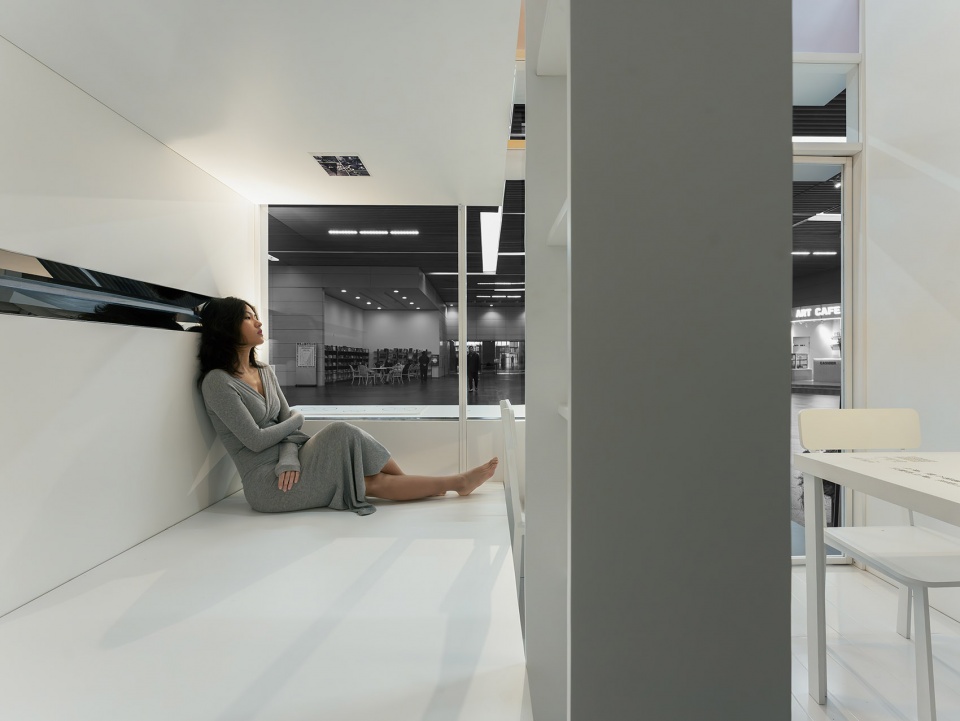
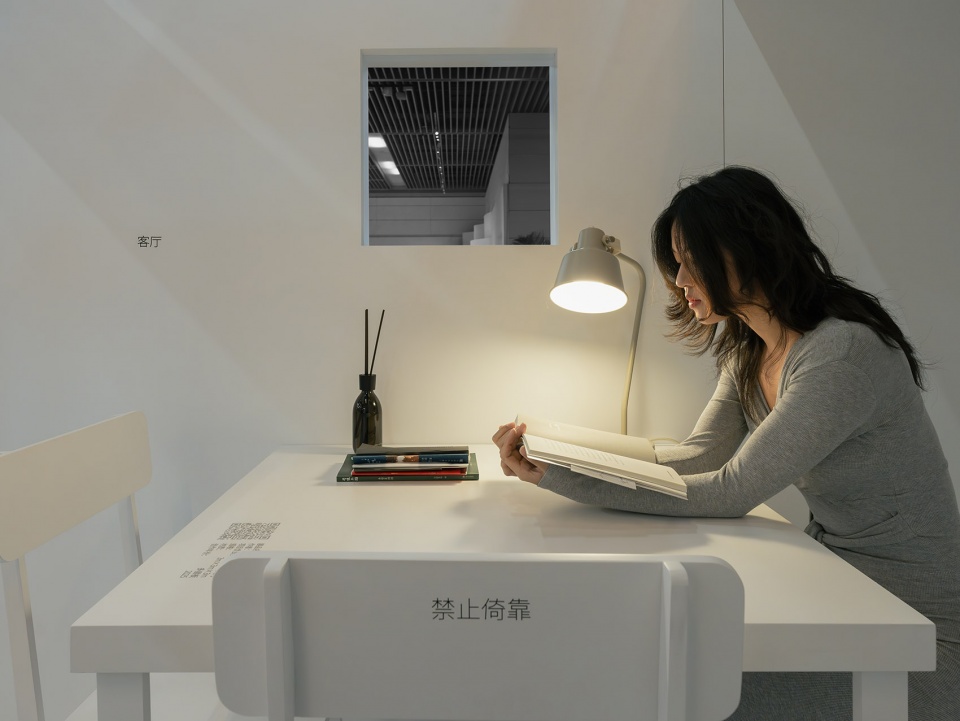
所有人在这里达成共识:家无关大小,能守住生活尊严,就是心安的锚点。
A home is not defined by its size. A home is about preserving the dignity of everyday life and creating a safe haven for those who come back to it.
▼家成为心安的锚点,creating a safe haven
展品信息
名称:《家·尊严》
作者:俞挺
项目负责:黄河
规格:3m*3m*3m
材质:多层板
创作年份:2025
Title: Home · Dignity
Architect: YU Ting
Project Lead: HUANG He
Dimensions: 3 m × 3 m × 3 m
Material: Plywood
Year: 2025
第二重宝函・城市
一座迷宫,所有人共同的精神热土
Treasure Casket Two: City
A Labyrinth, a Shared Sense of Belonging
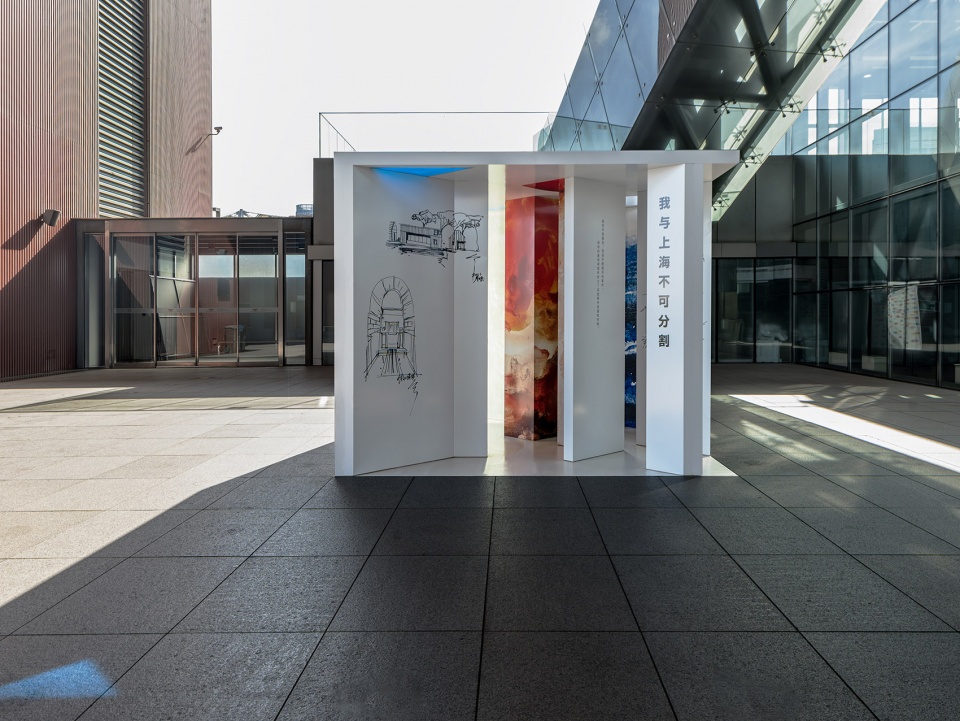
2026年3月19日,第二重宝函《城市・自豪》正式开幕,展览的叙事从一个人的小家,走向整座城市。
On March 19, 2026, the second Treasure Casket, City · Pride, opened, expanding the exhibition’s narrative from the scale of the individual home to the city itself.
▼《城市・自豪》,City · Pride
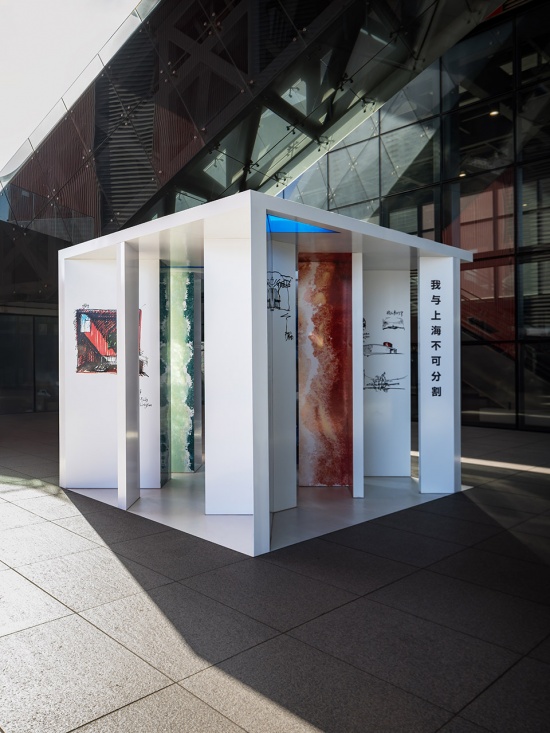
我把上海想象成一座巨大的迷宫。它足够复杂,让我们在其中迷茫、奔波、碰壁;也让我们不断探索,慢慢找到自己的路径。城市的轮廓,是在我们一次次行走与探索中逐渐清晰起来的。
I imagine Shanghai as a vast labyrinth. Its complexity can leave us lost, disoriented, even frustrated. Yet it is precisely by finding our way through it—by wandering, exploring, and sometimes taking a wrong turn—that the city gradually reveals itself to us. And in that process, we begin to find our own place within it.
▼《城市・自豪》,City · Pride
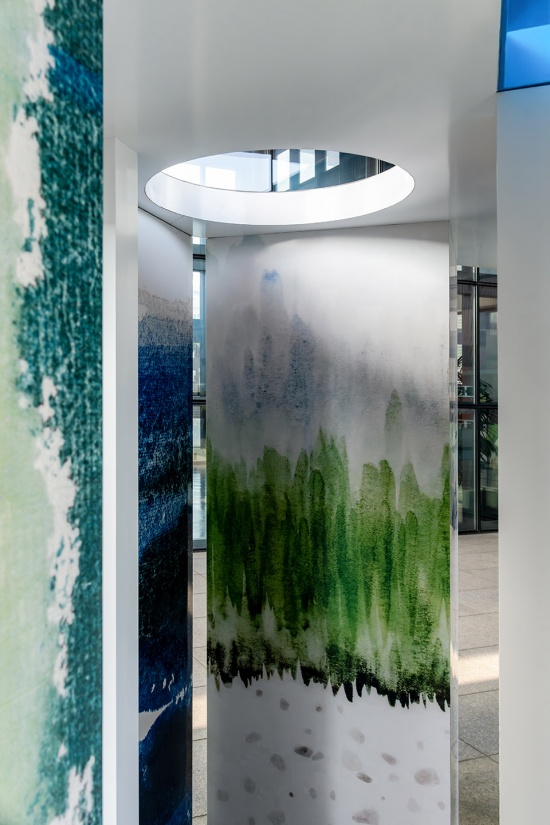
但在上海生活久了,我们也会麻木、失望,甚至想要离开。可当真正离开这座城市,一句熟悉的上海话,又能瞬间唤醒心底的归属感。上海,这座故土与热土,早已成为我们内心深处最难以割舍的地方。
Living in Shanghai for long enough can also make us take the city for granted. We may become disappointed, or even choose to leave. Yet distance often makes its presence more tangible: a familiar Shanghai accent can suddenly bring back a sense of belonging. Shanghai is not simply the place where we live; it is a place we carry with us.
▼“城市”由彩色打印钢板构成,
City is constructed from colour-printed steel panels
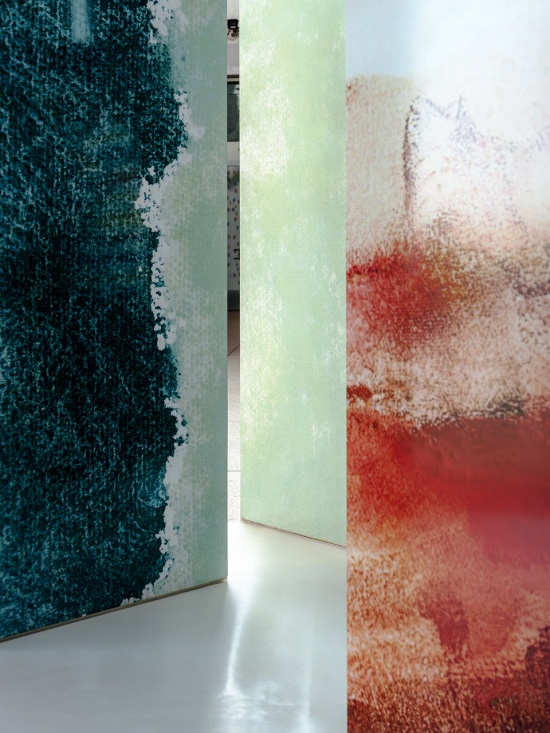
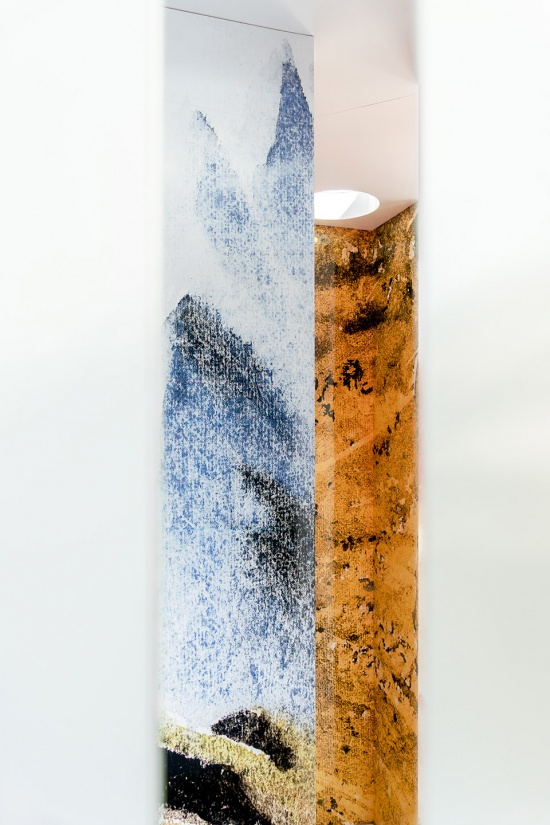
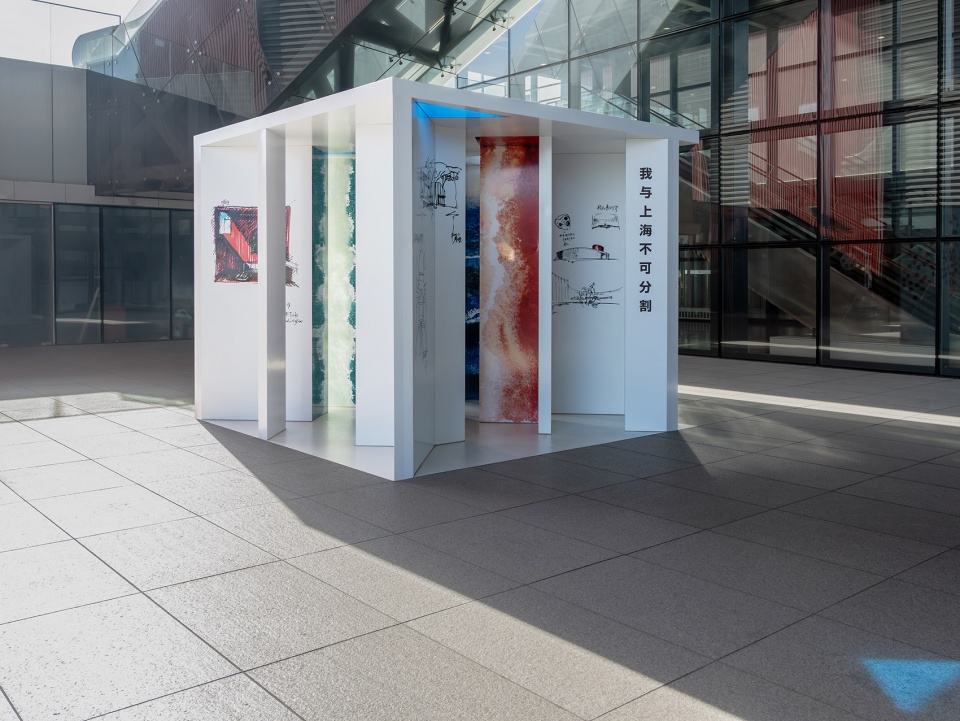
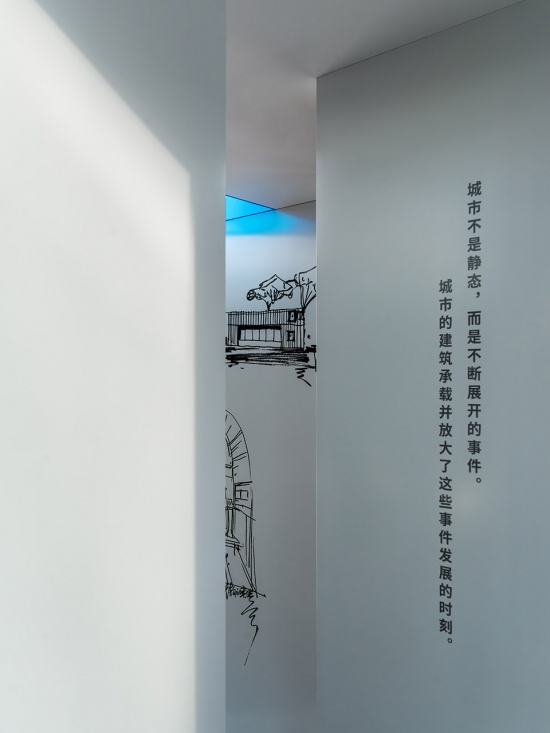
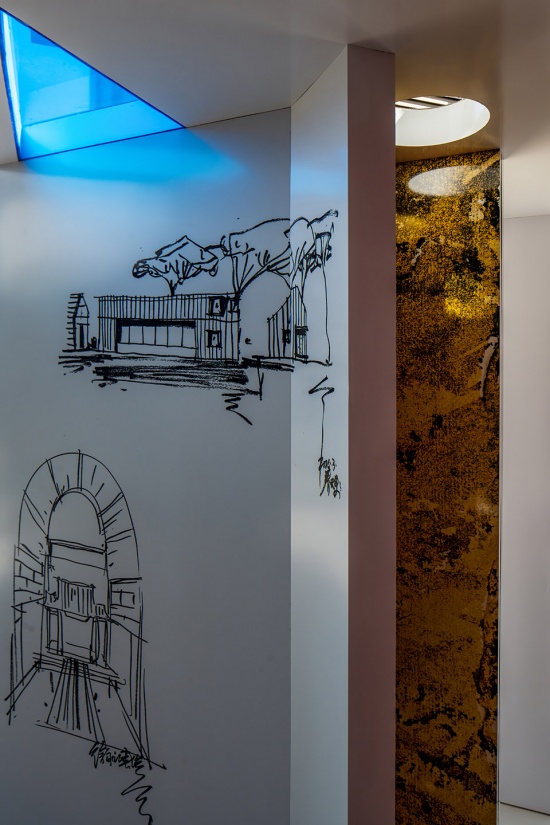
“城市”由彩色打印钢板构成,我把关于上海的迷茫、探索与记忆浓缩在一个9平方米的迷宫中。狭窄的通道不断改变方向,稍不留神便会误入岔路;而外壁上,我的水彩绘画与徐家汇书院等建筑作品的草图,则像散落在城市中的坐标,记录着我在城市中不断行走、工作和生活的痕迹。
City is constructed from colour-printed steel panels. I condensed this experience of Shanghai—its confusion, exploration and accumulated memories—into a nine-square-metre labyrinth. Its narrow passages shift direction repeatedly, making it easy to lose one’s way. On the exterior, my watercolour paintings and sketches of buildings such as Xujiahui Library are scattered across the surface like fragments of the city, marking places where I have worked, walked and lived over the years.
▼建筑师的水彩绘画与作品草图,
watercolour paintings and sketches of buildings
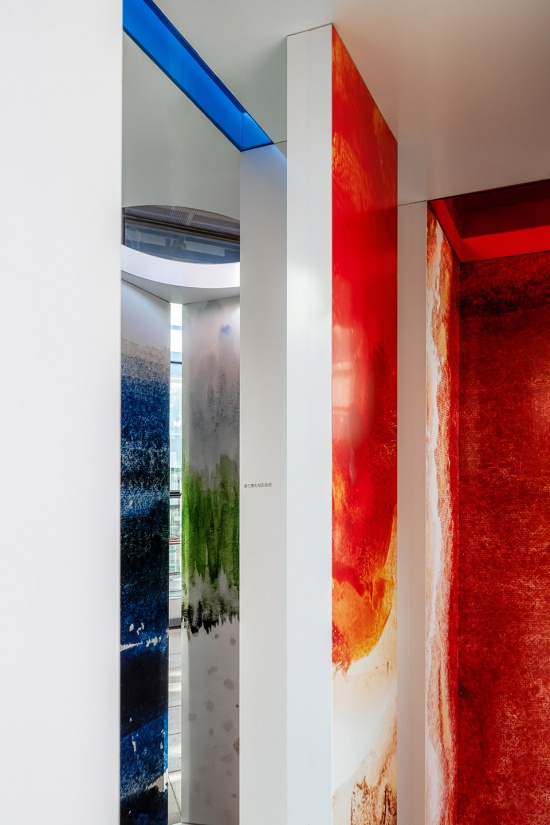
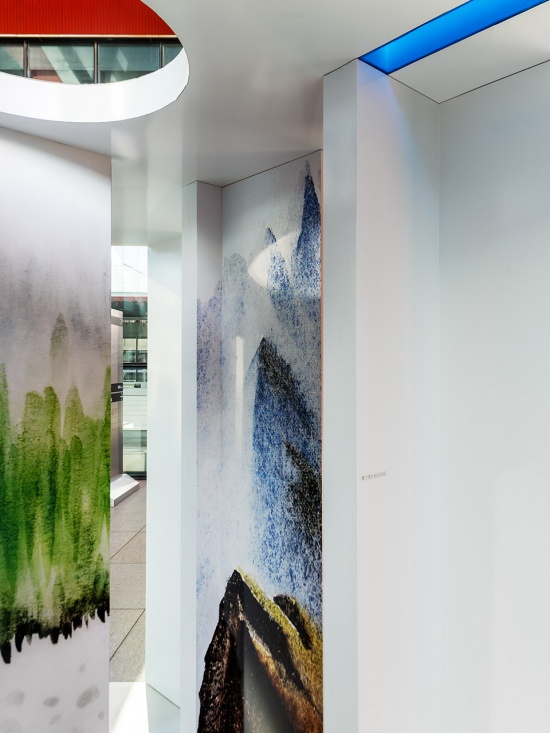
城市的宏大既让人迷失,也让人在不断寻找中找到自己的位置。
A city may make us lose our way, but in finding our way through it, we find our own location.
▼在城市中寻找自己的位置,finding our way through the city
展品信息
名称:《城市·自豪》
作者:俞挺
项目负责:穆芝霖
规格:3m*3m*2.4m
材质:彩色打印钢板
创作年份:2026
Title: City · Pride
Architect: YU Ting
Project Lead: MU Zhilin
Dimensions: 3 m × 3 m × 2.4 m
Material: Colour-printed steel panels
Year: 2026
第三重宝函・美术馆
一个人的美术馆,允许独处在公共空间发生
Treasure Casket Three: Gallery
One Person’s Gallery Where Solitude Can Take Place in Public
2026年5月1日,第三重宝函《一个人的美术馆》开幕。展览把视线投向上海最密集的公共文化空间——美术馆。
On May 1, 2026, the third Treasure Casket, One Person’s Gallery, opened. The exhibition turns its attention to one of Shanghai’s most important forms of public cultural space—the gallery/museum.
▼《一个人的美术馆》,One Person’s Gallery
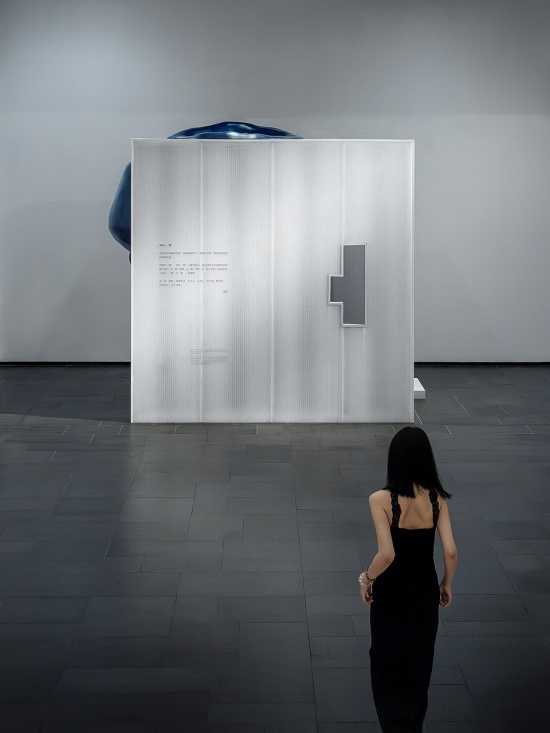
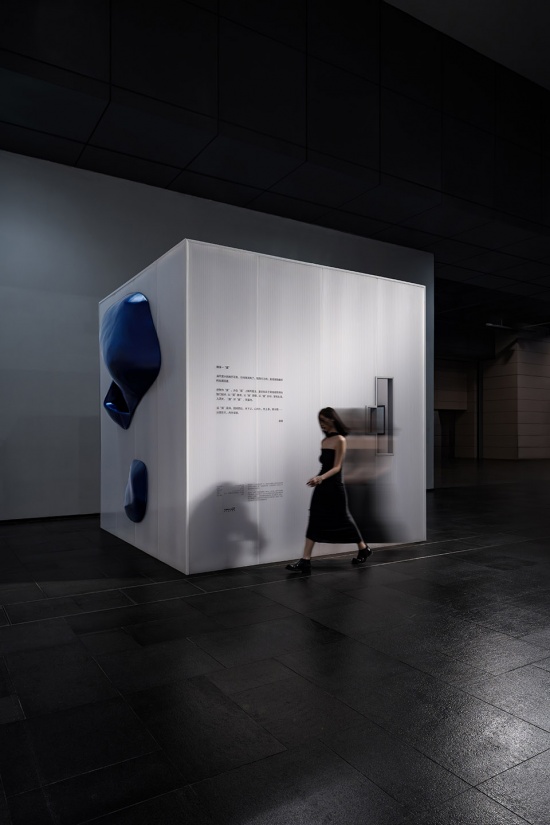
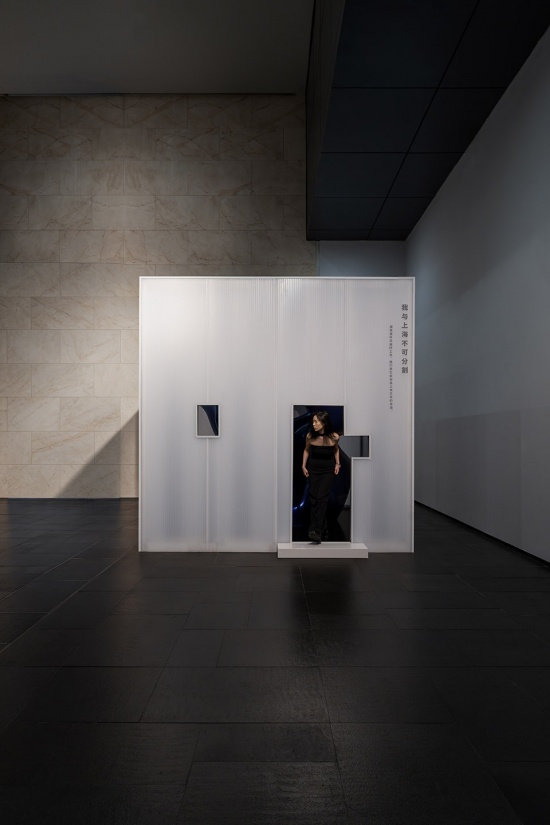
▼黑色实体的“太湖石”被半透明的白色阳光板包裹,
A black solid volume, conceived as a Taihu stone, is wrapped in translucent white polycarbonate panels
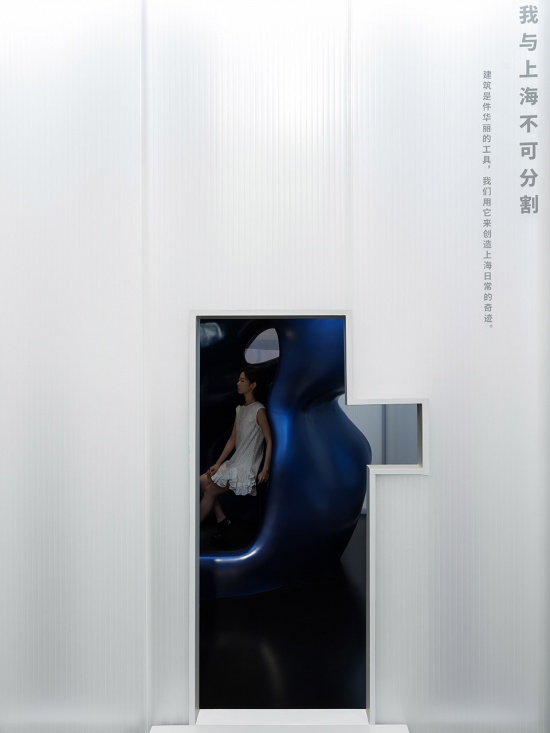
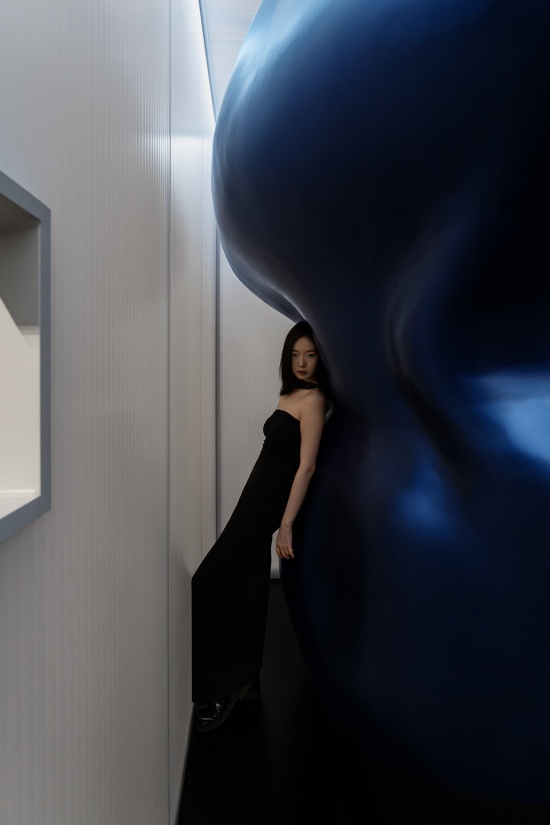
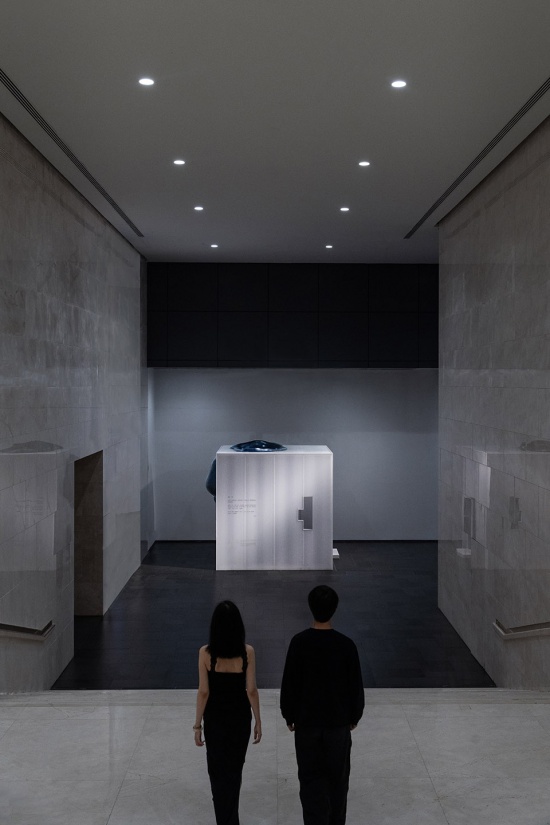
上海拥有数量庞大的美术馆和观展人群,但大多数时候,观展是群体式的体验。十年前,我曾做过“一个人的图书馆”和“一个人的美术馆”,尝试创造一个人在艺术空间独处的体验。这一次,我希望把个人与美术馆的关系转化为一种“一对一”更具体的深度对话。
Shanghai has a large number of galleries/museums and an equally large audience, yet the experience of visiting a museum is usually one of group viewing: many people looking at the same things within the same space. Ten years ago, I created One Person’s Library and One Person’s Gallery, exploring what it might mean for an individual to be alone within a cultural space. This time, I wanted to move beyond the relationship of group to group, and create the possibility of a more direct, one-to-one encounter between a person and the gallery.
▼黑色实体的“太湖石”被半透明的白色阳光板包裹,
A black solid volume, conceived as a Taihu stone, is wrapped in translucent white polycarbonate panels
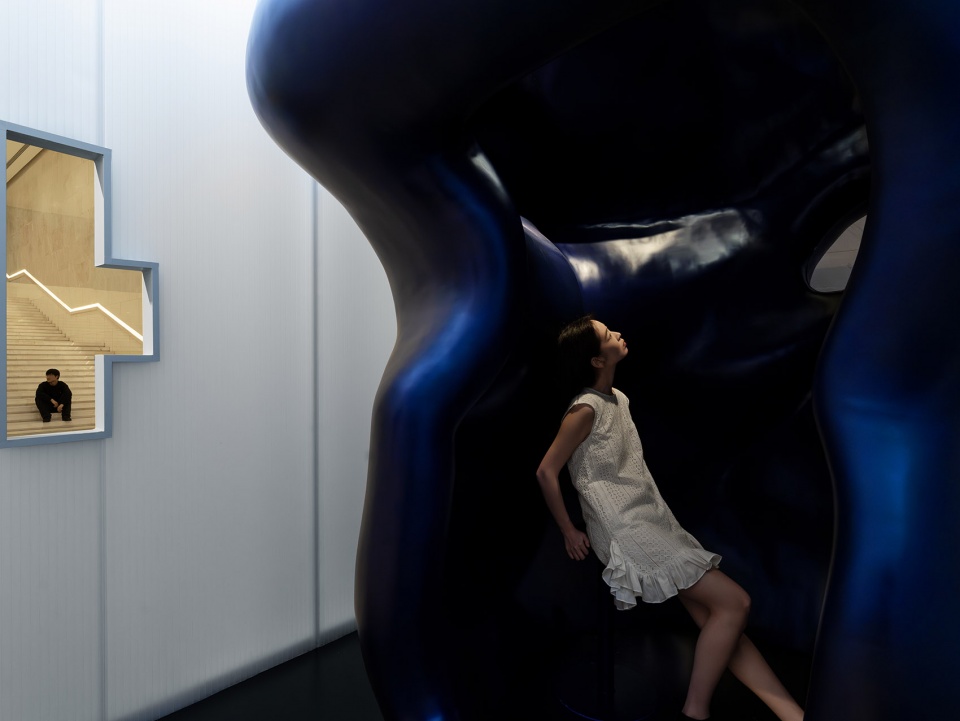
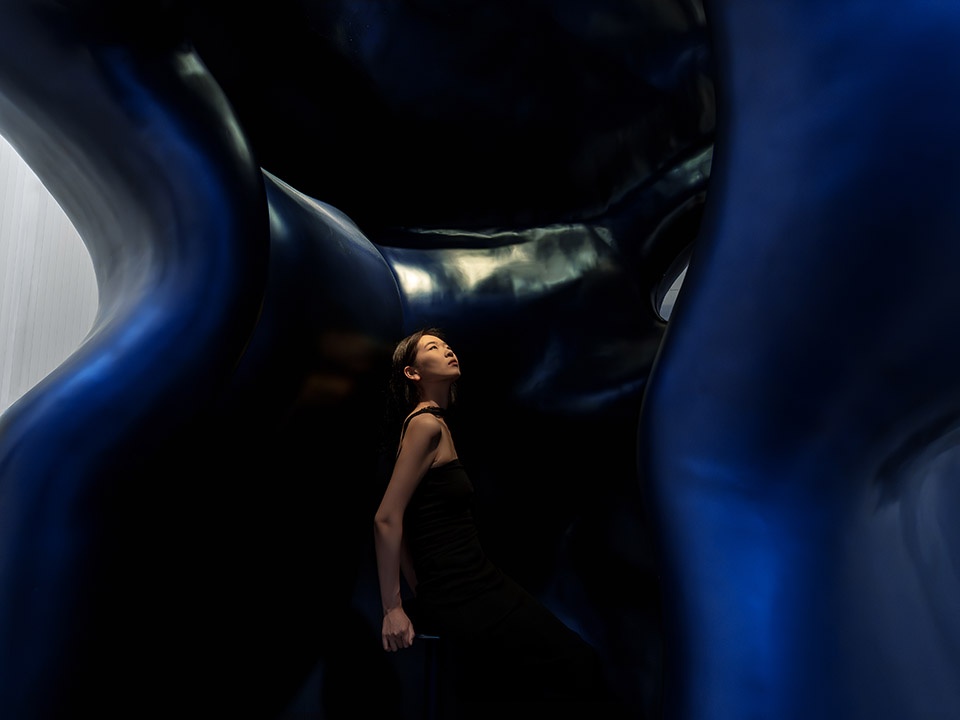
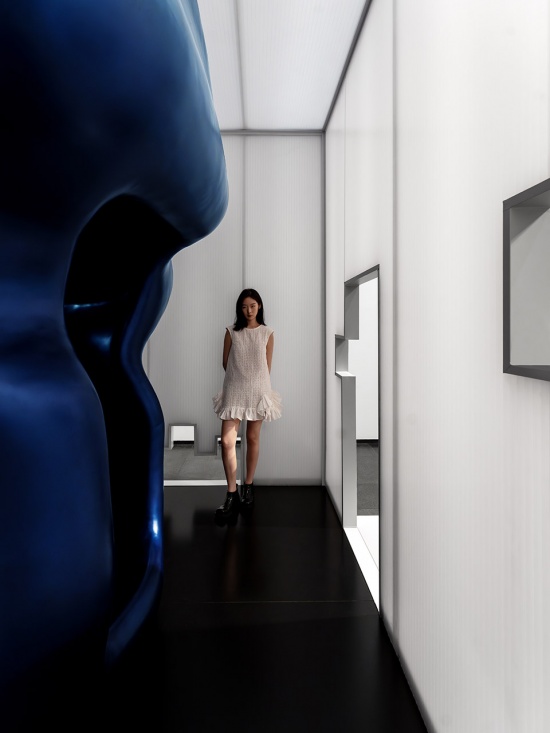
在设计上,我尝试以建筑手法重新改写中国传统空间的几个核心元素:半透明的界面、太湖石景观——黑色实体的“太湖石”被半透明的白色阳光板包裹,并在两者之间又剥离出一层过渡空间,黑与白、曲与直、透明与不透明、开放与封闭,形成空间中的多组对偶。
In designing the space, I reinterpreted several elements of traditional Chinese spatial language through architectural means: the translucent interface and the Taihu stone. A black solid volume, conceived as a Taihu stone, is wrapped in translucent white polycarbonate panels. Between the two, I carved out a layer of transitional space. Black and white, curved and straight, transparent and opaque, open and enclosed—these pairs of opposites shape the experience of the space.
▼开放与封闭,open and enclosed
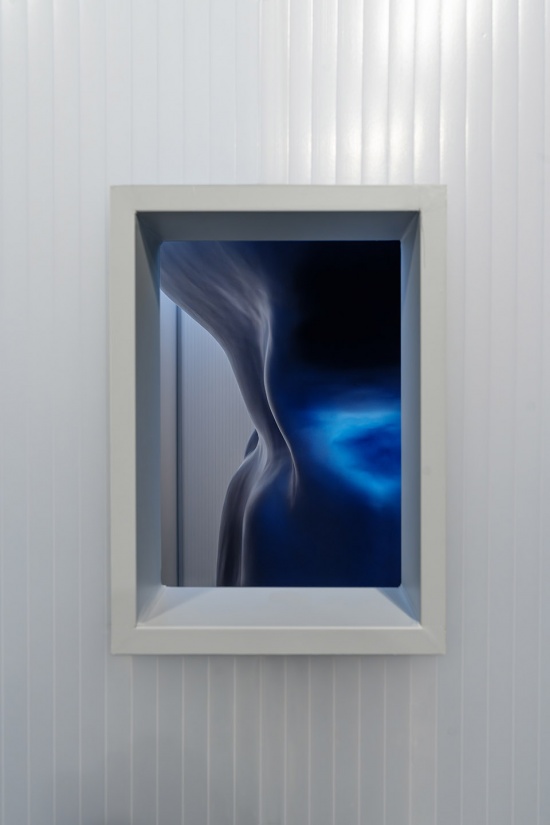
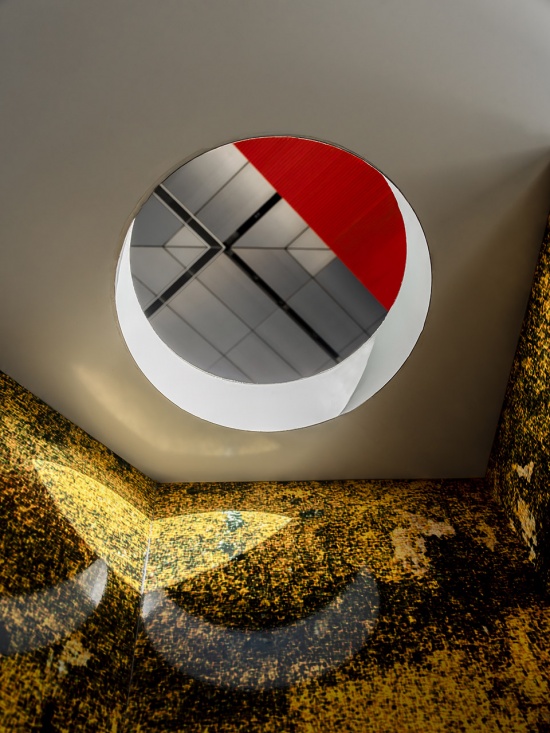
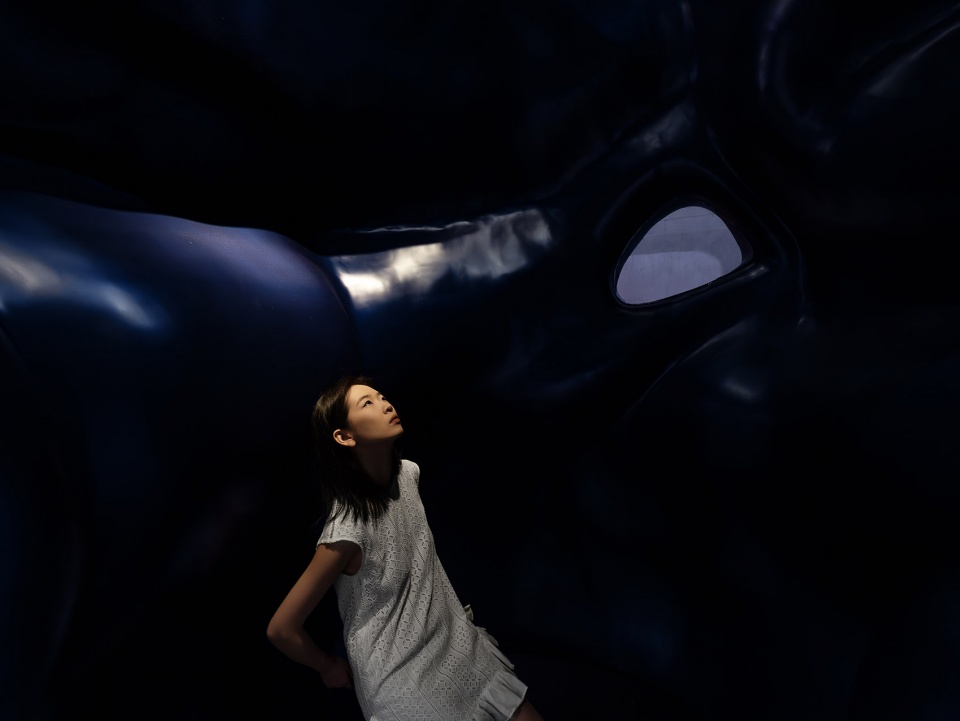
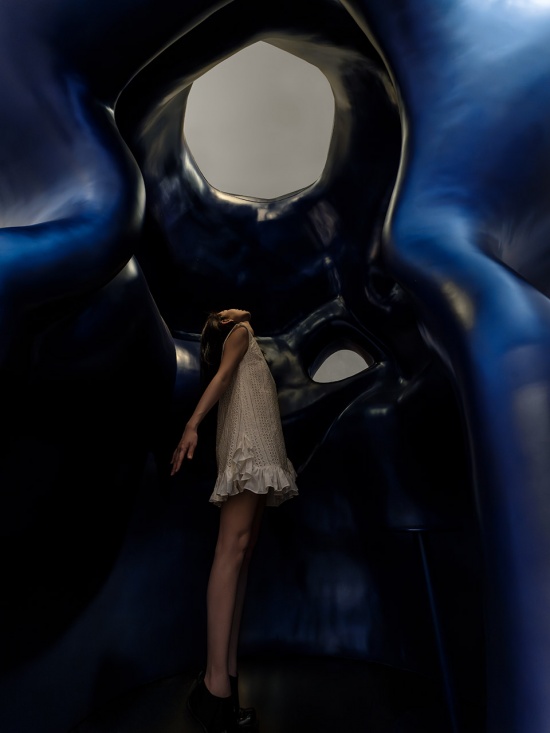
黑色实体顶部留了一个孔,让光线自然落下。我邀请每一位观众,与空间完成一张自拍,产生一件只属于自己的作品。
An opening at the top of the black volume allows daylight to fall into its interior. The light changes with time, leaving the space open to different experiences. I also invite each visitor to take a selfie with the space, creating an image that is uniquely their own.
▼让光线自然落下,allows daylight to fall into its interior
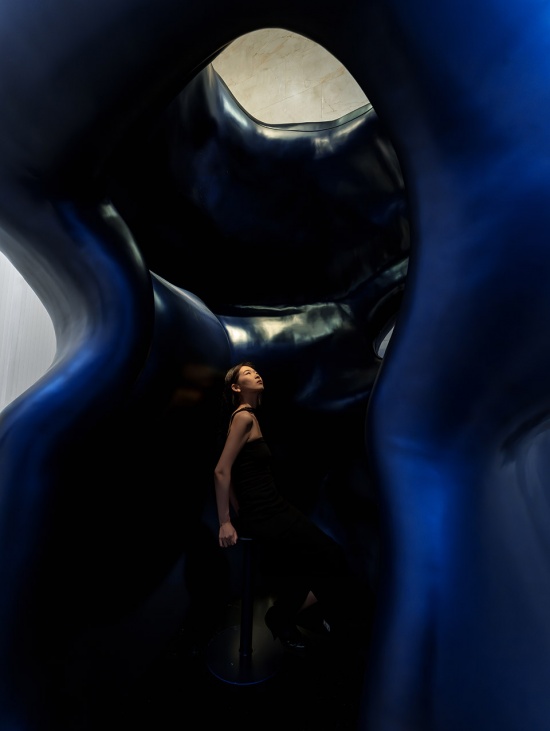
美术馆真正的公共性,在于它让每个人都能与美术馆产生独一无二的联系。
A gallery becomes truly public when each person can find their own relationship with it.
▼让光线自然落下,allows daylight to fall into its interior
展品信息
名称:《一个人的美术馆》
作者:俞挺
项目负责:朱行远
规格:3.1m*3.5m*3.4m
材质:泡沫、聚氨酯泡沫增硬剂、阳光板
创作年份:2026
Title: One Person’s Gallery
Architect: YU Ting
Project Lead: ZHU Xingyuan
Dimensions: 3.1 m × 3.5 m × 3.4 m
Materials: Foam, polyurethane foam hardener, polycarbonate panels
Year: 2026
第四重宝函・咖啡馆
以“针灸”激活城市公共生活
Treasure Casket Four: Café
Acupuncture for Urban Public Life
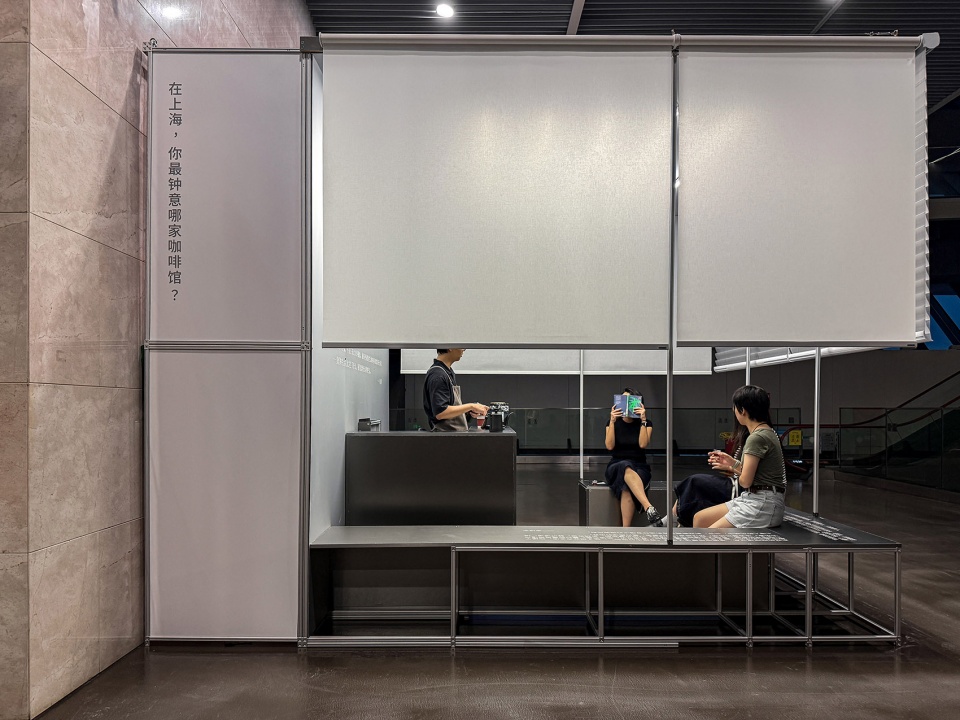
2026年8月7日,《我与上海不可分割》展览的第四章《咖啡馆·满足》于上海美术馆开幕。
On August 7, 2026, the fourth chapter of Bound to Shanghai, Café · Satisfaction, opened at the China Art Museum, Shanghai.
▼《咖啡馆·满足》,Café · Satisfaction
▼《咖啡馆·满足》,Café · Satisfaction
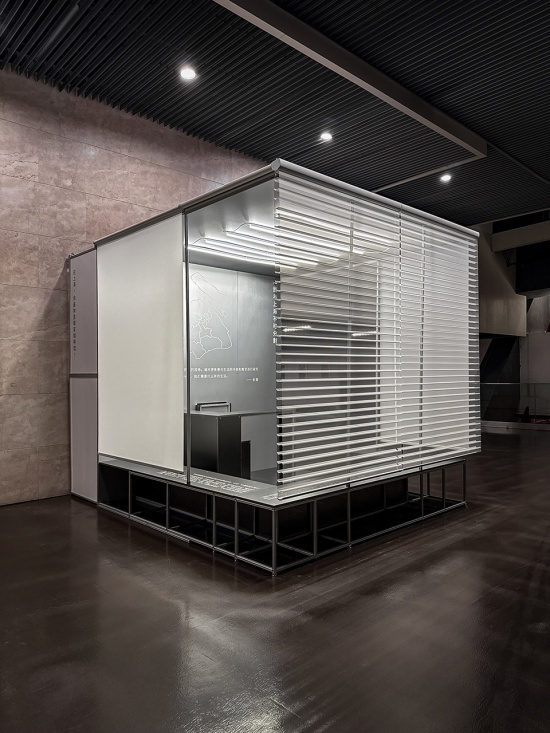
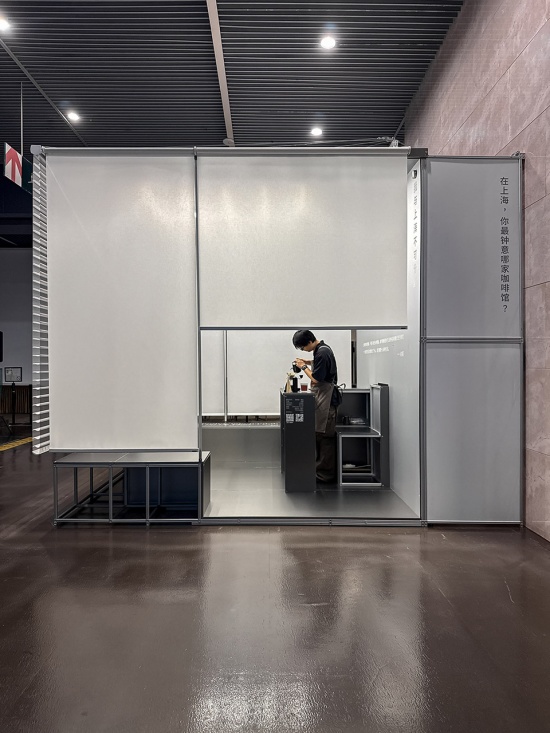
上海的咖啡馆数量位居全国前列。它们以丰富的空间尺度与类型,自然嵌入街角、弄堂与社区。咖啡馆像一根刺入城市肌理的针,以极小而精准的介入激活周围的公共生活,创造出介于公共与私人之间的空间状态。
Shanghai has one of the highest numbers of cafés in China. With their varied scales and forms, cafés have naturally woven themselves into street corners, lanes and neighbourhoods. A café is like a needle inserted into the urban fabric: a small but precise intervention that activates the surrounding public life, creating a space somewhere between the public and the private.
▼自然嵌入街角弄堂的咖啡馆,
Café naturally woven themselves into street corners
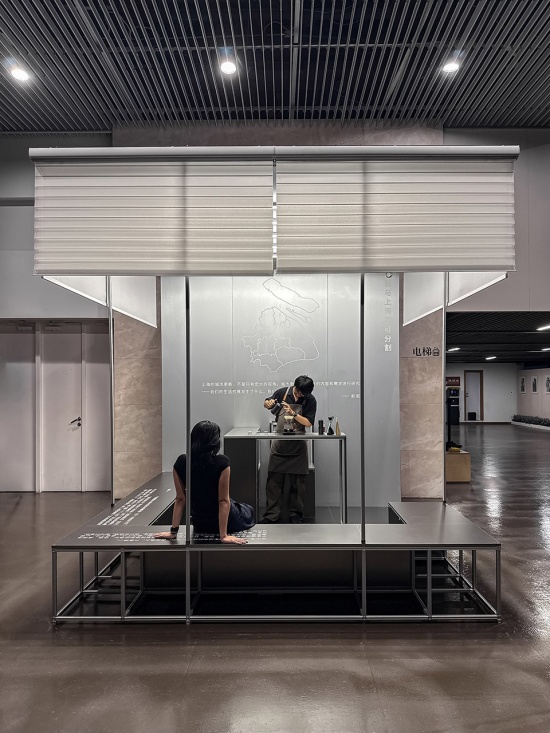
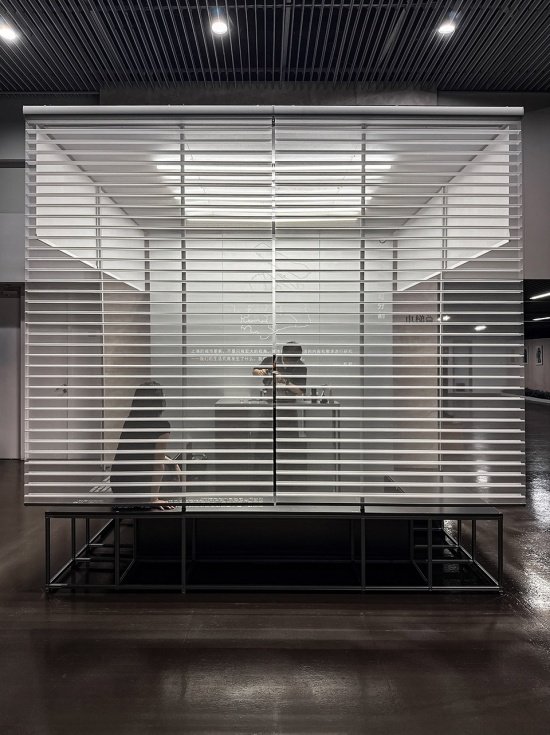
咖啡馆的空间应是轻盈、开放、可变的。我在约11年前在临安设计过一座“纸房子”——择胜居,那是一次对轻质空间的探索,竹子与油纸构成了具有东方意境的空间界面。由于展览周期与建造条件的区别,此次的“咖啡馆”将材料转向窗帘与可装配的铝型材。
A café should be light, open and adaptable. Around eleven years ago, I designed a “Paper House” in Lin’an, Zeshengju, as an exploration of lightweight space, using bamboo and oiled paper to create spatial boundaries with an Eastern sensibility. Given the different duration and construction conditions this time, the Café uses curtains and prefabricated aluminium profiles instead.
▼将材料转向窗帘与可装配的铝型材,
Café uses curtains and prefabricated aluminium profiles
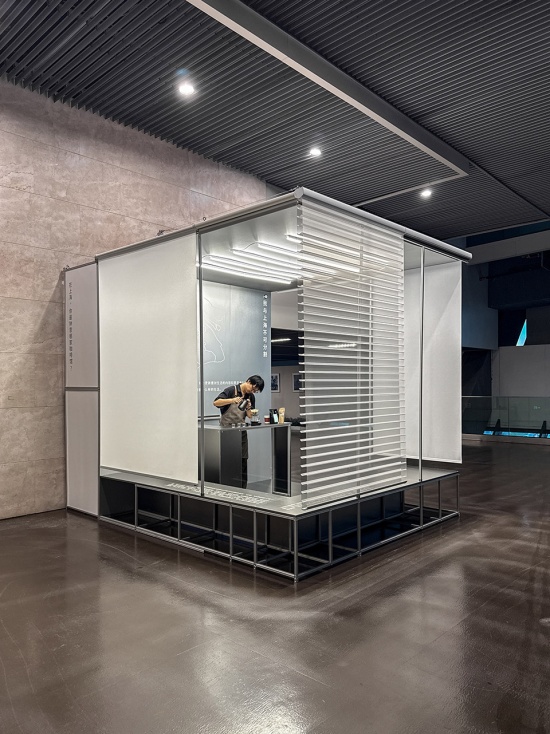
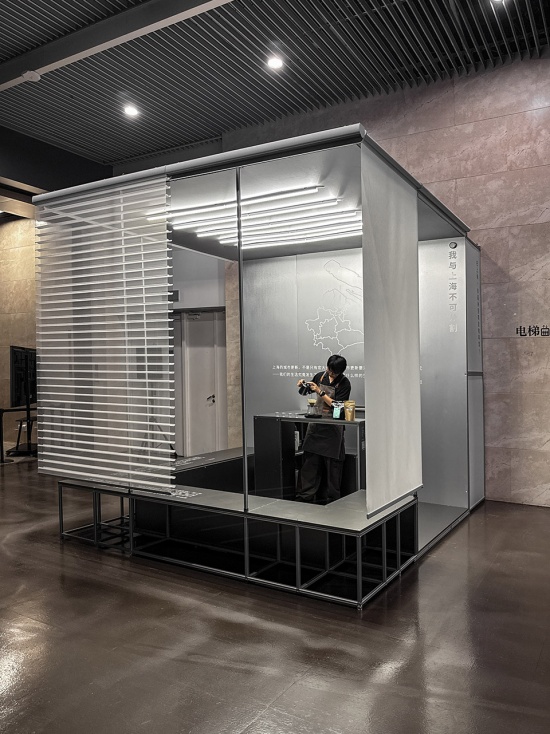
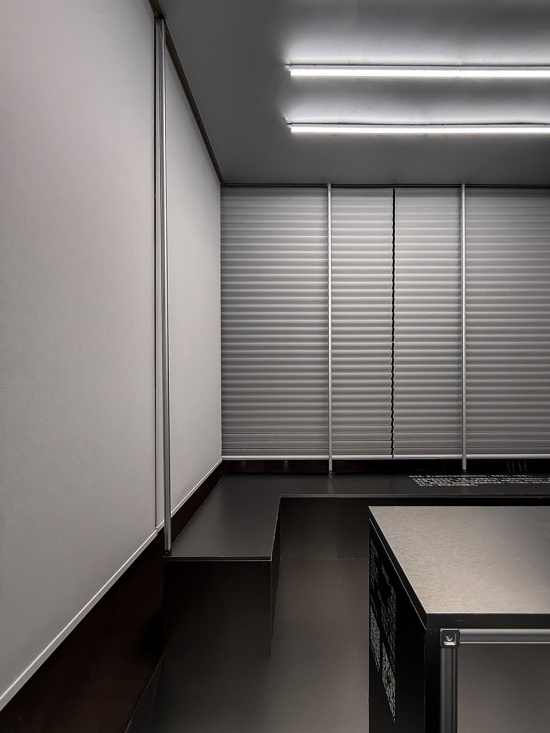
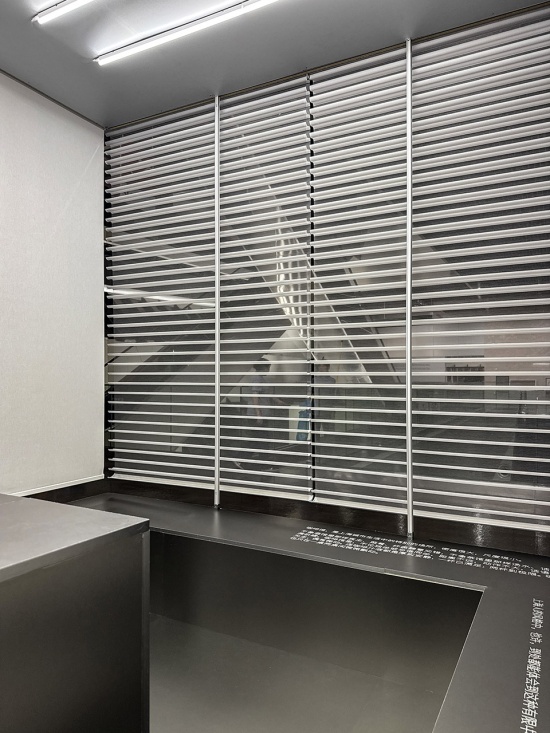
铝型材承担着结构功能,由其构成的C形悬挑结构逐渐显现出视觉力量,因此我没有将其隐藏,而是让它成为空间表达的一部分,形成这个咖啡馆的“外骨骼”。内部的座椅从地面与墙面的板材翻折而出,在视觉上与空间界面形成一体。
The aluminium profiles serve as the structural system. Their C-shaped cantilevered frames gradually revealed a strong visual presence, so rather than concealing them, I made them part of the spatial expression, forming the café’s “exoskeleton”. Inside, the seating is folded directly out of panels extending from the floor and walls, visually integrating the furniture with the architecture.
▼铝型材形成这个咖啡馆的“外骨骼”,
The aluminum profiles forming the café’s “exoskeleton”
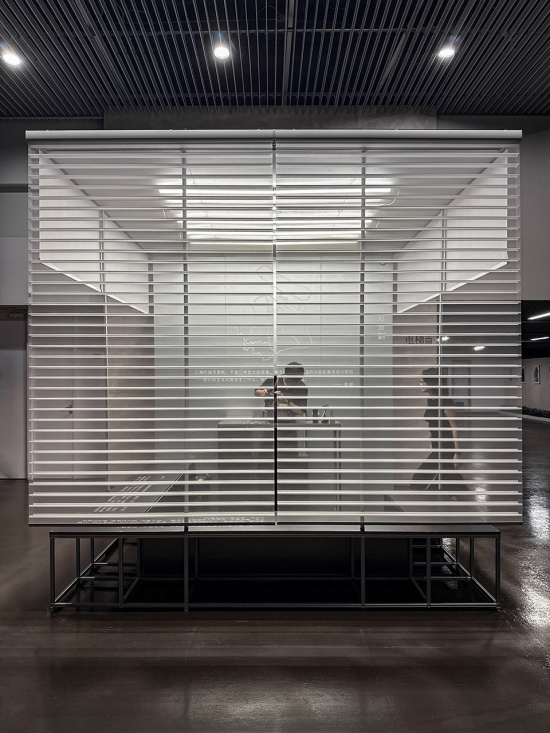
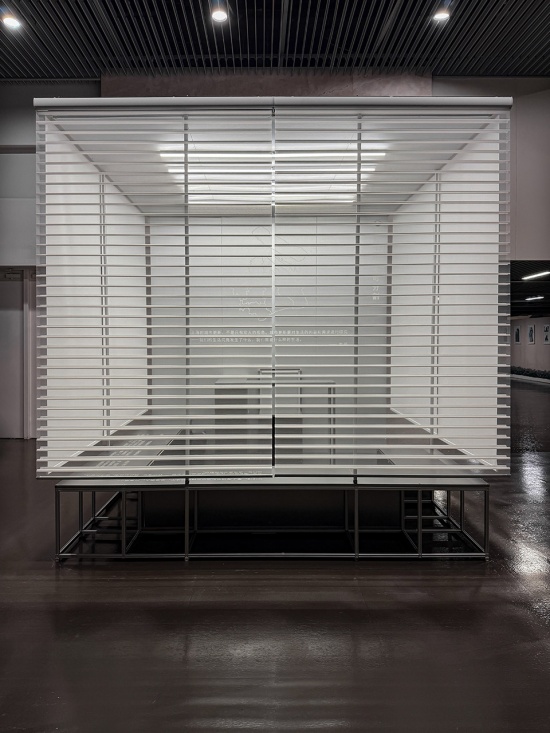
与刚性的骨架相对应的,是三面可升降的窗帘。帘幕开启时,咖啡馆与美术馆公共空间连通;闭合时,则形成相对独立的内部空间。帘幕内外光线与人影变幻,咖啡香味时有时无,构成一套不断变化的边界关系。咖啡馆用流动的边界精准地嵌入上海城市空间,构成了繁忙大都会生活里一种精妙的停顿。
Set against this rigid skeleton are the curtains on three sides of the space that can be raised and lowered. When open, they connect the café to the museum’s public space; when closed, they create a more intimate interior. Light and silhouettes shift as the curtains move, while the aroma of coffee comes and goes, creating a constantly changing boundary between inside and outside. With its fluid boundaries, the café makes a precise intervention into Shanghai’s urban fabric, creating a subtle pause amid the intensity of metropolitan life.
▼可升降的窗帘,
the curtains on three sides of the space that can be raised and lowered
展品信息
名称:《咖啡馆·满足》
作者:俞挺
项目负责:孙丽然
项目团队:杭子涵
规格:3.9m*3m*3.1m
材质:铝型材、竹炭木金属板、窗帘
创作年份:2026
Title: Café · Satisfaction
Architect: YU Ting
Project Lead: SUN Liran
Project Team: HANG Zihan
Dimensions: 3.9 m × 3 m × 3.1 m
Materials: Aluminium profiles, bamboo-charcoal metal panels, curtains
Year: 2026
存在即事件:空间构建仍在发生 Existence is Event The Spatial Experiment Continues
《我与上海不可分割》展览还在继续,另外三个空间仍将在接下来的时间里在上海美术馆逐一打开。“七重宝函”并不是一个已经完成的答案,而是一场仍在发生的空间实验。当每一个人进入其中,带着自己的记忆、感受与上海相遇,这场展览也将继续生成属于每个人自己的“与上海不可分割”。
Bound to Shanghai is still unfolding. Over the months ahead, the remaining three spaces will gradually open at the China Art Museum, Shanghai. The “Seven Treasure Caskets” are not a finished answer, but an ongoing spatial experiment. As each visitor enters, bringing their own memories and experiences into the encounter, the exhibition continues to unfold—allowing each person to form their own understanding of what it means to be “bound to Shanghai.”
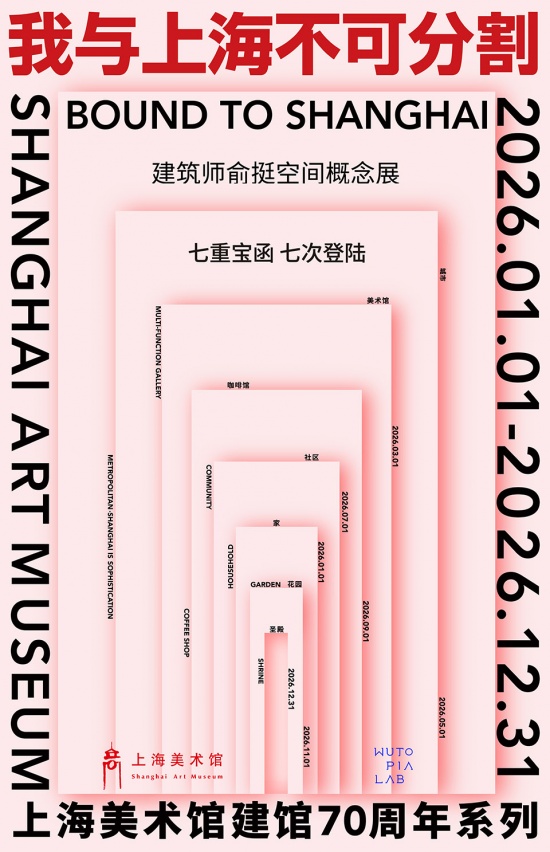
▼展览海报,poster
展览信息
展览名称:我与上海不可分割——建筑师俞挺空间概念展
展览地址:上海美术馆(中华艺术宫)
展览时间:2026.1.1-2027年初
项目摄影:李昊阳
Exhibition: Bound to Shanghai — A Spatial Concept Exhibition by Architect YU Ting
Venue: China Art Museum, Shanghai
Dates: January 1, 2026 – early 2027
Photography: LI Haoyang