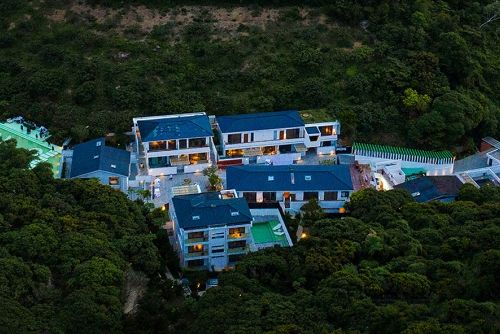
Next door, Tang and Song Dynasties, Hangzhou/Garden Building
我一直有个想法,一墙之隔,三两步,实现两个时代的穿越,两种平行极致美学的出入。将我最爱的唐与宋并置的一起,背靠背,游走之间。
I have always harboured an idea: across a single wall, a step or two away, to realise a passage between two eras—an entry and exit between two parallel, extreme aesthetics. To place my most beloved Tang and Song side by side, back to back, within a single stroll.
▼一墙之隔,出唐入宋,A wall apart: exiting Tang and entering Song
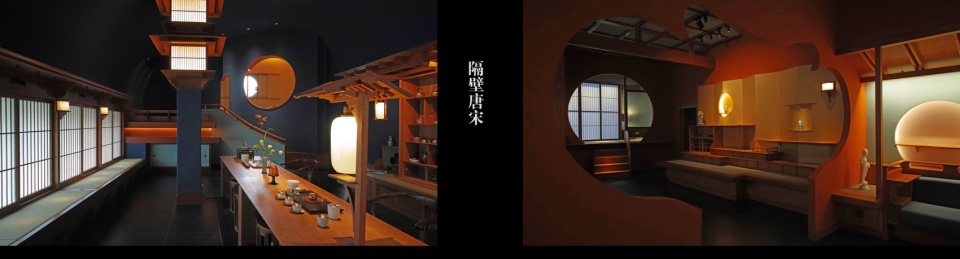
唐与宋的并置,是两种境遇,两种想象,两种情绪。
唐是:酒马剑,宋是:茶琴梅;
唐是:筵灯歌,宋是:炉香帖;
唐是:塞雪旗,宋是:巷雨帘……
在梦里,唐的雨下的都与宋不一样。
要做一场“隔壁唐宋”,只能做个选择,一生要实验很多次的“隔壁唐宋”,这是一个永恒的命题。
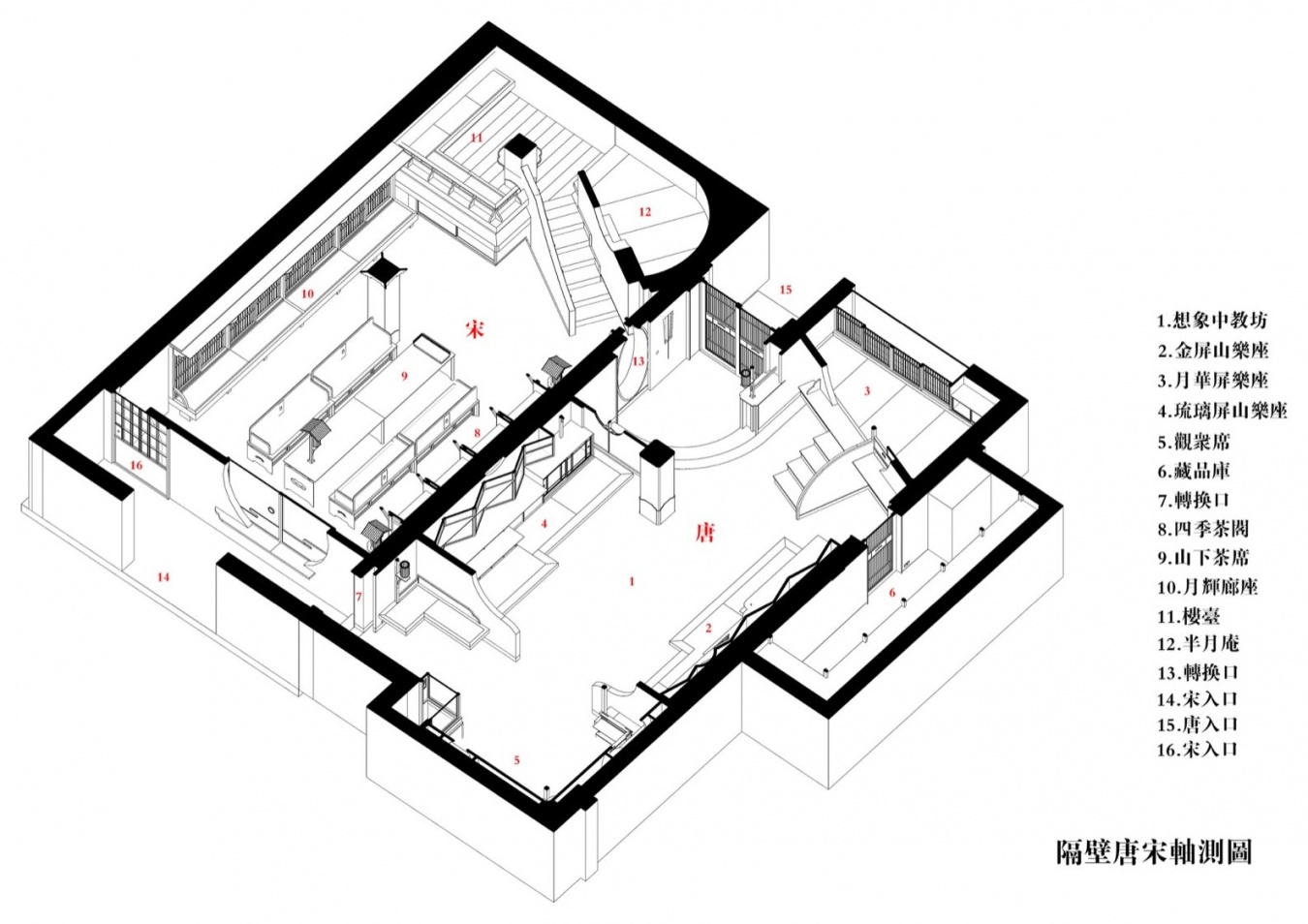
▼轴测图,Axonometric
The juxtaposition of Tang and Song represents two circumstances, two imaginations, two moods.
Tang is: wine, horse, sword; Song is: tea, qin, plum.
Tang is: banquet, lantern, song; Song is: censer, incense, calligraphy.
Tang is: frontier snow, banners; Song is: alley rain, blinds……
In dreams, even the rain of Tang falls differently from that of Song.
To create an “A Wall Apart: Tang and Song,” one must make a choice. It is an “A Wall Apart: Tang and Song” that must be experimented with many times in a lifetime—an eternal proposition.
▼想象中的教坊,The imagined imperial music academy
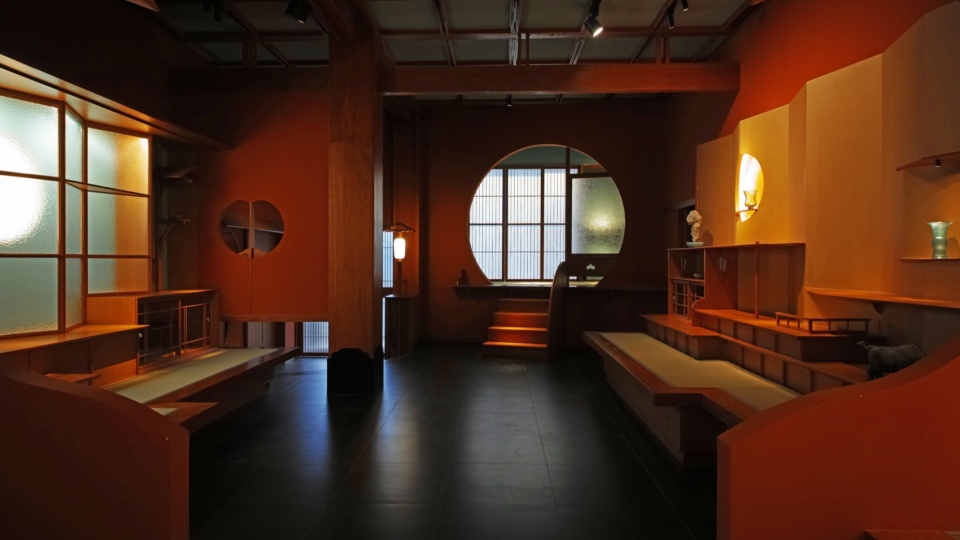
▼琉璃屏山乐座,The glazed-screen mountain music seat
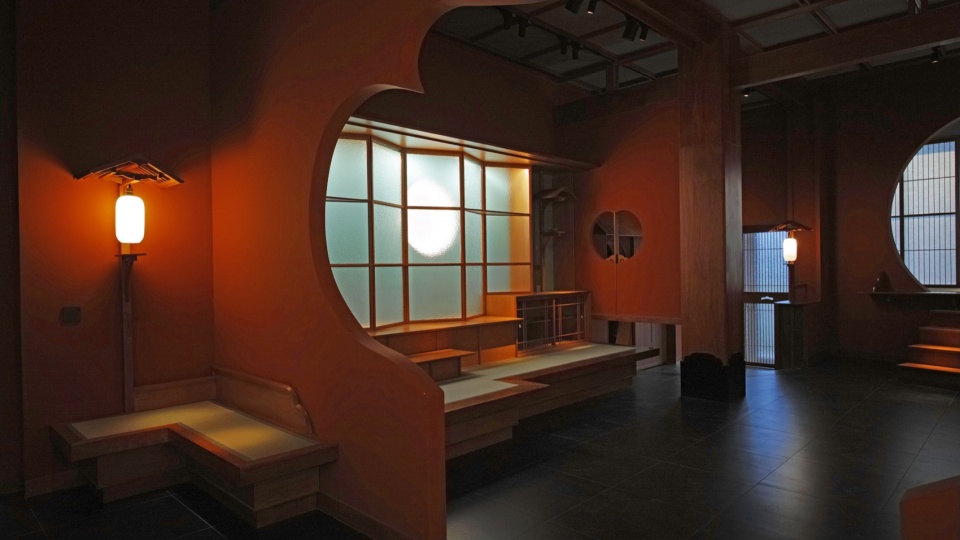
唐是:教坊笙歌。
宋是:楼台孤眺。
Tang is: singing and music in the imperial music academy.
Song is: solitary gazing from a tower.
▼金屏山乐座,The golden-screen mountain music seat
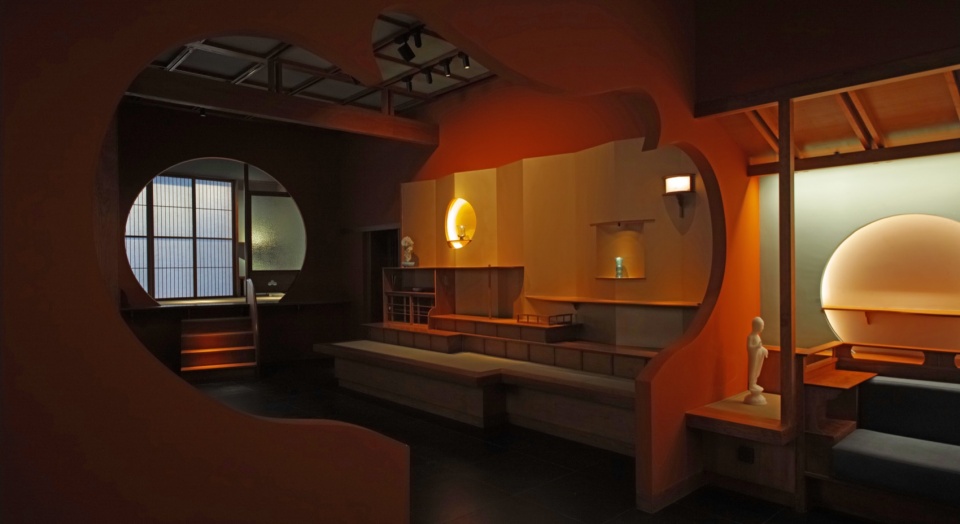
▼藏于花萼洞中的观众席,The audience seats hidden in the flower-calyx cave
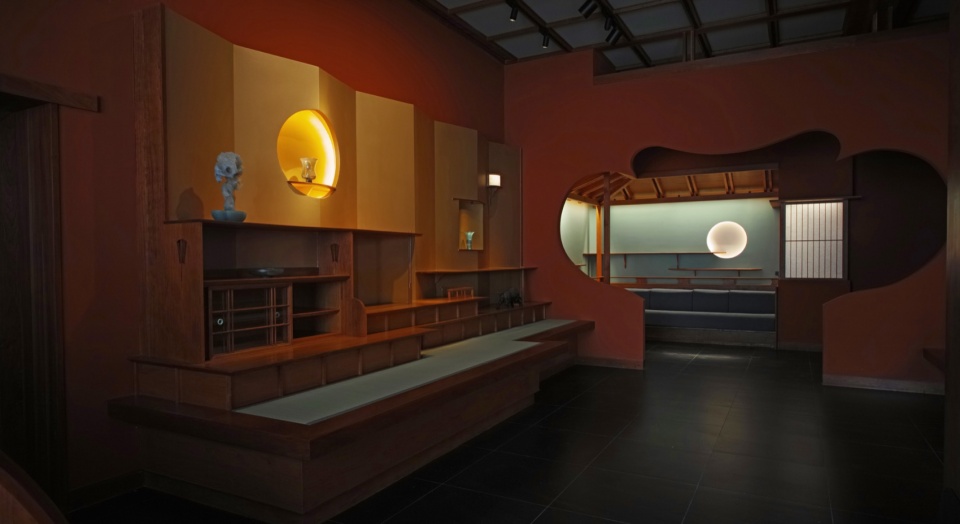
▼主演背景,月华屏,The moonlight screen, backdrop of the main performance
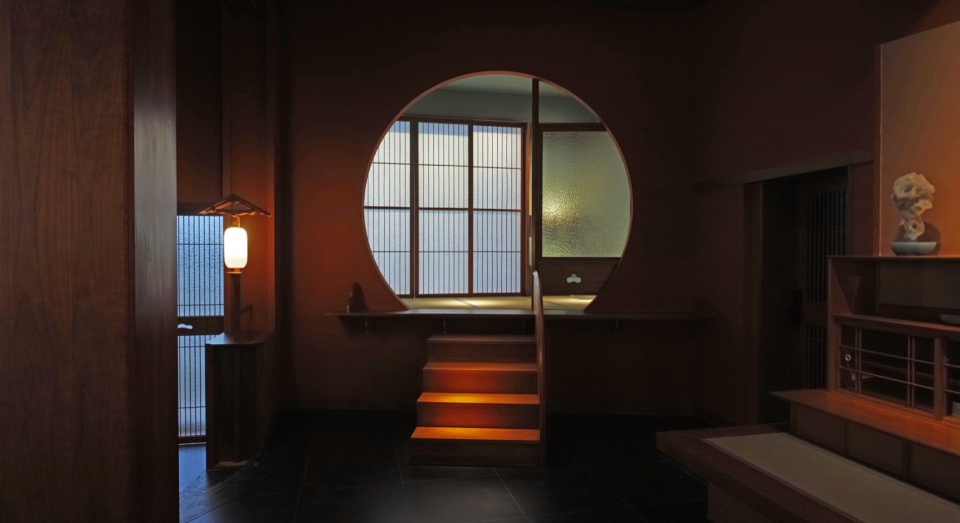
在此,唐与宋做一个相反对仗,这个相反,其实也是人的一个转身,刚刚还在夜宴,金樽映烛,红裙旋雪,一殿浓色,满座风流中,骤然退席,推门出殿外高台,眼前风过楼台,酒意皆散,月白铺阶,栏杆浸冷,环睹皆凉。一转身,背后还是醉红,眼前已是清寒。
Here, Tang and Song are set in antithetical parallel. This opposition is, in fact, also a human turning-around: one moment still at a night banquet, golden goblets reflecting candlelight, red skirts swirling like snow, a hall of dense colour, a seat full of gallantry—then suddenly rising from the feast, pushing open the door onto the high terrace outside. Before one’s eyes, wind sweeps the tower; the fumes of wine disperse; moonlight paves the steps; the railings are steeped in cold; all around is chill.In one turn, behind one is still drunken red; before one is already clear coldness.
▼观演的交界:花萼门,The threshold of viewing: the flower-calyx gate
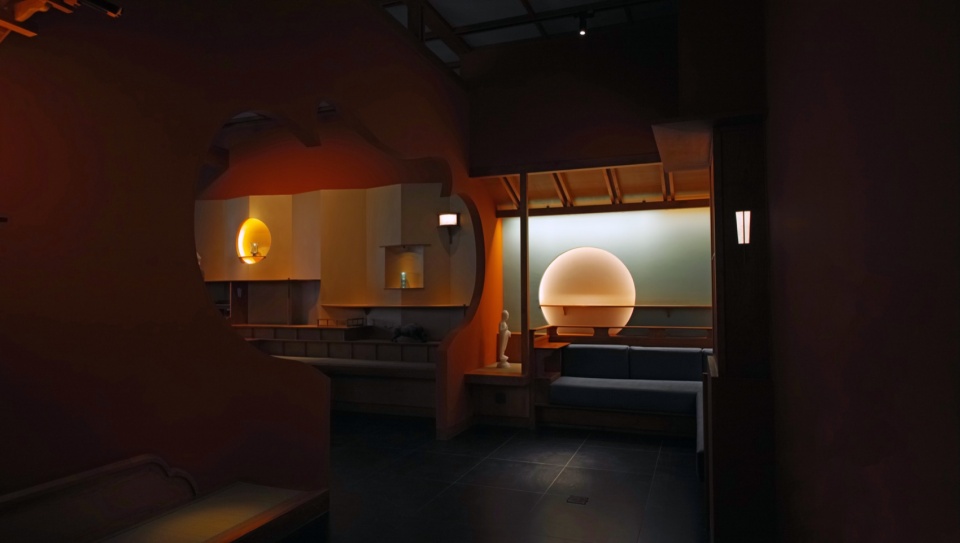
▼花萼观众席,背靠天空,The flower-calyx audience seats, back against the sky
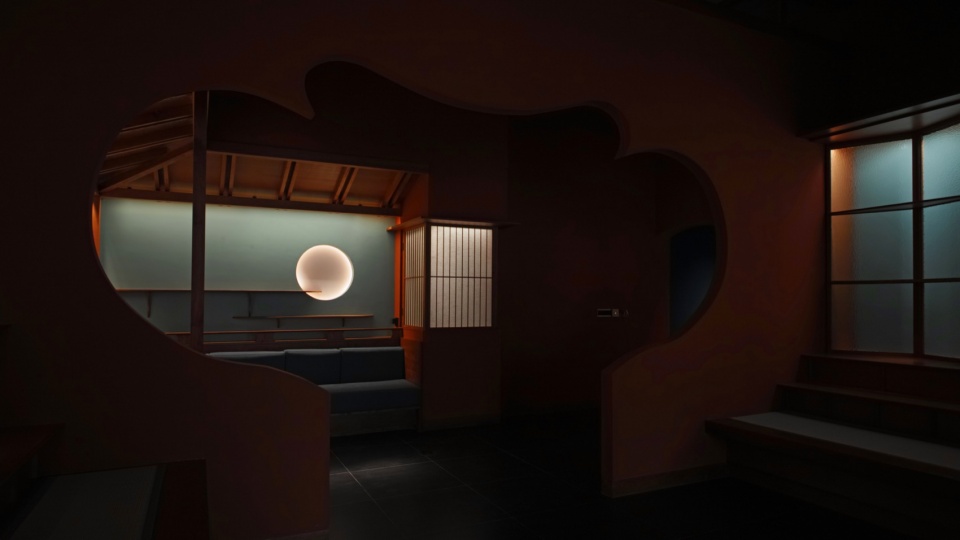
唐是在场的,共乐的,人在繁华之中;
宋是出场的,独望的,人在繁华之外。
Tang is present, sharing joy—one is within the bustle.
Song is exiting, gazing alone—one is outside the bustle.
▼金屏山座,人、音乐与器物共座,The golden-screen mountain seat, where people, music and objects sit together
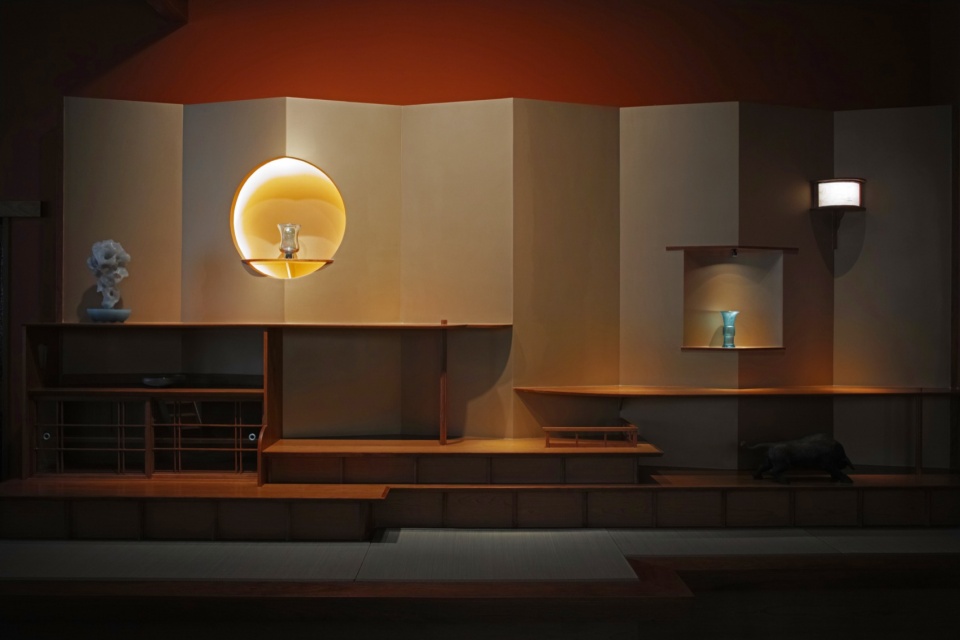
▼镜门间,唐窥见宋,Between the mirror doors, Tang glimpses Song
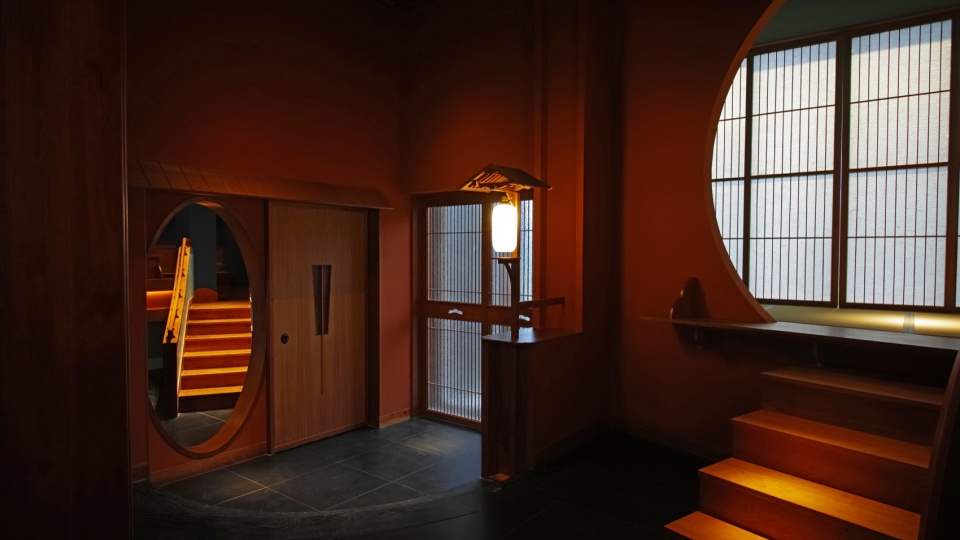
▼镜门窥宋,Peeking at Song through the mirror door
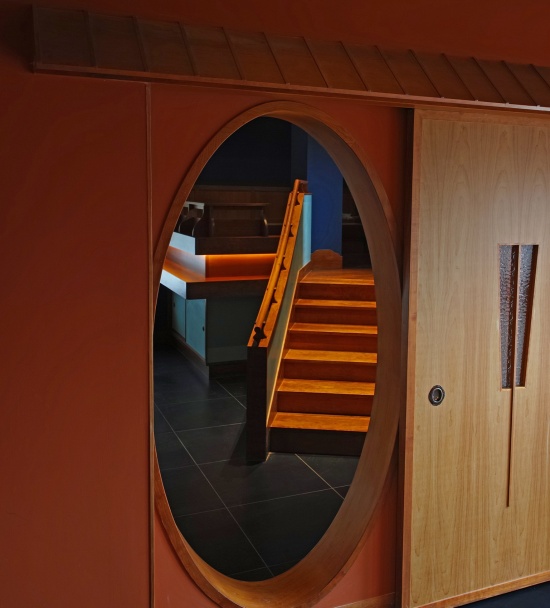
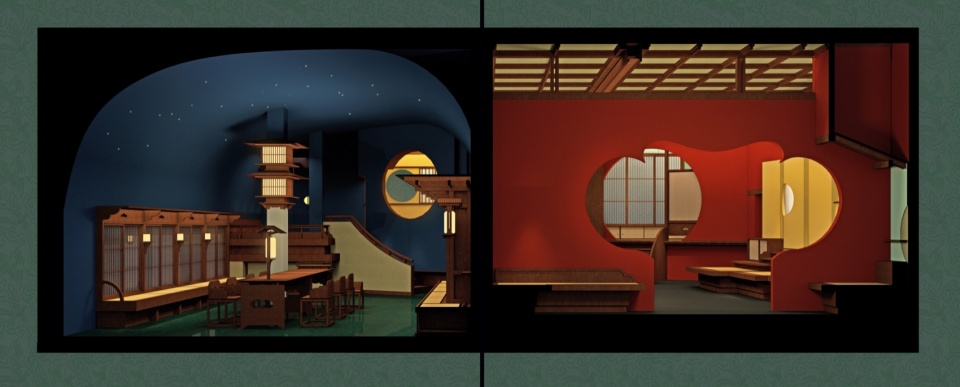
我将红色给唐,红色是青春烈火,琉璃琥珀,胡姬彩袖;红色是纵情,是外放,是酣宴,是豪兴。
我将深蓝给宋,深蓝是孤灯残月,青瓷旧卷,庭院疏梅;深蓝是沉思,是内心,是寒夜,是忧思。
I give red to Tang. Red is the fire of youth, glazed amber, the colourful sleeves of Hu dancing girls; red is abandon, is outward release, is the revelry of feasting, is heroic fervour. I give deep blue to Song. Deep blue is the solitary lamp and waning moon, celadon and old scrolls, sparse plum in the courtyard; deep blue is contemplation, is inwardness, is the cold night, is melancholy.
▼自宋步入唐,Stepping from Song into Tang
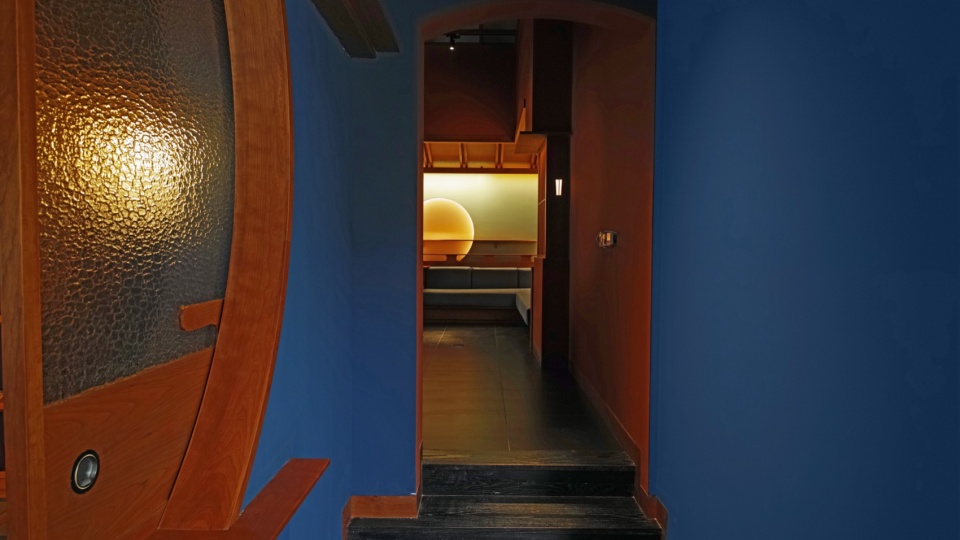
▼自山下茶席仰望山台,Looking up at the mountain terrace from the tea seat at its foot
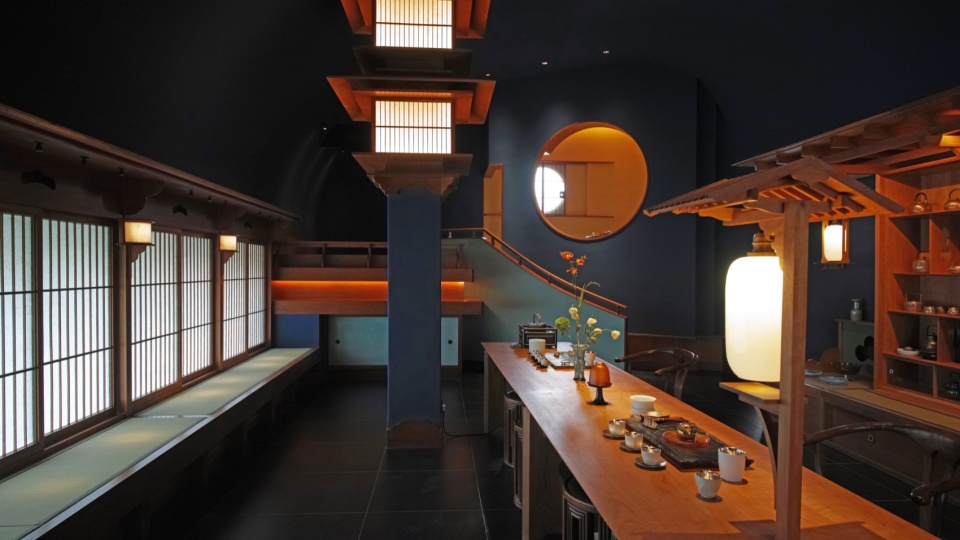
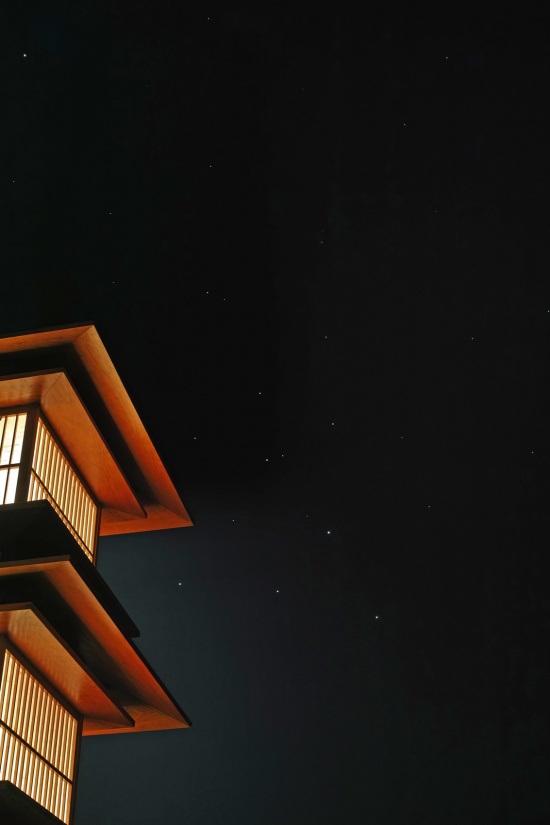
▼高幢兀立,月明星稀,The tall pagoda standing alone under a bright moon and sparse stars
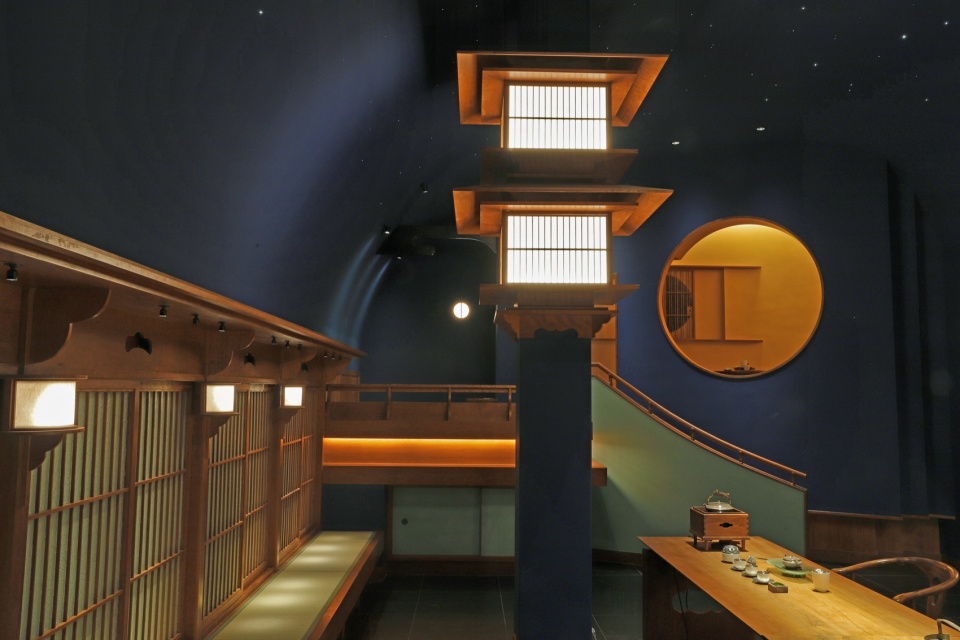
▼月台望山下席,Looking down from the moon terrace to the tea seat below
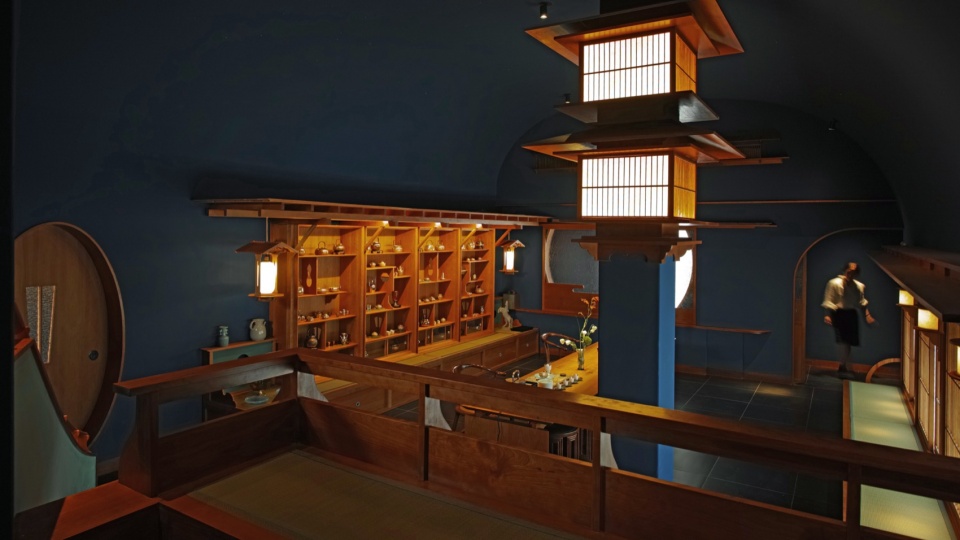
▼廊座清辉,Clear moonlight over the corridor seat
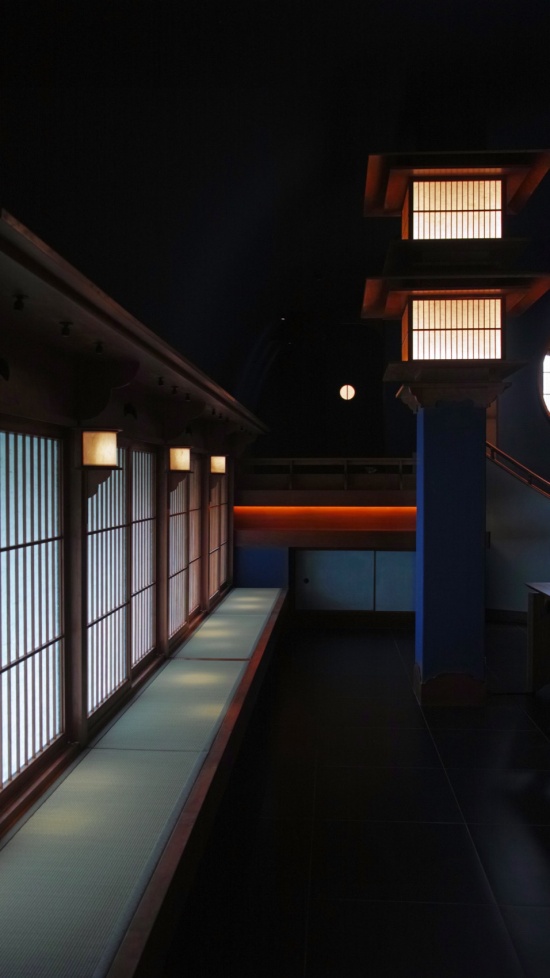
▼月朗星稀,Bright moon and sparse stars
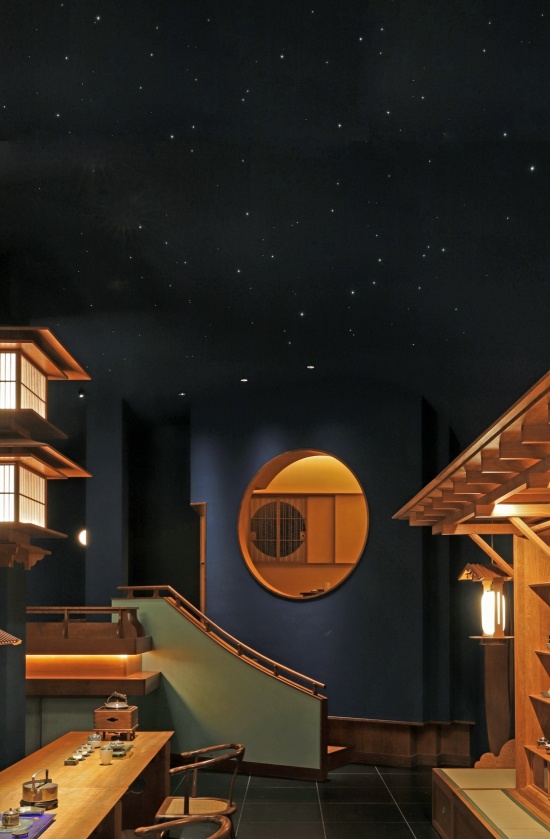
▼夜幕下一镜可通唐,Under the night curtain, a mirror leads through to Tang
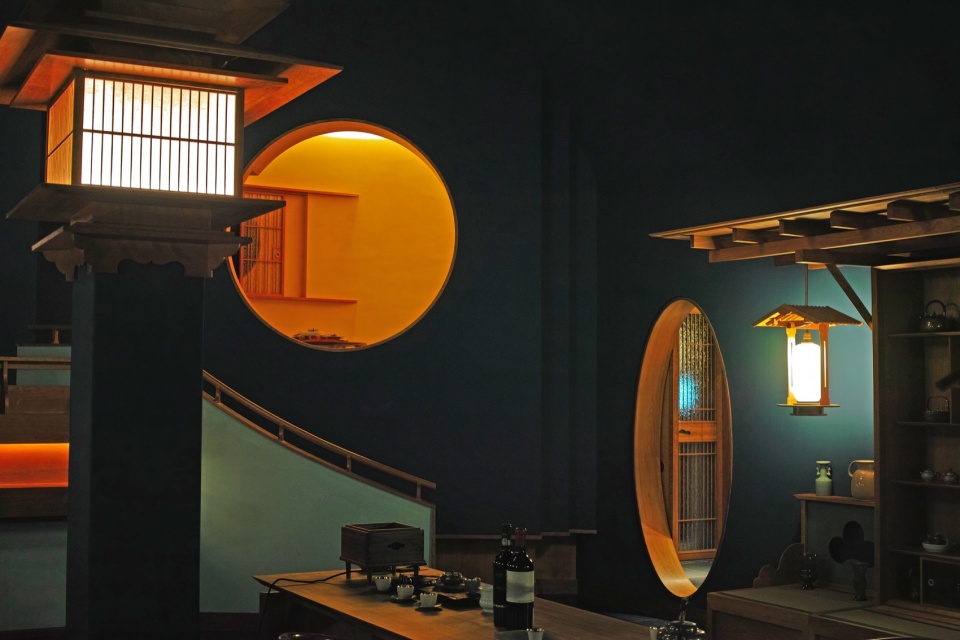
▼宋的开启,The opening of Song
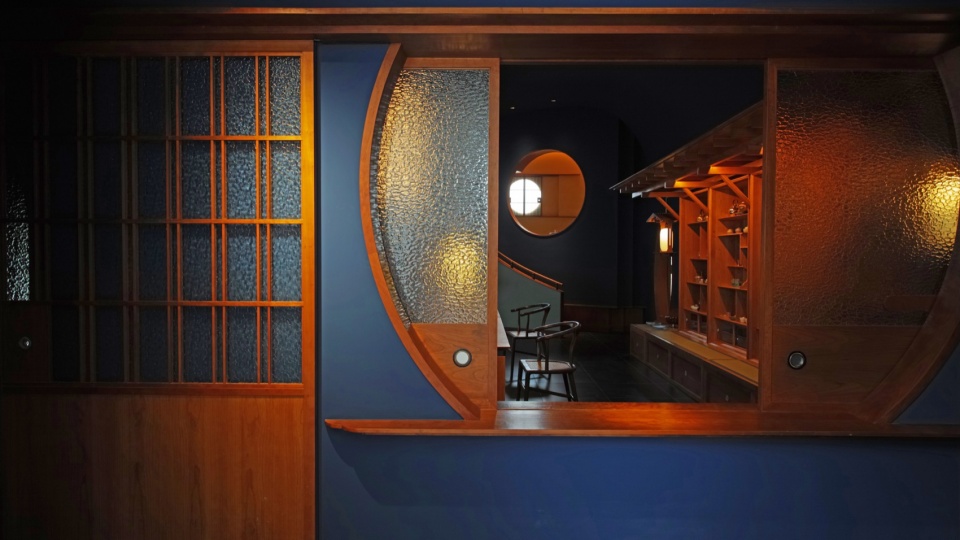
▼水月窗夹半月庵,
The water-moon window framing the half-moon hermitage
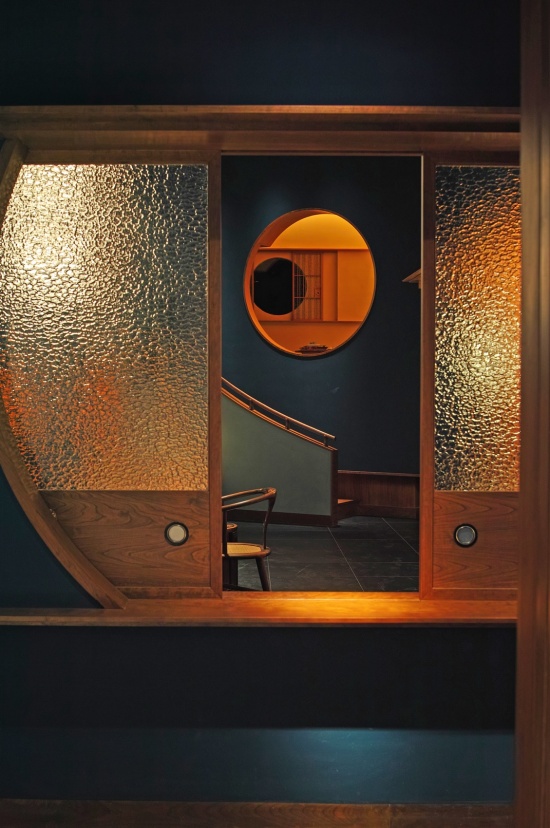
隔壁,看似并置,却是转身,“隔壁唐宋”不仅是将两个时代的特质与情绪之并置物化,更是想物化一个人的出与入,前与后、外与内,境遇走马,心念转圜。
A wall apart appears to be juxtaposition, yet it is a turning-around. “A Wall Apart: Tang and Song” not only materialises the juxtaposition of the qualities and moods of two eras, but seeks to materialise a person’s exit and entry, front and back, outside and inside—circumstances passing like a galloping horse, the mind turning and circling.
▼柱劈两看:隐身的半月庵与山下茶席,A column splits two views: the hidden half-moon hermitage and the tea seat below
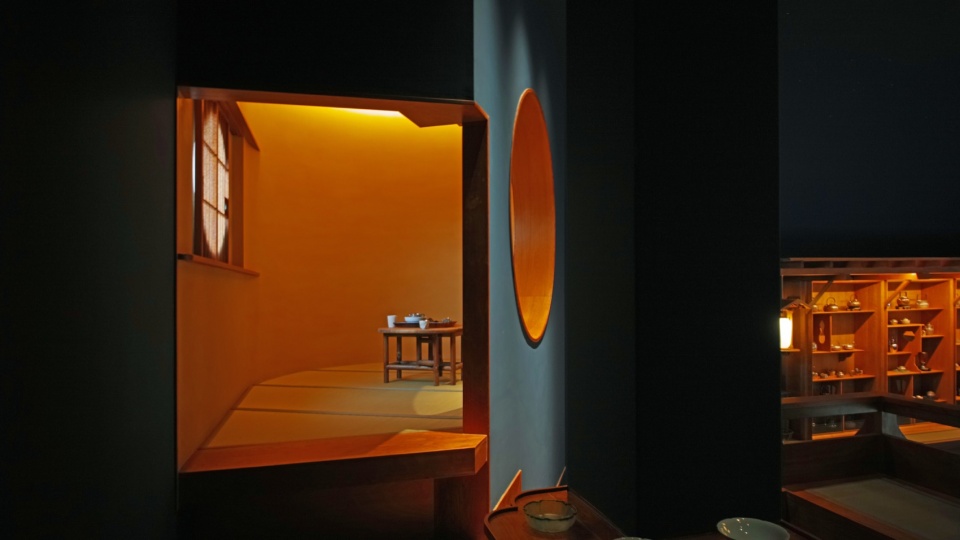
▼阑勾三镜,The balustrade linking three mirrors
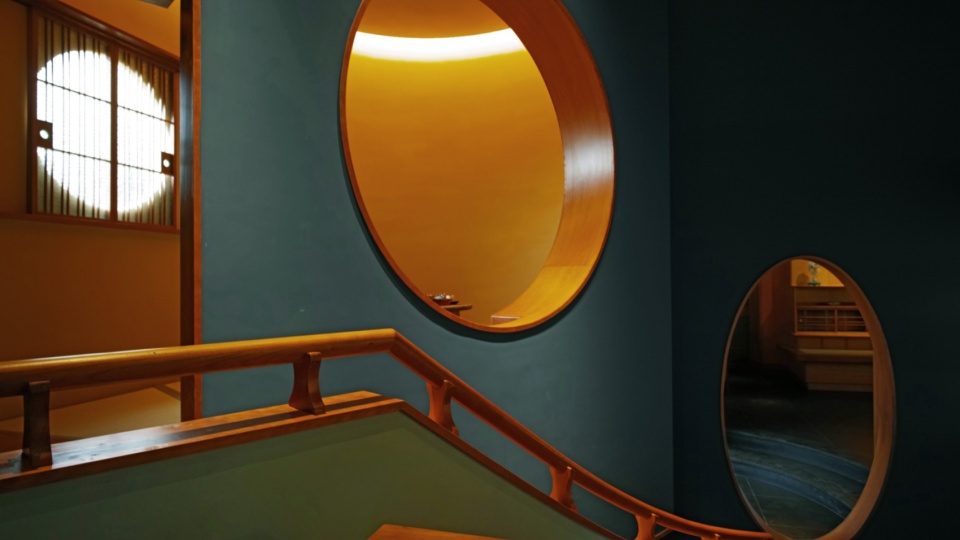
▼水月窗启四季茶阁,The water-moon window opening onto the four-season tea pavilion
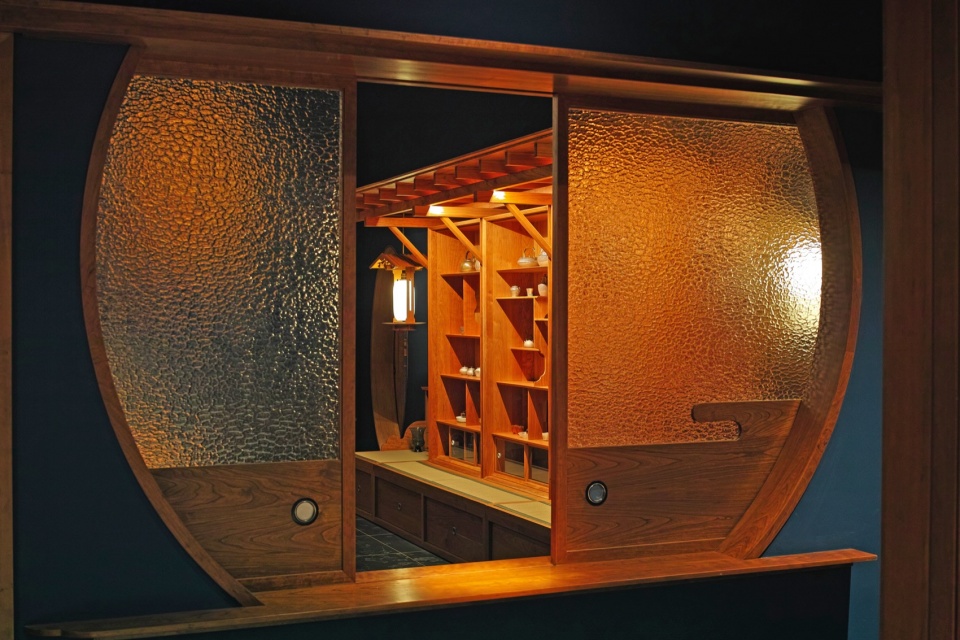
▼登月台,Ascending the moon terrace
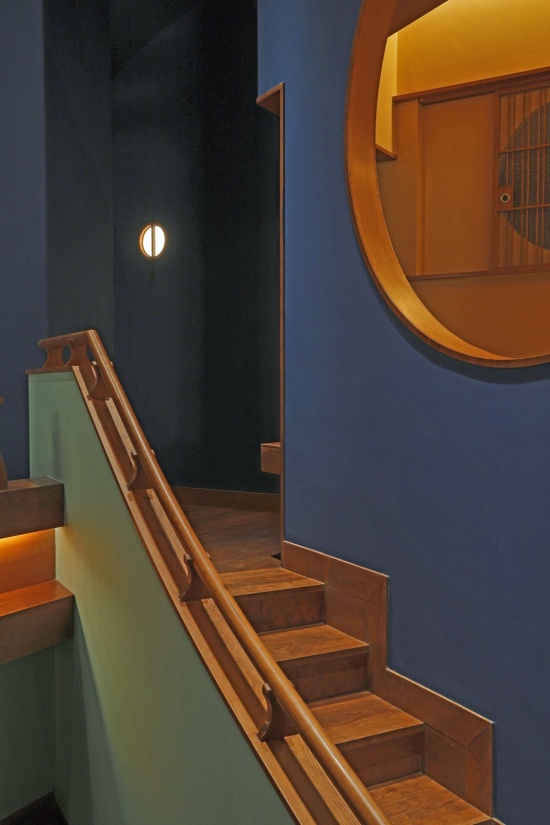
▼月升高幢,The moon rises over the tall pagoda
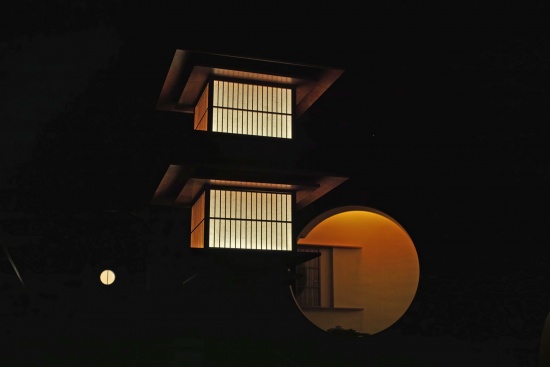
▼作为夜空的蓝,Blue as the night sky
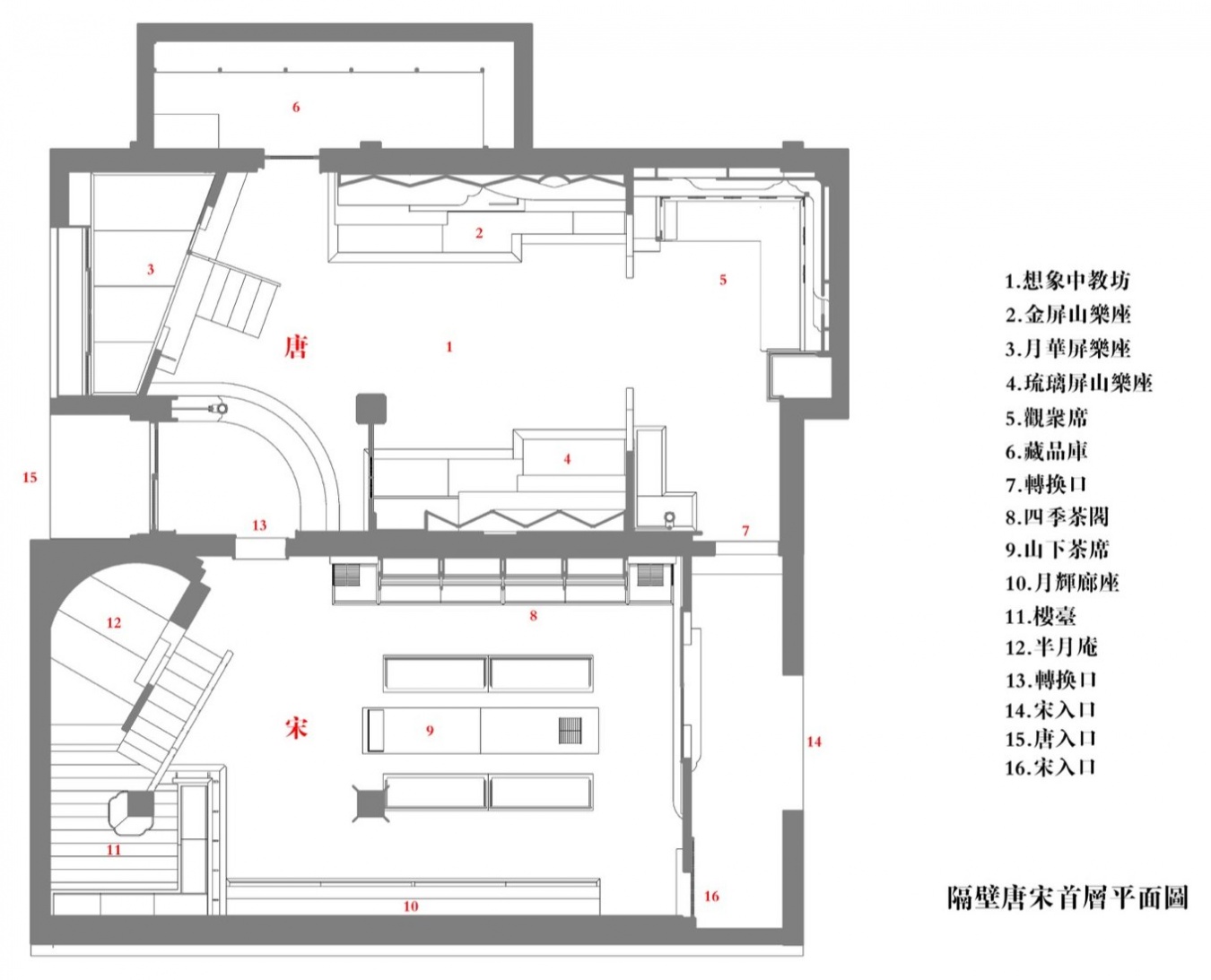
▼平面图,Plan
项目名称:隔壁唐宋——杭州卢艺工艺美术展厅
项目类型:室内
项目地点:浙江省杭州市
建成状态:建成
设计时间:2020年7月
建设时间:2022年9月
建筑面积:120平方米
设计单位:造园建筑工作室 中国美术学院建筑艺术学院
设计单位联系方式:info@gardeningarchitects.com
主创建筑师:王欣 孙昱
业主:浙江卢艺文化创意有限公司
施工:杭州方奕建筑有限公司
照明:杭州荣熙照明工程有限公司
道具:日兴圆艺术家居(杭州)有限公司
摄影师:造园建筑
Project Name: A Wall Apart: Tang and Song — Hangzhou Luyi Arts and Crafts Exhibition Hall
Project Type: Interior
Project Location: Hangzhou, Zhejiang Province
Completion Status: Built
Design Period: July 2020
Construction Period: September 2022
Floor Area: 120 sqm
Design Firm: Gardening Architects, School of Architecture, China Academy of Art
Design Firm Contact: info@gardeningarchitects.com
Principal Architects: Wang Xin, Sun Yu
Client: Zhejiang Luyi Cultural and Creative Co., Ltd.
Construction: Hangzhou Fangyi Construction Co., Ltd.
Lighting: Hangzhou Rongxi Lighting Engineering Co., Ltd.
Props: Rixingyuan Artist Home (Hangzhou) Co., Ltd.
Photography: Gardening Architects
Case Recommendation RECOMMEND CASE
More >>
8F – Sample Unit Design Proposal for the Beijing Publishing Creative Industry Base, Beijing/Interior Design
Solar Term Fusion Cuisine Restaurant, Shantou/Architecture
GXG Wuhan Flagship Store, Wuhan/Interior
Déyì Japanese Teppanyaki Restaurant, Guangzhou/Architecture
Caves and Clouds Sushi Hanzo, Shenzhen/Interior
Yada Theater, Jiangsu/Architecture
Tanyea·Weiminghai, Shenzhen/Architecture