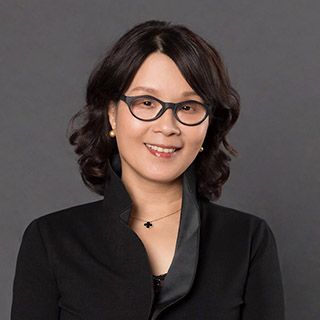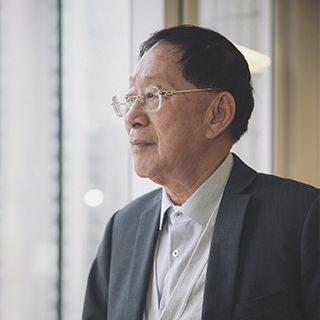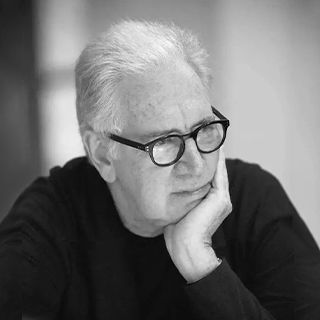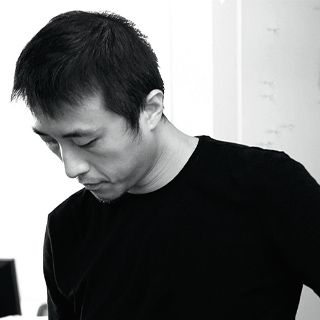
From 2000 to 2010, Li Hu worked at Steven Holl Architects in the United States, becoming a partner of the firm in 2005. He established and led its Beijing studio, during which he designed a series of urban architectural projects that have exerted significant influence through their successful integration of green, sustainable design and the creation of vibrant urban public spaces—among them Beijing’s Parkview Green, Shenzhen’s Vanke Center, Chengdu’s Raffles City, and Nanjing’s Fang Fang Art Museum. Among them, Contemporary MOMA was awarded the 2009 Tall Building Award by the Council on Tall Buildings and Urban Habitat; Shenzhen Vanke Center is China’s first LEED‑Platinum‑certified green building and received the American Institute of Architects’ Honor Award for Architecture in 2011.


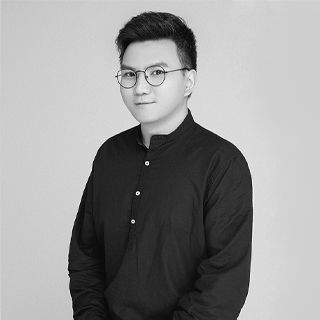
Most of our projects are located in remote rural areas, rendering conventional architectural practice ill‑suited to the context. Accordingly, we have long traversed project sites, dedicating substantial on-site time to each endeavor, in an attempt to forge a mode of “place‑based” creation—sifting through the fragments of history, cultural context, and nature that linger, often in scattered or even sensuous forms, within the present moment and its spatial‑temporal coordinates.

“In classical Chinese, ‘zǐ’ can refer to a craftsman, and ‘jí’ means to gather or bring together… We’ve always placed great importance on the community, and there’s also an element of local sentiment—of affection for one’s hometown—embedded in it… Our studio is based in Shenzhen mainly because the air is relatively clean; of course, the industry itself is equally vibrant and unburdened by rigid, conventional discourse.” We aim to harness design as a driving force, actively engaging in community development, urban–rural regeneration, and cultural preservation.
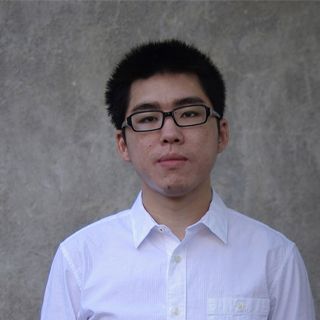
I don't think that design is exactly what some modernists believe is that the creator created the world; we may be more like planting trees to plant some space for life and stories to grow in. Everything is spiritual and beautiful. We believe that every small or grand space contains the mysteries of the world and the glory of life. Designers are not creators, but tree planters. We want to carefully plant each tree in a quiet and robust space where life and stories can flourish.
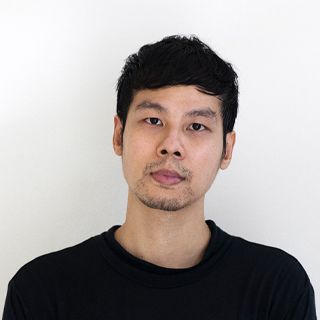
Our architectural design is a prototype, which can also be imagined as a space that can be reassembled. These buildings fully express the naturalness of Asian architecture and how to find another new possibility in the reinforced concrete city.
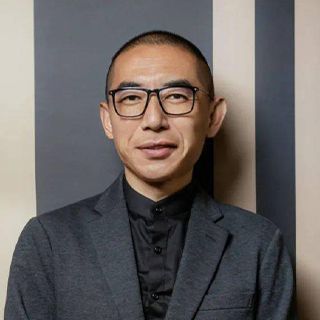
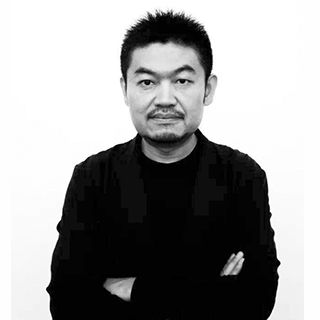
Zhang Li (1970-), currently a professor, doctoral supervisor and deputy dean of the School of Architecture of Tsinghua University, editor-in-chief of World Architecture, hosted by Jianmeng Studio, executive director of the Architectural Society of China, and deputy chief architect of the Architectural Design and Research Institute of Tsinghua University,. Its main academic concern is the interaction between architectural space and the human body, and it is committed to the contemporary interpretation of Oriental space philosophy, advocating "soft sustainability" and active healthy space.
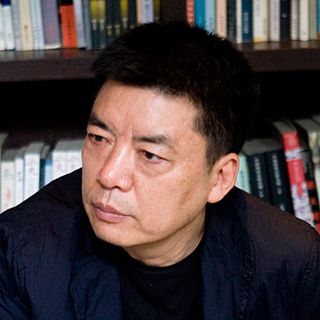
Architecture is not merely for “looking at”; it contains many elements that can only be appreciated through attentive observation or a measure of specialized knowledge. Moreover, some aspects remain invisible yet profoundly shape our perceptions and behaviors. And the details each have their own function, which professionals understand. I hope my architecture possesses architectural qualities in every respect; let us continue to strive.

Conceptual design, rendering production, and on-site construction coordination.
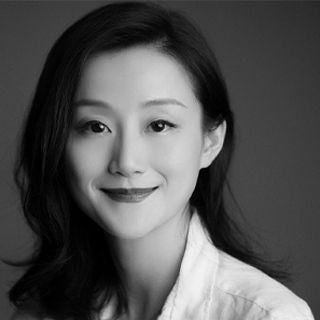
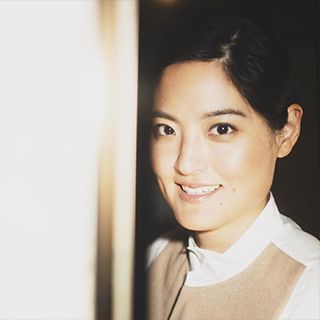
At the age of 14, he went to study in the United States and graduated from Columbia University with the highest undergraduate honors—SUMMA CUM LAUDE—earning a Bachelor of Arts in Architecture with DISTINCTION, the highest distinction of PHI BETA KAPPA, and the CENTENNIAL SCHOLAR lifetime honor. His major was architecture, with minors in art history and physics. Subsequently, he was admitted to Harvard University with the highest honors and earned a four-year Master of Architecture degree. As a key recipient of Harvard’s Peter Rice Fellowship, in 2010 he was appointed as the sole visiting researcher and dispatched to Renzo Piano Building Workshop (RPBW), where he contributed to the research and design of Norway’s National Museum of Art, Pirelli’s global headquarters, and industrial parks. He previously served as a Project Architect at Foster + Partners and as the firm’s China Desk Director in New York, playing a key role in the design of landmark projects including the United Nations Plaza Tower in New York, the Hearst Corporation Headquarters in New York, the Bloomberg Philanthropies Headquarters in London, the Volvo U.S. Corporate Headquarters and Industrial Park, and the Rosario Urban Complex and Cultural‑Industry Park in Argentina. Both Piano and Foster are Pritzker Prize laureates. He has previously served as a visiting and distinguished professor at Harvard University, Columbia University, and the University of Hong Kong. Currently a specially recruited talent, he teaches at Zhejiang University, serves as a thesis advisor for the School of Architecture at the China Academy of Art, and holds a research position at the Center for Research in Contemporary Calligraphy. He is also pursuing a doctoral degree in architecture under the tutelage of Pritzker Prize laureate Wang Shu. He has participated in two art exhibitions curated by the renowned calligrapher Professor Wang Dongling—“Ta Miao Dao Xiang” in 2017 and “OCAT Bamboo Path” in 2018—serving as the exhibition space planner and designer. Qi Shanshan is currently dedicated to examining urban issues in China and engaging in rural practice, reflecting on how to transcend geographical boundaries and contribute Chinese cultural values to the world. Since founding STUDIO QI Architects in 2012, she has served as the chief planner and lead architect of the boutique‑hotel cluster “Sujiji” and as the chief architect of the Songtsam Group. Her work has been recognized with the WAF American Architecture Master Prize, the LEAF International Green Leaf Award, the WA World Architecture Award for Best Residential Design, and the UED China Most Beautiful Homestay Design Award, and she was named one of the Global Top 20 Women Architects in 2018. She firmly believes that architects must possess a strong sense of responsibility and sensitivity. Architects must embrace a profound sense of responsibility and sensitivity; architecture should be a gentle yet powerful force; and, at its core, design is the pursuit of a state of “just right.”