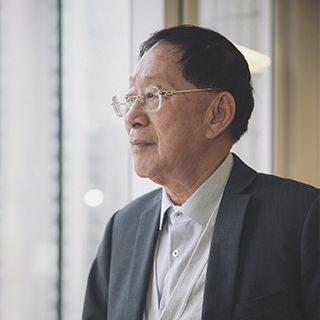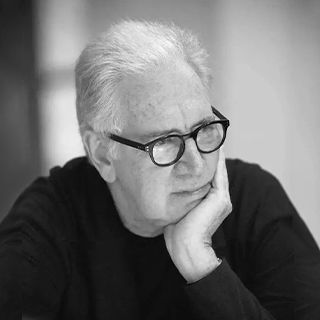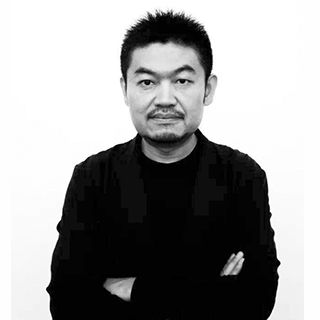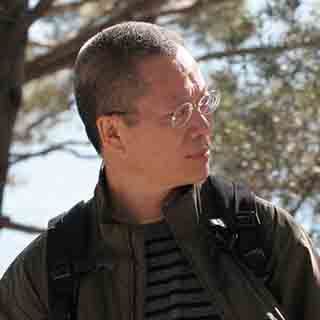
Work Experience: Currently a professor at the School of Environmental Art Design of Beihai Art and Design Academy, he formerly served as a professor and master’s supervisor at the Academy of Arts & Design of Tsinghua University, as well as vice president of QingShang Environmental Art and Architectural Design Institute, and as a senior vice chairman of the Design Committee of the China Building Decoration Association. Professional Achievements: ① Practical Work 1998, Chongqing Hall of the Great Hall of the People (China Architectural Decoration Design Excellence Award) The Museum of Modern Chinese Literature, 1999 1999, Anhui Hall of the Great Hall of the People (China Architectural Decoration Design Excellence Award) 2000, Qinghai Hall of the Great Hall of the People (China Architectural Decoration Design Excellence Award) Hall 118 of the Great Hall of the People, 2001 2002, Jilin Hall of the Great Hall of the People (Beijing Municipal Award for Excellence in Architectural Decoration Design) Jiangxi Hall of the Great Hall of the People, 2003 2004, Supreme People’s Court of China (Beijing Municipal Award for Excellence in Architectural Decoration Design) 2004: Beijing Qinghai Building (China Architectural Decoration Design Excellence Award) The Chongqing Municipal People’s Congress and Chinese People’s Political Consultative Conference Office Buildings and Conference Center, 2006 2006, Hunan Hall of the Great Hall of the People (China Architectural Decoration Design Excellence Award) The 201 Project at Zhongnanhai, Beijing, 2008 2008 Beijing Zhongnanhai Chunouzhai Project 2009: Shengdu International Conference Center in Jining, Shandong (five-star hotel, Confucian culture) (National Excellent Award for Architectural Decoration) In 2009, the VIP Terminal and Business Jet Terminal at Beijing Capital International Airport received the National Excellent Award for Architectural Decoration—Public Building Interior Design Category—as part of the Olympic Projects. The 085 Project at Zhongnanhai, Beijing, 2009 Building 11, Yuquan Mountain, Beijing, 2009 2010 Zou City, Shandong: Ze Lin Villa (Five-Star, Mencius Culture)


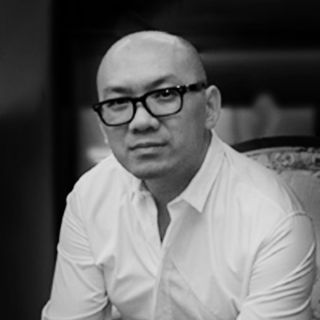
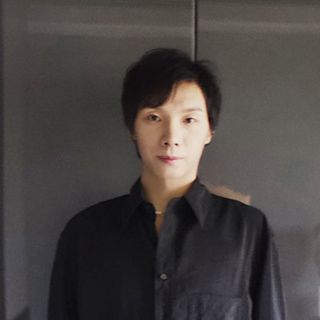
Founder & Chief Designer, Xima Design Engineering (Hong Kong) Co., Limited Joint Supervisor of Graduate Programs, Chiang Yee School of Art and Design, Shantou University & Shantou University Graduate School Special Invited Lecturer, Advanced Training Program in Soft Furnishings and Visual Merchandising, Tsinghua University Visiting Professor, Department of Visual Arts, Guilin Tourism University Born in Shanghai in 1971, he founded CIMAX DESIGN (Hong Kong) Co., Ltd. in 2004 and, together with Ms. Wen Jie, has led a young design team in delivering a wide range of design services to clients. Attention to detail, functionality above all, and a willingness to challenge convention—these principles have long guided the design philosophy of Xima Design Engineering (Hong Kong) Co., Ltd.!
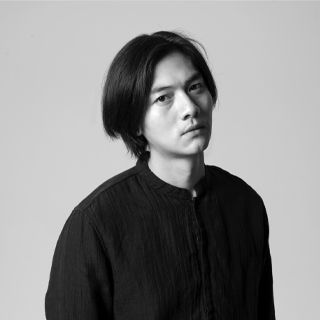
In the future, I hope that design will remain at the heart of what we do—after all, it’s a truly powerful way to engage with society and the world. Carrying on with this matter and doing it well is my only plan.

Professional strengths: space design and furnishings design Representative works: Baohuayuanshu, Zhongxing Honglu, Shang Dongding, Weskeia, Zhongjin Haitang Bay, Eastern Suburb Ziyuan, Tomson Lake Court, Hongti Peninsula, Southern Suburb Villa, Path Feili Bay, Dahua Jinxiu Huacheng, Dahao Mountain Forest, Da 'an Sheng Baba, Bruce County, Poly Home, Four Seasons Imperial Court, Shang Hai style, Renheng Shibin, Xiangsheng Sijiang Bay, Taoyuan, Wai Yuan, green Shanghe Court, Pujiang Overseas Chinese Town, Hushan in sight, Oriental Hawaii, Tomson Hall, Yipin Mancheng, Green City Rose Garden, etc.

Professional strengths: once worked as a design director in a Taiwan design company, presided over large-scale projects of more than 20000 square meters, worked rigorously and meticulously, and strictly controlled the implementation of design works. Overseas study experience: Japan, Italy. Representative works (real estate): Jiulongcang Lan Gong, Zhongjin Haitang, Renheng Binjiang, Cuihu Tiandi, Hongqiao Yushu, Peach Blossom, Vanke Baima, Hushan in sight, Haihai Bay, Repulse Bay Garden, Coastal Li Shu, Zhen Shuian, Pujiang Overseas Chinese Town, Aifa Aolang Garden, Shanghai Bay, Holy Land Vera, Changtai Xijiao, Jin Dayuan, Yindu, Long Lake, Longxiu Mountain, Longxiu Mountain, Yuqin Garden, Zhongkai City Light, Yunding Villa, Yunan Green Land, Yipin Mancheng, Binhu County, Hua Ting Capital, Zhujiajiao No.1, Guanting, Four Seasons Imperial Court, Rongxin Platinum Bay, Country Garden, Sheshan Silver Lake, Zhongbang City Garden, Dongting Yulong, Hongxi County, Contemporary Yishu, Yashixuan, etc
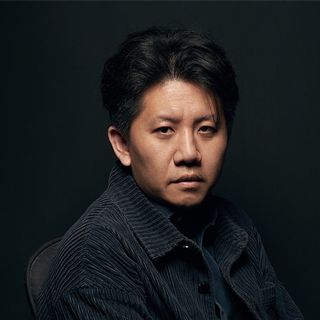
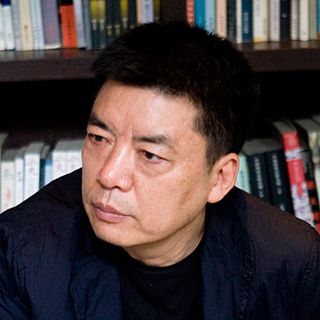
Founder and lead architect of Pills Studio. Associate Professor, Associate Dean, Department of Architecture, Central Academy of Fine Arts. Visiting Professor, School of Architecture, Syracuse University. Master of Architecture, Princeton University. He was a lecturer at the Academy of Fine Arts of Beijing Film Academy and an open course instructor at the School of Architecture of Tsinghua University. Member of the American Institute of Architects and the Chinese Academy of Fine Arts. He has won the Academic Committee Award of the 2019 Shenzhen-Hong Kong Architecture Biennale and the First Prize of the FAIRYTALES 2015 International Architecture Competition. He has served as the architectural history consultant of the director group of Jiang Wen's film "Evil does not suppress righteousness. His works are exhibited in Venice International Architecture Biennale, Shenzhen-Hong Kong Architecture Biennale, China Contemporary Architecture Image Exhibition, National Art Exhibition, Shanghai Urban Space Art Season, etc. His works have been exhibited in the National Architecture Museum in Washington, Shanghai Museum of Contemporary Art, Shanghai OCAT, Beijing Modern Automobile Art Center and other institutions, and have been collected by Shenzhen Pingshan Art Museum, Shanzhongtian Art Museum, X Museum and other institutions.
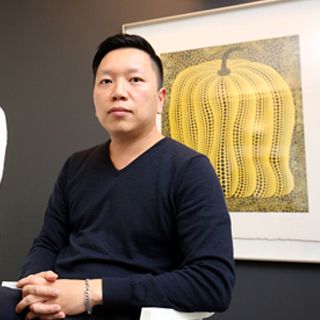
Mr. Zhuang Chaofeng is the chief creative director of Liang Zhitian Designer Co., Ltd., with more than 20 years of rich interior design experience. He is now responsible for supervising design projects in Hong Kong, the Mainland and overseas, and leading his design team to carry out the research and development of interior and product design projects., And analyze the market and design trends, plan effective design development plans. It is understood that many design projects led by Mr. Zhuang Chaofeng have won many awards: including FX International Interior Design Award, IF Design Award, IIDA International Interior Design Award, Gold Key Hotel Design Award in the United States, "Perspective" magazine "Perspective Interior Design Award" and other awards. Mr. Zhuang Chaofeng himself is also kind and interesting, and his Yan value and design level are both high. Representative projects include Shenzhen Bay 1, Shanghai Gubei 1, Hyatt Regency Hong Kong Sha Tin, Shangri-La Hotel, London, and the "Natural Jewelry Box" furniture series in cooperation with Italian brand Visionnaire.

Conceptual design, rendering production, and on-site construction coordination.
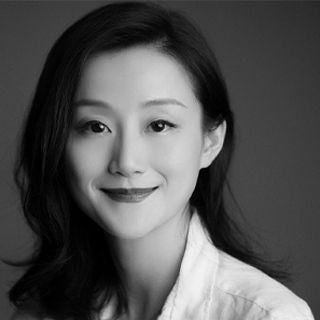
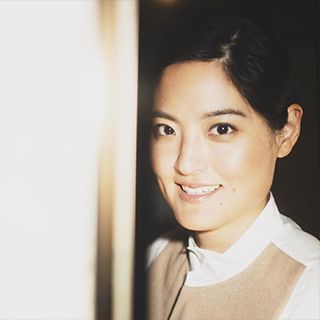
At the age of 14, he went to study in the United States and graduated from Columbia University with the highest undergraduate honors—SUMMA CUM LAUDE—earning a Bachelor of Arts in Architecture with DISTINCTION, the highest distinction of PHI BETA KAPPA, and the CENTENNIAL SCHOLAR lifetime honor. His major was architecture, with minors in art history and physics. Subsequently, he was admitted to Harvard University with the highest honors and earned a four-year Master of Architecture degree. As a key recipient of Harvard’s Peter Rice Fellowship, in 2010 he was appointed as the sole visiting researcher and dispatched to Renzo Piano Building Workshop (RPBW), where he contributed to the research and design of Norway’s National Museum of Art, Pirelli’s global headquarters, and industrial parks. He previously served as a Project Architect at Foster + Partners and as the firm’s China Desk Director in New York, playing a key role in the design of landmark projects including the United Nations Plaza Tower in New York, the Hearst Corporation Headquarters in New York, the Bloomberg Philanthropies Headquarters in London, the Volvo U.S. Corporate Headquarters and Industrial Park, and the Rosario Urban Complex and Cultural‑Industry Park in Argentina. Both Piano and Foster are Pritzker Prize laureates. He has previously served as a visiting and distinguished professor at Harvard University, Columbia University, and the University of Hong Kong. Currently a specially recruited talent, he teaches at Zhejiang University, serves as a thesis advisor for the School of Architecture at the China Academy of Art, and holds a research position at the Center for Research in Contemporary Calligraphy. He is also pursuing a doctoral degree in architecture under the tutelage of Pritzker Prize laureate Wang Shu. He has participated in two art exhibitions curated by the renowned calligrapher Professor Wang Dongling—“Ta Miao Dao Xiang” in 2017 and “OCAT Bamboo Path” in 2018—serving as the exhibition space planner and designer. Qi Shanshan is currently dedicated to examining urban issues in China and engaging in rural practice, reflecting on how to transcend geographical boundaries and contribute Chinese cultural values to the world. Since founding STUDIO QI Architects in 2012, she has served as the chief planner and lead architect of the boutique‑hotel cluster “Sujiji” and as the chief architect of the Songtsam Group. Her work has been recognized with the WAF American Architecture Master Prize, the LEAF International Green Leaf Award, the WA World Architecture Award for Best Residential Design, and the UED China Most Beautiful Homestay Design Award, and she was named one of the Global Top 20 Women Architects in 2018. She firmly believes that architects must possess a strong sense of responsibility and sensitivity. Architects must embrace a profound sense of responsibility and sensitivity; architecture should be a gentle yet powerful force; and, at its core, design is the pursuit of a state of “just right.”